The shade bed is the hardest one to plant twice. Not much wants to grow there, so you buy the thing that does, and then something eats it in a single night.
Almost always the thing you bought was a hosta.
Start Here: Hostas Are Deer Candy
Hostas are the default shade plant in every garden centre in the country, and they are the single most reliably eaten perennial in a deer area. Rutgers rates them among the most severely damaged plants in their entire trial. A mature clump can go from full to bare stems overnight in July.
This is worth saying plainly because most shade plant lists put hostas at the top, and if deer walk through your garden, that list is useless to you.
If you love hostas, the honest options are a fence, a repellent on a schedule, or containers close to the house. There is no deer-proof hosta variety, despite what the tags sometimes suggest. Blue-leaved varieties with thicker leaves like Halcyon get eaten slightly less, which is not the same as not eaten.
Is Any Plant Really Deer Proof?
No. Clemson HGIC says it outright : no plant is deer proof, and deer-resistant is a horticultural term for plants deer seldom eat, not plants they never eat. A hungry deer in a hard winter will eat almost anything, and a doe teaching a fawn will sample plants she would normally walk past.
What the ratings measure is preference. Deer avoid three things fairly consistently:
- Fuzzy or hairy leaves. Unpleasant texture in the mouth.
- Strong scent. Aromatic foliage reads as inedible.
- Toxic or bitter sap. Learned avoidance, often passed from doe to fawn.
Every plant below has at least one of those. That is why they get left alone, and it is a more reliable guide than any list of variety names.
| Your spot | Plants that cope | Why they work there |
|---|---|---|
| Dry shade under a maple | Epimedium, wild ginger | The two that genuinely handle the hardest combination most gardens have |
| Damp shade | Ostrich fern, astilbe | Both want soil that never quite dries out, and both sulk without it |
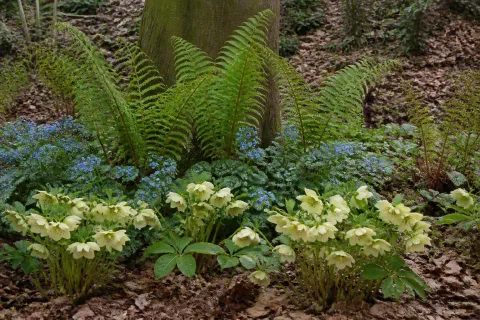
| Deep shade on a north side | Christmas fern, autumn fern, hellebore, Solomon’s seal, wild ginger | The shortlist that still grows where very little light arrives |
| A slope that needs holding | Christmas fern | Clumping and evergreen, so it stays where you put it |
| An edge that should spill | Japanese forest grass | A slow mound that falls over an edge better than anything else in shade |
| Colour in a dark corner | Japanese painted fern, brunnera ‘Jack Frost’ | Foliage carries the bed after the flowers finish |
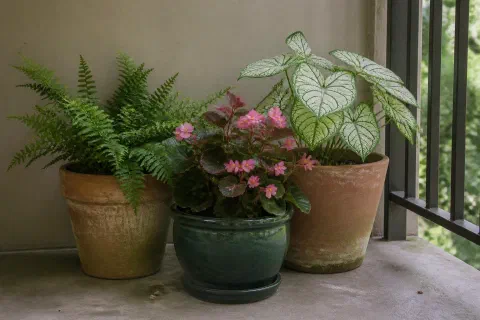
| Shade containers | Wax begonia, caladium, coleus | The annuals deer generally walk past |
The Reliable Ones, With Zones
Ferns
The most dependable deer resistant shade plants there are. Deer essentially never touch them.
- Ostrich fern (Matteuccia struthiopteris), zones 3 to 7. Tall, up to four feet, spreads by runners. Use it where you want it to take over, because it will.
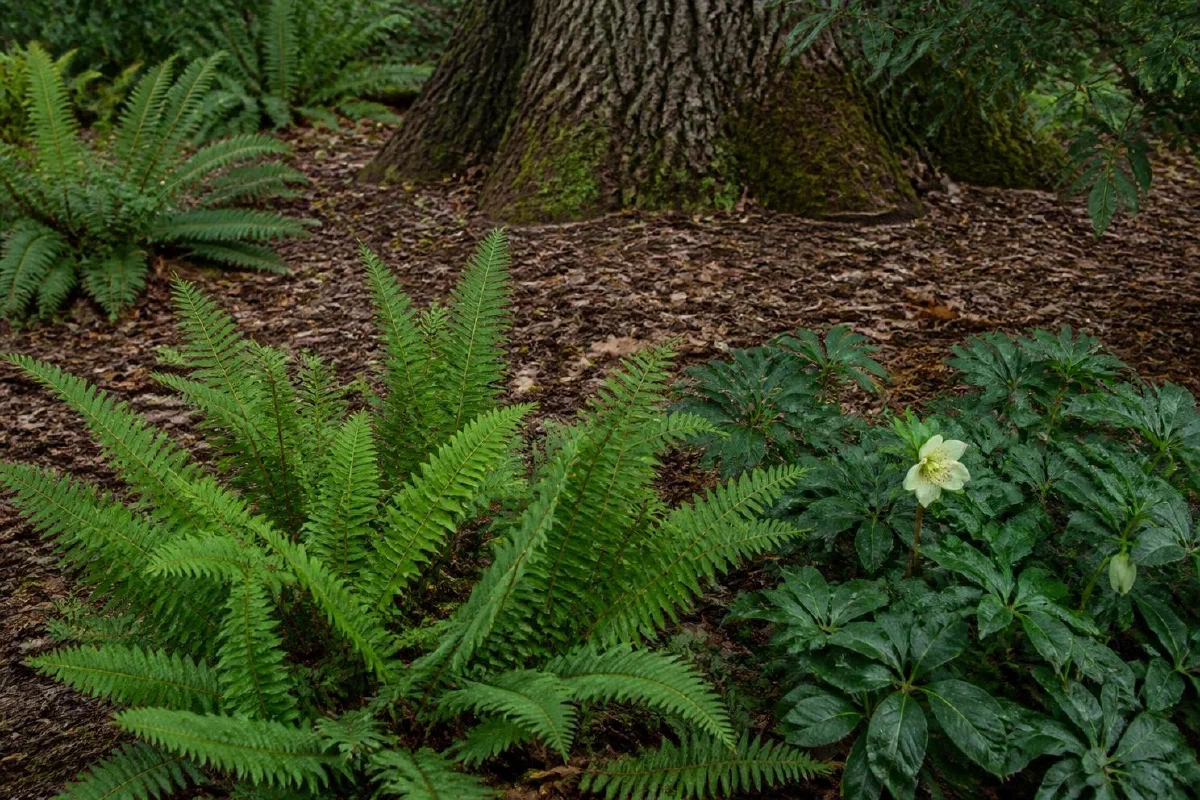
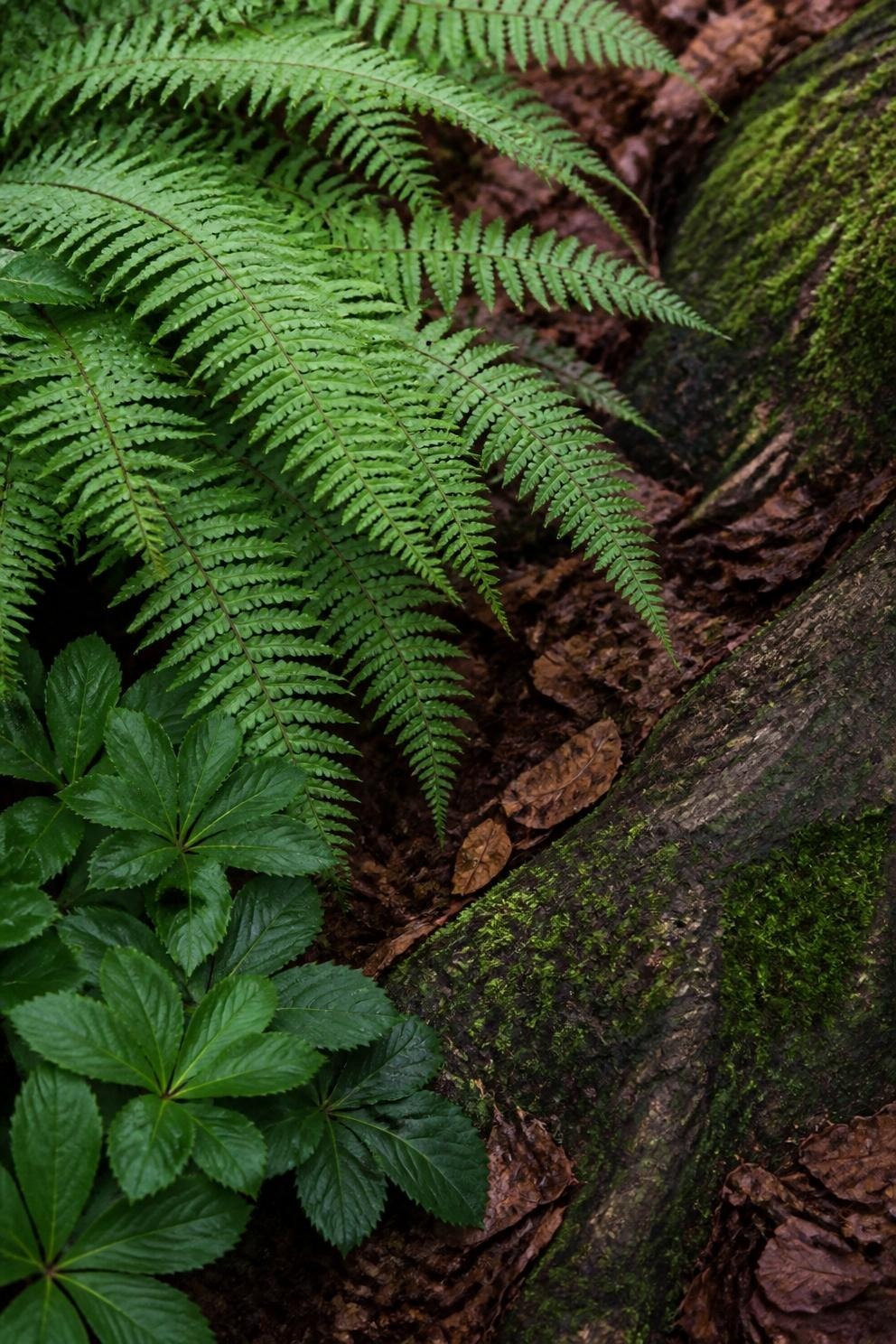
- Christmas fern (Polystichum acrostichoides), zones 3 to 9. Evergreen, clumping, about two feet. Native to eastern North America and the best choice for a slope.
- Japanese painted fern (Athyrium niponicum var. pictum), zones 4 to 9. Silver and burgundy fronds, about eighteen inches. The one to plant where you want colour rather than just green.
- Autumn fern (Dryopteris erythrosora), zones 5 to 9. New fronds emerge coppery. Semi-evergreen in the warmer part of that range.
Hellebore
Helleborus species, zones 4 to 9. Evergreen leathery foliage, flowers in late winter and early spring when nothing else is out.
The whole plant is toxic, which is exactly why deer leave it alone, and also why it goes at the back of the bed if you have a dog that chews. The ASPCA lists hellebore as toxic to dogs, cats, and horses , with drooling, abdominal pain, and diarrhea as the usual signs. Cut last year’s tatty leaves off in late winter so the flowers show.
Lungwort
Pulmonaria, zones 3 to 8. Spotted, bristly leaves and blue and pink flowers in early spring on the same plant.
The bristles are the defence. It is one of the earliest things to bloom in a shade bed and it holds decent foliage through summer if it does not dry out completely.
Barrenwort
Epimedium, zones 5 to 9. The answer to dry shade under a maple, which is the hardest site in most gardens.
Slow to establish, essentially permanent once it is. Wiry stems, heart-shaped leaves, small spurred flowers in spring. Shear the old foliage in late winter before the new growth pushes.
Brunnera
Brunnera macrophylla, zones 3 to 8. Sprays of tiny blue flowers like forget-me-nots in spring, over large heart-shaped leaves.
The named silver-leaved varieties such as Jack Frost are the reason to grow it, because the foliage carries the bed all summer after the flowers finish. Rough leaf texture keeps deer off.
Astilbe
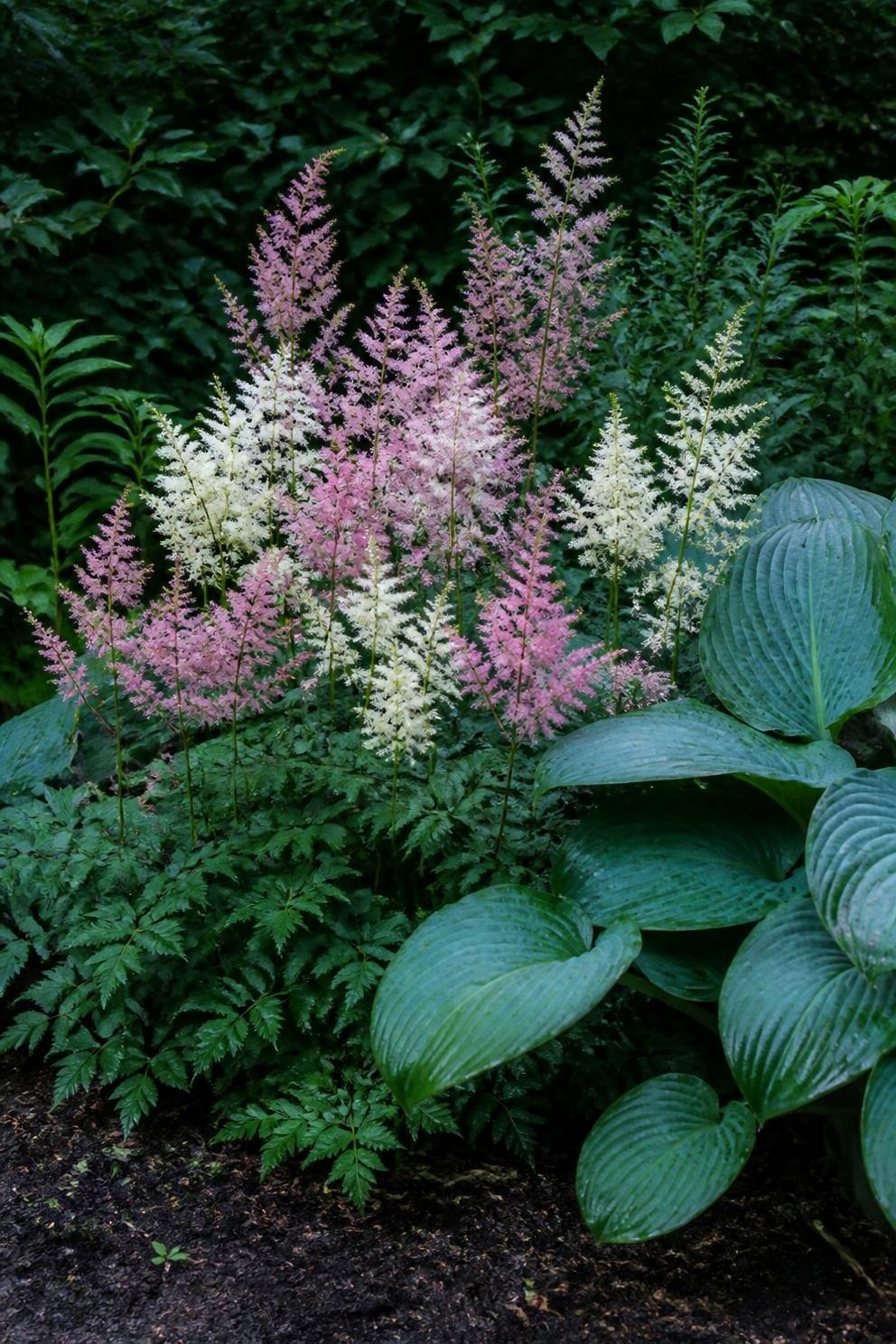
Zones 3 to 8. Feathery plumes in white, pink or red in early to mid summer, over ferny foliage.
The one condition it will not forgive is dry soil. In consistently moist shade it is excellent and untouched. On a dry site it browns at the edges and sulks no matter what else you do.
Japanese Forest Grass
Hakonechloa macra, zones 5 to 9. A slow mound of arching grass that spills over an edge better than anything else in shade.
Not a fast plant. Give it three seasons to look like the photograph. Deer ignore grasses almost entirely.
Solomon’s Seal
Polygonatum, zones 3 to 8. Arching stems with small white bells hanging underneath, yellow foliage in autumn.
The variegated form lights up a dark corner. Spreads gently by rhizome, which is welcome in a woodland bed.
Foamflower
Tiarella, zones 4 to 9. Native, low, with bottlebrush spikes of white or pink in spring and lobed leaves often marked dark along the veins.
Good at the front of a bed and good as a loose groundcover under shrubs.
Lenten Rose, Bleeding Heart, and the Caveats
Bleeding heart (Lamprocapnos spectabilis), zones 3 to 9, is usually left alone and is genuinely beautiful in May. The catch is not deer, it is that it goes fully dormant by midsummer and leaves a hole. Plant a fern next to it to close the gap.
Lamium, zones 3 to 8, is deer resistant and a fast groundcover for dry shade. In a small bed it is useful, in a big one it can become the only thing you have.
For Deep Shade Specifically
Some of the plants above want part shade rather than full. For a genuinely dark spot, north of a building or under dense evergreens, the shortlist is shorter:
- Christmas fern and autumn fern
- Epimedium
- Hellebore
- Solomon’s seal
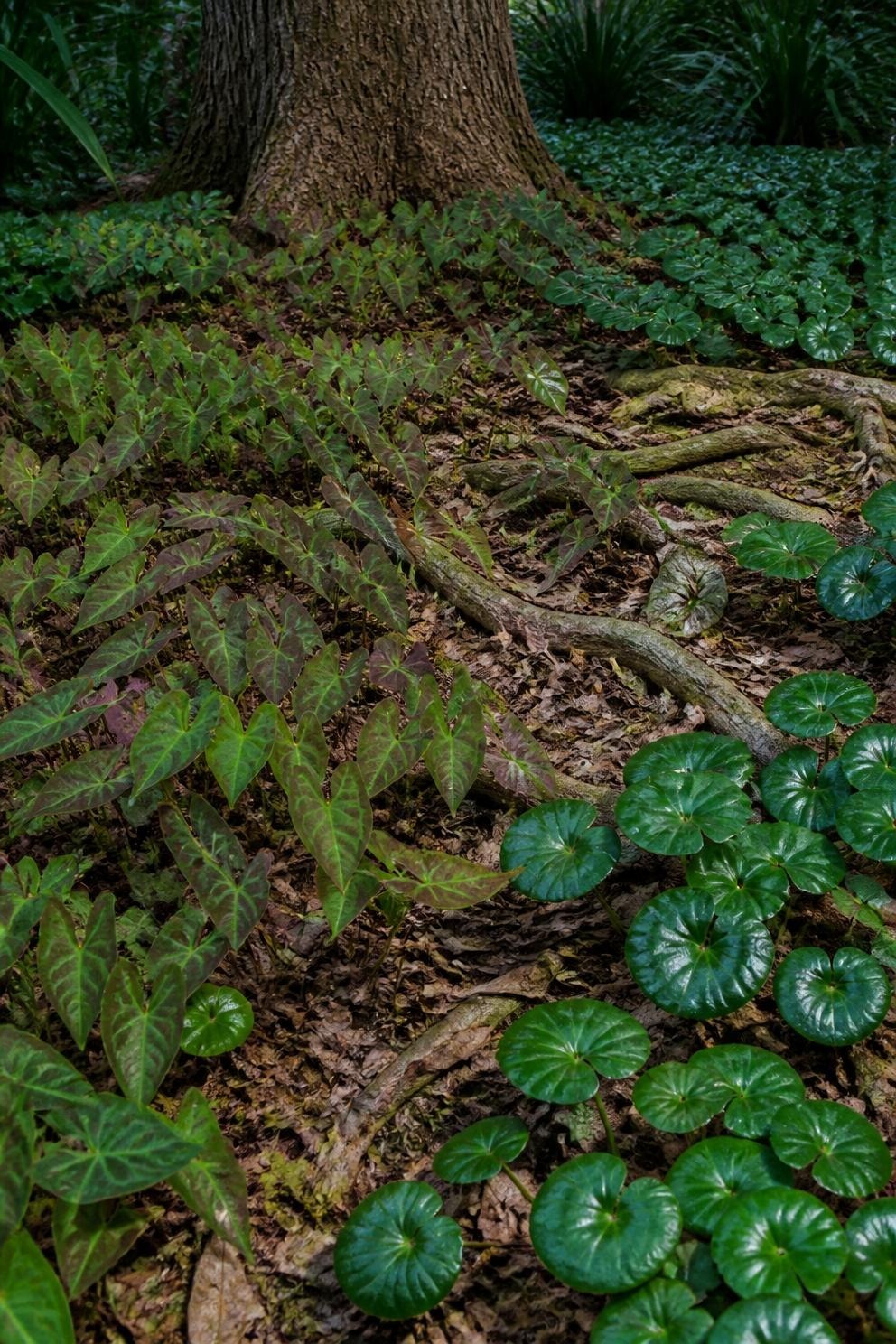
- Wild ginger (Asarum), zones 4 to 8, glossy low groundcover
Deep shade plus dry soil is the hardest combination in gardening. Epimedium and wild ginger are the two that genuinely cope.
Annuals for Shade Containers
If you are filling pots rather than beds, most of the usual shade annuals are eaten. Impatiens in particular are heavily browsed. The full list of what works in a pot is in our guide to shade plants for containers .
The ones deer generally skip:
- Wax begonia and dragon wing begonia. Thick, slightly bitter leaves.
- Caladium. Toxic sap, and the leaf colour does more for a dark corner than a flower would.
- Coleus. Aromatic foliage, and it tolerates more sun than people expect.
This article contains affiliate links. If you buy through them, Etheric Echoes may earn a commission at no extra cost to you. As an Amazon Associate I earn from qualifying purchases. Read the full disclosure.
Repellents, If You Are Going to Use Them
A repellent is a schedule, not a purchase. Every one of them stops working when it rains off, and deer get used to a scent that never changes.
- Liquid Fence deer and rabbit repellent (opens Amazon in a new tab) (4.0 stars, 11,400 reviews). The one most people end up on. It smells genuinely unpleasant for a day after spraying, which is the point.
- I Must Garden deer repellent (opens Amazon in a new tab) (4.3 stars, 2,700 reviews). Mint-based and much more bearable to be around, which matters if the bed is next to a door or a window you open.
- Deer netting, 7 by 100 feet (opens Amazon in a new tab) (4.3 stars, 10,600 reviews). Less pretty and far more effective. Worth it over a new bed for its first season while the plants establish.
Two things that make repellents work better: alternate between two different products so the deer do not habituate, and start before the browsing does rather than after. Spraying a stripped hosta accomplishes nothing.
What I’d Plant First
If the bed is empty and you want it to look right without a second attempt:
- Ferns for the backbone. Christmas fern if it is dry, ostrich fern if it is damp and you have room.
- Hellebore for winter and early spring, at the front where you will see the flowers.
- Brunnera for summer foliage. The silver leaves do the work from June onward.
- Epimedium anywhere it is dry, especially under a tree.
- Japanese forest grass at an edge, where it can spill.
That is a bed with something happening in every season, and nothing on the list is a deer’s first choice. If you want to push the flowering further, our guide to shade perennials that actually flower lays the same bed out by bloom month.
Care for the First Two Seasons
A shade bed asks for less watering than a sunny one, but it is not maintenance-free. Most of the work is in the first two years, while the plants are still settling in.
- Water new plants through their first summer rather than assuming the shade keeps them damp.
- Mulch to hold moisture, and keep the mulch off the crowns so they do not rot.
- Cut last year’s tatty hellebore leaves off in late winter so the flowers are not buried.
- Shear epimedium’s old foliage in late winter, before the new growth pushes through it.
- Plant a fern beside bleeding heart instead of trying to fill the hole it leaves in midsummer.
- Lift and divide crowded brunnera and lungwort in early spring if the middle of the clump starts to die out.
Mistakes That Cost You the Bed
None of these are expensive. They are just the things that make a shade bed fail twice.
- Buying a hosta and hoping. There is no resistant variety. In a deer area a hosta is a summer-long project, not a plant.
- Treating deer resistant as deer proof. It narrows what gets browsed. It does not eliminate it, and a hard winter changes the list.
- Spraying after the browsing starts. A repellent is a schedule. It stops working when it rains off, and deer get used to a scent that never changes.
- Planting astilbe on a dry site. It browns at the edges no matter what else you do for it.
- Expecting the slow plants to fill in by August. Epimedium and Japanese forest grass are worth the wait and they take three seasons.
- Putting hellebore where a chewer can reach it. The whole plant is toxic, which is exactly why the deer leave it alone.
FAQ
Are hostas ever safe?
Only behind a fence, in a container near the house, or under a repellent applied on a real schedule. There is no resistant variety. Thick blue-leaved types are eaten marginally less, not reliably left alone.
Do deer eat ferns?
Very rarely. Ferns are the closest thing to a safe bet in a shade garden, which is why they are the backbone of the planting above.
What is the most deer resistant shade plant?
Ferns and hellebores, for different reasons. Ferns have no appeal at all. Hellebores are toxic and get avoided even in a hard winter.
Will deer resistant plants stay untouched forever?
No. In a severe winter or a drought, deer eat things they normally ignore. The list narrows what gets browsed, it does not eliminate it.
Does anything bloom in deep shade?
Hellebore in late winter, brunnera and lungwort in spring, astilbe in summer if the soil stays moist. In genuinely deep shade, foliage does more work than flowers, which is why caladium and painted fern earn their place.
Is it too late in the year to plant these?
Autumn is a good time for most shade perennials. The soil is still warm, the air is cooler, and roots establish before winter. Avoid planting astilbe into dry autumn soil unless you can keep watering it.
What to Read Next
- Shade plants for containers if the bed is really a set of pots on a shaded patio or a north-facing step.
- Shade perennials that actually flower lays the same bed out by bloom month, for anyone who wants more colour than foliage alone gives.
- A shady backyard corner with moss, ferns, and stone takes the fern half of this list and builds a whole corner around it.
- What to do when container soil keeps drying out too fast covers the watering problem that kills more shaded pots than deer ever do.