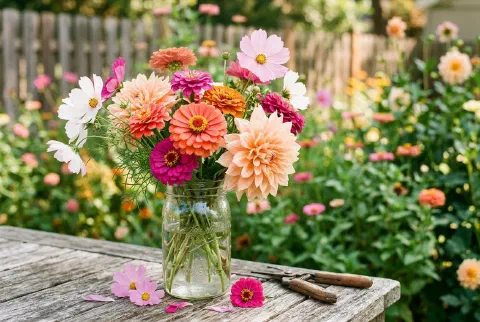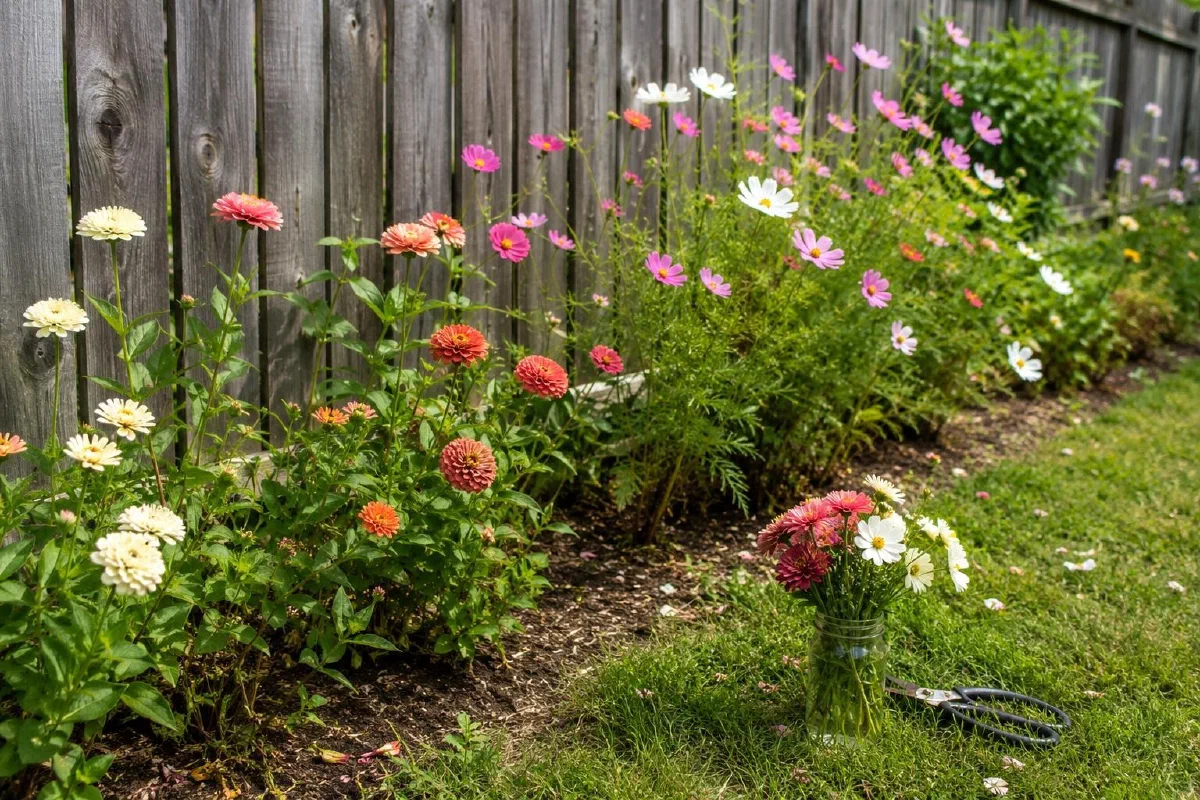
A cut flower bed does not have to be a whole field.
It can be one sunny strip along a fence, a narrow raised bed, or a patch you can reach from both sides. The trick is choosing seeds that keep producing after you cut them, not flowers that give one beautiful moment and then leave you with empty stems.
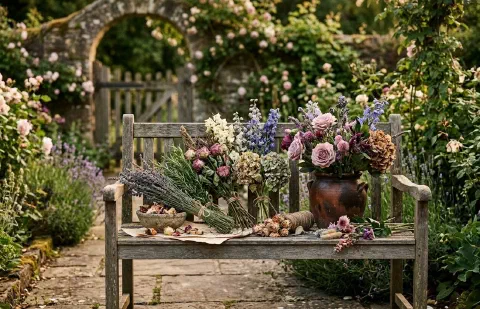
Not every stem in the jar has to start from seed either. Planting freesia bulbs in pots and beds adds scent to the same small bed for the cost of one bag of bulbs.
If the bed is small, every plant has to earn its space.
Zinnias Are the First Pick
Zinnias are hard to beat in a small cutting bed.
They are easy from seed, happy in heat, and generous once they start blooming. The more you cut, the more they branch. They also come in enough colors that you can make the bed feel soft, bright, vintage, or clean depending on the mix.
Do Zinnias Keep Blooming After You Cut Them?
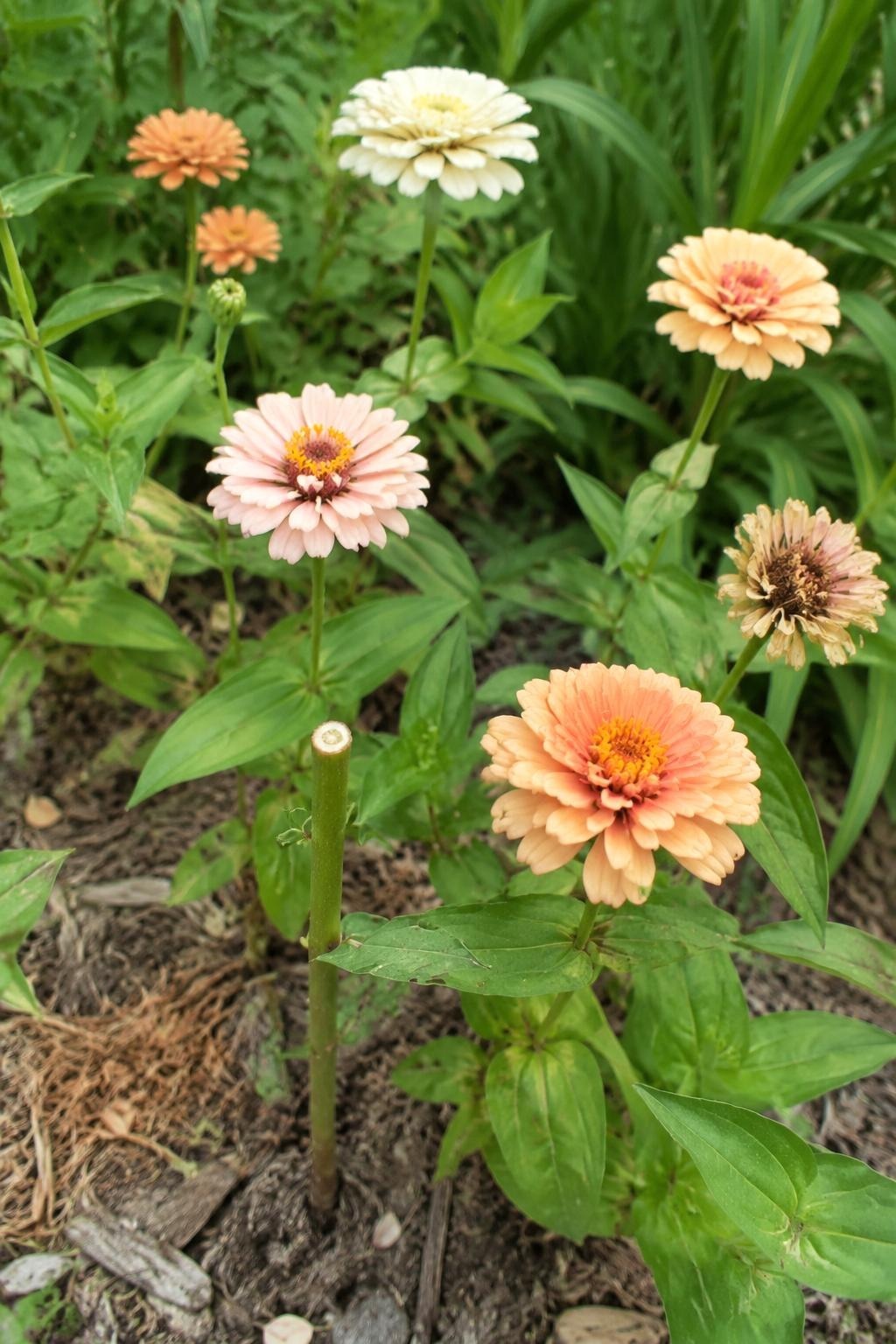
Yes, and cutting is what keeps them going. Clemson Extension’s cutting garden guide puts it plainly: cutting flowers from your garden encourages more blooms , while blooms left on the plant slow production and start forming seed instead. A bouquet is not a withdrawal from the plant so much as a prompt to make more.
For a calmer look, choose a limited color range. Cream, salmon, blush, apricot, lime, and soft coral are easier to use in jars than a packet with every color at once.
Give zinnias full sun and decent spacing. Crowding them can invite mildew later in the season. If you already grow them, the seed-saving routine in saving zinnia seeds is worth learning.
Cosmos Fill the Back Without Feeling Heavy
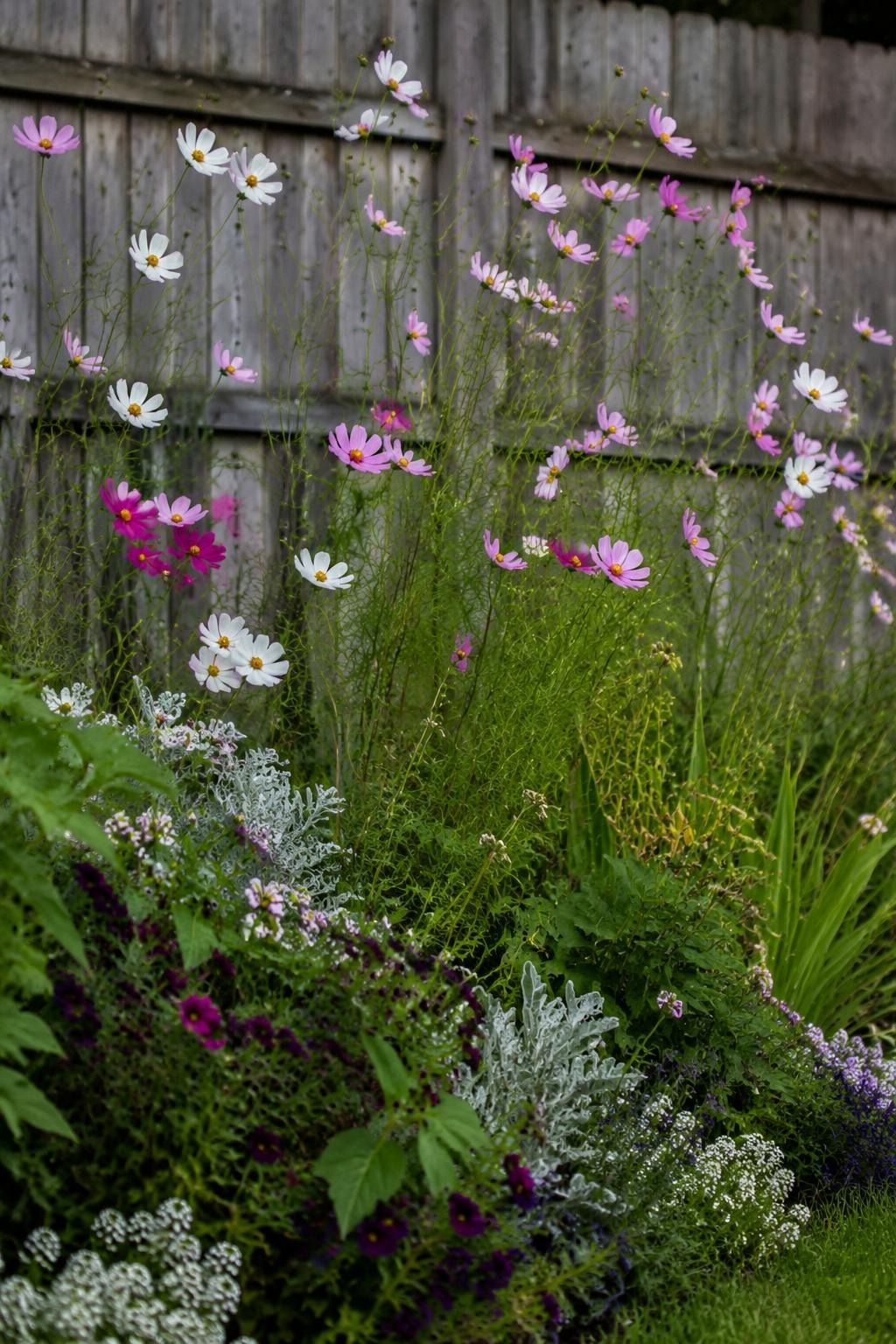
Cosmos give a small bed height and movement.
They are not dense plants. They weave through the space, bloom on long stems, and soften the whole bed without making it feel stuffed. They also handle less-than-perfect soil better than many fussier flowers.
Plant cosmos toward the back or middle of the bed, depending on how tall the variety gets. Cut them when the petals are just opening. They look delicate, but they are useful flowers if you keep picking.
One warning: rich soil can make cosmos leafy and huge. Do not overfeed them.
Calendula Earns Its Place Early and Late
Calendula is one of those flowers that looks simple until you need it.
It is also on Clemson Extension’s list of annuals worth cutting , filed under its older name, pot marigold. It starts easily, blooms in cheerful shades of yellow, gold, orange, and cream, and often keeps going when the weather cools again. The stems are not always as long as zinnias or cosmos, but they are useful in small jars and kitchen table arrangements.
Calendula is also good for bed edges because it stays approachable. Tuck it along the front where you can keep deadheading without stepping into the planting.
Basil Counts as a Cut Flower Plant
Flowering basil belongs in a small cutting bed.
The foliage smells good, the stems fill gaps in jars, and the flowers add a loose herbal shape that keeps arrangements from looking too stiff. Cinnamon basil, lemon basil, and Thai basil are especially useful if you want something that feels a little less expected.
Pinch basil often so it branches. Let some stems flower once the plants are strong. You can still use leaves in the kitchen while stealing stems for little bouquets.
This is a good bridge plant if your garden sits between flowers and food. It also pairs well with the porch herb logic in summer porch herb pots .
Amaranth Adds Drama Without Many Plants
One or two amaranth plants can change a small bed.
Upright types give height. Trailing types spill in a way that looks beautiful in arrangements, but they need enough room. If your bed is tiny, use amaranth sparingly. It is a strong plant, not a filler.
The deep burgundy and green varieties are especially useful when the rest of the bed is full of softer flowers. They make simple jars look more intentional.
Gomphrena Is Small but Steady
Gomphrena is not flashy at first glance, but it produces steadily and dries well. Clemson Extension names globe amaranth among the cutting garden plants whose wiry stems hold up in fresh arrangements or hang to dry.
Quick Tip: Cut a few extra gomphrena stems at the end of the season and hang them upside down in a dark, dry closet. The wiry stems keep their shape when they dry.
The clover-like blooms hold their shape, which makes them useful fresh or dried. Plant them where you can reach them easily because the stems are small and you will pick them often.
Purple, white, blush, and orange varieties all work. White gomphrena is especially easy to tuck into jars when other flowers are doing the louder work.
A Small Bed Formula
For one small sunny bed, try this mix:
- zinnias for main blooms
- cosmos for height and movement
- calendula for early color and edges
- basil for greenery and scent
- gomphrena for small steady stems
- one amaranth plant for depth
That is plenty.
How to Cut a Stem So the Plant Makes More
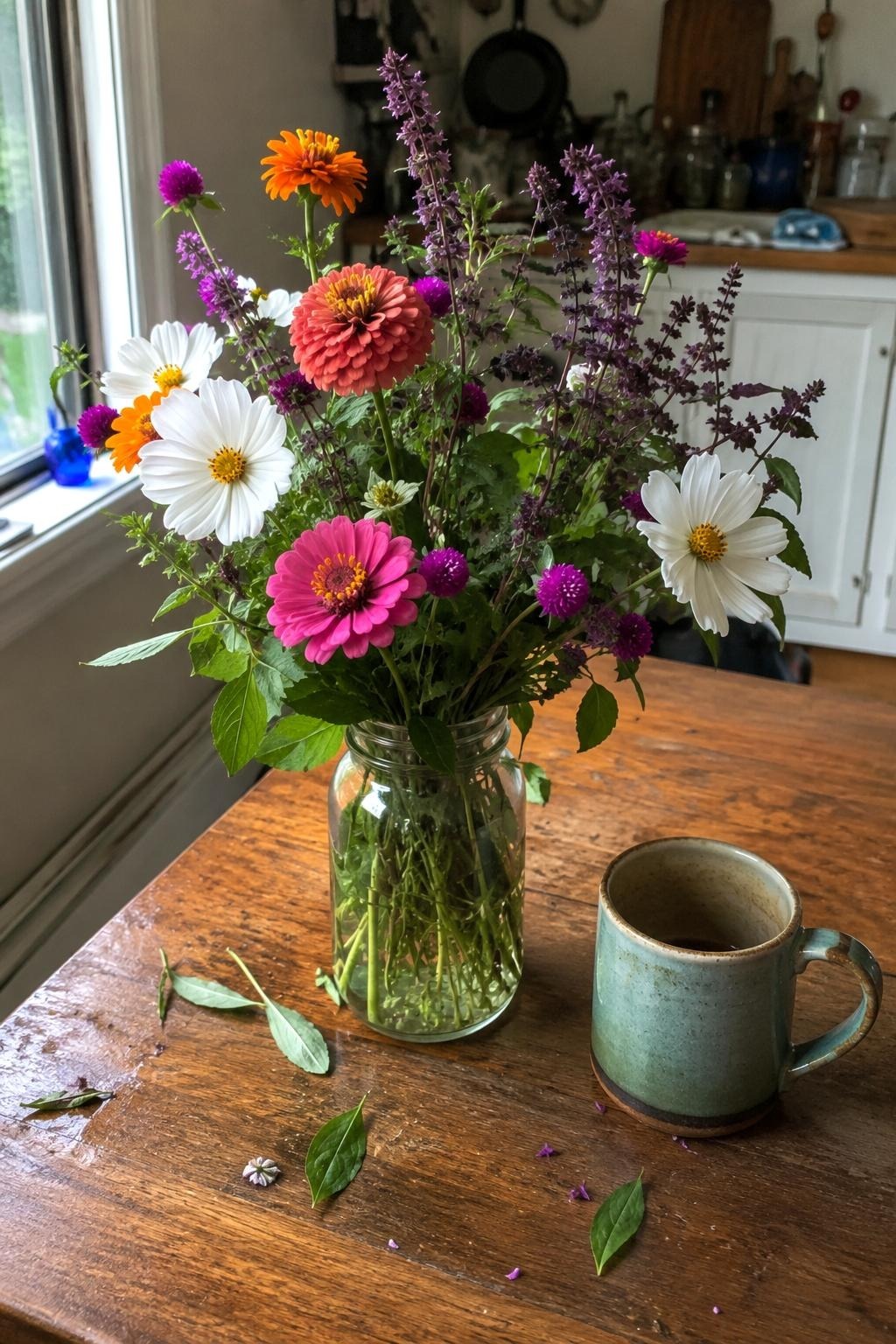
Cut in the morning while the stems are full of water, and cut above a set of leaves rather than down at the base of the plant.
- Take the stem as the flower opens, not after it has been open for days.
- Cut above a leaf node, and leave enough stem to sit well in the jar.
- Strip the lower leaves so nothing sits below the water line.
- Get the stems into water within a few minutes, and recut the ends if they have been sitting in a bucket.
You do not need rows and rows. You need plants that keep giving after you cut.
Mistakes That Crowd a Small Bed
The mistake is adding every pretty packet until the bed becomes a competition. A small cutting bed works better when each plant has a clear job, and most of the ways it goes wrong come from forgetting that.
- Buying a packet for every color. A mix with twenty colors is harder to use in a jar than three shades that agree. Pick a range, not a rainbow.
- Feeding cosmos like a vegetable. Rich soil gives you leaves. Cosmos goes leafy and tall with fewer flowers, so leave it in ordinary ground.
- Crowding the zinnias. Tight spacing in a small bed is what invites mildew later in the season, and mildew in August ends the cutting.
- Letting one amaranth take the bed. It is a strong plant, not a filler. One or two is a feature; five is a hedge.
- Leaving faded blooms on the plant. Seed formation is what slows production, so every flower left sitting there costs you stems later.
Keeping the Bed Producing Into Fall
Cutting is the main job, and it is the one most people stop doing once the jar is full. The rest of the upkeep is small.
- Keep picking, even when there is no vase to fill. A stem left to set seed is a stem the plant will not replace, which is the point Clemson Extension makes about cutting.
- Deadhead the calendula at the front edge, which is the spot you can reach without stepping into the planting. Calendula is the plant most likely to start up again once the nights cool.
- Pinch the basil so it branches, and let only a few stems flower once the plants are strong.
- Pull the annuals once frost finishes them, and save seed from the plants that gave you the most stems.
What to Read Next
- What Happened When I Stopped Buying Cut Flowers is the honest version of what a small cutting bed does and does not replace.
- Flowers to Grow for Drying Winter Arrangements extends the same bed into the months when nothing is blooming.
- Save Zinnia Seeds Next Year keeps the colors you liked without buying the packet again.
- Summer Porch Herb Pots for Easier Dinners is where the basil in this mix earns its place twice, in jars and in the kitchen.