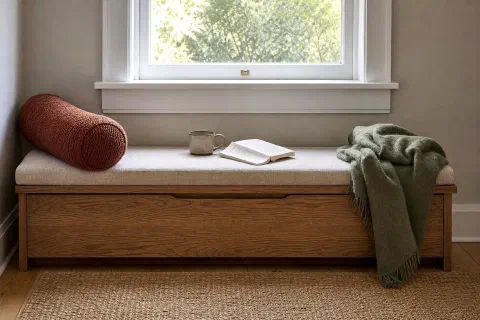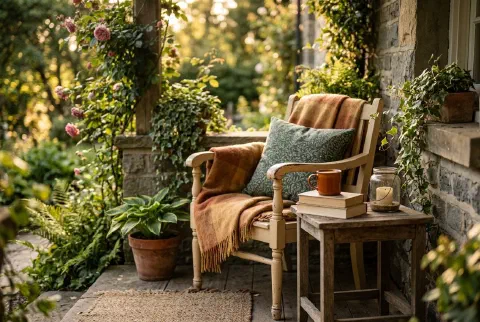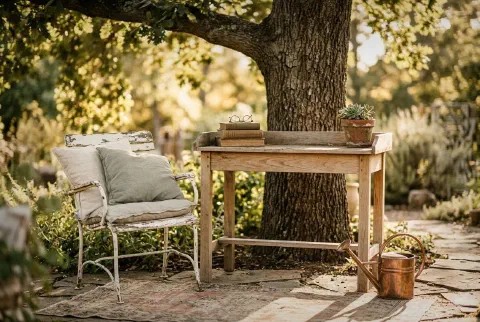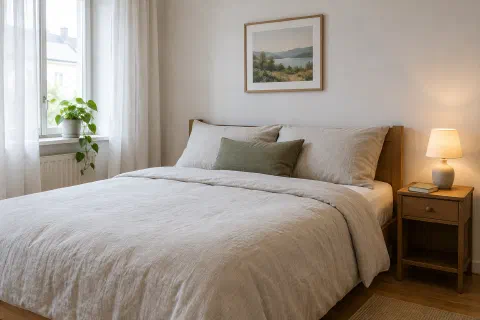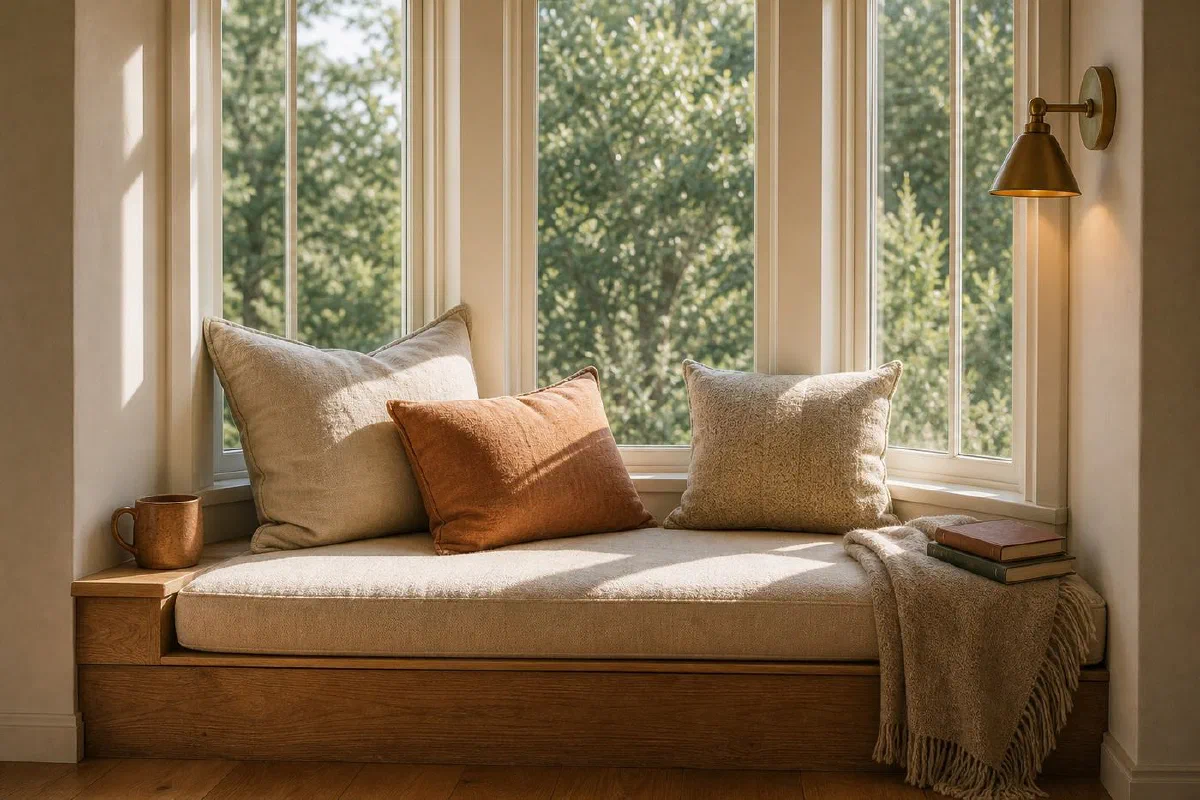
These cozy reading nook ideas for small spaces start with a seat in a place you already want to pause: beside a bedroom window, at the end of a hall, or near the kitchen.
Before buying, sit in the proposed spot for ten minutes. Check the door swing, walking path, nearest outlet, and where daylight lands on the page. If the empty corner feels awkward, pillows will not fix it. If it feels pleasant, a lamp and small surface may be enough.
In a tiny bedroom or hallway, measure the complete setup before you shop. Include the chair or cushion, the lamp base, the table, and the route past them. A reading corner can fit on paper and still fail when a closet door opens or a laundry basket comes through.
How big does a reading nook need to be?
There is no universal minimum, because the door swing and the route past it decide whether a corner works. Tape the footprint of the seat, the lamp base, and the table on the floor, open every nearby door, then walk past with a laundry basket. If you can still get through comfortably, the nook fits, even at the end of a hallway.
Measure the corner before you buy
Use painter’s tape for the furniture footprints, then write the measurements down. You are recording what the room can hold while you sit, reach, stand, and walk past, not chasing a universal minimum.
| Measure | How to take it | What it tells you |
|---|---|---|
| Seat footprint | Measure the widest and deepest points, including legs or a cushion edge | Whether the chair fits without narrowing the route |
| Seat depth and back support | Measure front edge to back cushion; sit with both feet supported | Whether the seat works before you add a pillow |
| Page-light position | Mark where the lamp base can sit and where the shade will be beside or behind your shoulder | Whether the light can reach the page without glare or a cord across the floor |
| Landing surface | Sit normally and measure the distance to the place where a mug, glasses, and current book will rest | Whether the table is useful instead of decorative |
| Door and walking clearance | Tape the full setup, open nearby doors, and walk past with a laundry basket | Whether the nook stays usable during an ordinary evening |
Keep the measurements with the room sketch when a listing hides a chair’s footprint.
Choose the Layout That Fits Your Space
| If you have | Try this layout | Watch for |
|---|---|---|
| An unused shallow closet | Open closet nook | Rental rules and ventilation |
| A bay or deep window | Window bench | Cold glass and direct glare |
| A dead-end hallway | Compact chair corner | Keeping the passage clear |
| Accessible space below stairs | Under-stair tuck | Structure, wiring, and headroom |
| One free bedroom corner | Floor cushion or small chair | Back support and lamp placement |
| A kitchen window edge | Narrow banquette | Cabinet and traffic clearance |
| A sunroom or enclosed porch | Movable floor-pillow nook | Moisture and seasonal storage |
1. Turn a Shallow Closet Into a Closet Nook
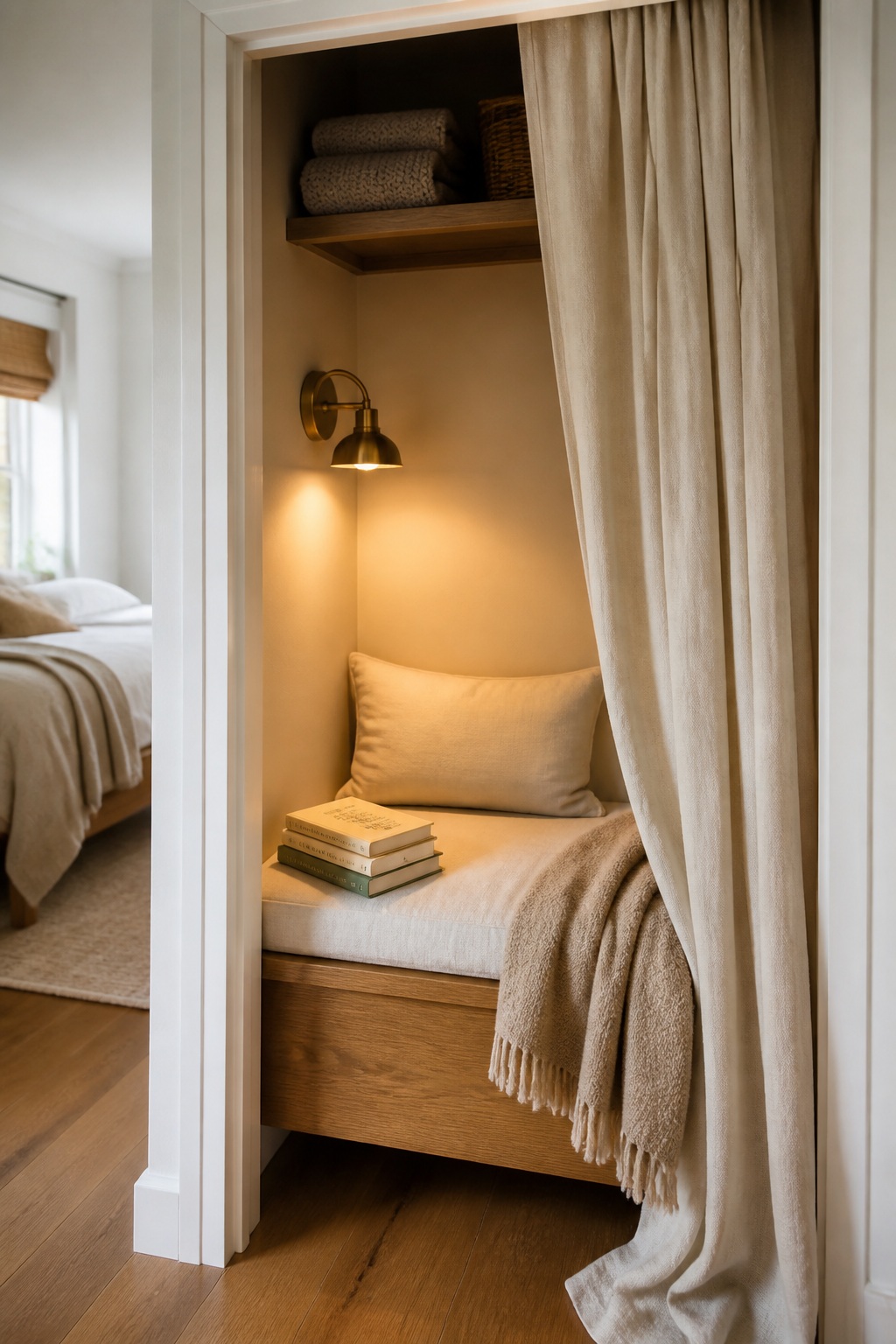
A closet can work when its contents have another honest home. Remove only a lightweight door and rod you are allowed to alter, and keep every hinge and screw in a labeled bag. In a rental, a tension-rod curtain is the safer starting point.
Use a low bench or firm cushion that lets you sit without curling your knees into the opening. Test the actual seat with your feet on the floor and your back supported instead of chasing one standard depth. A plug-in sconce or reading lamp is simpler than new wiring. Keep fabric away from hot bulbs, and do not bury an outlet behind the cushion.
2. Use a Window Bench Without Overbuilding It
A bay window already has the view and the sense of enclosure. Test it with a sturdy freestanding bench before commissioning a built-in. Add a washable seat pad, one back cushion, and a small basket for the book in progress.
Pay attention to comfort at different times of day. Direct sun can create glare on glossy pages, while cold glass can make the seat unpleasant in winter. A lined shade handles both problems without closing the nook off permanently. Place an adjustable task lamp at one end for evening reading instead of relying on the room’s ceiling fixture.
3. Claim a Hallway Corner Without Blocking It
A hallway end can hold a real reading chair if the chair does not narrow the route. Start with painter’s tape on the floor to mark the chair and side-table footprint. Walk past it carrying a laundry basket. Open every nearby door. If the route feels tight, use a smaller upright chair or move the idea elsewhere.
Angle the chair slightly toward the wall, then add a slim floor lamp and a stool no wider than the chair arm. One narrow picture ledge can hold two or three current books without turning the hallway into storage. The result should feel like a pause at the end of the house, not furniture parked in circulation space.
4. Test an Under-Stair Space Without Guessing
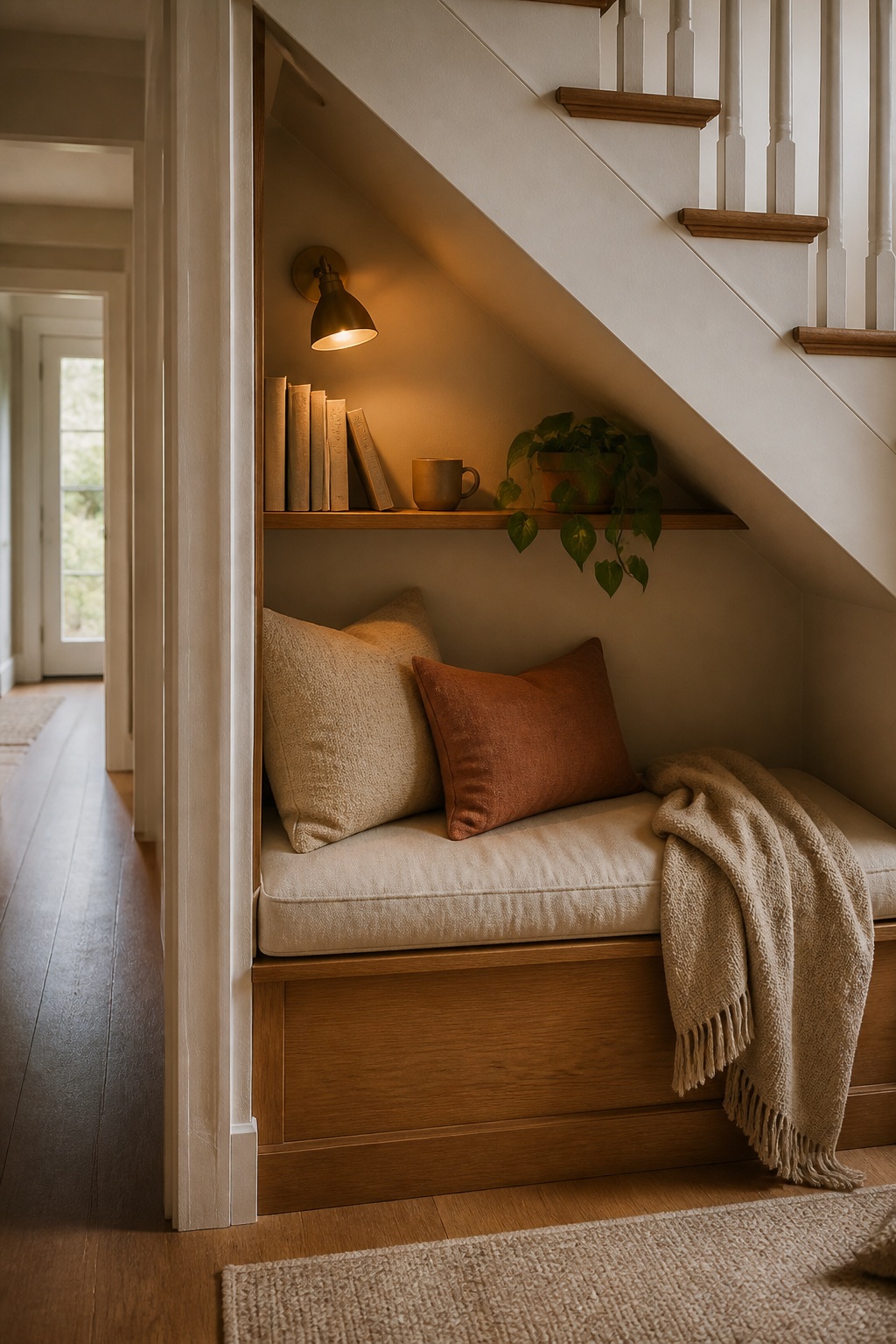
The slope under a staircase can create a snug seat, but this layout needs restraint. Do not cut drywall, move wiring, or alter framing without confirming what is behind the wall and whether local permits or a professional are needed.
Try a low movable bench at the tall end. Sit upright, lean back, and stand without hitting the slope. Add a wall-mounted or clamp-style task light only where the cord and fixture stay clear. If headroom is uncomfortable, use the recess for books and place the chair just outside it.
5. Build the Bedroom Corner in Layers
This is the easiest renter-friendly option because every piece can move. Begin with the chair or floor cushion you already own. Add a folded blanket behind the lower back, then read there for a week before deciding whether you need a better seat.
The lamp should illuminate the page without shining into your eyes. The American Optometric Association recommends task lighting for reading because it can be positioned close to the work while limiting glare. A small stool, crate, or sturdy stack table keeps tea and glasses off the floor. Finish with one plant or framed print only if there is still breathing room.
6. Add a Narrow Kitchen Banquette
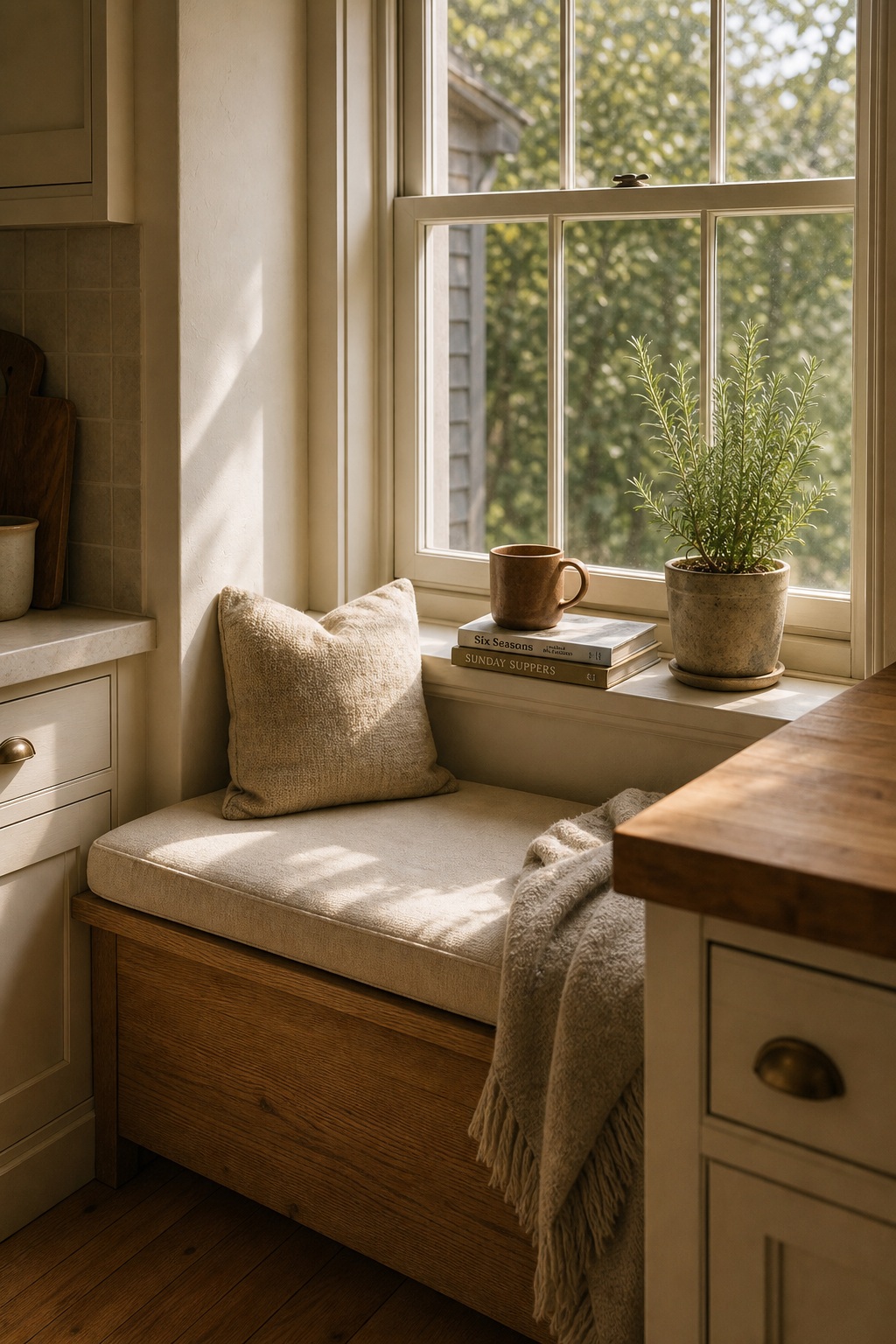
A kitchen nook is for the ten quiet minutes that already exist: coffee before the house wakes, a magazine while soup simmers, or a child reading nearby while dinner is made.
Keep the bench outside cabinet and appliance clearance, and do not interrupt the route between sink, refrigerator, and stove. A washable cushion makes more sense than thick upholstery. Use the windowsill for one mug only if it is deep and stable; otherwise add a narrow ledge away from food preparation. A clip light works only when secured and its cord stays clear of hot or wet areas.
7. Keep a Sunroom Nook Flexible
An enclosed porch or sunroom can become a shared reading spot with two floor cushions, a low table, and a basket of books. Choose pieces that can move indoors when the room becomes damp, cold, or intensely sunny. Washable covers and a lidded book basket make seasonal changes easier.
Daylight may be enough for a weekend afternoon, but add a portable task lamp for darker days. Light appearance is a preference, not a rule: the U.S. Department of Energy lists 2700 K as warm and 3000 K as soft, warm-looking . Pick the warmth you enjoy, then make sure the page is bright enough to read without strain.
Set Up the Nook in This Order
- Mark the footprint. Tape the seat and table outline on the floor, then test doors and walking paths.
- Choose the seat. Read in it for at least ten minutes before adding anything decorative.
- Position the page light. Put adjustable light beside or slightly behind your shoulder and change the angle if the page glares.
- Add one landing surface. Make room for a mug, glasses, and the book you are reading now.
- Live with it for a week. Add a shelf, curtain, plant, or pillow only after the corner proves what it needs.
Keep It Comfortable Instead of Decorative
Reset the nook when you finish reading: return the mug, fold the blanket, and leave only the current book within reach. Vacuum under floor cushions and check window corners for condensation before storing books against the wall.
Protect the route around the nook. A cozy chair is not worth blocking a door, heater, outlet, or nighttime walkway.
Common Reading Nook Mistakes
Most mistakes in a small reading corner come from doing the setup out of order, which is what the five steps above are for. Two are worth calling out on their own.
Ignoring the radiator under the window. The window wall is the most tempting spot and often the worst one. Heat warps books, and the seat is unusable for half the year. A different corner with a lamp beats a perfect window you cannot sit in from November to March.
Making it too styled to use. If the blanket is folded to a photograph and the chair is angled for the room rather than for the page, nobody will sit there. Test the seat for ten minutes before you decorate around it.
More help with this project
- These tall indoor plants for a living room can mark the edge of a reading corner without adding another piece of furniture.
- These window seat ideas for renters and small rooms cover bench-free layouts when a built-in is not an option.
What to Read Next
- Create a fall reading corner for after dinner for warmer light and an evening routine.
- Choose warm-white bulbs for a living room when the room feels harsh at night.
- Add houseplants without making a small room feel cluttered for a botanical layer that leaves floor space.
- Arrange a small apartment living room for renters when the nook shares the main seating area.