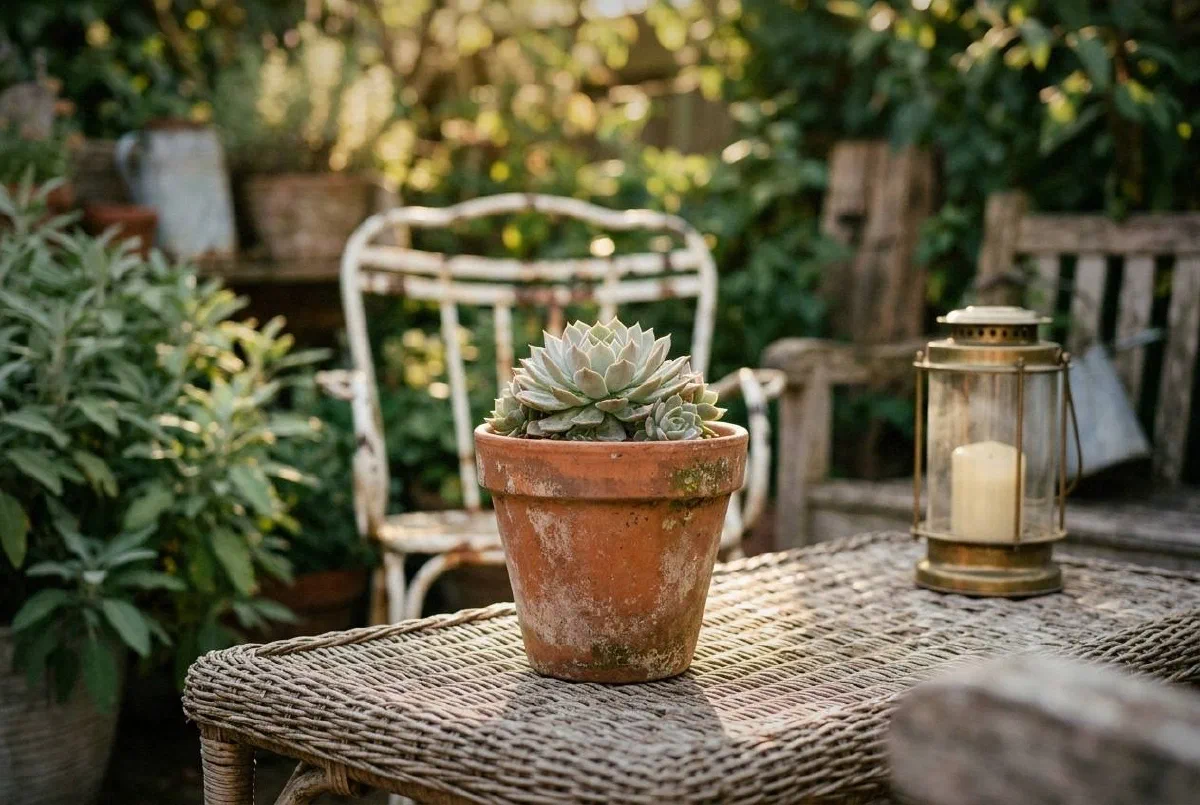
Small patios are not a consolation prize.
A 6 by 8 patio is easier to set up than a 20 by 30 one. The decisions are smaller. The setup costs less. One good chair and one healthy pot can fill the space in a way that a big patio never quite allows.
These seven layouts fit a small patio, deck, balcony, or paved corner. Each one uses two or fewer pieces of furniture and can be set up in an afternoon. No regrading, no new pavers, no pretending the patio is bigger than it is.
1. The Two Chair Bistro Corner
The bistro setup is popular because it solves the main problem fast.
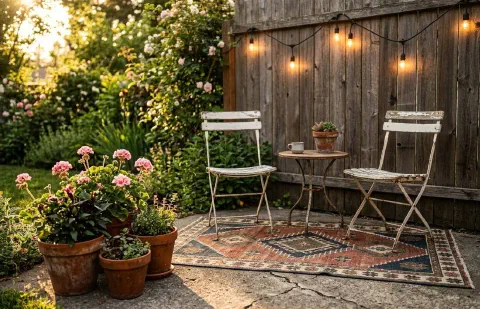
Two metal or wood folding chairs and a 24-inch round table take up about a 4 by 4 footprint. Set them diagonally in one corner of the patio rather than centered. The diagonal opens up the rest of the space and makes the patio feel bigger than it is.
Choose chairs you can fold and bring inside if your zone has hard winters. Wrought iron, painted metal, and weathered teak all hold up if left out, but they last longer with a winter break.
For the table, skip glass tops on small patios. They show every dust speck and reflect harsh sun. A wood top, metal mesh, or stone-look table reads quieter.
Two chairs is usually the limit on a small patio. Three starts to feel crowded. The bistro corner is for coffee, a glass of wine, or a quiet conversation. It does not need to host a crowd.
2. The Single Chair Reading Nook
Sometimes the patio only needs to fit one person.
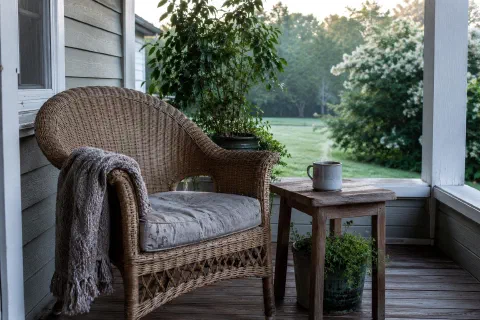
A single Adirondack chair and a 12-inch side table take up about a 3 by 3 footprint. This setup leaves the rest of the patio open for plants, a watering can, a pair of garden boots by the door.
The single-chair nook works best where two walls meet, or where a wall meets a fence. The corner gives the chair a tucked-in feeling without needing a high backrest.
For the side table, anything stable that holds a coffee cup works. A small overturned terracotta pot. A wood stump. A flea-market plant stand. The table does not need to match.
If you have a porch or covered patio, this nook is most useful tucked at the far end, away from the door, facing back toward the yard or street.
3. The Bench and Pots Edge
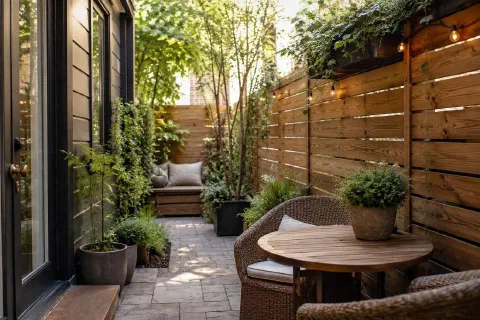
A bench along the back edge of a small patio uses less floor space than chairs and more wall space.
Pick a 4 to 5 foot wood or metal bench. Set it against the back wall, fence, or house wall of the patio. The bench seats two and reads as built-in even if it is not.
Group three to five terracotta pots at one end of the bench. Lavender, rosemary, trailing nasturtium, and one upright plant like a small boxwood or salvia all do well in a clustered pot grouping in Zones 5 through 9.
If a dog or a cat shares the patio, keep the lavender up on the bench rather than on the ground. The ASPCA lists Lavandula angustifolia as toxic to dogs, cats, and horses , with nausea and vomiting as the usual signs.
The pots should vary in height. Two short, two medium, one tall. This is the visual rhythm that keeps a pot grouping from looking like a row of identical containers.
Skip cushions on the bench unless you have a place to store them. A bare bench with a folded throw nearby is more practical than a pile of cushions that go moldy in October.
4. The L Shaped Bench Against a Wall
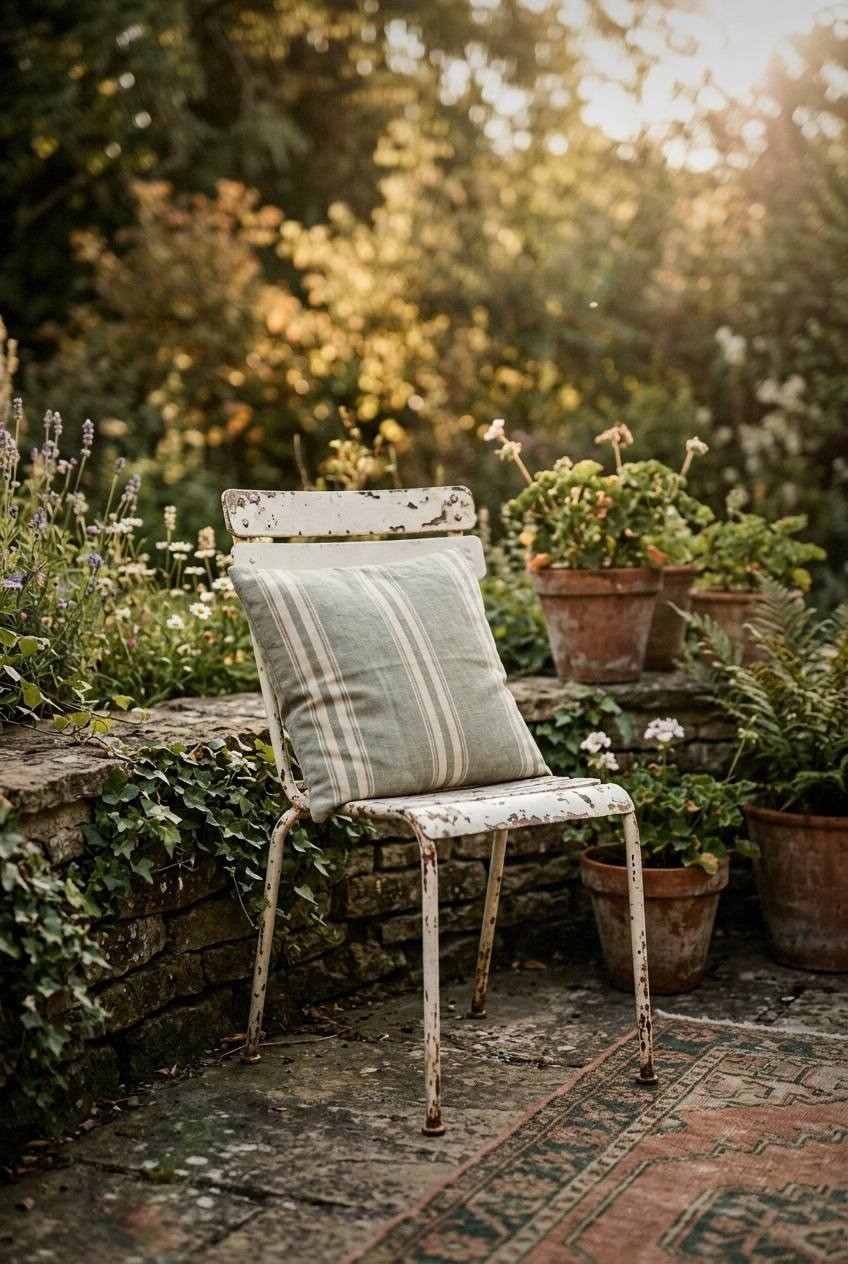
If the patio has two walls meeting in a corner, an L-shaped bench fits the geometry.
A 4-foot bench along one wall and a 3-foot bench along the perpendicular wall, meeting at the corner, give two seats and a footprint that hugs the architecture. This is sometimes called a built-in or banquette layout, but you do not need to actually build it in. Two free-standing benches placed perpendicular work fine.
The L-shape leaves the center of the patio open. Use that center for one large pot, a small bistro table that pulls in when needed, or just air. Empty space on a small patio is not wasted space. It is the part that lets the patio feel calm rather than packed.
Add a small side table at the inside corner where the benches meet. Coffee, a book, or a candle goes there.
5. The Stool and Low Table Floor Sit
Some small patios feel better with low furniture instead of full-height chairs.
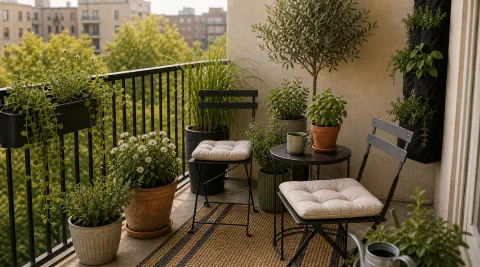
Two short stools, garden cubes, or floor cushions arranged around a 12-inch tray-style table create a different kind of patio. It feels closer to the ground, quieter, and more like a tea spot than a dining spot.
This works particularly well on a balcony or a tiny urban patio under 6 feet square. The lower furniture height makes the small space feel taller and gives the eye more to look at on the surrounding plants and walls.
Keep the cushions inside on a hook or in a basket by the door. Bring them out when you actually use the patio. Floor cushions left outside in any zone go bad fast.
6. The Two Step Pot Stack Against a Fence
Small patios fill up fast with floor pots. The fix is going vertical.
A two-tier wooden or metal plant stand against the fence holds 6 to 10 pots in less than 2 square feet of floor space. Stack the bottom shelf with larger pots: a 12-inch pot of lavender, a small boxwood, an annual flower mix. Use the top shelf for herb-sized pots: basil, parsley, thyme, mint.
Mint is the one to put on the top shelf if a dog grazes in the yard. The ASPCA lists Mentha species as toxic to dogs, cats, and horses , with vomiting and diarrhea after large ingestions.
The two-step stack creates a visual mini garden that reads as a planted bed without taking up bed space. It also makes watering faster, since all the pots are in the same place.
If the patio has a fence or wall, a single hanging pot or wall planter at eye height adds a third level above the stand. The composition reads layered without needing more floor pots.
7. The Corner Floor Cushion Spot
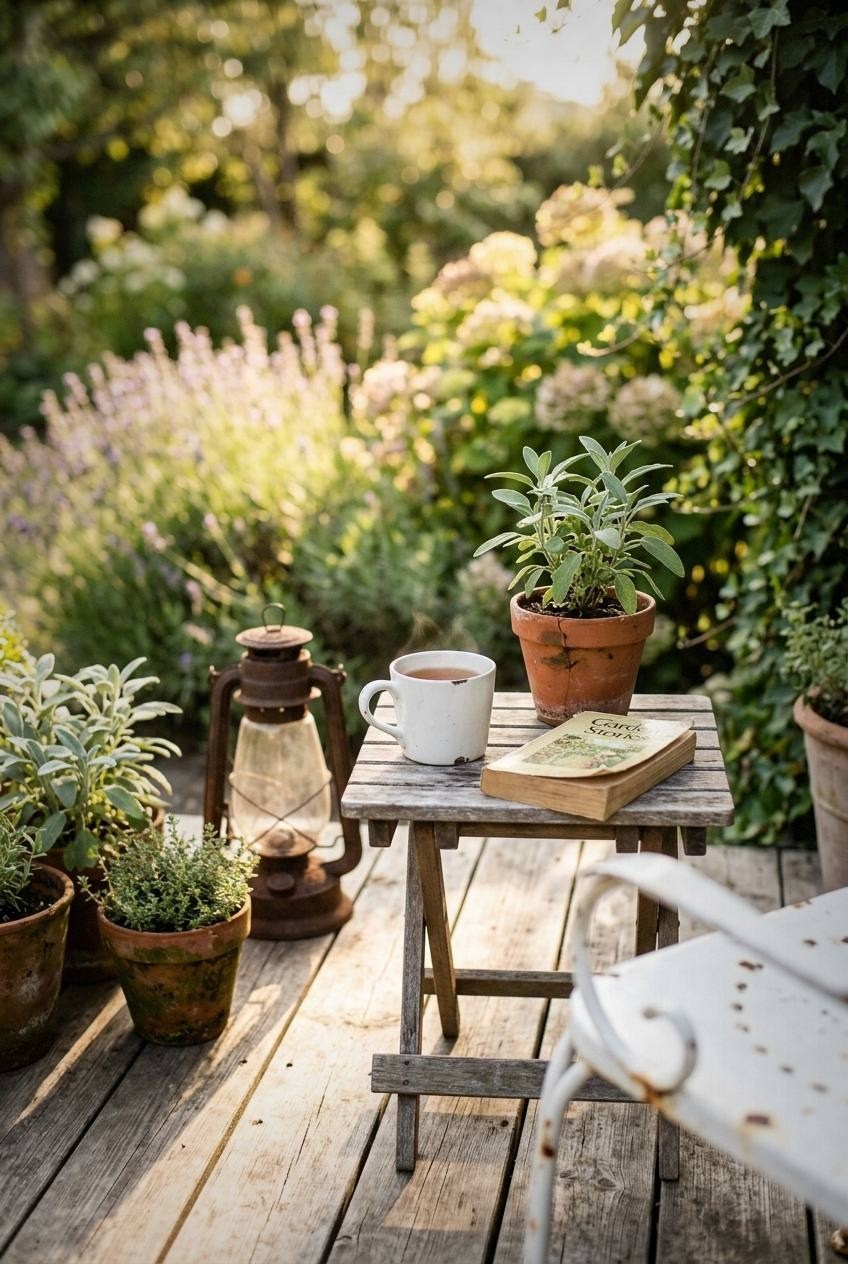
The corner floor cushion spot is the layout that turns a small patio into an evening room.
Pick the corner of the patio that is most shaded or covered. Lay one large outdoor floor cushion or a small low rug. Add a wooden tray that works as a tea-and-candle table. String one set of warm-white string lights overhead.
This setup costs less than the bistro corner and suits a different time of day. The bistro corner is for morning coffee. The floor cushion is for 9pm.
The cushion lives in a basket inside the door. The string lights stay up year-round if rated for outdoor use. The tray is the only piece that lives outside permanently.
This is the layout people tend to notice first. It also gets used more than expected once the lights are up.
Which Layout Fits Your Patio?
Match the layout to the shape of the patio: a square one takes the bistro corner or the floor cushion, a rectangle takes the bench or the L-bench, and a balcony takes the stool-and-low-table or the vertical pot stack. The floor space each one needs and the number of seats it gives you are the two numbers that usually decide it.
| Layout | Floor space it takes | Seats | Best for |
|---|---|---|---|
| Two chair bistro corner | About 4 by 4 feet | 2 | A square patio with one open corner |
| Single chair reading nook | About 3 by 3 feet | 1 | Where two walls meet, or a wall and a fence |
| Bench and pots edge | A 4 to 5 foot wall | 2 | A rectangular patio with a solid back edge |
| L shaped bench | A 4 foot wall and a 3 foot wall meeting at a corner | 2 | A patio with two walls in one corner |
| Stool and low table | Under 6 feet square | 2 | A balcony or a tiny urban patio |
| Two step pot stack | Less than 2 square feet of floor | Plants only | A patio with a fence or wall to stand it against |
| Corner floor cushion spot | One shaded or covered corner | 1 | Evenings, once the light drops |
The small patio that works is the one with two useful pieces, one focal plant, and enough open floor to walk through.
How to Set Up the Layout in One Afternoon
The order saves you from moving the same chair three times.
- Measure the patio and write the number down. Width and depth, in feet. Every layout above is described by the floor space it takes, so the measurement decides the shortlist.
- Pick the corner with the best light, not the best view. The spot that gets sun in the morning is the one that will actually be used at breakfast.
- Set the seating first. Two chairs or one bench, placed diagonally or against a wall. Everything else fits around the seating, never the other way round.
- Leave the walking path clear before you add a single pot. If you have to turn sideways to cross the patio, it’s already full.
- Group the pots in threes or fives and vary the heights. Identical pots in a straight row read as storage; a cluster reads as planting.
- Add the light last, and stand outside with it on. String lights, a lantern, or one small lamp. Look at the patio from inside the door before you decide where the light belongs. If you want more than one fixture, patio lighting ideas for a tiny backyard walks through ten options sized for a small footprint.
- Use it that evening. A layout you haven’t sat in is still a guess.
Keeping the Layout Working Through the Season
A small patio won’t stay set up on its own. Ten minutes a week is the whole maintenance plan.
- Bring the cushions in every night, or give them one dry home. Cushions left out in a small space are what turn a calm corner back into a pile.
- Wipe the chair frames once a month. Metal and teak both last longer with a wipe than with a winter rescue.
- Turn the pots a quarter turn every couple of weeks. Plants lean toward the light, and a pot grouping that leans all one way stops looking deliberate.
- Sweep the walking path, not the whole patio. The path is the part that makes the space feel usable.
- Cut the herbs back rather than letting them bolt. A leggy basil or mint takes over a small tabletop pot faster than anything else on this list.
- Bring the floor cushions and the string lights in before the first storm of the season. Both are the pieces that fail first when they stay out.
What to Read Next
- Small patio ideas when you barely have room if the measurement step tells you the patio is tighter than any layout here.
- Container garden ideas for small patios that still feel full for the pot half of the setup once the seating is settled.
- String light patio ideas without a pergola because the light is what makes a small patio work after dark.
- A weekend patio refresh you can do with what you already own when you want a change without buying anything new.