You can set up a cozy spring porch for $100 to $150 using cold-hardy pansies (Zones 4-9), a secondhand chair or bench, and repurposed planters. Start when nighttime temps stay above 25°F, usually mid-March in Zone 6 or late February in Zone 7. Focus on three elements: seating you can actually use, plants that survive frost, and one layered textile.
What You Need
| Item | Source | Cost |
|---|---|---|
| Cold-hardy pansies (12-18 plants) | Local nursery or big box | $18-$30 |
| Primrose or hellebore (2-3 plants) | Garden center | $12-$20 |
| Secondhand chair or small bench | Facebook Marketplace, estate sale | $15-$40 |
| Outdoor throw pillow or cushion | Thrift store, clearance | $8-$15 |
| Repurposed planters (galvanized buckets, wooden crates) | Salvage yard, your garage | $0-$20 |
| Potting soil (2 cu ft bag) | Hardware store | $8-$12 |
| Outdoor welcome mat | Discount store | $12-$18 |
| String lights (25 ft) | Hardware store clearance | $10-$15 |
| Outdoor-safe paint (if repainting furniture) | Hardware store | $8-$12 |
Total range: $91-$182. Stay under $150 by skipping string lights or using planters you already own.
How to Do It
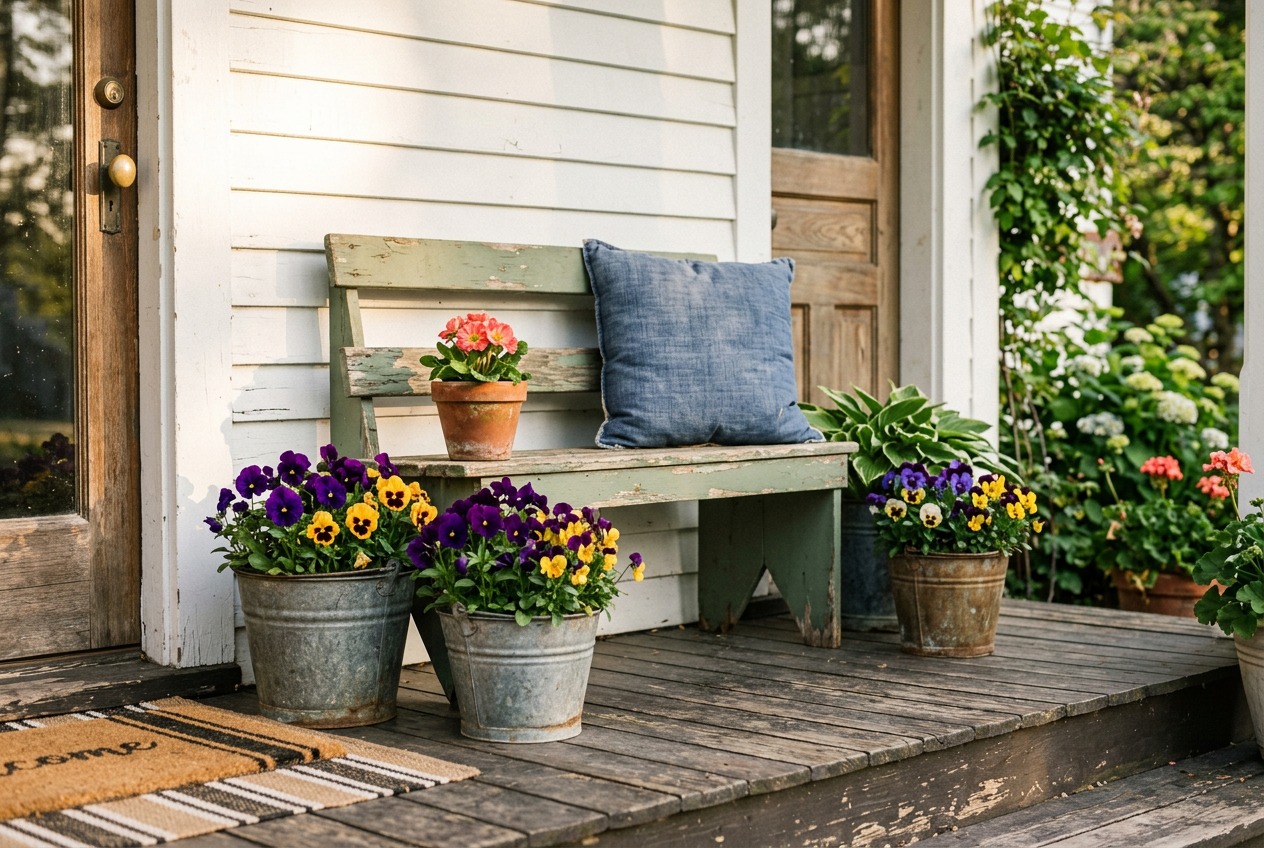
Step 1: Find your seating first. Check Facebook Marketplace for wooden chairs, metal bistro sets, or small benches. I paid $20 for a cedar bench with peeling paint and spent two hours sanding and repainting it with exterior latex. If the piece is solid wood and the joints are tight, cosmetic damage doesn’t matter.
Step 2: Set up your seating area before you plant anything. Place the chair or bench where you’d actually sit in the morning. If your porch gets afternoon sun, angle seating toward the yard so you’re not squinting. Test it for a day before committing to the layout.
Step 3: Choose cold-hardy plants by your zone. Pansies (Viola x wittrockiana) handle frost down to 20°F once established. Primrose (Primula vulgaris) blooms in 40-50°F weather. Hellebores (Helleborus orientalis) survive snow. All three work in Zones 5-8 for March planting.
| Zone | Safe Planting Date | First Blooms |
|---|---|---|
| 5 | Late March to early April | Mid-April |
| 6 | Mid-March | Early April |
| 7 | Late February to early March | Late March |
| 8 | February | Early March |
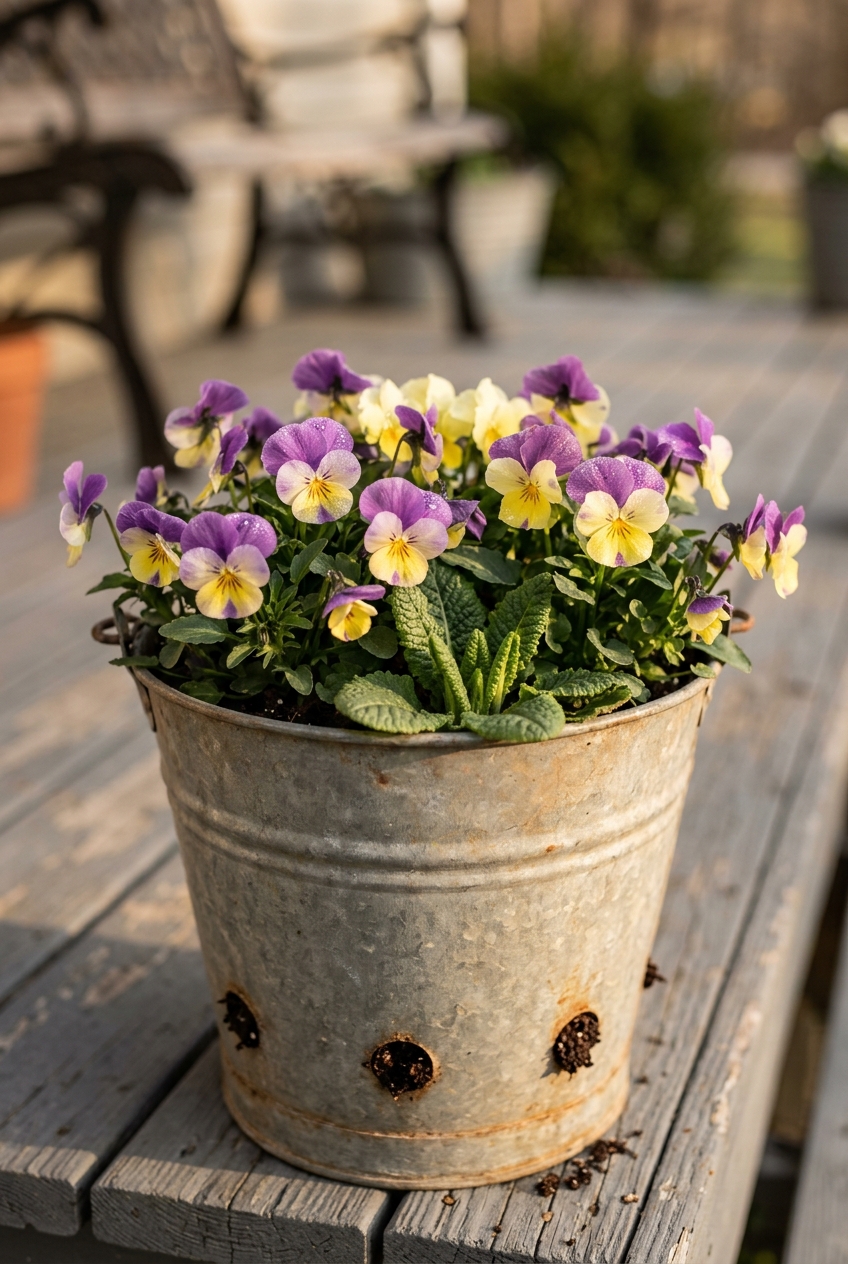
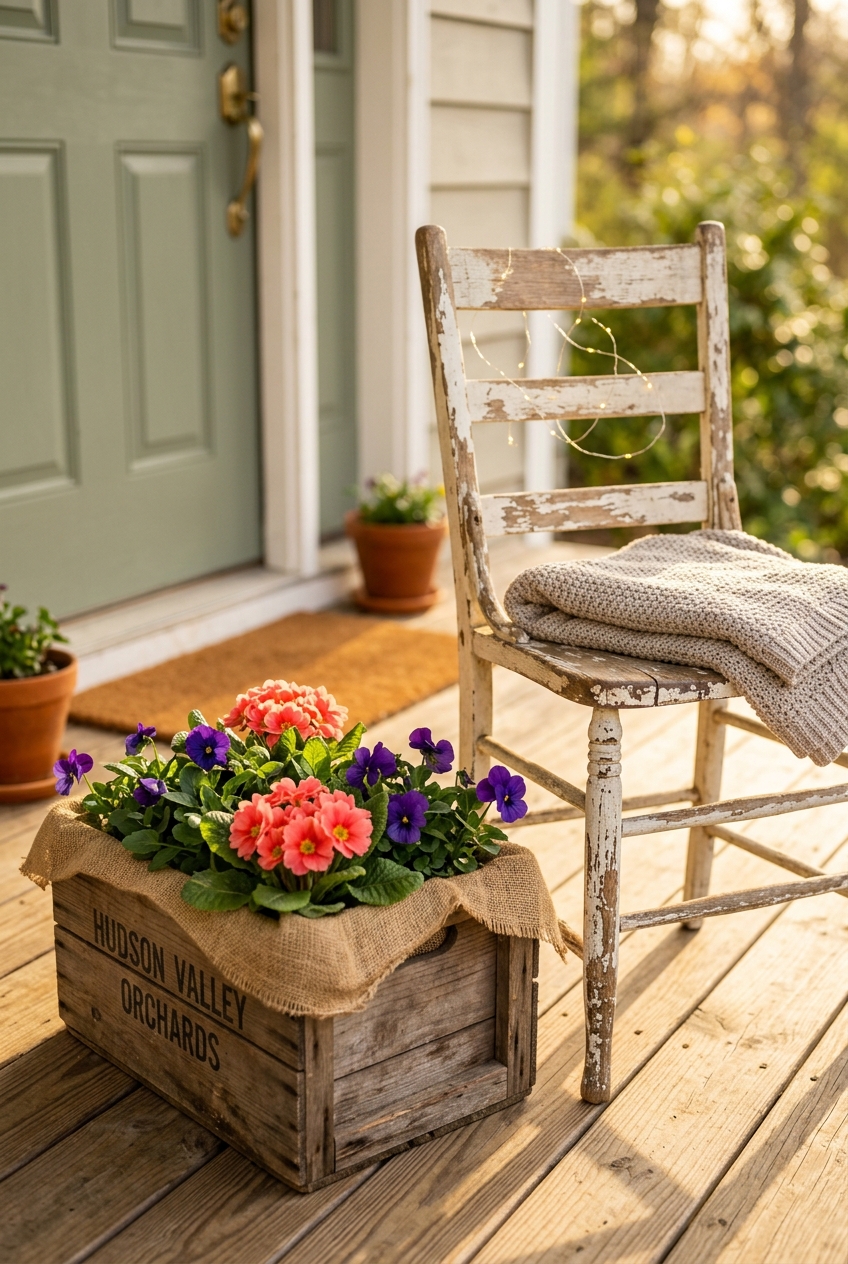
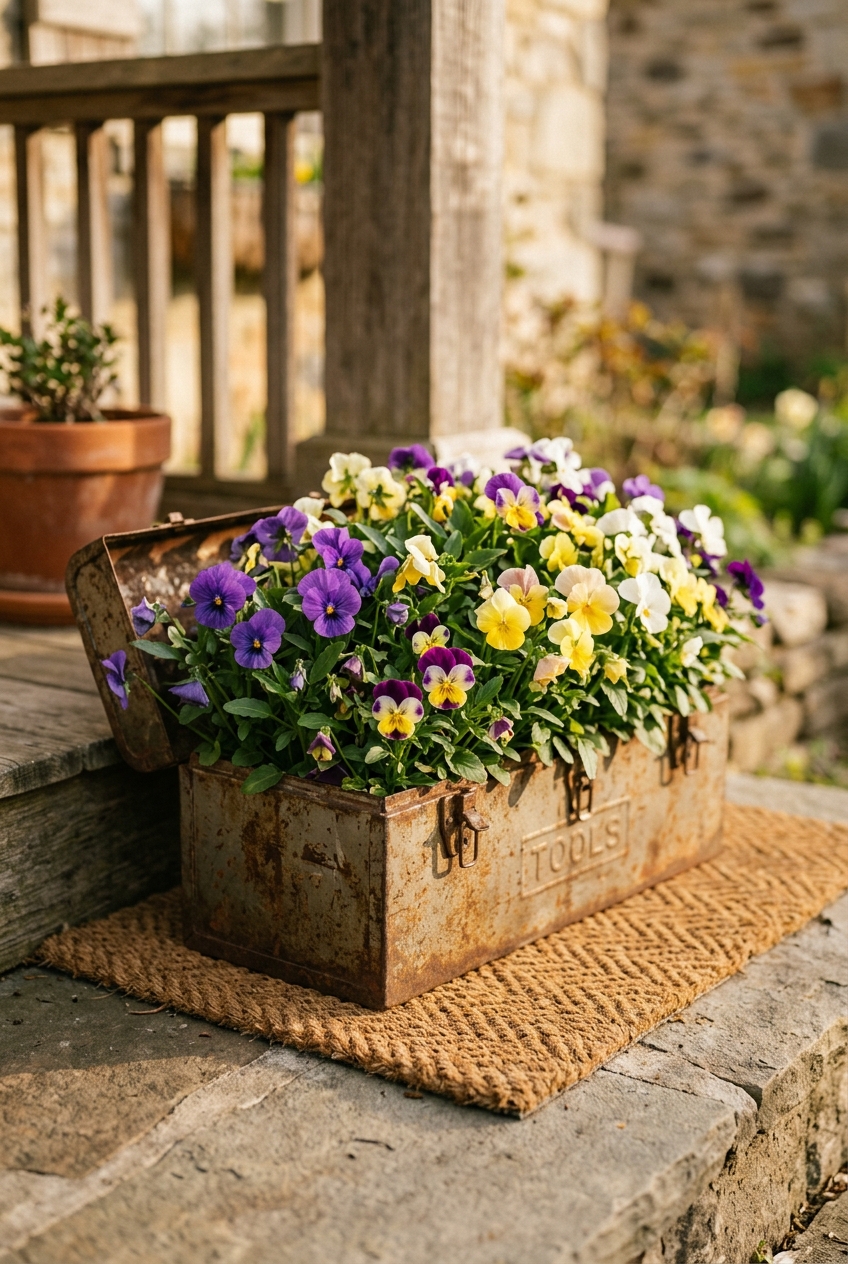
Step 4: Use mismatched planters. Galvanized buckets ($6-$10 at farm supply stores) need drainage holes drilled in the bottom. Wooden crates from the grocery store work if you line them with landscape fabric. I’ve used old metal toolboxes, enamelware bowls, and ceramic mixing bowls from estate sales. Drill three 1/2-inch holes in anything that doesn’t drain naturally.
Quick Tip: Spray-paint mismatched planters the same color (white, sage green, or charcoal) to make them look intentional. One can of Rust-Oleum Universal covers 4-6 small containers.
Step 5: Plant densely. Space pansies 4 inches apart instead of the 6-8 inches the tag suggests. You want full coverage now, not in six weeks. Mix colors or stick to two, never more than three. Purple and yellow read as spring. All white looks clean but shows dirt fast.
Step 6: Add one textile layer. A single outdoor pillow on the chair or a small cotton throw (not acrylic, it looks cheap) makes the space feel finished. Thrift stores sell outdoor pillows for $5-$10 in late winter when they’re clearing old stock.
Step 7: Light it at night if you use the porch after dark. Battery-operated string lights (not solar, they’re dim) cost $10-$15 for a 25-foot strand. Wrap them around a porch column or drape them along the railing. Skip this if you’re tight on budget. It’s decorative, not functional.
What to Watch For
Pansies stop blooming when temps hit 75°F consistently. In Zone 7, that’s late May. In Zone 5, you get until mid-June. Plan to replace them with heat-tolerant plants (petunias, zinnias) or let the space go dormant for summer.
Wooden furniture left outside year-round needs a coat of exterior sealer every 18-24 months. I use Cabot’s Australian Timber Oil ($18 per quart), which covers about 125 square feet. One coat in early spring keeps the wood from splitting.
Galvanized buckets rust at the drainage holes. It’s cosmetic and adds character, but if you hate the look, line the inside bottom with a cut piece of landscape fabric before adding soil.
From my experience: I tried using all-white pansies one year because I thought it would look elegant. They showed every speck of dirt and pollen within a week. Stick with purple, yellow, or deep red if you want low-maintenance color.
Make It Your Own
For shaded porches (north-facing or under deep eaves): Use shade-tolerant primrose and hellebores instead of pansies. Add a potted fern (Athyrium filix-femina, $8-$12) for texture. Shade porches stay cooler, so you can keep early spring plants blooming into late May even in Zone 7.
For narrow porches (less than 4 feet deep): Skip the chair and use a wall-mounted shelf or a narrow plant stand instead. Hang two or three planters at staggered heights. I’ve used an old wooden ladder ($10 at a barn sale) leaned against the wall with pots on each rung.
For covered porches with no rain exposure: Use indoor-outdoor pillows and a small cotton rug instead of a mat. You can get away with less durable textiles if they never get wet. Check clearance sections at HomeGoods or TJ Maxx in late winter for $10-$15 finds.
For Zone 4 or colder: Wait until early April to plant. Use pansies bred for cold tolerance like the Matrix series or Cool Wave series. Both handle temps down to 10°F once hardened off.
Before You Start
Early spring means freeze risk through mid-April in most zones. Pansies and primrose survive frost, but new growth can look wilted after a hard freeze (below 25°F). They bounce back within a day or two. Don’t panic and replace them.
Budget $100-$150 for the initial setup, but plan for $20-$30 in plant replacements when temps warm up in late May or June. Spring porch setups are seasonal, not permanent.
If you’re buying secondhand furniture, check for soft wood (poke it with a screwdriver) and wobbly joints. A chair that rocks when you sit in it isn’t worth $5. Peeling paint and surface rust are fine. Structural damage is not.
FAQ
When is it too early to set up a spring porch in Zone 6?
Mid-March is safe for cold-hardy plants like pansies and primrose. If a hard freeze (below 20°F) is forecast, cover plants with a bedsheet overnight or move containers against the house. I’ve planted pansies in early March in Zone 6 and lost nothing.
Can I use real wood furniture outside year-round?
Cedar, teak, and redwood handle weather without rot for 10-15 years if sealed annually. Pine and oak need more maintenance and will split after 3-5 years outdoors. I’ve kept a cedar bench outside in Zone 6 for eight years with one coat of sealer each spring.
What’s the cheapest way to add color to a porch without plants?
Paint the front door or shutters. A quart of exterior paint costs $12-$18 and covers a standard door with two coats. Bright colors (coral, teal, mustard yellow) read as intentional even if the rest of the porch is bare. I painted my door Sherwin-Williams “Obstinate Orange” for $15 and it’s the first thing people notice.