A cottage garden front yard costs $150 to $500 depending on size and plant choices. The five layouts below use 15 to 30 plants each, prioritize perennials that return yearly, and work in zones 3 through 9. Each plan includes exact plant counts, spacing measurements, and supplier links.
What You Need
All five layouts assume a front yard bed between 80 and 200 square feet. Adjust plant quantities up or down based on your actual footage.
| Item | Cost Range | Notes |
|---|---|---|
| Perennial plugs or 4" pots | $3-8 each | Bare root divisions cost less in spring |
| Annual seeds (optional fill) | $2-4 per packet | Cosmos, sweet alyssum, bachelor buttons |
| Compost (2 cubic yards) | $40-80 | Bulk delivery cheaper than bags |
| Mulch (1 cubic yard) | $30-50 | Shredded hardwood or pine bark |
| Edging (optional) | $20-60 | Steel or stone, not required |
| Hand tools (trowel, fork) | $15-30 | One-time purchase |
Total for Layout 1 (Sunny Corner Cottage): $185 to $310 depending on plant size and compost source.
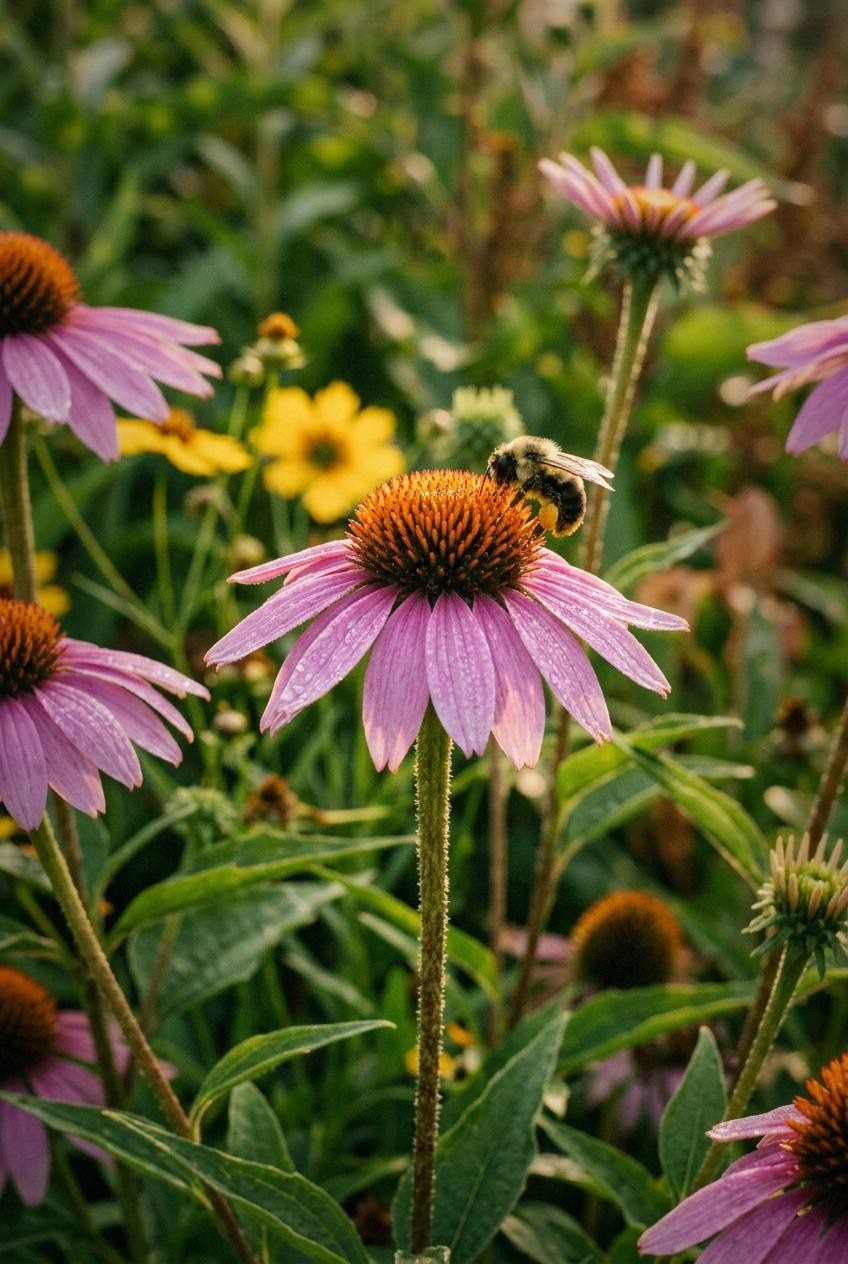
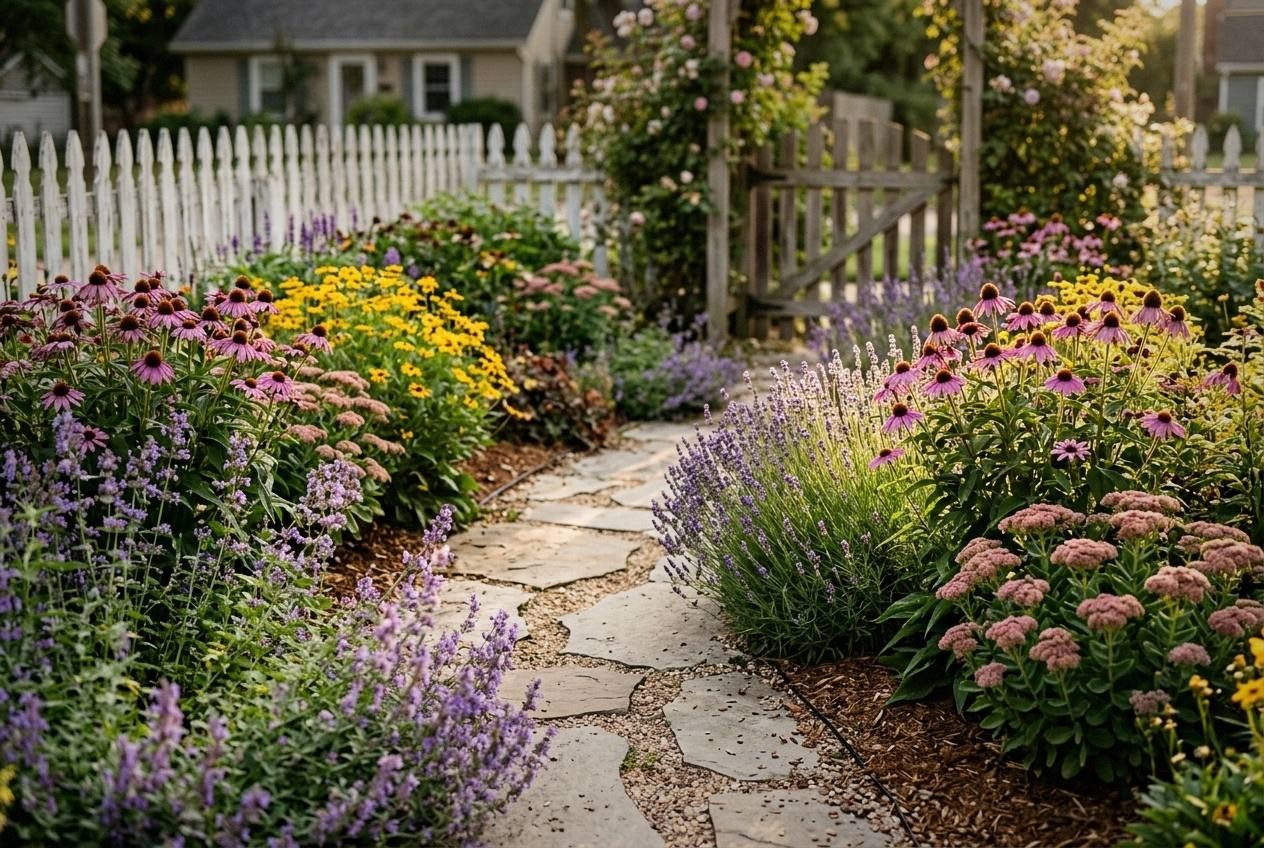
Layout 1: Sunny Corner Cottage (Full Sun, 100 sq ft)
This plan fits a corner lot or side-yard strip with 6+ hours of direct sun. Plant in spring after last frost or early fall (6 weeks before first frost).
| Plant | Quantity | Spacing | Zones | Cost |
|---|---|---|---|---|
| ‘Autumn Joy’ sedum | 5 | 18" apart | 3-9 | $20-35 |
| Purple coneflower (Echinacea purpurea) | 7 | 18" apart | 3-8 | $28-56 |
| ‘Moonbeam’ coreopsis | 9 | 12" apart | 4-9 | $27-54 |
| Lavender (Lavandula angustifolia) | 3 | 24" apart | 5-9 | $12-24 |
| Catmint (Nepeta x faassenii) | 5 | 18" apart | 3-8 | $15-30 |
| Cosmos (annual, from seed) | 1 packet | Scatter in gaps | 3-10 | $3 |
Planting order: Back row gets sedum and coneflower (tallest, 24-36" mature height). Middle row gets coreopsis and catmint. Front edge gets lavender. Scatter cosmos seeds in any bare spots after perennials are in.
Quick Tip: Buy perennials as bare root divisions from local gardeners in April or May. I paid $2 per coneflower division versus $8 for a potted plant at the nursery.
Layout 2: Partial Shade Pathway (4-6 Hours Sun, 120 sq ft)
Works alongside a front walk or under a high-canopy tree. Morning sun is better than afternoon sun for these plants.
| Plant | Quantity | Spacing | Zones | Cost |
|---|---|---|---|---|
| Astilbe (mixed colors) | 6 | 18" apart | 4-9 | $30-48 |
| Hosta ‘Francee’ or ‘Patriot’ | 5 | 24" apart | 3-9 | $20-40 |
| Coral bells (Heuchera) | 8 | 12" apart | 4-9 | $32-64 |
| Bleeding heart (Dicentra spectabilis) | 3 | 24" apart | 3-9 | $15-30 |
| Impatiens (annual, from 6-packs) | 12 | 10" apart | 3-10 | $12-18 |
Total cost: $109 to $200.
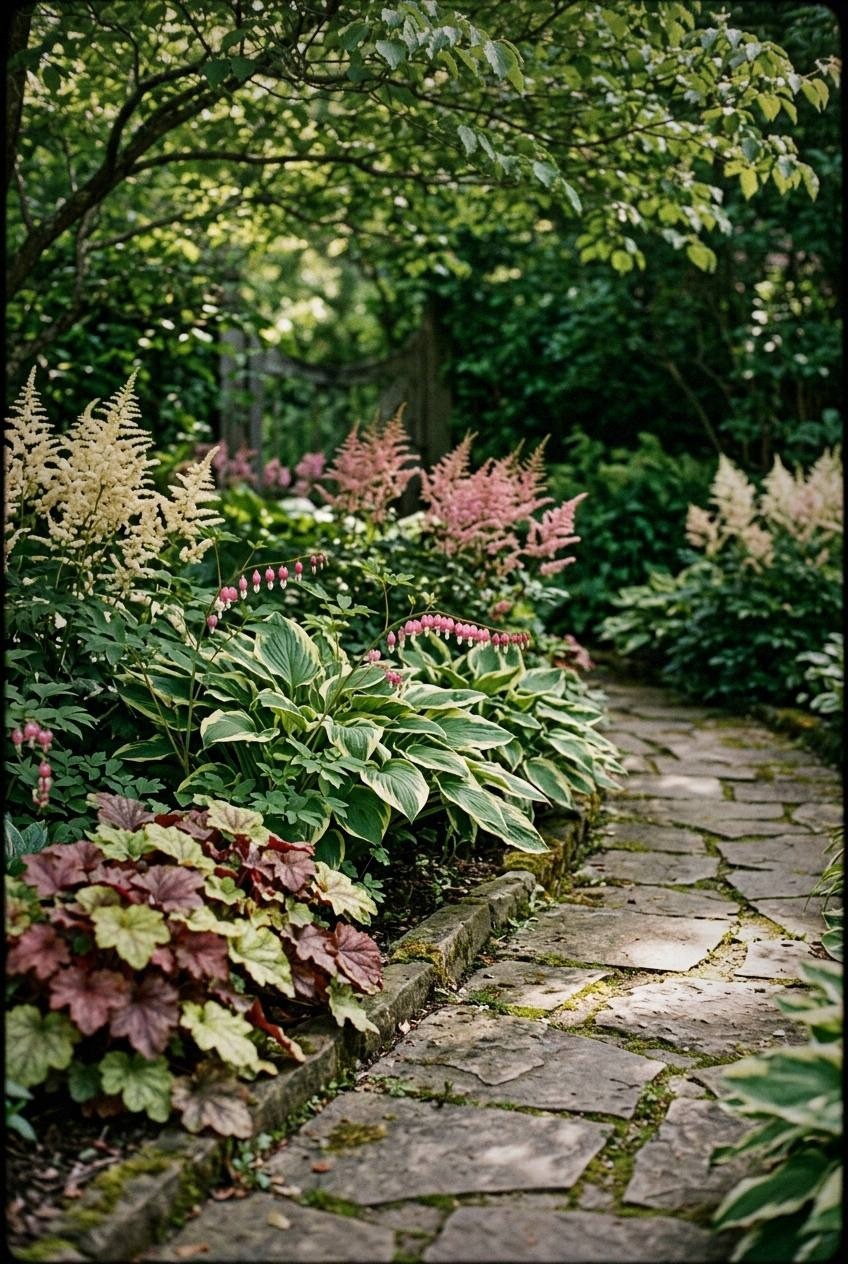
Plant bleeding heart and astilbe toward the back (24-36" height). Hostas fill the middle. Coral bells edge the front. Tuck impatiens between perennials for first-year color while everything fills in.
From my experience: I planted this layout in zone 5b three years ago. The bleeding heart went dormant by July (normal), but the astilbe and coral bells stayed full all season. By year two, I didn’t need the impatiens anymore.
Layout 3: Fragrant Entry Garden (Mixed Sun, 80 sq ft)
Designed for a small bed flanking a front door or porch steps. Focuses on scent and pollinator traffic.
| Plant | Quantity | Spacing | Zones | Cost |
|---|---|---|---|---|
| Dianthus ‘Firewitch’ | 7 | 12" apart | 3-9 | $21-42 |
| Sweet alyssum (annual, from seed) | 2 packets | Scatter densely | 3-10 | $4-6 |
| Salvia nemorosa ‘May Night’ | 5 | 18" apart | 4-8 | $20-40 |
| Dwarf Russian sage | 3 | 24" apart | 5-9 | $12-24 |
| Bee balm (Monarda didyma) | 3 | 18" apart | 4-9 | $12-24 |
Total cost: $69 to $136.
Russian sage and bee balm go in back (30-36" tall). Salvia in the middle row. Dianthus edges the front. Broadcast sweet alyssum seed over the entire bed after planting perennials. It self-seeds and returns each year.
Layout 4: Low-Budget Seed Start (Full Sun, 150 sq ft)
This plan uses mostly annuals from seed to fill a larger space fast. Add perennials over time.
| Plant | Quantity | Spacing | Zones | Cost |
|---|---|---|---|---|
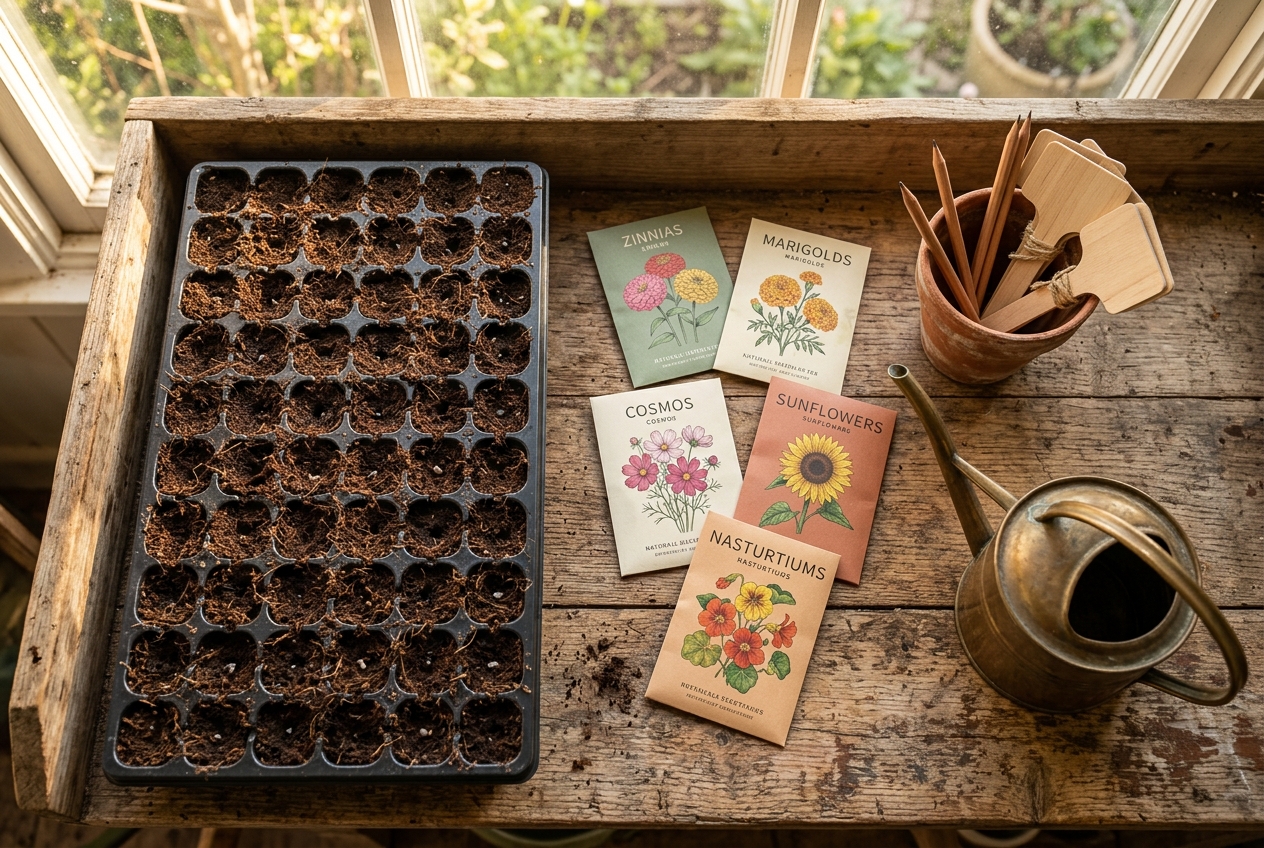
| Zinnia mix (from seed) | 2 packets | Thin to 12" | 3-10 | $4-6 |
| Bachelor buttons (from seed) | 1 packet | Thin to 10" | 3-10 | $2-4 |
| Marigold (from seed) | 1 packet | Thin to 10" | 3-10 | $2-4 |
| Nasturtium (from seed) | 1 packet | Thin to 12" | 3-10 | $3-5 |
| Sunflower ‘Autumn Beauty’ | 1 packet | Thin to 18" | 3-10 | $3-5 |
| Yarrow (Achillea, perennial) | 5 | 18" apart | 3-9 | $15-30 |
Total cost: $29 to $54 (plus compost and mulch).
Direct-sow all seeds after last frost. Plant yarrow plugs at the same time. This layout looks full by July and costs under $60 for plants. Next spring, add perennial divisions from neighbors or buy a few more as budget allows.
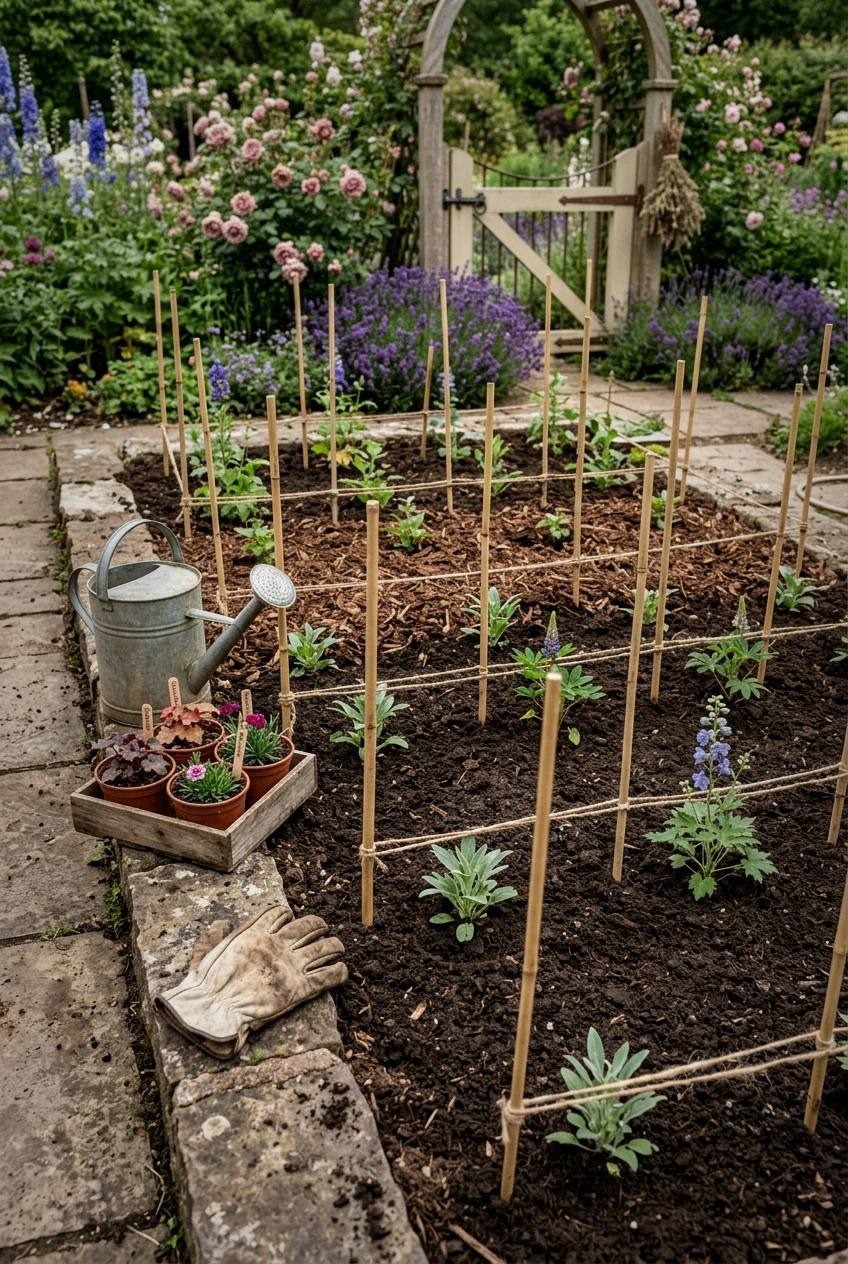
Quick Tip: Nasturtiums reseed aggressively in zones 7-10. In zone 5, I replant them every spring, but they’re worth it for the peppery leaves and constant blooms.
Layout 5: Pollinator Powerhouse (Full Sun, 200 sq ft)
Larger corner or side yard bed. Designed to support bees, butterflies, and hummingbirds from April through October.
| Plant | Quantity | Spacing | Zones | Cost |
|---|---|---|---|---|
| Joe Pye weed (Eutrochium) | 3 | 36" apart | 4-9 | $15-24 |
| Black-eyed Susan (Rudbeckia hirta) | 10 | 18" apart | 3-9 | $30-60 |
| Anise hyssop (Agastache foeniculum) | 8 | 18" apart | 4-9 | $24-48 |
| Blazing star (Liatris spicata) | 7 | 15" apart | 3-9 | $21-42 |
| Milkweed (Asclepias tuberosa) | 5 | 18" apart | 3-9 | $20-40 |
| Phlox paniculata ‘David’ | 6 | 18" apart | 4-8 | $24-48 |
Total cost: $134 to $262.
Joe Pye weed goes in the back (can reach 5-6 feet in rich soil). Middle rows get black-eyed Susan, anise hyssop, and phlox. Front edge gets liatris and milkweed. This mix blooms continuously. Joe Pye and anise hyssop bloom late summer when most gardens fade.
Planting Timeline by Zone
| Zone | Spring Planting Window | Fall Planting Window |
|---|---|---|
| 3-4 | May 1-June 15 | August 1-September 1 |
| 5-6 | April 15-June 1 | August 15-September 15 |
| 7-8 | March 15-May 15 | September 1-October 15 |
| 9-10 | February 15-April 30 | October 1-November 30 |
Fall planting works better for perennials in zones 7-10. They establish roots over winter and bloom stronger the first spring. In zones 3-5, spring planting is safer unless you can get plants in the ground 8 weeks before first frost.
From my experience: I tried fall planting lavender in zone 5 and lost half of them to frost heave. Now I only fall-plant the hardiest stuff (sedum, coneflower, black-eyed Susan) and wait until spring for everything else.
Spacing and Soil Prep
Cottage gardens look best when plants touch by mid-summer. Space perennials 1.5 times their mature width for a full look by year two. For faster coverage, space them at exactly their mature width, but expect to divide them sooner.
Soil prep steps:
- Remove existing grass or weeds. Smother with cardboard and 4 inches of compost for 6 weeks, or strip sod with a flat shovel.
- Spread 2-3 inches of compost over the entire bed. Do not till unless soil is compacted clay.
- Rake level. Plant perennials at the same depth they were growing in their pots.
- Water thoroughly. Mulch with 2 inches of shredded bark, keeping mulch 2 inches away from plant stems.

What to Watch For
Spacing mistakes. New gardeners plant too far apart and the bed looks bare for two years. Cottage gardens should feel slightly crowded. If you can see mulch between plants by August, you spaced too wide.
Watering the first month. Perennials need water every 2-3 days for the first 4 weeks, even if it rains. After that, deep watering once a week is enough. Annuals need more frequent water all season.
Mulch volcanoes. Piling mulch against plant stems causes rot. Leave a 2-inch gap around each stem. I lost three lavender plants to crown rot before I learned this.
Make It Your Own
Zone 3-4 swaps: Replace lavender with Russian sage. Swap catmint for ‘Walker’s Low’ catmint (hardier). Use Echinacea purpurea instead of fancy hybrids.
Zone 9-10 swaps: Replace astilbe with caladiums. Swap hostas for cast iron plant (Aspidistra). Use pentas instead of salvia.
Shade adaptations: Any of these layouts work in partial shade if you swap sun plants for shade-tolerant versions. Replace coneflower with astilbe, coreopsis with coral bells, lavender with ferns.
Smaller budgets: Start with layout 4 (seed-based) and add perennials one season at a time. Five new perennials per year builds a full bed in three years.
Before You Start
Budget range: Expect to spend $150 to $300 for a 100-square-foot bed if you buy perennials as 4-inch pots and use bulk compost. Costs drop to $50 to $100 if you start from seed, accept divisions from neighbors, or buy bare root plants in early spring.
Time commitment: Planting takes 4 to 6 hours for a 100-square-foot bed (one weekend). First-year maintenance is 30 minutes per week (watering, deadheading). By year three, maintenance drops to 15 minutes per week plus spring cleanup.
Best season to start: Spring planting (after last frost) works in all zones. Fall planting (6-8 weeks before first frost) works better in zones 7-10 for perennials.
FAQ
How many plants do I need for a 10x10 front yard bed?
A 100-square-foot bed needs 20 to 30 perennials if you want full coverage by the second year. Space plants 12 to 18 inches apart depending on mature size. Fill gaps with annual seeds the first season.
Can I plant a cottage garden on a slope?
Yes. Slopes drain fast, so choose drought-tolerant plants like sedum, coreopsis, yarrow, and catmint. Mulch heavily to prevent erosion. Avoid plants that need consistent moisture like astilbe or bee balm unless you’re willing to water daily.
What’s the cheapest way to fill a large front yard bed?
Start 80% of the bed from seed using annuals (zinnias, cosmos, sunflowers, bachelor buttons). Add 5 to 10 perennial plugs the first year. Each spring, add 5 more perennials and let the annuals self-seed. By year four, you’ll have a full perennial bed for under $200 total.