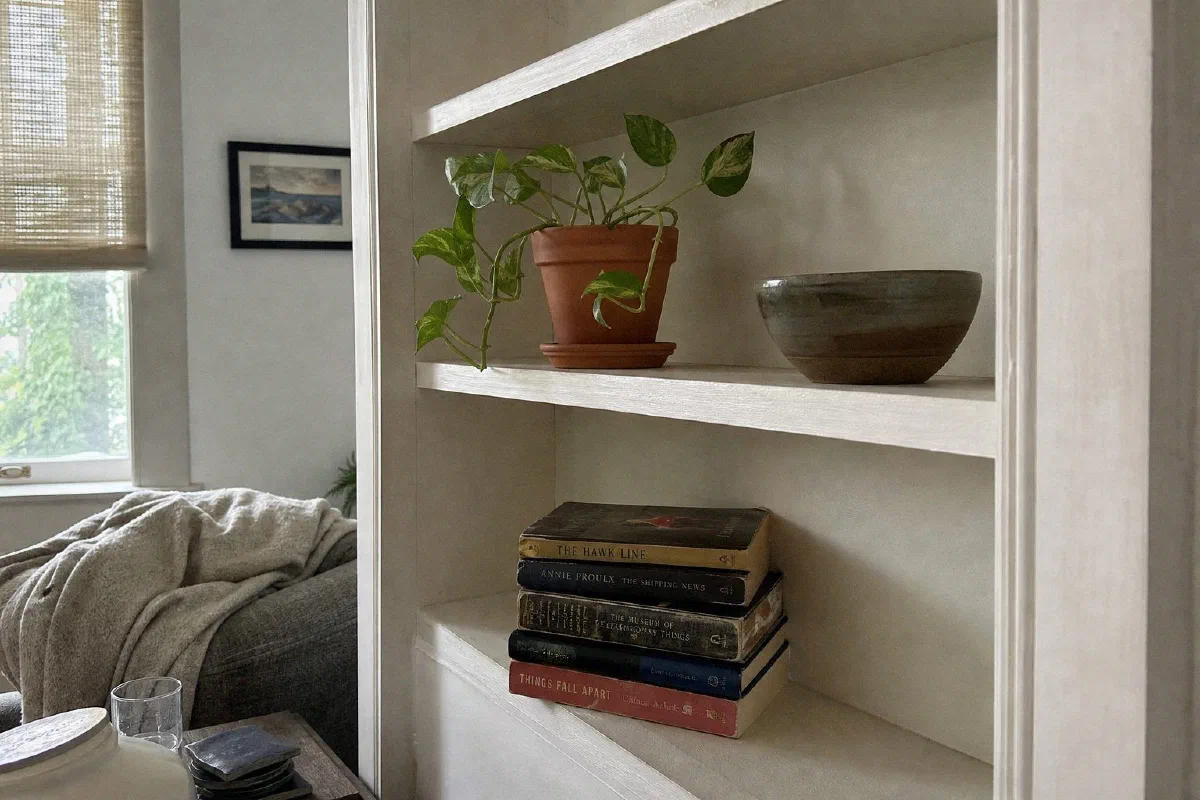
Most corner shelves have a six-week lifespan.
Week one, they look great. Week six, they are holding a phone charger, a half-empty candle, and mail you meant to deal with. I have owned three corner shelves in my current living room and retired two of them for exactly this reason. The third one stuck, and it is not because I am better at decorating. It is because I stopped treating it like extra storage and started treating it like one small, specific job.
Get the depth right before you buy anything
A corner shelf deeper than 10 inches starts eating into walking space in most living rooms. Shallower than 6 inches, and you cannot rest anything wider than a candle without it looking like it is about to fall.
The sweet spot for a real corner, not a floating wall shelf, is 8 to 9 inches deep and mounted so the top surface sits between 60 and 66 inches off the floor. That height clears most doorframes and keeps the shelf out of the way of anyone walking past with a laundry basket.
The depth rule in one line: under 6 inches holds a candle, 8 to 9 inches holds books and a plant, and past 10 inches you are borrowing walking space from the room.
Give the shelf one job, not three
The shelves that survive in my house do exactly one thing: they hold books, or they hold plants, or they hold a small rotating display. Never all three.
The moment a shelf becomes the place for mail, spare batteries, and a coaster nobody uses, it stops being decor and starts being a landing strip. If you already have a landing-strip problem, that is a real need. Give it its own basket on a lower shelf or in a drawer, somewhere out of eye line, and let the corner shelf stay decorative.
Use three objects, not eight
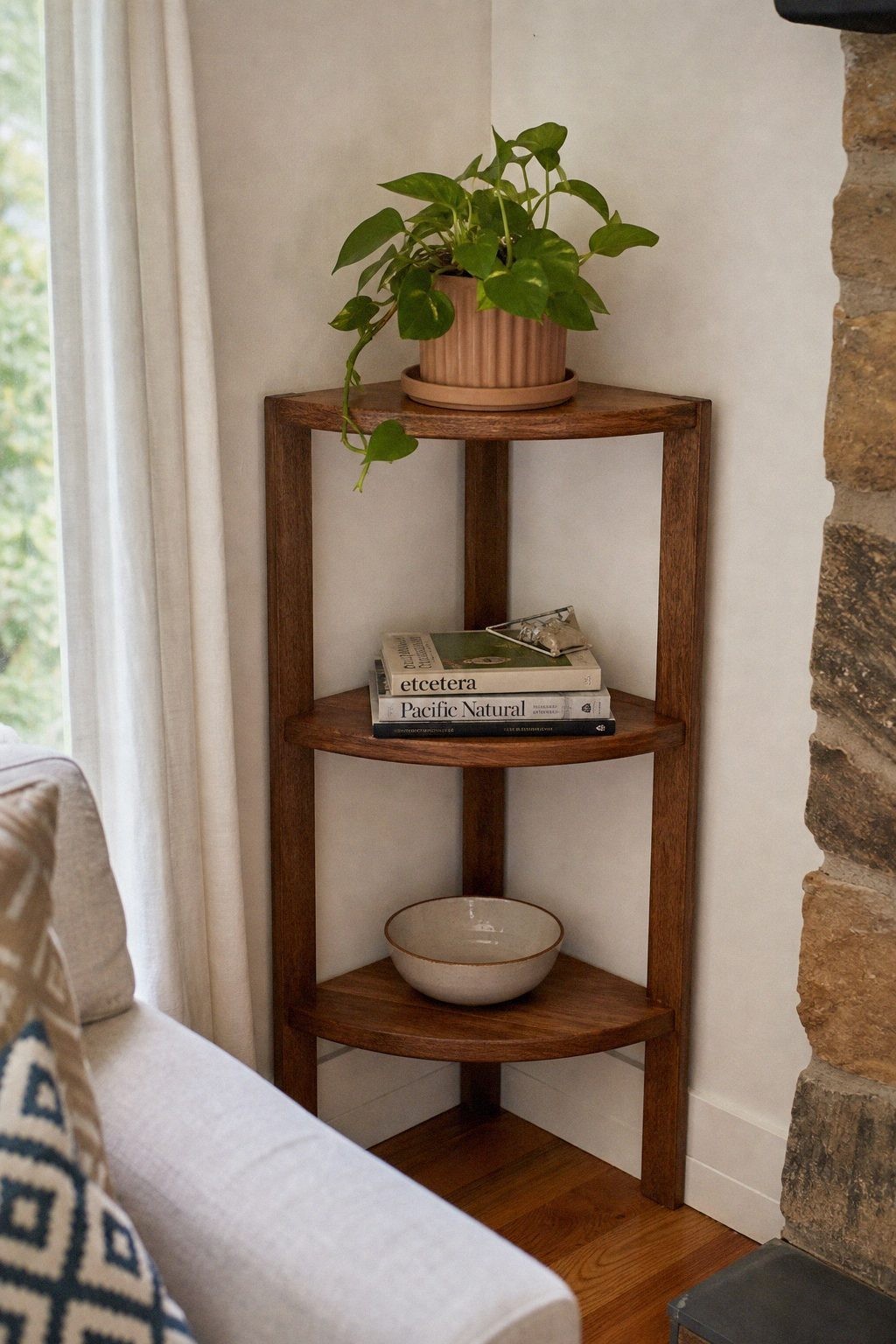
Three objects on a corner shelf almost always looks more finished than eight, because each one gets room to actually read as itself instead of blending into a pile.
A dependable starting combination: one plant with some height, like a 6-inch pothos in a plain terra cotta pot, one low stack of three to five books, and one small ceramic bowl or dish. Put the tallest item toward the back corner where the two walls meet, and let the books and bowl sit slightly forward and off to one side. Centered and symmetrical reads stiff on a shelf this small.
Pothos earns its place for a reason beyond looks. Clemson HGIC’s houseplant guide lists golden pothos among the plants that tolerate low light, which is what a corner away from a window actually offers, and it notes that indoor plants in low light need less fertilizer than plants in brighter spots. The one upkeep job is dust: wipe the leaves with a damp soft cloth rather than a leaf-shine product, because the residue those products leave interferes with air exchange through the leaf.
If the shelf still feels bare with three objects, the shelf itself is probably too big for the spot. A narrower shelf will look intentional. A big shelf with gaps just looks unfinished.
Add one small light source
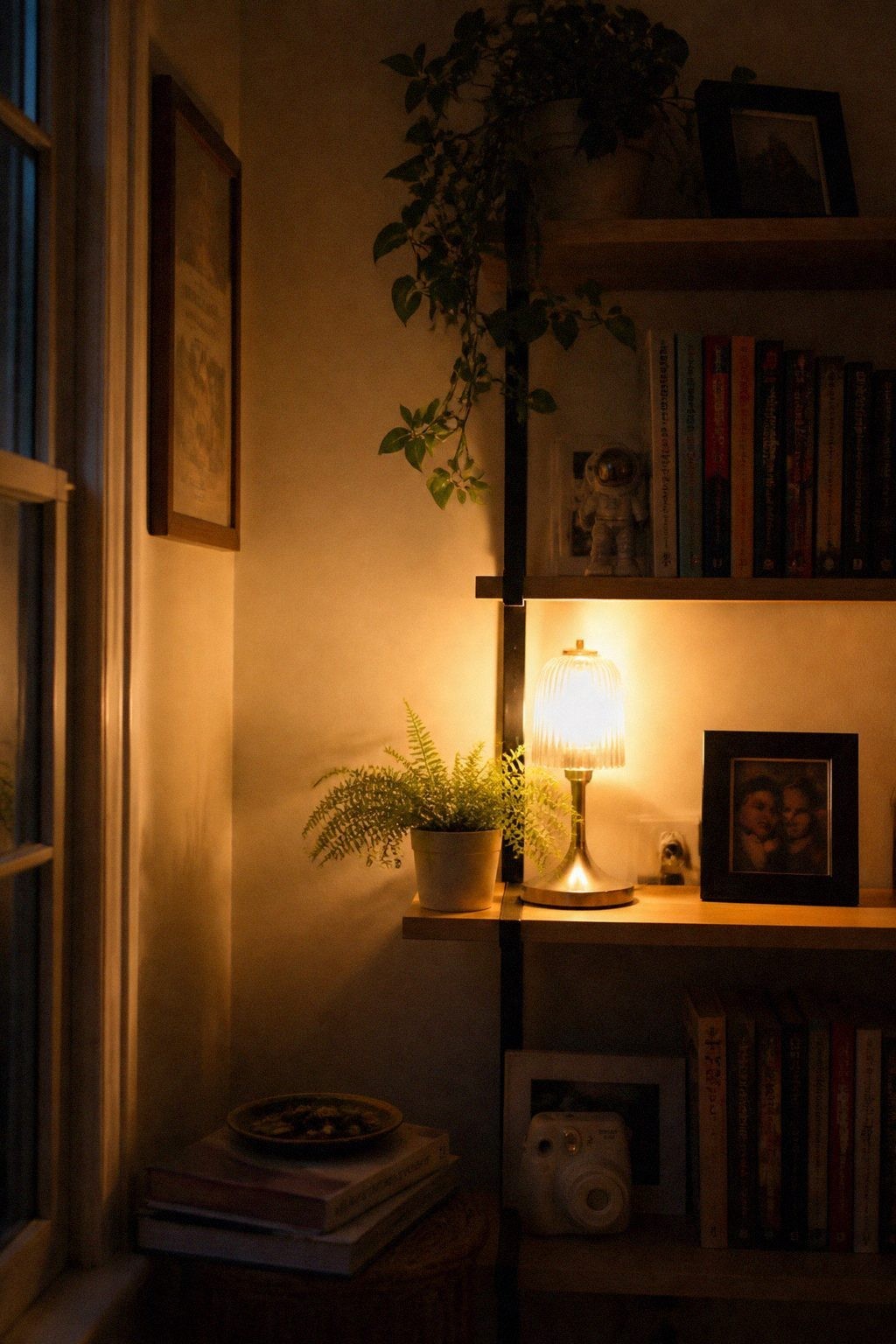
A corner shelf under a single warm bulb looks like it was styled on purpose. The same shelf under nothing but overhead light looks like it was forgotten.
A small plug-in puck light or a battery-powered stick-on LED strip, tucked under the shelf edge or along the back wall, adds enough warm light to make the objects on the shelf cast a small shadow. That shadow is what makes a still shelf feel alive in a photo or in person, especially after the sun goes down.
Warm is the setting to look for, and not only for looks. DOE’s lighting guidance notes that light color runs from a yellowish warm white to a bluish cool white and changes how a room feels, and that an LED puts out the same light as an old incandescent bulb while drawing a fraction of the power. A small accent light you can leave on all evening is the point here.
Some corners should stay empty
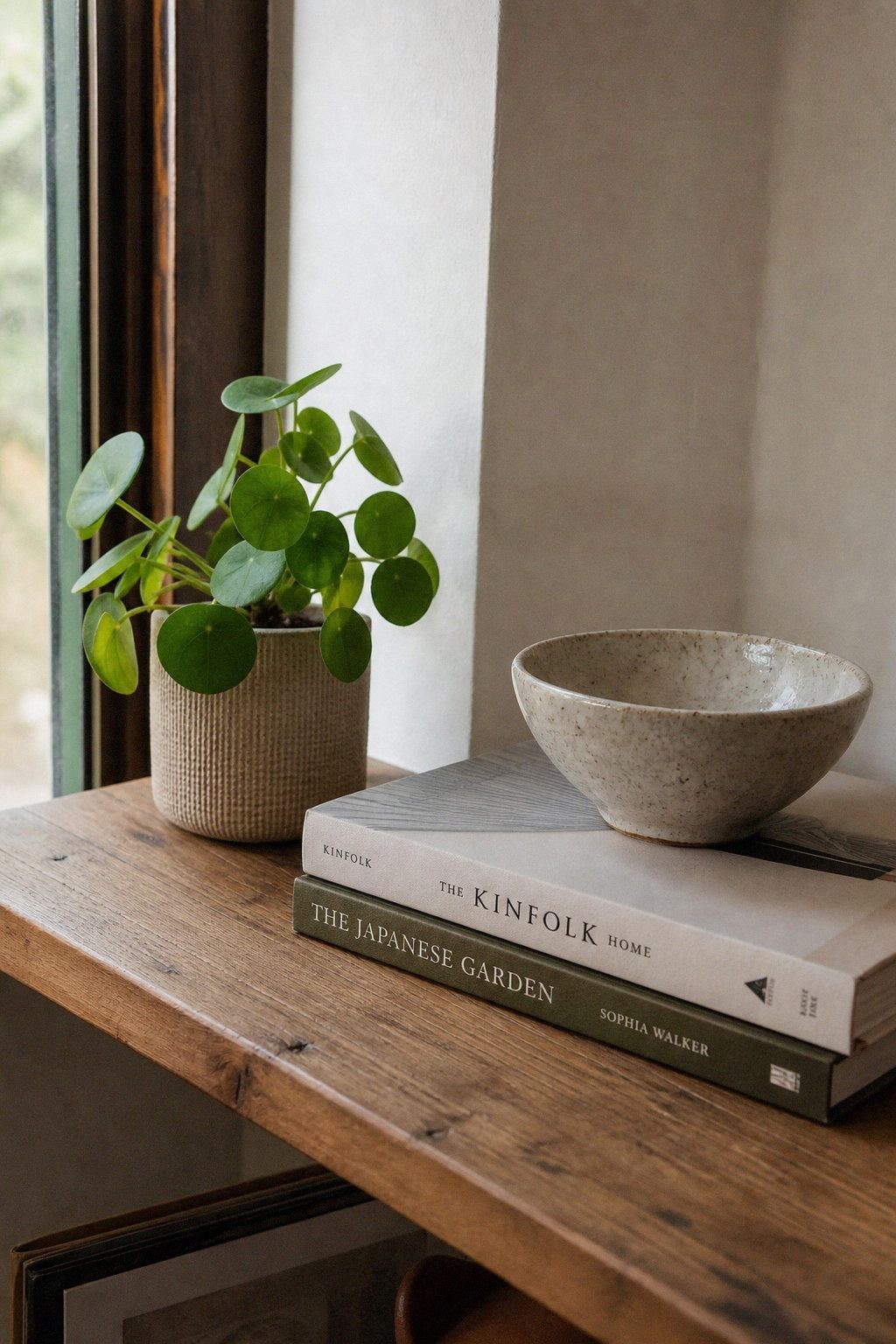
Not every dead corner needs a shelf. A narrow corner behind a door, or one you only see from an angle while walking through, usually looks better left alone or filled with something tall and simple, like a single floor plant, than with a shelf you will feel obligated to fill.
If you have moved something onto a shelf, taken it back off, and moved it back three times, that is a sign the corner wants space, not more objects.
How to place the three objects
If you want a starting point that works in most living rooms, build it in this order:
- Back corner, tallest spot: one plant with height.
- Middle: a low stack of three to five books.
- Front, slightly off to one side: one small bowl, dish, or candle.
Leave visible wood or shelf surface between each object. That gap is doing as much work as anything you put on the shelf.
What to Read Next
- Cozy Reading Nook Layouts for Small Spaces works out the chair, the light, and the reachable surface before you buy anything.
- Target Pieces for a Quiet Reading Corner is a short list of what to look for in the lamp you put beside a chair.
- Window Seat Ideas covers the built-in version of the same problem if your corner already has a bench.
- Living Room Plant Ideas for Empty Corners is the answer when the corner wants one tall plant instead of a shelf.
- Narrow Plant Stands for Apartment Corners keeps a small footprint when the floor space is the tight part.