You can grow 40+ pounds of vegetables in containers for $65-$75, using five 5-gallon buckets, three 18-inch pots, and eight linear feet of railing planters. Each layout below fits a standard 8x10 foot patio and produces from May through October in zones 5-8.
What You Need
| Item | Quantity | Cost | Source |
|---|---|---|---|
| 5-gallon buckets (food-grade) | 5 | $15 | Hardware store or bakery |
| 18-inch diameter pots | 3 | $24 | Home Depot, Lowe’s |
| 36-inch railing planters | 2 | $18 | Amazon, Gardener’s Supply |
| Potting mix (2 cu ft bags) | 3 | $24 | Any garden center |
| Organic vegetable fertilizer (5 lb) | 1 | $12 | Down to Earth, Dr. Earth |
| Seed packets | 6-8 | $18-24 | Johnny’s, Burpee, Baker Creek |
| Total | $111-$117 |
Wait. That’s over budget. Here’s how to hit $75:
| Item | Quantity | Cost | Actual Source |
|---|---|---|---|
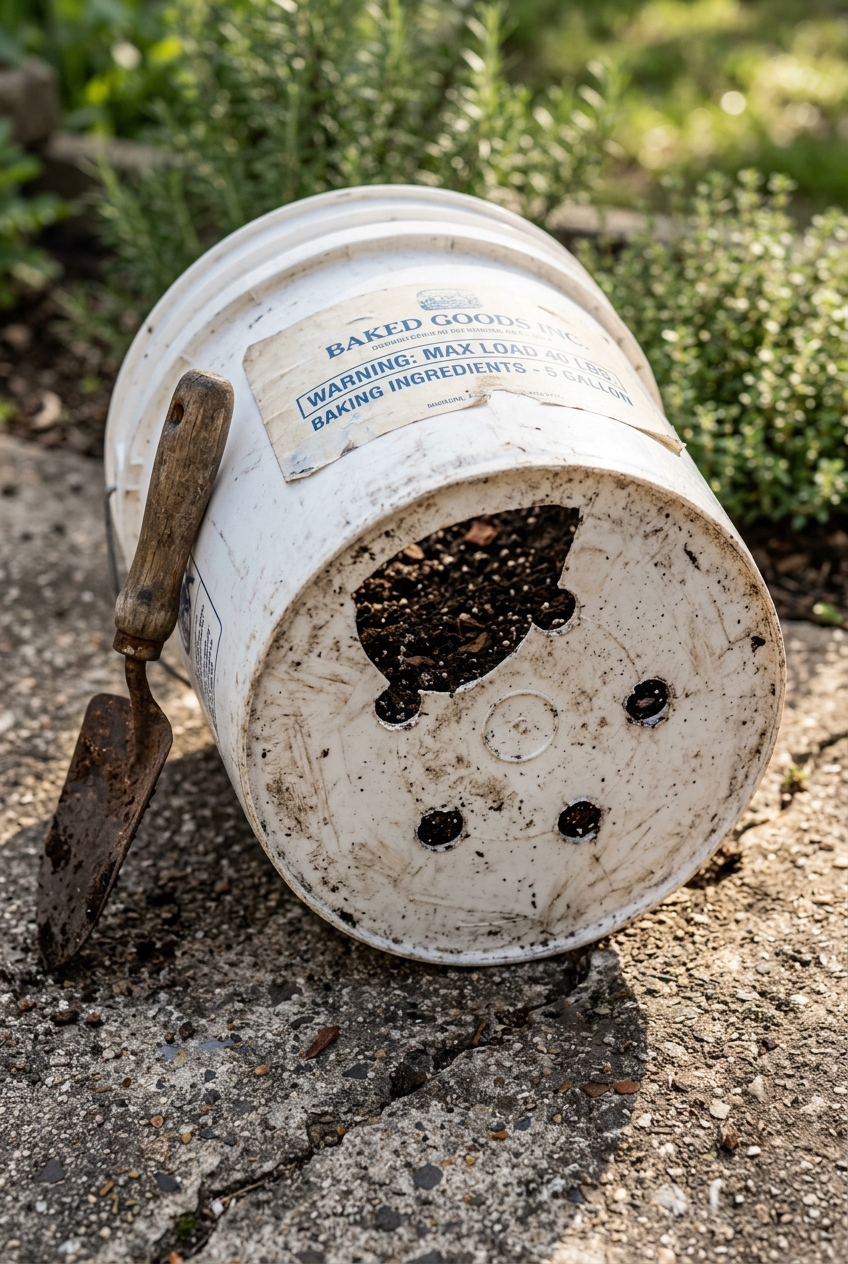
| 5-gallon buckets (free from bakeries) | 5 | $0 | Ask grocery bakeries for frosting buckets |
| 18-inch pots (on sale or used) | 3 | $18 | Facebook Marketplace, end-of-season sales |
| Railing planters (DIY from fence boards) | 2 | $8 | Two 6-foot cedar fence boards cut to length |
| Potting mix (bulk from landscape supply) | 8 cu ft | $32 | Local landscape yard, not bagged |
| Fertilizer (Dr. Earth 4 lb) | 1 | $9 | Amazon, Walmart |
| Seeds (6 packets, open-pollinated) | 6 | $12 | Seed Savers Exchange, local swaps |
| Actual Total | $79 | Adjust seed count to hit $75 |
Drill five 1/2-inch drainage holes in the bottom of each bucket. Soak used containers in a 1:10 bleach solution for 10 minutes before planting.
Layout 1: Salad Factory (60+ salads, May-October)
This layout produces two large salads per week for 30 weeks. Total footprint: 6x4 feet.
Containers:
- Two 36-inch railing planters
- Three 18-inch pots
Plants:
- Railing Planter 1: Lettuce ‘Jericho’ (6 plants, 6 inches apart)
- Railing Planter 2: Arugula ‘Astro’ (broadcast seeded, succession plant every 3 weeks)
- Pot 1: Cherry tomato ‘Sungold’ (1 plant)
- Pot 2: Cucumber ‘Bush Pickle’ (2 plants)
- Pot 3: Basil ‘Genovese’ (3 plants, 6 inches apart)
Plant lettuce and arugula March 15-April 1 in zones 6-7, April 15-May 1 in zones 4-5. Succession plant arugula every 21 days through August 15. Tomatoes and cucumbers go in after last frost.
Quick Tip: Cut lettuce leaves at 4 inches tall instead of harvesting whole heads. Each plant regrows 3-4 times before bolting.
Layout 2: Sauce Maker (25 pounds tomatoes, 8 pounds peppers)
Five buckets arranged in an L-shape. Needs full sun, 8+ hours.
| Bucket | Plant | Variety | Yield |
|---|---|---|---|
| 1 | Tomato (determinate) | ‘Roma’ or ‘San Marzano’ | 15-20 lbs |
| 2 | Tomato (determinate) | ‘Amish Paste’ | 15-20 lbs |
| 3 | Bell pepper | ‘California Wonder’ | 4-6 lbs |
| 4 | Hot pepper | ‘Jalapeño’ | 2-3 lbs |
| 5 | Basil | ‘Italian Large Leaf’ (3 plants) | 4+ lbs leaves |
Plant tomatoes and peppers May 10-20 in zone 6, May 20-30 in zone 5. Stake tomatoes with 6-foot bamboo poles or tomato cages. Peppers need no support.
Feed every 2 weeks with fish emulsion (2 tablespoons per gallon) starting when first flowers appear. Determinate tomatoes ripen all at once in late July through August, perfect for sauce batches.
Layout 3: Stir-Fry Station (40 meals worth)
Fits a 4x6 foot space. Produces continuously from June through first frost.
Containers:
- Three 5-gallon buckets
- Two 18-inch pots
Plants:
- Bucket 1: Bok choy ‘Joi Choi’ (succession plant every 3 weeks, 2 plants per round)
- Bucket 2: Snow peas ‘Oregon Sugar Pod II’ (8 plants, planted in circle)
- Bucket 3: Green beans ‘Provider’ (bush type, 6 plants)
- Pot 1: Scallions (25 sets planted 1 inch apart, harvest as needed)
- Pot 2: Thai basil (3 plants) and cilantro (succession seed every 2 weeks)
Plant snow peas March 20-April 10 in zones 5-7. They produce until heat kills them in late June. Plant beans May 15-30 in same bucket after peas finish. Bok choy goes in April 15 and again every 3 weeks through August 1.
From my experience: I plant scallion sets instead of seeds. Twenty-five sets cost $4 at any garden center and you can harvest 150+ scallions by pulling them at pencil thickness. They regrow if you leave the roots.
Layout 4: Snack Garden for Kids (cherry tomatoes, snap peas, carrots)
Three buckets, two pots. Maximum grab-and-eat produce.
| Container | Plant | Kid Appeal |
|---|---|---|
| Bucket 1 | Cherry tomato ‘Sungold’ | Sweetest tomato, 100+ fruits |
| Bucket 2 | Snap peas ‘Sugar Ann’ | Eat pod and all, no shelling |
| Bucket 3 | Strawberries ‘Albion’ (everbearing) | Fruits June-October |
| Pot 1 (18") | Carrots ‘Paris Market’ (round type) | Easy to pull, ready in 50 days |
| Pot 2 (18") | Bush cucumber ‘Spacemaster’ | No bitterness, perfect snack size |
Plant snap peas 4 weeks before last frost. Everything else goes in at last frost date. Paris Market carrots are round, not long, so they work in pots. Thin to 2 inches apart when seedlings are 2 inches tall.
Kids harvest cherry tomatoes daily starting mid-July. One Sungold plant produces 8-10 pounds of fruit in a 5-gallon bucket.
Layout 5: Vertical Climbers (maximum yield, minimum footprint)
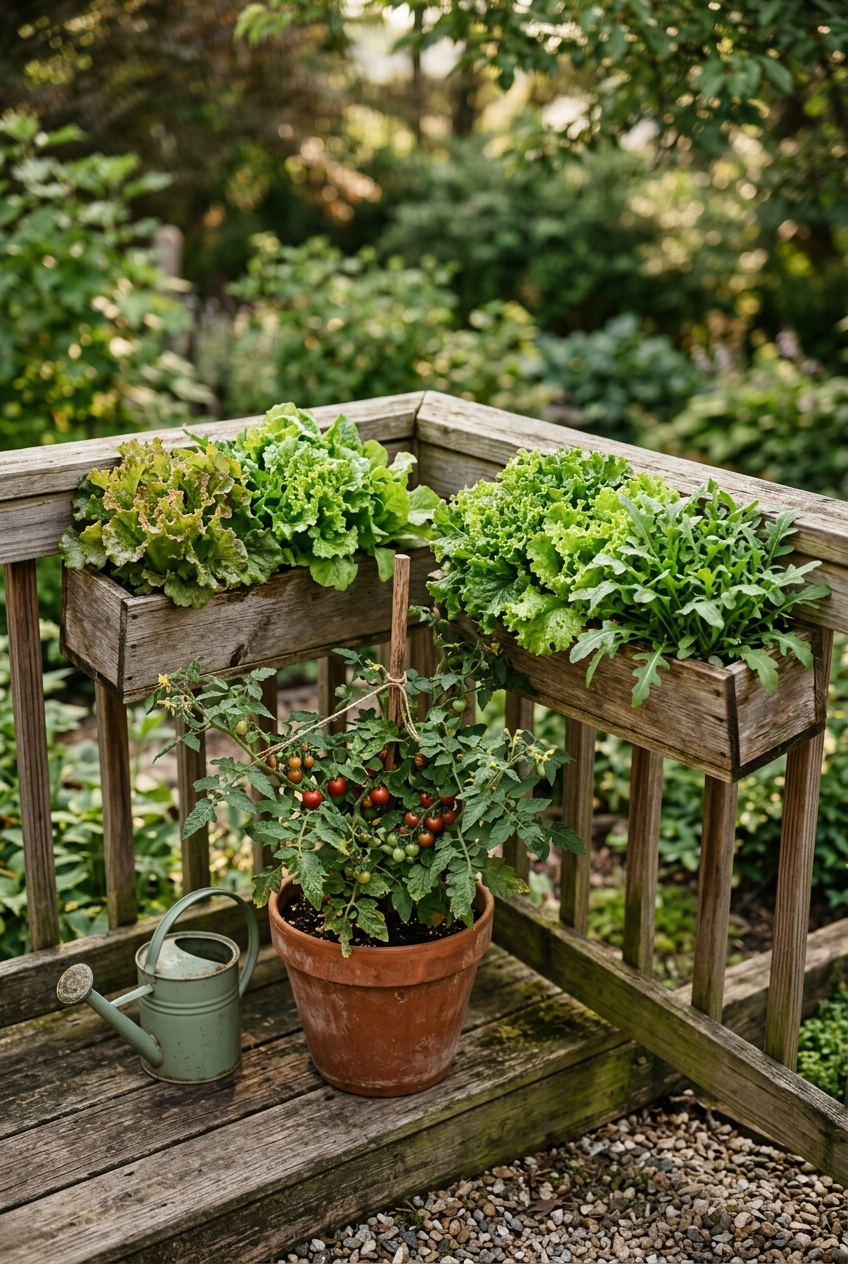
Two buckets, two railing planters, one 18-inch pot. Uses vertical space on a fence or railing.
Setup:
- Install 6-foot bamboo poles or cattle panel trellis behind buckets
- Railing planters attach to deck rail or fence
Plants:
- Bucket 1: Pole beans ‘Kentucky Wonder’ (6 plants in circle around pole)
- Bucket 2: Cucumber ‘Marketmore 76’ (2 plants, trained up trellis)
- Railing Planter 1: Bush zucchini ‘Raven’ (1 plant, hangs over edge)
- Railing Planter 2: Nasturtiums (edible flowers, pest trap crop)
- Pot: Kale ‘Lacinato’ (3 plants, harvest outer leaves)
Pole beans produce 3x more than bush beans in the same container. Plant after soil hits 60°F (late May in zone 5, early May in zone 6-7). Train cucumbers onto trellis by gently wrapping vines around supports twice per week.
Nasturtiums attract aphids away from other plants and the flowers/leaves are edible. Peppery flavor, good in salads.
Quick Tip: Zucchini in a railing planter hangs over the edge and doesn’t shade other plants. Harvest at 6-8 inches long every 2-3 days. Miss one harvest and you’ll have baseball bats.
What to Watch For
Water daily once temperatures hit 80°F. Containers dry out faster than ground beds. Stick your finger 2 inches into soil. If it’s dry, water until it drains from the bottom holes.
Yellow lower leaves on tomatoes and peppers mean nitrogen deficiency. Side-dress with 1/4 cup organic vegetable fertilizer per bucket, scratched into top 2 inches of soil. Do this every 4 weeks from June through August.
Blossom end rot (black spots on tomato bottoms) comes from inconsistent watering, not calcium deficiency. Water at the same time each day. Mulch container tops with 1 inch of straw to keep moisture even.

From my experience: I lost three rounds of lettuce to slugs before I learned this trick. Put a 1-inch copper tape barrier around the rim of railing planters. Slugs won’t cross it. $8 roll from Amazon lasts three seasons.
Make It Your Own
Zone 8-9 adjustments: Skip snow peas and lettuce after April. They bolt in heat. Grow heat-lovers like okra ‘Clemson Spineless’ (1 plant per 5-gallon bucket), Armenian cucumber, and Thai basil instead. Plant tomatoes in February-March.
Zone 3-4 adjustments: Start everything indoors 6-8 weeks before last frost. Use black plastic pots to warm soil faster. Extend season with Wall O’ Water protectors ($3 each) around tomatoes and peppers. Plant cold-hardy lettuce and kale through September for fall harvest.
Shade gardens (4-6 hours sun): Grow lettuce, arugula, kale, chard, and herbs. Skip tomatoes, peppers, and cucumbers. They need 8+ hours. Try ‘Bright Lights’ chard (beautiful stems, kids love it) and ‘Red Russian’ kale (cold hardy to 15°F).
Apartment balconies: Check weight limits. Eight 5-gallon buckets with wet soil weigh 320 pounds. Spread them out or use 3-gallon containers instead. Reduce plant counts by 30%.
Before You Start
Potting mix is not topsoil. Never use garden soil in containers. It compacts and drowns roots. Buy actual potting mix with perlite or vermiculite. Coast of Maine, Black Gold, and FoxFarm are good brands.
Food-grade buckets are critical if you’re using free bakery buckets. Ask what was stored in them. Avoid any that held chemicals or non-food products. Frosting, pickles, and bulk food buckets are safe.
Last frost dates vary by 2-3 weeks within the same zone depending on your microclimate. Check your local university extension office for specific planting dates. In zone 6, that’s typically May 10-15 but can be April 25 in sheltered urban areas.
Budget $75 assumes you already own basic tools (trowel, watering can). Add $15 if you need those. Buying seeds instead of transplants saves $30-40 but adds 4-6 weeks to harvest time for tomatoes and peppers.
FAQ
How much sun do container vegetables actually need?
Fruiting plants (tomatoes, peppers, cucumbers, squash, beans) need 8+ hours of direct sun. Leafy greens (lettuce, kale, chard, arugula) produce in 4-6 hours. Herbs vary: basil needs 6+ hours, parsley and cilantro tolerate 4 hours. Measure sun in your space on June 21 when the sun is highest. That’s your minimum for the growing season.
Can I reuse potting mix next year?
Yes, but refresh it. Remove old roots and add 30% new potting mix by volume. Mix in 1/4 cup organic fertilizer per 5-gallon bucket. Potting mix breaks down and compacts over one season. If plants grew poorly or had disease, dump it and start fresh. I reuse mine for 2-3 seasons for healthy plants.
What if my containers don’t have drainage holes?
Drill them or don’t use those containers. Vegetables die in waterlogged soil within a week. Five 1/2-inch holes per 5-gallon bucket, three holes per 18-inch pot. Drill from the inside out to prevent cracking. Put containers on pot feet or bricks so water actually drains away instead of sitting in a saucer.