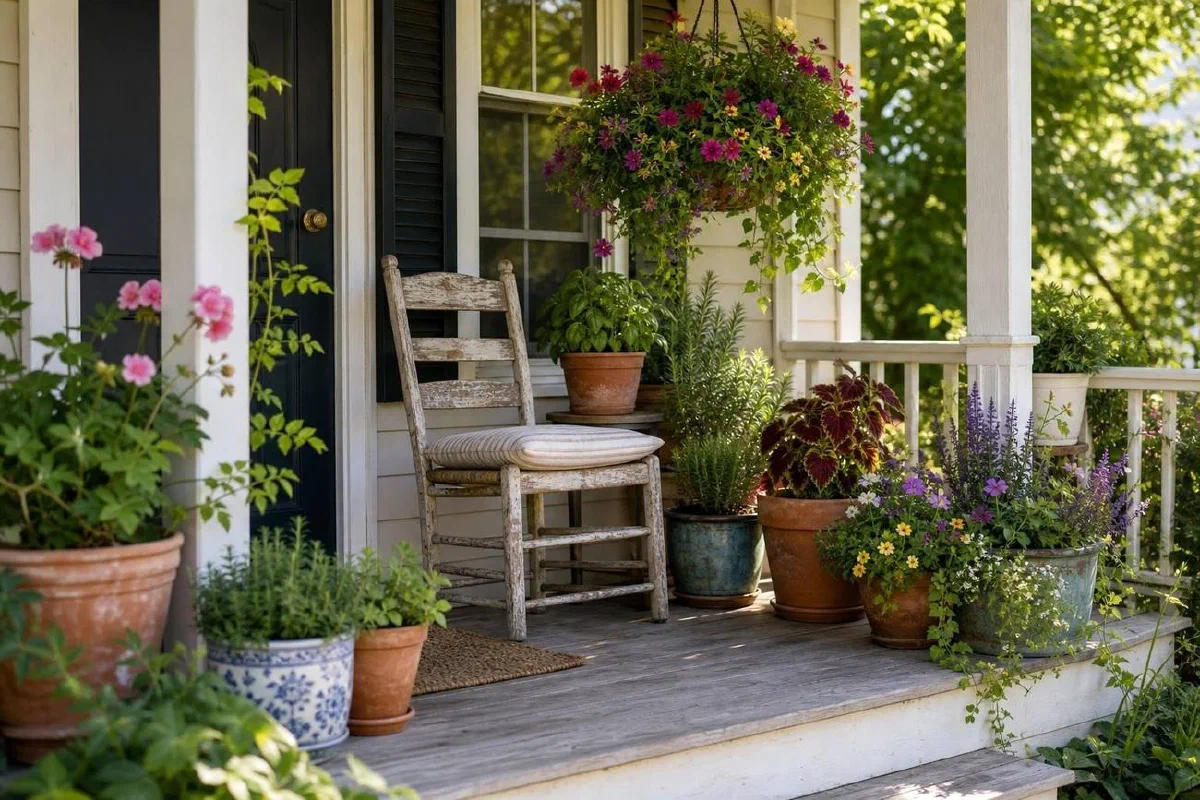
Container gardening is the shortcut I come back to when a porch looks flat.
Beds take time. Shrubs take years. A container can change the whole entry in an afternoon. That is probably why porch pots are everywhere on Pinterest right now. They are fast, they photograph well, and they let you try a color without committing the whole yard to it.
The catch is that containers can also look chaotic. Too many pot sizes, too many colors, too many plants fighting for the same little bit of soil. The best porch containers are usually simpler than the garden center wants them to be.
Here are the container ideas I would use first.
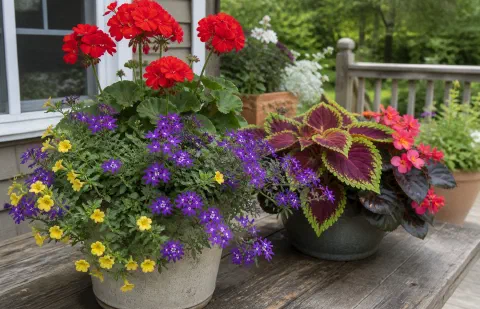
For fast porch color, use one larger pot near the door, repeat the same flower color in two smaller pots, and add trailing plants at the front edge. Bigger containers look full faster and need less emergency watering.
Which Plants Fit Your Porch Light
Light decides more than color does. Penn State Extension defines full sun as six or more hours of direct sun, part sun as four to six, part shade as two to four, and shade as less than two, so a covered porch is a shade site whether or not it feels dark to you.
| Your porch light | Plants that work | Pot size to start with |
|---|---|---|
| Full sun, 6+ hours | Geraniums, marigolds, portulaca, rosemary, thyme, lavender | One large pot; small pots dry out by mid-afternoon |
| Part sun, 4 to 6 hours | Calibrachoa, petunias, bacopa, sweet potato vine | Two or three medium pots grouped so they shade each other’s soil |
| Shade, under 2 hours | Coleus, caladium, begonias, ferns, heuchera, creeping Jenny | Go bigger than you think; foliage drinks soil volume faster than flowers |
1. Group Three Pots Instead of Lining Them Up
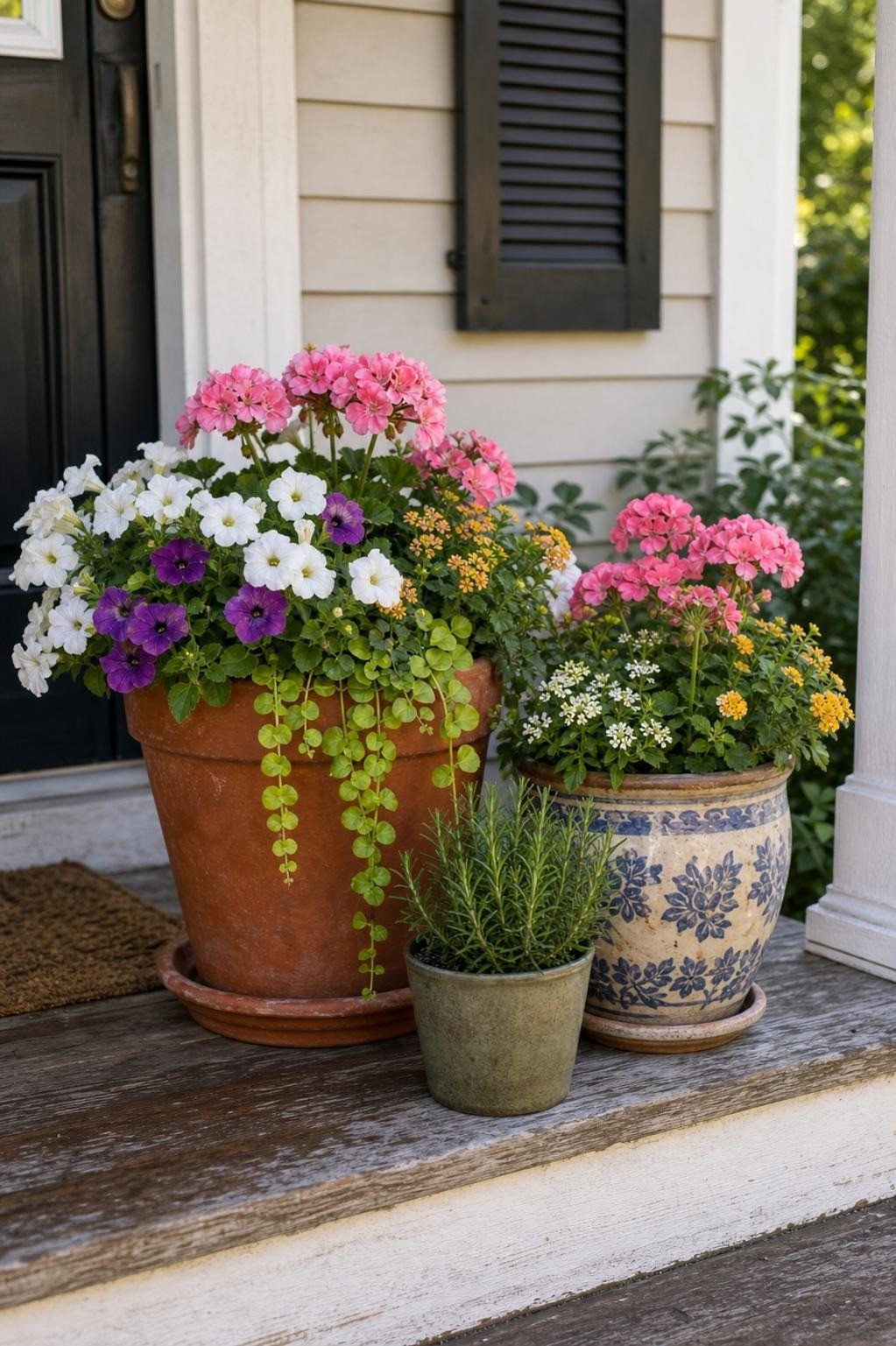
A row of pots can look like a store display. A group looks like a porch.
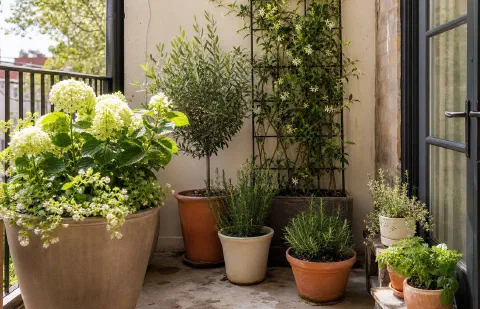
Use three containers with different heights: one large anchor pot, one medium pot, and one small pot. They do not have to match. Terracotta, a thrifted ceramic pot, and a plain black nursery pot slipped inside a basket can work together if the plants repeat a color.
Put the largest pot in the back, the medium pot slightly forward, and the smallest one where it fills the gap. Leave enough space to sweep around them. If a pot grouping makes it harder to use the door, it will start annoying you by June.
2. Use the Thriller-Filler-Spiller Rule Lightly
The old container rule is useful, but people overdo it.
One upright plant, one mounding plant, and one trailing plant is plenty. A tall grass, coleus, or geranium can be the upright piece. Calibrachoa, impatiens, or begonias can fill the middle. Sweet potato vine, creeping Jenny, bacopa, or trailing lobelia can spill over the edge.
The problem starts when every pot gets five plants and three trailers. It looks full for two weeks and then dries out constantly.
For a 12-inch pot, use three plants. For a 14-inch pot, use four or five. For a big 18-inch porch pot, you can use more, but only if you are willing to water it.
3. Make a Shade Pot That Does Not Look Like an Apology
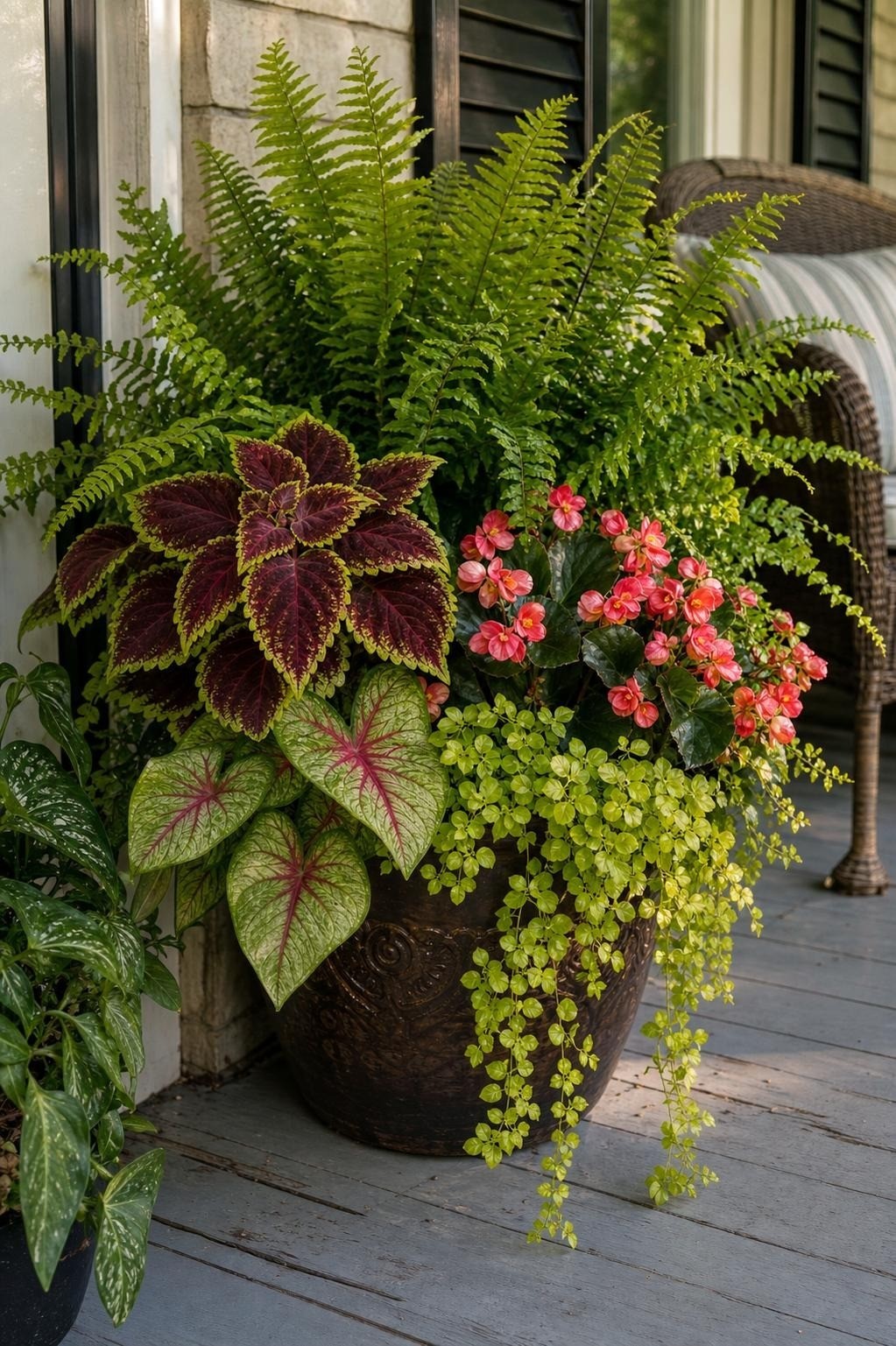
Covered porches are often shade gardens in disguise.
Instead of trying to force sun flowers into a dim corner, build the pot around foliage. Coleus, caladium, ferns, begonias, heuchera, and creeping Jenny can make a shade pot feel full and colorful without needing six hours of sun.
For a simple shade container, try:
- one upright fern or caladium
- two begonias
- one trailing creeping Jenny or bacopa
Keep the palette tight. Lime, burgundy, and pale pink. Or deep green, white, and silver. Shade pots look better when the leaves are doing the work.
4. Put Herbs Where You Brush Past Them
Herb pots belong near the door, not hidden on the back edge of the patio.
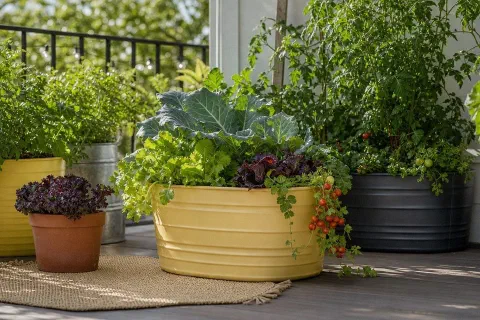
Rosemary, thyme, basil, mint, oregano, and parsley all earn their space because they smell good when you pass them. A pot of rosemary beside the step can make the porch feel more alive than another flat of annuals.
Mint needs its own container unless you want it everywhere. Basil wants warm weather and more water than rosemary. Thyme likes to dry a little between waterings. Do not plant those three in the same small pot and expect everyone to be happy.
If you want a useful porch trio, use rosemary in one pot, basil in another, and thyme in a shallow bowl.
5. Repeat One Flower Color Across the Porch
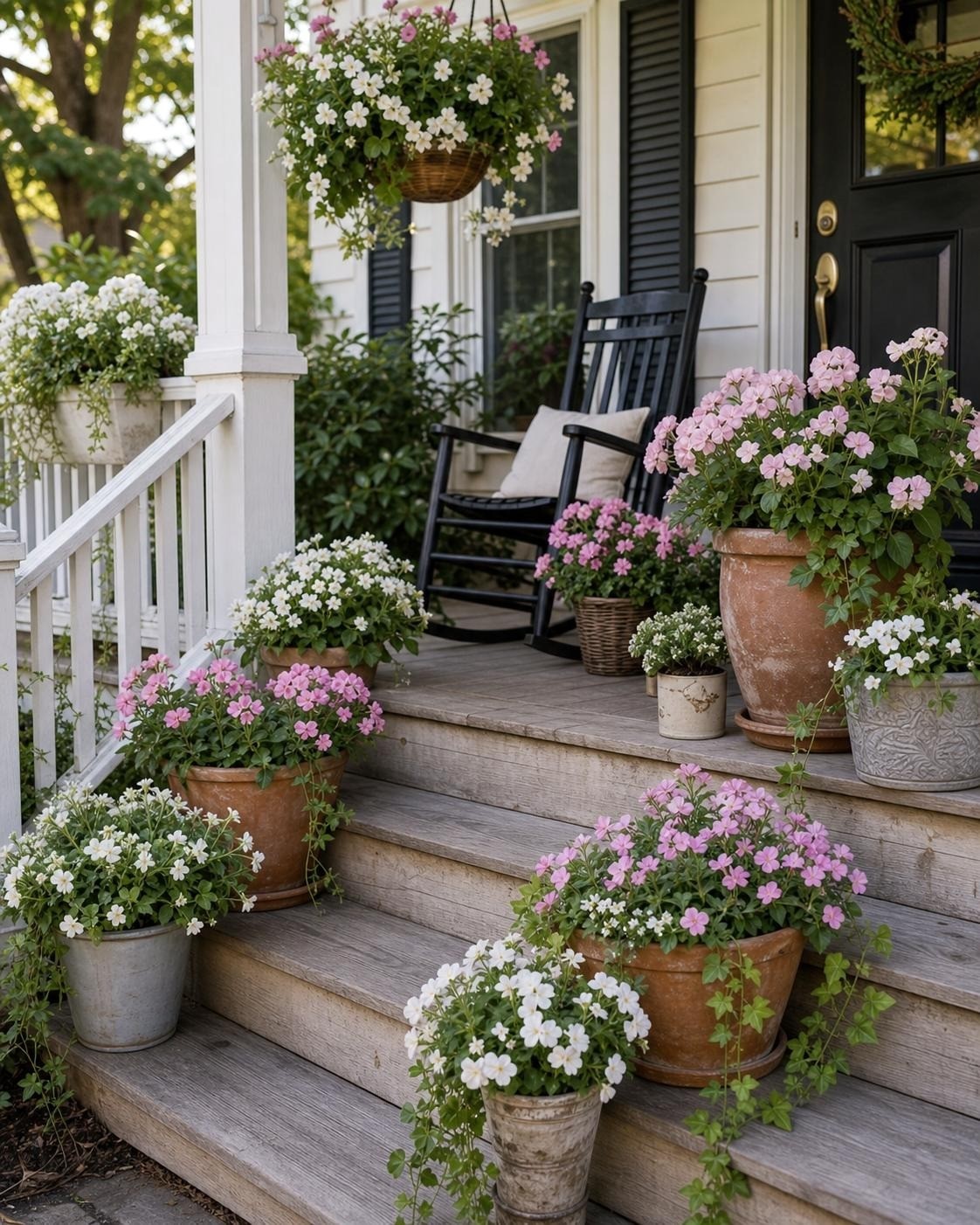
This is the easiest way to make mismatched containers work.
Pick one flower color and repeat it in every group. White bacopa. Pink geraniums. Purple calibrachoa. Yellow marigolds. The pot styles can vary if the color repeats.
I like white for shaded porches because it shows up from the street. Pink and coral look good against brick. Purple and yellow work well near dark siding. Red can be great, but it gets loud fast, so use it with more green than you think.
6. Make Watering Boring
Containers fail because watering gets annoying.
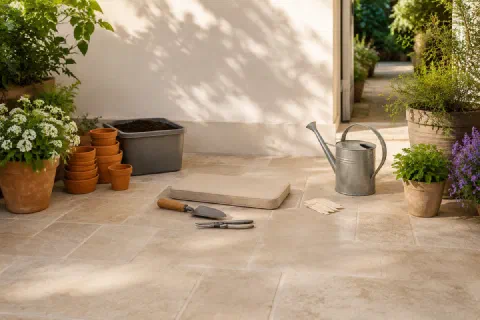
Put the pots within reach of the hose. Use saucers only where water will not stain the porch. Add a slow-release fertilizer when you plant. Check small pots every day once the heat arrives. Large pots may need water every other day, but hanging baskets can need water daily.
Pot material changes the schedule more than most people expect. Clemson HGIC notes that clay pots are porous and dry out faster, while nonporous containers hold water and need less frequent watering. The same factsheet puts slow-release feeding on a rough every two to three months rhythm, which is why one scoop at planting beats a summer of guessing.
If that sounds like too much, use fewer pots and make them bigger. A big container is more forgiving than five tiny ones.
A hanging basket gets color to eye level without using any floor at all. Five hanging basket combos that bloom all summer are the fastest version of this.
Planting a Porch Pot in Six Steps
- Choose the pot before the plants. A 14-inch pot holds three or four plants; a 12-inch pot holds three at most.
- Check that there is a drainage hole and a saucer or feet under the pot so water can leave.
- Fill with fresh potting mix, not garden soil, and leave an inch of headroom for watering.
- Set the upright plant slightly off center and toward the back.
- Add the filler plants around it, then tuck the trailing plant at the front edge.
- Water until it runs out of the bottom, then top up the mix and add slow-release fertilizer.
The Porch Pot Formula I Trust
For a fast porch refresh, I would use one large mixed container near the step, one herb pot by the door, and one hanging basket or rail planter if there is room.
That is enough color to change the porch without turning watering into a second job.
If the porch still reads flat once the pots are in, the missing layer is usually softer than flowers: summer porch decor with light relaxed layouts and an outdoor rug that makes a porch look finished both do more for the space than another flat of annuals.
What I’d Buy First
- A larger porch pot with enough soil volume to hold moisture.
- One thriller, one filler, and one spiller plant for instant structure.
- Slow-release fertilizer if annuals need to keep blooming.
- A watering wand or small can that makes daily care easy.
What to Read Next
- Front porch planter ideas that look full all season is the follow-up when the pots you have are too small to carry the entry on their own.
- Cheap pots that look expensive on a front porch covers the containers themselves, including how to make resin and thrifted pots read as intentional.
- Flower container combinations that bloom all season gives you the plant pairings if you would rather copy a proven mix than build one.
- Hanging baskets that bloom all summer in full sun handles the sunniest spot, where porch pots dry out fastest.
- Hanging baskets that make a plain porch look welcoming is the next step if you have more railing than floor space.