
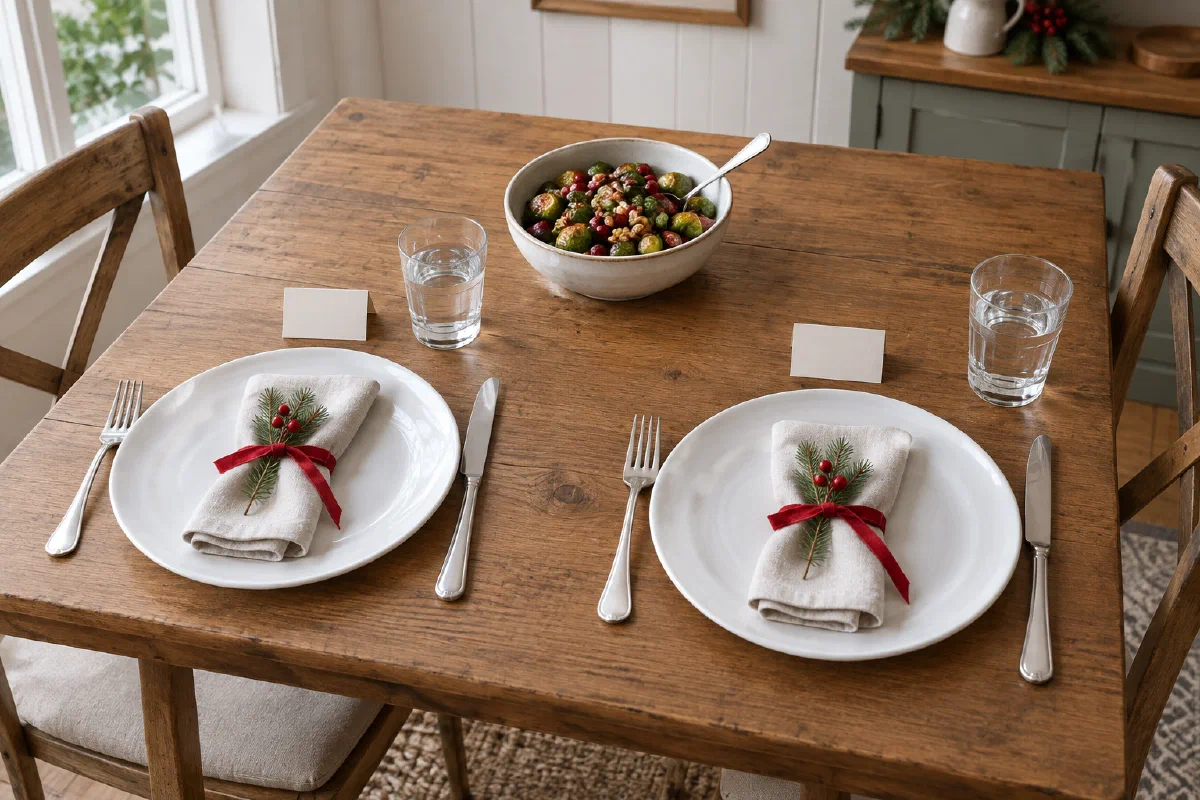
A white plate, a red napkin tied with ribbon, and a name card can make a small table look ready for Christmas dinner. Keep everyday dishes and put the seasonal detail where each person sits.
Set out one complete place, including the glass and needed utensils. Repeat it for the actual guests, then test the serving space with empty dishes before adding decorations.
These eight ideas focus on place settings and serving. For the middle, use our Christmas centerpiece ideas or dinner-centerpiece guide.
Start with a simple place-setting layout
For a basic setting, put the fork to the left of the plate and the knife to the right, with its blade facing inward. Add a spoon only if the meal needs one. The water glass can sit above the knife, and the napkin can go on the plate or to the left. These options follow the Emily Post Institute’s basic table-setting guide.
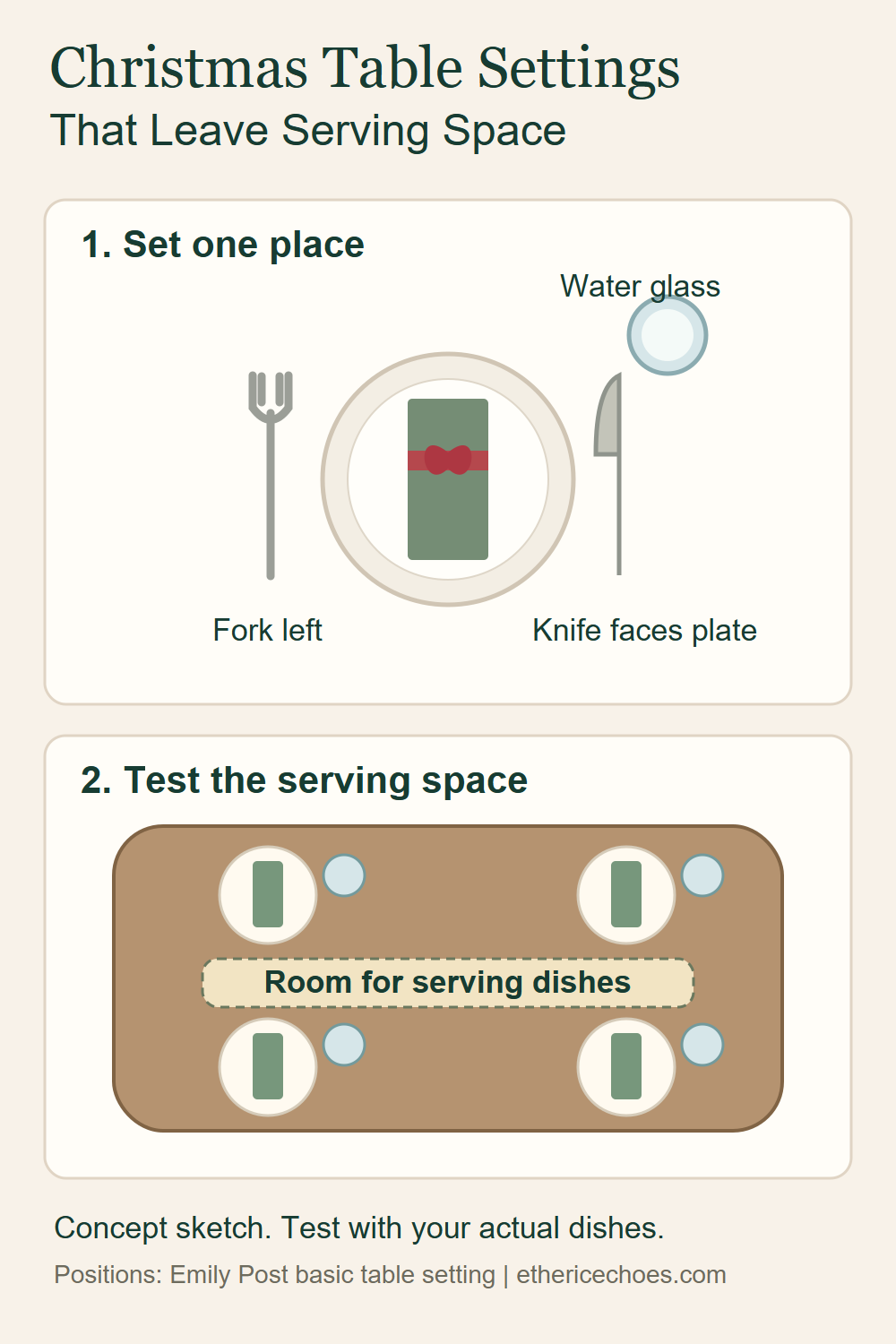
View the scalable layout diagram
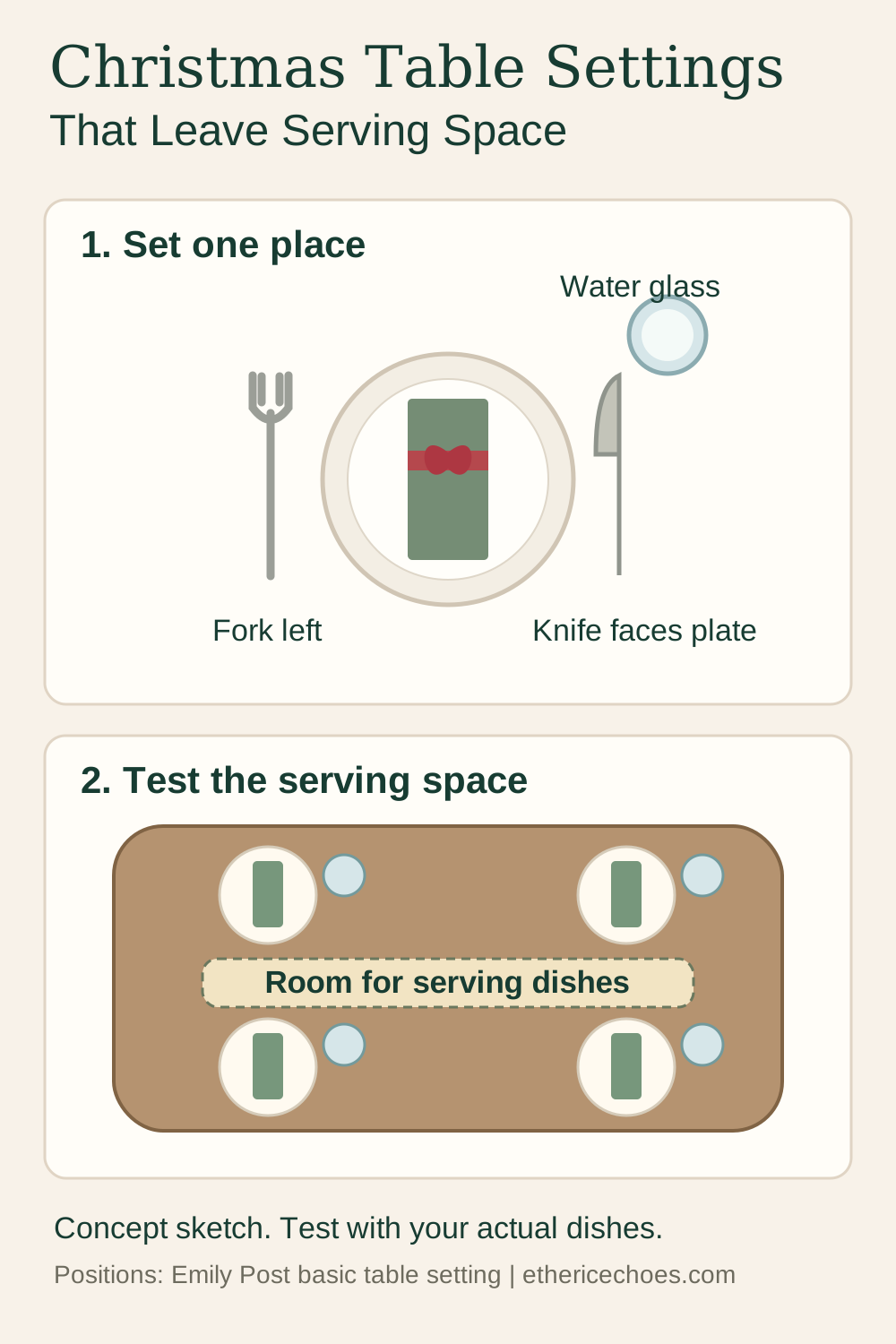
Skip a charger plate if it adds unnecessary width. Test the real serving dishes with chairs pulled out: you need to sit, reach a glass and pass a bowl comfortably.
1. Tie a ribbon around one folded napkin
A red ribbon against an ivory napkin gives an everyday white plate a clear Christmas detail. Fold the napkin into a rectangle, wrap the ribbon loosely around its middle and tie a small bow. Place it across the plate so the tails remain within the setting.
Keep the ribbon easy to untie. A tightly wrapped napkin becomes awkward when the meal begins, and long tails can trail into food or catch a glass. Put a plain name tag under the bow if you need assigned seats.
Use saved ribbon or fabric offcuts with your neutral dishes. Put out a spare bowl for removed ties before serving.
2. Connect mismatched plates with the same napkin color
Different plates can look like a planned Christmas setting when one detail repeats at every seat. Use the same red, deep green or cream napkin throughout, then choose a plain glass that sits comfortably beside each plate. Let the plate patterns provide the variation.
Set each place with the plate that will actually be used for dinner. Stacking a smaller decorative plate on top adds another item to move when food arrives. If a small plate is needed for a course, bring it out with that course.
Use dishes suitable for serving food. An old plate of unknown condition or food-contact suitability can be displayed elsewhere, while your everyday plates hold the meal. Repeat the napkin color in a simple place card if you want another link between the settings.
3. Draw place-setting borders on a paper table cover
Plain kraft paper can give a casual table a cheerful handmade Christmas treatment. Lay it flat, set out the plates and glasses, then draw a loose border around each place. Add the person’s name or a small holly drawing beside the plate, outside the eating area.
Use paper wide enough to lie securely on the tabletop, with edges that do not hang into laps or catch on chair arms. Remove the dishes while drawing and let the ink dry completely before putting them back. Keep the drawings simple so there is still space for serving bowls.
This suits a relaxed supper. Avoid loose glitter, pens that shed and small craft pieces near food. Use flameless lights for accompanying decorations.
4. Fold a napkin pocket for utensils and a small menu
A pocket fold keeps the details together when a narrow table has little room beside each plate. Fold a square napkin in half, then fold one front layer upward to form a pocket. Fold the sides behind until the bundle fits on the plate, and slide in a short printed menu.
You can place the required utensils in the pocket for the welcome setting, then set them beside the plate when the meal starts. Make the pocket loose enough that they lift out easily. A small folded card is easier to manage than a tall menu standing between guests.
Test one actual napkin before making a batch. Thin fabric and thick linen fold differently; simplify a pocket that falls apart when moved.
5. Use a clementine and a name card as a small favor
An intact clementine on the plate adds orange color to a setting of white dishes and green napkins. Put a folded name card beside it rather than piercing the fruit with a pin or fastening a tag with glue. The fruit can move to a bowl when dinner is served.
Use washed fruit and give each guest an easy place to put it. If a favor is not wanted, the same folded card can stand beside the glass on its own. Avoid adding leaves from an unknown plant to food or to an eating plate.
Use only fruit you expect to eat or send home. Leave it out if it does not suit the meal or your guests.
6. Set a checked Christmas brunch table
A checked placemat, plain bowl and familiar mug suit a Christmas breakfast better than a formal stack of plates. Choose the bowl or plate for the food you are serving, then add only the utensils needed. A red or green cloth can supply the seasonal color if the dishes are all different.
Put a mug on a saucer if you use one; otherwise, leave a stable, clear spot for it directly on a suitable tabletop or mat. Set a paper name card against the folded napkin. Keep bows and other loose details away from hot drinks.
Test the coffee pot, toast and serving bowls before setting every place. Serve from the kitchen if those items crowd the table.
7. Prepare buffet bundles instead of filling every seat
When people will serve themselves from a counter, a full formal setting can make a small table harder to use. Put clean utensils inside folded napkins and arrange the bundles together near the plates. A red paper band or a short ribbon can hold each bundle closed.
Keep the bundles on a clean tray with enough space that guests can take one without touching several others. Put a small basket nearby for the removed bands. Arrange drinks separately if that prevents people from queuing in the same narrow spot.
Leave the dining table ready for the plates people bring over. You can still use a seasonal cloth or place cards there, but avoid filling the empty plate spaces with objects that guests will have to relocate.
8. Give a round table a Christmas border at each seat
On a small round table, rectangular placemats can overlap before any food arrives. Try one folded green napkin on each plate and a slim paper name card just inside the table edge. If you use mats, test round ones against the actual plate and glass rather than buying them by appearance alone.
Repeat the card design around the table to make a loose border of Christmas detail. A small red bow printed or drawn on each card keeps the color visible after the napkins are opened. Avoid a continuous decoration around the rim where arms and sleeves will brush it.
Check the center with your serving dishes in place. If the bowls will not fit comfortably, serve from the kitchen. Moving the food service can be more useful than shrinking every person’s setting.
Choose the setting that suits the meal
| Your table or gathering | Start with | What to leave out |
|---|---|---|
| Two people, everyday dinner | Ribbon napkins | Extra decorative plates |
| Several different dish patterns | One repeated napkin color | A second competing pattern |
| Casual Christmas supper | Drawn paper cover | Loose glitter and craft pieces |
| Christmas breakfast | Bowls, mugs and checked textiles | Dinner utensils you will not use |
| Guests serve from the kitchen | Buffet bundles | Full formal settings at every seat |
| A compact round table | Details within each place | Overlapping rectangular mats |
Use flameless candles if you want light alongside the settings. They keep open flames away from napkins, ribbons and paper. The U.S. Fire Administration includes flameless candles in its holiday safety guidance.
Before guests arrive, sit in each seat, reach for the glass and pass a serving dish. Put a spare bowl nearby for ribbons and favors. Keep the chosen supplies together for the next meal.