The Christmas plants that do best indoors are a poinsettia, an amaryllis, a Christmas cactus, paperwhites, a Norfolk Island pine and a white orchid, plus a cyclamen, kalanchoe, anthurium or rosemary tree if you have the right window. Nearly all of them want bright light without hot sun, a spot away from drafts and heating vents, and water only when the top of the soil feels dry. Four of the ten are safe for cats and dogs, a few will bloom again next year, and the rest are happy to be enjoyed for the season and then composted in January with no guilt.
10 Indoor Christmas Plants and How to Care for Them
Which Christmas plants are easiest to keep indoors?
Start with the table, then pick the two or three that fit your windows and your pets.
| Plant | Light | How long it looks good | Blooms again? | Pets |
|---|---|---|---|---|
| Poinsettia | Bright, about 6 hours | Colored bracts for months | Hard, strict dark schedule | Toxic, usually mild |
| Amaryllis | Sunny, then bright indirect | Flowers 6 to 8 weeks after potting | Yes, for many years | Toxic |
| Christmas cactus | Bright, indirect | Weeks of flowers, plant lives for decades | Yes | Non-toxic |
| Paperwhites | Bright, cool room | A few weeks of fragrance | No, discard the bulbs | Toxic |
| Rosemary tree | Sunny window, 6 hours | A green tree all winter if it gets sun | Yes, as a plant | Non-toxic |
| Norfolk Island pine | Bright, indirect | Green all year | Not a bloomer, keeps growing | Non-toxic |
| Cyclamen | Bright, indirect, cool | Several months if kept cool | Difficult | Toxic |
| Kalanchoe | Bright and sunny | Flowers late November to March | Unreliable | Toxic |
| Anthurium | Bright, indirect, warm | Weeks, often months | Yes, in good light | Toxic |
| White orchid | Bright, little direct sun | Several months | Can, with enough light | Non-toxic |
Some links below are Amazon affiliate links. If you buy through them, Etheric Echoes earns a small commission at no extra cost to you.
10 Christmas plants for indoors
Each one below has the basics in a short list, then a plain way to put it in a room. You do not need all ten. Two or three plants in a good window look better than ten crowded onto a shelf.
1. Poinsettia
The red “petals” on a poinsettia are really bracts, the colored leaves around a small yellow flower. It is native to Mexico and it is still the plant most people picture for the Christmas and holiday season.
- Light: Bright, with at least 6 hours of indirect sun. Hot direct sun can fade the color.
- Water: When the soil surface feels dry, water thoroughly, then pour off anything left in the saucer.
- Warmth: 65 to 70 degrees, and never in a drafty hall. Below 50 degrees the leaves drop.
- How long: Newer varieties can stay colorful for months.
- Pets: Poinsettia is toxic to dogs and cats, but the effect is usually irritation of the mouth and stomach, sometimes with vomiting, and its toxicity is generally over-rated. The milky sap can irritate skin.
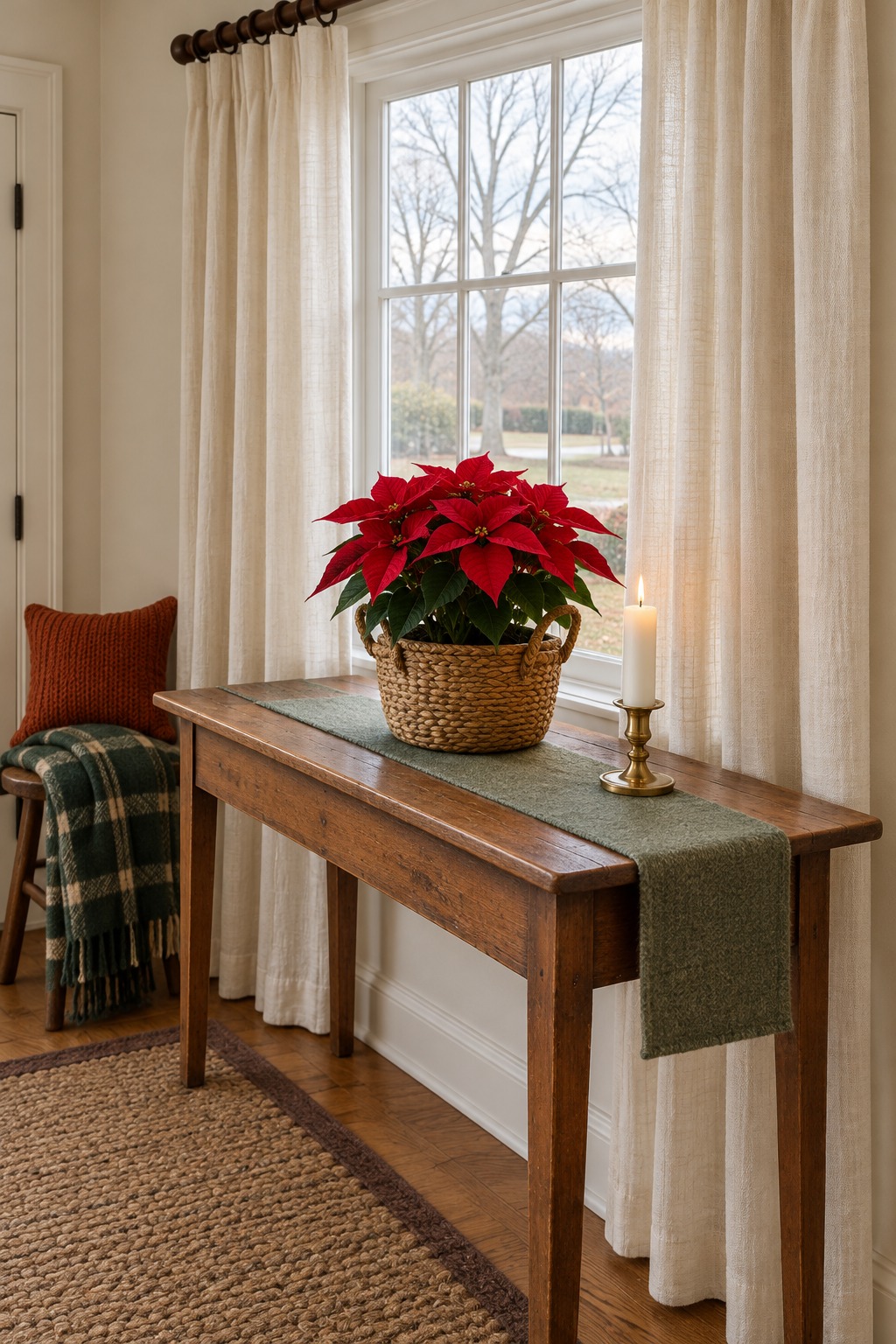
Take off the foil wrap or poke a hole in the bottom so water can drain. Then set the pot inside something that hides the plastic, like this 8 inch seagrass basket with a removable liner (opens Amazon in a new tab)As an Amazon Associate, we earn from qualifying purchases. Full disclosure.. Three poinsettias of different sizes on an entry table or a bench look generous, and one on a bare console is plenty.
2. Amaryllis
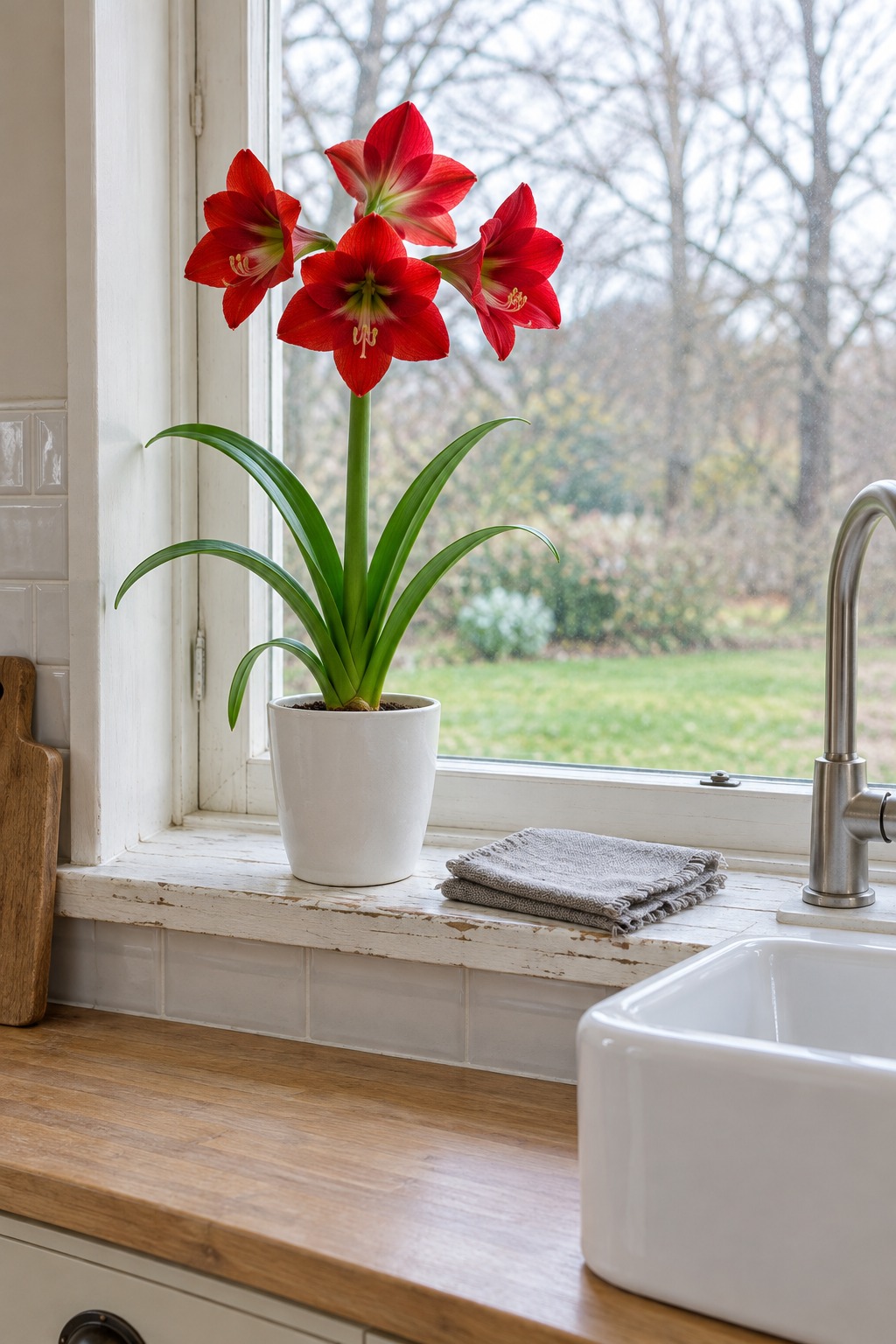
An amaryllis is the plant to buy if you want a big flower show with almost no work. You pot a bulb and it blooms about 6 to 8 weeks later, which is why November is the time to start. A large bulb can send up two or three stalks, and each set of flowers lasts around 3 weeks.
- Light: A sunny spot to start. Once it flowers, move it to bright indirect light, which makes the flowers last longer.
- Water: Water once when you pot it, then lightly until growth appears, then keep the soil evenly moist but never soggy.
- Warmth: 65 to 70 degrees to get it going, then 55 to 65 once it is in bloom.
- How long: Flowers about 6 to 8 weeks after potting.
- Blooms again: Yes. Cut off the spent stalk but leave the leaves, because they feed the bulb for next year.
- Pets: Amaryllis is toxic to dogs and cats. Vomiting, diarrhea and drooling are the common signs.
Leave the top third of the bulb above the soil. This Red Lion amaryllis kit (opens Amazon in a new tab)As an Amazon Associate, we earn from qualifying purchases. Full disclosure. comes with the bulb, a plastic pot with a saucer and potting mix, so you can start one on the kitchen table tonight. The stalk gets top-heavy, so a heavy pot or a stake helps. Amaryllis flower arrangements for Christmas shows several ways to display one.
3. Christmas cactus
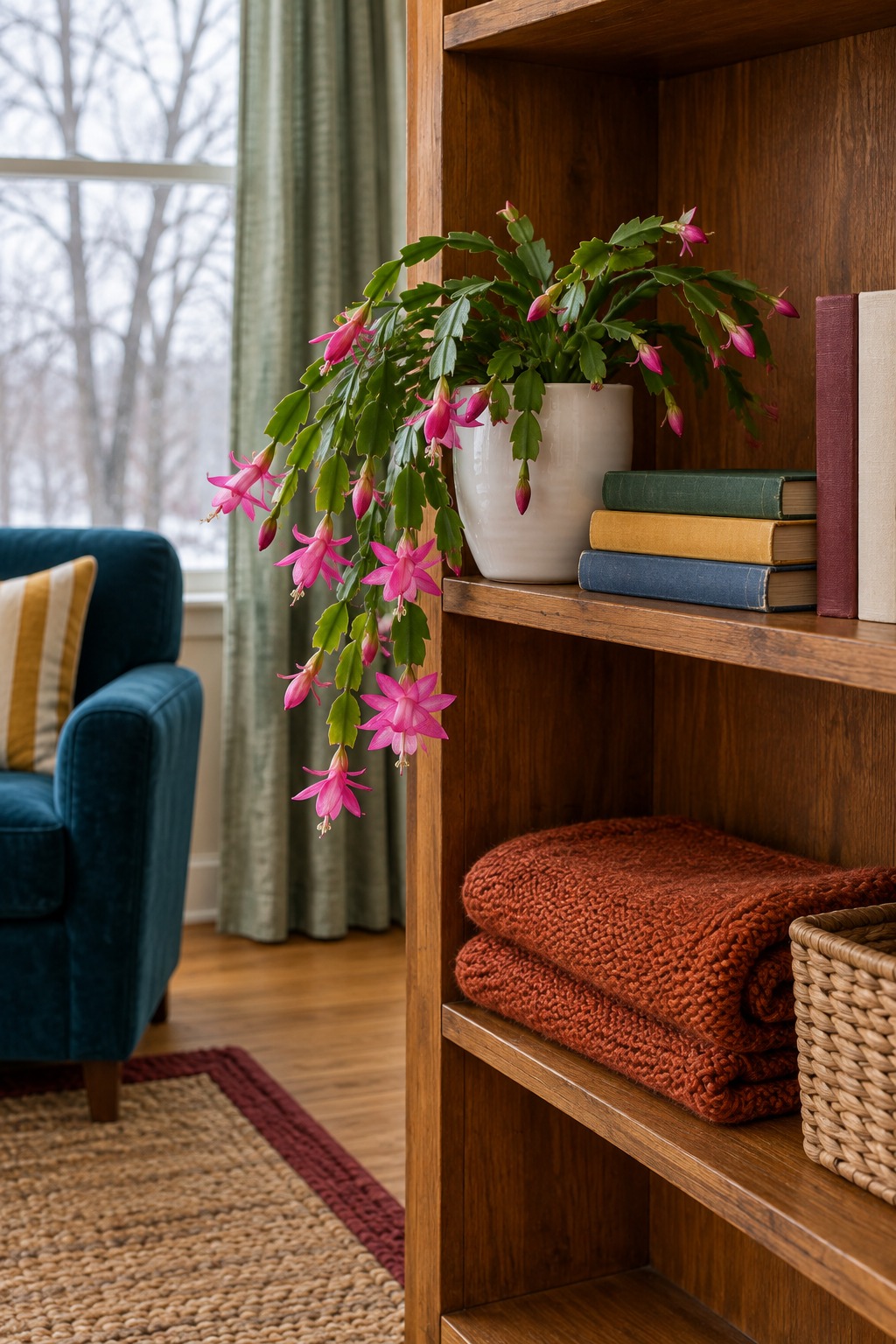
The Christmas cactus is the easy one to love. It is a succulent plant from the rainforests of South America, so it likes more moisture than a desert cactus, and with decent care it lives for decades. The botanical name is Schlumbergera. A Thanksgiving cactus looks nearly the same, blooms a little sooner and wants the same care.
- Light: Bright and indirect, with no hot afternoon sun.
- Water: When the top inch of soil is dry. It does not like to sit wet.
- Warmth: 60 to 70 degrees. Heat and dim light make the buds drop.
- How long: Weeks of flowers in red, pink, white or yellow, and the plant itself lasts for decades.
- Blooms again: Yes. It sets buds when nights are long and cool, so from September give it 12 to 14 hours of real darkness and keep nights under about 65 degrees.
- Pets: The Christmas cactus is non-toxic to dogs and cats.
Once the buds form, try not to move it around, because that is when they drop. A hanging pot or a shelf edge shows off the arching stems. How to get a Christmas cactus to bloom has the full darkness schedule.
4. Paperwhites
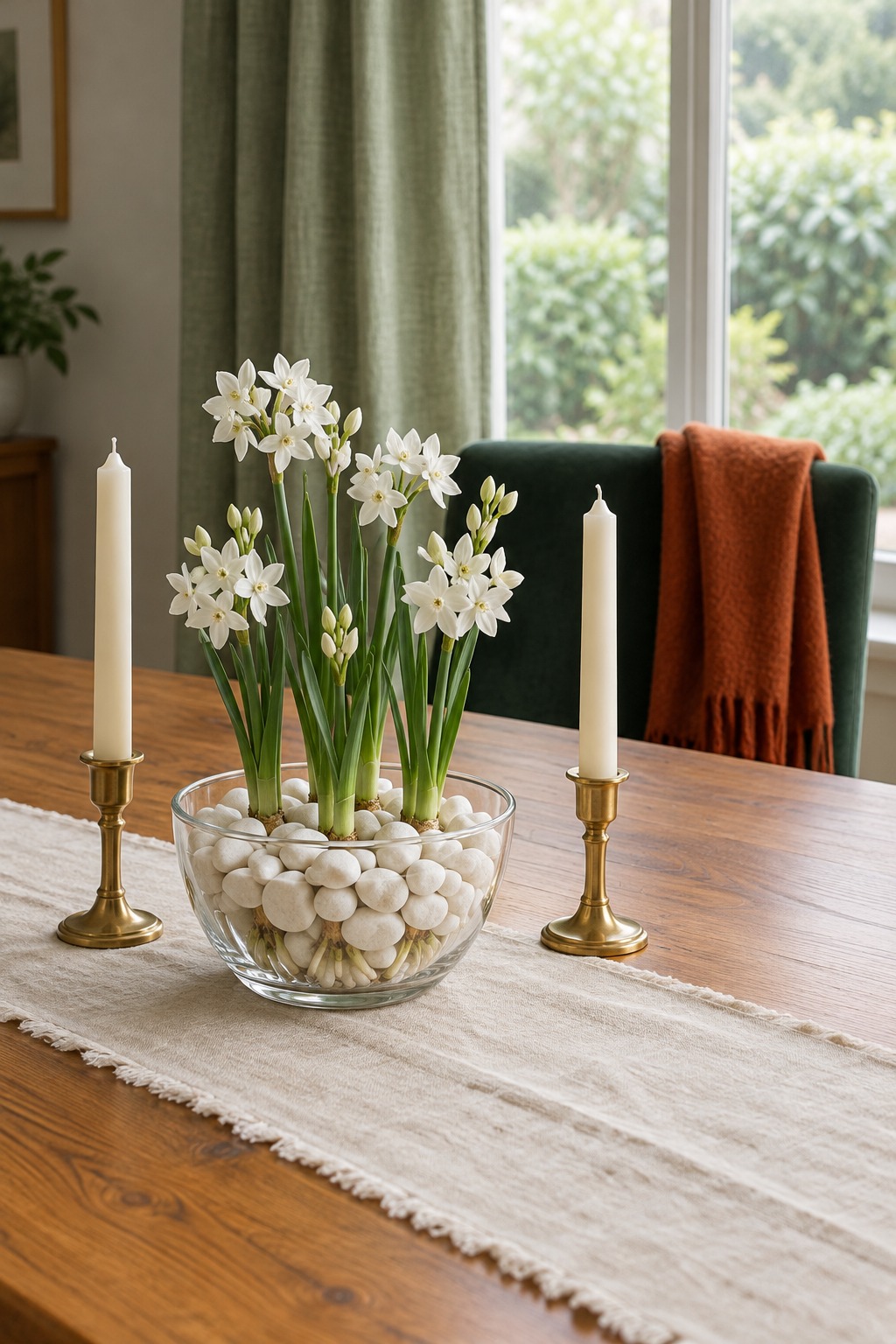
Paperwhites are the cheap, quick one. They are a kind of narcissus, and they smell wonderful, sweet and strong. You do not even need soil.
- Light: Bright light once the shoots come up.
- Water: In a shallow bowl with pebbles, add water until it touches the bottom of the bulbs and keep it at that level. In a pot of mix, keep it lightly moist.
- Warmth: A cool room, 50 to 65 degrees, is what UMass Extension recommends, and heat shortens bloom time.
- How long: They bloom about 4 to 6 weeks after planting, with a range of 3 to 10 weeks depending on the kind.
- Blooms again: No. Extension services say to discard the bulbs after the flowers fade.
- Pets: Paperwhites are toxic to dogs and cats, and the bulbs are the most poisonous part.
Plant a new bowl every two weeks and you will have flowers on the table from Thanksgiving into the new year. This paperwhite growing kit (opens Amazon in a new tab)As an Amazon Associate, we earn from qualifying purchases. Full disclosure. has 5 bulbs, a plastic pot and saucer, and growing mix. If yours flop over, paperwhites for Christmas covers how to prop them up.
5. Rosemary tree
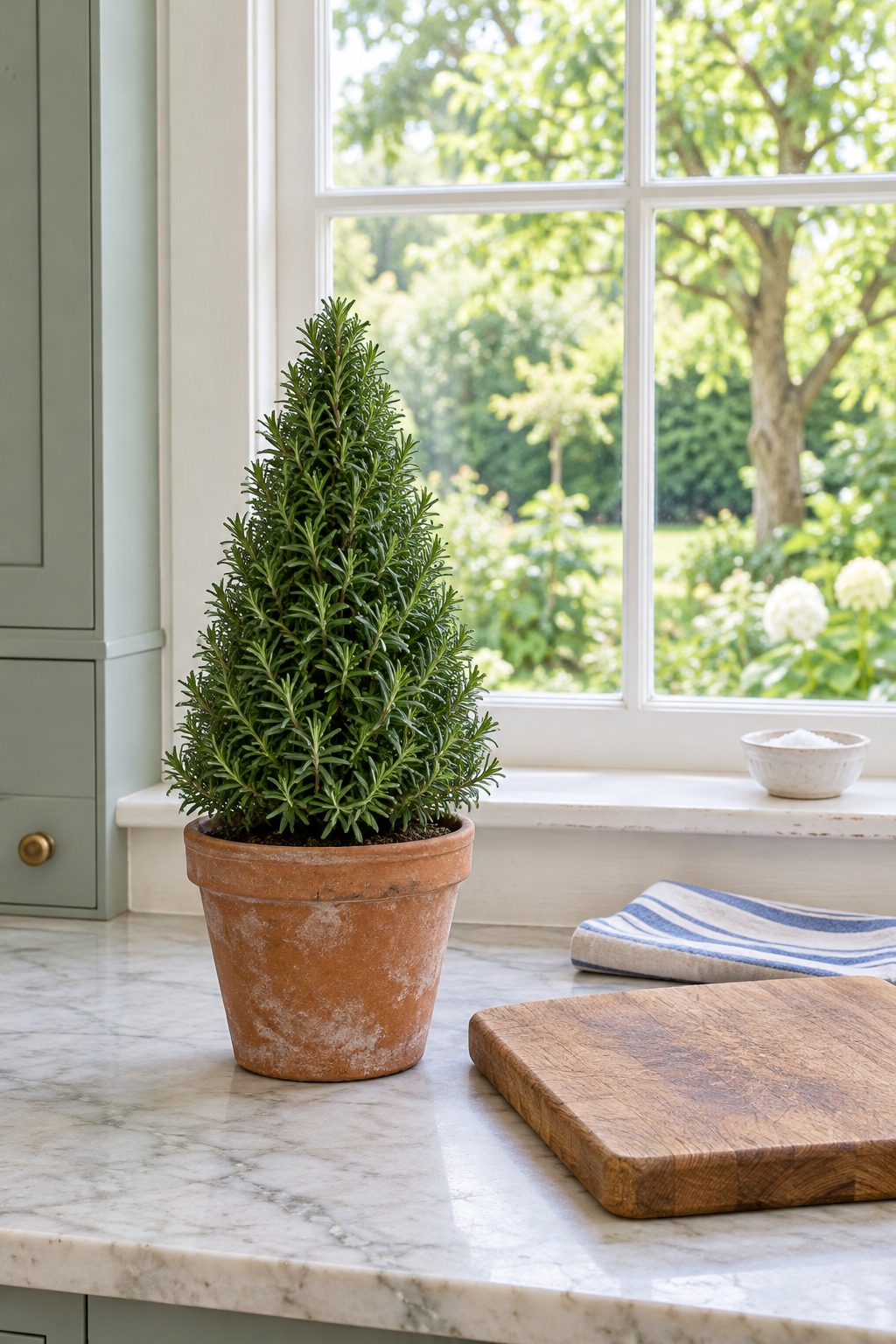
A rosemary tree is a real herb clipped into a little cone, and it is the one plant here you can cook with. It smells like the holidays when you brush it. It is also the fussiest, so be honest about your windows before you buy one.
- Light: A sunny window, about 6 hours of sun. A dark corner will not work.
- Water: When the soil feels dry to the touch, then water well and let it drain. Wet roots are what kill it.
- Warmth: Cool to average, away from radiators and dry heat.
- How long: A green tree all winter if it gets enough sun, and with care it can last for years.
- Blooms again: It is grown for its leaves, so there is nothing to rebloom. With enough sun it keeps growing.
- Pets: Rosemary is non-toxic to dogs and cats.
Take off the foil and let it drain in the sink. Winter days are short, and a grow light on a timer helps. This floor grow light (opens Amazon in a new tab)As an Amazon Associate, we earn from qualifying purchases. Full disclosure. has a 3, 9 and 12 hour timer and an adjustable pole up to 68 inches.
6. Norfolk Island pine
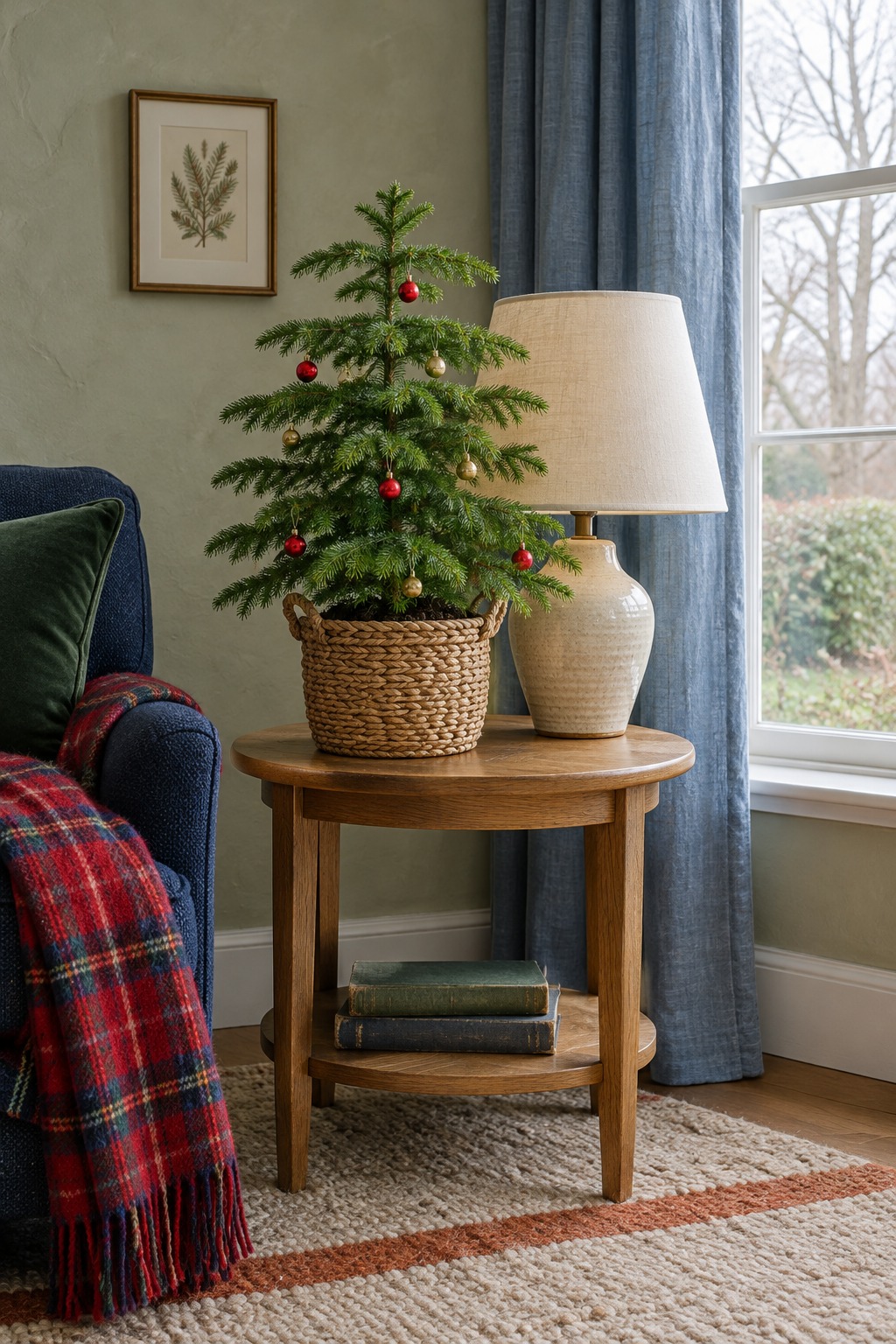
If you want a real tree in a small space, this is it. A Norfolk Island pine has soft, tiered branches and the shape of a Christmas tree. It is not a true pine, though. Its botanical name is Araucaria heterophylla and it comes from the Pacific. It is an evergreen that stays green all year and keeps growing.
- Light: Bright and indirect, near an east, west or south window. Turn the pot each week so it grows straight.
- Water: When the top inch of soil is dry. Water fully, then drain.
- Warmth: Normal house temperatures of 55 to 70 degrees, with winter nights no colder than 50.
- How long: It lives for years and is not a seasonal plant.
- Blooms again: It does not flower. It simply grows.
- Pets: Norfolk Island pine is non-toxic to dogs and cats.
It likes humid air, around 50 percent, so keep it away from heating vents and set the pot on a tray of damp pebbles. For a Christmas look, hang a few very light ornaments on it. The branches are thin, so skip anything heavy. These 49 shatterproof mini ornaments (opens Amazon in a new tab)As an Amazon Associate, we earn from qualifying purchases. Full disclosure. are about 1.2 inches across and made of lightweight plastic.
7. Cyclamen
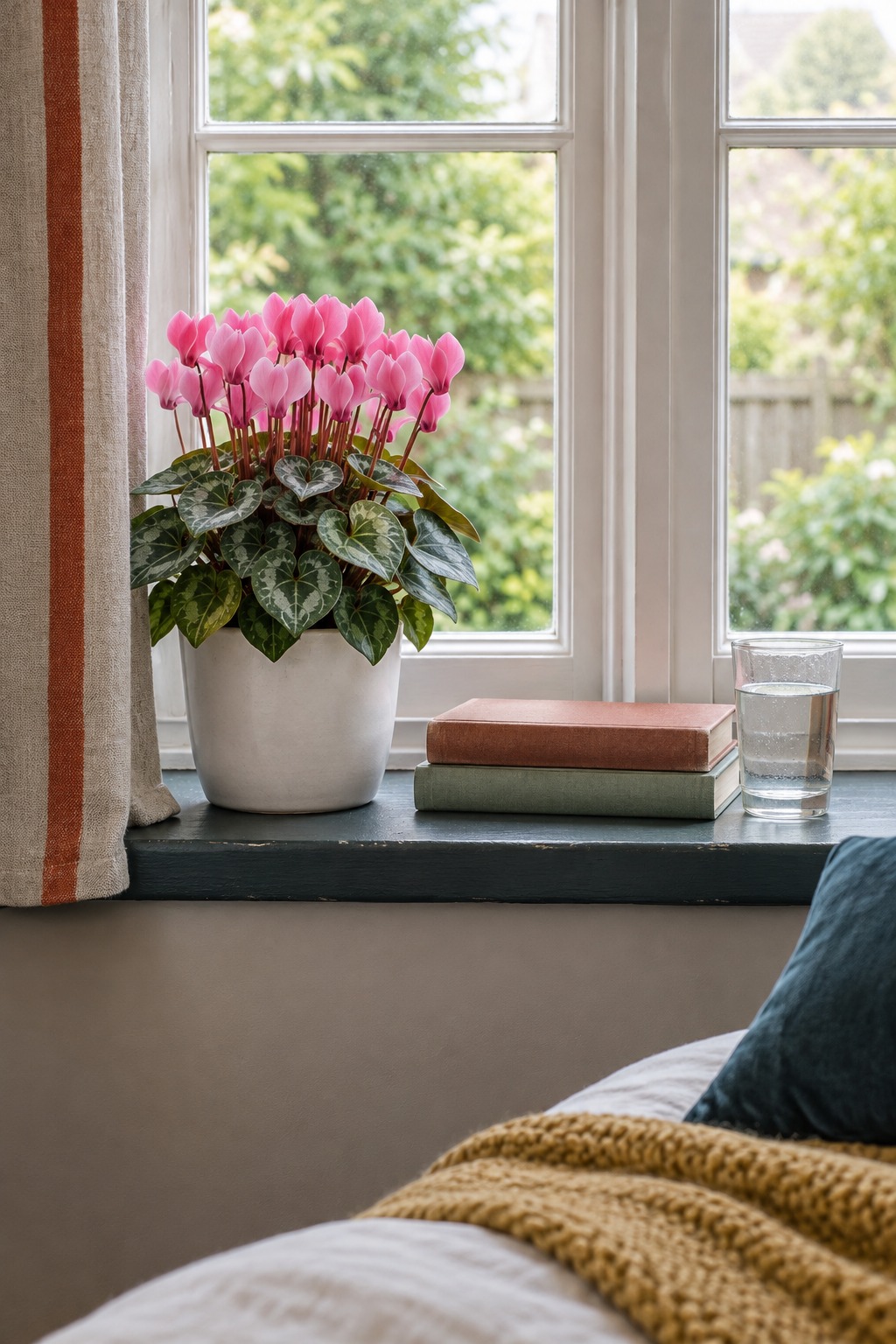
A cyclamen has heart-shaped leaves and flowers that stand above them in pink, red, white or purple. It is the plant for the cold room, the bedroom windowsill or the unheated entry. A warm, dry living room is where it struggles.
- Light: Bright and indirect. A north window works.
- Water: Keep it evenly moist but never soggy. Water from below by standing the pot in about half an inch of water for five minutes, then drain it. Water in the crown can rot the plant.
- Warmth: The cooler the better, 50 to 65 degrees, and around 50 to 60 at night.
- How long: Several months of flowers if the room stays cool. Extension notes call it dependable for one season.
- Blooms again: It is possible, because the plant goes dormant after flowering, but it is difficult in most homes.
- Pets: Cyclamen is toxic to dogs and cats. Drooling, vomiting and diarrhea are the usual signs, and large amounts of the tuber can affect the heart.
Pull spent flowers off at the base of the stem, not just the petals. Put the pot on a windowsill in a room you keep cool, and it will keep the flowers coming.
8. Kalanchoe
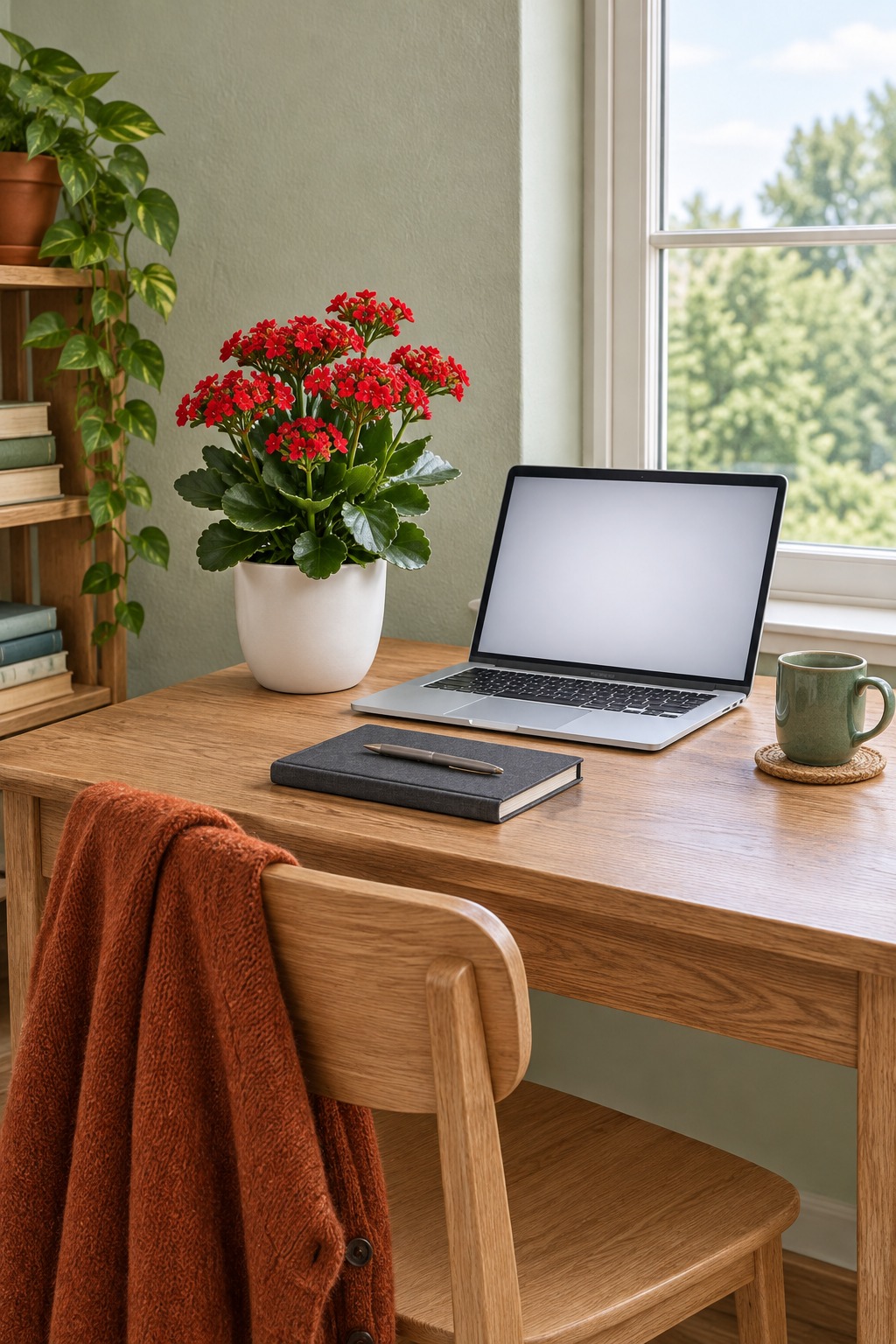
A kalanchoe is a succulent with thick, glossy leaves and tight clusters of tiny flowers in red, orange, pink or yellow. It is cheap, it is tough, and it blooms from about late November until March, a long run for a small plant.
- Light: Bright and sunny. It wants the best window you have.
- Water: When the soil feels dry to the touch. Overwatering is the main way to lose one.
- Warmth: 60 to 75 degrees.
- How long: Flowers for months, and the leaves stay good after that.
- Blooms again: Unreliable unless you control day length. For Christmas flowers it needs about 13 hours of total darkness every night for around 30 days. Most people keep it for the leaves or replace it.
- Pets: Kalanchoe is toxic to dogs and cats. Vomiting and diarrhea are the common signs, and an abnormal heart rhythm is rare.
Because it is small and sturdy, it suits a desk, a kitchen sill or a bathroom shelf with a window. Group three in the same color for a bold look, or mix colors for a cheerful one.
9. Anthurium
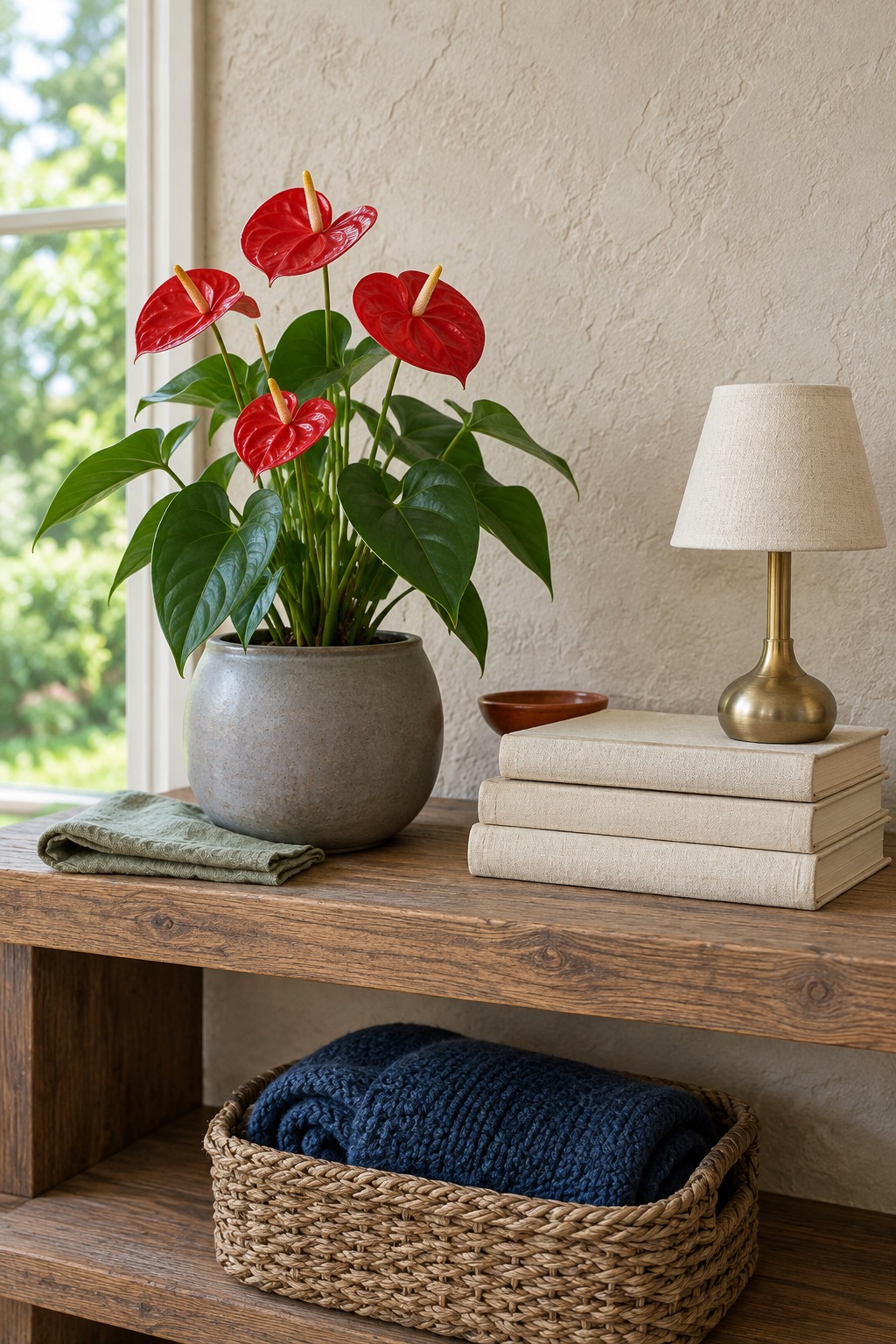
Red anthurium looks glossy and a little fake, in the best way. The bright red heart-shaped part is a spathe, not a petal, and it lasts a long time. It is the plant for a warm home. The University of Massachusetts says anthuriums do well in homes kept above 70 degrees, which is the opposite of cyclamen.
- Light: Bright and indirect. Direct sun scorches the leaves.
- Water: When the top inch or two is dry, and empty the saucer.
- Warmth: About 65 to 80 degrees, and protected from cold drafts.
- How long: The red spathes last for many weeks and often for months.
- Blooms again: Yes, in good light, and it will keep producing new flowers through the year.
- Pets: Anthurium is toxic to dogs and cats. Chewing it can cause mouth pain and swelling, drooling, vomiting and trouble swallowing.
A single anthurium in a plain pot on a shelf or a side table looks more modern than a bunch of festive plants, and it matches a neutral room.
10. White orchid
If red and green is too much for your room, a white moth orchid (Phalaenopsis) is the calm option. The Royal Horticultural Society puts it first on its list of Christmas houseplants. Clemson Extension says moth orchids adapt well to most homes and their flowers stay fresh for several months.
- Light: A bright window with little or no direct sun, such as an east window.
- Water: About once a week, letting it dry slightly in between, and never leave it in a waterlogged pot.
- Warmth: Nights no colder than 65 degrees, with days 10 to 15 degrees warmer.
- How long: Flowers for several months, usually into early spring.
- Blooms again: It can, but too little light is one of the main reasons an orchid will not flower. Keep it for the leaves if it skips a year.
- Pets: The moth orchid is non-toxic to dogs and cats.
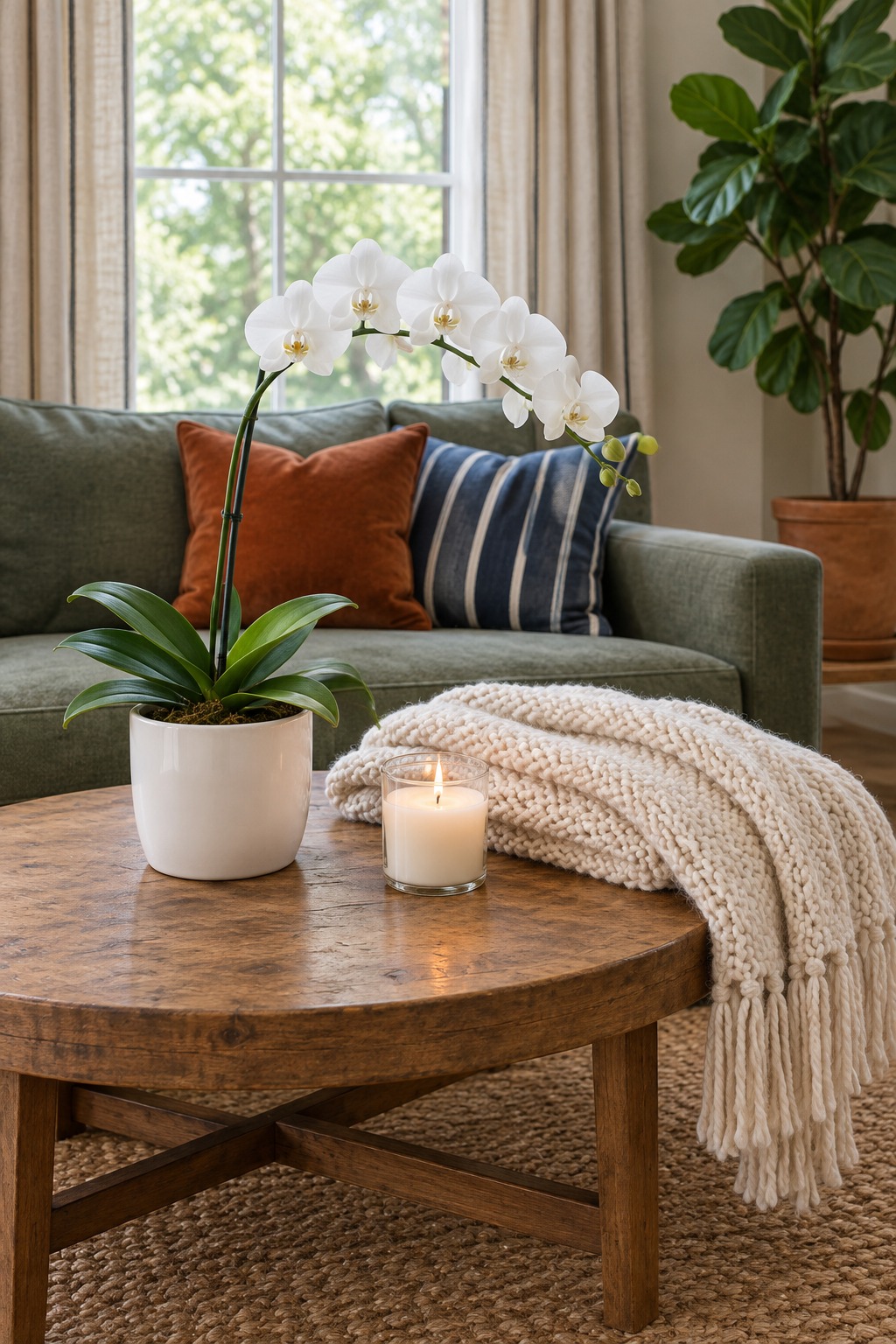
Orchids grow in bark, not soil, so water the plant in the sink and let it drain fully before it goes back in its decorative pot. One on a coffee table in a plain white pot looks calm next to candles.
How do you keep Christmas plants alive indoors?
Light first. Flowering plants need more of it than leafy ones, and the brightest window in the house, usually south or southwest, is where they should live. The University of New Hampshire says plants kept in poor light turn yellow and drop their flowers sooner.
Then the rest, in order:
- Remove the foil. Water has to drain. Take the pot to the sink, water until it runs out the bottom, let it drip, then put the decorative wrap back.
- Water when the top of the soil is dry. “Dry to the touch” means the top inch feels dry and below that still feels moist. A saucer of old water is how most holiday plants die.
- Keep them out of drafts and heat. Doors, windows, fans, fireplaces and radiators dry the leaves and flowers fast. The UNH extension says a hot, dry room shortens bloom time more than anything else.
- Go cooler at night if you can. Most flowering plants last longer in a room around 65 degrees in the day and 50 to 55 at night.
- Group plants together. A cluster raises the humidity around them a little. Most holiday plants dislike sudden temperature changes and dry indoor air.
- Pick off dead leaves and spent flowers. It keeps the plant tidy and cuts down on problems.
When you bring a plant home from the store in cold weather, have it wrapped in a sleeve. A poinsettia is hurt when the temperature drops below 50 degrees on the way to the car.
Are Christmas plants safe for cats and dogs?
Some are and some are not. Here is the split:
| Non-toxic to dogs and cats | Toxic to dogs and cats |
|---|---|
| Christmas cactus | Poinsettia (mild irritation, usually) |
| Rosemary | Amaryllis |
| Norfolk Island pine | Paperwhites (narcissus) |
| Phalaenopsis orchid | Cyclamen, kalanchoe, anthurium |
A non-toxic plant can still upset a stomach if a pet eats a lot of it, so put even the safe ones up high. If your pet chews one of the toxic plants, call your vet or a pet poison hotline. For more plants that are safe for a pet household, see houseplants safe for cats and dogs.
Which Christmas plants bloom again next year?
The amaryllis, the Christmas cactus and the anthurium are the best bets, and they are the ones worth keeping after January. A phalaenopsis orchid is a maybe, depending on your light.
Here is the honest keep or toss list:
- Keep: Amaryllis, Christmas cactus, Norfolk Island pine, rosemary, anthurium.
- Maybe: Orchid, cyclamen, kalanchoe.
- Toss or compost: Paperwhites, and a poinsettia if you do not want to do the dark schedule.
One more plant goes into the garden: the hellebore, or Christmas rose. It is sold as a gift plant at the holidays, and in spring you can plant it in a shade garden and it will come back for years. It is toxic to dogs and cats.
Can you keep a poinsettia after Christmas?
Yes, and many people do, but getting it to turn red again is work. Cut it back to about six inches after the bracts fade, put it outdoors in a sunny spot once frost is gone, feed and water it through summer, and bring it inside before frost. From the last week of September until early December it needs natural daylight only, and complete darkness from about 5 p.m. to 8 a.m. Even a lamp on at night will delay the color. If that sounds like too much, you can still keep it as a green plant.
What indoor plant can you use as a small Christmas tree?
A Norfolk Island pine is the easiest living tree for a small space. It stays green, takes a few light ornaments, and can be a tree again next year. A rosemary tree is the second choice, and it smells good, but it needs a sunny window. Both are shorter than a cut tree and fit on a table or a stool.
How do you decorate indoor plants for Christmas?
Keep it light. Use mini ornaments on a Norfolk Island pine, a wide ribbon around the basket instead of around the plant, and a few tea lights in glass nearby. Hide plastic pots in baskets, bowls or crocks. Skip heavy ornaments and anything sprayed on the leaves, since thin branches and leaves are easy to damage.
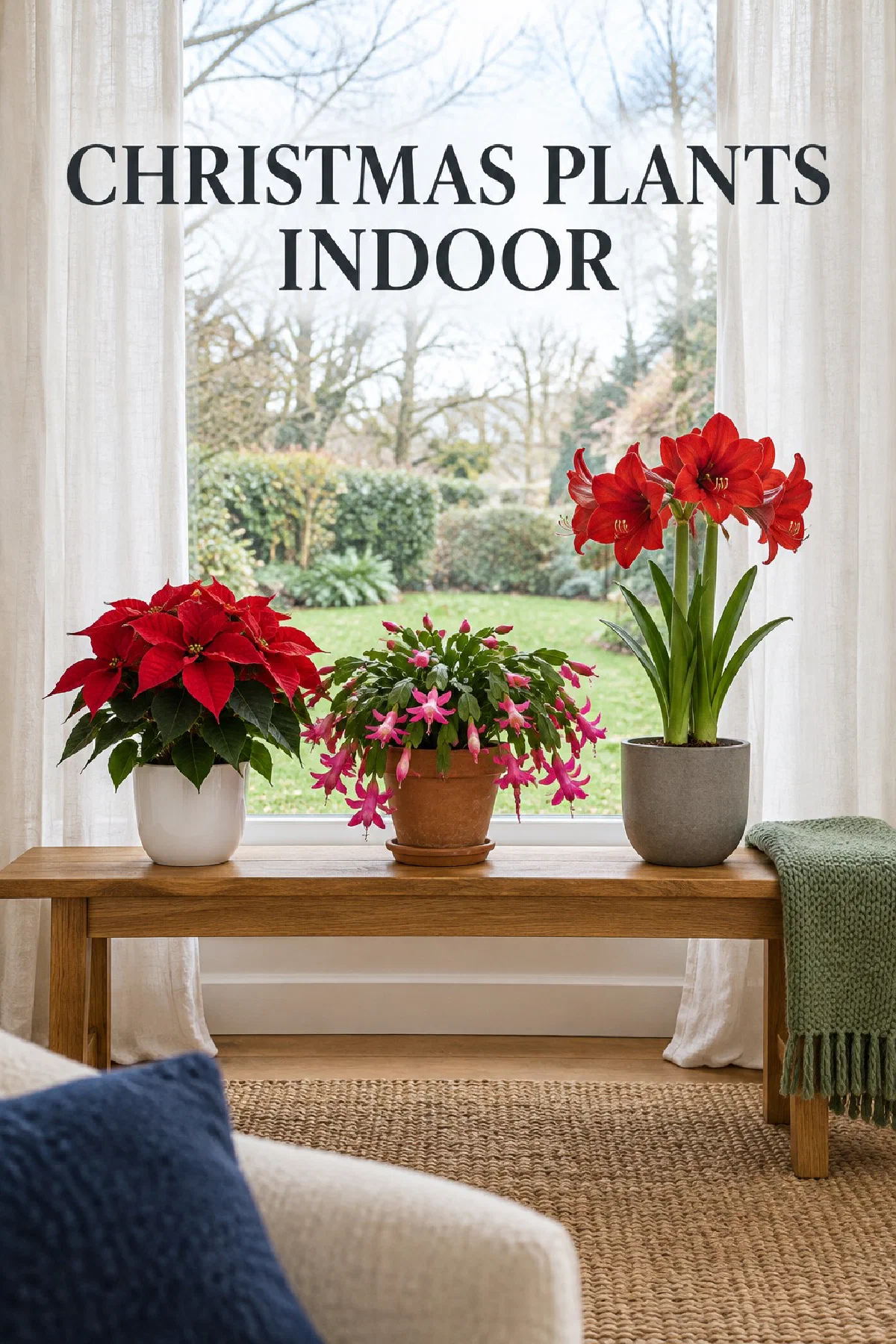
A good small display is three plants at different heights on one surface: a tall amaryllis, a medium poinsettia and a low cactus, all on a tray so the water stays contained. Indoor Christmas greenery that lasts has more ideas for mixing living plants and cut stems.
When should you buy or plant Christmas plants?
It depends on the plant. For amaryllis and paperwhites, now through early November. An amaryllis needs 6 to 8 weeks from potting to bloom, so potting one by the first week of November gives you flowers in mid to late December. Paperwhites take 3 to 10 weeks depending on the kind, so start one bowl now and another in two weeks.
Poinsettias, cyclamen, kalanchoe, anthurium and orchids are sold already in bloom, so buy them close to when you want them in the house, not weeks ahead. Buy a Christmas cactus in bloom too, because the dark schedule it needs starts in September.
What are the traditional Christmas plants?
Poinsettia, holly, ivy, mistletoe and the Christmas rose are the old ones. Holly, ivy and mistletoe are mostly used as cut greens in wreaths and garlands and are not houseplants. English ivy (Hedera helix) can live indoors, and a ring of it on a hoop makes a living wreath, but English ivy and holly are toxic to dogs and cats, and so is American mistletoe. Holly leaves and berries are low in toxicity, but keep all of these out of reach if you have pets.
The Christmas fern, a woodland fern whose fronds stay green through winter, is popular in New England for garlands too, but it is a plant for the woods rather than your living room.
What to buy
The products from above, in one place. Check sizes on each listing before you order.
- Amaryllis kit: Red Lion bulb, pot, saucer and potting mix (opens Amazon in a new tab)As an Amazon Associate, we earn from qualifying purchases. Full disclosure.
- Paperwhite kit: 5 bulbs, plastic pot, saucer and mix (opens Amazon in a new tab)As an Amazon Associate, we earn from qualifying purchases. Full disclosure.
- Seagrass planter basket: 8 inch with removable plastic liner (opens Amazon in a new tab)As an Amazon Associate, we earn from qualifying purchases. Full disclosure.
- Clear plant saucers: 8 inch, pack of 6 (opens Amazon in a new tab)As an Amazon Associate, we earn from qualifying purchases. Full disclosure.
- Mini ornaments: 49 shatterproof balls, about 1.2 inches (opens Amazon in a new tab)As an Amazon Associate, we earn from qualifying purchases. Full disclosure.
- Floor grow light: two heads, timer, pole up to 68 inches (opens Amazon in a new tab)As an Amazon Associate, we earn from qualifying purchases. Full disclosure.
What to read next
- Amaryllis flower arrangements for Christmas shows how to display the amaryllis from idea 2.
- Paperwhites for Christmas has the planting schedule and how to keep the stems upright.
- How to get a Christmas cactus to bloom covers the darkness schedule in more detail.
- Houseplants safe for cats and dogs lists 23 plants checked one by one.