Christmas planters work best when the container fits the place, not when every pot gets the same bundle of branches and a red bow. An exposed porch needs weight and weatherproof materials. A covered balcony needs a smaller arrangement that will not crowd the door. Indoors, drainage and pet access matter more than wind.
The quickest outdoor version uses potting mix already in a sturdy container: insert evergreen boughs at different angles, add a few taller bare stems, then secure one restrained accent. The University of Illinois Extension recommends evergreen branches, red twig dogwood, birch, and similar woody material for winter containers. You do not need to buy a new planter or replace usable soil to make one.
Pick the Planter by Where It Will Live
| Location | Best starting material | Main problem to solve | Good scale |
|---|---|---|---|
| Exposed front step | Cut spruce, fir, pine, and woody stems | Wind, freeze-thaw, and tipping | Heavy pot at least as wide as the door-side space allows |
| Covered porch | Cut greens or a nursery-grown evergreen | Drying under the roof | Medium pot with easy watering access |
| Apartment balcony | Short cut greens and one slim branch line | Door clearance and building rules | One narrow pot or railing box kept inside the rail |
| Indoor windowsill | Paperwhites, Christmas cactus, or a small foliage arrangement | Drainage, heat, and pets | Low bowl or cachepot with a protected saucer |
| Dining or coffee table | Cut greens in a watertight inner vessel | Drips, blocked sightlines, and loose needles | Low arrangement that can lift away |
For an outdoor display that has to stay alive rather than serve as a cut-green arrangement, container size and winter protection matter. Illinois Extension notes that a larger soil mass, an insulated container, a protected location, and winter moisture help container-grown evergreens survive. A small decorative conifer in a thin pot is not automatically winter-hardy just because the same species grows outdoors in the ground.
Materials That Cover Most of These Ideas
- A clean container with drainage for a living plant, or a watertight inner vessel for an indoor cut arrangement
- Existing potting mix for holding outdoor cut stems
- Two or three types of cut evergreen, such as spruce for body, fir for flatter fans, and pine for movement
- Three to five red twig dogwood, birch, or curly willow stems
- Floral wire or reusable garden ties
- Pinecones, dried seed heads, or a few weatherproof ornaments
- A stable saucer or tray for indoor containers
- Gloves, clean pruners, and a watering can
Choose fewer materials than the garden-center display suggests. Two greens, one branch type, and one accent are enough for a full pot. Repetition makes a pair of mismatched containers look related.
Build an Outdoor Christmas Porch Pot in Six Steps
- Test the empty pot in place. Open the door, walk past it, and check the view from the street before adding weight.
- Use the existing potting mix if it is workable. Cut arrangements need an anchor, not fresh growing soil. If the soil is frozen solid, wait for a milder day rather than forcing stems into it.
- Make the low skirt first. Insert the longest flexible pine or cedar-like branches around the rim so they cover the container edge without blocking the path.
- Fill the middle. Add denser spruce or fir at several angles. Turn the pot as you work and fill visible holes instead of making one perfect front.
- Add height once. Put three or five woody stems slightly off center. Odd numbers help, but the real test is whether the top still looks steady in wind.
- Wire the accent to the structure. Pinecones and ornaments should attach to a branch or pick. Nothing loose belongs in a planter beside a walkway.
Illinois Extension’s winter-container guidance uses the same practical order: evergreens first, branches for height and texture, then the accents. The pot should still look good after the ribbon or ornaments come off.
1. A Classic Evergreen Porch Pot Without the Giant Bow
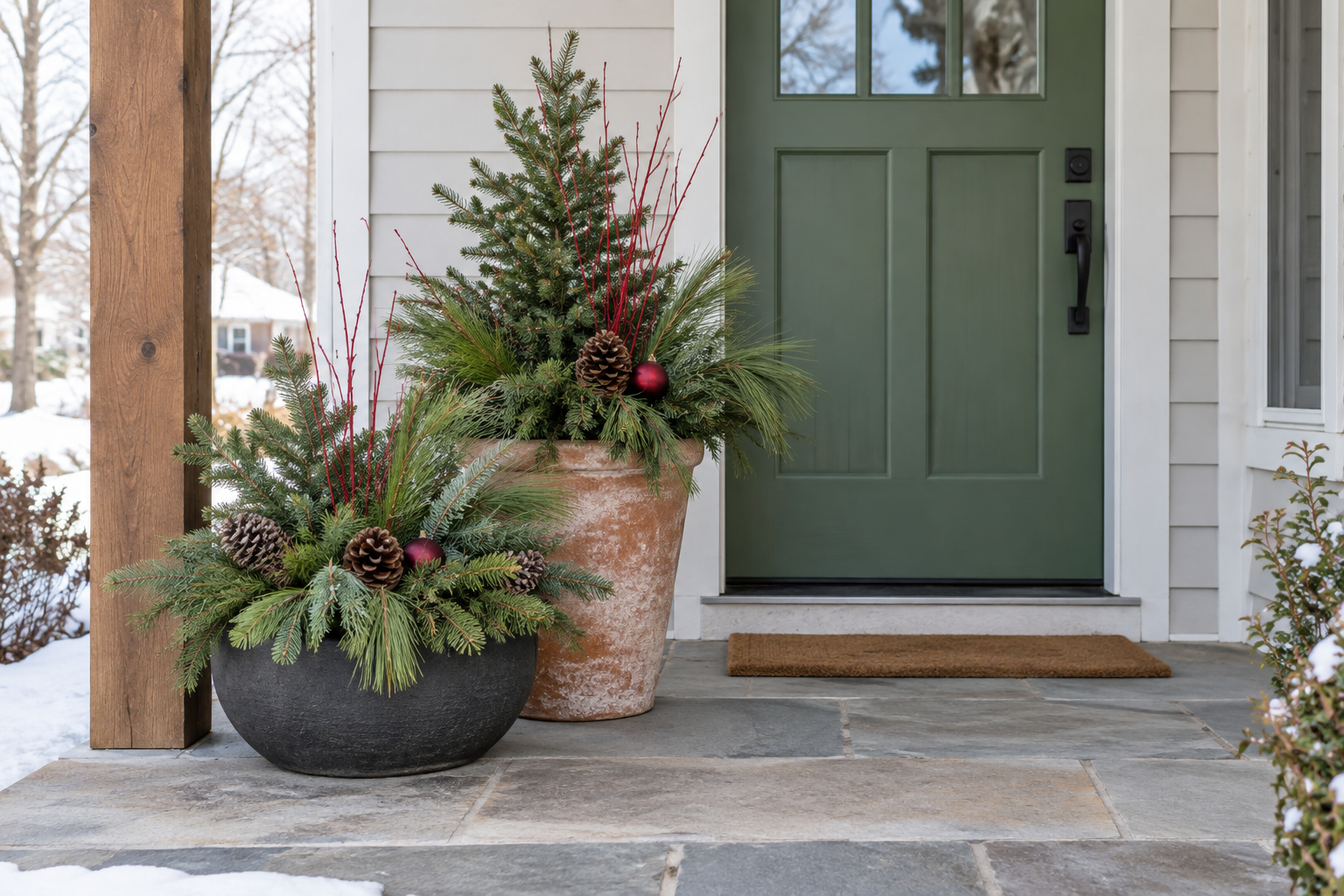
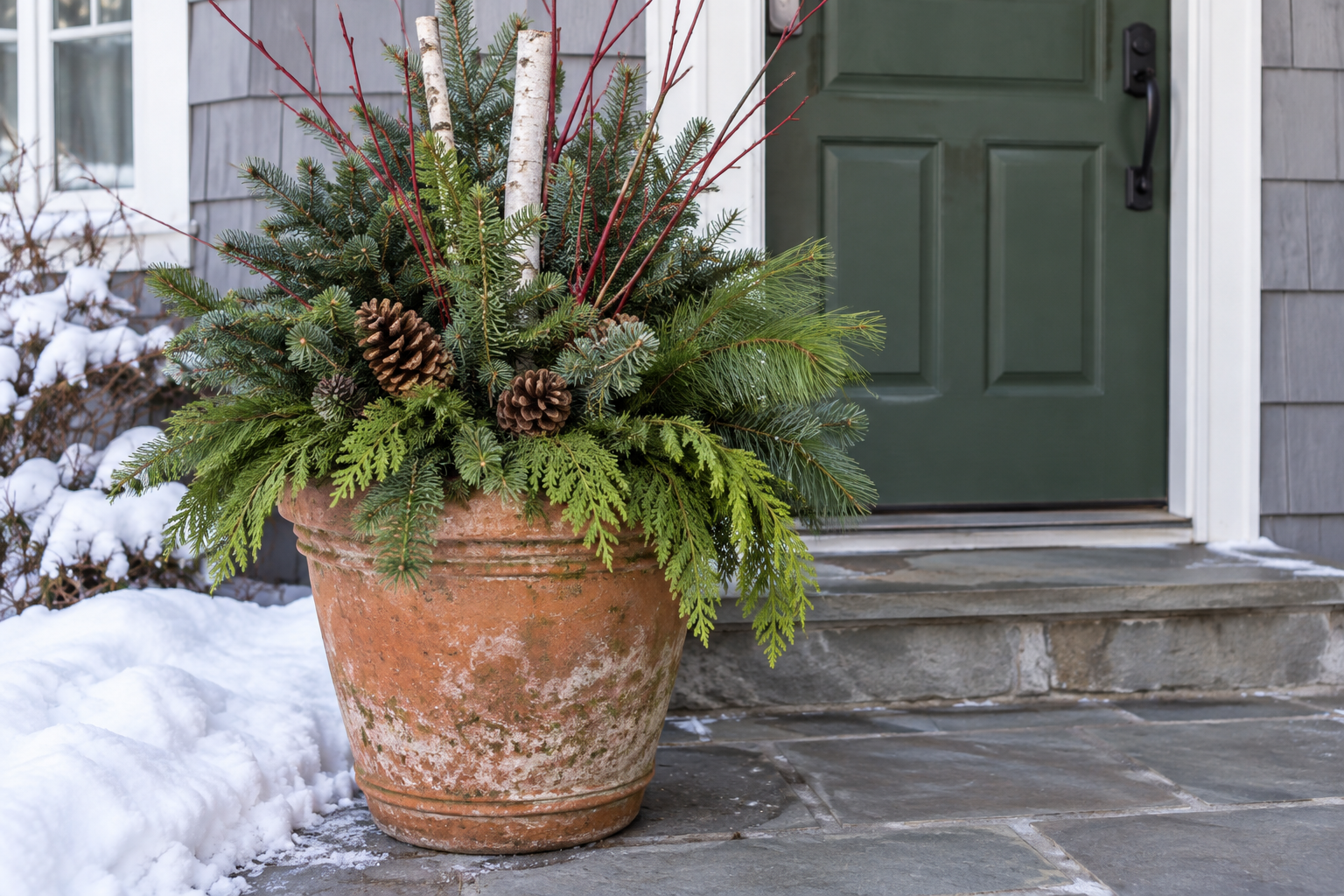
Start with spruce or fir through the middle, then let white pine spill over two or three points at the rim. Add three red twig dogwood stems and a small group of wired pinecones. That gives the pot height, body, and movement without covering half the greenery with ribbon.
This is the most forgiving idea for a plain front step because the materials look good from several feet away. If the door already has a wreath, repeat one material from it rather than matching every detail. A pinecone wreath and pinecones in the pots are enough. The Christmas porch decor guide can help place the planters so the door still opens fully and the steps stay clear.
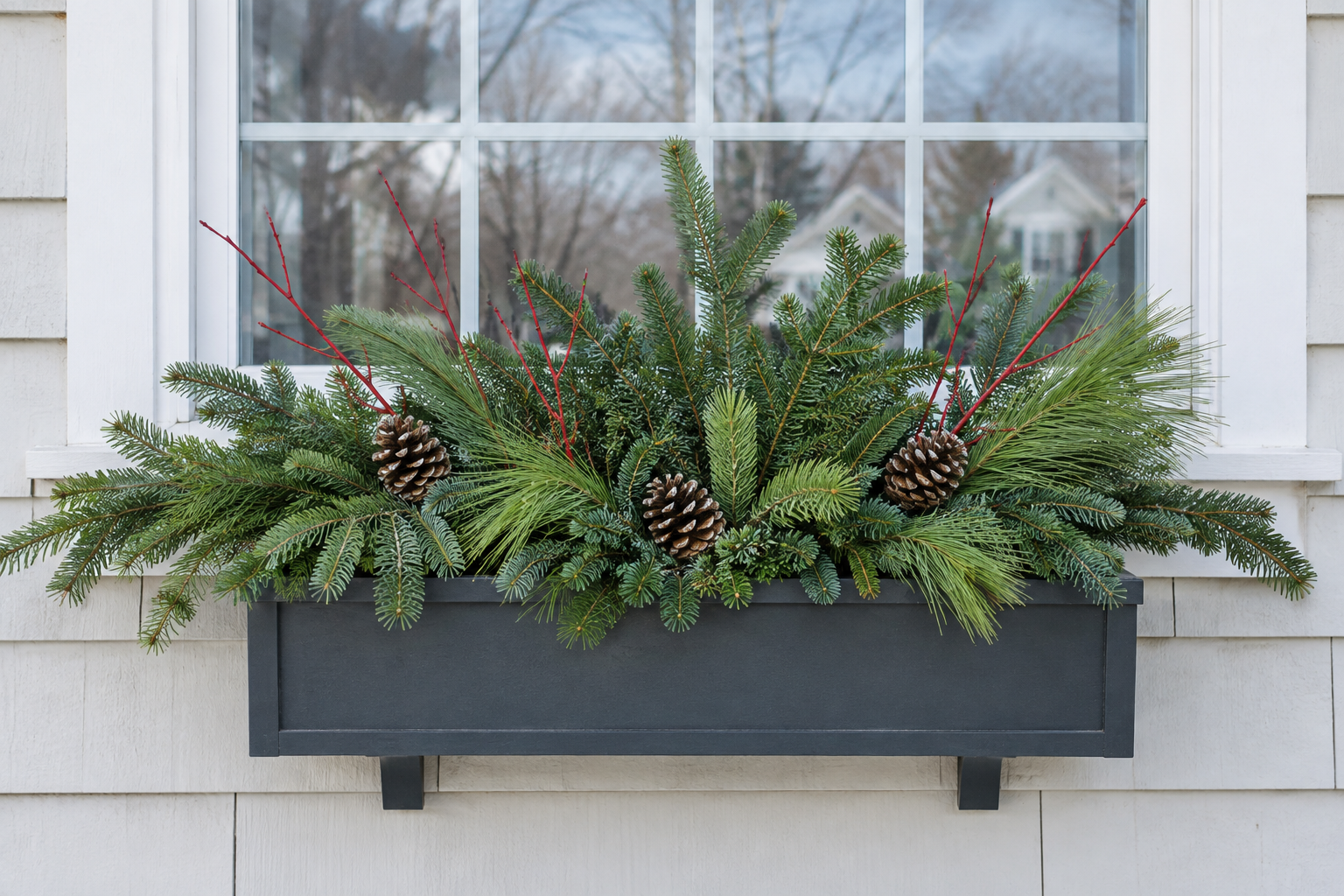
2. A Narrow Window Box With Greens That Point Three Ways
A winter window box looks flat when every branch points upward. Insert some stems vertically, some horizontally, and a few over the front edge. Illinois Extension uses that three-direction approach for winter window boxes because it fills the shallow container without relying on flowers.
Use spruce as the dense base, white pine as the softer filler, and one line of magnolia leaves or bare twigs for contrast. Keep the material below the window sash and away from vents. Wire any ornaments before the box goes back into its brackets. If the box is high enough to require a ladder for weekly repairs, skip ribbon and loose picks. Secure it once and let the branches carry the design.
3. Red Twig Dogwood and Spruce for a Tall Front-Door Pair
Two tall urns do not need two identical branch arrangements. Build the same low evergreen base in each, then angle the dogwood stems slightly toward the door. The pair will read as one entrance even if the containers are different shapes.
Keep the height narrow. A wide fan of branches catches wind and can scrape siding or swing into the walking path. Three to five stems per pot usually give enough red line against the green. Add a small cluster of cones low in each arrangement, where the weight is less likely to pull a branch over. For a narrow stoop, use the placement checks in the Christmas front-door decor guide before making the arrangements wider.
4. One Compact Christmas Planter for a Balcony
A balcony planter should make one corner feel finished without narrowing the exit. Use one heavy, narrow pot inside the railing, never balanced on top of it. Short fir or spruce branches hold their shape better than a wide pine skirt in a tight walkway. Add one upright birch or dogwood stem, then stop.
Check the lease and building rules before attaching lights, railing boxes, or hooks. Keep dry plant material away from grills, heaters, and smoking areas. If the balcony is covered, remember that the arrangement may receive little rain even during wet weather. The small-apartment Christmas balcony guide covers removable lighting and the clear path back to the door.
5. Paperwhites in a Low Windowsill Bowl
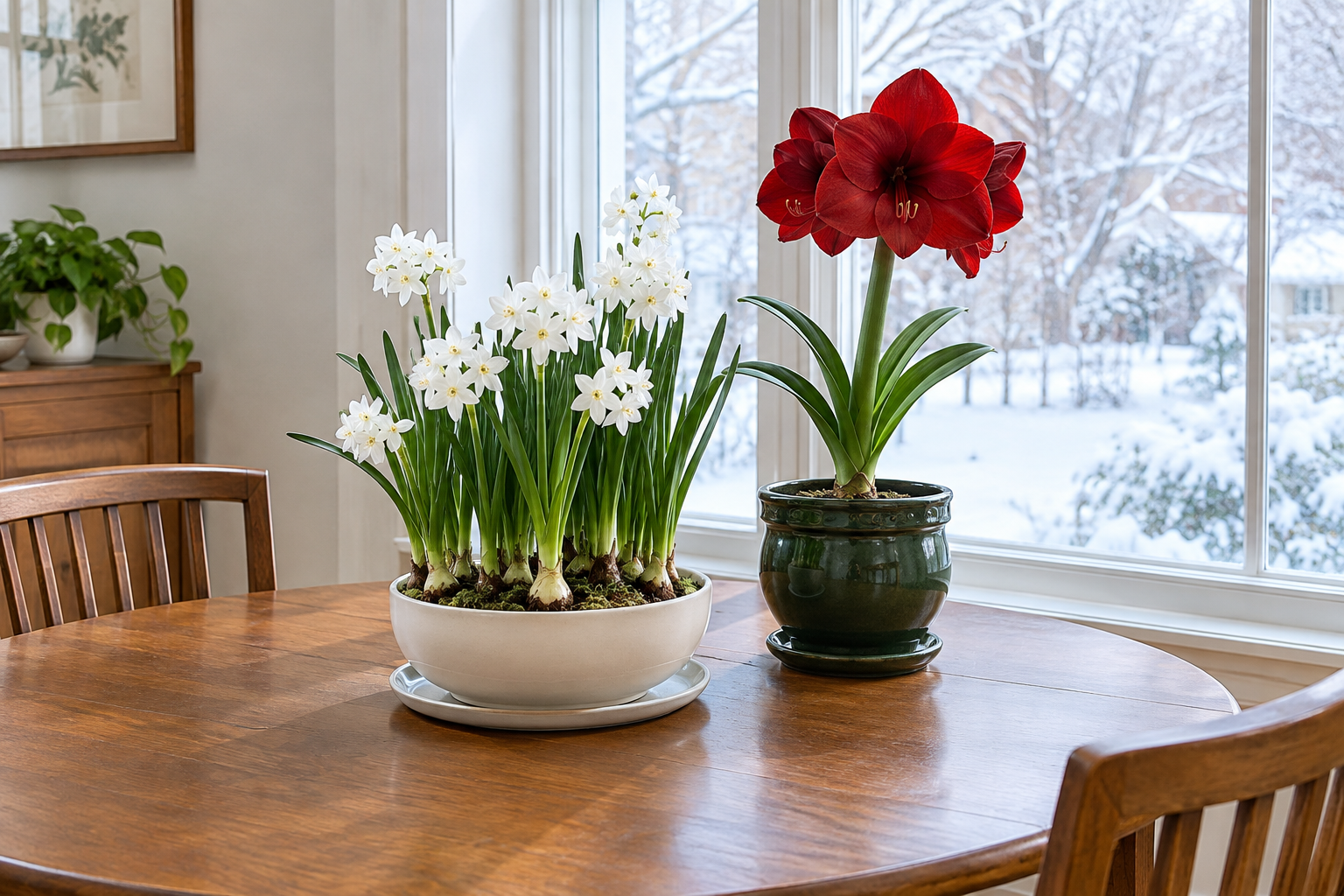
Paperwhites give an indoor planter height without taking much floor space. A low, heavy bowl is easier to keep upright than a tall narrow pot once the stems lengthen. Leave the necks of the bulbs visible, keep the vessel stable, and turn it as the leaves lean toward the window.
Timing matters more than decoration. If you want flowers near Christmas, use the schedule in when to plant paperwhites for Christmas rather than buying bulbs and hoping the date works. Paperwhites are toxic to cats and dogs, especially the bulbs, according to Penn State Extension. In a home where a pet can reach the windowsill, choose a different idea rather than trusting a decorative cover to hide the bulbs.
6. One Amaryllis in a Heavy Cachepot
Amaryllis already provides the color and the tall shape, so the planter does not need pinecones, picks, ribbon, and moss competing with it. Place the nursery pot inside a heavier cachepot, protect the surface below, and leave room to remove the inner pot for watering. A low container reduces the top-heavy look as the flower stalk rises.
For a longer table or mantel, repeat small pots rather than crowding several bulbs into one shallow bowl. The amaryllis Christmas arrangement guide compares container shapes and support options. Amaryllis is also toxic to cats and dogs, with the bulb carrying the greatest concentration, so keep it out of reach or choose the pet-aware option below.
7. A Pet-Aware Christmas Cactus Planter
A Christmas cactus gives an indoor holiday planter real flowers without loose berries, wired ornaments, or cut branches dropping onto the floor. The ASPCA lists Christmas cactus as non-toxic to cats and dogs, although chewing any plant can still cause stomach upset. Put the nursery pot inside a clean cachepot with a removable saucer, then use the plant’s arching stems as the whole arrangement.
This is a living plant, not a prop. Keep drainage open and do not let water stand inside the outer pot. Place it where the plant gets the light it needs and the pet is unlikely to knock it down. If you already own one, moving it into a steadier container may be the only Christmas decorating the windowsill needs.
8. A Low Table Planter With a Hidden Water Vessel
For a dining or coffee table, place a small watertight bowl inside a wider decorative container. The inner bowl holds short cut greens; the outer container supplies the finish and catches any drips when you lift the arrangement away. Keep every branch below the sightline across the table and leave candles out of the greenery.
Use fir or spruce around the rim, one small cluster of pinecones, and a few short stems of rosemary or another material you can identify safely. Skip holly berries where children or pets can reach the table. The indoor Christmas greenery guide explains which greens hold up indoors and where heat makes them dry faster.
9. A Christmas Planter That Becomes a Winter Planter
Build the December layer so it can come off in January. Use evergreen boughs, bark, dogwood stems, and cones as the permanent winter structure. Wire a few deep red ornaments or one removable ribbon near the front. After the holiday, remove that accent and leave the greens and branches in place.
This works especially well for a porch you do not want to redecorate twice in three weeks. It also keeps a usable arrangement out of the trash while the greens still look good. Check it after storms, remove anything loose, and replace individual branches when they brown. The result reads as winter after Christmas without another shopping trip.
Keep the Planter Looking Good
| Check | Outdoor cut greens | Outdoor living plant | Indoor living plant |
|---|---|---|---|
| First day | Secure every stem and accent | Confirm drainage and cold suitability | Protect the surface and empty standing water |
| Each week | Check for loose wire, brown tips, and wind movement | Check soil moisture as the plant and weather require | Check soil moisture and rotate if growth leans toward light |
| After severe weather | Reset the pot and remove broken pieces | Inspect the container for cracks and exposure damage | Not applicable unless kept near a cold draft |
| After Christmas | Remove holiday accents or compost safe cut material | Continue species-specific care | Keep growing the plant according to its care needs |
Cut greenery on a cold porch often lasts better than greenery in a heated room, but weather, species, and exposure change the result. Check the arrangement instead of promising it a fixed number of weeks. For a living outdoor evergreen, follow the nursery’s hardiness and care directions; a decorative pot does not give roots the same protection as the ground.
Pet and Child Safety Changes the Materials List
Penn State Extension identifies amaryllis, paperwhites, and holly as holiday plants that need caution around pets. The ASPCA also lists holly as toxic to cats and dogs. Do not tuck berries or bulbs under moss and assume that makes them inaccessible.
For an indoor arrangement within reach, use a verified pet-safe living plant such as Christmas cactus, or choose non-plant accents made from wood, fabric, and securely attached pinecones. Keep wire ends covered, skip glass ornaments, and place the whole container on a stable surface. If a pet eats an unknown plant, contact a veterinarian or animal poison-control service rather than waiting for a decorating article to diagnose the risk.
Christmas Planter Questions
What can I put in a planter for Christmas?
For an outdoor cut arrangement, combine two or three evergreen types with red twig dogwood, birch, curly willow, pinecones, or dried seed heads. Use one removable holiday accent. For a living indoor planter, paperwhites, amaryllis, or Christmas cactus can work when their care and pet risks fit the room.
How do you make a Christmas porch pot?
Use workable potting mix as the anchor, add long branches around the rim, fill the middle with denser greens, insert a few tall woody stems, and wire every accent to the structure. Test the pot beside the door before filling it so it does not block the path.
Can a Christmas planter stay outside all winter?
A cut-green arrangement can stay while it remains secure and presentable. A living plant needs species-specific hardiness, enough root protection, drainage, and moisture. Illinois Extension advises a large soil mass, insulation, and a protected location for overwintering container plants in cold climates.
Do Christmas porch pots need water?
Living plants do. Cut greens may also benefit from moisture, but the pot must still drain and remain safe through freezing weather. Check the actual material and local conditions rather than following one schedule for every container.
Sources
- University of Illinois Extension: container-garden designs for winter
- University of Illinois Extension: creating winter evergreen containers
- University of Illinois Extension: overwintering plants in containers
- Penn State Extension: holiday plants and pets
- ASPCA: holly toxicity information
- ASPCA: Christmas cactus toxicity information