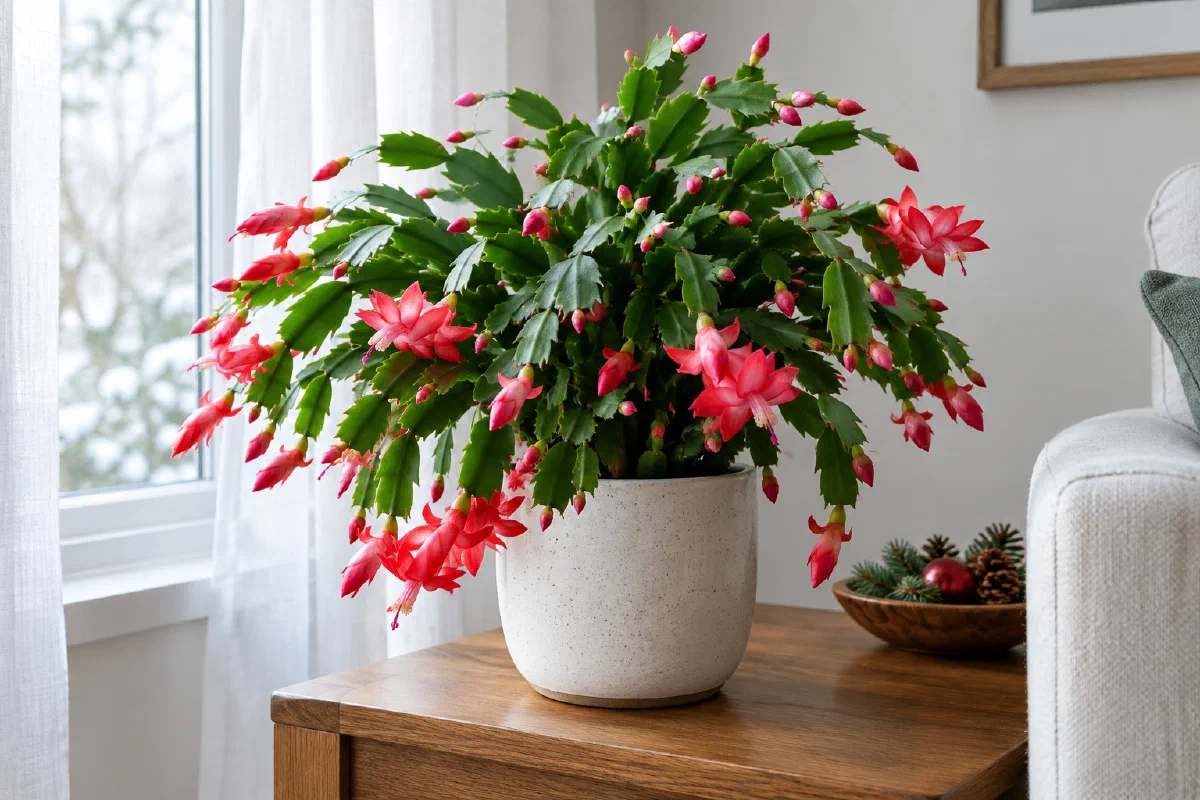
If your Christmas cactus grows healthy green segments but refuses to flower, the missing piece is usually the autumn signal, not a stronger fertilizer. A true Christmas cactus (Schlumbergera bridgesii) is a short-day plant that needs shorter days and cool nights to set buds. University of Minnesota Extension says Christmas and Thanksgiving cacti bloom after about six weeks of short days; when nights stay around 60 to 65 degrees Fahrenheit, the plant needs at least 12 hours of complete darkness each night for that period.
Start the bloom routine about six weeks before the holiday window you want. Give the plant bright, filtered light during the day, cool nights, and a dark stretch with no lamp, television, or porch light shining on it. Once buds form, leave the plant in a stable place. Moving it, letting it dry hard, or exposing it to drafts can turn a promising display into dropped buds.
Christmas cactus is a rainforest plant, not a dry desert cactus. UMN Extension’s holiday cactus guide recommends well-drained soil, filtered light, and avoiding heavy, wet soil. Penn State’s holiday cactus care guide also notes the need for uninterrupted darkness and moderate watering. Penn State’s holiday plants and pets guidance says the ASPCA rates Christmas cacti as non-toxic to cats and dogs, although any plant can still upset a pet’s stomach if eaten.
How to start the six-week short-day plant bloom plan
| Timing | Daytime | Nighttime |
|---|---|---|
| Weeks 1 to 6 before bloom | Bright, filtered light | 12 hours of complete darkness if nights are 60 to 65°F |
| When buds appear | Bright light without hot direct sun | Keep the same stable temperature and light pattern |
| During bloom | Filtered light, away from heat | Avoid cold drafts and sudden temperature swings |
| After flowers fade | Bright indirect light | Water less often while the plant rests |
If your room is cooler, around 55°F at night, the plant may set buds with less reliance on long darkness. If nights stay above 65°F, UMN Extension says flowering is unlikely. That is a useful diagnosis: adding more daylight will not fix a warm-night problem.
Give filtered light and complete darkness
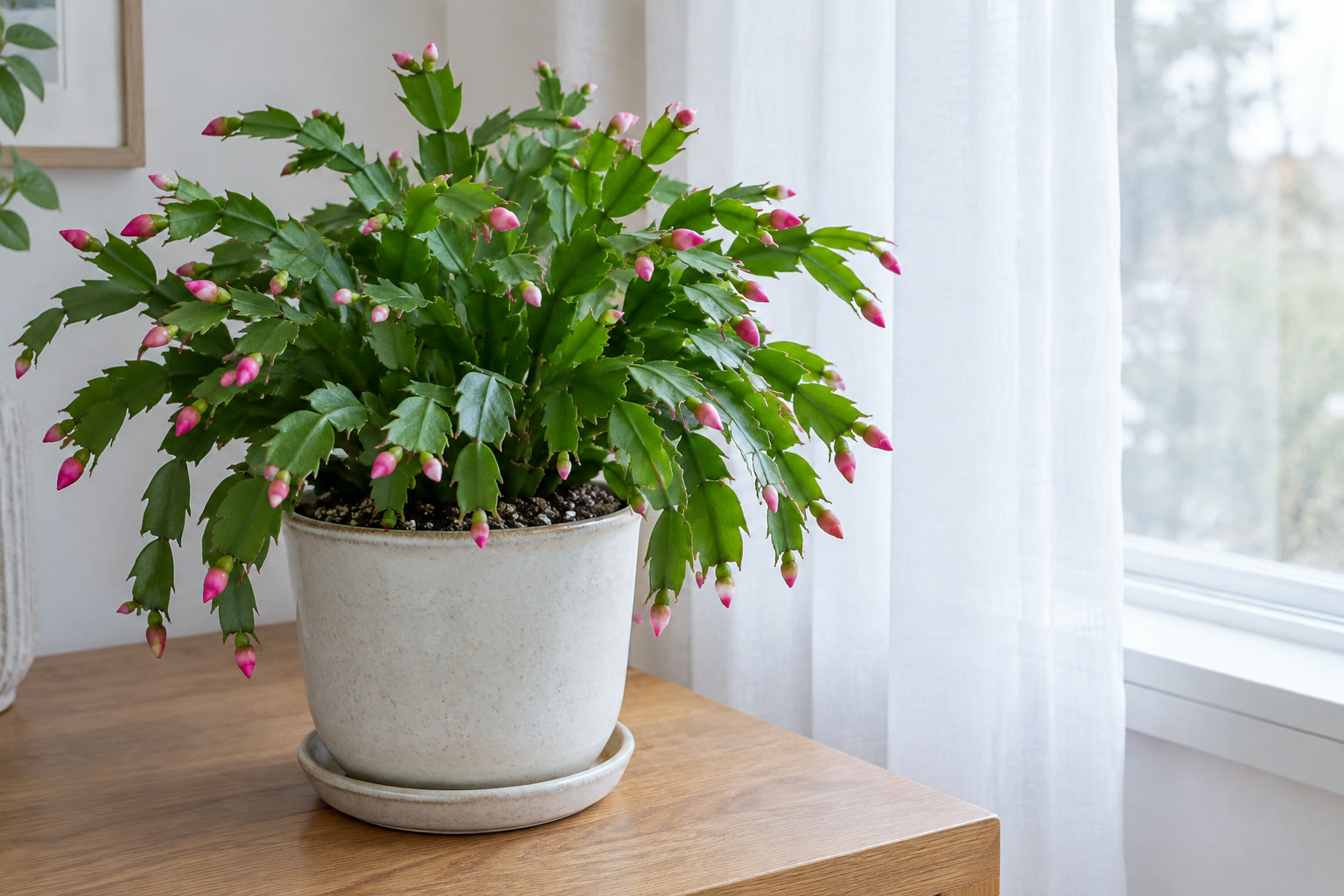
Place the plant near an east-facing window or a bright window softened by a sheer curtain. Filtered light keeps the segments green without the scorch that can follow full afternoon sun. During the bloom routine, the dark period has to be dark. A plant sitting beside a bright kitchen or living-room lamp may never receive the signal it needs.
You do not need to move the cactus into a closet every night if the room already has a naturally dark window area. You do need to notice the small lights that stay on: a grow light timer, a lamp across the room, or a porch light through the glass. Use a box or move the plant only if you can do so without knocking the stems.
Water with well-drained soil, not soggy roots
Water from the top and soak the potting mix thoroughly, then let the container drain. Water again when the mix becomes dry. The plant likes some moisture, but a pot that stays wet can develop root rot. Use a pot with drainage holes and do not leave it standing in a full saucer.
During bud formation, avoid two extremes:
- letting the mix become bone dry for long enough that the segments shrivel;
- watering on a fixed calendar when the room is cool and the soil is still wet.
Check the soil with a finger or wooden skewer. If it feels damp below the surface, wait. If it is dry and the segments look limp, water fully and drain the pot. Good care is a check, not a weekly guess.
Avoid bloom mistakes once flower buds form
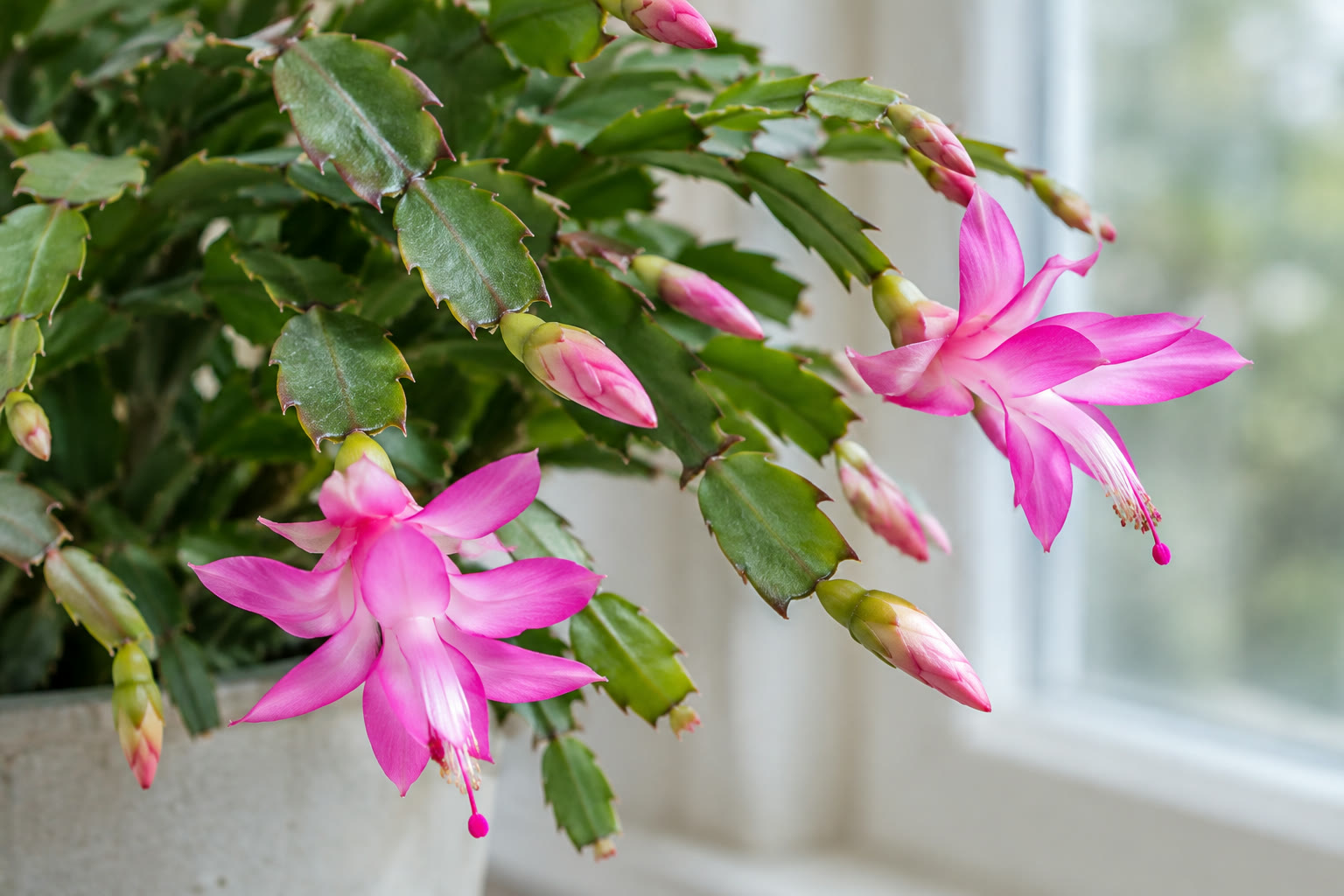
The safest display spot is one you can leave alone for several weeks. Keep the plant away from a heat register, fireplace, exterior door, and cold window glass. Do not repot while it is actively blooming. Penn State recommends repotting after flowering, usually in late winter or early spring, and using a slightly larger container only when the plant needs it.
If a bud drops, review the last few days rather than adding fertilizer. Sudden temperature changes, drafts, a move to a darker spot, a dry spell, or wet soil can all stress a holiday cactus. The answer is a stable place and consistent checks, not a bigger cachepot.
Four display spots that protect the plant
The plant is part of the room, so place it where the room’s habits will not work against the bloom.
- A bright kitchen shelf away from the stove. The shelf gives daylight and keeps the plant visible, but it must be clear of steam, cooking heat, and the path of a dish towel.
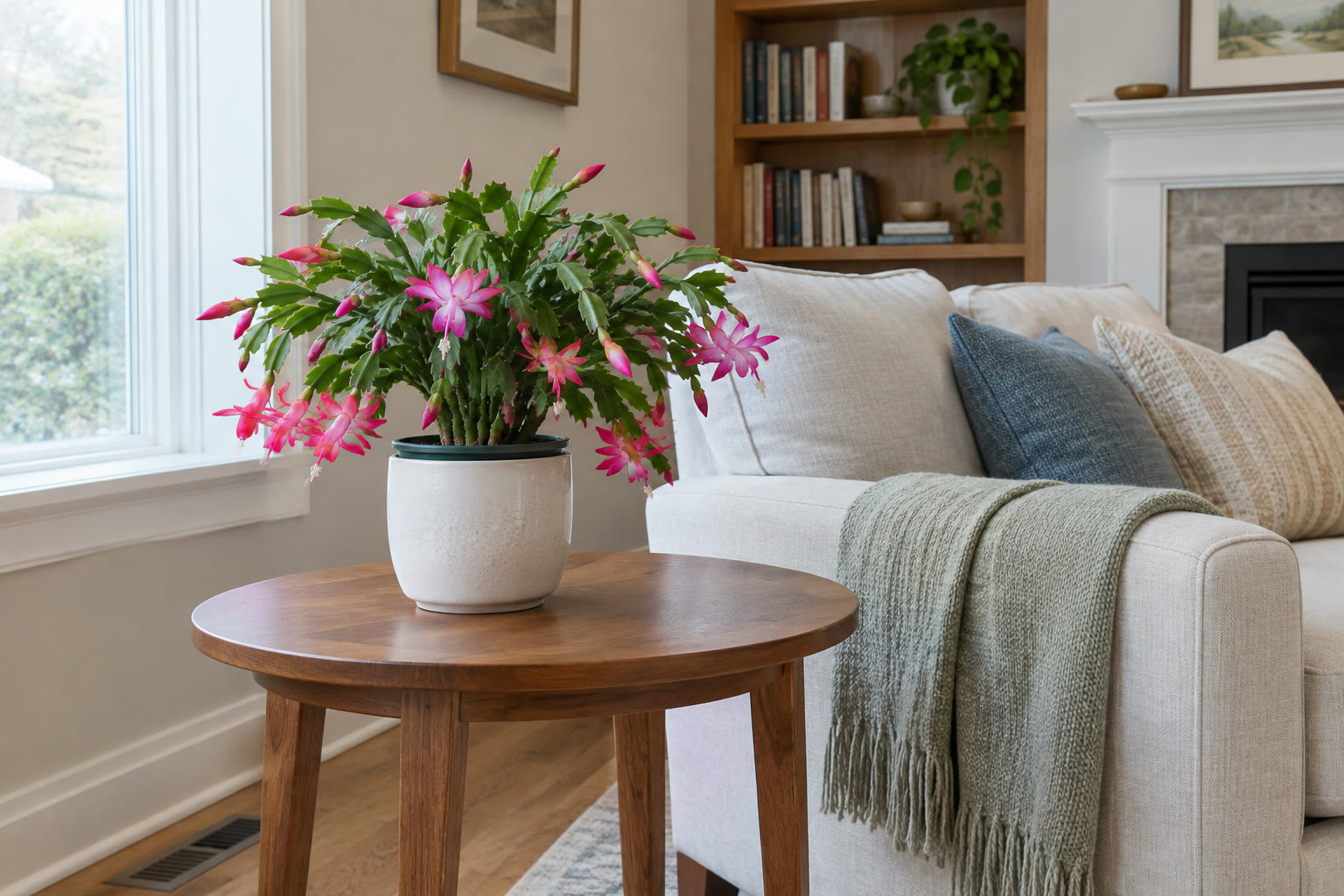
- A living-room side table. Use a saucer and a stable pot. Keep it far enough from a lamp or vent that the leaves stay at an even temperature.
- A bedroom dresser near filtered light. This works when the room can stay dark at night and the plant will not be brushed by clothing or curtains.
- A quiet entry console. Choose the spot only if the door does not create a cold draft and the pot cannot be bumped by bags or coats.
The best display is the one that lets the plant stay put. A cactus with open flowers looks better for longer when nobody has to move it every evening for dinner or clear it away from a heater.
Christmas cactus care and pet safety after bloom
Let spent flowers fall or remove them gently. Reduce watering while the plant rests, then return to regular care as new growth starts. Feed during the growing season according to a balanced houseplant fertilizer’s label; UMN Extension lists monthly half-strength feeding from June through August.
If you want another bloom next year, mark the calendar for the autumn routine. A true Christmas cactus may be sold under the broader holiday-cactus name, and Thanksgiving cactus is more common in shops. The stem shape and bloom timing can differ, so a plant labeled “Christmas cactus” may not open on December 25 every year. The care signal remains the same: cool nights, shorter days, and a stable home.
What to Read Next
- Low-light indoor plants can help fill the darker side of a room while the cactus gets its filtered window light.
- Indoor house plants with an uncluttered look has display ideas for small shelves and rooms.
- Winter home decor after the tree comes down shows how a holiday plant can stay useful after the ornaments leave.
- Christmas hostess gift ideas for every kind of invite includes the pet and timing questions to ask before gifting a live plant.
- Indoor Christmas plants covers 10 plants and how to care for them.