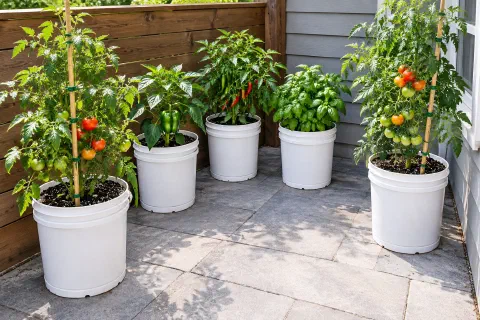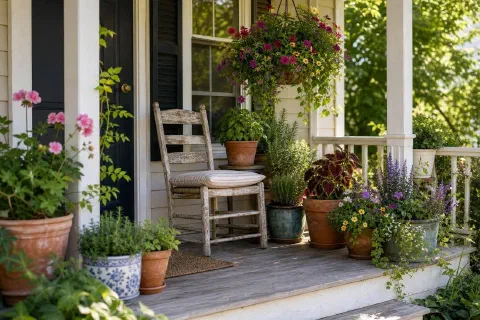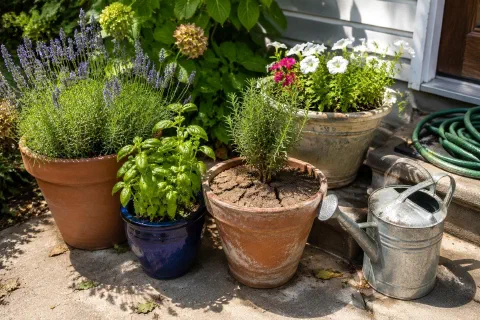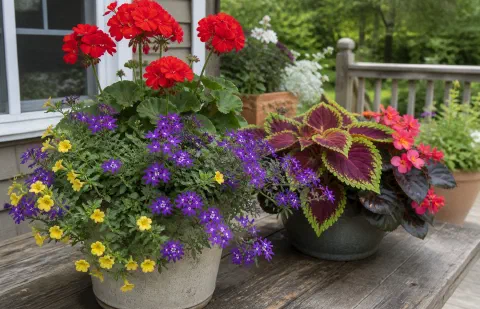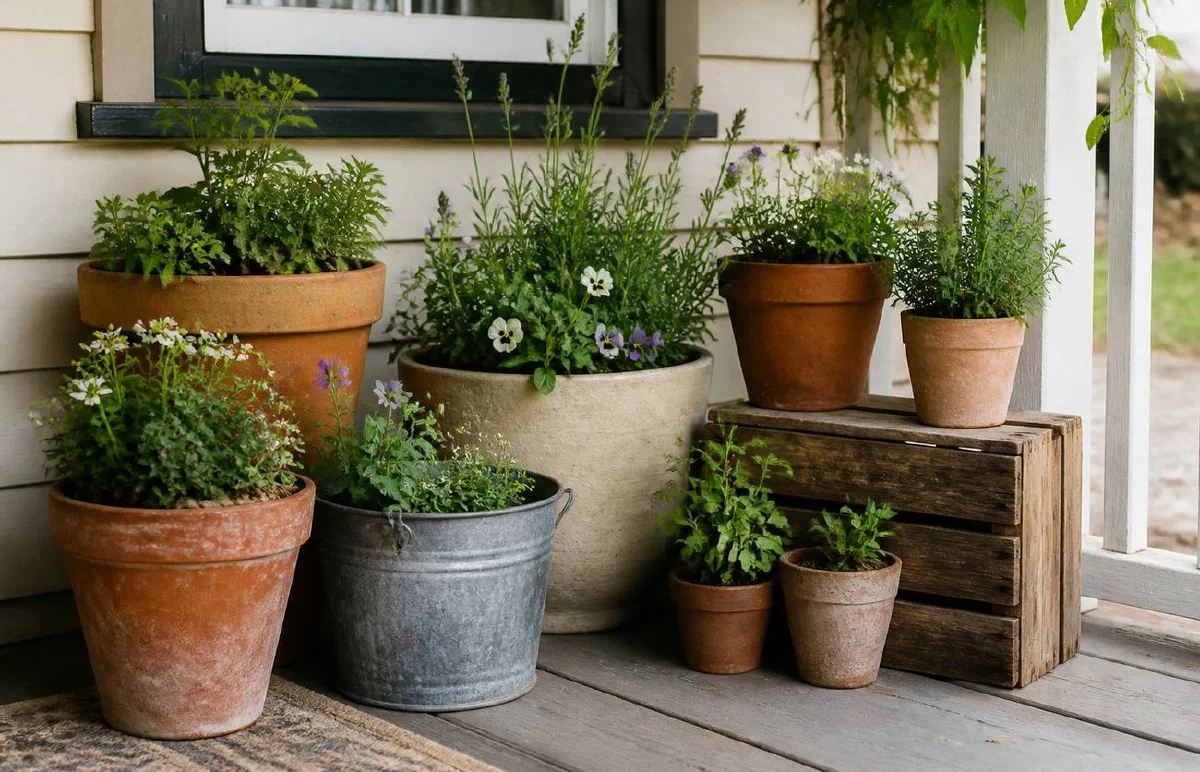
Cheap containers can look wonderful. They can also look like you forgot to take the recycling out.
The difference is not money. It is editing.
A porch full of random buckets, nursery pots, baskets, and cracked terracotta can feel charming when there is a plan behind it. Without a plan, it becomes clutter with dirt in it.
Here is how I would build a budget container garden that still feels intentional.
Start With What Already Looks Like It Belongs Outside
Not every free container is worth using.
Good candidates:
- terracotta pots with chips or mineral marks
- galvanized buckets
- old wooden crates
- nursery pots hidden inside baskets
- metal tubs with drainage holes
- thrifted ceramic planters in muted colors
- weathered window boxes
Harder to make look good:
- bright plastic storage bins
- shiny indoor trash cans
- novelty containers
- anything with loud branding
- containers too shallow for roots
You can use almost anything if it drains, but some things take too much work to stop looking like a hack.
| Container | What it does well | What to check first |
|---|---|---|
| Terracotta | Weathers, and mismatched pieces still look related | Drainage hole, and chips that will not turn into cracks |
| Galvanized buckets | Cheap, casual, and good for herbs | Drill holes in the bottom before planting |
| Woven baskets | Hide a nursery pot completely | The inner pot has to come out to drain |
| Wooden crates | Add height to a grouped corner | Line it, and keep it out of standing water |
Hide Nursery Pots Instead of Replacing Everything
Nursery pots are not the enemy. They are lightweight, free, and easy to move.
The trick is to hide them. Drop the nursery pot inside a basket, crate, old crock, metal bucket, or larger empty planter. This gives you the look without repotting every plant the second you bring it home.
Leave room for drainage. If the outer container has no hole, lift the nursery pot out to water, let it drain, then put it back. Clemson HGIC’s houseplant factsheet calls this double-potting, and gives the one rule that matters: the inner pot still needs a drainage hole, and if the outer pot has none, you have to be able to lift the inner one out and let it drain.
This is especially useful for seasonal flowers. There is no reason to spend more on the container than the plant.
Pick One Repeating Material
A budget container garden needs one thing that repeats.
Terracotta is the easiest. Even mismatched terracotta looks related. Galvanized metal works too. So does dark plastic if you keep it clean and use it in a group.
If all your containers are different, repeat the plant color instead. White flowers in mixed pots. Burgundy foliage in mixed pots. Herbs in mixed pots. Something needs to connect the pieces.
Random can look intentional when the eye finds a pattern.
Use Bigger Containers When You Can
Tiny pots are cheap, but they are not always easier.
They dry out fast, tip over, and multiply until the porch looks crowded. One 16-inch pot often looks better than five little 6-inch pots.
If you find a big ugly plastic pot for free, do not dismiss it. Tuck it inside a basket, paint it matte black, or group it behind smaller terracotta pots so only the plant shows.
The plant does not care if the pot came from a boutique garden shop.
Does a Cheap Container Need a Drainage Hole?
Yes, or it needs a nursery pot inside it that has one. Roots that stand in water rot, and a bucket, crock, or bin with no hole in the bottom is a bucket that holds water. If you love the container and will not drill it, drop the plant in a nursery pot, water that, and lift it out to drain. That one move is what separates a working budget pot from a drowned plant.
Turn Buckets Into Planters Carefully
Buckets can work, but they need drainage and restraint.
Drill several holes in the bottom. Add a layer of coarse material only if the container is very deep, then use fresh potting mix. Do not use garden soil in a bucket. It compacts and stays too wet. Clemson HGIC’s container gardening factsheet says garden soil usually cannot be used in a container because it may be too heavy, and that whatever you use has to be porous because roots need both air and water.
Galvanized buckets look best with simple plants:
- rosemary
- lavender
- thyme
- geraniums
- nasturtiums
- compact zinnias
- lettuce or herbs near a kitchen door
Avoid filling every bucket with a different loud flower. That is when the look turns chaotic.
Make A Free-Container Corner
If you have several mismatched containers, put them in one intentional corner instead of scattering them.
Use height:
- crate on the bottom
- large pot beside it
- medium basket on top
- low bowl in front
Plant the tallest container with rosemary, salvia, grass, or coleus. Use the low bowl for thyme, alyssum, sedum, or trailing lobelia. Add one flower color across the group.
This makes the corner feel designed, even if every container came from a garage shelf.
Avoid The Junk Garden Problem
Budget gardening can drift into clutter fast.
Before using a found container, ask three questions:
- Does it drain?
- Does it fit the porch or patio?
- Would it still look good if the plant struggled for two weeks?
That last question is useful. A charming pot with a tired plant still has some dignity. A weird plastic container with a tired plant just looks sad.
My Favorite Budget Mix
For a small porch, I would use:
- one big thrifted terracotta pot with a geranium
- one basket hiding a nursery pot of basil
- one galvanized bucket with rosemary
- one low bowl of thyme and alyssum
- one reused black nursery pot tucked behind the group with coleus
That gives you flowers, herbs, scent, texture, and height without buying a matching set of planters.
Intentional beats expensive. But intentional still needs editing.
What to Read Next
- Container Vegetable Garden Ideas for Small Spaces: what to actually plant in a small collection of pots.
- Container Vegetable Garden Layout: how to arrange the pots once you have them.
- What to Do When Container Soil Keeps Drying Out Too Fast: the small-pot problem, and what actually fixes it.
- Container Garden Ideas for Small Patios That Still Feel Full: making a handful of pots read as a full planting.
- Flower Container Combinations That Bloom All Season: what to put in the containers you already have.