I stood in my side yard last April with a paper bag full of wildflower seeds, staring at a patch of dirt I’d been meaning to “do something with” for three years. I’d saved dozens of garden plans on my phone. I’d sketched layouts. I’d measured twice and planted never.
So I ripped open the bag and threw the seeds like I was feeding chickens.
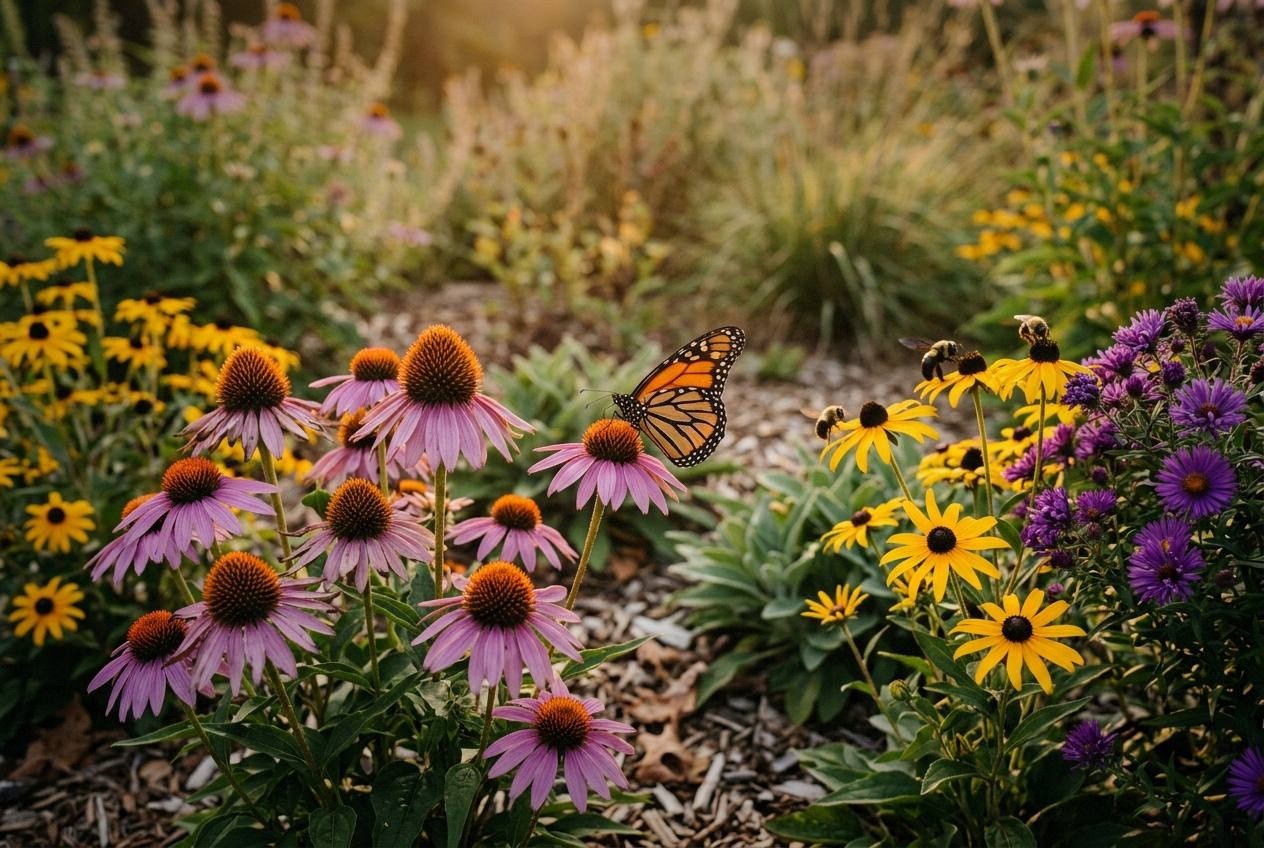
That’s chaos gardening. No rows, no spacing, no plan. Just seeds meeting soil and whatever happens next. My side yard is now a riot of California poppies, bachelor’s buttons, and cosmos that reseeds itself every year. I spend maybe twenty minutes a month pulling the truly aggressive weeds. The bees are happy. I’m happy. My neighbor asked if I hired a landscaper.
What Chaos Gardening Actually Is
Chaos gardening means scattering seeds in a rough area and letting nature sort out the details. You’re not spacing plants six inches apart. You’re not thinning seedlings. You’re creating a dense, self-sustaining patch that looks intentionally wild.
This works because plants in nature don’t grow in neat rows. They compete, they cooperate, they fill every available inch of soil. The strong ones thrive. The weak ones become mulch. You get a garden that looks full and established in one season instead of three.
The method exploded on Pinterest because it gives you permission to stop obsessing. No perfect soil test. No hardiness zone anxiety. Just seeds, dirt, and time.
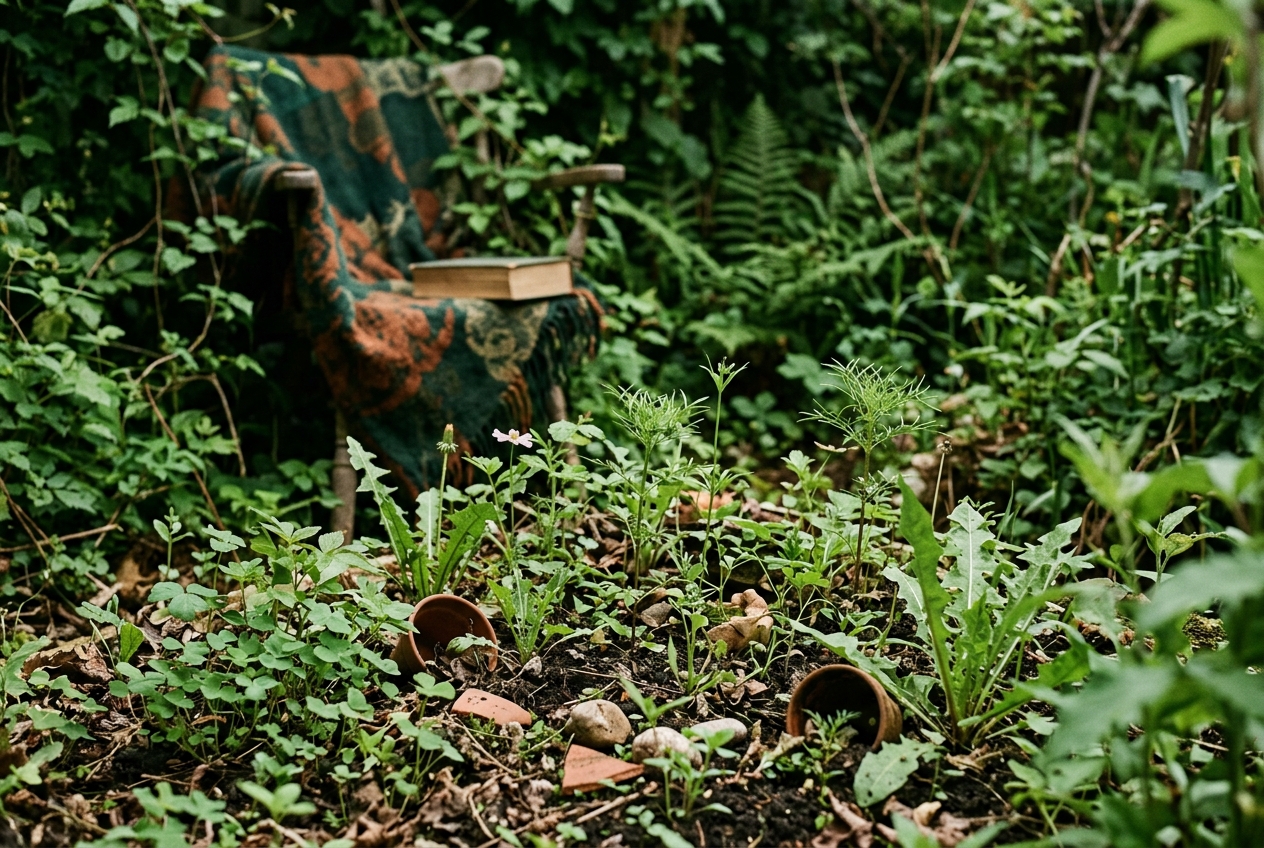
The Seed Mixes That Actually Work
Not all seeds are chaos-garden material. You need varieties that germinate easily, tolerate crowding, and don’t require babying.
My go-to mix (about $18 for 1,000 square feet):
- California poppy (Eschscholzia californica): germinates in 10-14 days, reseeds aggressively
- Cosmos (Cosmos bipinnatus): tall, airy, blooms until frost
- Bachelor’s button (Centaurea cyanus): blue flowers, drought-tolerant once established
- Calendula (Calendula officinalis): edible flowers, self-sows everywhere
- Alyssum (Lobularia maritima): fills low spaces, smells like honey
I buy from American Meadows or Botanical Interests. Their “scatter garden” mixes are pre-blended for chaos gardening. A one-pound bag runs $24-32 and covers about 2,000 square feet if you’re generous with it.
What doesn’t work: anything that needs consistent moisture (impatiens, begonias), anything with tiny seeds that wash away in rain (petunias), anything that takes 90+ days to bloom (most perennials from seed).
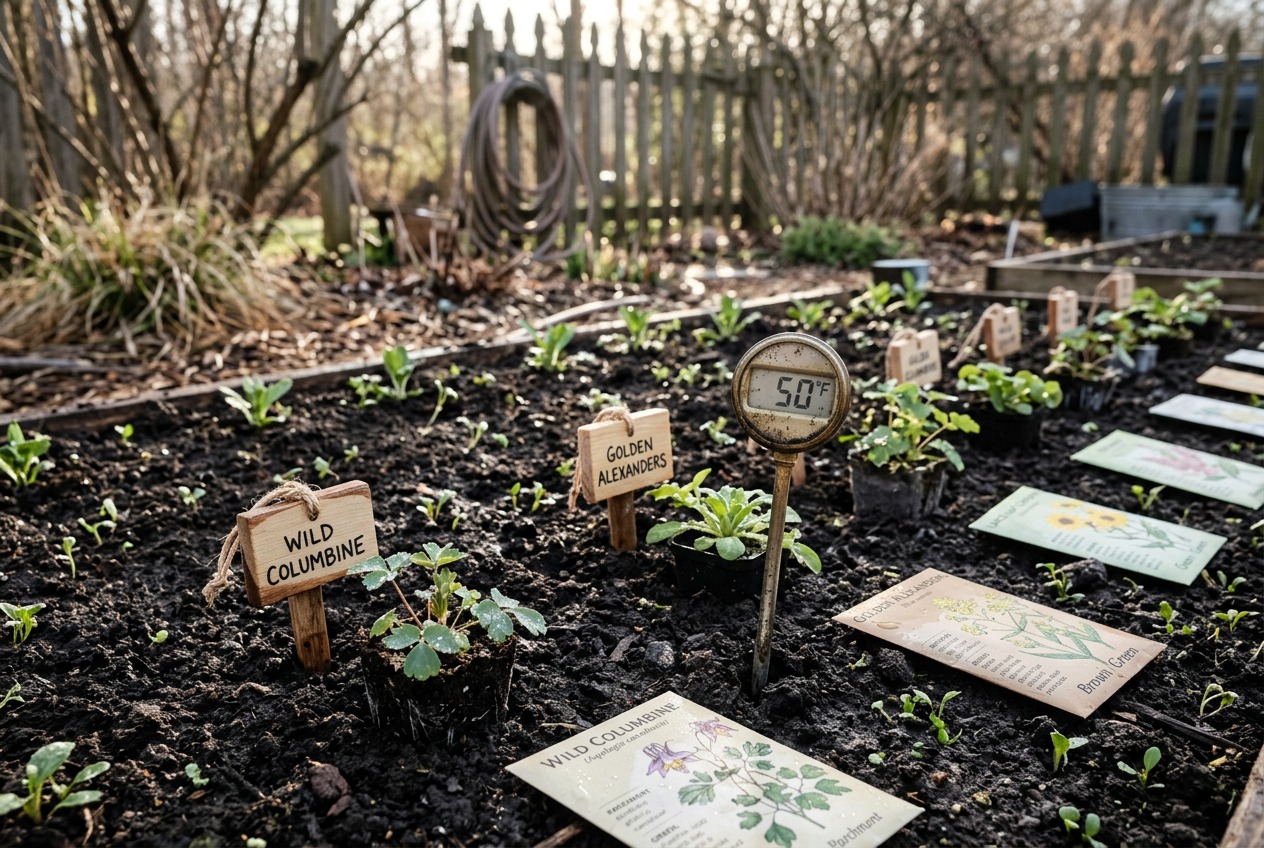
For shadier spots, I use a woodland mix: columbine, foxglove, forget-me-nots. These are slower but they establish and spread on their own timeline.
Soil Prep (The Bare Minimum Version)
Here’s what I actually did, not what the gardening books say you should do.
I cleared the area of grass using a flat shovel. Took about an hour for 200 square feet. I didn’t remove every single root. I didn’t rototill. I scraped off the top layer until I saw mostly dirt.
Then I raked it smooth. That’s it.
If your soil is pure clay or pure sand, dump a bag of compost on top and rake it in. One cubic foot bag ($4-6) covers about 50 square feet when you spread it thin. This gives seeds something to grab onto while they germinate.
The “right” way involves soil testing and amendments and weeks of prep. The chaos way involves one afternoon and accepting that some seeds won’t make it. Enough will.
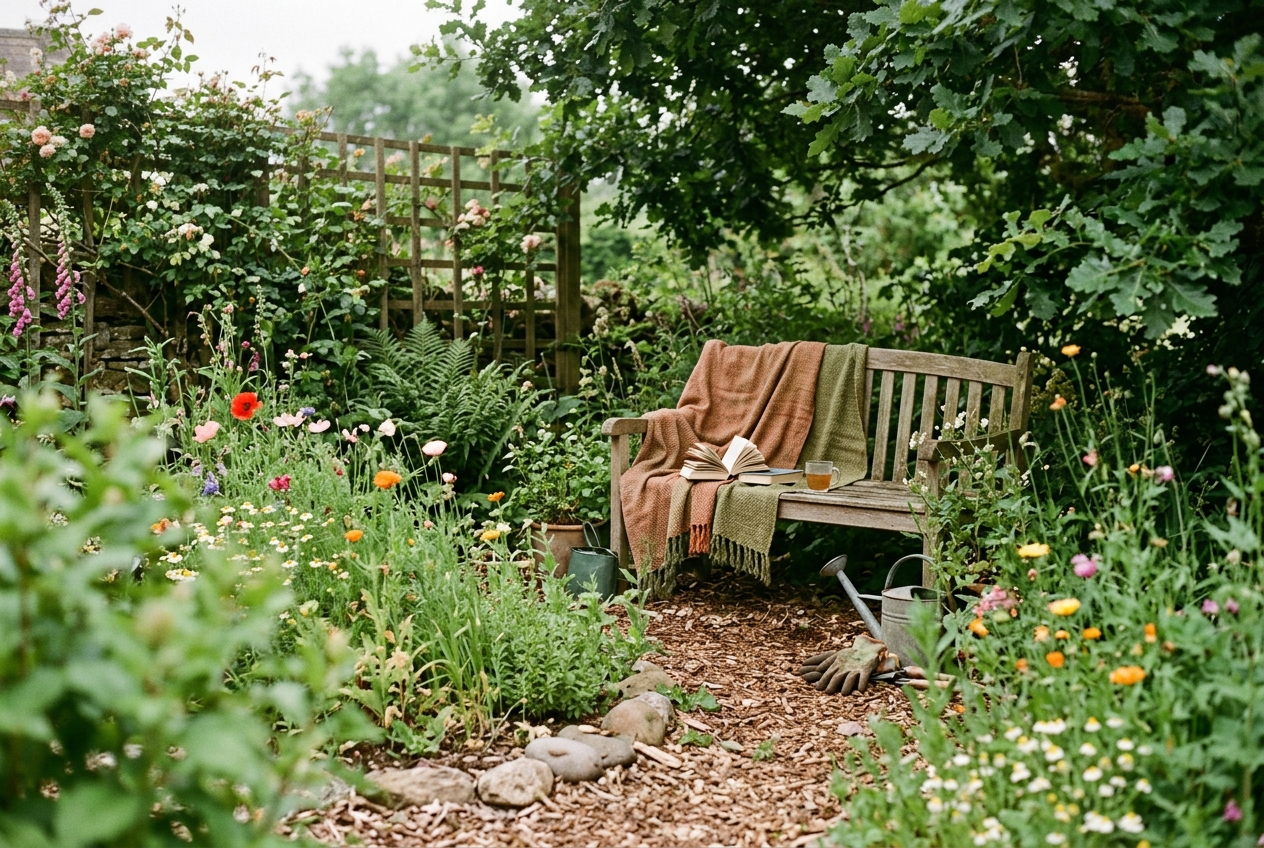
The Actual Scattering Technique
Timing matters more than technique. Scatter in early spring (after last frost) or fall (6-8 weeks before first frost). Seeds need consistent moisture to germinate, which nature provides more reliably in these windows.
I mixed my seeds with playground sand (50-pound bag, $6 at hardware stores) at a 1:4 ratio. This bulks up the volume so you can see where you’ve already scattered. Otherwise you end up with bald patches and clumps.
Walk the area in a grid pattern, tossing handfuls as you go. Aim for even coverage but don’t stress it. I scattered about one ounce of seed per 100 square feet. That’s roughly a small handful.
After scattering, I dragged a leaf rake gently across the surface. This presses seeds into contact with soil without burying them. Most wildflower seeds need light to germinate.
Then I watered. Not a heavy soak, just enough to settle everything. I used a hose with a misting nozzle for about five minutes per 100 square feet.
For the first two weeks, I watered every other day if it didn’t rain. After that, I let nature take over.
The Timeline Nobody Tells You
Week 1-2: Nothing visible. You’ll wonder if birds ate everything. They probably ate some of it. That’s fine.
Week 3: Green fuzz appears. This is either your flowers or weeds. Assume it’s flowers and leave it alone.
Week 4-6: Actual recognizable seedlings. This is when you’ll panic about overcrowding. Don’t thin them. The crowding is the point.
Week 8-10: First blooms appear. For me, this was calendula and alyssum. The showier stuff (cosmos, poppies) came two weeks later.
Week 12+: Full chaos. Everything is blooming at different heights. It looks intentional because density reads as lushness.
My side yard hit peak chaos in late June. By August, some plants had gone to seed and were dropping their own for next year. I let them. By September, I had second-generation seedlings coming up.
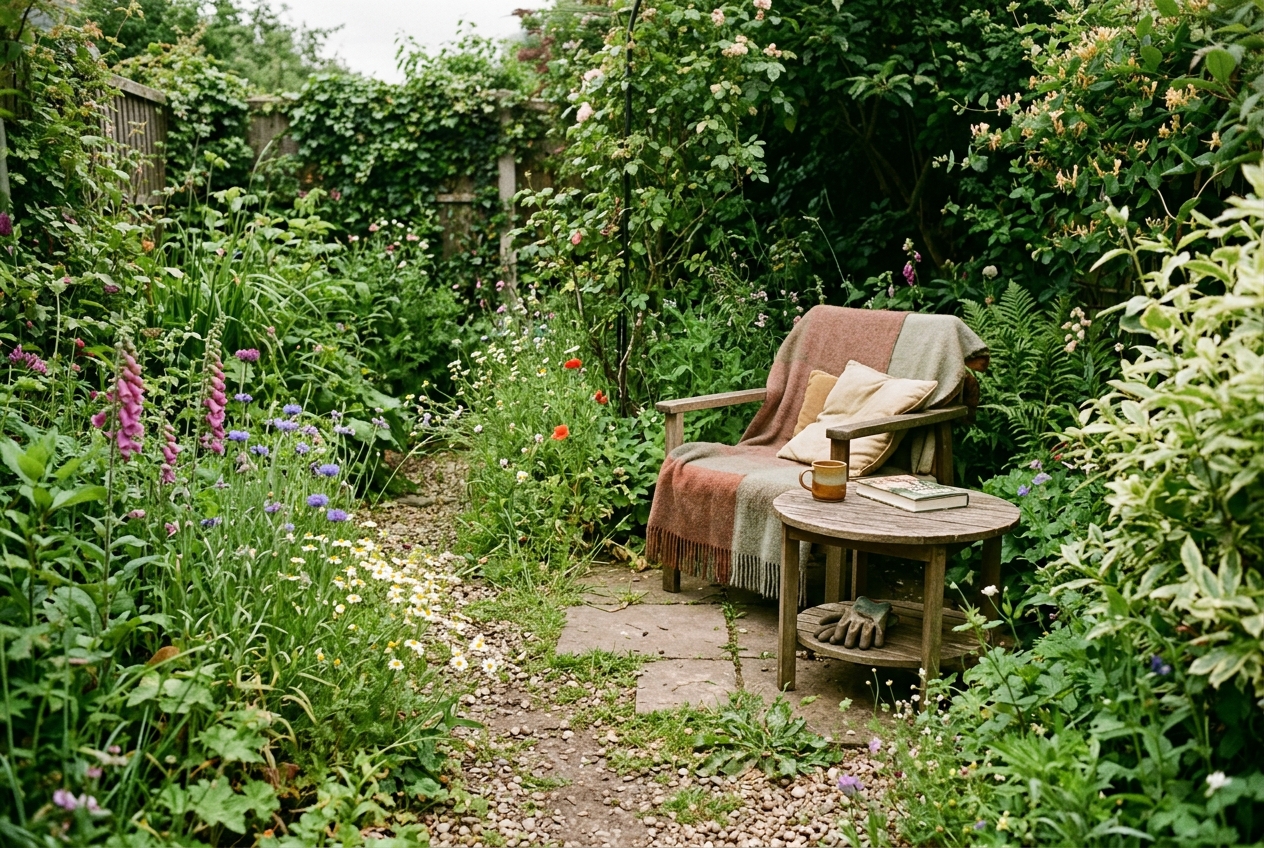
What Maintenance Actually Looks Like
I pull weeds that are obviously not flowers. Dandelions, crabgrass, that one aggressive vine that tries to strangle everything. This takes 15-20 minutes every two weeks.
I don’t deadhead. Deadheading prevents reseeding, which defeats the whole point. Let the flowers go to seed. They’ll scatter themselves and come back next year.
I don’t fertilize. These are tough plants that thrive on neglect. Fertilizer makes them leggy and weak.
I do water during extended dry spells (10+ days without rain). A deep soak once a week is enough. Once plants are established (about 8 weeks in), they’re mostly drought-tolerant.
In fall, I leave everything standing. The seed heads feed birds. The dead stems provide winter habitat for beneficial insects. In early spring, I mow it all down to about 4 inches with a string trimmer. This clears space for new growth without removing the seeds that dropped.
Total annual time investment: maybe 3-4 hours. Total annual cost after the first year: $0, because it reseeds itself.
The Weeds Will Come (And That’s Fine)
My chaos garden has weeds. Not a carpet of weeds, but they’re there. Some bindweed, some chickweed, some things I can’t identify.
Here’s what I learned: if it’s green and it’s not strangling the flowers, I leave it. The goal isn’t perfection. The goal is a full, blooming space that doesn’t require weekend-consuming maintenance.
The dense planting actually suppresses most weeds naturally. There’s no bare soil for weed seeds to land on. The flowers shade out competitors. By mid-season, the ratio is about 90% flowers to 10% weeds.
If a weed gets big enough to bother me, I yank it. I don’t get on my hands and knees with a trowel. I grab and pull. Sometimes the roots come up, sometimes they don’t. The flowers fill in the gap either way.

Why This Works When Perfect Gardens Don’t
I’ve tried the planned garden thing. I’ve bought six-packs of annuals and spaced them precisely and watered them daily and watched them struggle.
Chaos gardening works because it mimics how plants actually want to grow. Crowded. Competing. Supporting each other. The weak ones die, but there are so many plants that you don’t notice the gaps.
It also works because the barrier to entry is low. You don’t need to know plant names or sun requirements or companion planting theories. You need seeds and dirt and the willingness to let go.
My side yard isn’t Instagram-perfect. It’s messy in the best way. There are too many cosmos in one corner and not enough poppies in another. A volunteer tomato plant is growing in the middle because I threw kitchen scraps there once.
But it’s full. It’s blooming. It’s alive in a way my carefully planned beds never were.
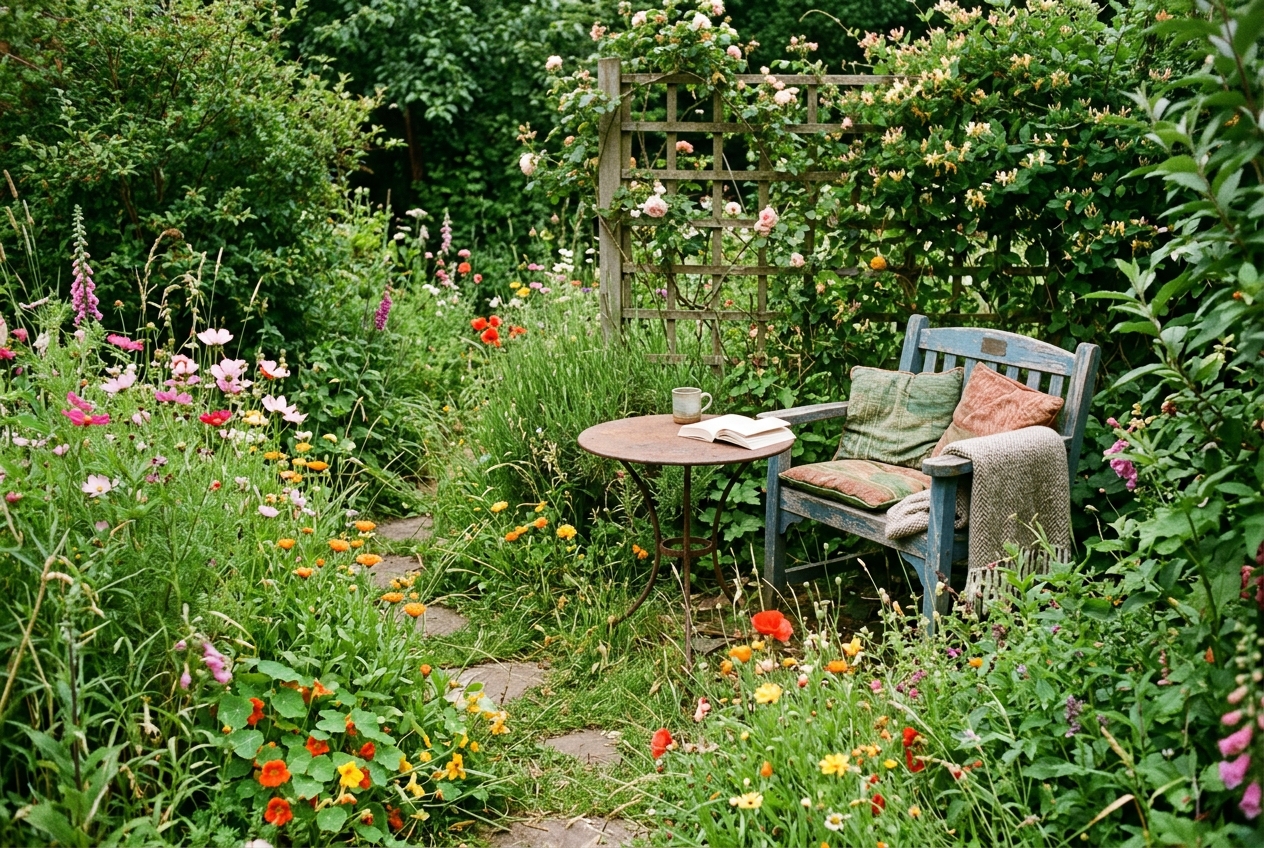
Some mornings I take my coffee out there and stand in the middle of it, surrounded by flowers I barely remember planting. I feel like I’ve finally figured something out. Not about gardening exactly. About letting things be what they want to be instead of what I think they should be.
A place where you scatter seeds and stop worrying.