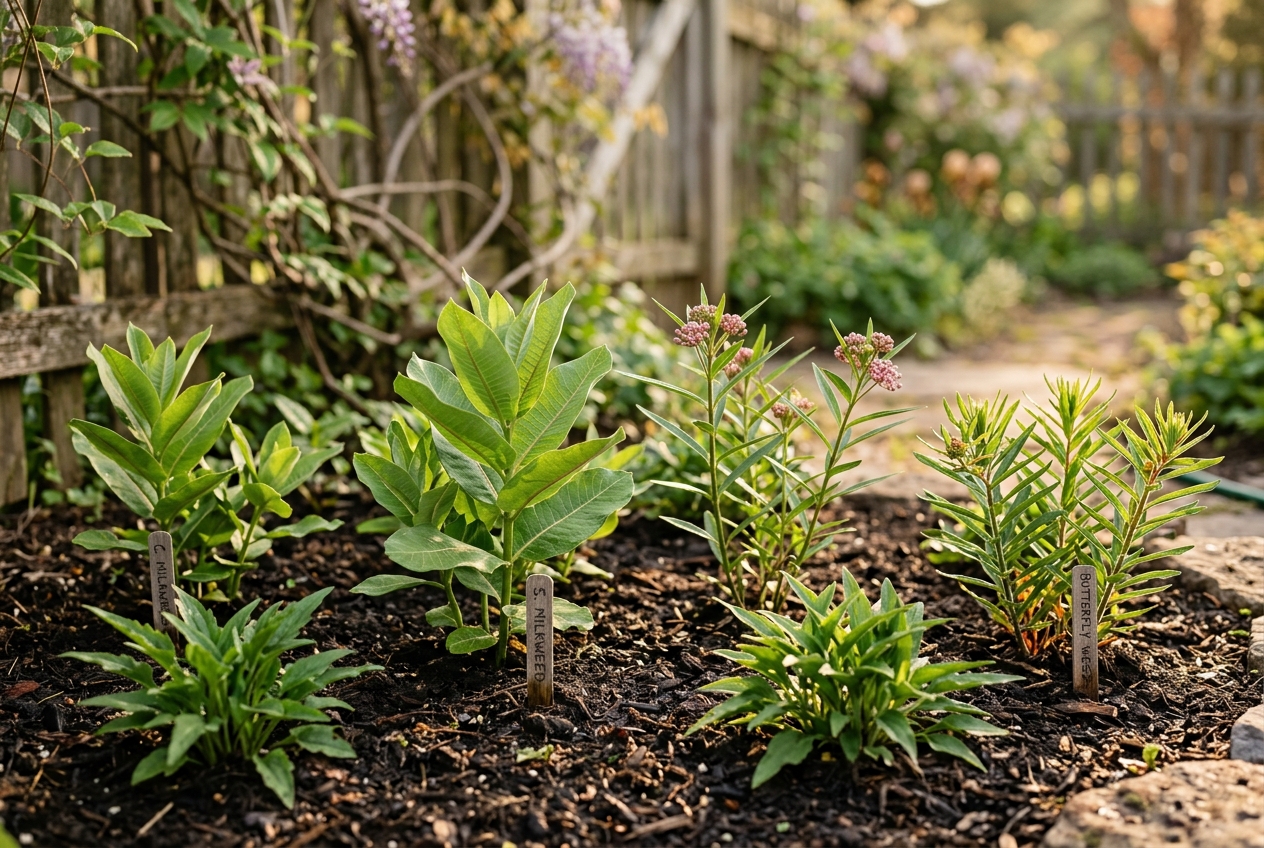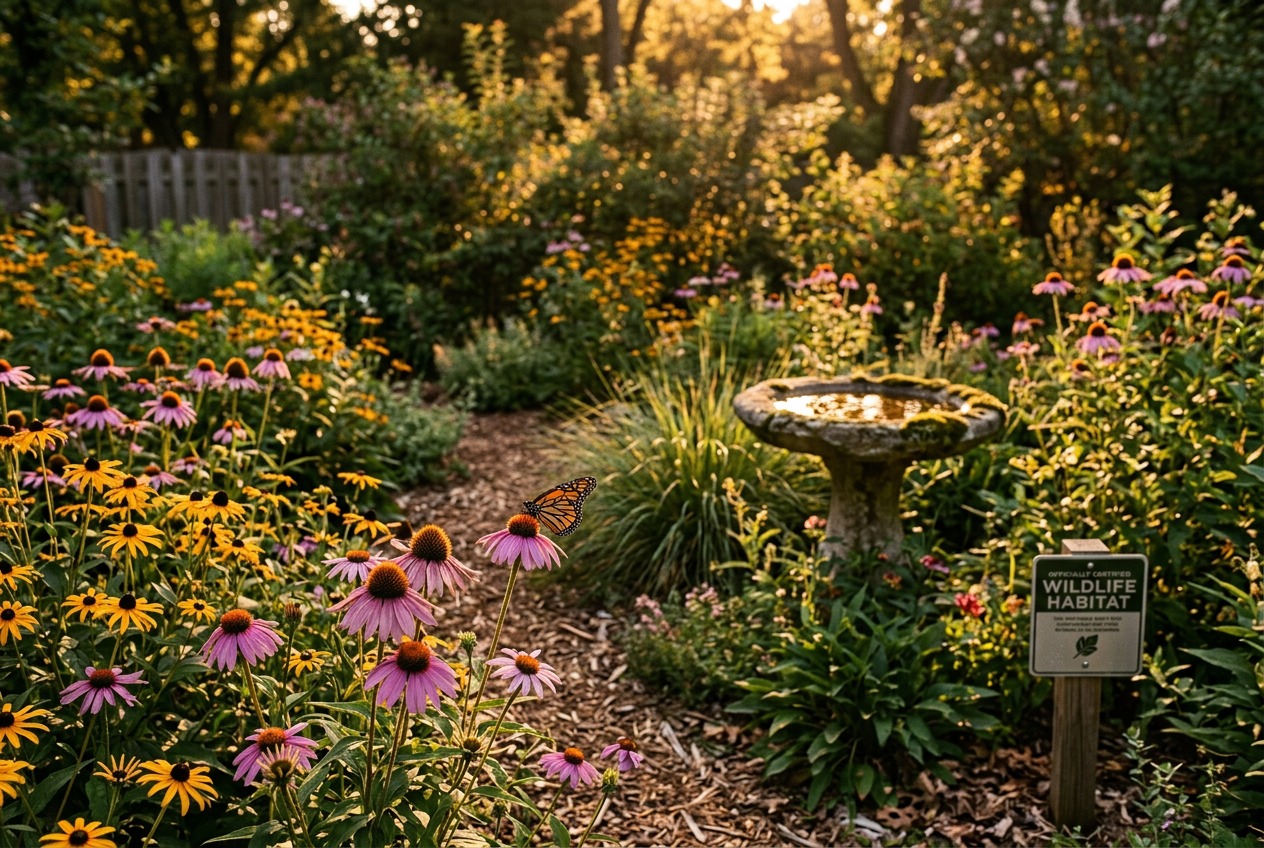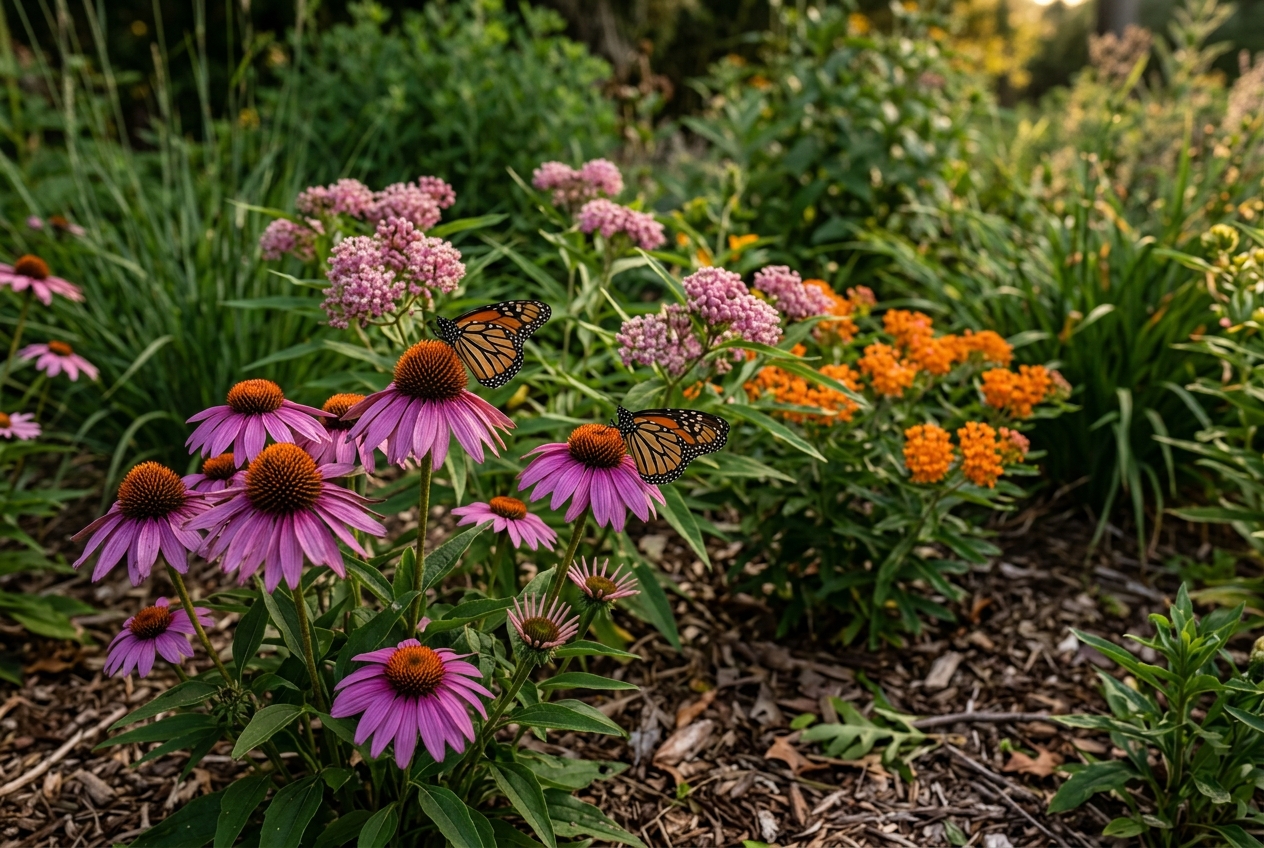
Zone 7 butterfly gardens need host plants for caterpillars and nectar sources for adults, timed across three seasons. Plant four species per season (spring, summer, fall) to keep butterflies feeding from April through October. The 12 plants below include native host plants for monarchs, swallowtails, and fritillaries, plus nectar sources that bloom in sequence. Expect to spend $8 to $15 per plant at native nurseries, with spacing from 12 to 36 inches depending on mature size.
What You Need
| Item | Specifics | Cost per Unit | Notes |
|---|---|---|---|
| Spring bloomers (4 species) | Spicebush, Wild Columbine, Golden Ragwort, Woodland Phlox | $10-$12 | Plant March-April |
| Summer bloomers (4 species) | Swamp Milkweed, Purple Coneflower, Butterfly Weed, Mountain Mint | $8-$15 | Plant May-June |
| Fall bloomers (4 species) | New England Aster, Joe Pye Weed, Ironweed, Goldenrod | $10-$14 | Plant by August |
| Compost | 2-3 inches per bed | $35/cubic yard | Mix into native soil |
| Mulch | Shredded hardwood | $30/cubic yard | 2-inch layer, keep off stems |
Buy from native plant nurseries or state extension plant sales. Big box garden centers rarely stock true native cultivars. Zone 7 spans parts of Virginia, North Carolina, Tennessee, Arkansas, Oklahoma, and northern Texas.
Spring Bloomers (April-May)
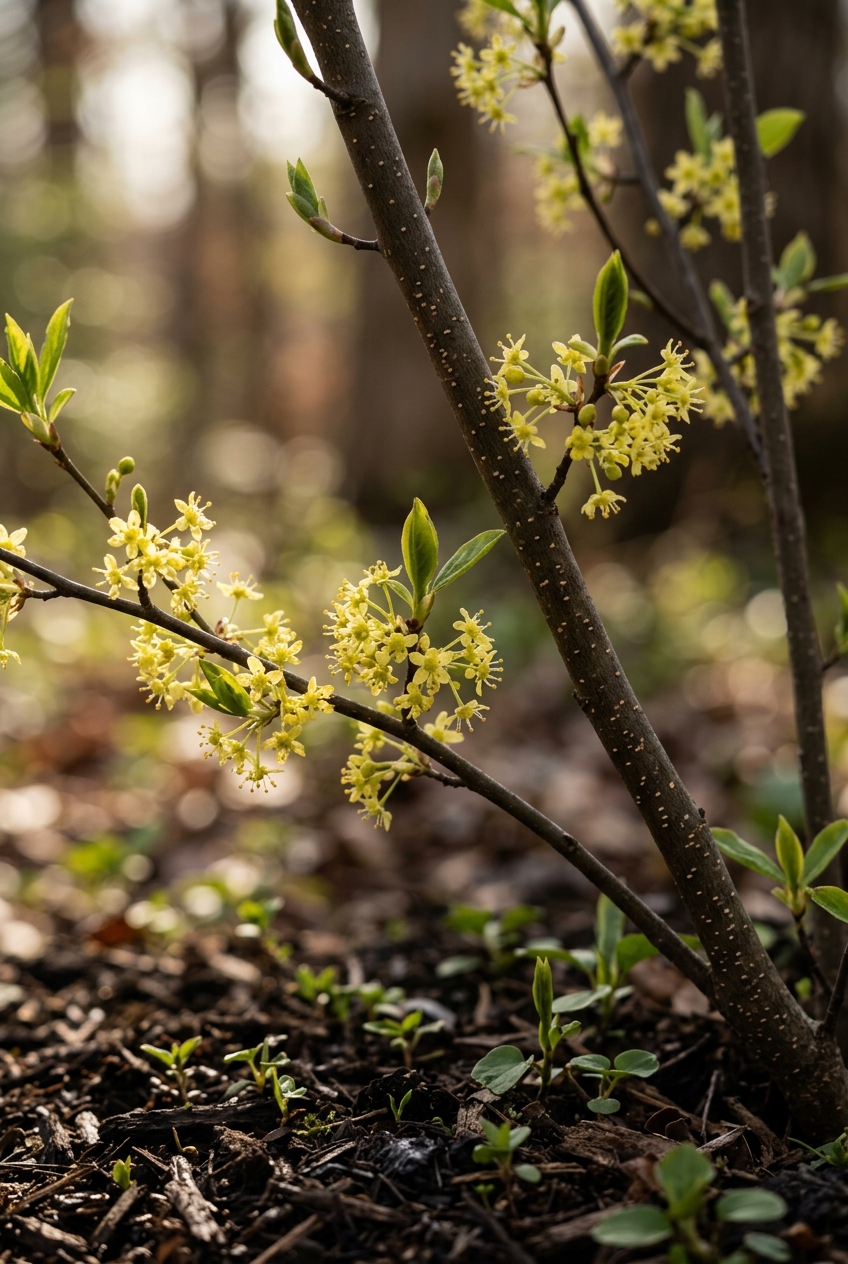
Spicebush (Lindera benzoin): Host plant for spicebush swallowtail caterpillars. Grows 6 to 12 feet tall in part shade. Yellow flowers appear before leaves in early April. Plant 4 to 6 feet apart. Tolerates clay soil and occasional flooding. Female plants produce red berries in fall if a male is nearby. $12 per 3-gallon container.
Wild Columbine (Aquilegia canadensis): Red and yellow tubular flowers attract hummingbirds and early butterflies. Blooms April through May in part shade to full sun. Space 12 inches apart. Self-seeds readily in gravel paths and rock crevices. Grows 1 to 2 feet tall. $8 per quart pot.
Golden Ragwort (Packera aurea): Bright yellow daisy flowers in April. Spreads by rhizomes to form a groundcover in moist shade. Space 18 inches apart. Grows 1 to 2 feet tall. Nectar source for small butterflies and native bees. Tolerates wet soil. $10 per quart.
Woodland Phlox (Phlox divaricata): Fragrant blue to lavender flowers in late April. Grows 10 to 15 inches tall in part shade. Space 12 inches apart. Spreads slowly by stolons. Nectar for spring azure butterflies and swallowtails. $9 per quart pot.
Summer Bloomers (June-August)
Swamp Milkweed (Asclepias incarnata): Host plant for monarch caterpillars. Pink flower clusters bloom June through August. Grows 3 to 5 feet tall in full sun to part shade. Needs consistent moisture. Space 18 to 24 inches apart. More disease-resistant than common milkweed. $12 per gallon pot.
Purple Coneflower (Echinacea purpurea): Native cultivars like ‘Magnus’ or straight species only (avoid fancy hybrids). Blooms June through September. Grows 2 to 4 feet tall. Space 18 inches apart. Nectar for swallowtails, fritillaries, and skippers. Drought-tolerant once established. $10 per gallon.
Butterfly Weed (Asclepias tuberosa): Orange flowers in June and July. Host plant for monarchs and other milkweed butterflies. Grows 1 to 2 feet tall in full sun. Space 12 to 18 inches apart. Needs well-drained soil. Slow to emerge in spring. $11 per quart pot.
Mountain Mint (Pycnanthemum muticum): White flowers with purple spots bloom July through September. Grows 2 to 3 feet tall. Space 24 inches apart (spreads by rhizomes). Attracts more butterfly species per square foot than any plant I’ve tested. Tolerates clay and occasional drought. $9 per quart.
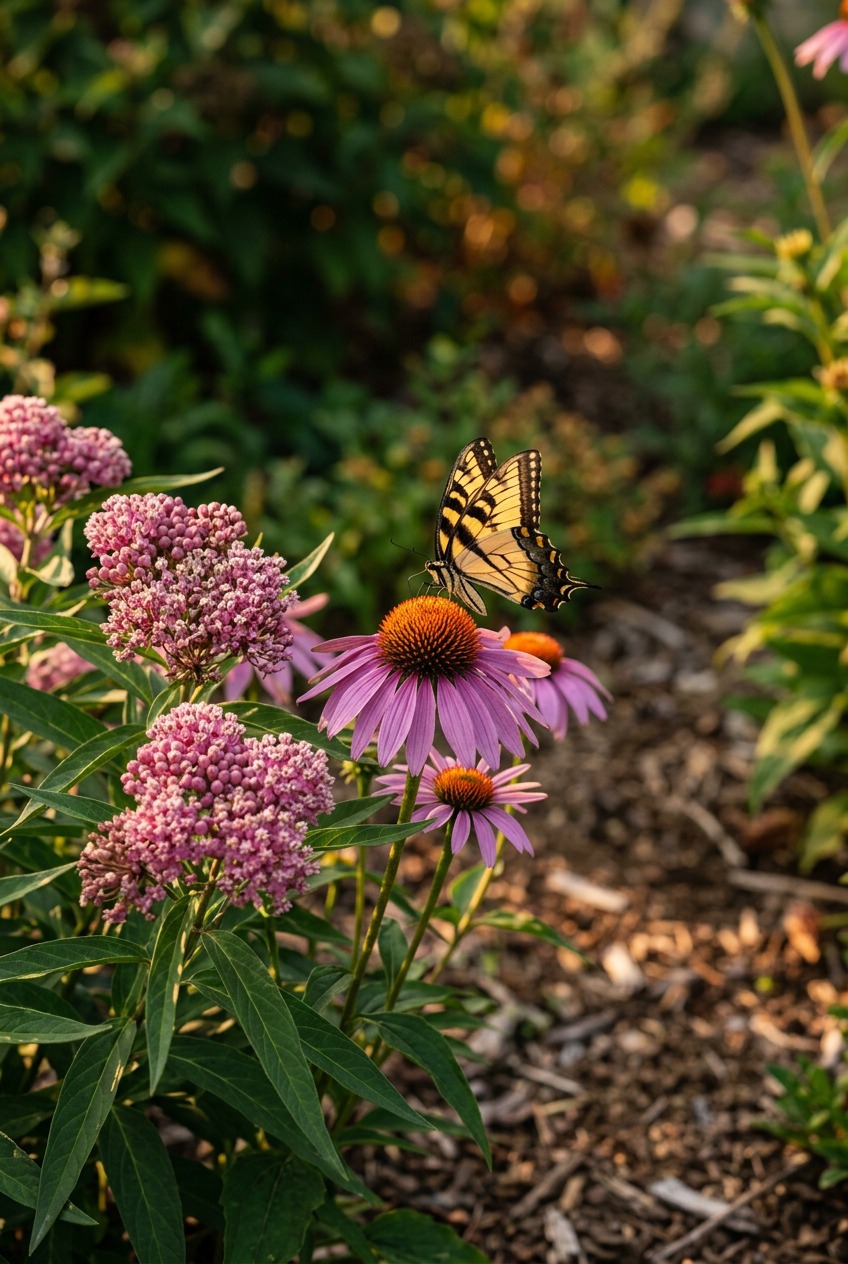
Quick Tip: Plant milkweed species in clusters of three or more. Monarchs lay more eggs on grouped plants than isolated specimens.
Fall Bloomers (September-October)
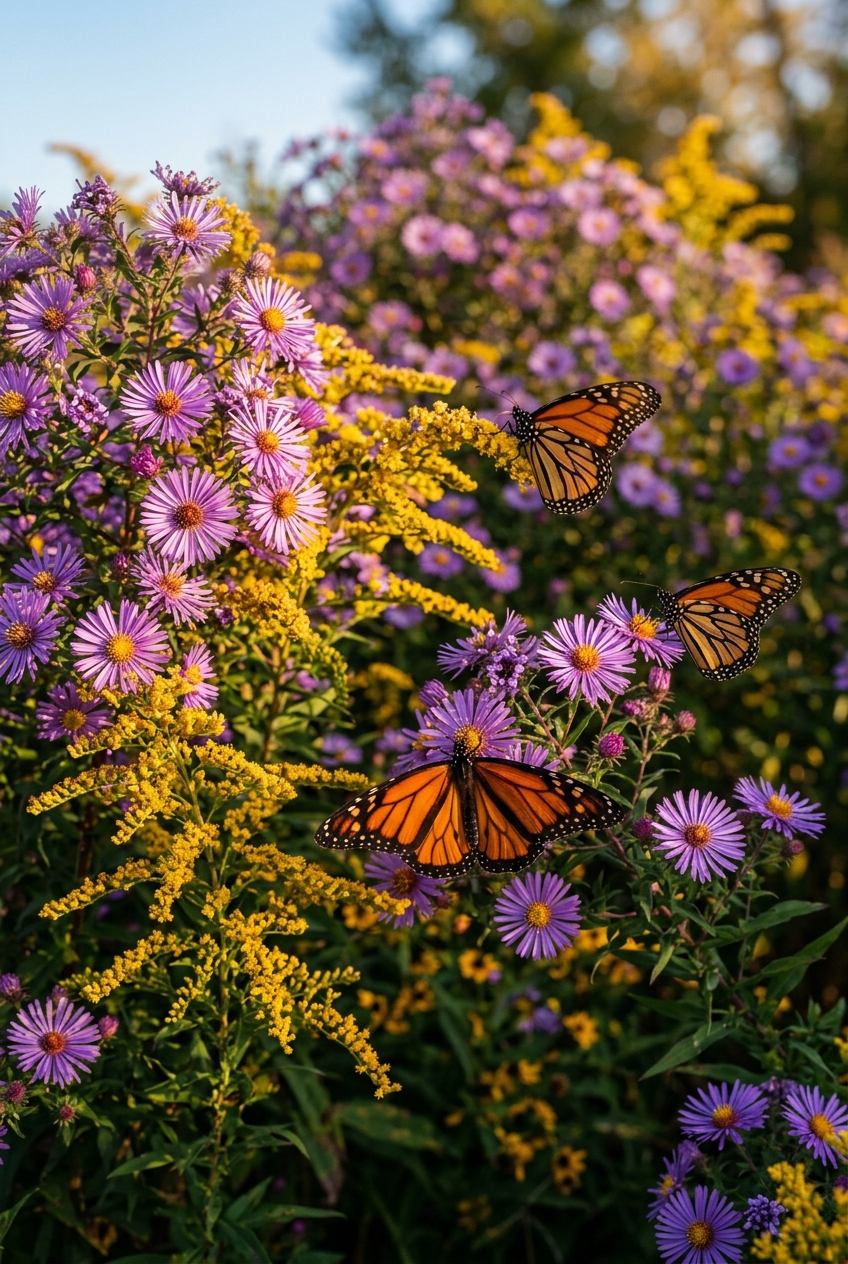
New England Aster (Symphyotrichum novae-angliae): Purple flowers September through October. Grows 3 to 6 feet tall. Space 24 to 36 inches apart. Critical nectar source for migrating monarchs. Cut back by half in June to reduce height and prevent flopping. $10 per gallon pot.
Joe Pye Weed (Eutrochium purpureum): Dusty pink flower heads in August and September. Grows 4 to 7 feet tall in full sun to part shade. Space 36 inches apart. Attracts swallowtails and fritillaries. Tolerates wet soil. $14 per gallon container.
Ironweed (Vernonia noveboracensis): Deep purple flowers August through September. Grows 5 to 7 feet tall. Space 36 inches apart. Place at back of border. Nectar for monarchs, swallowtails, and skippers. Tolerates heavy clay. $12 per gallon.
Goldenrod (Solidago rugosa ‘Fireworks’): Arching sprays of yellow flowers September through October. Grows 3 to 4 feet tall. Space 24 inches apart. Does not cause allergies (that’s ragweed). Attracts late-season butterflies and native bees. $9 per quart pot.
From my experience: I planted New England aster three years ago and cut it back in mid-June each year. The plants stay under 4 feet, bloom just as heavily, and don’t need staking. Uncut plants in my neighbor’s yard hit 6 feet and flopped by September.
Planting Schedule by Season
| Season | Plant These | Spacing | Bloom Period | Key Butterflies |
|---|---|---|---|---|
| Spring (March-April) | Spicebush, Wild Columbine, Golden Ragwort, Woodland Phlox | 12-72 inches | April-May | Spicebush swallowtail, spring azure |
| Summer (May-June) | Swamp Milkweed, Purple Coneflower, Butterfly Weed, Mountain Mint | 12-24 inches | June-September | Monarch, great spangled fritillary, eastern tiger swallowtail |
| Fall (July-August) | New England Aster, Joe Pye Weed, Ironweed, Goldenrod | 24-36 inches | August-October | Monarch (migrating), painted lady, red admiral |
Plant container-grown natives any time during the growing season, but spring and fall planting reduces watering needs. Water new plants twice per week for the first month, then weekly through the first summer.
What to Watch For
Milkweed beetles and aphids: Orange and black beetles chew milkweed leaves but rarely kill plants. Bright yellow aphids cluster on stems and flower buds. Spray them off with a hose. Avoid insecticides, which kill caterpillars. I let the aphids stay unless they completely cover the plant. Ladybugs and lacewings usually show up by mid-summer to eat them.
Powdery mildew on asters and mountain mint: White coating on leaves in late summer. Caused by poor air circulation and overhead watering. Space plants properly and water at soil level. Mildew looks bad but doesn’t kill the plant. Cut affected stems to the ground after frost.
Late emergence of butterfly weed: This plant emerges 3 to 4 weeks later than other perennials in spring. Mark its location to avoid digging it up. I lost two plants my first year because I forgot where I planted them and turned the soil in early April.
Make It Your Own
Shade gardens: Replace purple coneflower and butterfly weed with more spicebush, wild ginger (Asarum canadense), and violets (Viola sororia). Violets are host plants for fritillary caterpillars. Plant them 6 inches apart as a groundcover under trees.
Small spaces: Use one plant per season in containers at least 14 inches deep. Swamp milkweed, purple coneflower, mountain mint, and New England aster all grow well in pots. Water daily in summer. Use potting mix with compost, not garden soil.
Clay soil: All 12 plants tolerate Zone 7 clay except butterfly weed, which needs drainage. Plant butterfly weed on a slope or mix 2 inches of gravel into the top 6 inches of soil. I added gravel to one 3-foot-wide bed and planted six butterfly weed plants. All survived four years with no amendments beyond that initial gravel.
Dry sites: Skip swamp milkweed and Joe Pye weed. Add more butterfly weed, purple coneflower, and goldenrod. Plant in fall so roots establish before summer heat.
Before You Start
Host plants vs. nectar plants: Butterflies need both. Caterpillars eat host plant leaves (spicebush, milkweed, violets). Adult butterflies drink nectar from flowers. A garden with only nectar plants attracts butterflies but won’t support a breeding population. Plan for at least three host plant species.
Bloom sequence matters: Four weeks without flowers means butterflies move elsewhere. The 12 plants above provide continuous bloom April through October in Zone 7. If you’re starting with fewer plants, choose one from each season first, then fill in.
Native cultivars only: Fancy coneflower hybrids with double flowers or unusual colors produce less nectar and pollen. Butterflies ignore them. Stick with straight native species or cultivars selected only for height or color intensity, like purple coneflower ‘Magnus’ or New England aster ‘Purple Dome’.
FAQ
What are the best butterfly host plants for zone 7?
Spicebush for spicebush swallowtail caterpillars, swamp milkweed and butterfly weed for monarchs, and native violets for fritillaries. Plant at least three of each host species in clusters. Caterpillars eat a lot and one plant won’t sustain a brood.
When should I plant butterfly garden plants in zone 7?
Plant container-grown natives March through April or September through October. Spring planting gives roots a full season to establish before winter. Fall planting works if you water through the first month. Avoid planting during July and August heat unless you can water daily.
How many butterfly plants do I need in zone 7?
Start with 12 plants minimum (the four per season listed above) in a 100-square-foot bed. That provides continuous bloom and enough host plant mass for caterpillars. Increase to 25 to 30 plants for a 200-square-foot garden. More plants mean more butterflies, but start small and expand as you learn what grows best in your specific site.
What native plants attract butterflies in zone 7?
The 12 species above are all native to Zone 7 and attract monarchs, swallowtails, fritillaries, skippers, and other common butterflies. Mountain mint attracts the most species per plant in my garden (I’ve counted 8 different butterflies on one plant in a single afternoon). Joe Pye weed and New England aster are critical for fall migration.