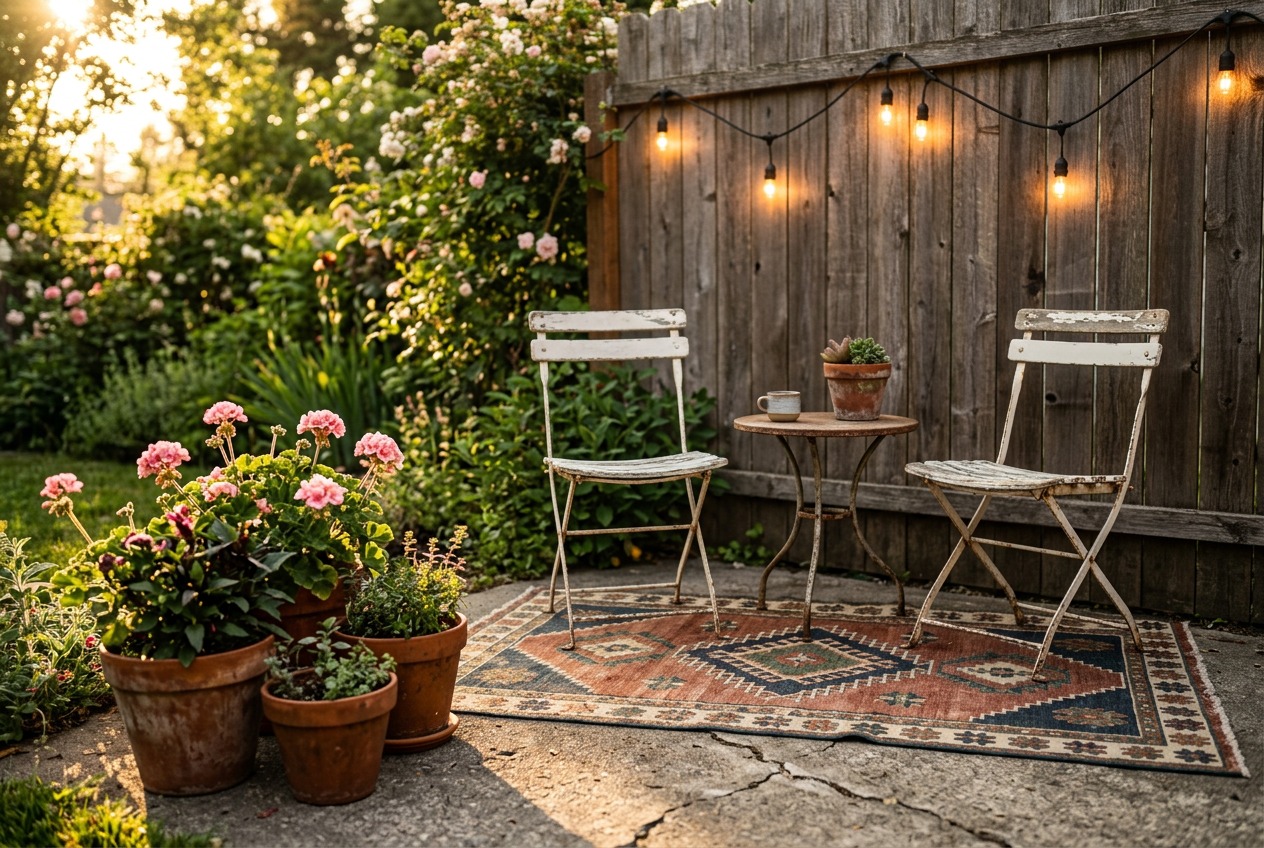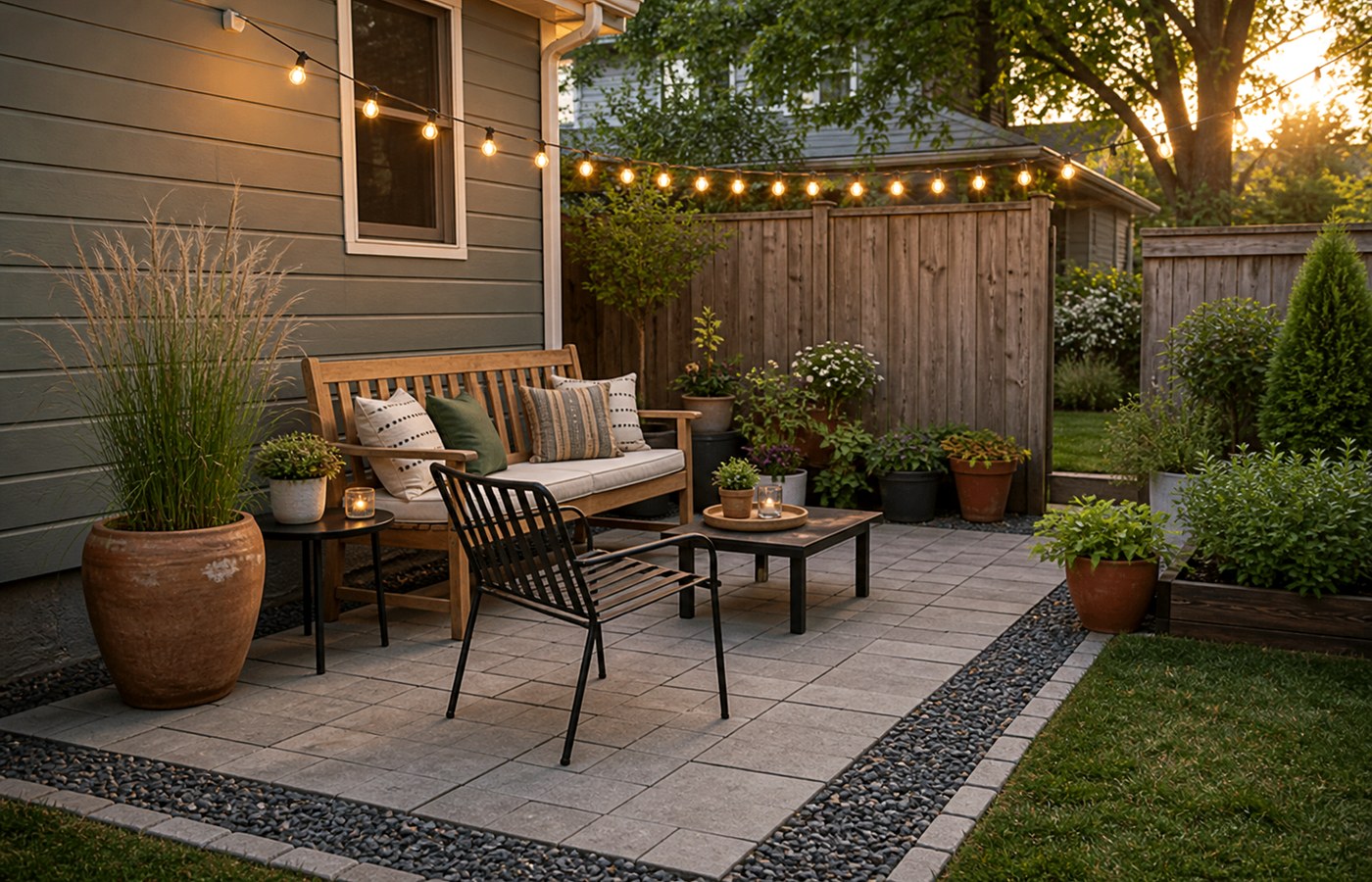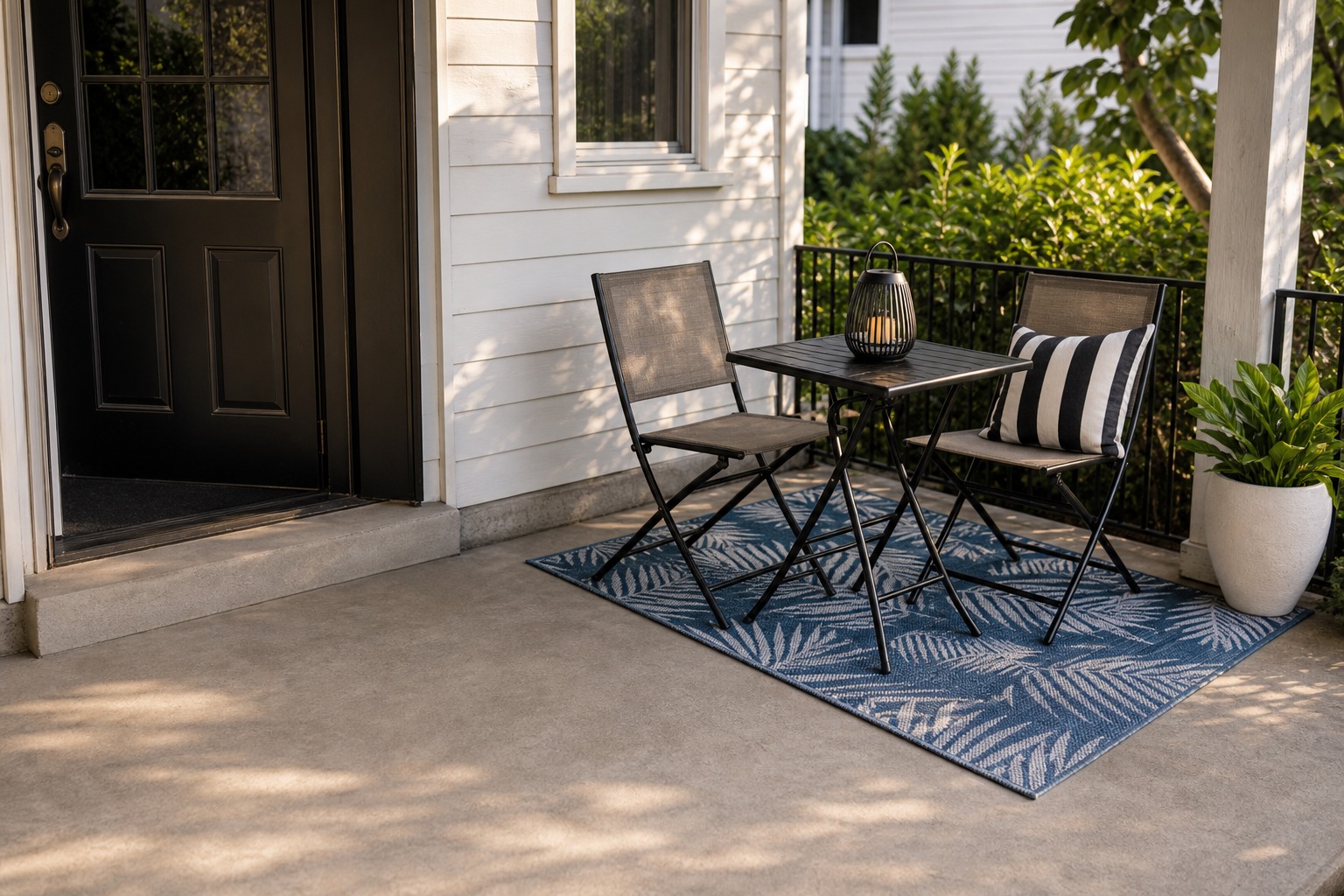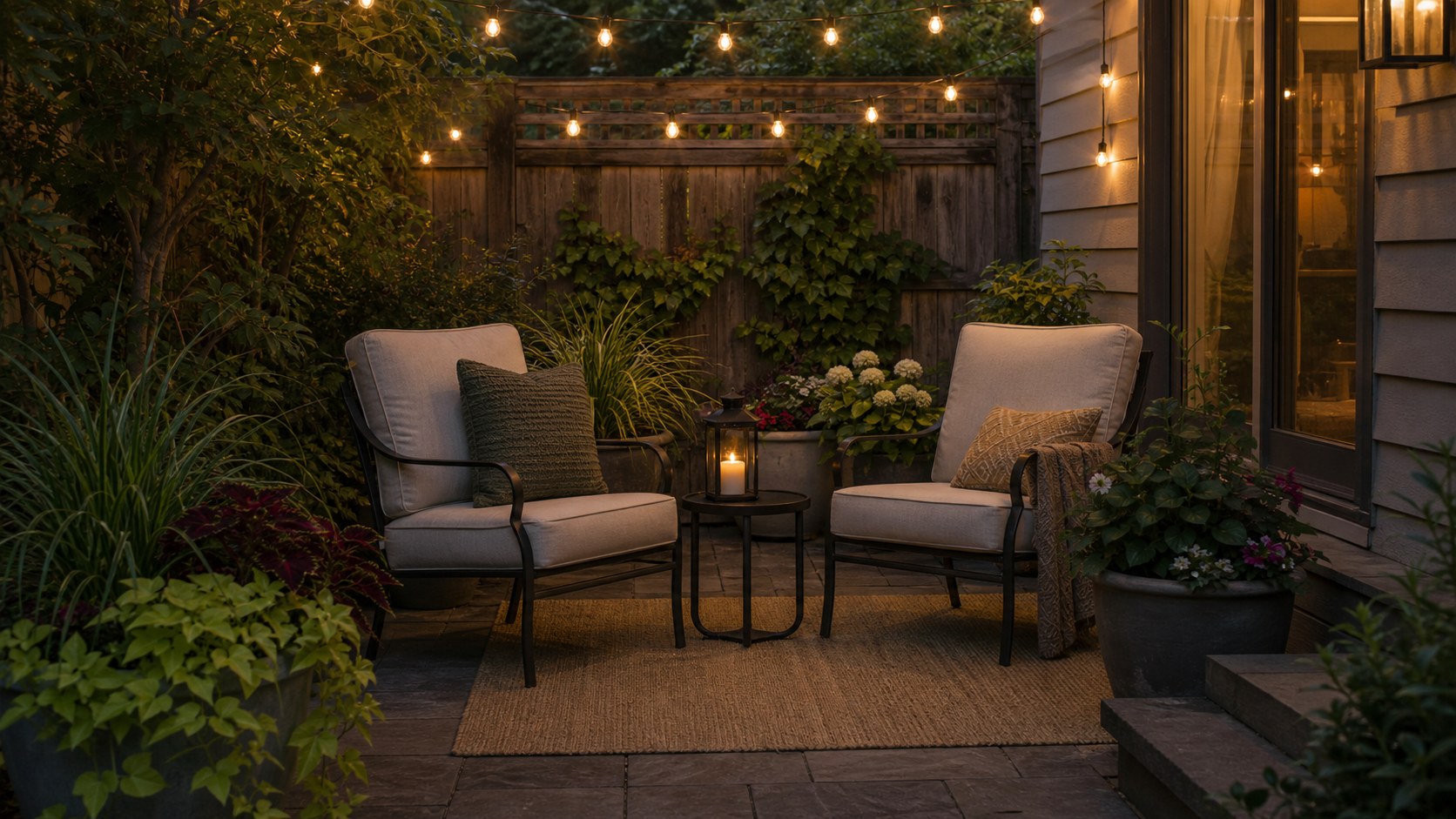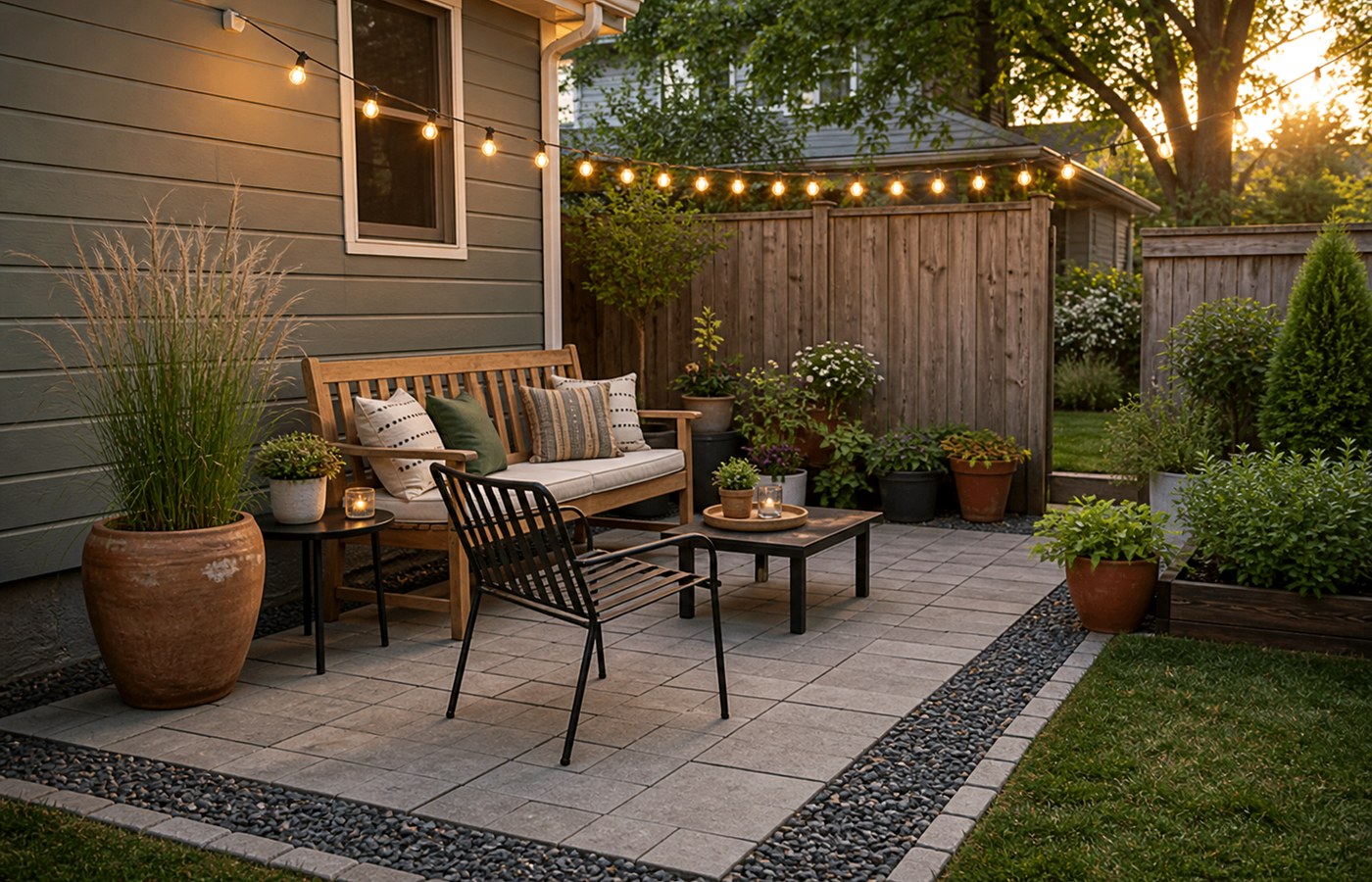
A budget patio does not look cheap because the chairs were inexpensive.
It looks cheap when nothing is making a decision.
The rug is too small, so the chairs float. The planters are scattered, so the eye has nowhere to land. The string lights sag from random hooks. A tiny table is doing the job of a dining table, a side table, and a plant stand. Then one more sign, one more pillow, one more solar stake gets added because the patio still reads unfinished.
That is the trap. Most plain patios do not need more decor. They need a stronger plan.
This article is not another list of things to buy. It is a way to look at a patio and spot the details that make it read as finished, even when the budget is tight.
The Difference Between Cheap and Finished
Use this as a quick diagnosis before you buy anything.
| What makes it look cheap | What makes it look finished |
|---|---|
| Several tiny pieces spread across the patio | Fewer pieces grouped into one clear sitting zone |
| A rug that does not reach the furniture | A floor area with a visible edge: rug, gravel, pavers, mat, or clean border |
| Every pot is a different color and size | Repeated containers, repeated plant colors, or one oversized planter |
| Bright white or scattered lighting | Warm light placed where people sit or walk |
| A furniture set pushed flat against the wall | Chairs angled toward a view, table, fire pit, or conversation |
| Too many novelty pieces | One useful focal point, then restraint |
The pattern is pretty simple: cheap-looking patios are usually scattered. Finished patios are edited.
Start With the Seating Shape
Do not start with cushions, lanterns, or plants. Start with the shape of the seating.
Ask one question first: what is this patio actually for?
| Patio job | Best layout move |
|---|---|
| Morning coffee | One good chair, small reachable table, plants on one side |
| Dinner outside | Table centered first, chairs allowed enough room to pull out |
| Talking with friends | Two chairs angled toward each other, table between them |
| Fire pit nights | Seating in a loose circle with clear walking space |
| Reading or sitting alone | Chair turned toward the garden, not shoved against the wall |
The mistake I see constantly is furniture lined up along the house like it is waiting to be stored. It may save floor space, but it rarely makes anyone want to sit down.
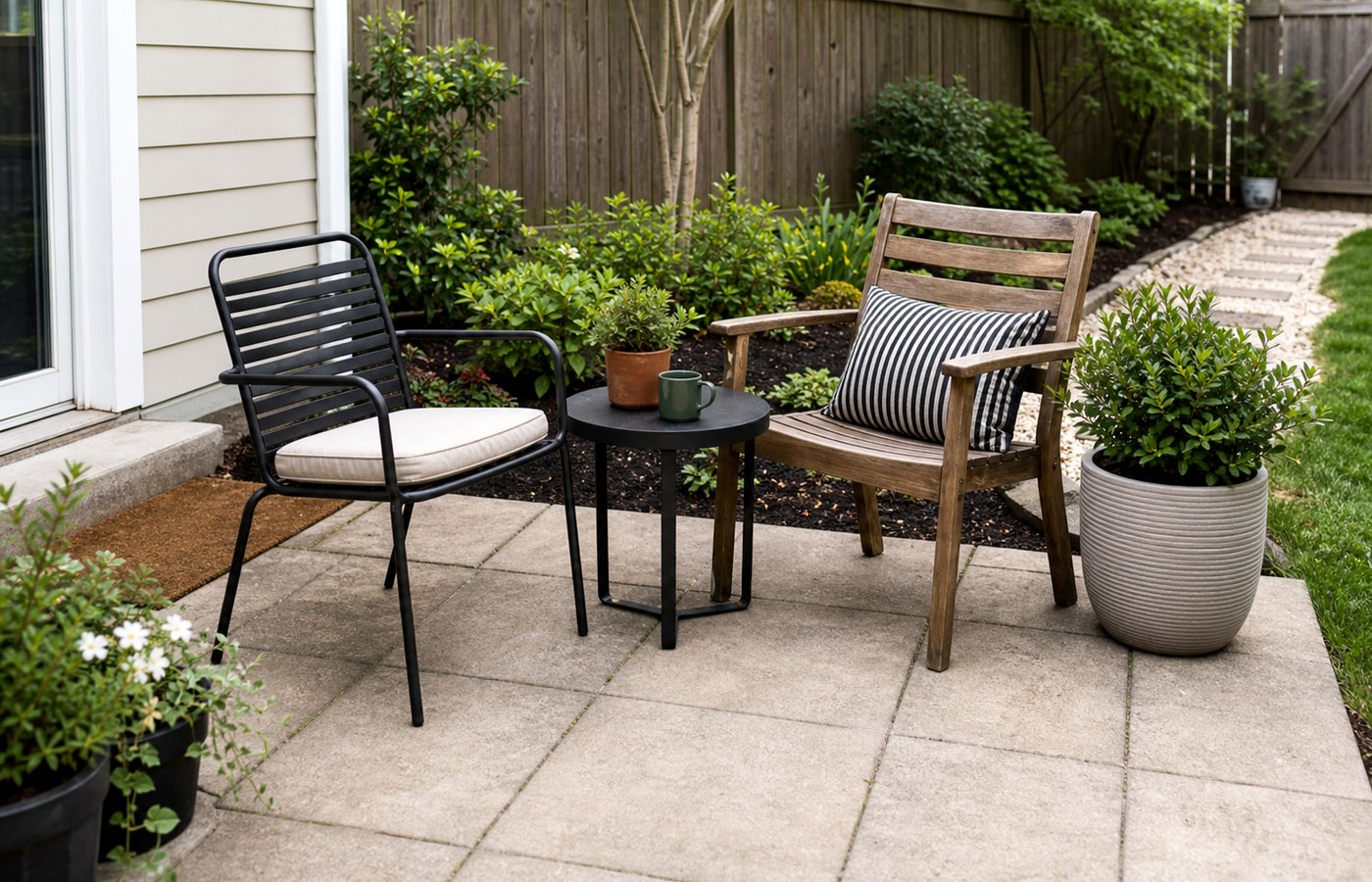
Pull the main chair or bench away from the wall if you can. Angle it slightly. Let the table be close enough to reach without leaning. If you have two chairs, make them talk to each other. A patio starts to look better the second it looks like a real person could use it.
If your space is very small, borrow the logic from a small patio morning coffee corner : one comfortable seat, one surface, one plant cluster, and a clear path. That beats a cramped mini set every time.
Give the Floor an Edge
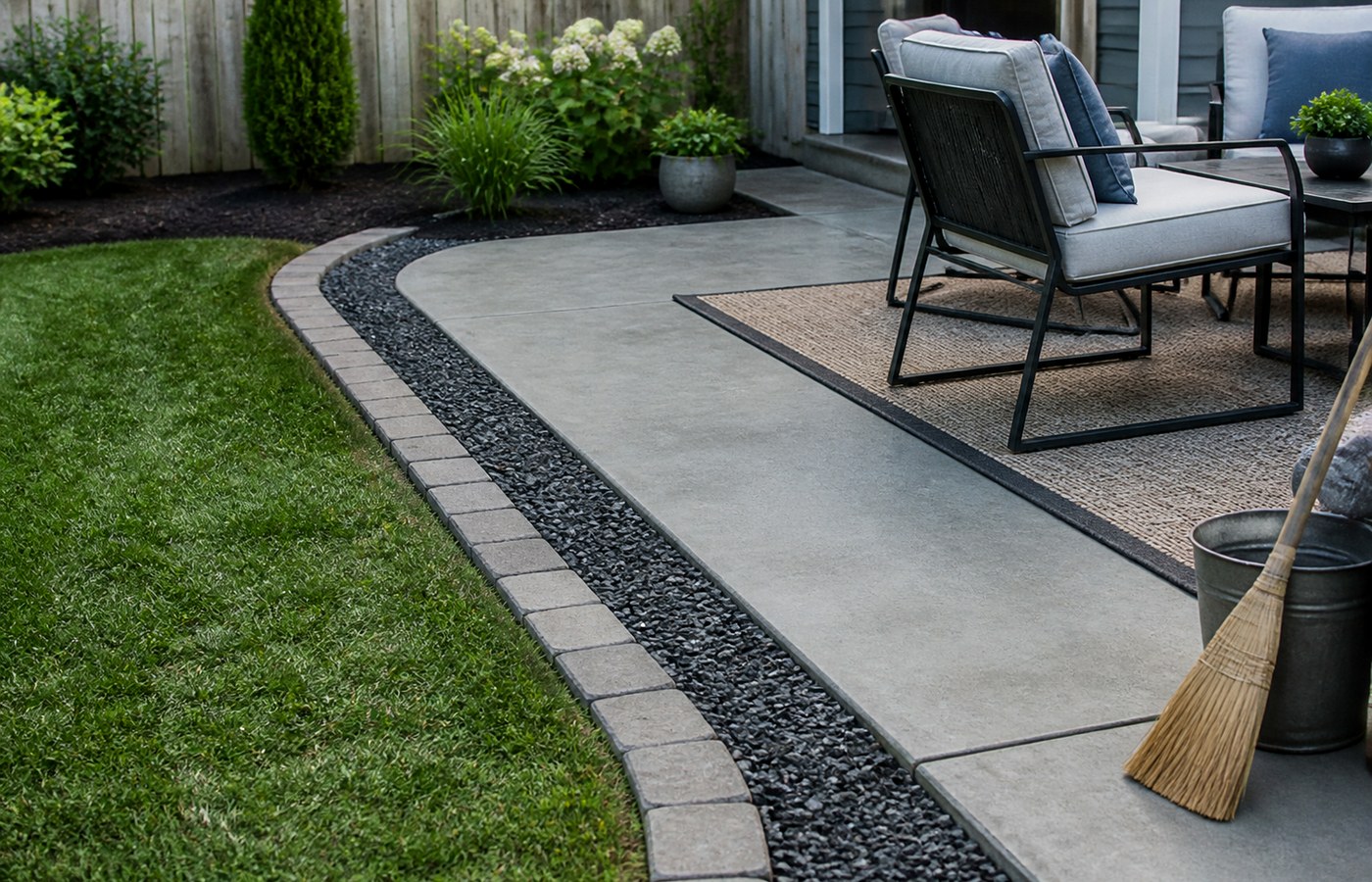
A patio floor can make the whole setup look unfinished, especially if it is cracked concrete, patchy pavers, or a plain slab that fades into grass.
You do not have to replace it. You do have to make it look intentional.
Good floor fixes usually do one of these jobs:
- They create a clear boundary around the seating.
- They hide the worst part of the slab.
- They make the transition from patio to yard look planned.
- They stop weeds, mud, or grass from creeping into the sitting area.
An outdoor rug can work, but only if it is large enough for the seating group. A small rug floating in the middle of a patio often looks worse than no rug. At minimum, the front legs of the chairs should touch it.
If rugs do not make sense for your climate, use a gravel border, a row of pavers, a sharp mulch edge, or a cleaned-up concrete line. A simple edge tells the eye, “This is the patio.” Without that edge, everything starts to look temporary.
For a plain concrete slab, try this order before buying decor:
| Floor problem | First fix to try |
|---|---|
| Dirty concrete | Sweep, scrub, rinse, and remove weeds from cracks |
| Patio fades into lawn | Add a border with gravel, pavers, bricks, or mulch |
| Furniture looks like it is floating | Use one larger rug or pull furniture into a tighter zone |
| Old pavers look uneven | Clean joints, pull weeds, and define the outside edge |
| Narrow side patio acts like a walkway | Put seating at one end and leave the walking path clean |
This is not glamorous advice, but it works. A clean edge can do more for a budget patio than another cart full of small accessories.
Use Fewer, Larger Pieces
Tiny bargains are dangerous because they seem harmless one at a time.
One small table. Two skinny chairs. A little plant stand. A lantern. A second lantern. A tiny rug. A sign. Three little pots. Suddenly the patio is full, but nothing has presence.
Budget does not mean everything has to be small. In fact, the opposite is usually better.
Choose one piece that carries visual weight:
- A bench instead of several little chairs
- One generous outdoor chair instead of two uncomfortable ones
- One larger planter instead of five tiny plastic pots
- One sturdy table instead of a cluster of wobbly stands
- One clear light source instead of scattered novelty lighting
This is why secondhand furniture often beats new budget sets. Older metal chairs, wood benches, and simple dining chairs tend to have better scale. They may need cleaning or paint, but they usually look more grounded than flimsy pieces bought just because they were easy to grab.
The patio should have a main character. Not ten side characters fighting for attention.
Repeat One Material or Color
Repetition is the fastest way to make inexpensive things look chosen.
You do not need a theme. You need a thread.
Pick one thing to repeat:
| Repeat this | What it does |
|---|---|
| Black metal | Connects mixed chairs, lanterns, and hooks |
| Terracotta | Makes plants look warmer and more settled |
| Natural wood | Adds weight to a concrete or paver patio |
| Cream cushions | Keeps mixed furniture from looking chaotic |
| Green foliage | Lets flowers and decor stay quieter |
| Concrete or stone | Gives the patio visual weight |
The trick is restraint. If the chairs are black metal, repeat black in the lantern or plant hooks. If the pots are terracotta, use terracotta again near the steps. If the table is wood, do not add five unrelated finishes around it.
This is where a lot of “budget patio” posts go wrong. They tell people to add color everywhere. Color is not the problem. Randomness is.
Make Planters Look Intentional
Planters can save a patio. They can also make it look like a holding area behind a garden center.
The fix is grouping.
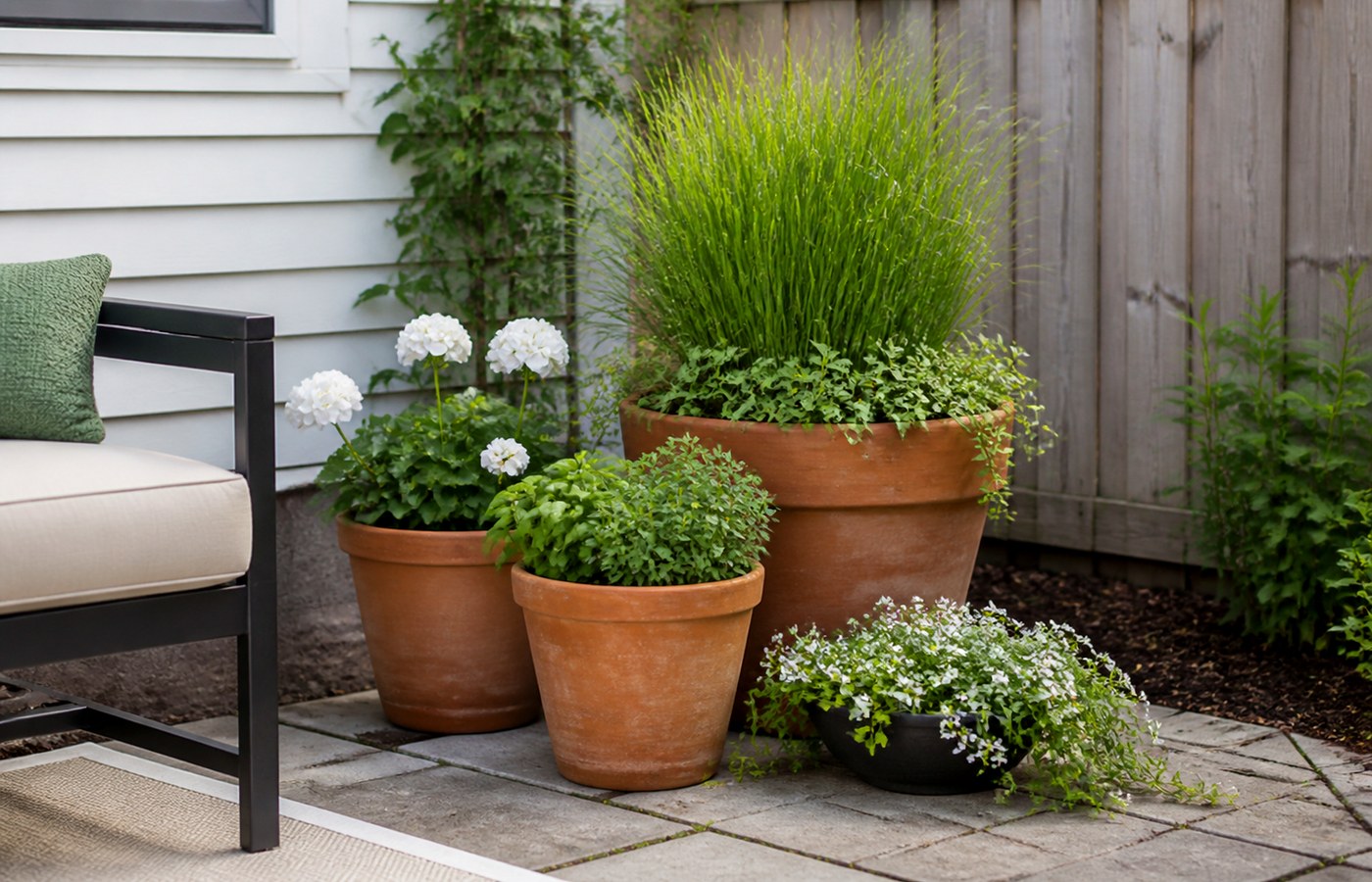
Do not line every pot evenly around the edge. Pull them together in clusters so they act like one feature. I usually like one tall thing, one medium thing, and one trailing or low thing. The exact plants can change, but the shape works.
Try these combinations:
| Light | Tall | Medium | Low or trailing |
|---|---|---|---|
| Hot sun | Rosemary, grass, salvia | Geranium, lantana, zinnia | Thyme, sweet potato vine, trailing verbena |
| Part sun | Dwarf hydrangea, lavender, boxwood | Coleus, geranium, heuchera | Creeping Jenny, alyssum, trailing lobelia |
| Shade | Fern, hosta in a taller pot | Impatiens, heuchera, caladium | Creeping Jenny, ivy, shade-tolerant trailing annuals |
If the containers do not match, repeat the plant color. If the plants are mixed, repeat the container. If both are mixed, tuck nursery pots inside baskets or larger cachepots so the patio does not look like a collection of leftovers.
One oversized planter by the chair can make a small patio look far more finished than a dozen little pots scattered around.
Use Lighting Like a Person Has to Sit There
Bad patio lighting is easy to spot. It is either too bright, too blue, or scattered everywhere.
Warm light looks better outdoors. It also makes the patio more usable. Put light near the place where people sit, eat, or step. Do not pepper the whole yard with little stakes unless you need a path marked.
Better budget lighting moves:
- One strand of warm string lights with clean start and end points
- A lantern on the table instead of several tiny lights on the ground
- A wall sconce or plug-in outdoor lamp where the seating actually is
- Step or path lights only where someone could trip
- A candle lantern inside a hurricane glass for evenings outside
String lights can look great, but the hanging matters. Tight, simple lines usually look better than loose swoops. If the lights sag randomly or disappear into extension cords, they make the whole patio look temporary.
For more lighting-specific ideas, the dusk-friendly backyard lighting guide pairs well with this approach.
Add Privacy Without Building a Wall
A patio often looks cheap when it is too exposed. The chairs may be fine, the plants may be fine, but the whole thing can look like it is sitting in the middle of nowhere.
You do not need a full fence to fix that. You need one side blocked, screened, planted, or shaded.
Good low-budget privacy moves:
- A trellis planter behind one chair
- Tall grass in a large pot
- A reed screen attached neatly to an existing rail or fence
- Outdoor curtains on a covered patio
- A shade sail pulled tight with clean hardware
- A row of taller containers along the most exposed side
The important part is placement. Put privacy where it changes the experience from the chair. A screen behind the wrong wall might look nice in a photo, but it will not make the patio more usable.
Sit down first. Notice the most exposed side. Fix that side.
The Skip List
This is the part that saves money.
If you want a budget patio that does not look cheap, be ruthless about what you skip.
| Skip this | Why it usually fails | Try this instead |
|---|---|---|
| Tiny bistro set nobody fits in | Looks cute, gets ignored | One comfortable chair and a real side table |
| Too-small outdoor rug | Makes furniture look stranded | Larger rug, gravel edge, or no rug |
| Mismatched novelty solar lights | Adds clutter at ground level | One warm light source near seating |
| Fake vines on a fence | Often looks tired fast | Real climbing plant, trellis, or tall grass pot |
| Too many signs | Turns the patio into a display | Let plants, seating, and lighting carry the space |
| Thin cushions in loud prints | Can make furniture look cheaper | Solid cushions, washable covers, repeated color |
| Scattered pots | Reads as storage | Group containers into one strong cluster |
The goal is not to make the patio look expensive in a fake way. The goal is to make it look edited. There is a difference.
Three Budget Levels That Work
No exact shopping list needed. Think in levels.
Level 1: The No-Buy Edit
Use this when the patio is messy but has decent bones.
- Empty the patio.
- Clean the floor and edges.
- Put only the useful pieces back.
- Group plants instead of spreading them out.
- Remove the decor that does not earn its space.
- Angle the seating toward a view, table, or conversation.
This can make the patio look better in an afternoon because the biggest problem was never the budget. It was the layout.
Level 2: One Smart Purchase
If you can buy one thing, choose the thing that fixes the biggest visual weakness.
| Weakness | Best single purchase |
|---|---|
| Furniture floating | Larger outdoor rug or floor border material |
| Patio is too exposed | Tall planter, trellis, screen, or umbrella |
| Space looks scattered | One larger planter or bench |
| Patio dies after sunset | Warm string lights or a sturdy lantern |
| No one uses it | Comfortable chair or better table |
Do not buy the prettiest thing. Buy the thing that solves the actual problem.
Level 3: Weekend Upgrade
This is the version for a patio that needs more structure.
Start with the floor edge. Then set the seating zone. Then repeat one material. Then add one plant cluster and one light source.
That order matters.
Decor before structure usually looks like clutter. Structure first makes even basic pieces look deliberate.
A Quick Before-You-Buy Test
Before buying anything for the patio, ask:
- Does this solve a real problem?
- Will it make the seating area more usable?
- Does it repeat a color or material already here?
- Is it large enough to matter?
- Will I still like it when it gets dusty?
- Am I buying this because the patio needs it, or because the patio looks unfinished and I am guessing?
That last question is the one that saves the most money.
The Patio Formula I Keep Coming Back To
If I had to make a plain patio look better without overspending, I would use this formula:
- One clear seating zone
- One floor edge
- One repeated material
- One plant cluster with height
- One warm light source
- One thing removed before anything new gets added
That is enough for most patios.
Once those pieces are in place, you can add personality. A pillow you actually like. Herbs near the door. A small table for dinner outside. A better umbrella. But the foundation comes first.
A budget patio looks cheap when it is trying to distract you.
It looks finished when it knows what it is doing.