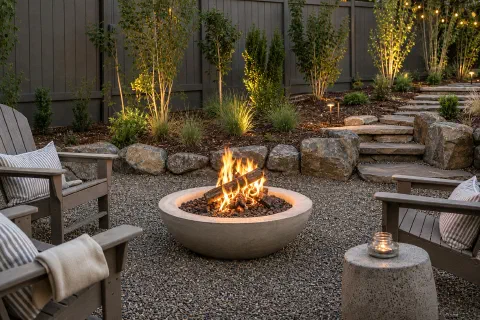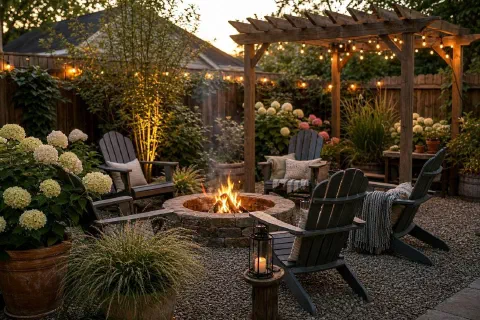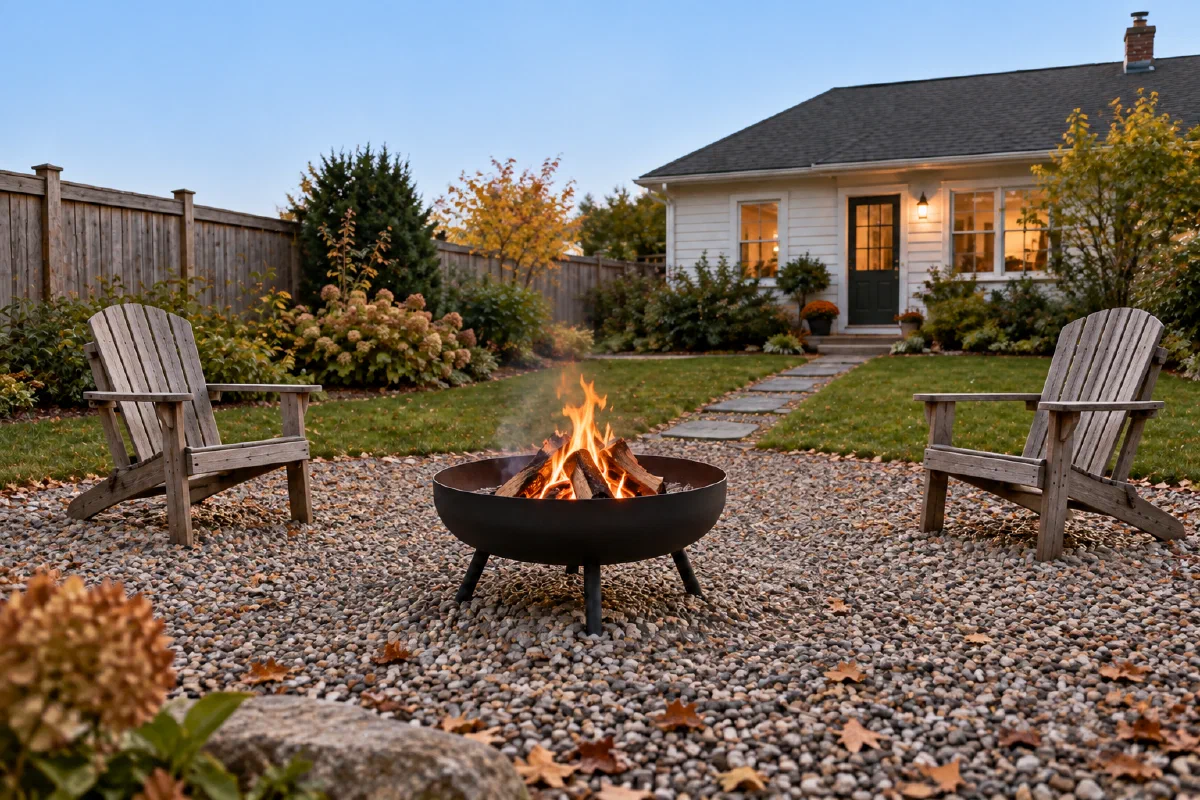
You can buy a modest metal fire bowl and still end up with an expensive project. The bowl may need a suitable base, a spark screen, dry wood, a place for ashes, and somewhere to store it out of the rain. A propane table costs more up front but skips the wood and ash routine. The sensible budget choice depends on the yard you already have and the evenings you actually want.
For an open yard where wood fires are allowed, compare portable wood bowls first. For a paved outdoor sitting area where you want to turn the flame on and off, compare propane tables. A double-wall, low-smoke wood pit is an upgrade for someone who will use it often; a small tabletop flame is atmosphere for a table, not a substitute for a gathering-size pit.
Before shopping, identify a permitted location. The U.S. Fire Administration says to use fire pits outdoors at least 10 feet from the home or anything that can burn . Your local rules and the exact unit’s manual may require more space or prohibit use altogether. If the available spot cannot meet those requirements, stop there. A lower price cannot make an unsafe location workable.
| Type | Makes sense when | Cost people forget | Skip it when |
|---|---|---|---|
| Portable wood bowl | You have a permitted open-yard spot and want a simple fire | Base, screen, dry wood, ash handling, cover | Smoke, storage, or tending a fire would spoil the evening |
| Double-wall low-smoke wood pit | You use wood fires often and value easier smoke management | Stand or approved base, screen, fuel, ash removal | You expect it to be smoke-free or want the cheapest first purchase |
| Propane fire table | You already have an appropriate outdoor sitting surface and prefer quick lighting | Cylinder, refills, cover, and room for the table | You have no compliant location or dislike maintaining a gas appliance |
| Tabletop unit | You want a small decorative flame on an approved outdoor table | Approved fuel, safe table placement, storage | You need to warm several people or are relying on a tiny balcony |
These are formats to compare, not endorsements of a particular model. Product dimensions, permitted surfaces, included accessories, fuel requirements, and current prices change by listing. Read the manual for the unit you plan to buy.
Price the place, not only the pit
Write down what the complete corner needs before you compare sale prices. You may already own chairs and have a suitable paved area, or the site may need work that costs more than the fire pit. Count what applies:
- The unit and its required parts. Check whether a stand, burner media, lid, screen, regulator, or cover comes in the box. Do not assume a photograph shows the included set.
- The surface and location. Use only a surface the maker approves. A patch of gravel or pavers can be useful for seating, but it does not cancel the pit’s clearance requirements or automatically make every pit safe to use there.
- Fuel and storage. Wood needs a dry place and an ash plan. Propane needs a compatible cylinder, refills, and storage that follows the cylinder supplier’s directions.
- The people around it. Chairs need room to move, a clear route to the house, and somewhere to set a drink without leaning over the flame.
- Aftercare. A cover or indoor storage place can matter more than an extra decorative accessory, especially if the unit will sit unused through winter.
If the ground and seating are the expensive part, start with the budget fire pit area guide . It works through bases and the usable sitting area. This page helps you choose the kind of fire pit that belongs there.
Portable wood bowl: low entry price, more tending
A basic steel bowl is the first format to compare when the yard permits a wood fire. It is movable after it has fully cooled and can be a smaller commitment than building a permanent ring. Check the bowl’s diameter against the firewood you can buy locally, its weight against the person who will move it, and whether a stable stand and spark screen are included.
The running work is part of the price. You need dry wood, a place to keep it, time to light and tend the fire, and a safe way to handle cold ash. The U.S. Fire Administration recommends a metal screen over wood-burning fires to help contain sparks and says to put the fire out before leaving the yard. A screen does not make nearby dry plants, a fence, or a roof overhang safe.
Wood smoke matters too. The EPA explains that wood smoke contains fine particles and that dry, seasoned wood burns with less smoke than wet wood. A wood bowl may be a poor fit if someone who will sit there has asthma or another sensitivity to smoke. Check burn restrictions before each use; permission to own a pit is not permission to light it on every night.
Double-wall wood pit: buy it for repeated use
Double-wall pits draw air through vents to help burn smoke particles while the fire is hot. They can be more pleasant than a simple bowl with dry fuel and a well-established fire, but “smokeless” is a product description, not a guarantee. Lighting, wind, damp wood, and an overloaded chamber can still send smoke toward the chairs.
Compare the complete kit rather than the polished cylinder in the listing photo. Ask whether the stand needed for your approved surface is included, whether the maker offers a correctly sized screen, how ash comes out, and where the unit will go when it rains. A premium bowl bought without those pieces can be a costly way to discover that the old patio is the wrong location.
This is the upgrade for someone who already likes making wood fires. If you rarely host or mainly want instant warmth after work, the higher initial cost may buy you a ritual you do not have time to use.
Propane table: easier evenings, a different checklist
A propane fire table suits the person who wants to sit down, light the burner, and talk. There are no logs or wood ashes to manage. It also gives the seating area a table shape, although you still have to respect the hot center and the manufacturer’s instructions about what can sit on the rim.
Look past the burner rating. Check the table footprint with chairs pulled out, the fuel-cylinder size it accepts, whether the cylinder is concealed or sits elsewhere, how the ignition works, and whether a cover is included. Add refills to the budget. Read the manual for gas connection, leak checks, clearances, and shutdown instead of applying wood-pit advice to a gas appliance.
A fire table is still an outdoor fire appliance. An overhang, tight balcony, or deck may rule it out under the manual, lease, building rules, or local fire code. Do not buy it first and negotiate with the space afterward.
Tabletop flames: small scale, separate safety questions
A tabletop pit can give two people a little flame, but it will not heat a circle of chairs. Choose one only after checking the permitted fuel, the table material, the clearance around the flame, and how the maker says to extinguish and store it. “Tabletop” does not mean safe for an apartment balcony.
Be especially careful with liquid-alcohol models. The Consumer Product Safety Commission warns about flame-jetting and spreading pool fires from some alcohol-burning tabletop fire pits . Do not treat an alcohol flame as a cheap indoor fireplace or refill one near a flame. This guide does not recommend a liquid-alcohol tabletop pit as a workaround for a place that forbids a standard fire pit.
Make the choice in this order
- Mark the usable location. Check local rules, your lease or HOA if applicable, the U.S. Fire Administration’s clearance guidance, and the exact manufacturer’s manual. If no location qualifies, choose a different way to make the seating area comfortable.
- Name the evening. A wood fire asks for tending and cleanup. Propane suits shorter, more frequent sit-downs. A tabletop flame is only a small accent. Pick the routine you will repeat, not the photograph you like most.
- Price the whole setup. Include the approved surface, fuel, required accessories, storage, and any seating you truly need. Compare totals for the options that passed step one.
Before paying, open the current product manual and listing together. Confirm the model number, dimensions, fuel, approved surfaces, included pieces, clearance diagram, and return terms. If the seller does not make the manual or basic safety information available, keep looking.
Related fire pit guides
- Budget fire pit ideas for a cozy backyard covers the base, chairs, and path once you know which type of pit fits.
- How big should a fire pit seating area be? helps you test whether the chairs and walking route fit the available ground.
- Fire pit seating ideas for year-round use helps you make the area useful beyond one holiday gathering.
- Best patio heaters for fall is the next comparison if warmth without an open wood fire is the main goal.