A decorative painted birdhouse with a tiny dowel perch looks charming on a store shelf, yet most native songbirds will fly right past it. Cavity-nesting birds choose a box by three practical rules: an exact entrance hole diameter sized to keep out invasive house sparrows and starlings, untreated cedar or pine walls with drainage and ventilation, and a predator-safe spot mounted away from busy bird feeders and overhanging cat routes.
Bird House Guide: Which House, Hole Size & Spot Fits Each Bird
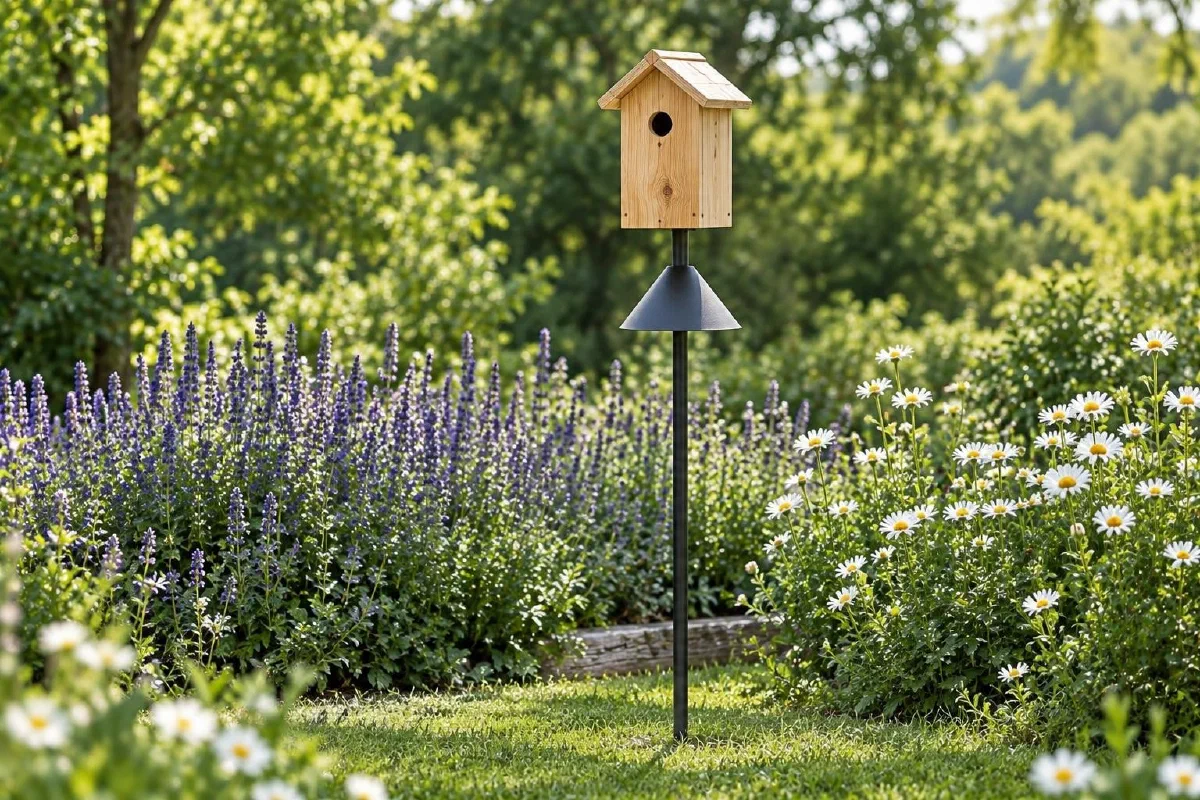
An untreated cedar bluebird house on a baffled metal pole facing open garden space follows Cornell NestWatch safety guidelines.
Bird house hole sizes, box depth and height by species
According to the Cornell Lab of Ornithology’s NestWatch guidelines, many familiar backyard birds happily use the same basic interior floor size (roughly 4x4 to 5-1/2x5-1/2 inches), while the entrance hole size and yard habitat decide who actually moves in. Save the chart below before buying or hanging a box.
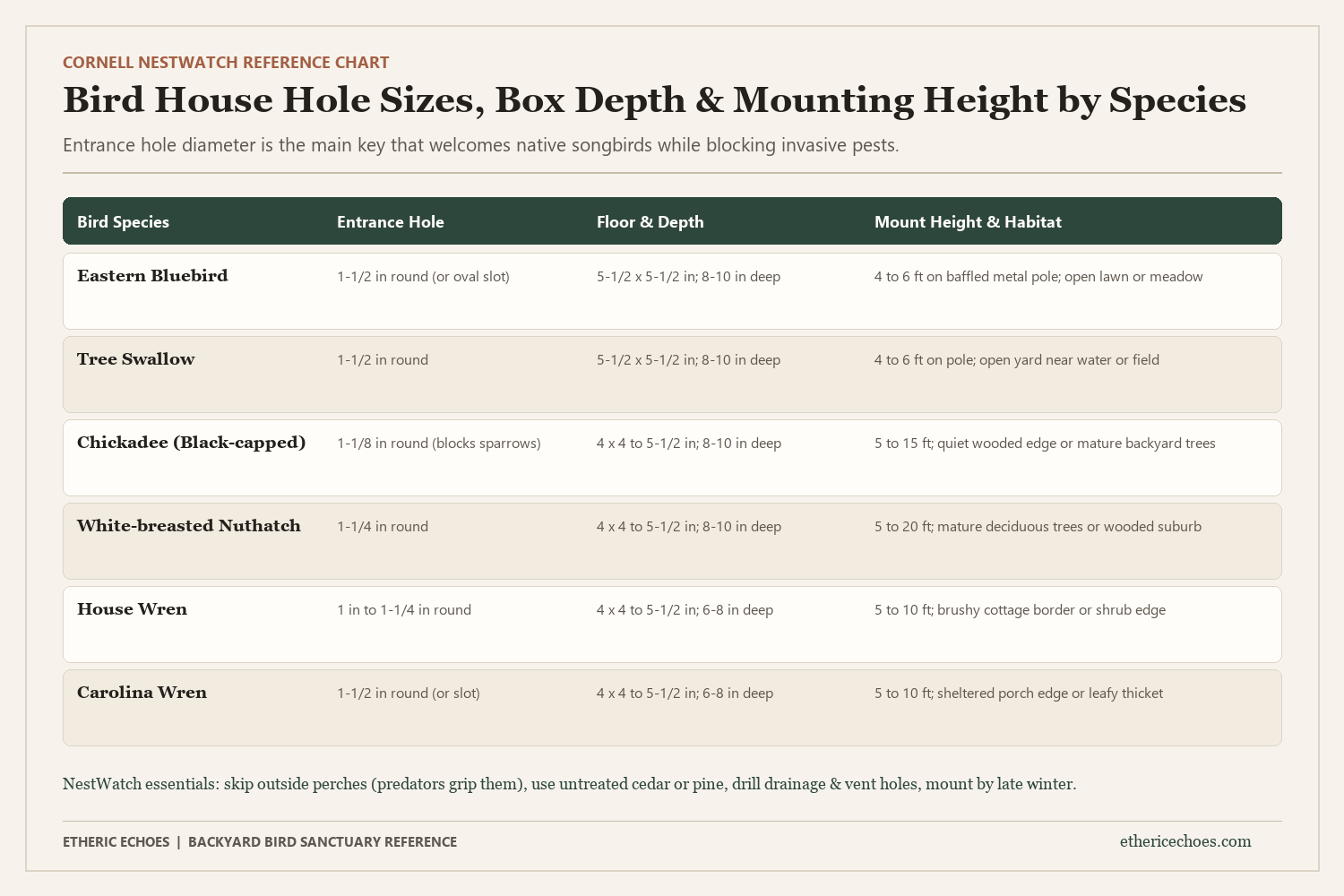
| Bird Species | Entrance Hole Size | Floor & Interior Depth | Mounting Height | Ideal Yard Habitat |
|---|---|---|---|---|
| Eastern Bluebird | 1-1/2 in round (or 1-3/8 x 2-1/4 in slot) | 5-1/2 x 5-1/2 in; 8-10 in deep | 4 to 6 ft | Open lawn, meadow or sunny cottage border |
| Tree Swallow | 1-1/2 in round | 5-1/2 x 5-1/2 in; 8-10 in deep | 4 to 6 ft | Open sunny yard near a pond, marsh or field |
| Black-capped / Carolina Chickadee | 1-1/8 in round | 4 x 4 to 5-1/2 in; 8-10 in deep | 5 to 15 ft | Quiet wooded edge or mature backyard trees |
| White-breasted Nuthatch | 1-1/4 in round | 4 x 4 to 5-1/2 in; 8-10 in deep | 5 to 20 ft | Mature hardwoods and wooded suburban yards |
| House Wren | 1 in to 1-1/4 in round | 4 x 4 to 5-1/2 in; 6-8 in deep | 5 to 10 ft | Brushy cottage border, hydrangeas or shrubs |
| Carolina Wren | 1-1/2 in round (or wide slot) | 4 x 4 to 5-1/2 in; 6-8 in deep | 5 to 10 ft | Sheltered porch edge, leafy thicket or arbor |
Five non-negotiable rules of a safe bird house
Before hanging any nesting box in your backyard, run through these five NestWatch safety checks:
- Zero outside perches: If a decorative wooden house comes with a glued peg beneath the hole, snap or pull it off before mounting. Native birds never need it, and predators use it to grip and reach inside.
- Untreated natural wood only: Use 3/4-inch thick untreated cedar, cypress or exterior pine so thick walls insulate chicks against summer afternoon heat and late-spring cold snaps. Skip metal, glazed ceramic, pressure-treated lumber or dark heat-trapping paint.
- Drainage and upper ventilation: Confirm the floor has at least four 3/8-to-1/2-inch drainage holes (or cut corners) and small 1/4-inch air gaps tucked beneath the sloped overhanging roof.
- Easy-open cleanout door: A hinged side or front panel lets you sweep out old nesting material and mites once fledglings leave without taking the pole down.
- Fledgling ladder grooves inside: Rough-sawn interior front wood (or shallow horizontal kerf grooves below the hole) gives baby birds traction to climb out on fledging day.
1. Eastern Bluebirds and Tree Swallows (open sunny yards)
Bluebirds and tree swallows hunt flying insects over open grass rather than inside dense woods. Mount a classic cedar bluebird house with a 1-1/2-inch round hole at 4 to 6 feet high on a freestanding metal pole fitted with a smooth stovepipe or cone predator baffle underneath.
Place the pole facing an open sunny lawn or flower border with a low fence post or tree branch 25 to 50 feet away where parents can perch and scan for insects before flying in. If both bluebirds and tree swallows visit your property, you can pair two boxes 15 to 20 feet apart (swallows will defend the pair from other swallows while letting bluebirds use the neighboring box), and space separate bluebird territories at least 100 yards apart.
2. Black-capped and Carolina Chickadees (quiet wooded edges)
Chickadees are some of the easiest and most rewarding backyard cavity nesters, especially because their 1-1/8-inch entrance hole is small enough to physically lock out aggressive non-native house sparrows. Add a thin copper or metal portal guard around the hole if gray squirrels frequently chew wooden rims wider in your neighborhood.
Mount a chickadee box 5 to 15 feet high on a baffled pole or quiet garden post tucked near evergreens, birch or oak trees. Adding roughly 1 to 2 inches of clean, untreated pine wood shavings (never fine sawdust) inside the bottom often encourages chickadees to excavate and claim the box in early spring.
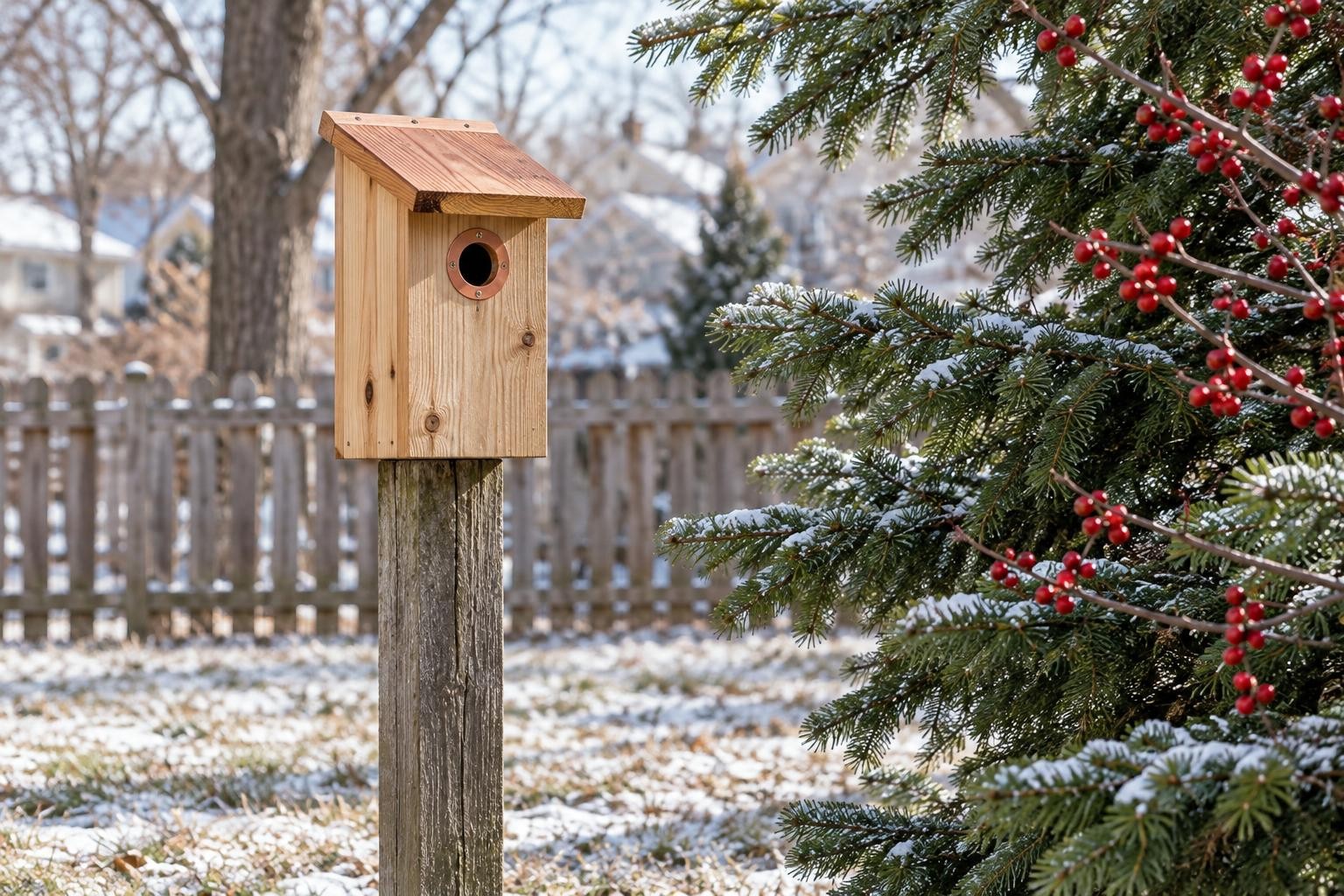
3. House Wrens and Carolina Wrens (cozy cottage borders)
Unlike bluebirds, wrens love leafy, slightly tucked-away cottage yards full of hydrangeas, climbing vines and sheltered corners. A hanging cedar house with a 1-inch to 1-1/4-inch hole hung 5 to 10 feet high from a sturdy shepherd’s hook or under a quiet porch eave suits house wrens right away.
Because male house wrens can sometimes poke holes in neighboring bluebird eggs, keep wren houses close to brushy flower borders and well away from open-lawn bluebird poles. If you live in the southern or mid-Atlantic range of Carolina Wrens, they happily nest in a slightly wider 1-1/2-inch box or sheltered open-front nesting shelf near a quiet covered porch.
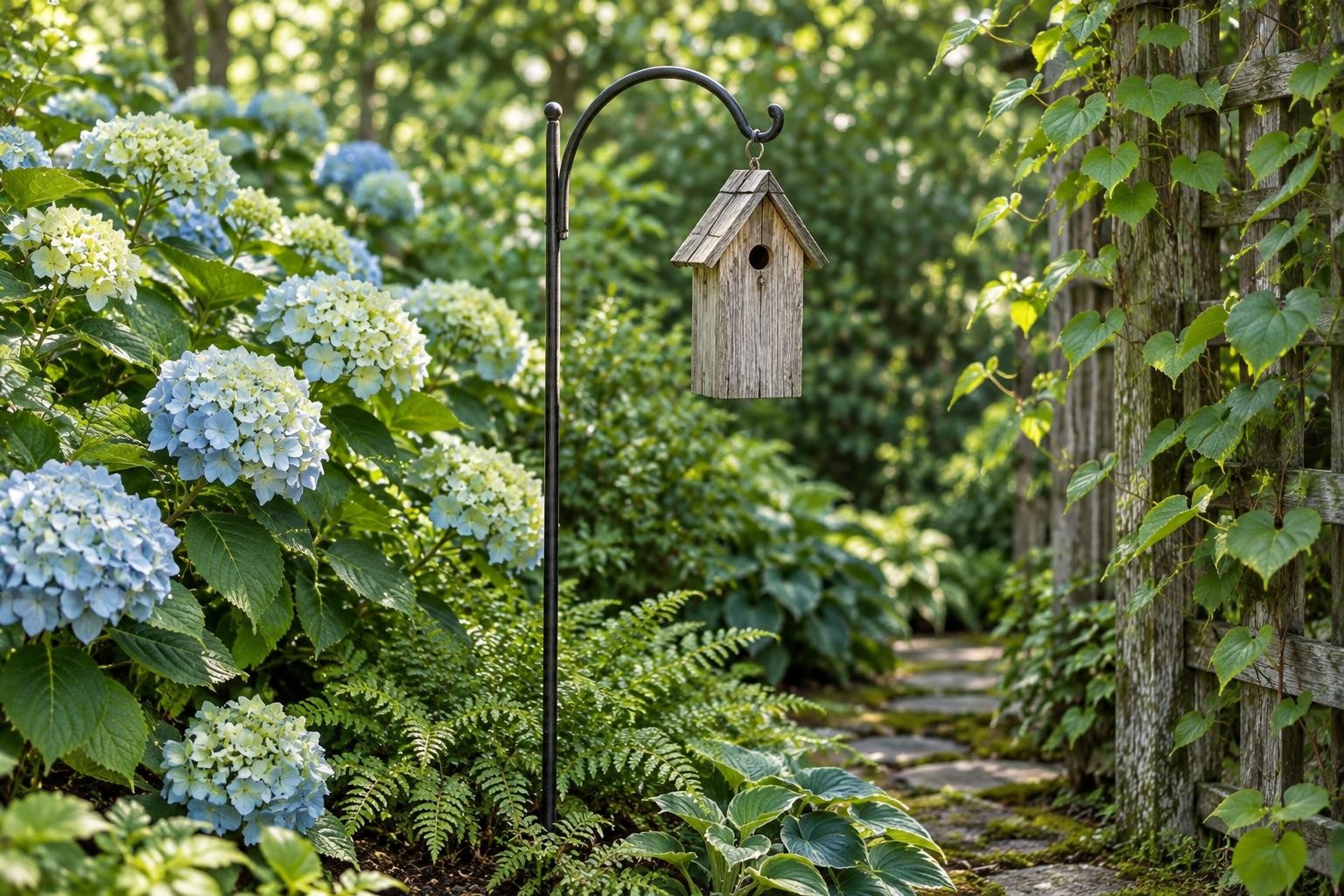
4. White-breasted Nuthatches (mature trees & wooded yards)
If nuthatches already walk head-first down your oak or maple trunks visiting your winter suet feeder, offer them a box with a 1-1/4-inch entrance hole mounted 5 to 20 feet high on a baffled post near mature deciduous trees. Keep the surrounding area calm and away from heavy dog or patio traffic.
Where to put a bird house (placement checklist)
Even the best cedar box sits empty if it bakes in afternoon sun or swings wildly in wind. Check these six placement habits before sinking a pole:
- Face east or southeast: Morning sun takes the chill off cool spring nights while afternoon sun and driving rain hit the solid back wall.
- Choose a baffled metal pole over a tree trunk: Mounting on a smooth metal conduit pole with a cone or stovepipe baffle stops raccoons, cats and snakes far better than nailing a box to a climbable tree.
- Keep 20 to 30 feet from bird feeders: Busy feeders attract crowds, jays and squirrels that stress nesting parents. Keep your bird feeding station and shallow bird bath in separate corners of the yard.
- Stay clear of heavy foot traffic and loud doors: Quiet side yards, fence edges and garden borders fill faster than posts beside a deck staircase.
- Mount in late winter: Put boxes up between January and early March. Resident chickadees and bluebirds start investigating cavities months before leaves open, and dry boxes double as winter night roosts.
- Clean between broods: Once young birds have completely fledged and left, open the side cleanout door wearing gloves, brush out the old nest into the trash, wipe with plain water (no harsh scented cleaners), and let the box air-dry for the next brood.
Shop predator-safe cedar bird houses
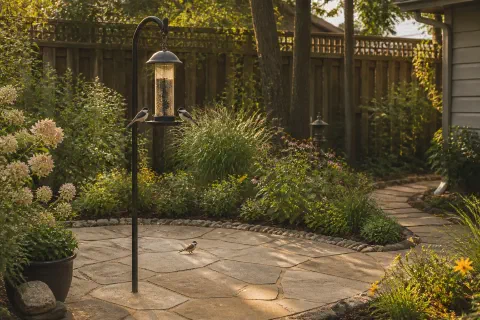
All three Amazon nesting boxes below are built from untreated cedar with ventilation, drainage and cleanout access, and none have an outside perch peg below the entrance hole. The garden scenes above show yard placement; the cards below display the actual listed bird houses.
As an Amazon Associate we earn from qualifying purchases, so Amazon links on this page may pay us a small commission at no extra cost to you.
Build out a complete four-season bird sanctuary
Nesting boxes work best when visiting birds also have natural cover, clean water and winter calories nearby. Browse our full Backyard Birds Hub to pair your bird house with 13 native berry shrubs for birds, 7 shallow bird bath setups and our winter bird feeder and seed guide.
Common questions about backyard bird houses
When is the best time of year to put up a bird house?
Mount new bird houses in late winter (January through early March) before spring territories form. Chickadees, nuthatches and bluebirds begin scouting cavities surprisingly early, and winter songbirds also roost inside dry boxes during freezing nights.
Why should a bird house never have a wooden perch below the entrance hole?
Native songbirds cling directly to the rim of the hole and do not need an outside peg. A perch gives invasive house sparrows, starlings, squirrels and raccoons an easy foothold to raid eggs and chicks.
Which direction should a bird house entrance hole face?
Aim the entrance hole east or southeast whenever possible so gentle morning sunlight warms the box while afternoon heat and prevailing storm winds hit the solid back wall instead of blowing rain inside.
Should you put a bird house right next to a bird feeder?
No. Mount nesting boxes at least 20 to 30 feet away from busy bird feeders because constant traffic, noisy flocks and squirrels around feeders stress nesting parents and attract predators.