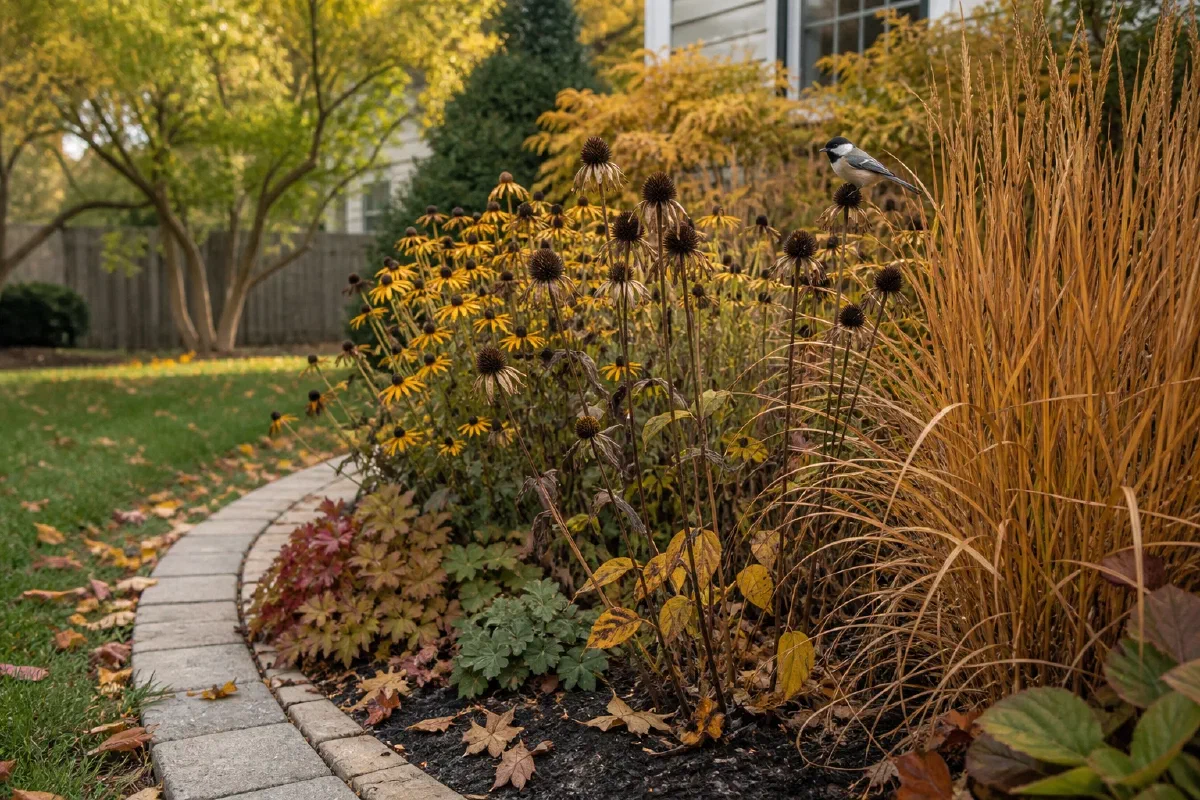
A bird-friendly fall garden does not need to look abandoned. The useful middle ground is to clean what can spread disease or block a path, leave the plants that still offer seeds and shelter, and move clean leaves into the beds where they can do some good.
Try dividing the yard into three simple zones: a neat walking edge, a standing winter bed, and a tucked-away habitat corner. You still get an orderly view from the window, while birds keep places to forage when flowers and insects become harder to find.
| Zone | What it looks like | What it does |
|---|---|---|
| Neat walking edge | A clipped front edge and clear paving, nothing lying on the path | Everything you walk past stays tidy |
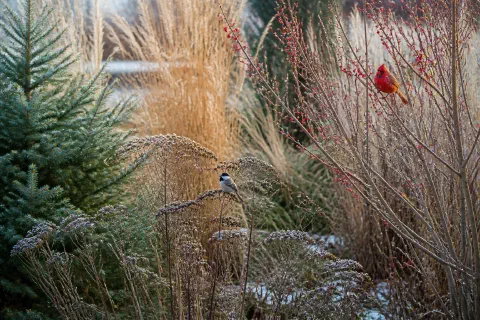
| Standing winter bed | Healthy seed heads and stems left up, broken ones removed | Food through winter and hollow stems for overwintering insects |
| Habitat corner | Clean leaves and sound branches grouped in one out-of-the-way spot | Foraging and cover without the rest of the yard looking abandoned |
The Quick Keep, Cut, or Move Test
Walk the garden once with pruners, a rake, and three decisions in mind. You do not have to finish every bed or identify every visitor before you begin.
- Keep it standing when a healthy plant has seed heads, sturdy hollow stems, berries, or dense structure that may provide food or cover.
- Cut and remove it when foliage is diseased, a plant is invasive, a stem blocks a walkway, or wet growth has collapsed into a slippery mat.
- Move it when clean leaves or sound branches are useful but lie in the wrong place. Shift leaves off paths and lawn into beds, and place branches in a deliberate back corner.
This test avoids the two frustrating extremes: stripping every bed bare or leaving every bit of debris exactly where it falls. It also gives each part of the cleanup a visible purpose.
Leave Seed Heads That Turn Into a Winter Pantry
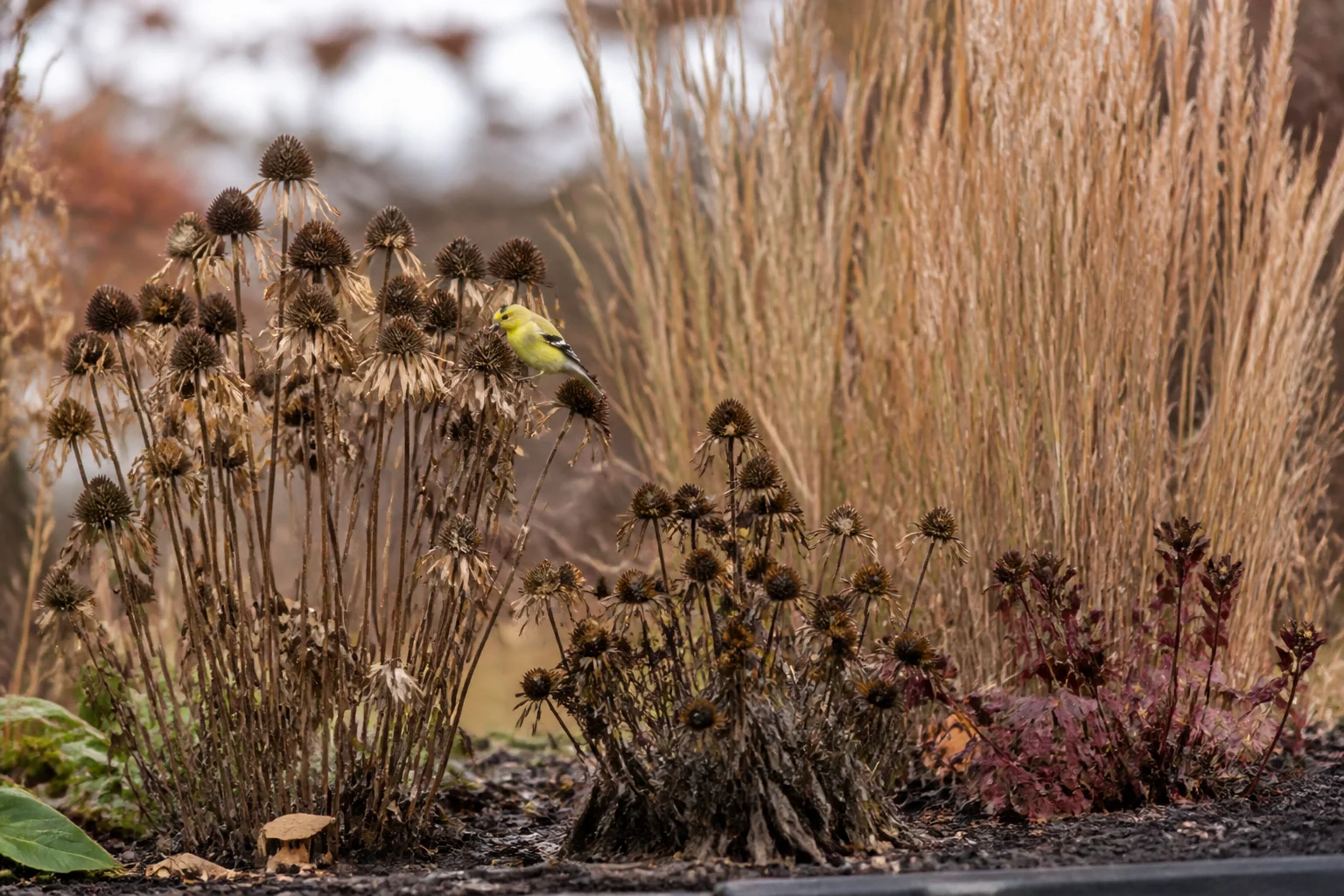
Begin with healthy coneflowers, black-eyed Susans, sunflowers, asters, goldenrod, and other seed-bearing perennials. Their faded heads may look finished to us, but they can still hold food for finches, sparrows, and other seed-eating birds. The Wildflower Center’s plant record for black-eyed Susan lists birds among the wildlife it attracts and notes plainly that they enjoy the ripe seeds.
Audubon’s fall yard guidance recommends saving native wildflower seed heads and native grasses after they go to seed. Penn State Extension also advises leaving fall perennial seed heads for birds and stems for overwintering bees.
Keep the strongest shapes and remove only the stalks that have fallen into a path or smothered a smaller plant. If a clump looks floppy, loosely tie it with plain garden twine or leave the best stems and cut the rest at the base.
Plants worth checking before you reach for the pruners
- Coneflowers and black-eyed Susans with intact seed heads
- Asters, goldenrod, and sunflowers that stayed healthy
- Native grasses with upright seed plumes
- Berrying shrubs with sound fruit and branches
- Dense evergreen growth that gives small birds a windbreak
Plant value varies by region, so use a native-plant finder or local extension list before adding something new. A plant suited to your climate is more useful than a generic bird-garden recommendation that struggles in your soil.
Cut Diseased Growth and Clear Safety Problems
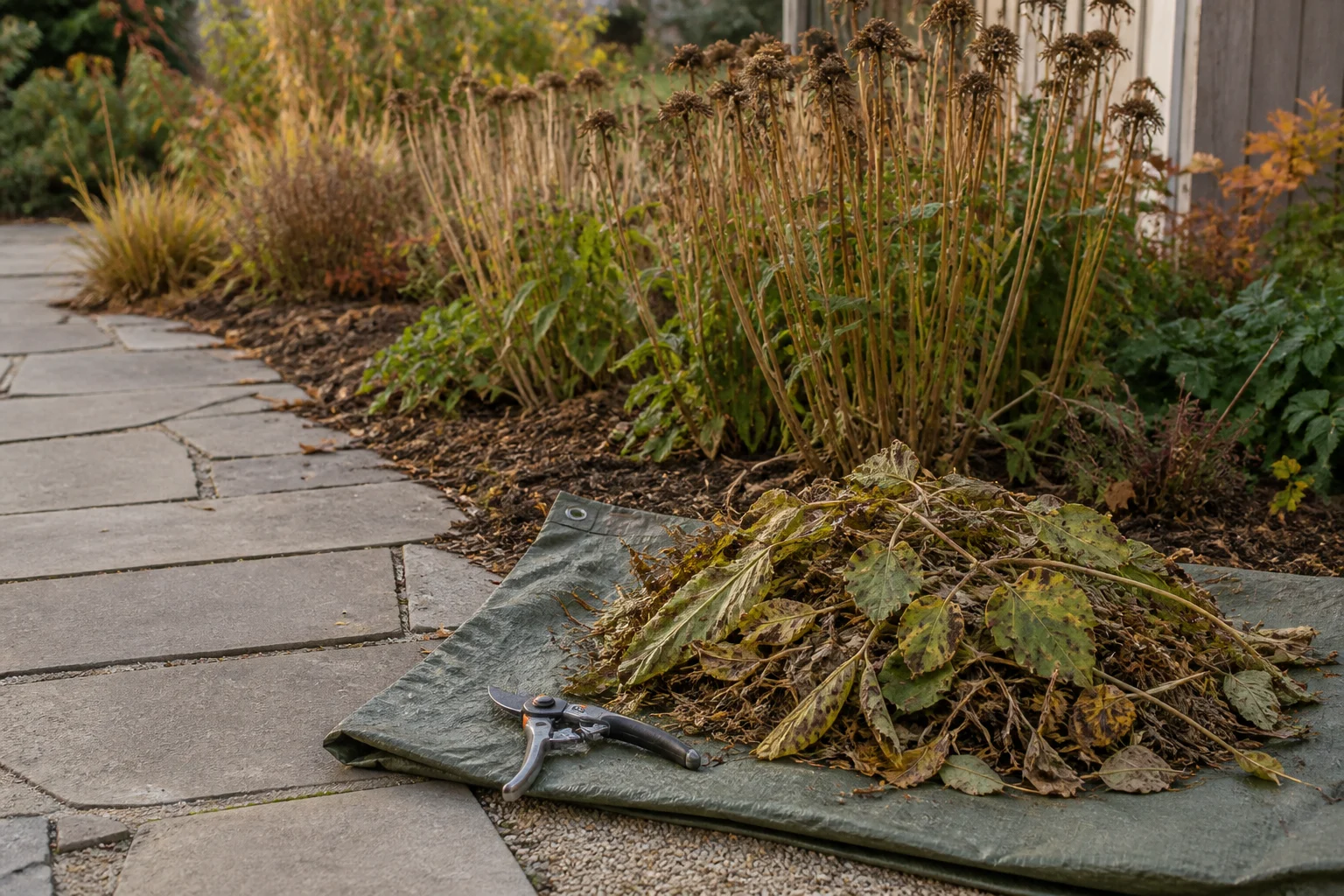
Wildlife-friendly does not mean keeping sick plant material. If a stem or leaf shows a known disease, remove it and follow local guidance for disposal rather than mixing it into a casual home compost pile.
Penn State Extension’s fall task guide specifically recommends cutting diseased material, including stems affected by powdery mildew, and destroying rather than composting it. The same guide notes that many healthy seed-bearing plants should remain standing.
Also cut anything that creates a practical hazard. Clear the route to a gate, feeder, hose connection, and seating area; trim thorny growth leaning into the path; and remove wet stems that have flattened over paving.
What belongs in the removal pile
- Confirmed diseased leaves and stems
- Seed heads from invasive or unwanted self-sowing plants
- Soft vegetable-garden debris that is rotting
- Broken branches hanging where people walk
- Plant material covering drains, steps, or low lights
Move Leaves Into Beds Instead of Bagging Every One
Leaves on a sidewalk are slippery, and a thick wet layer can trouble lawn grass. That does not make every fallen leaf trash. Rake clean leaves from hard surfaces and open turf into shrub borders or selected flower beds, keeping the layer loose rather than packing it against crowns and trunks.
Audubon explains that leaf litter enriches soil and holds places where insects and birds forage. Its natural fall cleanup guide suggests moving leaves into certain beds or a back corner when leaving them everywhere does not fit the yard.
A narrow path of exposed soil or mulch along the front edge makes the bed look tended. Behind that line, leaves can settle around taller plants without spilling over the walkway.
Give Birds One Sheltered Corner
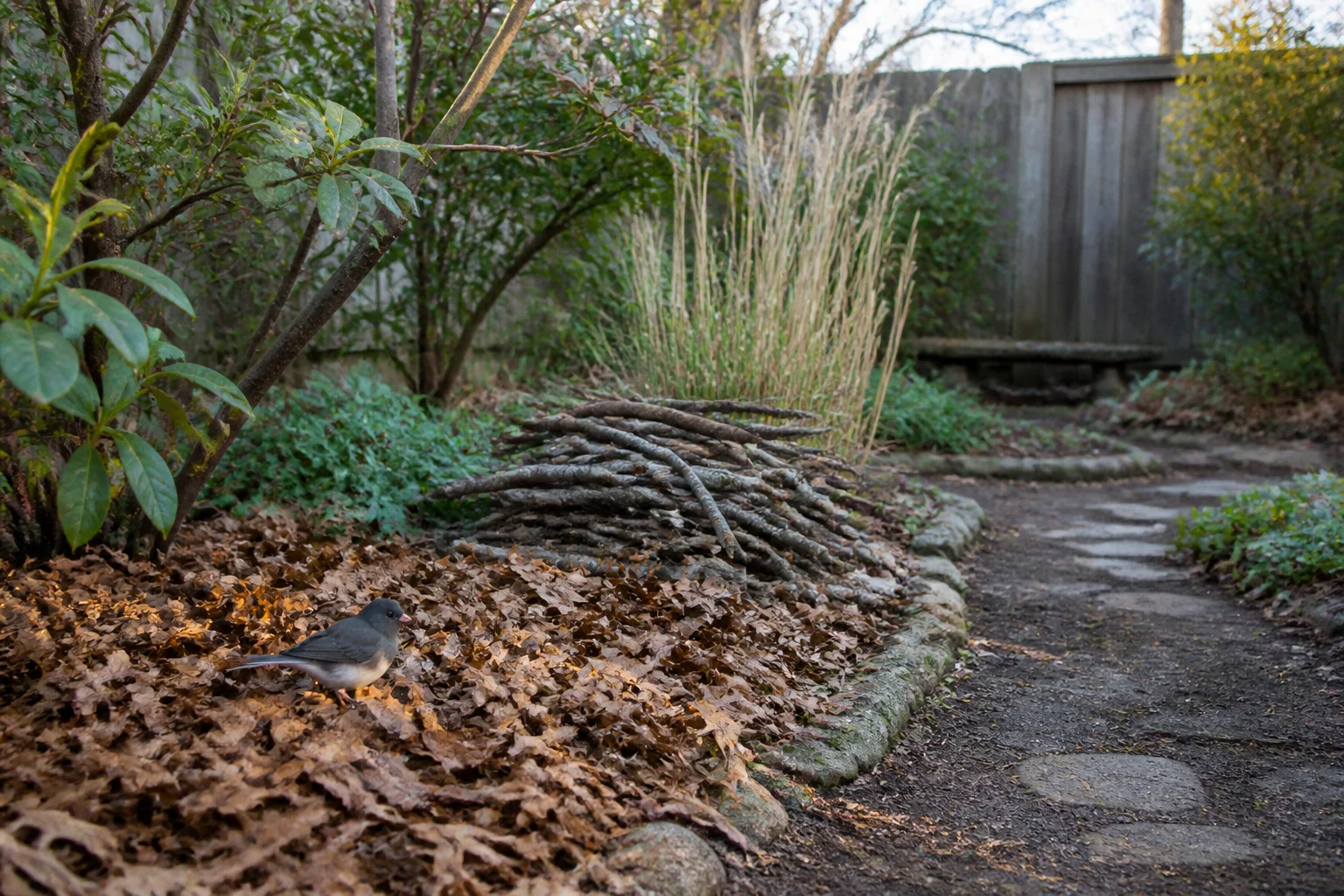
A small habitat corner can be more manageable than changing the whole yard at once. Choose a spot away from the busiest door, group a few sound fallen branches there, and leave nearby grasses or shrubs in place.
The pile should look placed rather than dumped. Start with the larger branches on the bottom, keep it out of drainage channels and property access points, and check local fire and neighborhood rules before building it.
Evergreens and dense native shrubs add cover without requiring a loose pile. If the yard is tiny or rented, a large container holding a region-appropriate native grass can preserve some standing structure without a permanent planting project.
Make the Garden Look Intentionally Left Standing
The eye reads repetition and clean boundaries as deliberate. Repeat three or five standing plant clumps, cut a crisp front edge, and remove random broken stems while keeping the strongest silhouettes.
A low border, a simple plant label, or a narrow mulch strip can separate the winter bed from the path. Grouping leaves under shrubs also looks calmer than letting them blow between every corner of the yard.
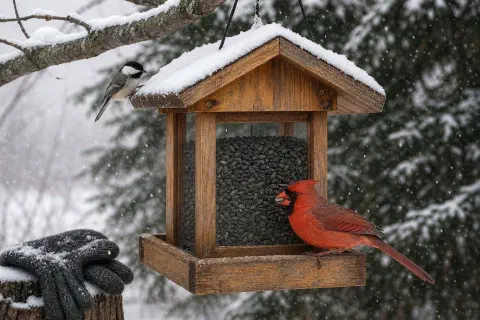
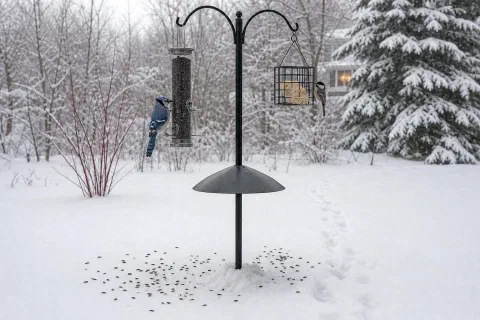
Do the same around a bird feeder. Keep the immediate refill path clear, but let seed-bearing plants and low cover remain farther back so the feeding area still feels connected to the garden.
A Fall Cleanup Order That Fits One Afternoon
The sequence matters more than the effort. Doing these in order means you cut once and move material once.
- Walk the yard with pruners, a rake, and the three decisions in mind, and start with the beds you actually see from the window.
- Cut and bag anything diseased, invasive, or already collapsed into a slippery mat.
- Clear the routes people use: the gate, the feeder refill path, the hose connection, and the way to the seating area.
- Leave the healthiest seed heads and stems standing, and loosely tie any clump that has started to flop.
- Rake clean leaves off paving and turf, then move them into shrub borders and beds in a loose layer.
- Group sound branches in one back corner, away from drainage channels and property access points.
- Take a photo when you finish, so next spring you know which stems were kept on purpose.
Save the Final Cutback for Spring
There is no universal date for spring cleanup. Climate, plant species, nesting activity, and local insect life all affect the right timing, so check regional extension guidance before cutting every stem at once.
When spring growth begins, work through one section at a time. Cut old stems carefully, watch for active nests, and leave some intact material in a quiet place instead of sending the whole winter bed away in one afternoon.
A quick photo taken after fall cleanup helps next spring. You will remember which stems were intentionally kept, where leaves were moved, and which gaps could use a native shrub or late-season perennial.
Bird-Friendly Fall Garden Questions
Should I leave every perennial standing?
No. Keep healthy stems and useful seed heads, but remove diseased growth, invasive seed heads, and anything that creates a safety or drainage problem.
Can I leave leaves on the lawn?
A thick, wet layer can block light and air from turf. Move clean leaves into garden beds or a selected habitat corner instead of leaving a heavy mat across the grass.
How can a small yard help birds without looking messy?
Use one standing winter bed and one leaf-and-branch corner, then keep paths and front edges clear. Grouped habitat reads as a choice, especially when the rest of the route through the yard stays neat.
Which flowers should I stop deadheading in late summer?
Start with healthy, region-appropriate coneflowers, black-eyed Susans, asters, goldenrod, sunflowers, and native grasses. Confirm local suitability before planting new species.
Should diseased stems go in compost?
Do not assume a home compost pile will handle plant pathogens. Follow your extension service’s disposal advice; Penn State recommends destroying rather than composting diseased stems and leaves in its fall garden guidance.
A Softer Cleanup With a Clear Plan
The easiest bird-friendly fall garden begins with less cutting, not more shopping. Leave the healthy pantry and shelter, remove disease and hazards, and move useful natural material to a place where it belongs.
When the path is clear and the standing bed has a defined edge, the yard can feel cared for without becoming empty. You get a calmer fall cleanup, and the birds keep more of what the season already made.
What to Read Next
- Bird bath placement mistakes that keep songbirds away is the water half of the same habitat plan, and it pairs with a standing winter bed.
- Plants hummingbirds visit every day is worth reading before you decide what goes back in the gaps this fall.
- What to plant in late June for fall color covers the planting side if your cleanup has left more bare ground than you expected.