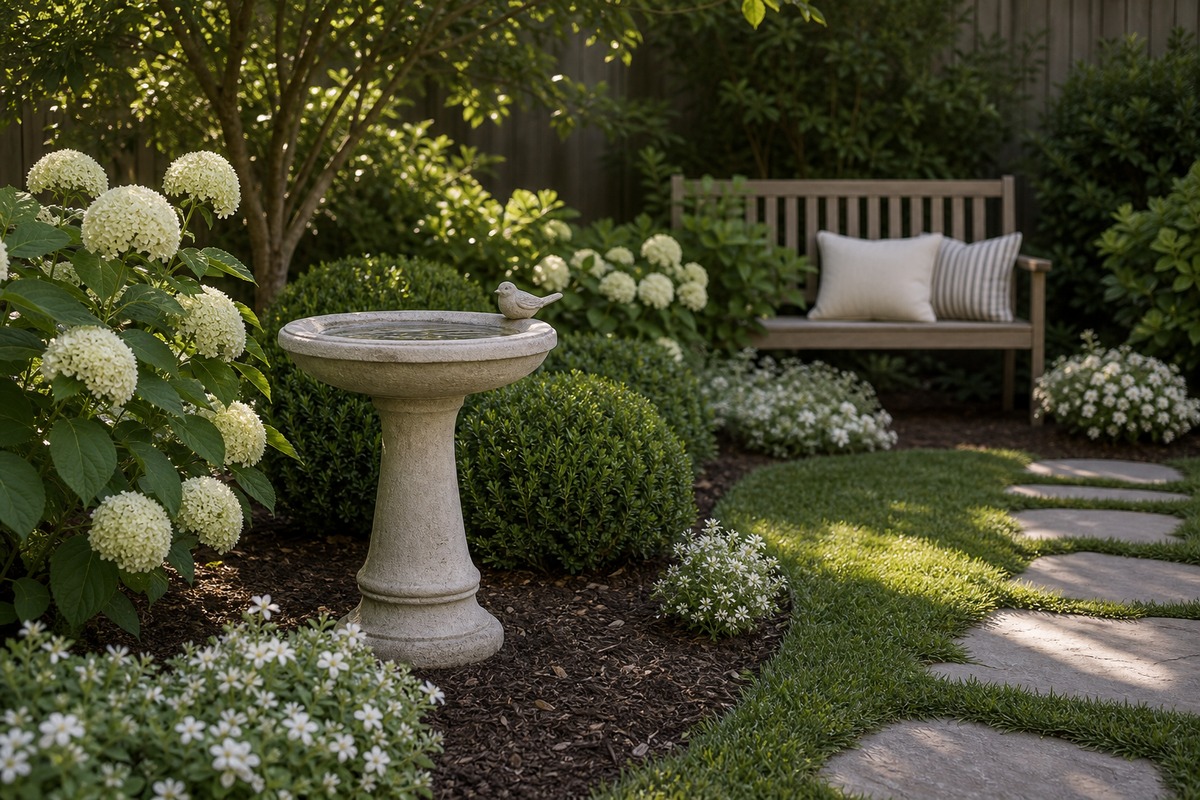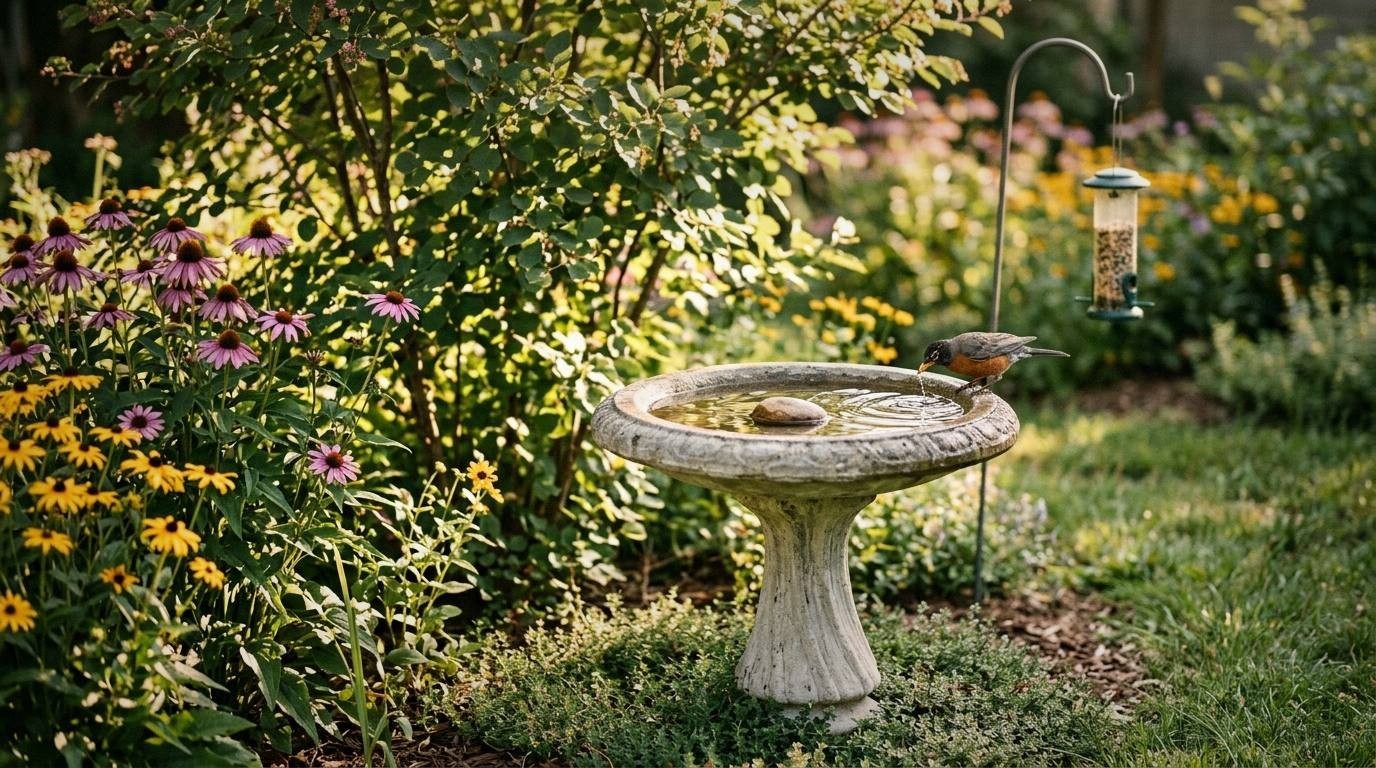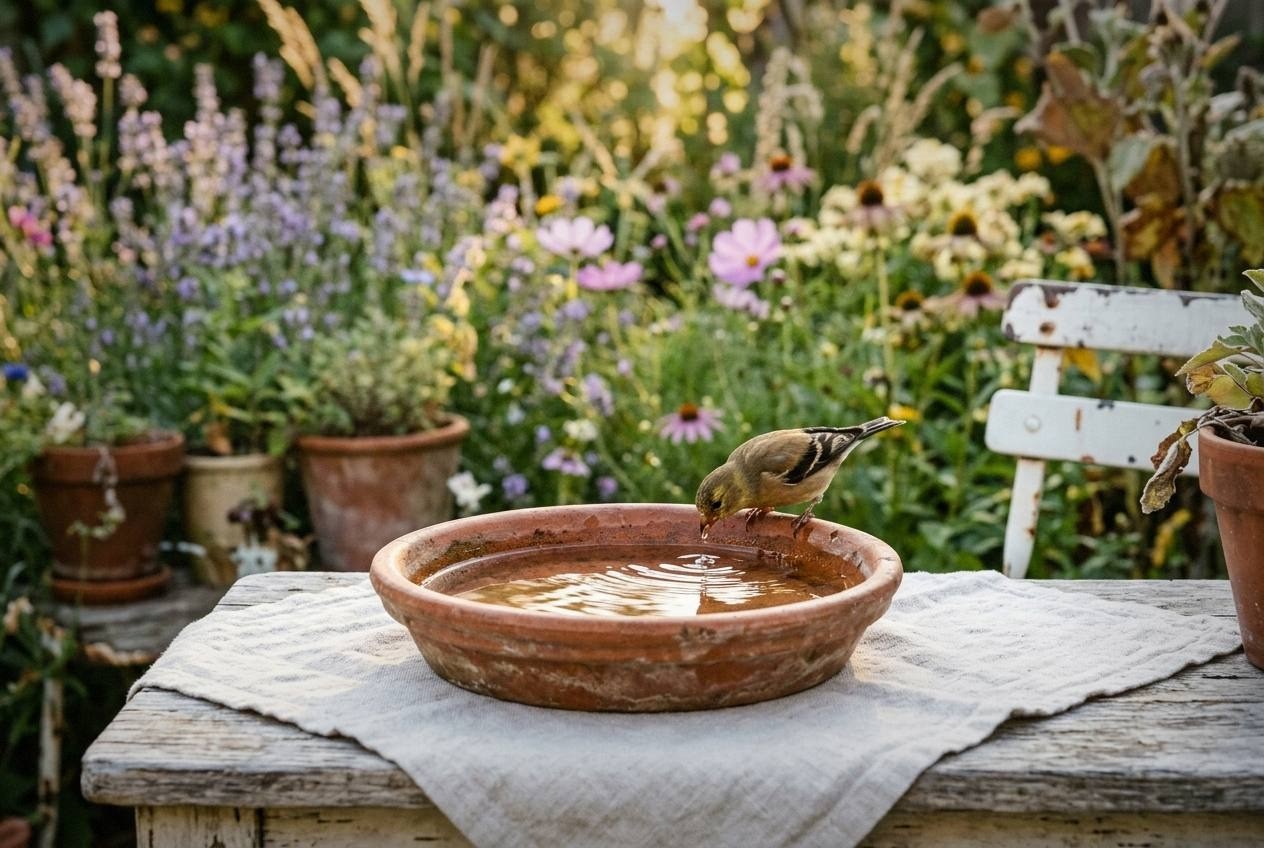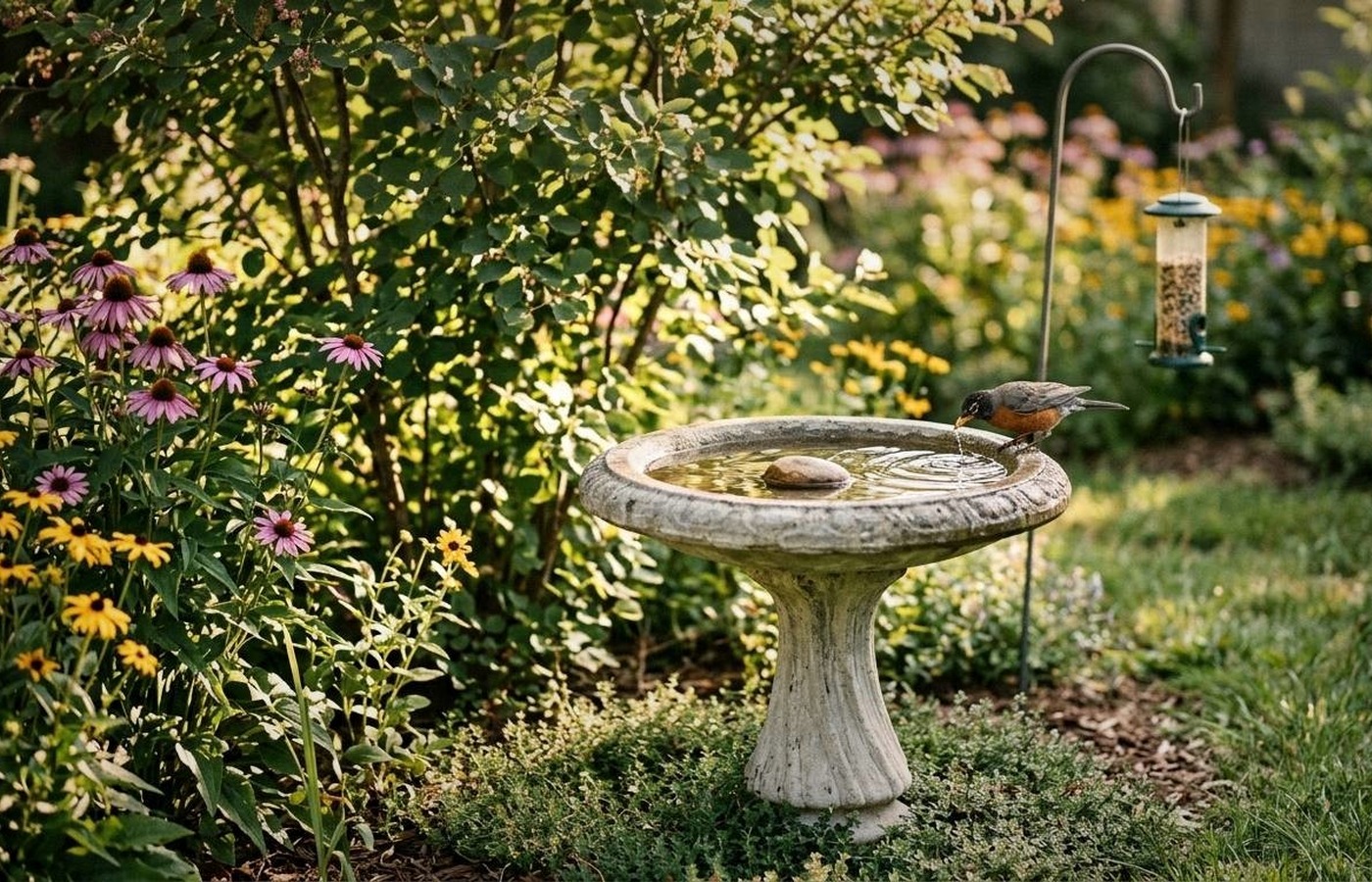
A bird bath can sit in a yard for years and still get ignored.
The usual problem is not the color or style. It is a bath that feels exposed, holds water that is too deep, heats up all afternoon, or sits where nobody remembers to clean it.
Before you replace the bath, check the spot. A small move can give birds a safer place to land and put the basin where you can actually keep the water fresh. If the spot is already right and the bath still is not working, compare a few baths by bowl depth and footing before replacing it.
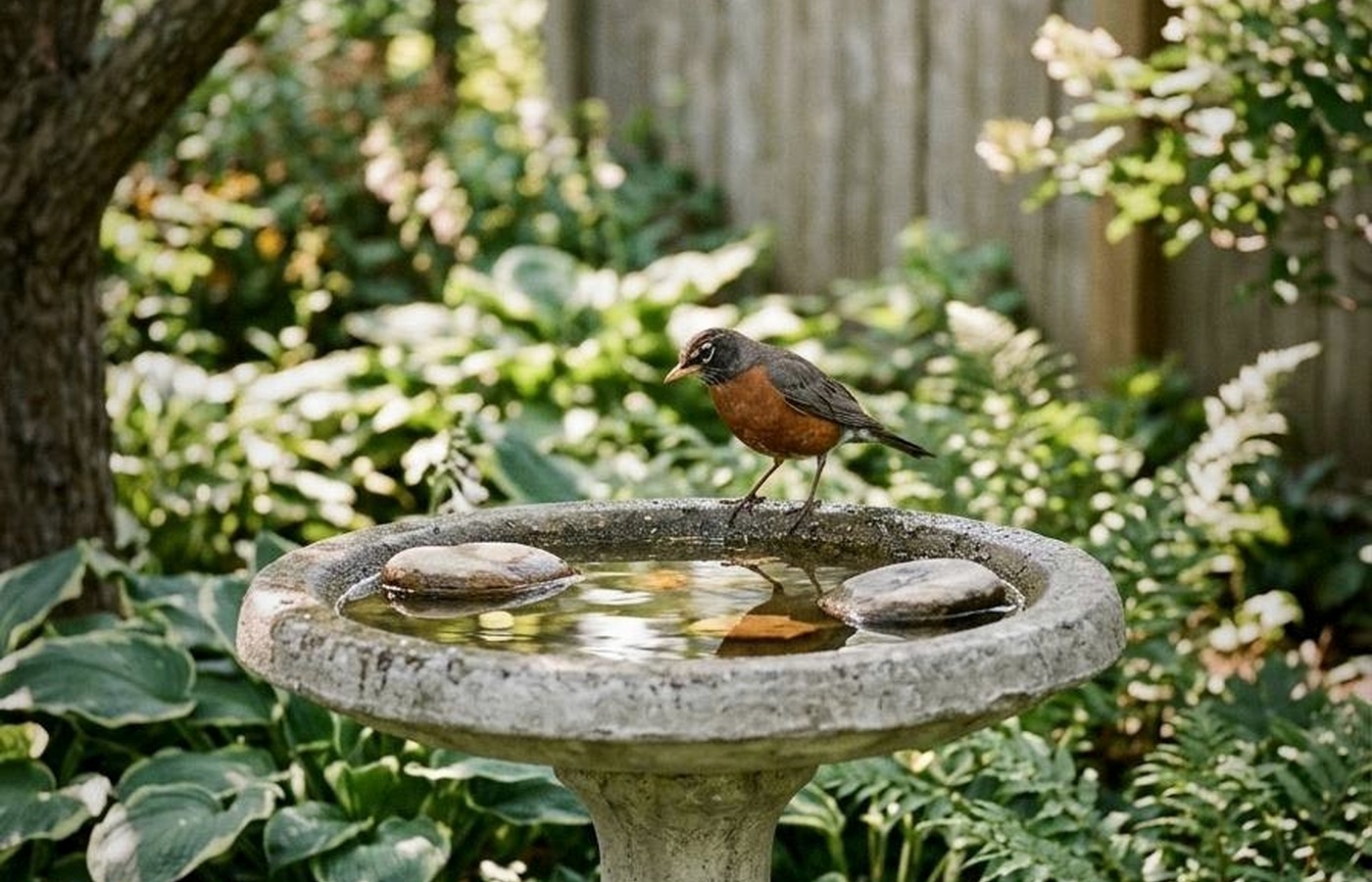
Put a bird bath in shade when possible, near escape cover but with open ground around the basin so cats cannot hide beside it. Keep the water about 1 inch deep at the edge and no more than 2 inches deep in the center. Place it where you can empty, rinse, and refill it often.
Three Popular Bird Baths Worth Comparing
I checked these Amazon listings on July 12, 2026. Availability, badges, ratings, and sales signals can change, so check the current listing before ordering.
Best-selling pedestal style
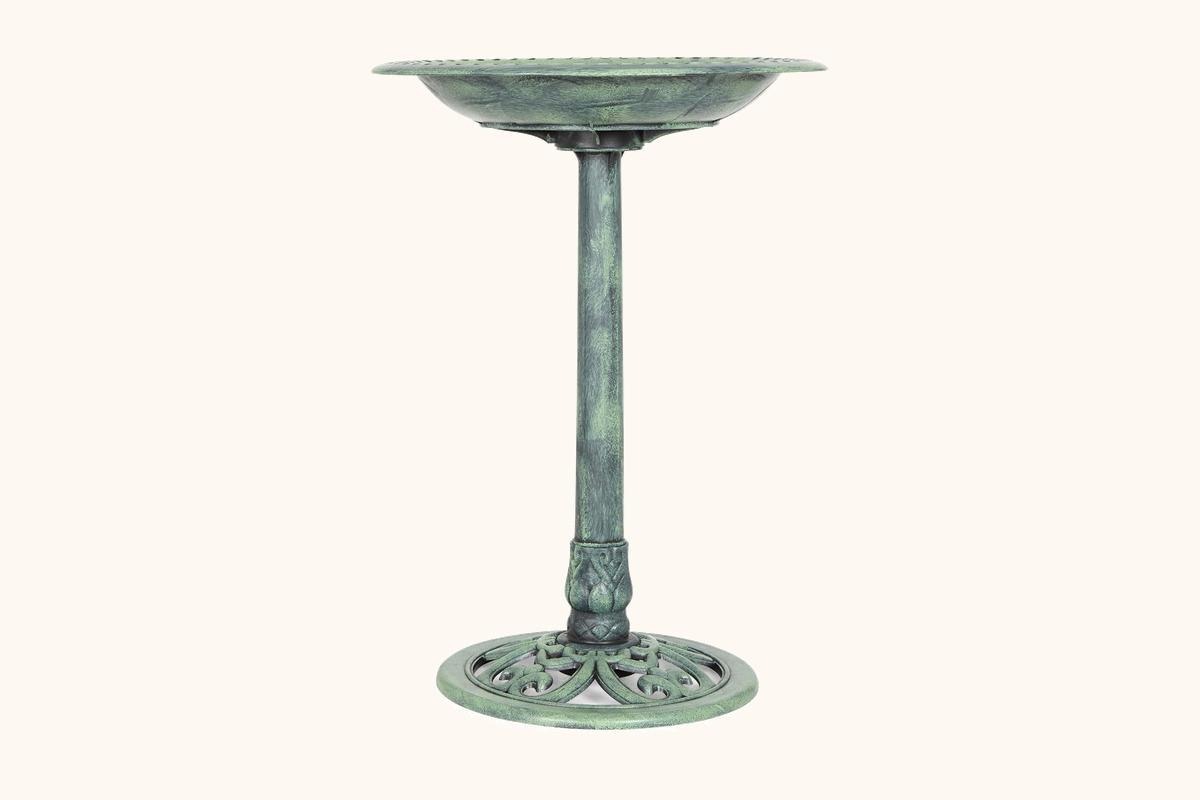
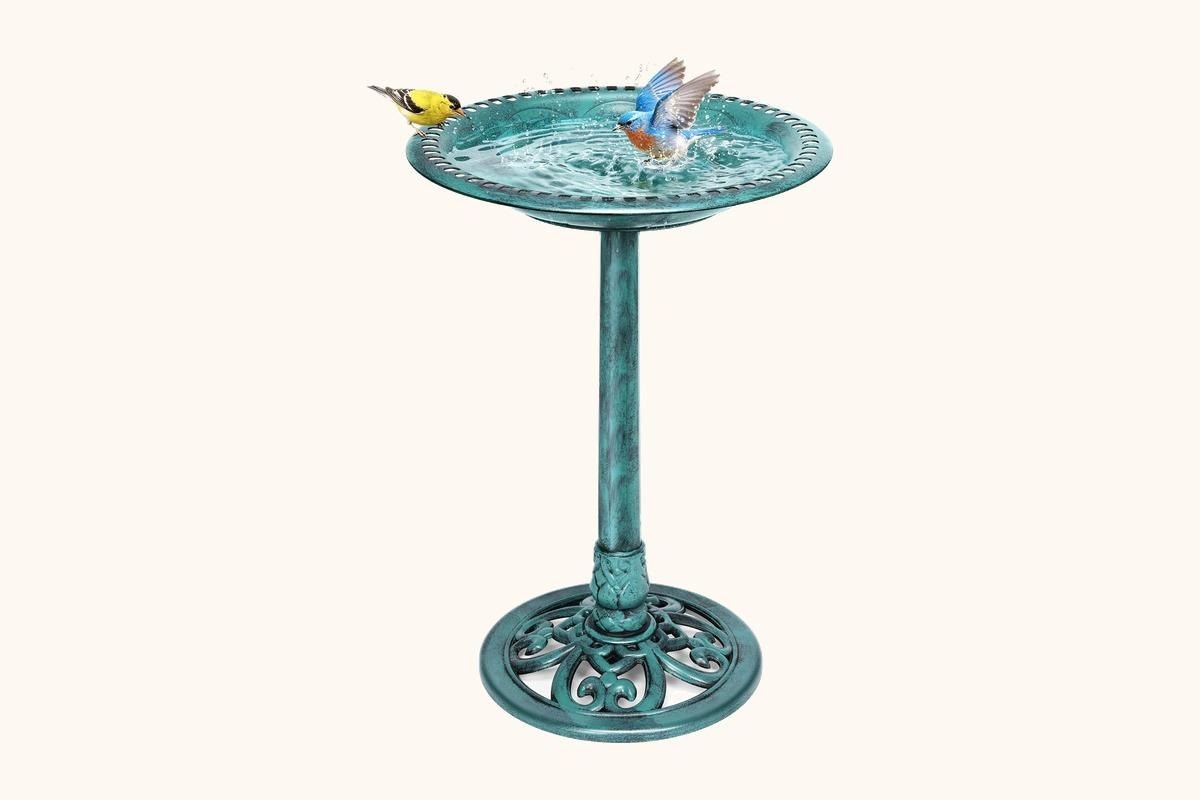
Popular wide-bowl pedestal
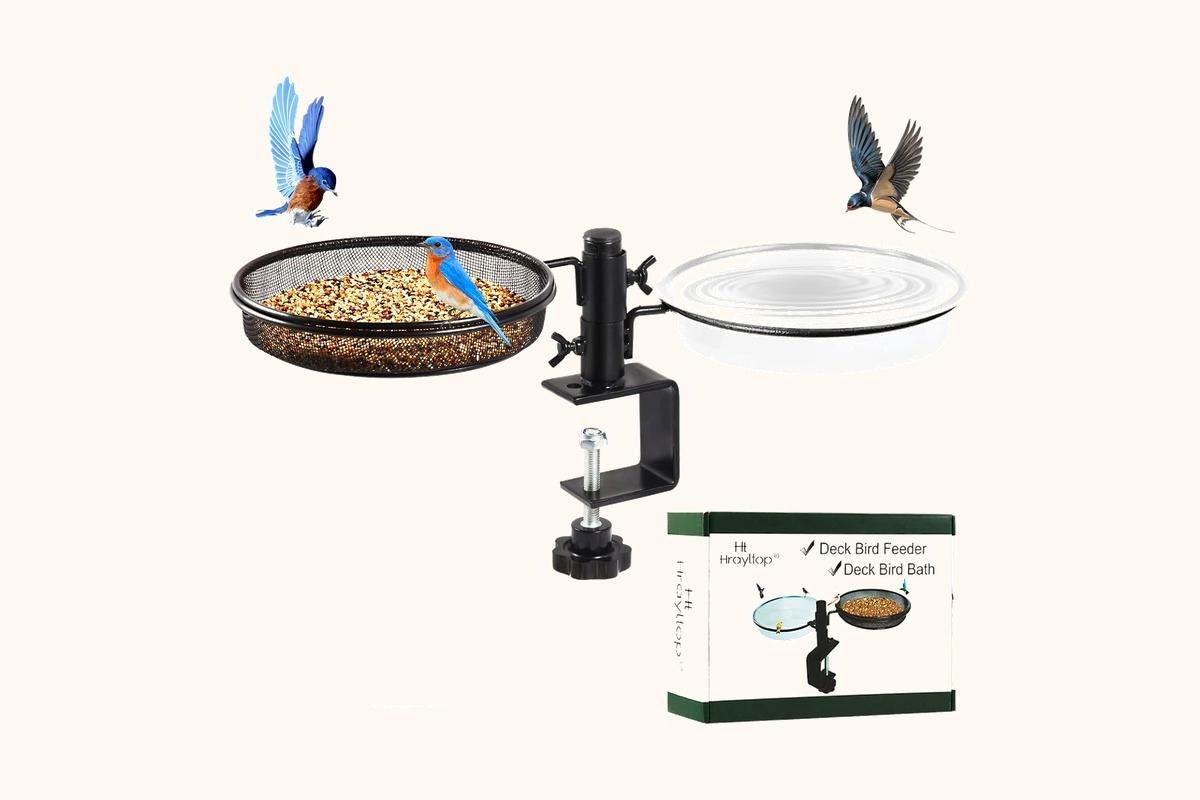
Balcony or deck-railing option
These are not interchangeable. Choose the placement first, then buy the style that fits it. A best-selling pedestal is still the wrong bath for a narrow balcony, and a railing bowl is the wrong choice if it lands at a dangerous distance from glass.
Mistake 1: Putting It in the Middle of Open Lawn
Birds do not love feeling exposed.
A bird bath in the center of a wide lawn may look charming from the kitchen window, but wet birds need a quick route to a branch or shrub if a hawk appears.
Place the bath near trees or shrubs, but do not bury it inside thick groundcover. Leave open ground around the basin so a prowling cat cannot crouch right beside it. Cornell recommends nearby branches for preening while warning that neighborhood cats need a clear buffer from the bath.
The same idea works in larger wildlife spaces. A backyard wildlife habitat feels more alive when water, food, and shelter sit close enough to work together.
Mistake 2: Making the Water Too Deep
Small birds are cautious around deep water.
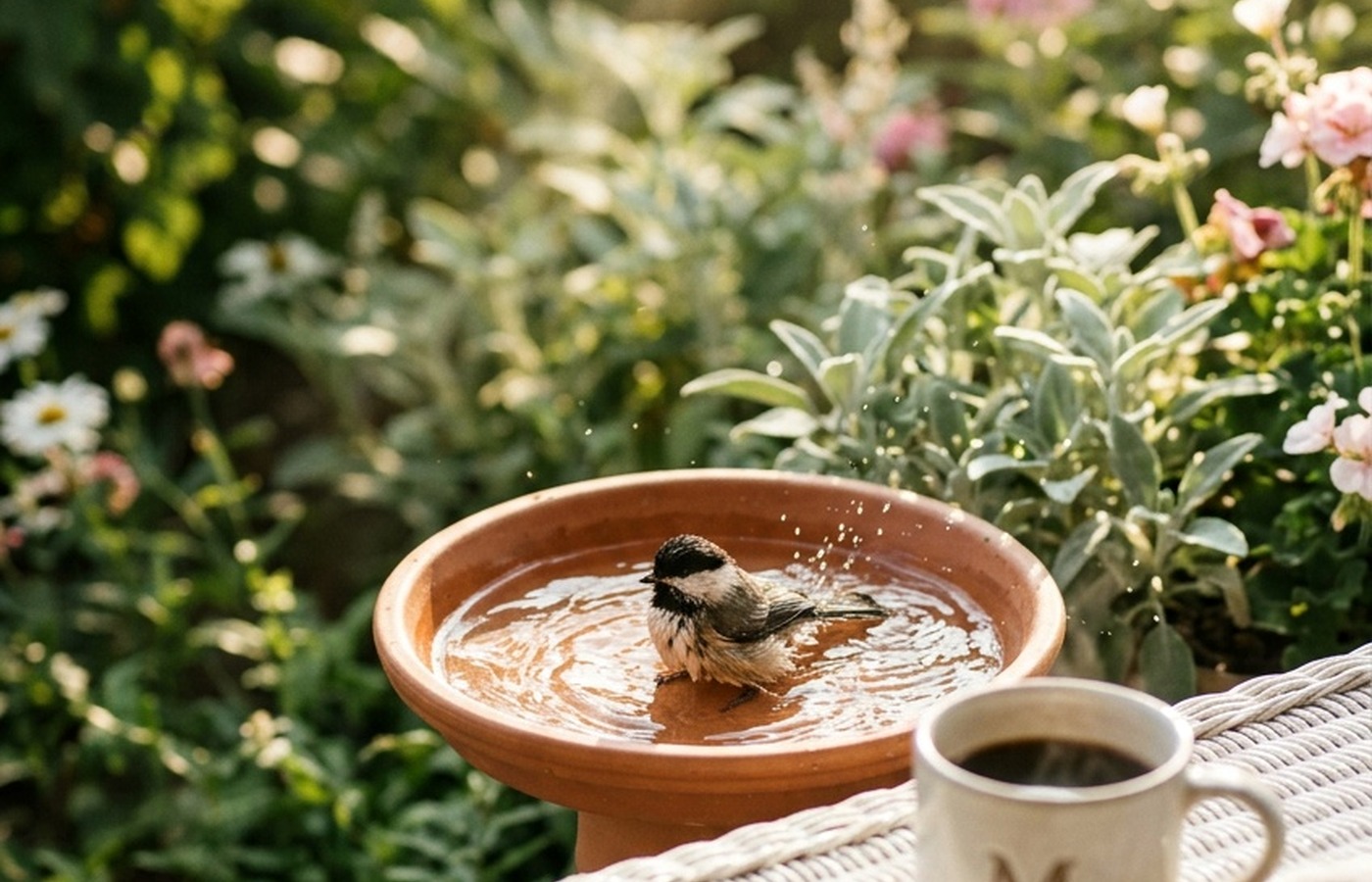
Most songbirds prefer shallow water with footing they can judge. Aim for about 1 inch at the edge, sloping to no more than 2 inches in the center. That range comes from the Cornell Lab’s bird-bath guidance . The Audubon DIY bird-bath guide also recommends a shallow pan no more than 2 inches deep.
If your basin is deeper, add flat stones that rise above the water. They give small birds a dry landing point and make the depth easier to read.
One or two stable stones are enough. Do not crowd the whole basin or make it hard to scrub.
Mistake 3: Hiding It Where You Forget It Exists
Bird baths need fresh water. That means you need to see it.
If the bath is behind a shed, at the far back fence, or tucked in a corner you only visit when mowing, it will probably go stale. Put it somewhere visible from a window, porch, or path you walk every day.
This is partly for your enjoyment, yes. But it is also practical. You will notice when the water is low, dirty, frozen, or full of leaves.
If you like tying small chores to an existing habit, this morning bird-bath routine shows the simple version.
Mistake 4: Placing It Too Close to Cat Cover
Nearby cover is good. Ambush cover is not.
Avoid placing a bird bath directly beside dense groundcover, tall grass, or low shrubs where cats can hide. Birds need a place to escape, but they also need a clear view of the ground around them.
Think of it as a clear safety circle. Birds should be able to see the ground around the bath before they land. If neighborhood cats roam the yard, a pedestal can help, but open visibility matters too. The safest fix for a pet cat is to keep it indoors.
Mistake 5: Letting Sun Turn the Water Warm
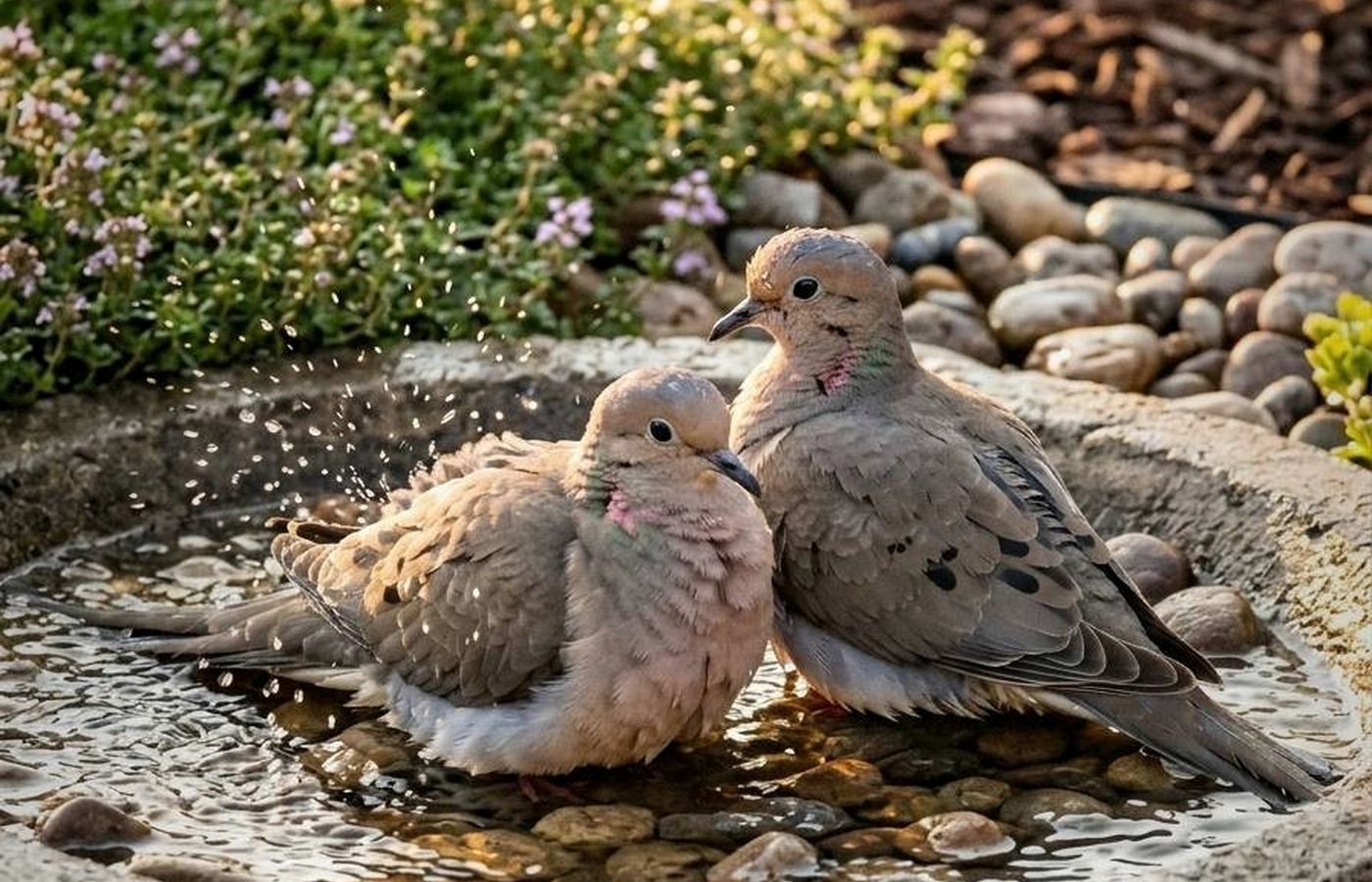
Full sun makes water heat up and evaporate faster. It can also speed up algae growth.
Morning sun with afternoon shade is ideal. The basin stays bright enough for birds to find, but the water does not heat up as quickly. Shade also slows algae.
If full sun is your only option, refill more often and scrub as soon as the basin feels slick. Moving the bath into afternoon shade is usually easier than trying to keep sun-warmed water fresh.
Mistake 6: Putting It at the Wrong Distance From a Window
A bird bath can draw birds into the exact flight path where glass becomes dangerous.
Audubon recommends placing baths and feeders either very close to a window or at least 30 feet away. At middle distances, a startled bird has room to build speed before striking the glass. If you cannot change the distance, add an effective exterior window treatment instead of relying on one or two decorative decals. See Audubon’s bird-feeding safety guidance for the placement rule.
Mistake 7: Treating Cleaning as an Occasional Chore
Fresh-looking water is not always clean water. Droppings, feathers, leaves, algae, and mosquito larvae can build up quickly in warm weather.
Empty and replace the water every day or two during hot weather and anytime it looks dirty. Give the basin a firm scrub with a dedicated brush, rinse it well, and refill with plain water. Do not add glycerin or other chemicals to keep winter water open. Use a bird-bath heater made for that job and follow its safety instructions.
The practical test is simple: if the bath is too far from the hose or too awkward to lift and empty, it is in the wrong place for you to maintain.
The 30-Second Placement Check
Stand where you plan to put the bath and check all seven:
- The basin has shallow edges and no more than 2 inches of water in the center.
- Birds have a nearby branch or shrub to reach after bathing.
- Cats cannot hide directly beside or beneath it.
- The basin gets shade during the hottest part of the day.
- You can reach it easily with water and a brush.
- It is either close to a window or at least 30 feet away.
- The base sits level and will not tip when a larger bird lands.
A Better Bird Bath Spot
The best spot is visible to you, close to escape cover, open around the base, shaded during the hot part of the day, and easy to reach with water.
Get the depth and cleaning routine right before spending money on a fountain, solar pump, or ornate pedestal. A plain shallow basin in the right place will help birds more than a beautiful bath that stays hot, deep, or dirty.
Then watch it for a week. If birds still ignore it, try a small move toward shade or safe cover before replacing the whole setup.
What I’d Actually Buy
Honestly, probably nothing. This article is about where the bath goes, and moving the one you own is free. Try the new spot for two weeks before you spend anything.
If you genuinely need a bath, the Daoeny 35-inch metal pedestal (opens Amazon in a new tab) is the straightforward pick and the VIVOHOME 28-inch (opens Amazon in a new tab) is the same idea in a heavier body for windy yards.
Renters and balcony people, the deck-mounted bath (opens Amazon in a new tab) clamps to a rail and needs no ground at all. That is the only one on this list that solves a problem the others cannot.