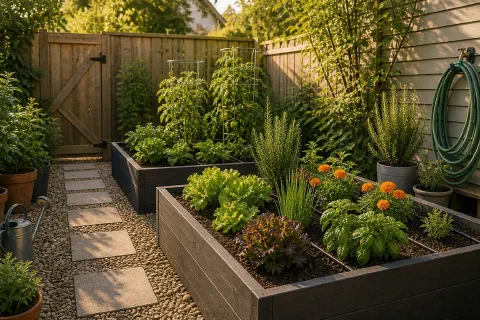
The question people actually ask about raised beds is not how to build one. It is whether the wood is going to end up in the vegetables.
That question has a real answer now, and it comes from a six-year study rather than from a forum thread. Oregon State University Extension’s publication on pressure-treated wood for raised beds tested it directly: treated beds against untreated beds, same soil, same crops, four seasons of lab results.
Short version: the copper stayed put, the vegetables did not take it up, and the treated boards outlasted the untreated ones by years. But the details matter, because they decide which boards you should carry home.
The Wood Options, Ranked by What They Cost You
| Wood | Rot resistance | Realistic lifespan in a bed | Watch for |
|---|---|---|---|
| Cedar or redwood | Naturally resistant, no treatment | 10 to 15 years | Cost, and it still rots at the soil line eventually |
| Pressure-treated (ground contact) | Copper-based preservative | Longest of any wood option | Must be rated for ground contact, not just “outdoor” |
| Black locust or white oak | Naturally resistant, very hard | Long, but hard to find and hard to drill | Availability and weight |
| Untreated pine or fir | None | Roughly 5 to 7 years before it fails | Cheapest up front, most expensive over ten years |
| Railroad ties | Not rated for gardens | Do not use | Creosote and industrial preservatives |
| Salvaged old lumber | Unknown | Unknown | Anything over about 20 years old may be CCA-treated |
Is Pressure-Treated Wood Safe for a Vegetable Garden?
Yes, if it is modern lumber rated for ground contact.
The arsenic warning you will find all over the internet is out of date. Oregon State’s publication is direct about it: it has been more than 20 years since chromated copper arsenate, or CCA, was used for wood sold to the general public. The preservatives in current residential lumber are copper-based instead, and the common ones are copper azole (CA-C), micronized copper azole (MCA), and alkaline copper quaternary (ACQ).
That is why the arsenic advice keeps circulating while the lumber it describes is no longer on the shelf. If you are buying new boards today, CCA is not what you are buying.
The exception is old wood. Salvaged lumber over about 20 years old may be CCA-treated, and manufacturers do not recommend it for garden beds. Old railroad ties are worse. Their industrial preservatives were never intended for a garden, and no extension service recommends them for a bed you will eat from.
“Ground contact” is the phrase to look for on the tag, not “outdoor.” A board rated for ground contact is treated for soil and moisture. A board rated only for above-ground outdoor use will rot at the soil line first.
Does Treated Wood Leach Copper Into the Soil?
It does, slightly, and only right where the wood touches the soil.
The Oregon State researchers built four beds: two from untreated Douglas-fir and two from Douglas-fir pressure-treated with copper azole to ground-contact specification. Every bed was about 4 feet by 10 feet and built from 2x12 lumber. They filled all four with the same amended native soil, watered them the same way, and planted the same crops in each.
Then they tested soil from three places in every bed, every spring before planting and every fall after harvest: within 1 inch of the wood, 3 to 4 inches in, and at the center.
Four seasons of results:
- Soil copper rose measurably only within 1 inch of the treated wood.
- That increase ran about 20 to 68 ppm above the untreated beds, and it varied year to year.
- Even the highest reading within that 1 inch stayed inside the natural range of copper already present in local soils.
- There was no increase 3 to 4 inches from the edge, and none in the center.
- There was no increase in copper in any vegetable or herb grown in the treated beds.
They tested arugula, basil, beet, carrot, lettuce, radish, kale, parsnip, pea, pepper, tomato, and turnip, and analyzed the plant parts separately where that mattered. Root crops had leaves and roots tested on their own.
So the honest answer is not that treated wood releases nothing. It is that what it releases stays in the first inch of soil against the board, does not reach the root zone in the middle of the bed, and does not show up in the food.
Not every extension service reads it the same way, and the difference is worth knowing. University of Minnesota Extension’s raised bed guide agrees that current preservatives are copper-based rather than arsenic and that any treated board should be labeled for ground contact, but it still suggests lining the edges of a bed to reduce copper moving into soil. That is precaution, not a measurement. The Oregon State study is the measurement, and it found the copper did not travel far enough to reach the plants.
If lining the edges buys you peace of mind, do it with landscape fabric rather than nonpermeable plastic. A sheet that traps water against the board shortens the bed’s life, which is the opposite of why you lined it.
Worth knowing: copper is a plant micronutrient, not a poison by default. It is also the active ingredient in some fungicides approved for organic growing. The concern is high levels, and the study did not find high levels.
How Long Will the Wood Actually Last?
This is where treated lumber earns its place, and the study is unusually blunt about it.
Going into its sixth year, the untreated Douglas-fir beds were failing. Brown rot had taken the lower inside of the 2x12 boards, and on the inside lower half more than half the cross-section was fully decayed. The untreated beds were close to needing replacement.
The treated beds were mostly intact, with minor fungal decay and some surface abrasion, and the researchers described them as ready for many more years.
That is the whole trade-off in one comparison. Untreated pine and fir cost less on the day you buy them and need rebuilding in about five to seven years. Treated boards cost more once and are still holding soil while the untreated ones are in a landfill.
Cedar sits in between. It resists rot on its own, looks better than treated lumber if the bed is visible from the house, and typically gives you 10 to 15 years. It is the right answer when the bed is part of the view. It is an expensive answer when the bed is out back by the compost.
What Thickness of Wood Should You Buy?
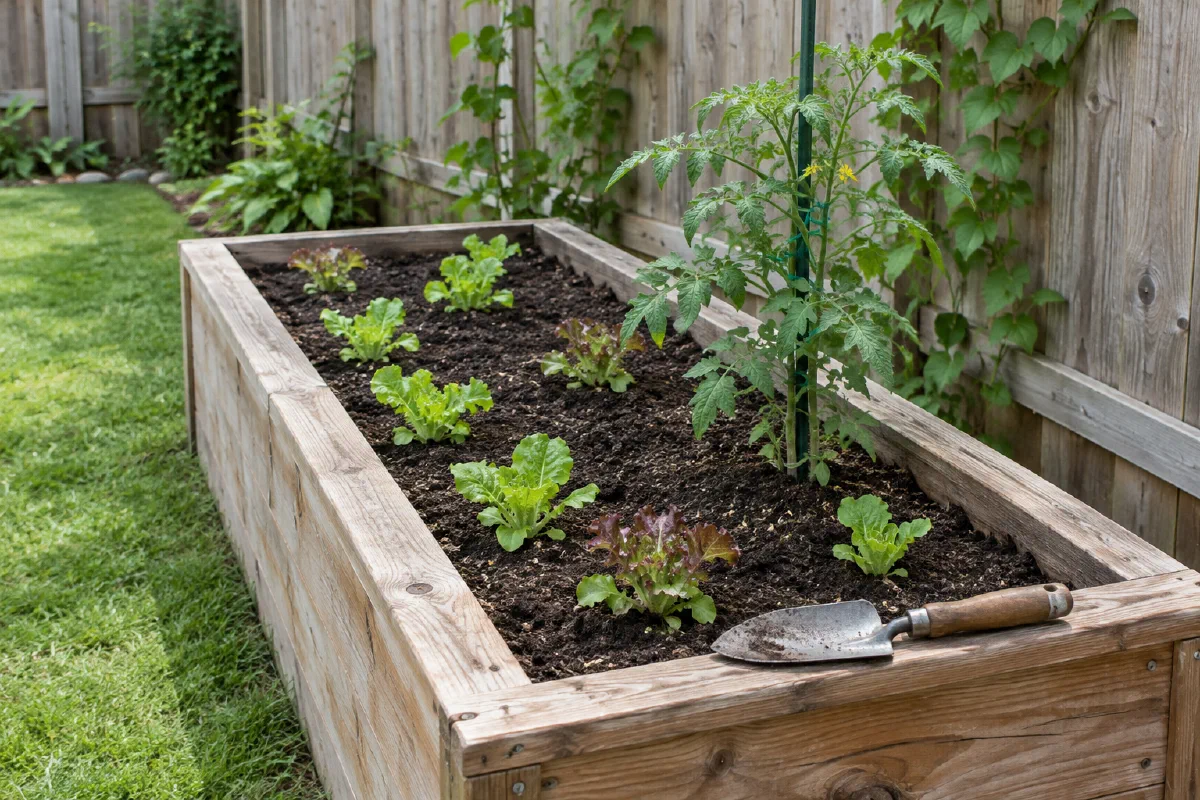
For a bed 10 to 12 inches tall, use 2-inch nominal lumber, which means a 2x10 or a 2x12.
Two inches of thickness is what holds the soil pressure without bowing outward over a long span. A 1-inch board is fence material, and a bed built from it will bulge in the middle within a season or two.
The 2x12 is what the Oregon State beds used, at 4 feet by 10 feet. If you want a shallower bed, a 2x6 stacked two high gives you the same 12 inches and is easier to carry.
Keep the width of the bed at 4 feet or less so you can reach the middle from either side without stepping in.
How to Keep the Wood From Rotting Too Soon
Wood in a raised bed fails at the soil line, not at the top, so most of this is about water.
- Set the boards on gravel or a paver, not directly on wet soil. Breaking contact with the ground is the single biggest thing you can do for lifespan.
- Line it with landscape fabric, not plastic, if you want a barrier. Fabric lets water through. Nonpermeable plastic traps moisture against the board, which rots it faster than the soil would.
- Do not bury the bottom board. A bed sitting on the surface drains better than one sunk into the ground.
- Leave the soil a couple of inches below the rim so mulch and water are not permanently against the top edge.
- Fix the irrigation leak. A soaker line dripping against one board for a season will rot that board first.
What Is the Cheapest Way to Build a Raised Bed?
Untreated 2x10 lumber is the cheapest thing that is still a real bed, and it is the right choice if you are testing whether you even like growing in beds.
Just go in knowing the timeline. You are buying five to seven years, and the rebuild is the cost you deferred.
If you would rather build once, ground-contact treated lumber is the cheaper option over ten years even though it costs more at the register. That is the finding the Oregon State durability data supports.
For the bed layout itself, raised bed gardening without turning the yard into a project covers placement, soil, and what to plant the first season.
Building the Bed in Five Steps
- Pick the spot and check the hose reaches it. Six or more hours of sun for vegetables, and a water source you will actually use.
- Set the corners on pavers or gravel. Level them, and check the diagonal measurements match so the box is square.
- Fasten the boards with exterior screws or galvanized bolts. Two per corner minimum, and predrill to avoid splitting the ends.
- Line the bottom with cardboard if you are smothering grass, then fill with a raised bed mix of topsoil and compost rather than straight potting mix.
- Top up short of the rim and mulch. Leave room for water, and keep mulch off the boards at the soil line.
If you would rather not build at all, container vegetable garden ideas for small patios covers the no-carpentry version, including the 5-gallon bucket route.
What to Read Next
- Raised bed gardening without a construction project if you want soil, placement, and first-season crops before you decide on lumber.
- lazy garden watering setup for raised beds because a bed that dries out in July undoes the work of building it.
- container vegetable garden ideas for small patios when the bed is going on a patio or a balcony instead of soil.
- 10 easy cottage garden perennials if the raised bed is going to hold flowers as well as vegetables.