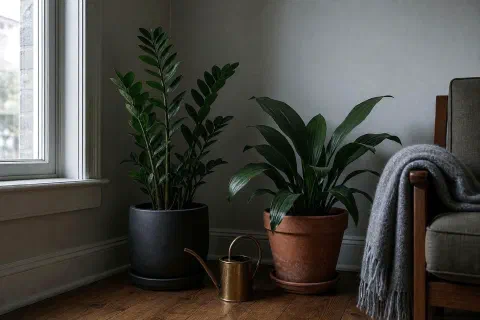
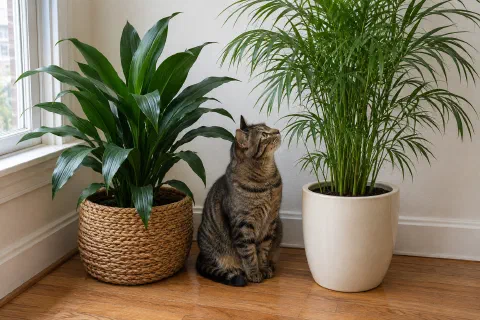
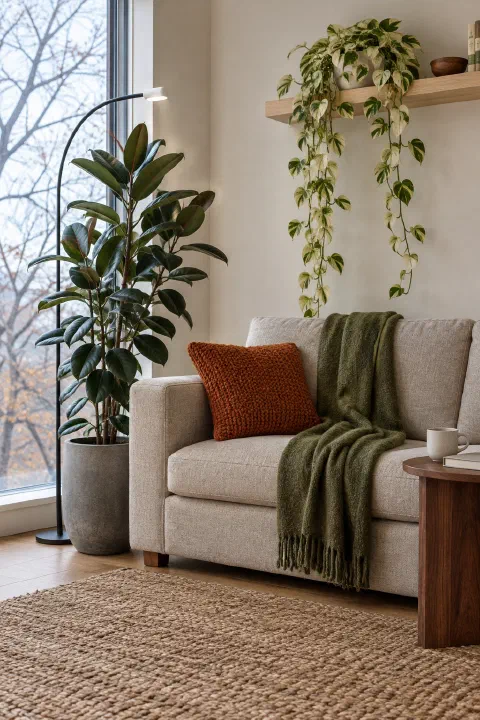
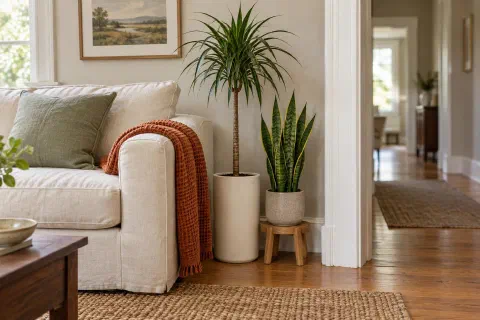
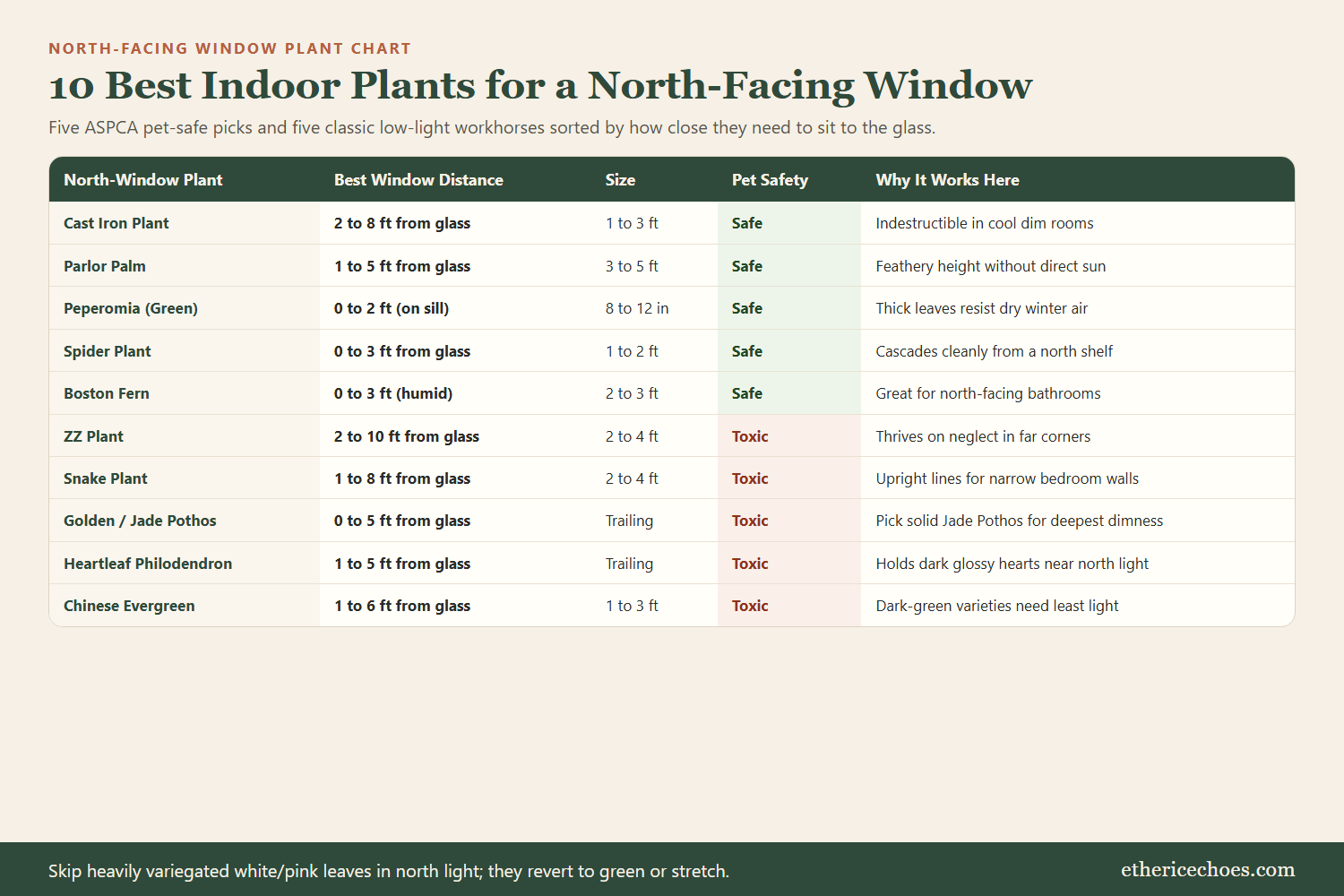
The best indoor plants for a north-facing window depend on how many feet from the glass the pot will sit. Right on the sill or within 3 feet, I love green peperomia, spider plant, parlor palm, jade pothos, heartleaf philodendron, and Boston fern. Step 4 to 8 feet back into the room, and we narrow the list straight to cast iron plant, ZZ plant, snake plant, and dark-green Chinese evergreen.
Best Indoor Plants for a North-Facing Window: 10 Picks by Distance
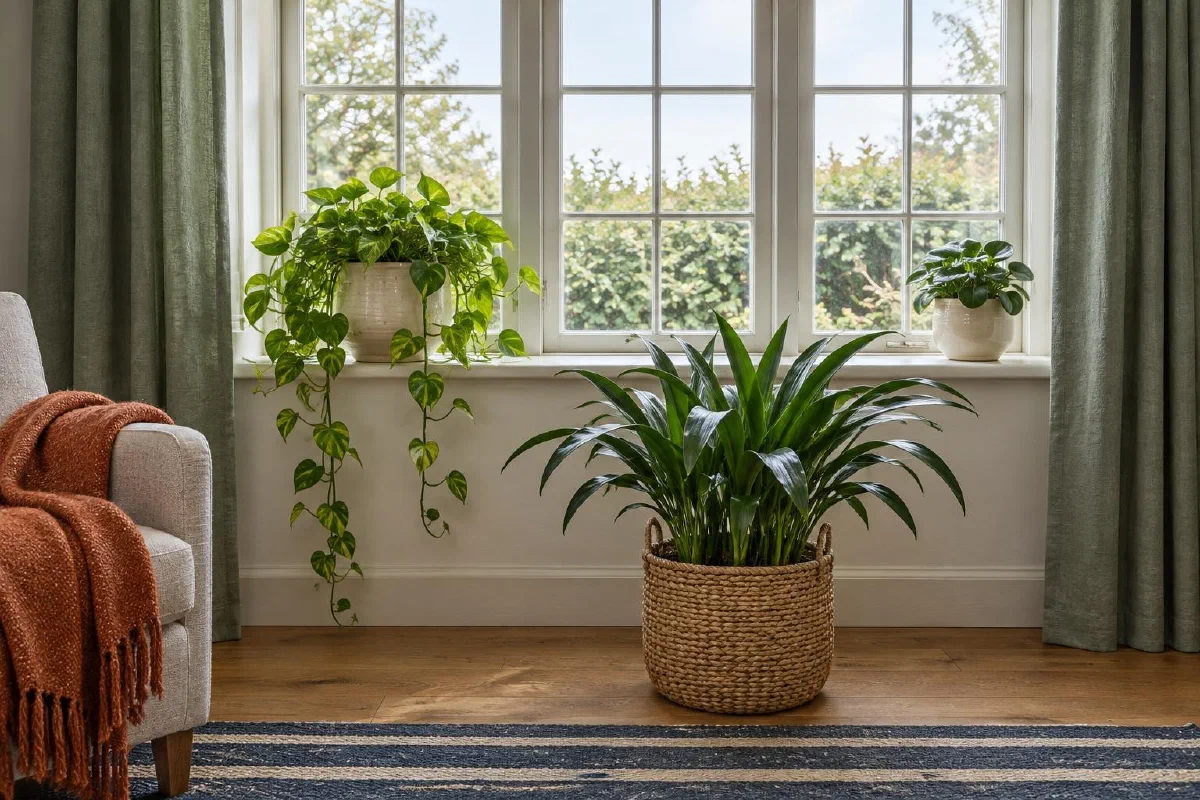
North-facing windows never scorch leaves, so shade-loving foliage can sit right on the sill year-round.
If you live in an apartment whose main windows face north, you do not have a “bad” plant room. You actually have one quiet superpower: in the Northern Hemisphere, north glass delivers steady, cool indirect daylight with zero scorching midday sun. That means forest-floor plants can sit right on the windowsill all summer without burning. The catch is that light fades fast as you move away from the glass, so distance matters twice as much here as it does in a sunny south room.
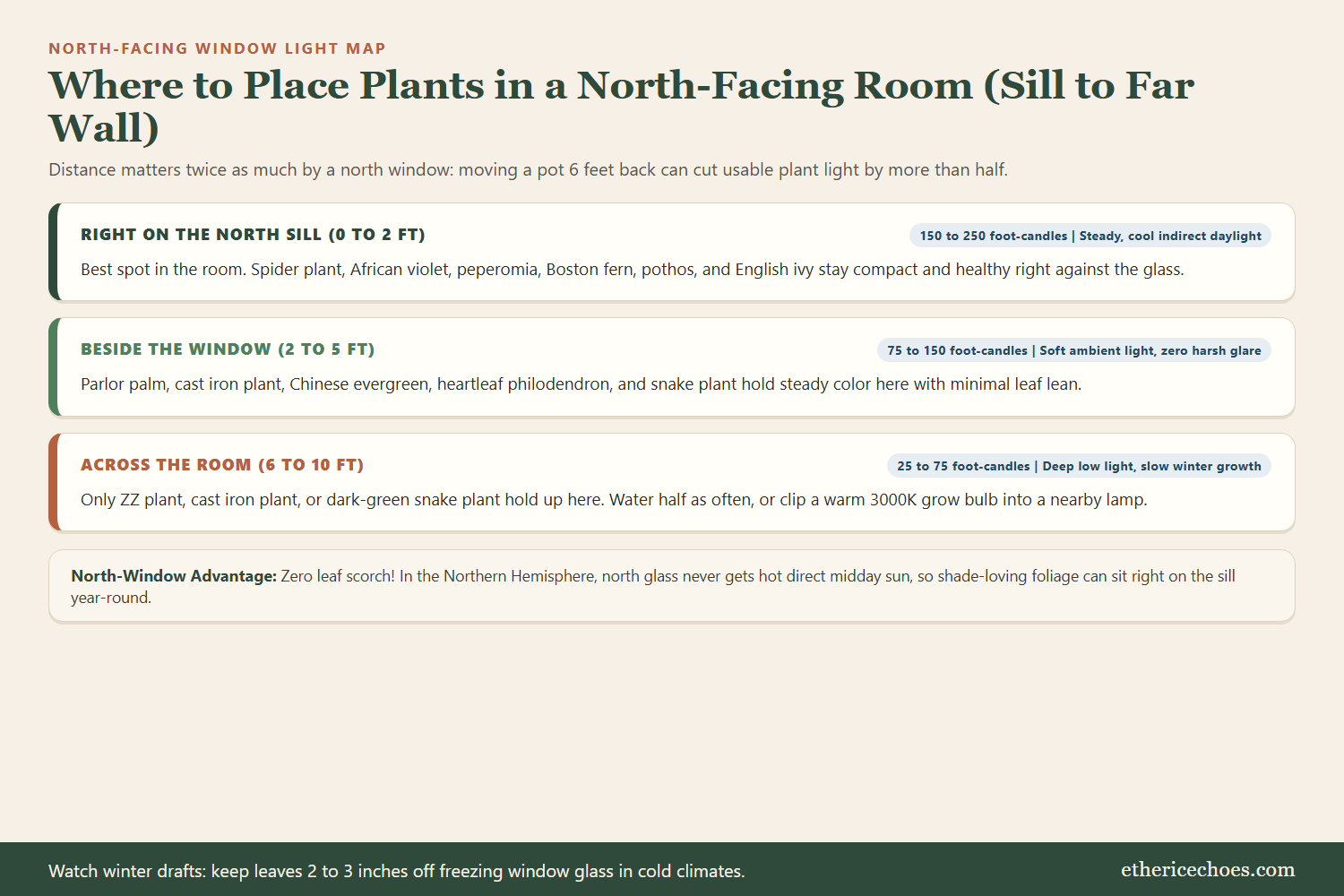
All 10 North-Facing Window Plants at a Glance
Use the chart below to match your exact window distance, room size, and pet-safety needs before shopping. You can also filter our full Indoor Plants Hub or try the Interactive Indoor Plant Finder.
5 ASPCA Pet-Safe Plants for North Windows
1. Cast Iron Plant (Aspidistra elatior)
If you have a north-facing living room corner five feet from the glass and a curious cat, this is the safest, toughest plant you can buy. Its deep emerald strap leaves shrug off cool drafts, dry indoor heat, and forgotten waterings, and the ASPCA lists cast iron plant as non-toxic.
- Best distance: 2 to 8 ft from a north window.
- Watering cue: Let the top 2 inches of soil dry between waterings.
- Honest tradeoff: It grows very slowly, so buy a full pot at the size you want your corner to look today.
2. Parlor Palm (Chamaedorea elegans)
Most palms turn crispy and thin in cool north light, yet parlor palm evolved on shaded forest floors and prefers gentle indirect daylight. Per NC State Extension, it stays compact enough for a tabletop when young and grows up to 4 or 5 feet as a graceful floor plant.
- Best distance: 1 to 5 ft from the glass.
- Watering cue: Keep lightly moist in summer, watering when the top inch dries; go lighter in winter.
- Pet safety: ASPCA non-toxic to cats and dogs.
3. Green Peperomia (Peperomia obtusifolia)
Often called Baby Rubber Plant or Pepper Face (the name it appears under in the ASPCA non-toxic list), solid green peperomia has thick, semi-succulent leaves that hold water well in dry heated bedrooms. Put it right on the north sill where its compact 10-inch mound stays tight and glossy.
- Best distance: 0 to 2 ft (right on the windowsill or a nearby nightstand).
- Watering cue: Wait until the soil dries about halfway down before watering; soggy roots cause mushy stems fast.
- Color tip: Skip heavily variegated cream-and-green cultivars in deep north shade; solid dark green holds its crisp look far longer.
4. Spider Plant (Chlorophytum comosum)
A solid green or lightly striped spider plant hangs cleanly inside a north-facing kitchen or living room window frame. While extension guides classify it as a medium-light plant for maximum baby offshoots, placing it right at the north glass gives it steady indirect light all year.
- Best distance: 0 to 3 ft from the glass.
- Watering cue: Water when the top inch dries; use filtered water if leaf tips brown from tap minerals.
- Pet note: ASPCA non-toxic, though cats love batting and nibbling the arching blades, so hang it high if you want tidy foliage.
5. Boston Fern (Nephrolepis exaltata)
Have a north-facing bathroom window? A Boston fern loves the cool indirect glass paired with daily shower steam. In a dry living room it can shed leaflets in winter, so save this pick for a humid bathroom or kitchen sill.
- Best distance: 0 to 3 ft from north glass in a humid room.
- Watering cue: Never let the root ball dry bone-hard; check twice a week and keep soil evenly damp.
- Pet safety: ASPCA non-toxic to cats and dogs.
5 Classic Low-Light Survivors (Keep Away From Pets)
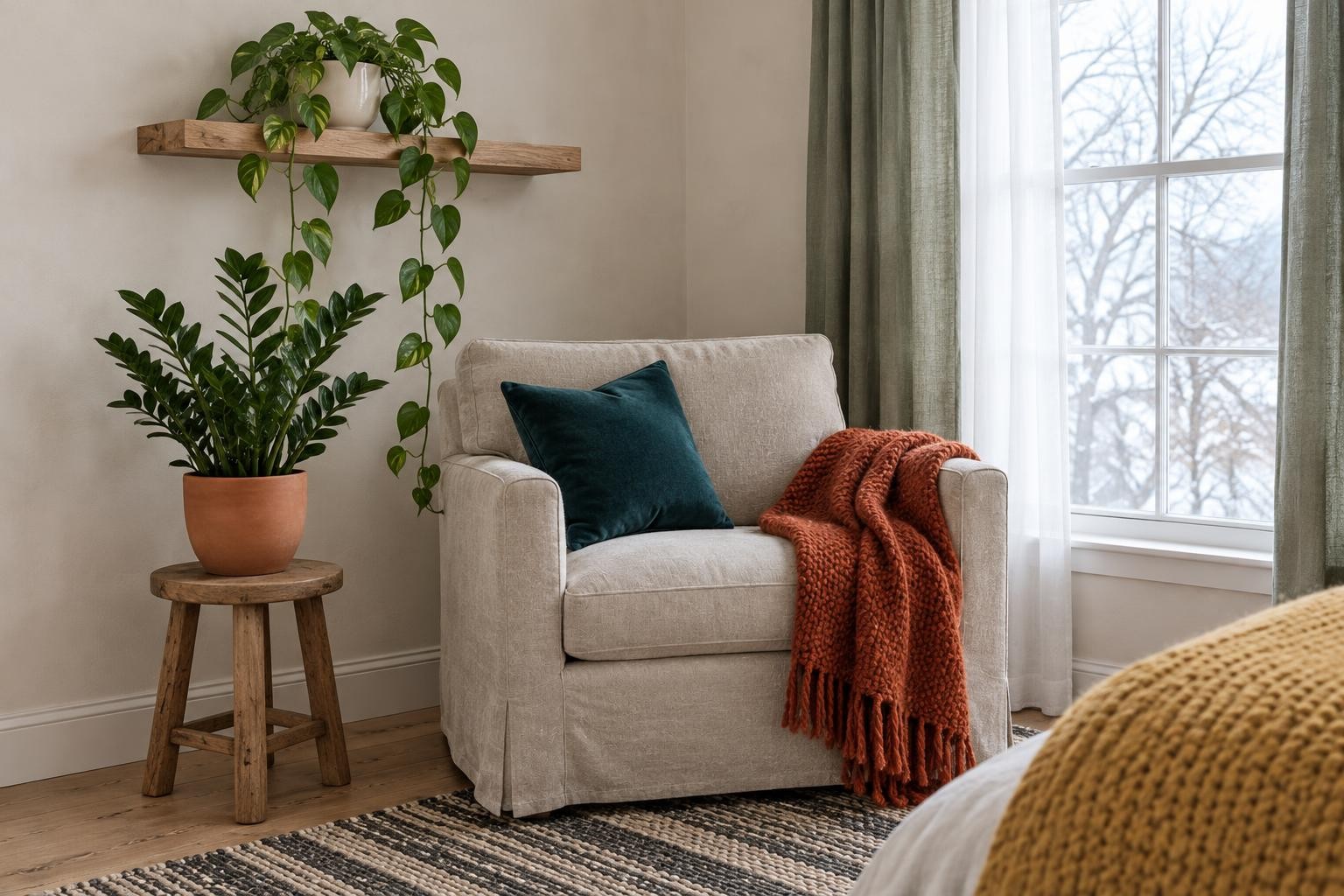
6. ZZ Plant (Zamioculcas zamiifolia)
When a spot sits six to eight feet across a north-facing room, ZZ plant is the undisputed survivor. Thick underground rhizomes store water like tiny canteens, so overwatering is the only real way to lose one.
- Best distance: 2 to 10 ft from north glass.
- Watering cue: Let the potting mix dry completely all the way down (often every 3 to 4 weeks in winter).
- Pet safety: Toxic to cats and dogs per ASPCA calcium-oxalate guidance.
7. Snake Plant (Dracaena trifasciata)
Upright, clean, and indifferent to dry radiator heat, a dark-green snake plant fills tight strips beside a north bedroom dresser or living room doorway. Avoid watering into the center crown where trapped water causes rot.
- Best distance: 1 to 8 ft from the glass.
- Watering cue: Dry completely between waterings; barely water once a month in midwinter.
- Pet safety: Toxic to cats and dogs.
8. Jade or Golden Pothos (Epipremnum aureum)
A trailing pothos sitting on a north windowsill or bookcase two feet from the glass turns a cool room cozy faster than almost any other plant. I always recommend solid Jade Pothos over heavily variegated Marble Queen in north light because solid green leaves pack more chlorophyll and keep tighter spacing between leaves.
- Best distance: 0 to 5 ft from north glass.
- Watering cue: Water thoroughly when the top 1 to 2 inches feel dry.
- Pet safety: Toxic to cats and dogs.
9. Heartleaf Philodendron (Philodendron hederaceum)
Often mistaken for pothos, heartleaf philodendron brings softer, velvety dark-green heart-shaped leaves that cascade gracefully off a north-facing shelf or cabinet top. It handles steady low light with ease when not overwatered.
- Best distance: 1 to 5 ft from the glass.
- Watering cue: Top 1 to 2 inches dry before watering.
- Pet safety: Toxic to cats and dogs.
10. Dark-Green Chinese Evergreen (Aglaonema)
Not all Chinese evergreens suit north windows. Bright pink, red, and silver varieties fade and stretch in dim rooms, whereas classic dark-green cultivars (like Maria or Emerald Beauty) stay dense and upright several feet back from north glass.
- Best distance: 1 to 6 ft from the window.
- Watering cue: Let the top 2 inches dry; keep away from icy winter window drafts.
- Pet safety: Toxic to cats and dogs.
4 Care Rules Unique to North-Facing Rooms
Plants in a north window do not fail because the light is “too bad.” They fail because people water and feed them like they sit in a sunny south room. Follow these four adjustments and your north plants stay green all winter:
- Cut winter watering in half: Cool indirect light slows how fast roots drink. Always push a finger or wooden skewer 2 inches deep before pouring; wet cold soil causes root rot fast.
- Keep leaves 2 to 3 inches off freezing glass: North windows are the coldest panes in the house on January nights. Pull sill pots back just enough so leaves never touch frost-chilled glass.
- Skip fertilizer from October through March: Clemson HGIC notes that foliage plants below roughly 200 foot-candles cannot use extra fertilizer, leaving behind white salt crusts that burn leaf tips.
- Add one warm 3000K grow bulb if trees block the view: If a neighbor’s wall, deep porch roof, or tall evergreens shade your north window, check our living room grow lights guide for a normal-looking lamp setup on a daytime timer.
Frequently Asked Questions About North-Facing Window Plants
What flowering plants actually bloom in a north-facing window?
Blooming takes far more light energy than holding green leaves, so options are narrow. Peace lily (Spathiphyllum, toxic to pets) produces occasional white spathes right on a bright unobstructed north sill, and African violet (Saintpaulia, ASPCA non-toxic) can bloom right against north glass in bright summer months or under a small warm-white shelf light in winter.
Why are my north-window plants getting leggy?
Long bare stems between small pale leaves mean the pot sits too far back from the glass. Move it within 1 to 3 feet of the window, trim the stretched vine back to a fuller node in spring, or clip a warm-white BR30 grow bulb into a nearby lamp.
How does a north-facing window compare to an east or west window?
North windows deliver gentle, constant indirect light all day with no direct sunbeams. East windows add gentle morning sun (ideal for almost all houseplants), while west windows bring hot late-afternoon sun that often needs a sheer curtain or 3 to 5 feet of setback.
What if my north-facing room is also very small?
Pair upright silhouettes like snake plant or parlor palm with a tall slim cylinder pot, or hang a spider plant right inside the upper window frame. See our tall narrow indoor plants guide for exact under-24-inch floor options.
Sources
- University of Missouri Extension: Lighting Indoor Houseplants (G6515): indoor foot-candle ranges and window light drop-off.
- Penn State Extension: Low-Light Houseplants: low-light thresholds and shade-tolerant species.
- Clemson HGIC: Indoor Plants Light and Fertilizing: low-light fertilizer limits and seasonal care.
- NC State Extension Plant Toolbox: parlor palm, cast iron plant, and snake plant profiles.
- ASPCA Toxic and Non-Toxic Plants Database: pet safety verification by scientific name.