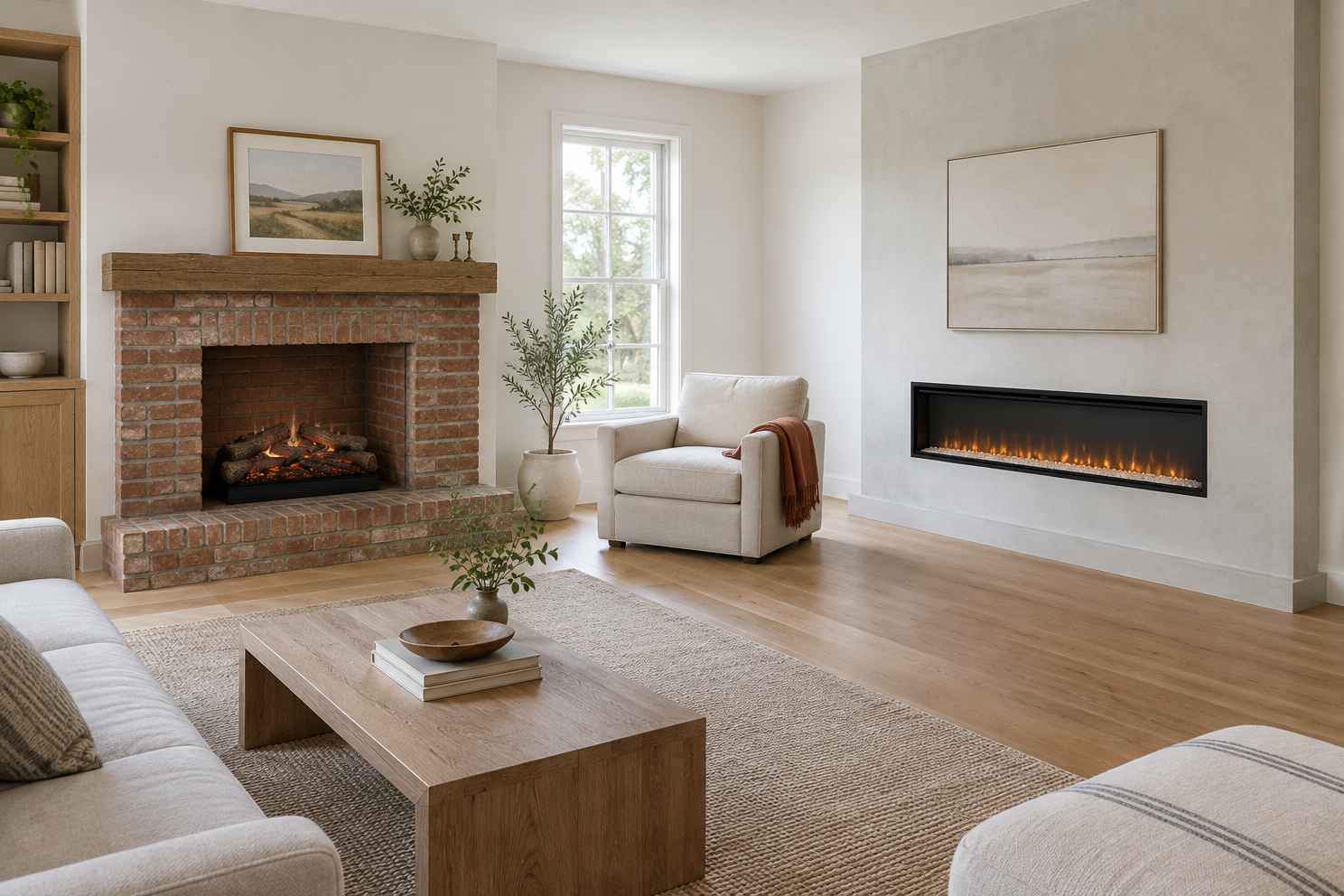
The best electric fireplace insert is the one that fits the opening or wall before it wins on flame effects. For an unused masonry fireplace, the Dimplex Revillusion RLG20 is the cleanest drop-in choice here. For a contemporary recessed wall, the Touchstone Sideline 50 gives you a much lower entry price than the premium built-ins. For a traditional framed firebox, the Modern Flames Redstone 30 has the proportions and depth to look intentional.
That answer changes if you rent, have only 2x4 framing, or expect one 1,500-watt heater to warm a large open floor plan. Measure first, then choose the flame.
Quick Comparison
| Pick | Best fit | Size or format | Heat | Price checked Sept. 16 | Main reason to skip it |
|---|---|---|---|---|---|
| Dimplex Revillusion RLG20 | Empty masonry fireplace | 23.75 W x 19 H x 12.5 D in | 1,500 W, 5,118 BTU | Lower | It is an open log set, not a glass-front insert |
| Modern Flames Redstone 30 | Traditional framed opening | 29.25 W x 18.88 H x 9.88 D in | 1,465 W, 5,000 BTU | Midrange | Almost 10 inches deep and costs more than a basic linear unit |
| Touchstone Sideline 50 | Value-focused linear wall | 50.4 W x 21.5 H x 5.5 D in | 1,500 W, 5,000 BTU | Lower-midrange | Fifty inches is too wide for many small walls |
| Dimplex IgniteXL 50 | Premium slim built-in | 50.25 W x 15.63 H x 5.88 D in | 1,500 W at 120 V; 2,500 W at 240 V | Premium | The price and electrical work are hard to justify for ambiance alone |
| R.W.FLAME 60-inch | Lower-cost Amazon alternative | 60-inch linear format | Listing-dependent | Check current listing | Marketplace specs and support need extra checking |
| PuraFlame Western 33-inch | Traditional Amazon alternative | 33-inch insert format | Listing-dependent | Check current listing | Confirm the firebox dimensions, not only the product width |
Prices can move. Dimensions and electrical requirements should be checked again in the current manual before framing or ordering.
Our Six Picks, With the Catch Included
1. Dimplex Revillusion RLG20: best for an existing fireplace
This is the least construction-heavy way to wake up an unused wood-burning firebox. It is a 23.75-inch-wide electric log set with a separate flame panel, remote, 1,500-watt heater, and no vent or gas line. Modern Blaze lists it at 19 inches high and 12.5 inches deep, so it needs a genuinely deep opening.
Choose it when the brick, surround, and hearth already give the room its architecture. The open-log format lets that existing masonry remain visible. Skip it when you want a sealed black firebox, a wide linear flame, or a shallow wall installation.
Check the Dimplex Revillusion RLG20 at Modern Blaze
2. Modern Flames Redstone 30: best traditional built-in
The Redstone has a squarer, deeper face than a long linear fireplace. Modern Blaze lists the 30-inch model at 29.25 inches wide, 18.88 inches high, and 9.88 inches deep, with high and low heat settings, a 120-volt plug, and a dedicated 15-amp circuit requirement. Ten flame, ember, and downlight colors make it adjustable without changing its traditional outline.
Choose it when you are building a framed firebox and want the fireplace to look like part of the room, not a screen hung across the wall. Skip it if the wall cannot spare nearly 10 inches of depth or if your budget is in the value range rather than the four-figure range.
Check the Modern Flames Redstone 30
3. Touchstone Sideline 50: best value linear fireplace
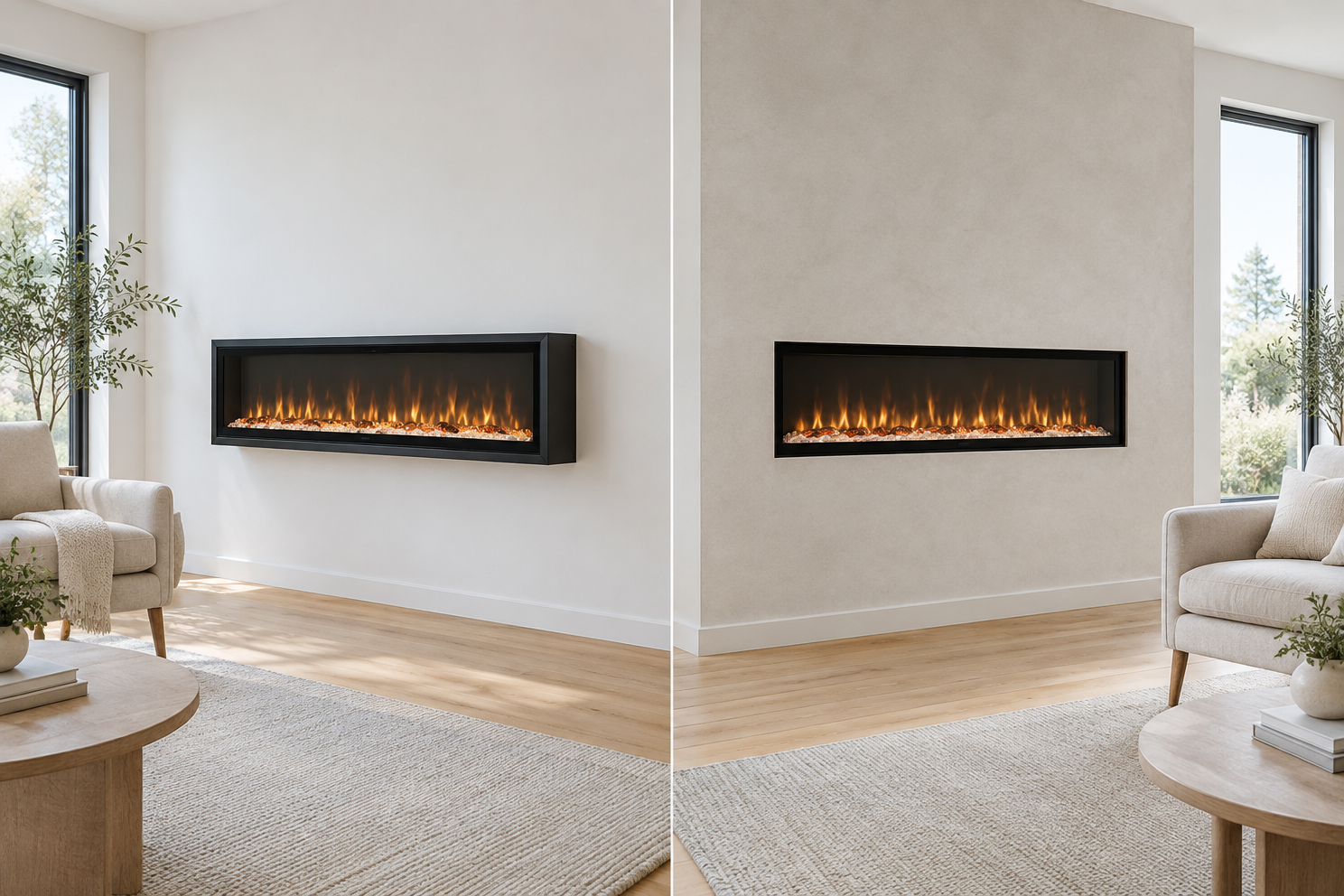
The Sideline 50 is the price reset in this group. When checked, it was less than one fifth of the Dimplex IgniteXL 50. It can be recessed or surface-mounted, plugs into a standard outlet or can be hardwired, and has a front heat vent. Touchstone includes log and crystal media, three flame colors, five intensity levels, and smart controls.
Choose it for a 50-inch contemporary focal point without premium-brand pricing. Skip it when you need a compact traditional insert, a 240-volt high-heat option, or a fireplace narrower than 50 inches.
Check the Touchstone Sideline 50 at Modern Blaze
4. Dimplex IgniteXL 50: best premium slim built-in
The IgniteXL is 5.88 inches deep, fully recesses in 2x6 construction, and can partially recess in a 2x4 wall with an optional trim kit. Its strongest practical difference is electrical: Modern Blaze lists 1,500 watts at 120 volts or 2,500 watts at 240 volts, with a dedicated circuit. The five-year manufacturer warranty also stands apart from the one-year warranties on several lower-cost models.
Choose it when finish quality, a clean face, warranty length, and the 240-volt heat option matter more than price. Skip it when the project is mainly decorative. A premium firebox can turn into a much larger feature-wall bill once framing, finish work, and electrical labor are included.
5. R.W.FLAME 60-inch: lower-cost wide Amazon option
This 60-inch model appeared high in Amazon’s exact-match results when checked, with a large review history. That makes it worth comparing when width matters more than brand support. It does not make it an automatic recommendation.
Before buying, confirm the current listing’s outer dimensions, recess dimensions, heat outlet location, circuit requirements, warranty contact, and return terms. Amazon listings can change variants under one page. Skip it if your installer needs a stable specification sheet before building the wall.
See the current R.W.FLAME 60-inch listing on Amazon
6. PuraFlame Western 33-inch: lower-cost traditional Amazon option
The 33-inch PuraFlame Western suits readers who want a black glass-front insert rather than exposed logs or a long linear unit. It also appeared with a substantial review history when checked. Its fit still depends on the exact opening and trim dimensions.
Choose it only after matching the manual’s required opening to your smallest width, height, and depth measurements. Skip it if you are trying to fill an irregular masonry opening with decorative trim alone.
See the current PuraFlame Western 33-inch listing on Amazon
The Three Measurements That Decide the Purchase
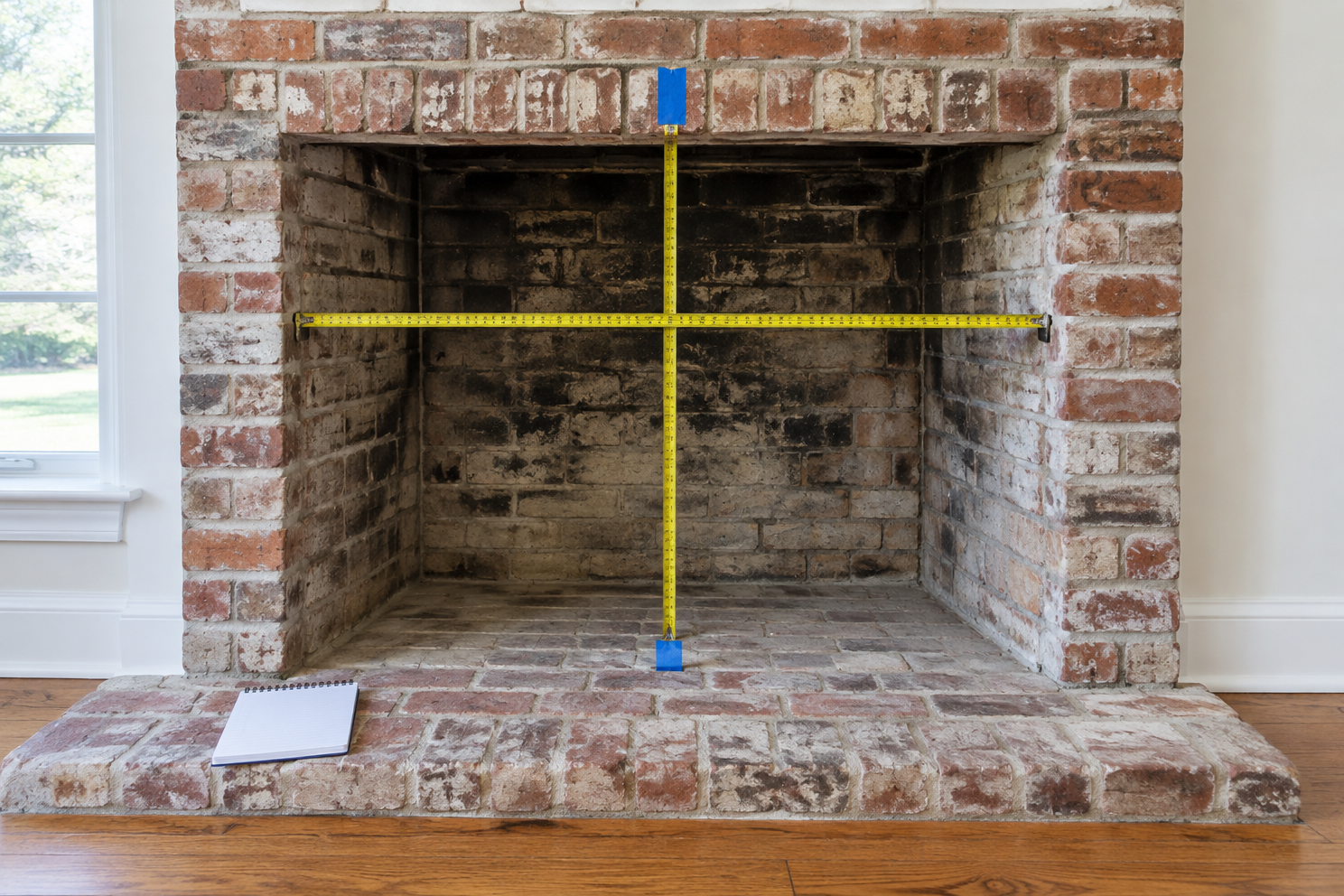
Measure the opening at the top, middle, and bottom for width. Repeat on both sides and the center for height. Measure depth from the front plane to the shallowest obstruction. Use the smallest number in each group.
Then check four things the product name will not tell you:
- The manufacturer’s required opening, not only the decorative face width.
- Heat outlet position. A top vent can conflict with a TV or mantel; a front vent is friendlier to recessed installations.
- Access after installation. A plug, junction box, and serviceable controls cannot disappear behind permanent finish work.
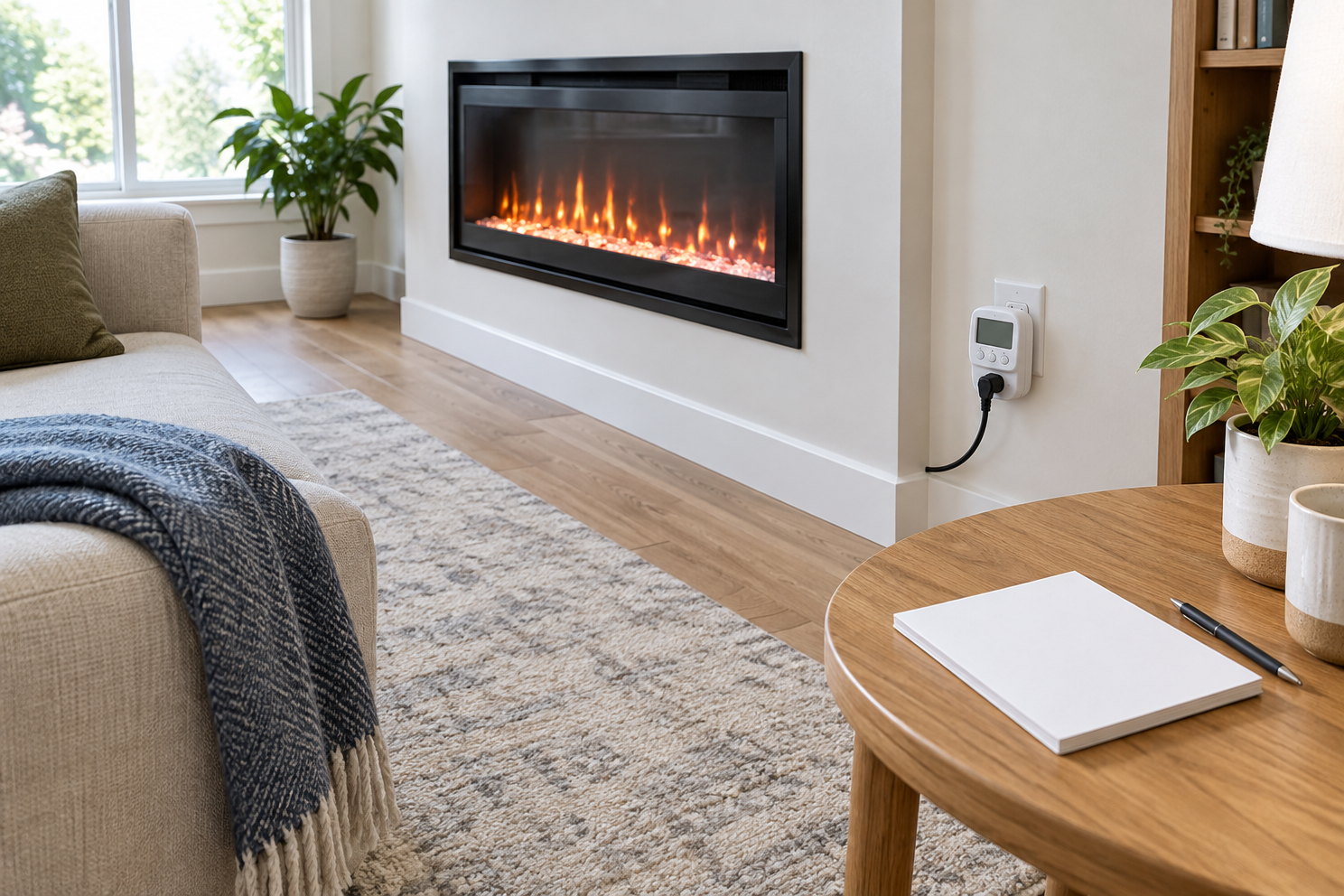
- Circuit load. A 1,500-watt heater draws about 12.5 amps at 120 volts. Follow the manual and electrician’s direction, especially if the circuit already serves lights or outlets.
Our full electric fireplace insert measuring guide walks through the worksheet.
What “Realistic” Should Mean
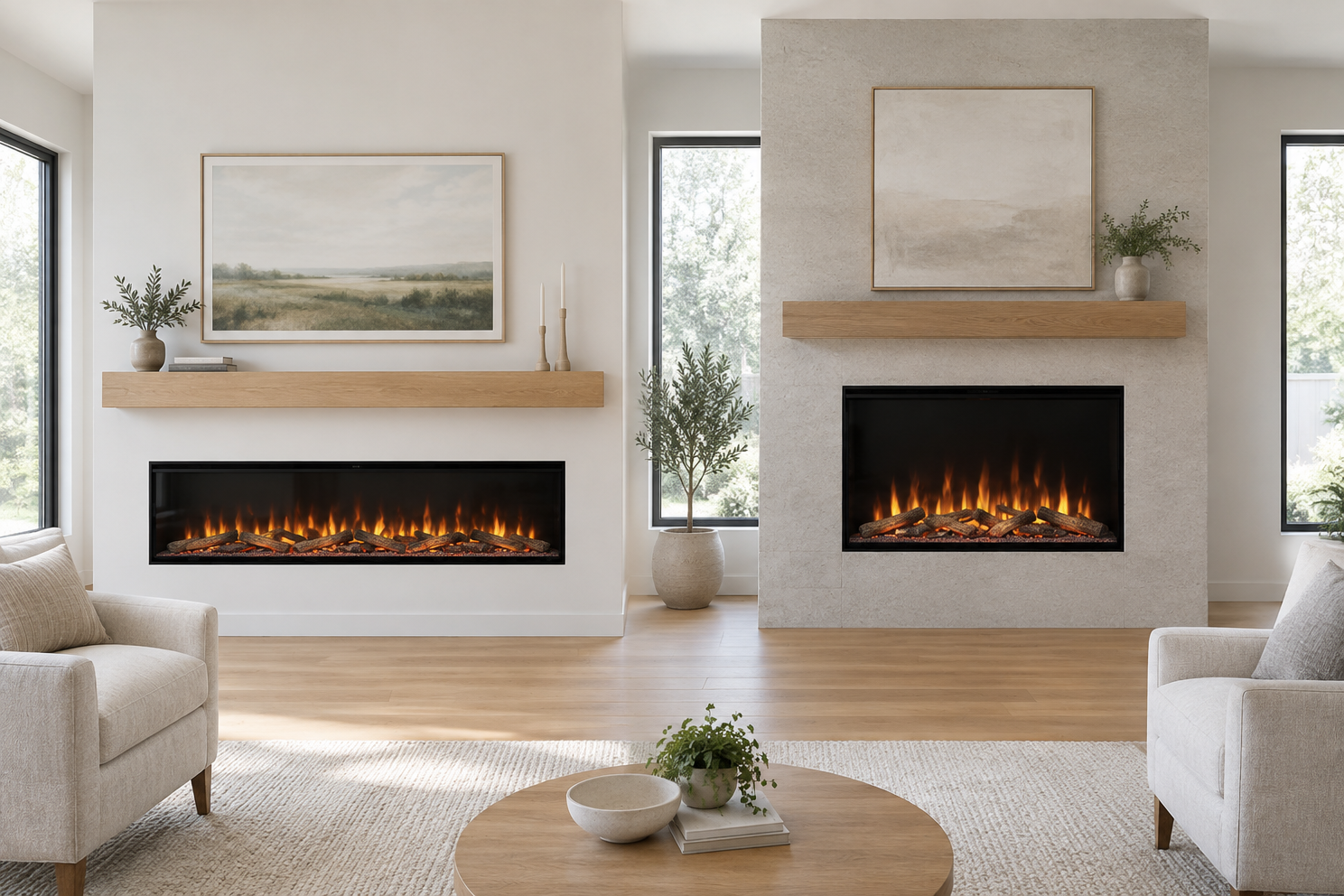
Realism is not one feature. In an existing fireplace, visible brick behind an open log set can look more convincing than a bright glass screen. In a contemporary room, a clean edge-to-edge linear flame may look more believable because it fits the architecture.
Judge these separately:
- Flame movement at the brightness you will actually use at night.
- Log or ember depth when viewed from the sofa, not from six inches away.
- Reflections on the front glass or acrylic panel.
- Fan noise with heat running.
- How the surround meets the wall or masonry opening.
The honest “avoid both” branch is simple: if the opening is irregular, the circuit is overloaded, or the wall cannot accept the required depth, pause the product search. Fixing the fit first will do more for the finished room than buying a better flame effect.
Electric Insert Heat and Running Cost
Most 120-volt options here top out near 1,500 watts. Using the U.S. Energy Information Administration’s June 2026 residential average of 18.34 cents per kilowatt-hour, 1,500 watts costs about 28 cents an hour at full heat. Four hours a day for 30 days comes to about 33 dollars.
That is useful supplemental heat for the room you are in. It is not the same as replacing a central system across a whole home. Read our electric fireplace running-cost breakdown before treating a coverage claim as a heating plan.
Safety and Installation Notes
The National Fire Protection Association recommends keeping portable heaters at least three feet from anything that can burn and plugging them directly into a wall outlet. The Consumer Product Safety Commission also warns against extension cords and power strips.
A built-in fireplace has model-specific clearances, framing, and wiring rules. Those instructions outrank general advice. Use a qualified electrician when the manual calls for a dedicated circuit or hardwiring.
Frequently Asked Questions
What is the best electric fireplace insert for an existing fireplace?
An electric log set such as the Dimplex Revillusion RLG20 is the simplest fit when the existing masonry is attractive and the opening is at least 23.75 inches wide, 19 inches high, and 12.5 inches deep. A glass-front insert is better when you want to hide the back of the firebox.
Do electric fireplace inserts need a chimney?
No. Electric inserts do not burn fuel or produce combustion exhaust, so they do not need a working chimney or gas line. The electrical supply, clearances, and installation instructions still matter.
Can a 1,500-watt electric fireplace heat a whole house?
Usually not. It is supplemental room heat. Layout, insulation, ceiling height, and outdoor temperature matter more than a broad square-foot claim.
Is a blower important?
A blower moves warmed air into the room. It improves heat distribution, but it also adds fan noise. If ambiance matters more than heat, compare flame-only operation and low-fan sound instead of treating the blower as an automatic upgrade.
Which insert should a renter buy?
Most renters should avoid a recessed insert. A freestanding stove, electric log set placed in an approved existing opening, or a surface-mounted unit with written landlord permission is easier to remove. See the apartment electric fireplace guide for the lease-first decision tree.
Bottom Line
Start with the structure you already have. Choose the Revillusion for a deep masonry opening, Redstone for a traditional framed box, Sideline for value in a linear wall, or IgniteXL when premium finish and 240-volt heat justify the price. The Amazon choices widen the budget range, but they deserve a stricter check of manuals, variant details, and support.
If none matches the smallest opening measurement, wall depth, circuit, and room scale, the best insert is not on this list. It is the one that fits those four facts without forcing the room to serve the product.