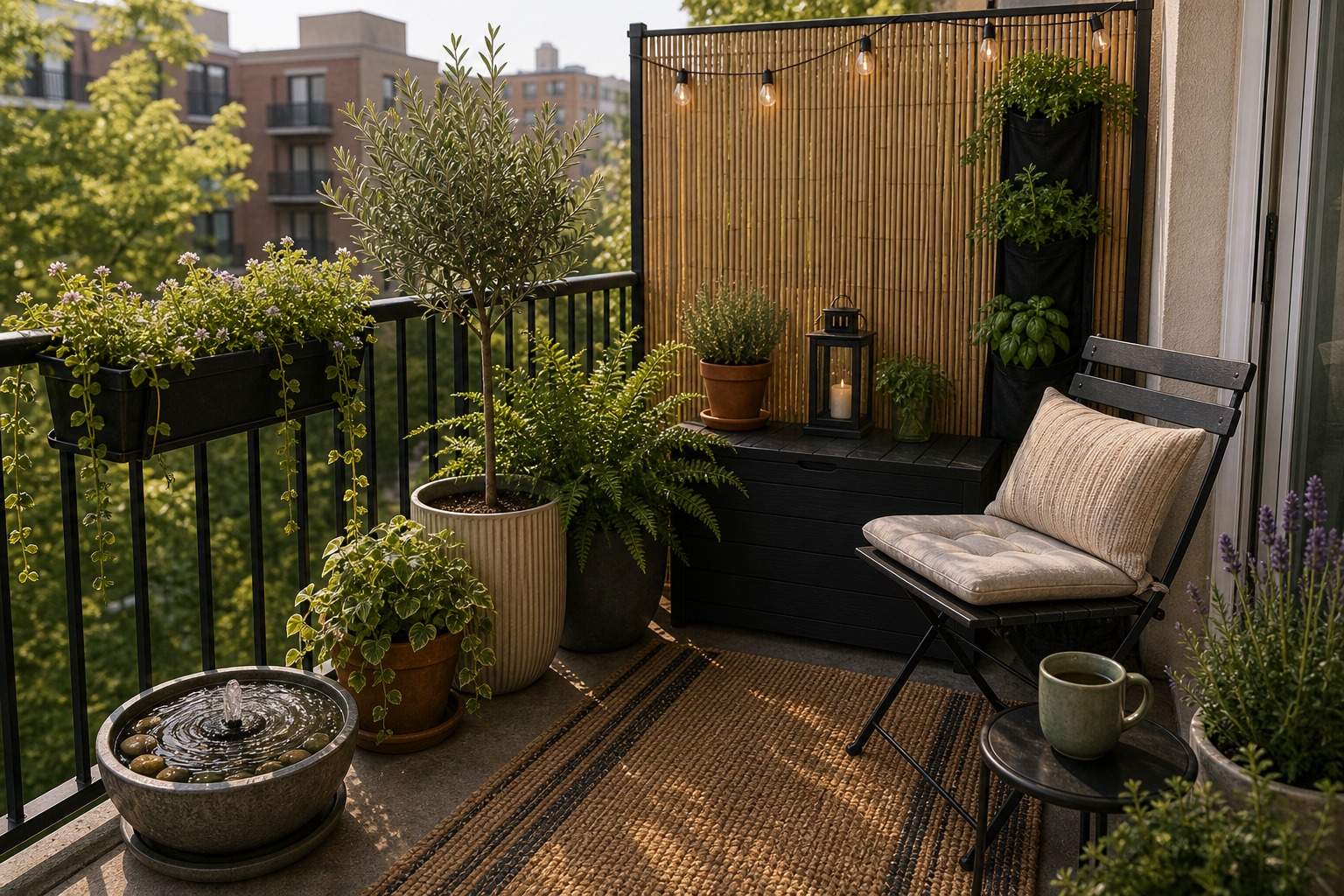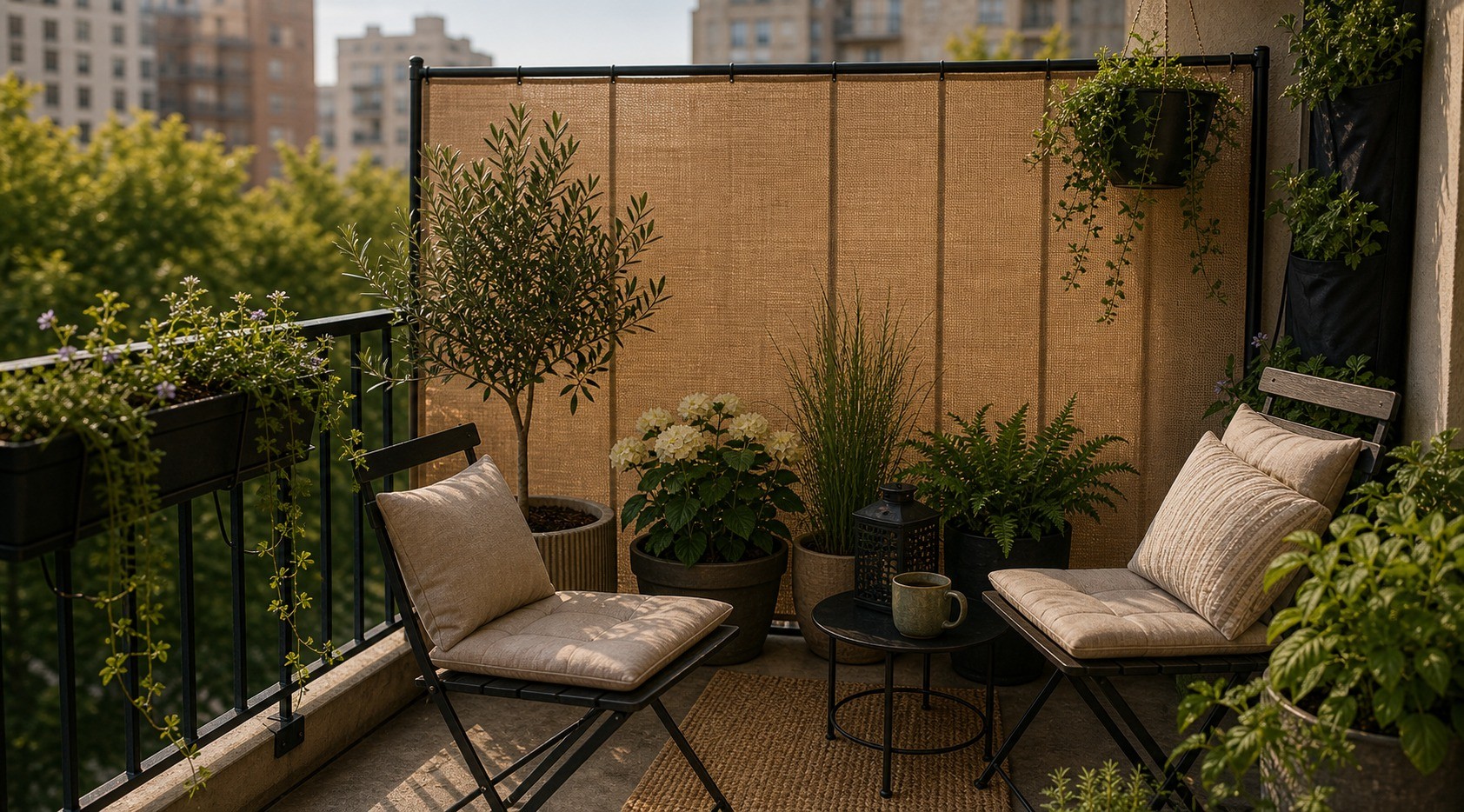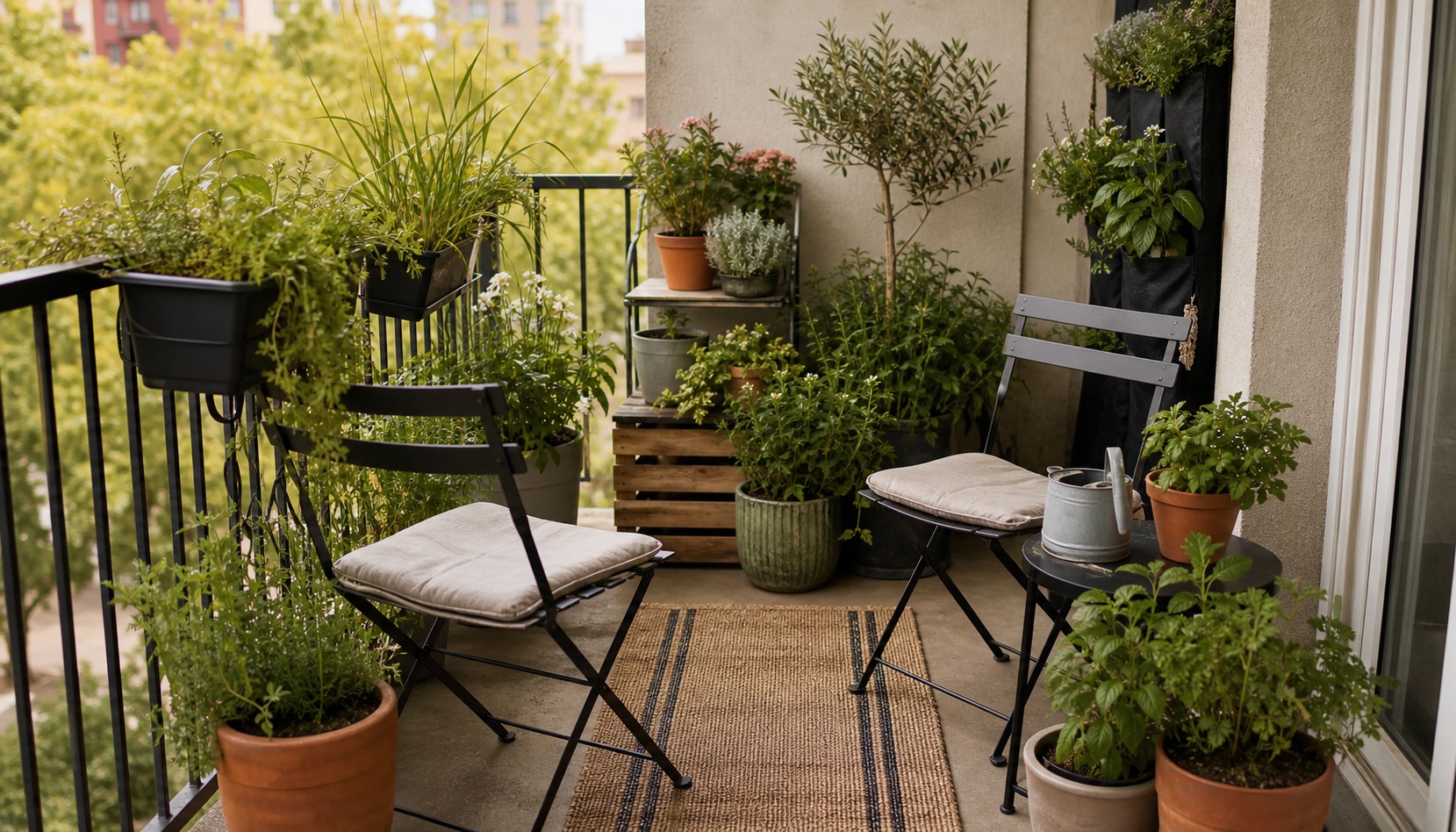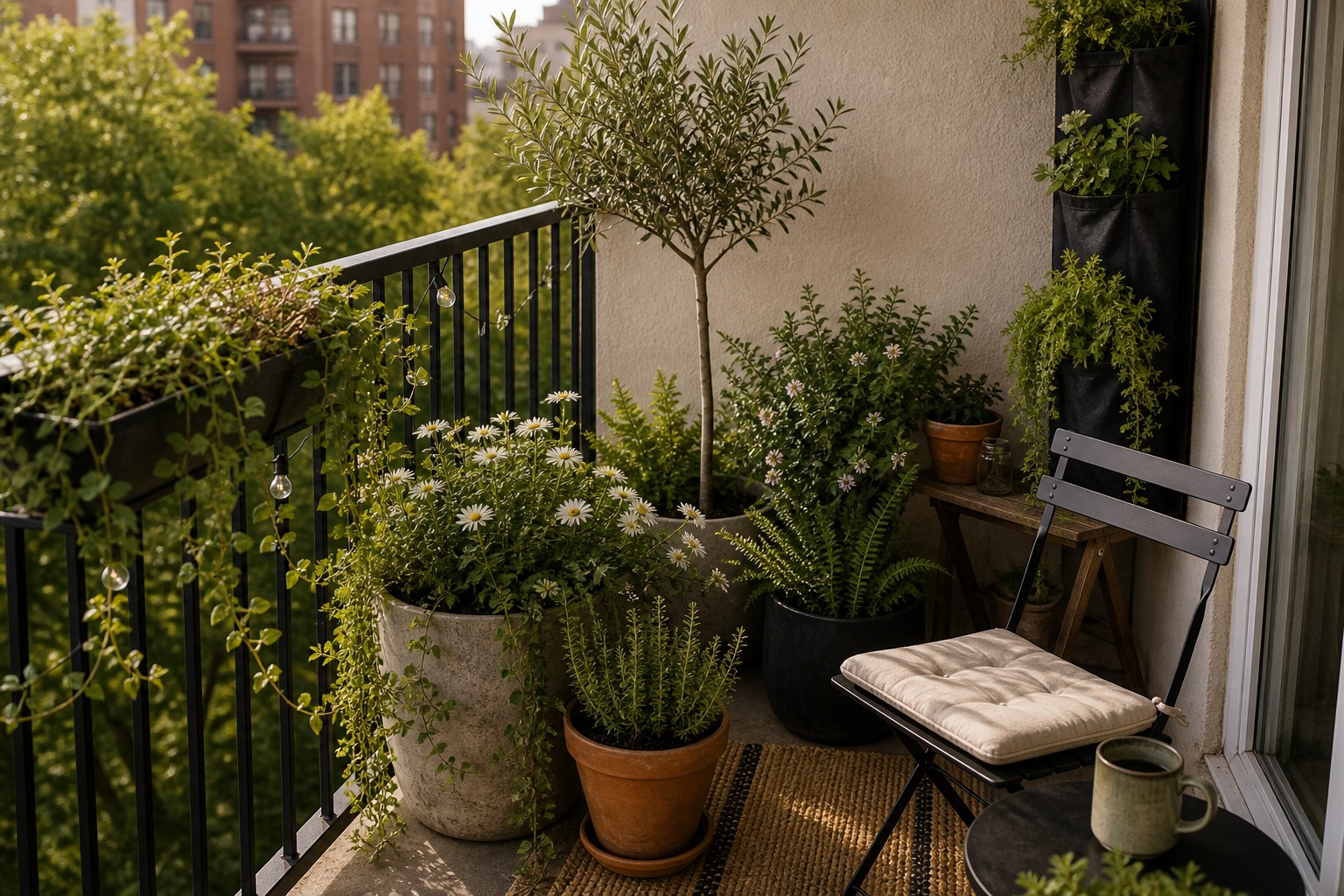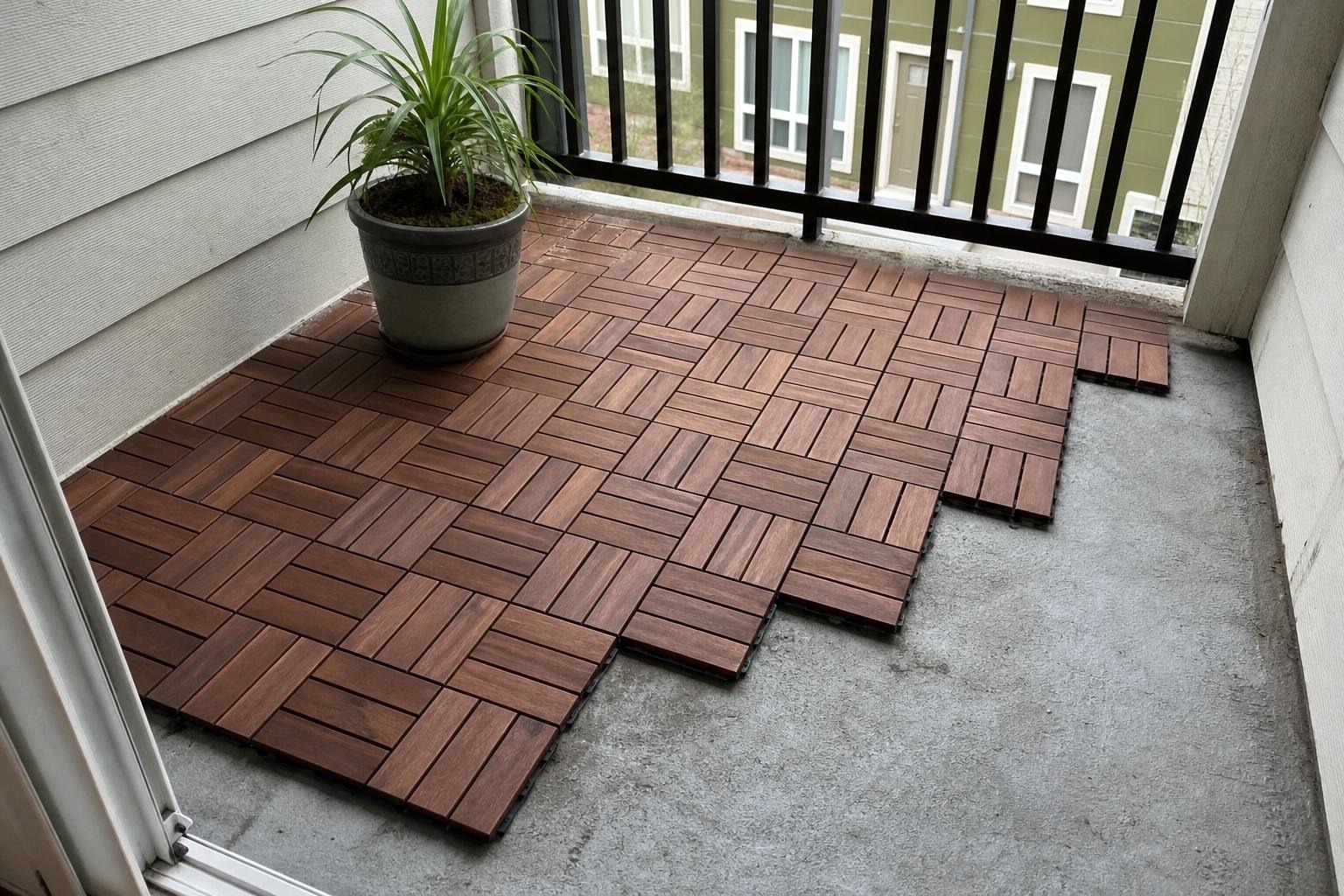
A bare concrete balcony reads like a maintenance closet with a view. The chairs sit on raw concrete, the potted herbs sweat rings into the slab, and nothing about the space says stay a while. Balcony flooring ideas that renters can actually use are limited by one rule: nothing gets glued, drilled, or grouted into place, because the lease says it comes back the way you found it. That still leaves real options. Interlocking deck tiles snap together over concrete with zero adhesive, and the right outdoor rug survives rain if you pick the material correctly. Both lift out in an afternoon at move-out. The part most balcony flooring guides skip is drainage. A balcony needs a functioning route for rain and wash water, and anything that traps moisture underneath can stain the surface, stay damp, or create a building-maintenance problem. University of Maryland Extension’s container guidance also warns that balcony containers can drain onto the surface below and recommends saucers or self-watering designs where appropriate; use the same caution when placing a rug or tile grid.
Interlocking Deck Tiles Compared: Wood, Composite, and Turf
Interlocking deck tiles are the closest thing to a real floor a renter can install without a single drill hole. Each tile snaps into its neighbor through side clips, and the whole grid rests on top of the concrete instead of bonding to it. Lift one corner and the entire section comes free in a few minutes.
What to check before buying any interlocking deck tile:
- Confirm the tile clips together on all four sides, not just two, so the grid stays flat in wind.
- Check the underside for raised feet or slats. A flat-backed tile traps water against the concrete.
- Buy a few extra tiles up front. Matching a faded or warped tile to an older batch later rarely works.
| Tile Type | Cost Tier | Best For | How It Drains |
|---|---|---|---|
| Wood-look composite tile | Mid-range | Most balconies, especially rainy climates | Slotted base with raised feet |
| Real IPE or acacia tile | Higher | Warm, dry climates and longer leases | Slotted base, needs airflow underneath |
| Artificial turf tile | Lower | Small balconies, pet owners, kid play space | Perforated backing over open slats |
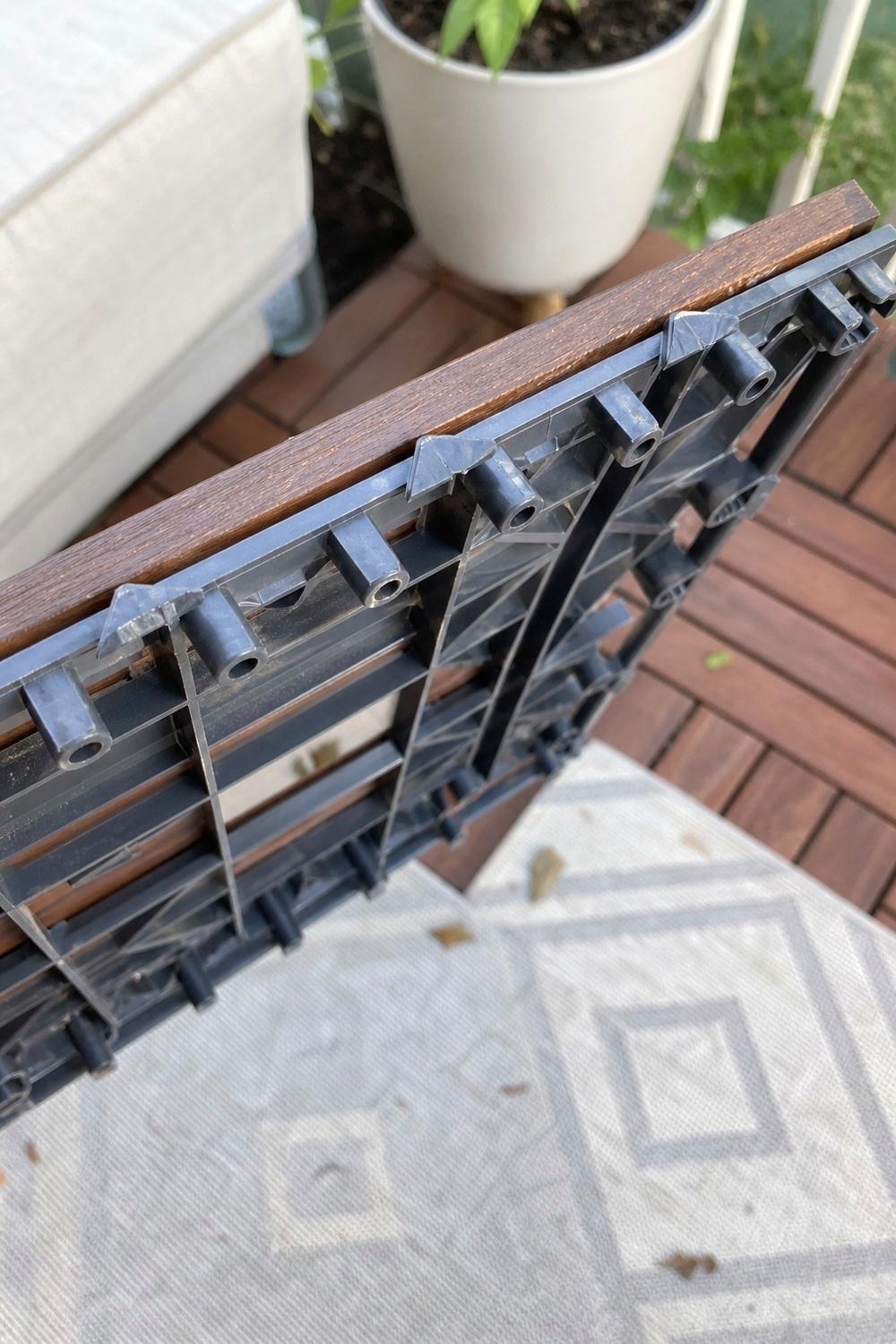
Wood-look composite tile handles rain and temperature swings without cracking, which is why it shows up on more renter balconies than real IPE or acacia tile. Hardwood looks better up close, but it needs oiling every year or two to hold its color, and a split board costs more to replace. Artificial turf tile is the easiest to lift and store, and it hides dirt and pet accidents better than a hard surface, though it will not photograph as a finished patio floor the way composite tile does.
Outdoor Rugs That Actually Handle Rain
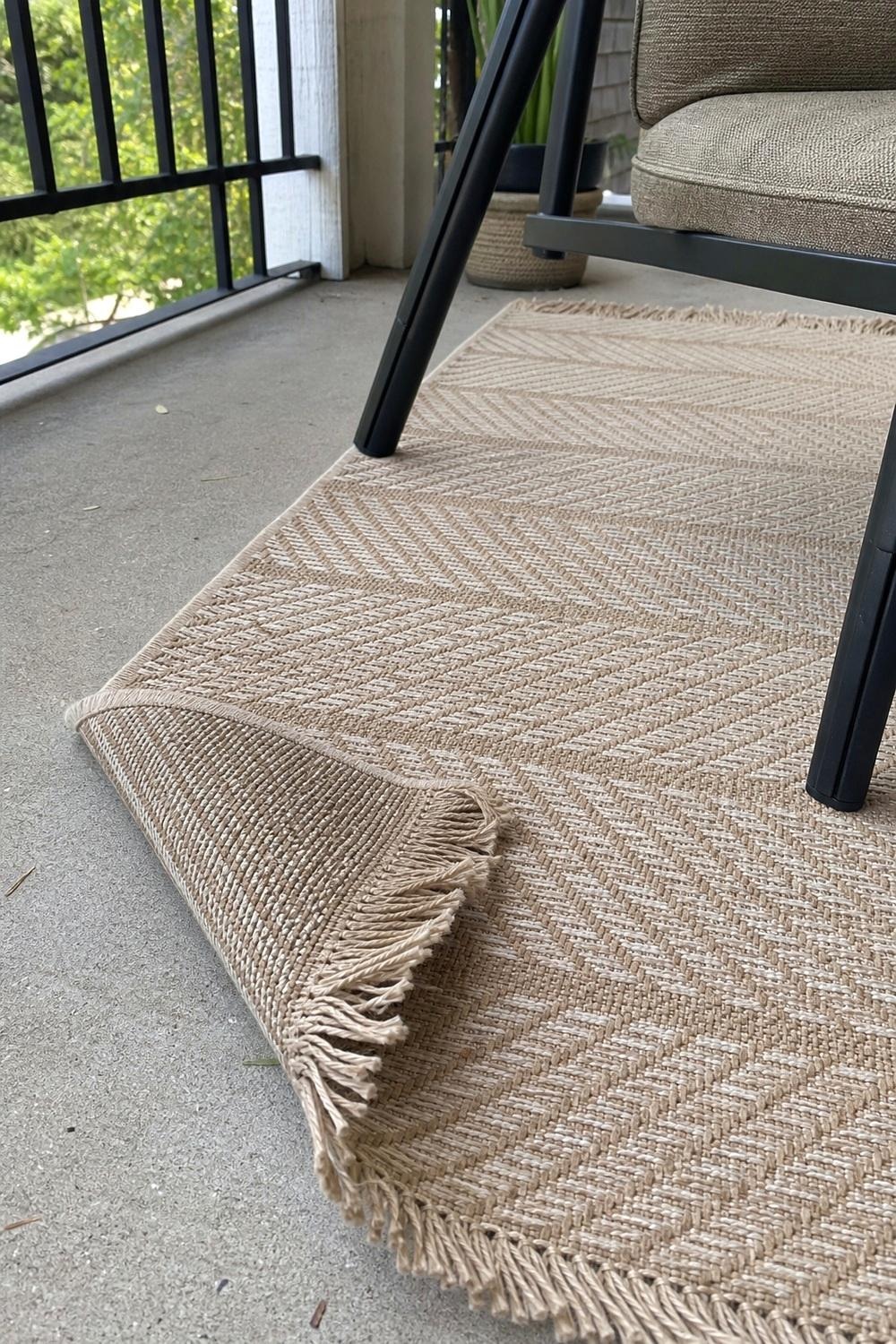
An outdoor rug is the fastest way to soften a balcony that already has decent chairs and pots. The material decides whether it becomes a useful layer or moldy carpet. A polypropylene rug is woven from plastic fiber that does not absorb water, so rain runs through it and it dries within a few hours in open air. A natural jute or sisal rug looks warmer but soaks up water like a sponge and stays damp for days, which is exactly the condition mold needs.
- Polypropylene rugs: dry fast, resist mildew, and most are rated for direct sun without fading.
- Jute, sisal, or cotton rugs: soft underfoot, but they hold moisture and do better fully covered or moved indoors for wet stretches.
- Any rug on a balcony above the second floor needs a corner weight or outdoor-rated rug tape. Wind lifts a light rug fast, and a rug that blows off a high balcony is a real hazard to whoever is underneath.
Once the floor is down, keep the furniture plan simple. A two-chair balcony layout fits on almost any interlocking tile or rug base without covering the drainage gap at the rail.
Every Balcony Flooring Option, Side by Side
Tiles and rugs are the two that work, but they are not the only things sold for this job, and the rest fail in ways that cost a deposit. Four questions settle it: does it come back up cleanly, does water get out from under it, does it survive direct sun, and how much does it weigh.
| Option | Comes back up cleanly | Drainage | UV durability |
|---|---|---|---|
| Wood-look composite deck tile | Yes, lifts out in an afternoon | Good, slotted base on raised feet | High, holds color outdoors for years |
| Real IPE or acacia deck tile | Yes, same clip system | Good, needs airflow underneath | Moderate, greys out without oiling |
| Artificial turf tile | Yes, and it is the lightest to store | Good, perforated backing over open slats | Moderate, budget turf fades and mats down |
| Polypropylene outdoor rug | Yes, roll it up | Fair, water passes through, but lift it to dry the slab | High, most are rated for direct sun |
| Jute, sisal, or cotton rug | Yes | Poor, absorbs water and holds it for days | Low, fades and eventually rots |
| Foam or EVA interlocking tile | Physically yes, see the section below | Poor, closed cell with a flat back, water sits underneath | Low, goes chalky and brittle fast |
| Peel-and-stick vinyl plank | No, leaves adhesive residue on the concrete | None, sealed flat to the slab | Low, the adhesive is the part that fails |
| Solid rubber or PVC mat | Yes if it is not taped down | None, sealed backing traps everything | Moderate |
| Stone paver or thick ceramic tile | Yes, but the weight is the problem | Good if dry-laid on spacers | High |
| Subfloor pedestal deck system | Yes, but it is a real weekend in both directions | Best, the whole floor sits above the slab | High |
The pattern is easy to read once it is in one place. Everything that comes back up cleanly also has a way for water to leave, and everything sealed flat to the concrete fails on both counts at the same time.
Why the Drainage Gap Matters More Than the Tile You Pick
A balcony floor is built with a slope, usually toward a drain, a scupper, or the open edge past the railing. That slope exists so rain and condensation leave instead of pooling. Anything that traps water flat against the concrete blocks that slope and turns the balcony into a shallow tray. Standing water under a rug or tile grid causes three problems in order: staining on the concrete that outlasts the security deposit, mold and mildew growing in the dark, damp gap, and, in buildings with strict rules, a maintenance complaint once the water finds its way to the unit below.
The EPA’s guidance on mold and moisture control is direct about the cause: mold will not grow without water, and controlling moisture is the only real way to control mold (EPA, A Brief Guide to Mold, Moisture and Your Home ). A balcony floor with no drainage path is a moisture source sitting in place around the clock.
Signs the water is not draining under your setup:
- A musty smell when you lift a corner of the tile or rug.
- Dark rings or a chalky residue on the concrete underneath.
- Water still standing under the flooring hours after rain has stopped.
Standing water under a floor covering is also a mosquito breeding spot, not just a mold risk. If the balcony already has a bug problem, see fixing standing water on apartment patios alongside whatever flooring you choose. And if you are still planning pot placement for a full apartment balcony garden , lay it out around the drainage gap from the start rather than after the tiles are already down.
Weep Holes and Subfloor Pedestals: The Parts Nobody Explains
Weep holes are the small gaps built into a balcony’s railing base or drain scupper that let water escape instead of backing up. They are easy to block by accident. A full-coverage rug, a solid rubber mat, or a tile grid pushed edge to edge against the wall can cover a weep hole without you noticing, until the next hard rain leaves a puddle that will not go down. Keep a clear inch or two of open space at every wall and railing edge so weep holes stay uncovered.
For anything heavier than snap tiles, a subfloor pedestal system raises the walking surface an inch or more above the slab on adjustable feet, which keeps the whole floor above standing water instead of resting flush against it. Pedestals take more time to install and remove than clip tiles, so they make more sense on a balcony you plan to keep for a few years, not a six-month lease.
Why a solid rubber mat or anything with a sealed backing is the wrong choice:
- A sealed-back mat has nowhere for water to go, so it holds every drop that lands on it against the concrete.
- It also hides the slope of the floor, so you cannot tell water is pooling until you smell it.
- If it is glued or taped down for stability, removing it can pull paint or sealant off the concrete, which is the opposite of renter-safe.
The Weight Limits and Wind Rules to Check Before You Buy Anything
Every balcony is engineered to hold a maximum live load, the combined weight of people, furniture, planters, and anything else on it at once. Balconies are typically designed to carry more per square foot than an interior floor, but older buildings and cantilevered designs deserve real caution rather than an assumption that the number is generous, which is why groups like the National Association of Home Builders have pushed newer construction guides specifically for wood-framed balconies and decks (NAHB, New Guide Identifies Best Practices for Wood Balcony and Deck Construction ). Interlocking deck tiles and outdoor rugs weigh almost nothing, so they rarely count against that limit. Stone pavers, thick ceramic tile, or a subfloor pedestal system loaded with heavy furniture is a different story, and stacking any of those with several large planters and a full crowd of guests adds up fast on a small balcony.
A quick balcony weight check before buying flooring:
- Skip natural stone pavers and thick ceramic tile. Both weigh far more than composite or turf tile for the same coverage.
- Count planters as furniture weight, not decoration. A large glazed pot from a potted plant setup full of wet soil can weigh as much as a person.
- If the balcony already sways, bounces, or the building has flagged nearby inspections, ask the property manager before adding any flooring at all.
Wind is the other risk nobody mentions. A light rug on a balcony above the second or third floor can lift in a strong gust, and interlocking tiles that are not clipped tight along every edge can do the same thing. Weight down loose edges, or choose a full-grid interlocking tile over a loose rug on any high or exposed balcony.
Can Foam Tiles Be Used Outdoors on a Patio or Balcony?
Short answer, no, not for a balcony that gets weather. Foam tiles are the interlocking EVA squares sold for garage floors, home gyms, and playrooms, and they are cheap, soft underfoot, and snap together in minutes, which is exactly why people try them out here. They fail on two things that matter more.
UV breaks the foam down. EVA is not made for sustained sun. It fades first, then hardens, then starts shedding a chalky powder and crumbling at the edges and corners. On a south or west-facing balcony that is often one or two seasons, and the pieces that break down do not come apart neatly. You end up sweeping foam crumbs off a slab you were trying to protect.
Closed-cell foam has no drainage path. Water does not pass through the tile the way it passes through a woven polypropylene rug, and the backing is flat rather than slatted on feet the way a deck tile is. So rain runs to the seams, works its way under, and then sits there against the concrete with nowhere to go and no airflow to dry it. That is the exact condition that stains a slab and grows mildew in the dark.
Two smaller problems come along with those. Dark foam on a sunny balcony gets genuinely hot underfoot by mid afternoon. And soft foam takes permanent dents from chair legs and planter feet, so the surface reads as tired long before it fails.
Where foam is fine: a fully covered balcony that rain never actually reaches, used as a soft temporary surface, lifted and aired out regularly. Anywhere else, an interlocking wood or composite deck tile does the same job with a slatted base and raised feet, which is the whole difference.
Why Peel-and-Stick Vinyl Fails Outdoors
Peel-and-stick vinyl squares look tempting because they go down flat and cheap, but they are built for a controlled indoor subfloor, not concrete that bakes in direct sun and gets rained on. The adhesive is rated for an indoor temperature range. Outdoors, summer heat softens it, winter cold makes it brittle, and the constant expansion and contraction of the concrete underneath works the bond loose within a season or two. When it finally lifts, it usually leaves a gummy adhesive residue on the concrete that is harder to remove than the bare slab ever was, which turns a renter-friendly idea into a deposit problem. Skip peel-and-stick vinyl on any balcony and choose an interlocking or loose-lay system instead.
How to Lay Interlocking Tiles Without Losing Your Deposit
The install itself takes an afternoon for most small balconies. The steps that protect the deposit happen before and after the tiles go down, not during.
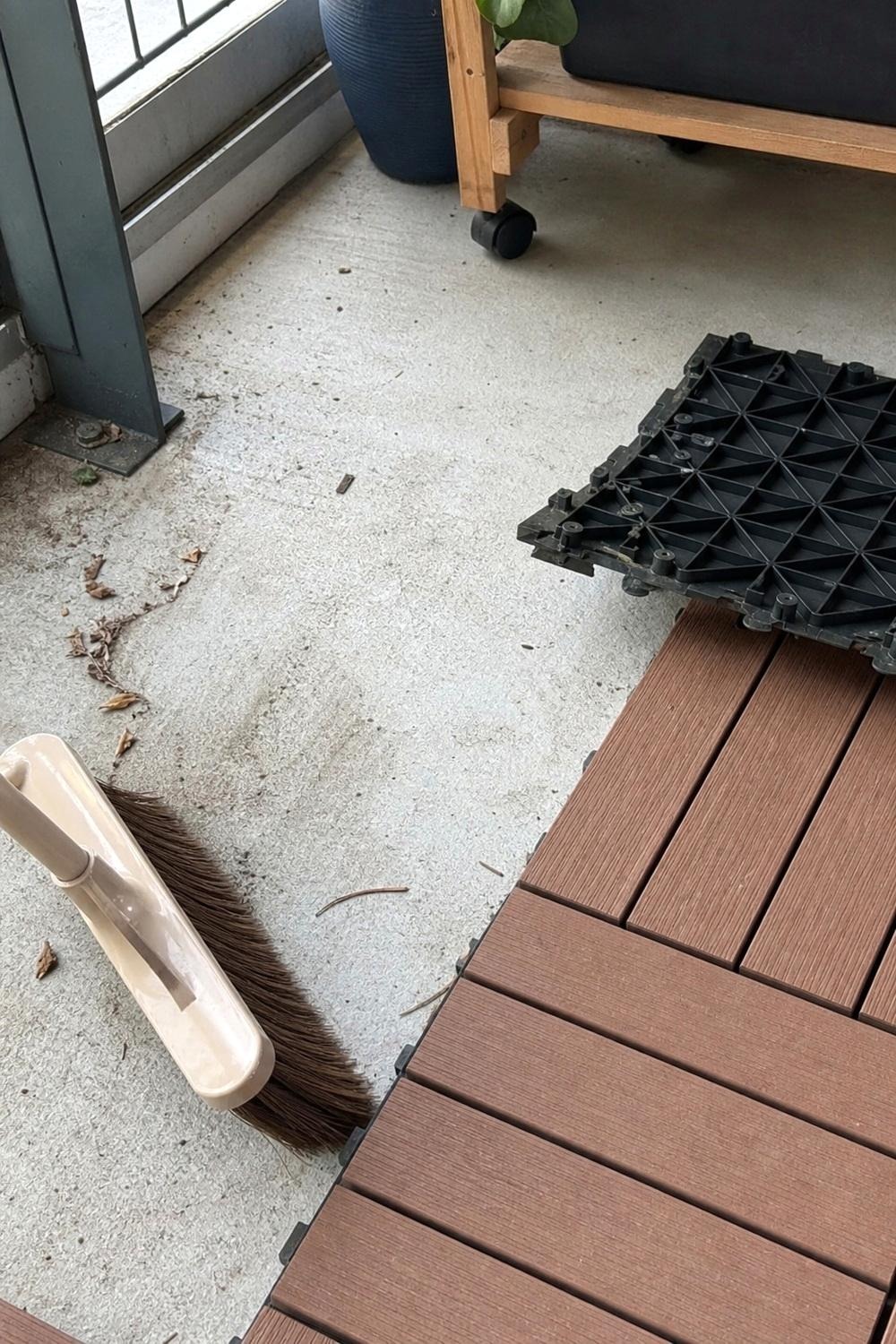
- Sweep and hose down the concrete, then let it dry completely. Trapped grit under a tile grinds a fine scratch pattern into the slab over time.
- Measure the balcony and dry-fit a full row along the longest wall before clipping anything, so cut pieces land along the least visible edge.
- Leave the drainage gap. Stop the tile grid an inch or two short of every wall, railing base, and drain or scupper so nothing blocks the slope or the weep holes.
- Snap the tiles together starting from one corner, working in rows, checking every few tiles that the grid still sits square.
- Cut edge pieces with a utility knife or fine-tooth saw, following the tile manufacturer’s scoring guide rather than guessing.
- Set furniture and planters down last, and use furniture pads under anything heavy so legs do not dig into the tile.
What to Check in Your Lease or HOA Rules First
Most leases say nothing specific about interlocking tile or an outdoor rug, because neither is a permanent alteration. Where leases do get specific, it is usually about weight, drainage, or anything attached to the building. Read the lease for a balcony-specific clause before buying flooring, and ask the property manager directly if the lease stays quiet on it. Get a plain answer in writing for anything that adds real weight, like a subfloor pedestal system or several large planters, so there is a record if the question comes up at move-out.
Questions worth asking a property manager before flooring goes down:
- Is there a stated weight limit for the balcony, and does it include furniture and planters?
- Are floor coverings allowed as long as nothing is glued, drilled, or permanently attached?
- Who is responsible for balcony drains and weep holes: the tenant or maintenance?
Condo balconies come with a second rulebook. An association usually has something to say about what is visible from the street or the courtyard, which can rule out bright turf or a loud rug pattern even when nothing is attached to the building. Weight limits are more likely to be written down and enforced. And several states now require periodic inspection of balconies in multi-unit buildings, which means anything covering the deck surface has to come off so an inspector can see the slab and the connections. That is another argument for clip tiles and a rolled rug over anything that takes a weekend to remove.
Caring for a Reversible Balcony Floor Through the Seasons
A renter-safe floor still needs upkeep, just less of it than a permanent one.
- Lift a few tiles or a corner of the rug every month or two and check the concrete underneath for moisture, mold, or grit buildup.
- Sweep or rinse the surface after pollen season and after any storm that blows in leaves or dirt.
- Store tiles and rugs somewhere dry over winter if the balcony gets heavy snow or ice. Repeated freeze-thaw cycles are harder on tile clips than a single cold snap.
- Wash a polypropylene rug with a hose and mild soap a couple of times a season, and skip fabric cleaners that are not rated for outdoor fiber.
A reversible balcony floor is worth the extra care because it is doing two jobs at once: making the space usable now and staying easy to lift out later. Get the drainage gap right, pick a rug or tile that actually sheds water, and the rest of the setup, chairs, plants, string lights, comes together on top of a floor that will not cost a cent of the deposit.