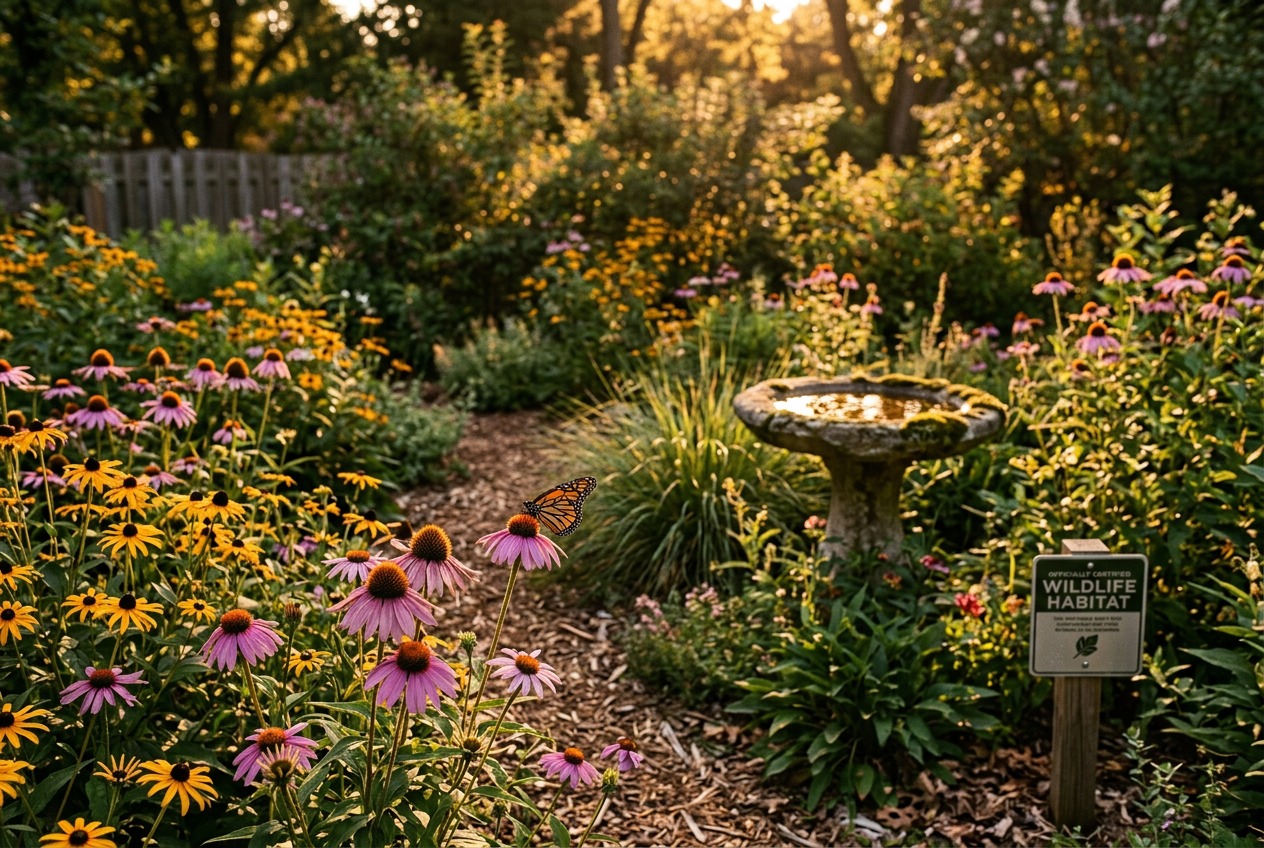
You can create a certified wildlife habitat for $75 to $100 using native plants, salvaged materials, and basic supplies from hardware stores. The National Wildlife Federation requires four elements: food sources, water, cover, and places to raise young. All eight projects below meet those requirements and attract birds, pollinators, and beneficial insects within one growing season.
What Qualifies as a Wildlife Habitat
The National Wildlife Federation certifies yards that provide food (native plants, seeds, berries), water (birdbath, pond, or shallow dish), cover (shrubs, brush piles, rock walls), and nesting sites (trees, nest boxes, host plants). You need at least one element from each category. Certification costs $20 after you complete the online application showing your habitat features.
Native plants do 90% of the work. A single native oak supports over 500 caterpillar species. Non-native ornamentals support fewer than 50. Focus your budget on native shrubs, perennials, and grasses suited to your USDA zone.
Project 1: Native Plant Border ($45-60)
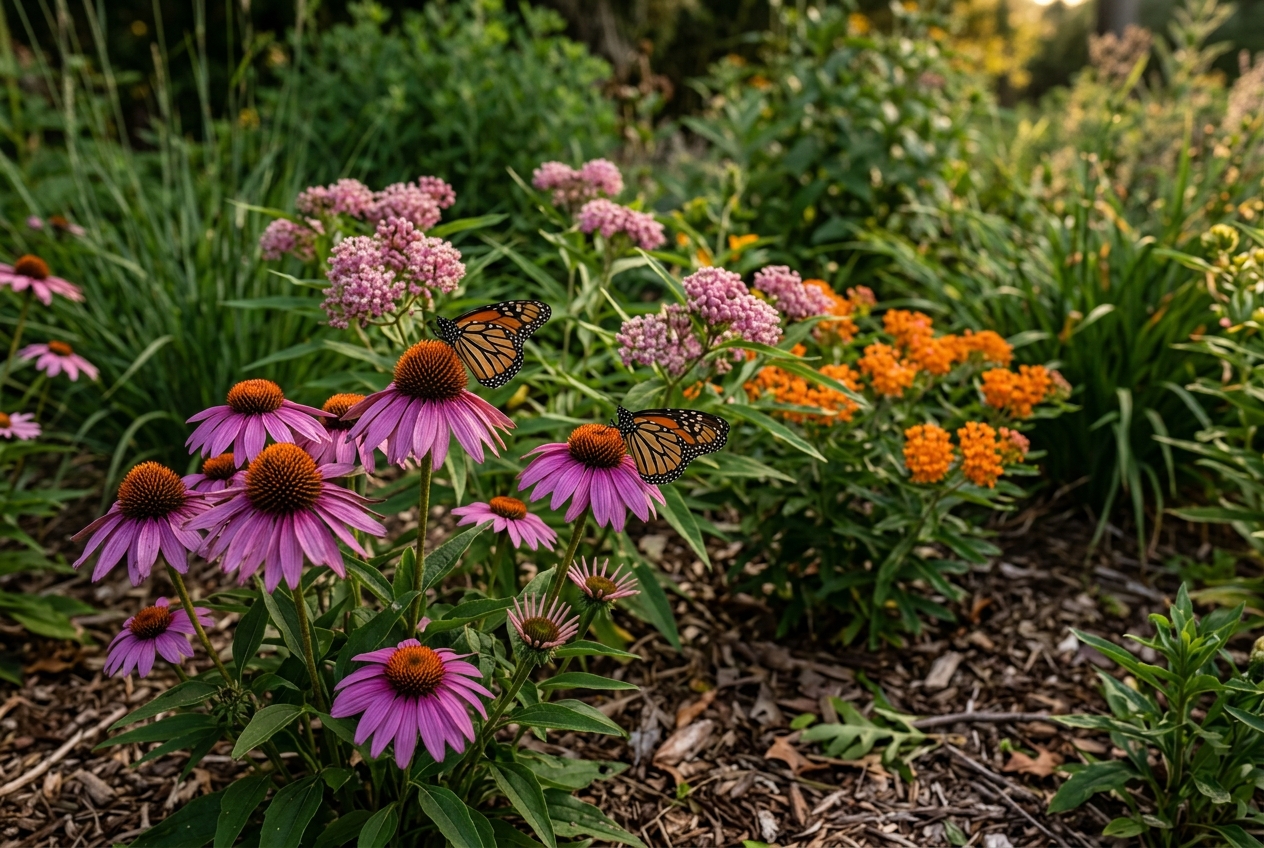
A 10-foot native plant border provides food and cover year-round. Choose species that bloom in different seasons and produce seeds or berries.
| Plant (Zones 4-8) | Quantity | Cost | Wildlife Benefit |
|---|---|---|---|
| Black-eyed Susan (Rudbeckia hirta) | 3 | $12 | Seeds for finches, nectar for bees |
| Purple coneflower (Echinacea purpurea) | 3 | $15 | Seeds for goldfinches, winter structure |
| Little bluestem grass (Schizachyrium scoparium) | 2 | $10 | Nesting material, seed heads |
| Native aster (Symphyotrichum) | 2 | $8 | Late-season nectar, native bee host |
| Mulch (2 cubic feet) | 1 bag | $6 | Retains moisture |
Total: $51
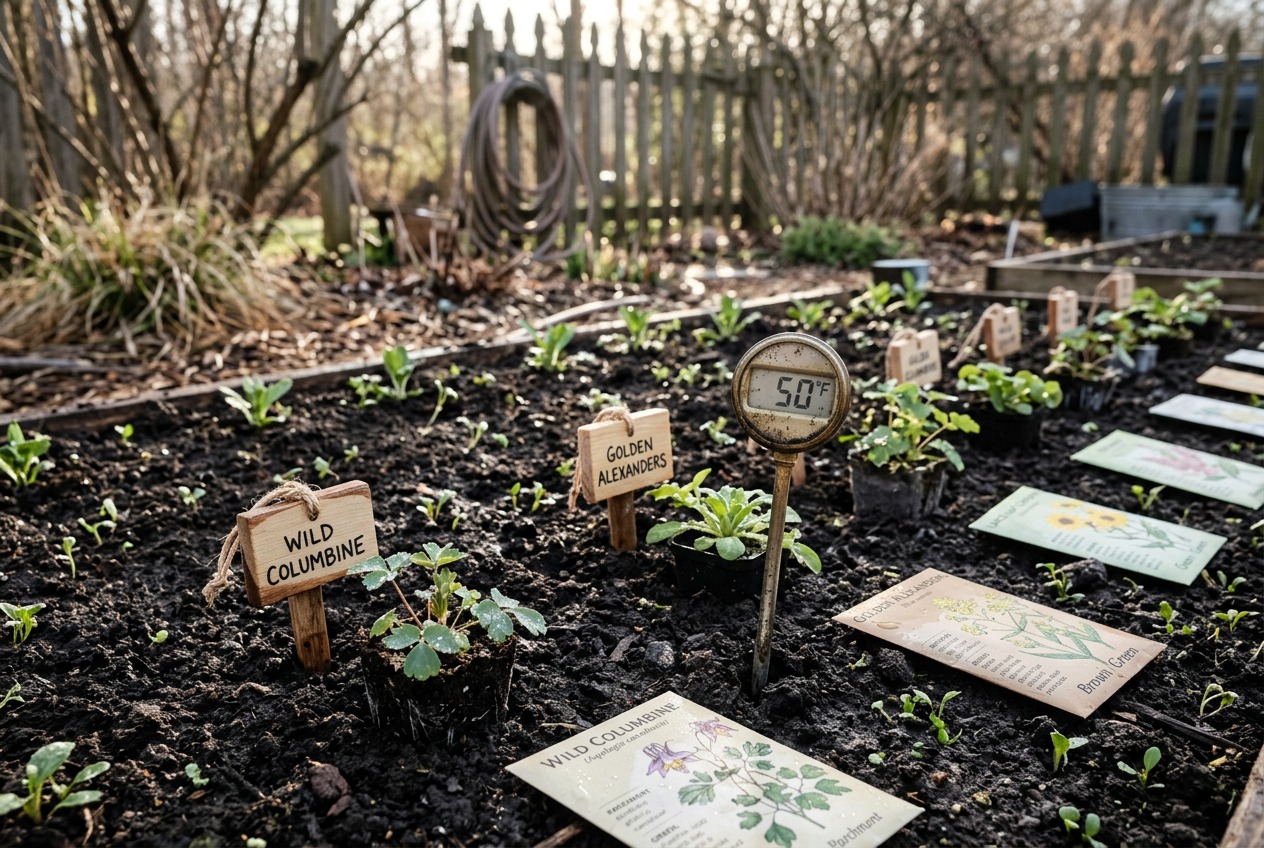
Plant in spring after last frost or fall 6-8 weeks before first frost. Space plants 18 inches apart. Water weekly the first season. These plants self-seed and spread, filling in gaps by year two.
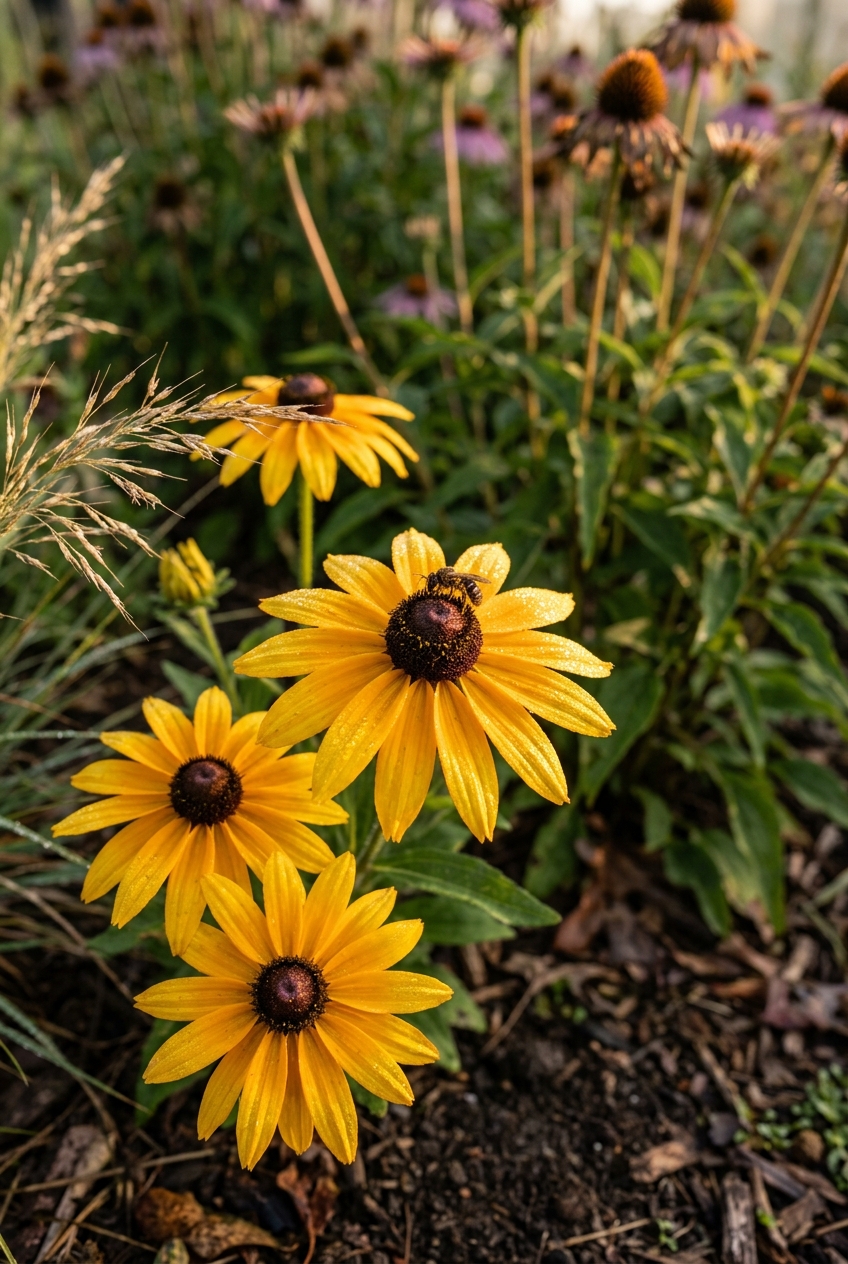
Quick Tip: Buy native plants from local nurseries or native plant sales hosted by Audubon chapters and native plant societies. Prices run $3-6 per plant compared to $8-12 at big box stores.
Project 2: Brush Pile Shelter ($0-15)
A 4-foot by 6-foot brush pile gives rabbits, toads, and ground-nesting birds shelter from predators and weather. Use pruned branches, fallen logs, and yard waste.
Materials:
- Branches 2-4 inches diameter (base layer)
- Smaller twigs and brush (top layers)
- Optional: landscape fabric ($12) to prevent weeds underneath
Stack large branches in a crisscross pattern for the base. Pile smaller branches on top, leaving gaps for animals to enter. Place in a corner of your yard away from high-traffic areas. The pile settles over time, so add more brush each fall.
Birds forage for insects in brush piles. Chipmunks and rabbits nest underneath. Garter snakes hibernate in the base layer.
Project 3: Shallow Water Basin ($20-35)
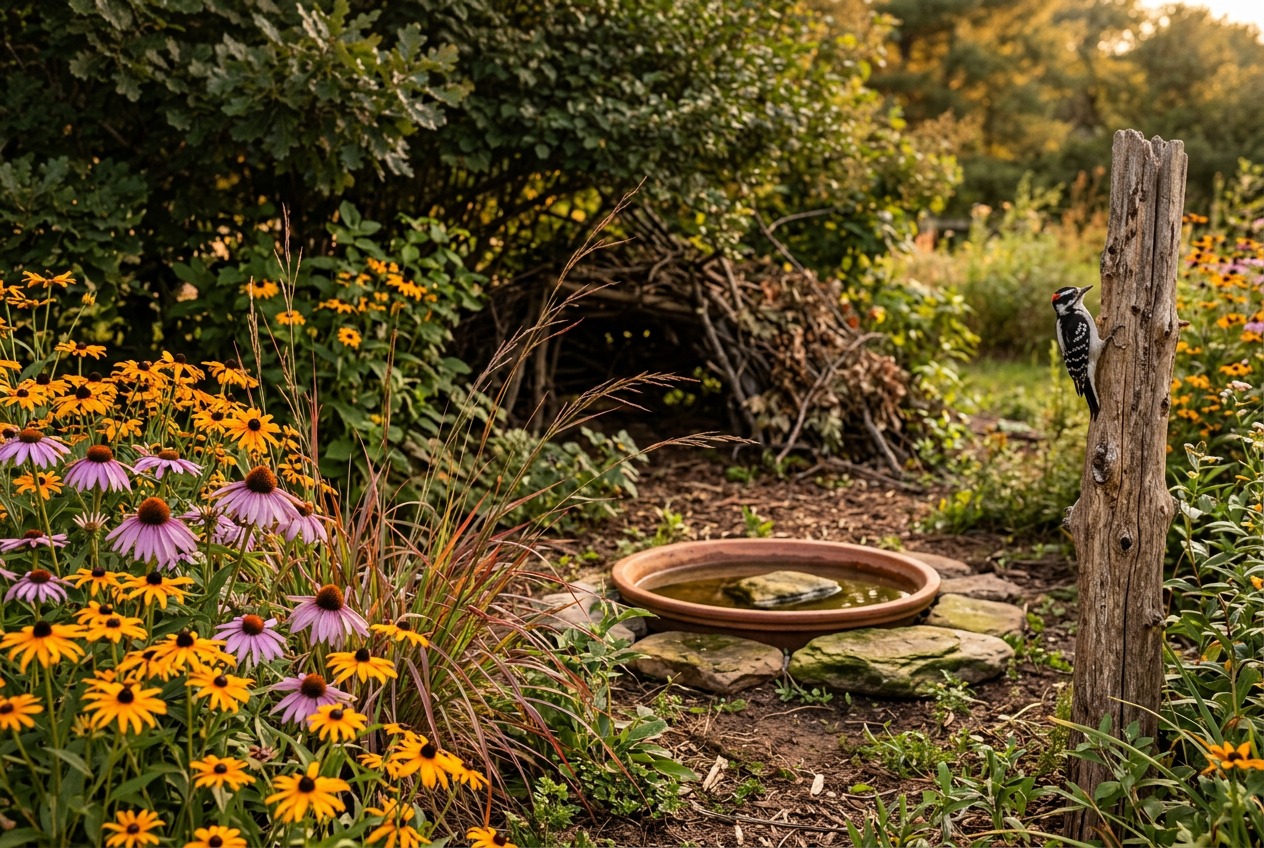
Birds need water 1-2 inches deep. A simple basin on the ground works better than a pedestal birdbath.
| Item | Cost |
|---|---|
| Terracotta saucer (18-24 inches) | $12-18 |
| Flat rocks for perching | $0 (collect from yard) |
| Submersible fountain pump (optional) | $15-20 |
Place the saucer in partial shade near shrubs so birds can retreat if threatened. Add 3-4 flat rocks as landing spots. Change water every 2-3 days to prevent mosquito larvae. In winter, use a birdbath heater ($25) to keep water from freezing.
From my experience: I placed my basin 8 feet from a dense spirea shrub. Robins and cardinals drink there every morning, then fly into the shrub to preen. Without nearby cover, birds won’t use the water.
Project 4: Mason Bee House ($12-25)
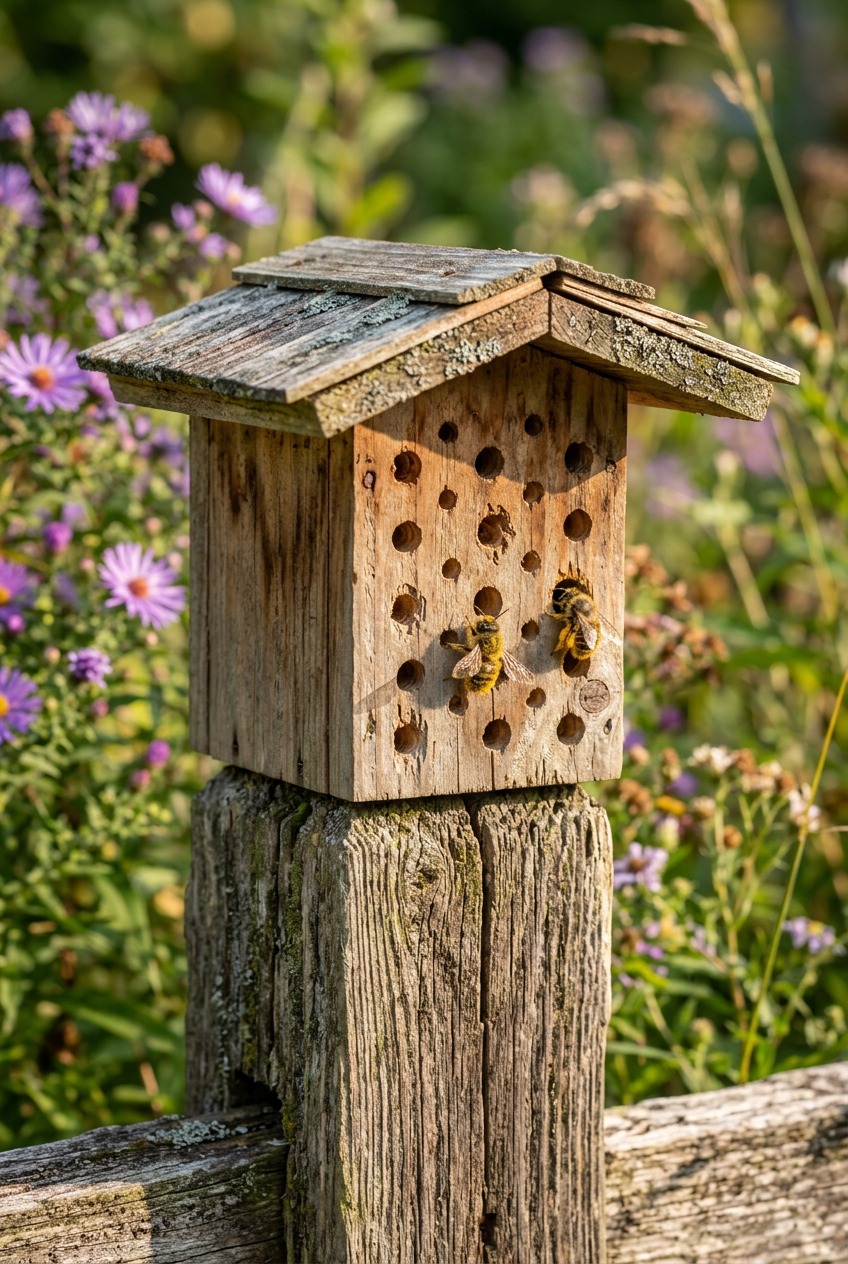
Mason bees pollinate 10 times more effectively than honeybees and don’t sting. A simple bee house costs under $25 or you can build one for $12.
DIY Materials:
- Untreated 4x6 lumber block (8 inches long): $8
- Drill with 5/16-inch bit: use existing
- Sandpaper: $2
- Roof overhang (scrap wood or shingle): $2
Drill 20-30 holes 5/16 inch wide and 5 inches deep in the wood block. Space holes 3/4 inch apart. Sand the holes smooth. Mount the block 4-6 feet high facing southeast, with a small roof overhang to keep rain out. Mason bees emerge in early spring (March-April in Zones 5-7).
Project 5: Toad Abode ($8-15)
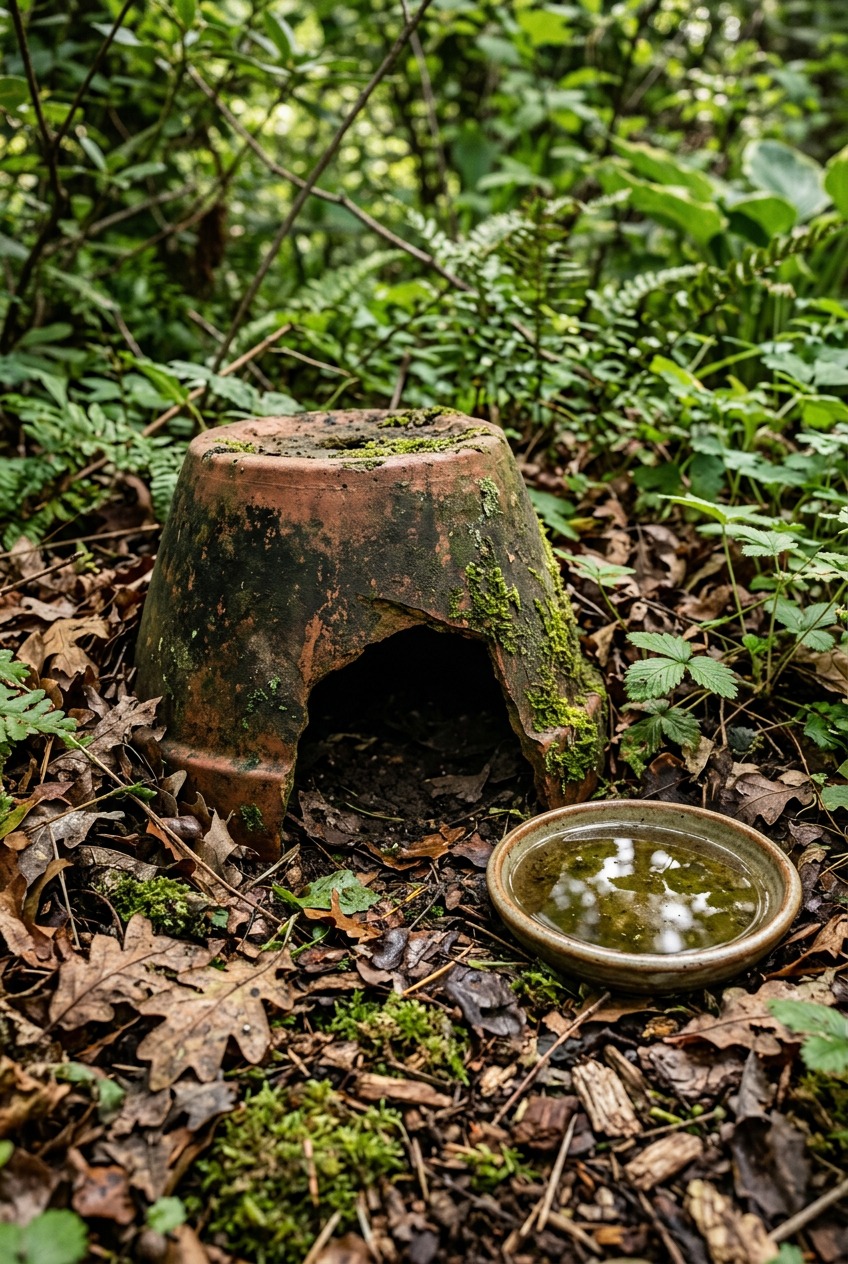
Toads eat 10,000 insects per summer, including slugs, beetles, and mosquitoes. Give them a cool, damp shelter.
Materials:
- Terracotta pot (8-10 inches): $6-8
- Small dish for water: $2
- Leaf litter or mulch: free
Break a 3-inch opening in the pot rim with a hammer. Flip the pot upside down in a shady, damp spot near your garden. Place the water dish next to the entrance. Add leaf litter around the base. Toads move in within days if your yard has enough insects and moisture.
Project 6: Seed-Bearing Perennial Patch ($30-50)
Leave seed heads standing through winter. Finches, sparrows, and juncos feed on them November through March.
| Plant (Zones 4-8) | Quantity | Cost | Seed Type |
|---|---|---|---|
| Sunflowers (Helianthus annuus) | 1 packet seeds | $3 | Large seeds for cardinals, chickadees |
| Zinnias (Zinnia elegans) | 1 packet seeds | $3 | Small seeds for finches |
| Cosmos (Cosmos bipinnatus) | 1 packet seeds | $3 | Abundant seed heads |
| Joe Pye weed (Eutrochium purpureum) | 2 plants | $12 | Late-season nectar, winter structure |
| Ironweed (Vernonia) | 2 plants | $12 | Seeds for sparrows |
Total: $33
Plant sunflowers, zinnias, and cosmos from seed in late April (Zone 5-7). Direct sow after last frost. These annuals bloom summer through fall, then set seed. Do not deadhead. Leave all stems standing until March. Cut back old growth in early spring before new growth starts.
Quick Tip: Finches perch directly on dried sunflower heads to extract seeds. Plant sunflowers near a window for close-up viewing.
Project 7: Leaf Litter Habitat ($0)
Raking leaves removes overwintering habitat for moths, beetles, and beneficial insects. Leave a 3-foot by 6-foot section of leaves undisturbed under shrubs or in a back corner.
Steps:
- Rake leaves into a designated area in fall
- Let them decompose naturally
- Add fresh leaves each autumn
- Do not disturb the pile until late spring
Luna moths, swallowtail butterflies, and native bees overwinter as pupae in leaf litter. Toads and salamanders burrow into damp leaves. By spring, the leaves break down into rich compost that feeds your soil.
This is the only project that costs nothing and requires no maintenance.
Project 8: Snag or Dead Tree ($0-40)
Standing dead trees (snags) provide nest cavities for woodpeckers, chickadees, and nuthatches. If you don’t have a natural snag, create one.
Option A: Preserve an existing dead tree
- Cost: $0
- Remove only branches that threaten structures
- Leave trunk standing 10-15 feet tall
- Woodpeckers drill nest holes within 1-2 years
Option B: Install a post
- Cost: $30-40
- Use untreated cedar post (6 inches diameter, 8 feet tall)
- Bury 2 feet deep in concrete
- Drill 1.5-inch entrance holes 6 feet up
- Mount in open area away from house
Snags also host beetle larvae, which woodpeckers and flickers eat. Bark peels away over time, creating crevices for bats and tree frogs.

From my experience: I left an 8-foot oak snag after a tree died in my backyard. Downy woodpeckers nested in it the second year. Nuthatches cached seeds in the bark all winter. The snag is now the most active wildlife spot in my yard.
What to Watch For
Cats kill 2.4 billion birds annually in the U.S. If you have outdoor cats or neighbors do, place feeders and water sources at least 10 feet from dense shrubs where cats hide. Add thorny plants like native roses or barberry under bird feeders.
Mosquitoes breed in standing water. Change birdbath water every 2-3 days. If you install a small pond, add a fountain or waterfall to keep water moving.
Pesticides kill the insects that birds and other wildlife need. Skip lawn treatments. Pull weeds by hand or use mulch to suppress them.
Before You Start
Wildlife habitat projects work best when clustered together. Place the water basin near the native plant border. Position the brush pile at the edge of your property. Group elements to create zones where animals feel safe moving between food, water, and cover.
Start with three projects this spring: native plants, water, and one shelter option (brush pile, toad abode, or bee house). Add more features each season as budget allows. Wildlife activity increases exponentially when you provide multiple habitat elements.
Most of these projects require no maintenance after the first season. Native plants are drought-tolerant once established. Brush piles and leaf litter manage themselves. You’ll spend more time watching birds and pollinators than working in the yard.
FAQ
How long before wildlife shows up after I create a habitat?
Birds and insects arrive within days of adding water and native plants. Mason bees nest in bee houses the first spring after installation. Toads move into shelters within a week if your yard has moisture and insects. Larger mammals like rabbits may take a full season to establish territories in brush piles.
Can I create a wildlife habitat in a small urban yard?
Yes. A 10-foot by 10-foot space can include a native plant border, water basin, and mason bee house. Urban yards often attract more wildlife than suburban lawns because they provide rare habitat in developed areas. Focus on vertical space: mount bee houses on fences, grow native vines on trellises, and use containers for native plants.
Do I need to provide food in winter or will wildlife find it naturally?
Native plants provide winter food naturally through seed heads, berries, and persistent fruit. Leave perennial stems standing until March. Add a suet feeder ($15) for woodpeckers and a tube feeder ($20) for finches if you want to supplement natural food. Clean feeders every two weeks to prevent disease.
What if my HOA doesn’t allow brush piles or unmowed areas?
Stack branches decoratively as a “habitat feature” rather than a messy pile. Use a formal border design for native plants with mulched edges. Frame leaf litter areas with landscape edging and call them “pollinator gardens.” Many HOAs approve wildlife habitat projects when presented as intentional landscaping rather than neglect.
Will a wildlife habitat attract rats or other pests?
Brush piles and native plants attract beneficial wildlife, not rodents. Rats need food sources like garbage, compost, or spilled birdseed. Keep birdseed in sealed containers, clean up spills immediately, and use baffles on feeder poles. I’ve maintained wildlife habitat for five years with no rodent issues by managing seed carefully.