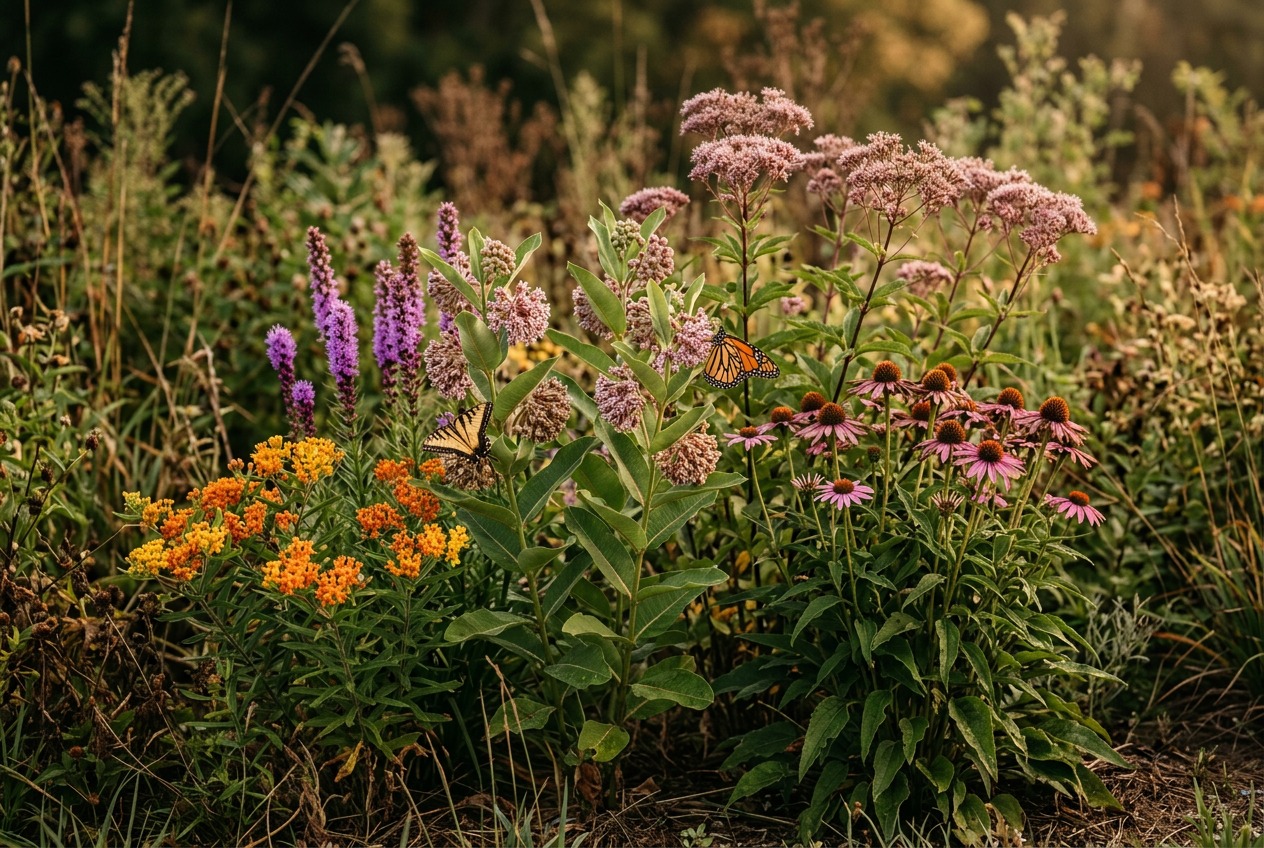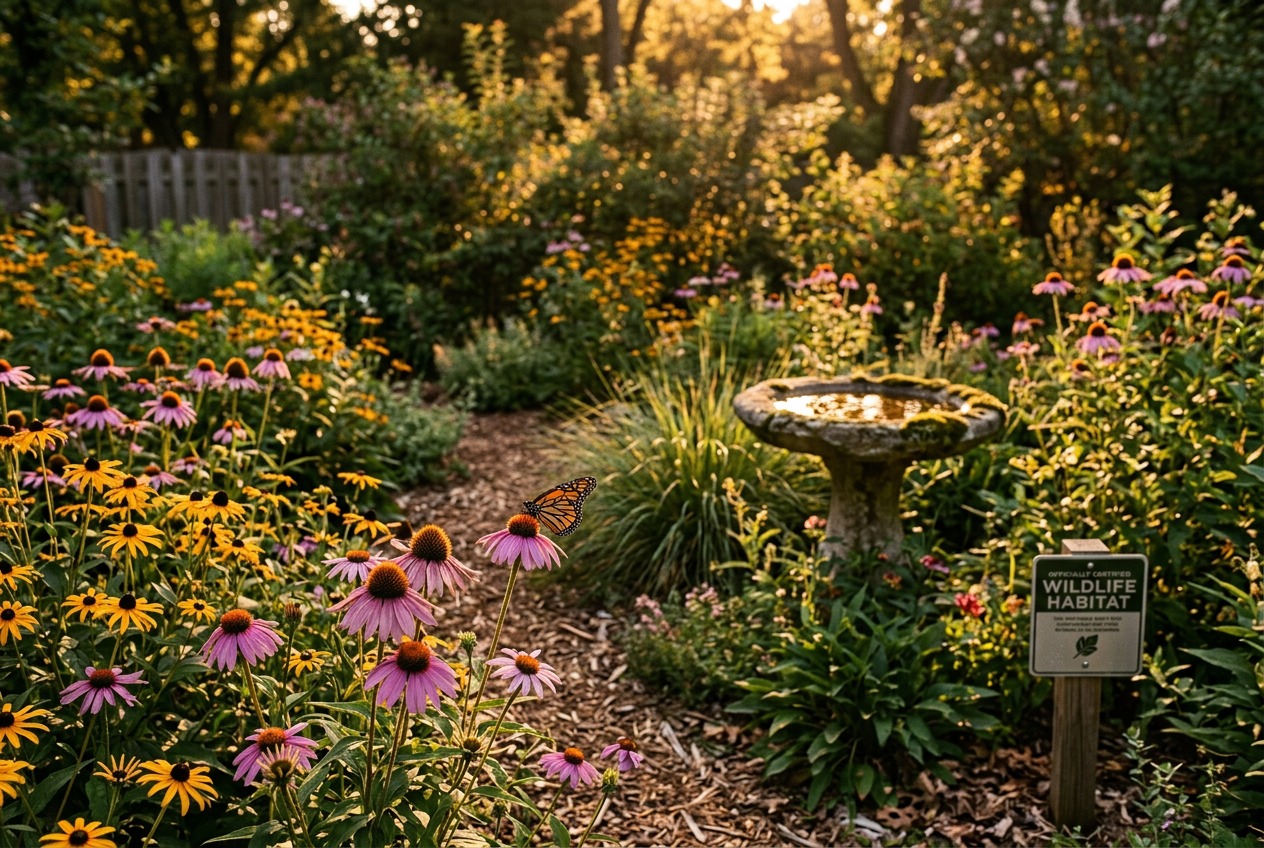
National Wildlife Federation certification requires four elements: food sources, water, cover, places to raise young, plus sustainable practices. You can meet all requirements in a 500-square-foot space and certification costs $20. Most gardeners qualify after adding 2-3 native plant species and one water source.
What You Need
| Item | Specifics | Cost |
|---|---|---|
| Native plants (food sources) | 3+ species for your zone | $15-45 |
| Water source | Birdbath, shallow dish, or small pond | $20-200 |
| Shelter materials | Brush pile, rock pile, or dense shrubs | $0-50 |
| Nesting support | Birdhouse, bee hotel, or host plants | $15-40 |
| NWF certification | Online application fee | $20 |
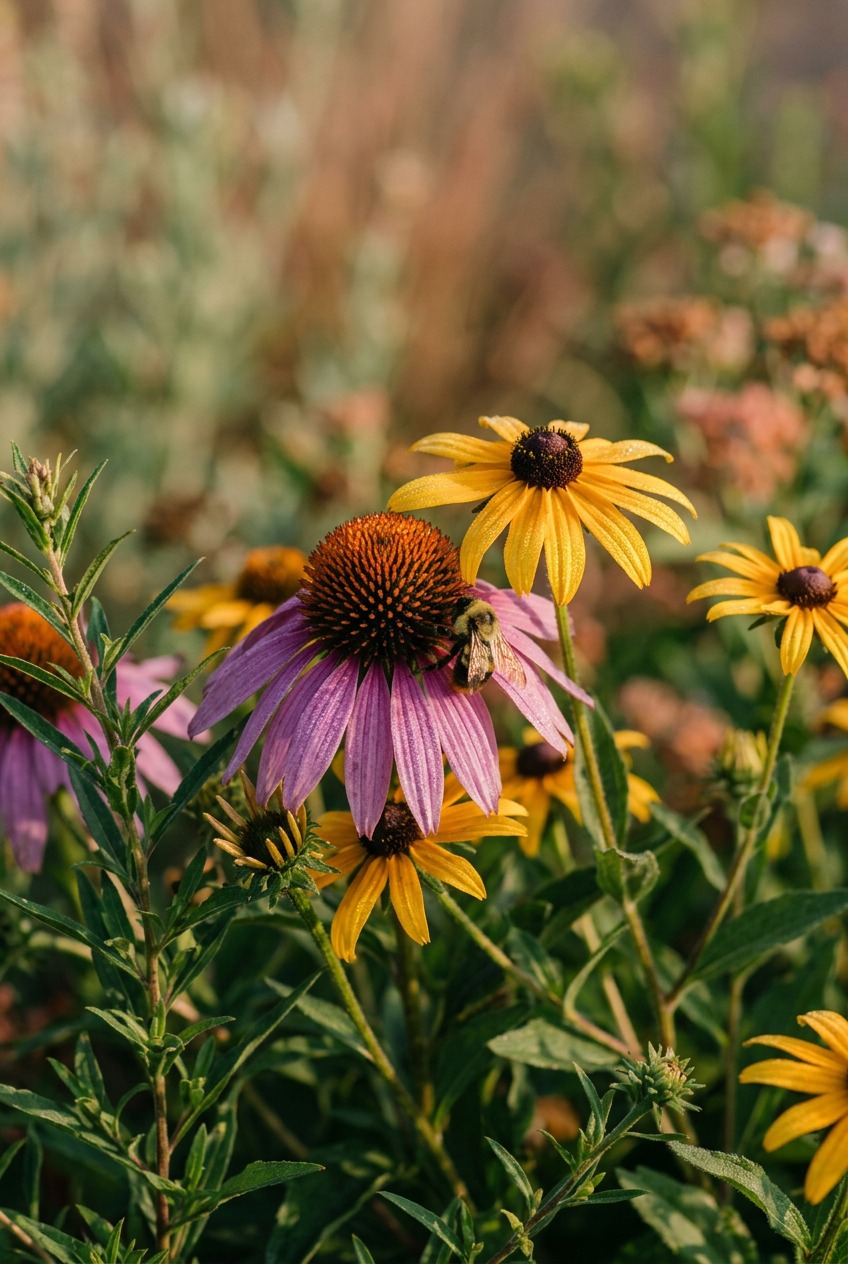
Choose native plants from your USDA zone. Zone 5-6: purple coneflower (Echinacea purpurea), black-eyed Susan (Rudbeckia hirta), serviceberry (Amelanchier). Zone 7-8: coral honeysuckle (Lonicera sempervirens), Virginia creeper (Parthenocissus quinquefolia), elderberry (Sambucus canadensis). Zone 9-10: milkweed (Asclepias tuberosa), salvia (Salvia greggii), lantana (Lantana camara).
How to Do It
Step 1: Add three native food sources. Plant at least three species that produce seeds, berries, nectar, or foliage. Space plants 18-36 inches apart depending on mature size. Install in spring after last frost or fall 6-8 weeks before first frost.
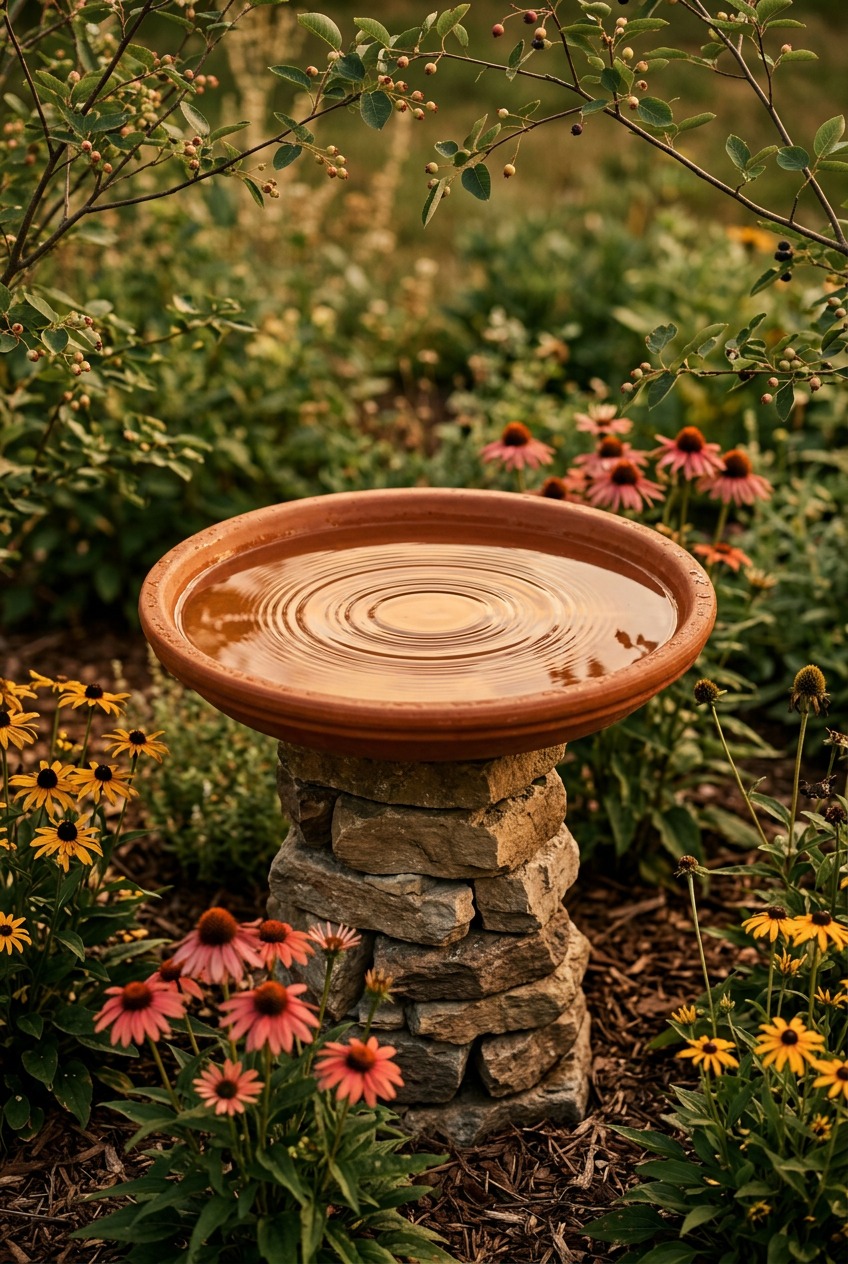
Step 2: Provide clean water. Set up a birdbath 3-5 feet off ground or a ground-level shallow dish (1-2 inches deep). Change water every 2-3 days to prevent mosquito breeding. Add a solar fountain or dripper for movement, which attracts more species.
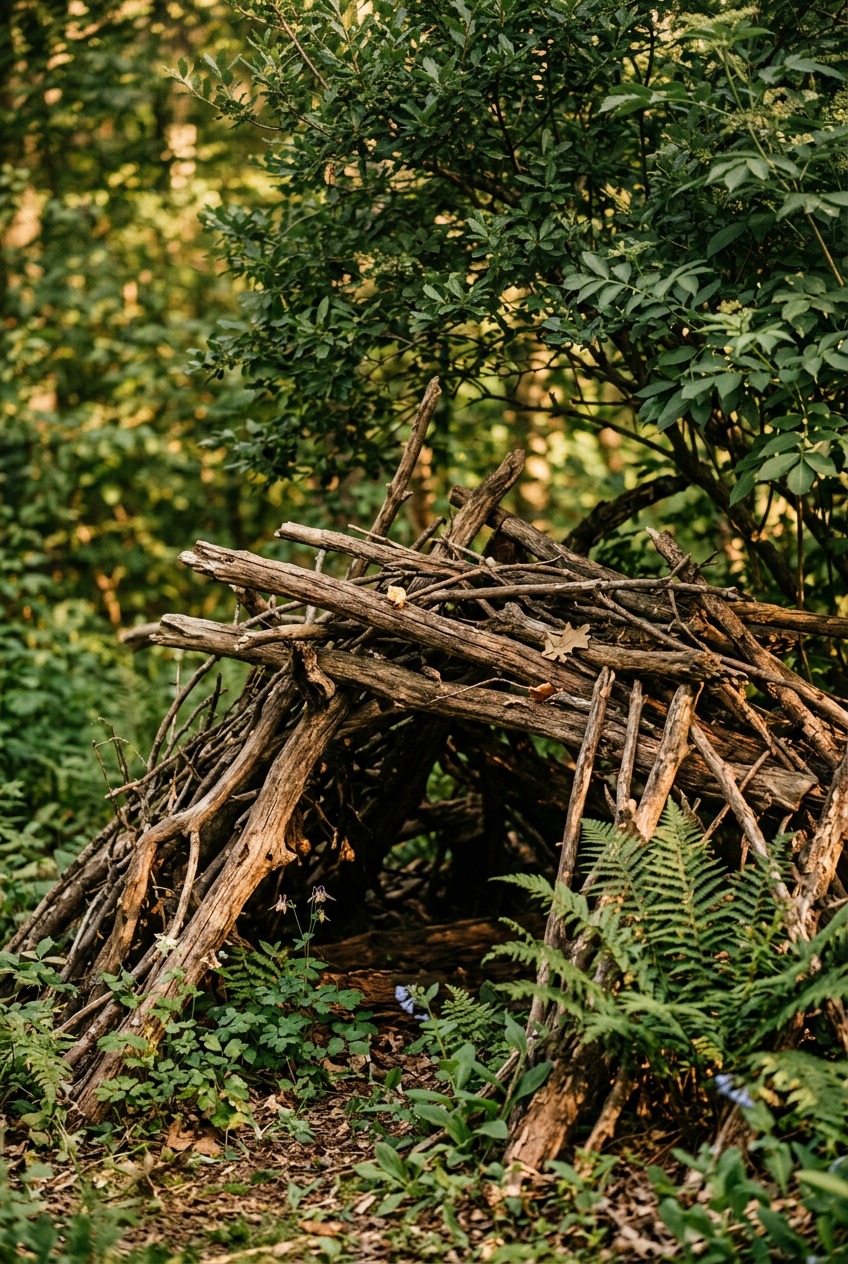
Step 3: Create cover areas. Build a brush pile 4x4 feet using fallen branches, or plant dense shrubs like ninebark (Physocarpus opulifolius) or viburnum (Viburnum dentatum). Cover protects wildlife from predators and weather.
Step 4: Establish nesting sites. Install a birdhouse with 1.25-inch entrance hole for chickadees or 1.5-inch for bluebirds. Mount 5-15 feet high. Or plant host plants for butterfly larvae: milkweed for monarchs, dill for swallowtails, native violets for fritillaries.
Quick Tip: One large oak tree (Quercus species) supports 500+ caterpillar species and counts as food, cover, and nesting in one plant.
Step 5: Use sustainable practices. Eliminate chemical pesticides and synthetic fertilizers. Compost yard waste. Reduce lawn area by 25-50% and replace with native plantings. Use rain barrels or rain gardens for water management.
Step 6: Document your habitat. Take photos of each element. Sketch a simple site map showing plant locations, water sources, and shelter areas. Note plant species names and installation dates.
Step 7: Apply for certification. Visit nwf.org/garden and complete the online application. Upload photos and site description. Certification arrives by email in 2-4 weeks. Optional yard sign costs additional $30.
What to Watch For
Water sources need weekly cleaning in summer. Algae builds up fast in temperatures above 75°F. Scrub with a brush and refill with fresh water.
Native plants may look sparse the first year. Root systems develop before top growth. By year two, expect 200-300% size increase and better wildlife activity.
Certification doesn’t require a large space. A 10x10 foot corner with three native perennials, a birdbath, and a small brush pile meets all requirements.
From my experience: I certified a 400-square-foot side yard in Zone 6 with just five native plants (two coneflowers, one Joe Pye weed, one goldenrod, one serviceberry shrub), a $25 birdbath, and a brush pile made from pruned branches. Cost $80 total, not counting the certification fee. Cardinals nested in the serviceberry the second spring.
Make It Your Own
Scale down for small yards. A container garden with native plants on a balcony can qualify. Use a 12-inch diameter pot with Rudbeckia hirta, add a shallow water dish, and install a small bee hotel.
Scale up for larger properties. Create multiple habitat zones: sunny meadow area with grasses and wildflowers, shaded woodland edge with ferns and native shrubs, wet area with cardinal flower (Lobelia cardinalis) and swamp milkweed (Asclepias incarnata).
Regional plant swaps: Replace suggested species with local natives. Check your state’s native plant society for zone-specific recommendations. University extension offices provide free lists of native plants that support the most wildlife species in your area.
Before You Start
Budget $100-300 for basic setup including plants, water source, and certification. You’ll spend less if you already have some native plants or can source free materials for shelter (fallen logs, rock piles, pruned branches).
Timeline runs 8-12 weeks from planning to certification. Spring installation (April-May in most zones) gives plants a full season to establish before winter. Fall planting works in Zones 7-10 where winters stay mild.
Certification is permanent once granted. You don’t need to reapply annually. The habitat designation stays with the property even if ownership changes, though new owners can update the registration.
FAQ
What’s the minimum yard size for wildlife habitat certification?
No minimum size exists. Balconies, patios, and small urban yards qualify. You need space for three food plants (can be in containers), one water source, and one shelter element. A 10x10 foot area meets all requirements if planned well.
How many native plants do I need for certification?
Three native plant species minimum, but more diversity attracts more wildlife. Aim for plants that bloom or fruit at different times: spring (serviceberry), summer (coneflower), fall (aster), winter (winterberry holly). Each additional species increases your habitat value.
Can I get certified if I have pets or use my yard regularly?
Yes. Pets and human activity don’t disqualify you. Wildlife adapts to yards with regular use. Place water sources and nesting areas in quieter zones away from high-traffic paths. Many certified habitats include play areas, vegetable gardens, and active lawn spaces alongside wildlife zones.