Every yard has a spot that looks useful until the sun hits it. The patio table gets abandoned after lunch. The deck steps are too hot. The play corner works in the morning and turns miserable by midafternoon.
A shade sail is not a full backyard renovation. That is the point. It is a small, practical way to test whether shade is the thing your outdoor space has been missing.
Use a shade sail where heat is changing behavior: the table nobody uses after noon, the deck steps that burn feet, or the play corner that only works in the morning. Cover the use zone first, not the whole yard.
The Sunny Spot You Keep Avoiding
The clearest sign you need shade is not the temperature. It is behavior.
If everyone drags chairs to the fence line, avoids the table after noon, or only uses the patio once the sun drops, the layout may not be the problem. The space may just be too exposed during the hours you want to use it.
The light labels are more precise than they sound. Penn State Extension’s guide to tough planting sites defines full sun as six or more hours of direct light, part sun as four to six, part shade as two to four, and shade as under two. A spot that is already clearing six hours by early afternoon is the one a sail actually fixes. A spot in part shade may only need a chair moved.
Shade also protects the little things that make a patio feel pleasant: cold drinks, outdoor cushions, potted herbs, kids’ toys, and bare feet on a hot surface.
If the space is small, combine shade with small patio ideas when you barely have room so the cooler spot still has a clear path.
Why Shade Sails Work So Well for Awkward Backyards
Umbrellas are useful, but they need floor space and a heavy base. Pergolas are beautiful, but they are expensive and permanent. A shade sail sits in the middle: affordable, flexible, and good for odd corners.
It can stretch from a wall to a post, from two trees to a fence-side anchor, or over a narrow side patio where an umbrella would be in the way.
If you already have a tree doing that job, use it. How to build an outdoor reading nook under a tree covers what to put under the canopy once the shade is free.
The best shade sails do not cover the whole yard. They cover the place where heat stops people from using the yard.
That same question of where the shade actually falls is what decides the perfect backyard hammock spot , which is worth working out before you sink a post anywhere.
Where a Cheap Shade Sail Helps the Most
Start with a use, not a shape.
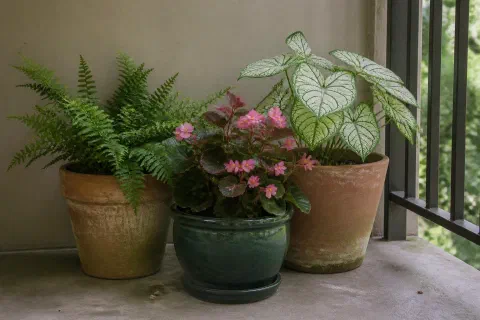
Good shade zones include a small dining table, a grill prep surface, a sandbox or water table, a pair of chairs, a container garden that wilts too fast because containers in full sun dry out faster than plants in the ground , or the doorway where the sun blasts into the house.
If you have a future party or cookout coming up, shade the place guests will stand with plates. For more hosting context, pair this with backyard dinner party checklist for hosting without stress or backyard BBQ zones for a crowd .
Triangle, Rectangle, or Shade Cloth: Which One to Buy
Triangle sails look light and are easier to fit into awkward spaces, but they cover less area. Rectangles cover tables and decks better, but they need more careful anchoring. Simple shade cloth with grommets can be the cheapest flexible option for garden zones, greenhouses, and temporary summer coverage.
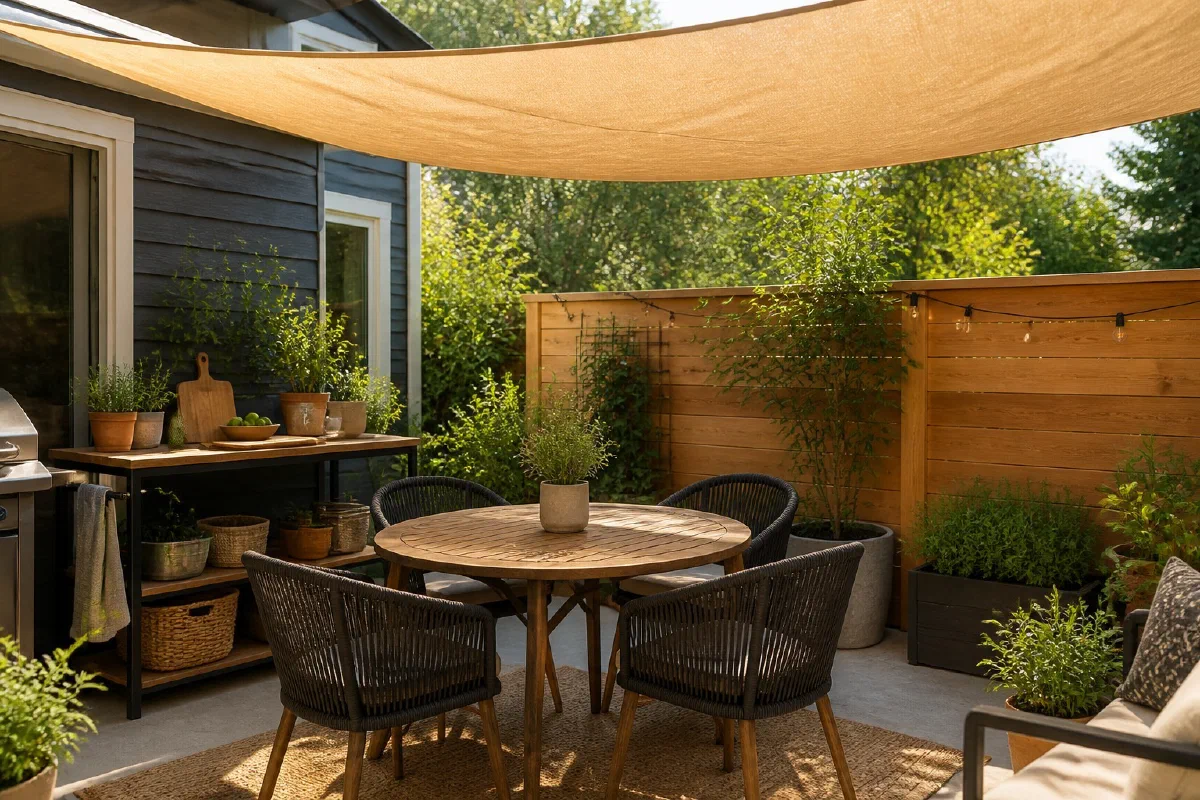
Measure the sun problem, then choose the shape. If the goal is a dining table, rectangle usually wins. If the goal is one hot corner, triangle may be enough. If the goal is a row of plants, shade cloth may be the practical choice.
Choose breathable fabric where heat buildup matters. Waterproof sails block rain but can trap heat and sag if they are not pitched well.
The Install Mistakes That Make Shade Sails Sag
Shade sails need tension and slope. Without both, they droop, flap, and collect water.
Do not hang every corner at the same height. Create a high side and a lower side so rain and debris can move off. Use hardware made for tension, not random rope tied loosely around a rail. Check the anchor points before trusting them in wind.
Most budget shade looks bad because it is too loose. Pull it clean, angle it slightly, and keep the corners balanced.
The afternoon test before you drill: tie the sail up with rope for one full afternoon and sit under it at the hour that actually matters. Move it once if the shadow lands wrong. Permanent anchors are much harder to argue with than a length of rope.
How to Hang a Shade Sail So It Holds Tension
The order matters more than the tools. Hanging the corners one at a time and tightening as you go is how a sail ends up pulling against itself.
- Pick the two strongest anchor points first. A wall stud, a solid post, or a mature trunk. The other two corners can be lighter.
- Set the high corner and the low corner before the other two. The slope between them is what sheds rain.
- Add the tension hardware at the corner, not in the middle of the run. A turnbuckle at each corner lets you pull the fabric tight without re-tying anything.
- Tighten in small steps, walking the perimeter. A quarter turn per corner, then go around again. One corner cranked tight first pulls the fabric out of shape.
- Check the fabric for a shallow dish, not a drum. You want a slight fall toward the low corner and no pocket that holds water.
- Re-tension it after the first rain and again after two weeks. New fabric stretches. The first tightening is never the last one.
How to Make Budget Shade Look Intentional
Pick one quiet color that works with the house: sand, charcoal, warm white, deep green, or a muted stripe. Then repeat that color in one small detail nearby, like cushions, planters, or an outdoor rug.
Keep the area underneath simple. Two chairs, one table, and one plant often look better than a fully decorated corner.
For evening use after the sun problem is solved, string light patio ideas without a pergola can help the shaded spot keep working after dusk.
When a $20 Shade Fix Is Enough and When It Is Not
A budget sail is enough when the problem is one hot zone, one season, or one test area. It is not enough when the anchors are unsafe, the wind is extreme, or the space needs permanent all-weather coverage.
Think of it as a low-cost experiment. If shade makes the patio usable for the first time, you have learned something before spending pergola money.
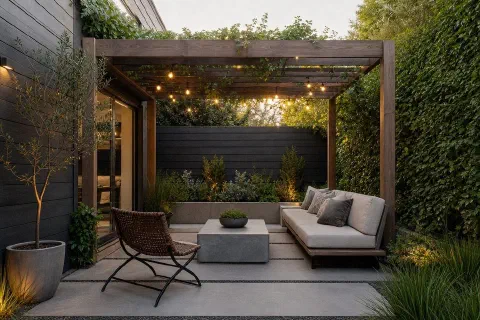
For permanent structure ideas, compare the shade sail test with modern pergola ideas for small backyards and a fire pit pergola .
End-of-Season Care for Shade Sail and Shade Cloth
A sail that comes down dirty in October comes back stained in May.
- Hose it before you fold it. Dust and pollen set into woven fabric over winter and come out as brown streaks in spring.
- Use mild soap and a soft brush only. Harsh cleaners strip the treatment that keeps the fabric from soaking through.
- Let it dry completely, then fold loosely. A sail packed away damp grows mildew, and mildew does not come out of a light-colored fabric.
- Take the hardware in with it. Turnbuckles and anchors last years longer in a shed than on a post through a freeze-thaw winter.
- Walk the anchors once in spring. Wood shrinks, bolts work loose, and a post that felt solid in July can wobble by March.
What I’d Buy First
- A rectangle sail for dining tables and narrow patios.
- A triangle sail for awkward corners and one-chair shade.
- Grommeted shade cloth for garden rows, plant shelves, or temporary summer coverage.
- Proper turnbuckles, anchors, and hardware instead of loose rope.
What to Read Next
- Small backyard patio ideas on a budget because a sail is usually the first line of a bigger patio fix.
- String light patio ideas without a pergola if the shaded corner still needs to work after dark.
- Modern pergola ideas for small backyards for what the permanent version looks like when the sail proves the point.
- Backyard BBQ zones for a crowd when the grill prep space is the spot that gets too hot to stand in.