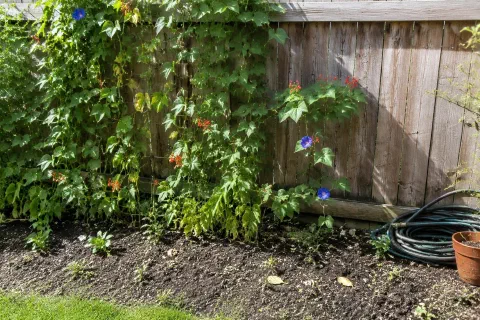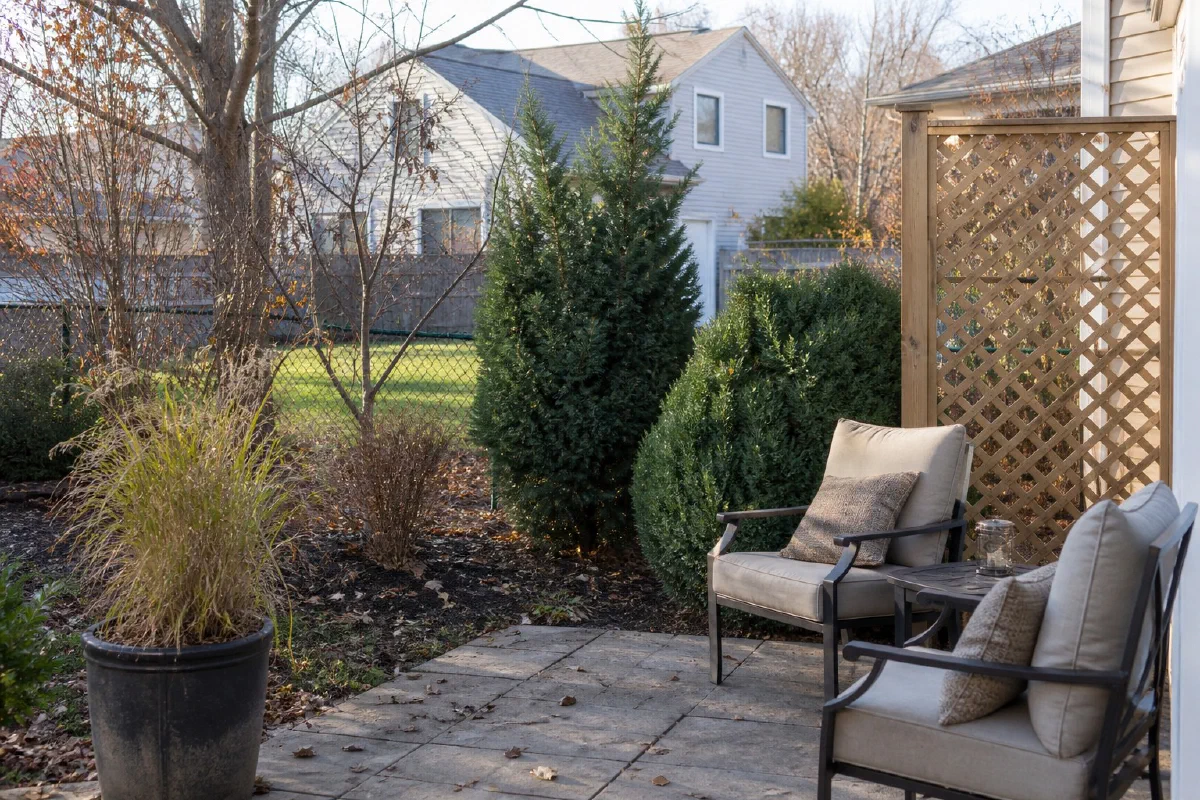
Privacy can disappear in one weekend. The maple drops its leaves, the vine turns to stems, and the chair that felt tucked away in August suddenly faces the neighbor’s kitchen window.
The best backyard privacy after leaves fall does not come from planting a solid wall along every property line. Stand where you sit and mark the narrow view that changed. Block it with the smallest useful combination of evergreen plants, a panel, and a better focal point. Fall reveals the problem; late summer is the better time to plan the work.
| What became visible | Useful short-term fix | Better long-term fix |
|---|---|---|
| A neighbor’s ground-floor window | A panel beside the seating area | A mixed evergreen screen |
| An upper-story window | An overhead element or offset screen | A properly sized small tree or tall shrub |
| A bare fence after vines drop | A trellis panel with winter interest | Layered shrubs in front of the fence |
| The whole yard from the back door | One foreground screen or focal point | A staggered planting that edits the view |
1. Map the Winter Sightline Before You Buy Anything
Start with the chair, doorway, kitchen sink, or path where the loss of privacy bothers you most. Sit or stand at normal eye level and photograph the exposed view. Mark the smallest area that needs to disappear. A gap between two shrubs is a different problem from a second-story window looking over the fence.
The University of Illinois Extension recommends beginning with a base map, then identifying the exact view to screen from inside and outside. That keeps a small problem from turning into an expensive row of plants. A screen that works from the patio may still leave the doorway view open.
2. Put the First Screen Close to the Place You Use
A screen does not have to sit on the property line. In a small yard, a panel or dense planter near the seating area can block more of the view with less height. Hold a flattened cardboard box or sheet where a screen might go, then check it from the chair and house. Move it until the unwanted view disappears without closing in the patio.
This works well for a side sightline into a neighbor’s window or driveway. Leave the walkway open, keep the screen clear of gates, and do not trap someone behind a grill or heater. The chair should feel tucked away, not boxed in.
3. Build a Mixed Privacy Screen Instead of One Long Hedge
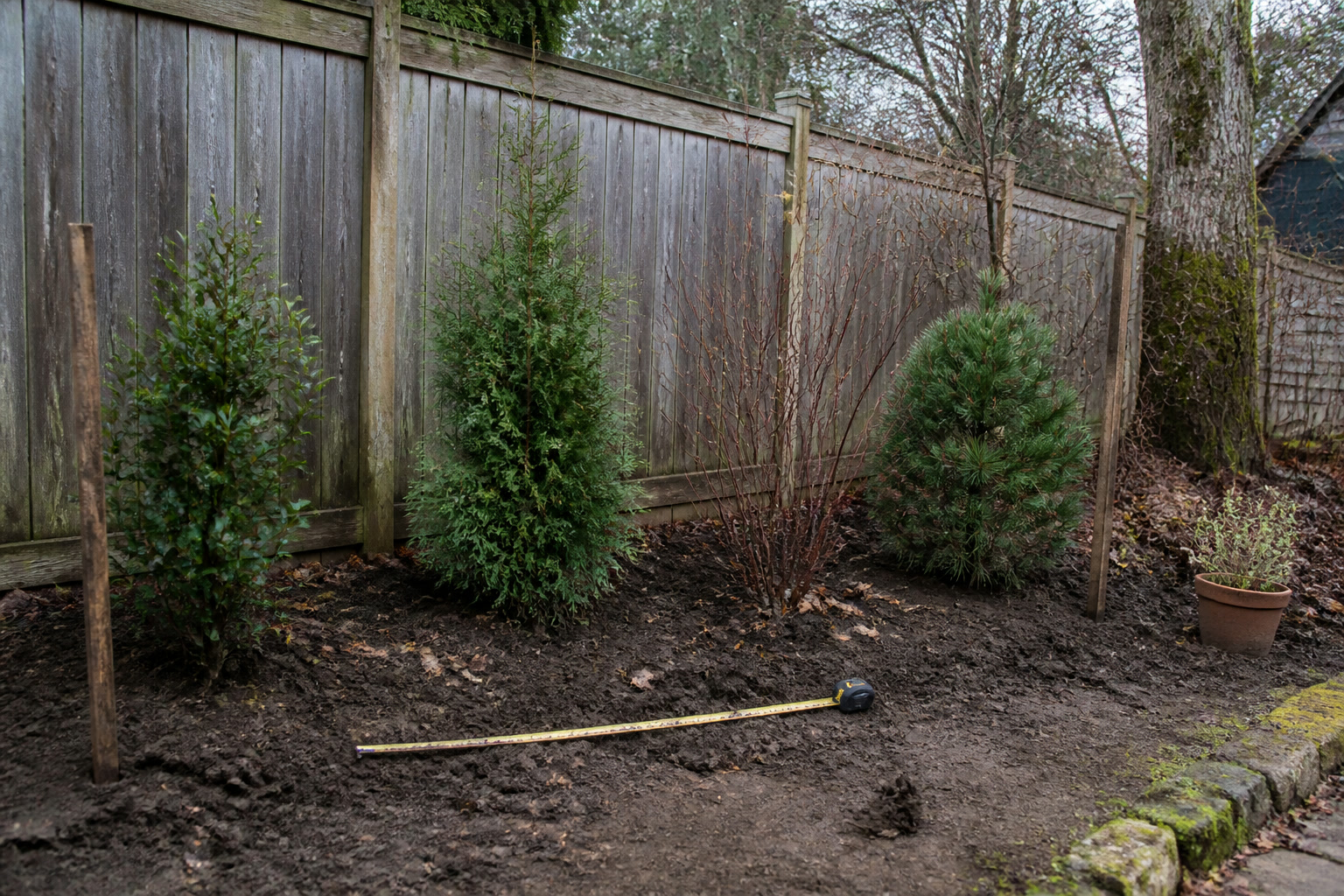
Evergreens create the winter backbone, but a single-species hedge carries a real risk: one pest, disease, or site mismatch can open the entire row. The University of Maryland Extension recommends mixed privacy screens because several species make the planting less vulnerable to one shared problem. The University of Minnesota Extension also advises using multiple species and choosing plants that fit the site’s winter hardiness, soil, and exposure.
Use a staggered group rather than a ruler-straight wall when space permits. Combine one dependable evergreen shrub with a different broadleaf evergreen or twiggy deciduous shrub suited to your region. Ask a local Extension office for choices that tolerate your sun, soil moisture, deer pressure, and cold. A plant that struggles on your site will not provide dependable winter privacy.
4. Measure Mature Width, Not the Nursery Pot
The small shrub at the garden center is not the size you are planning around. Maryland Extension lists American holly at roughly 15 to 30 feet tall and 10 to 20 feet wide, Eastern redcedar at 40 to 50 feet tall and 8 to 20 feet wide, and American arborvitae at 40 to 60 feet tall and 10 to 15 feet wide. Those ranges are a warning, not a shopping list. Each plant still needs the right region and conditions.
Read the mature width on an authoritative plant profile, divide it in half, and leave at least that much room between the trunk and a fence, walkway, or structure unless local guidance says otherwise. Check every overhead utility line too. Penn State Extension’s right-tree, right-place guidance stresses mature height and spread around utilities. Crowding may look private sooner, but it creates competition and harder pruning later.
5. Fill One Immediate Gap With a Panel or Lattice
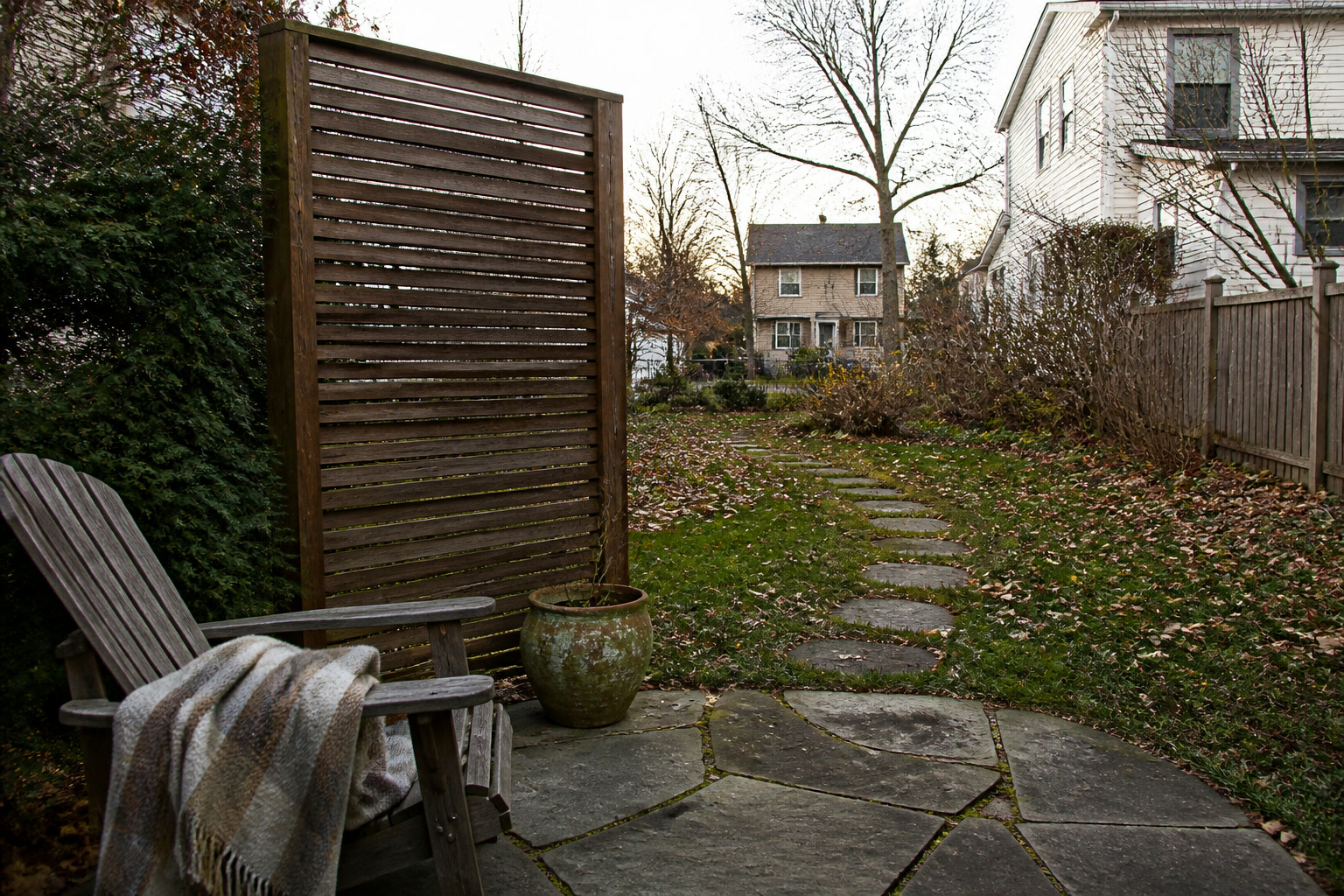
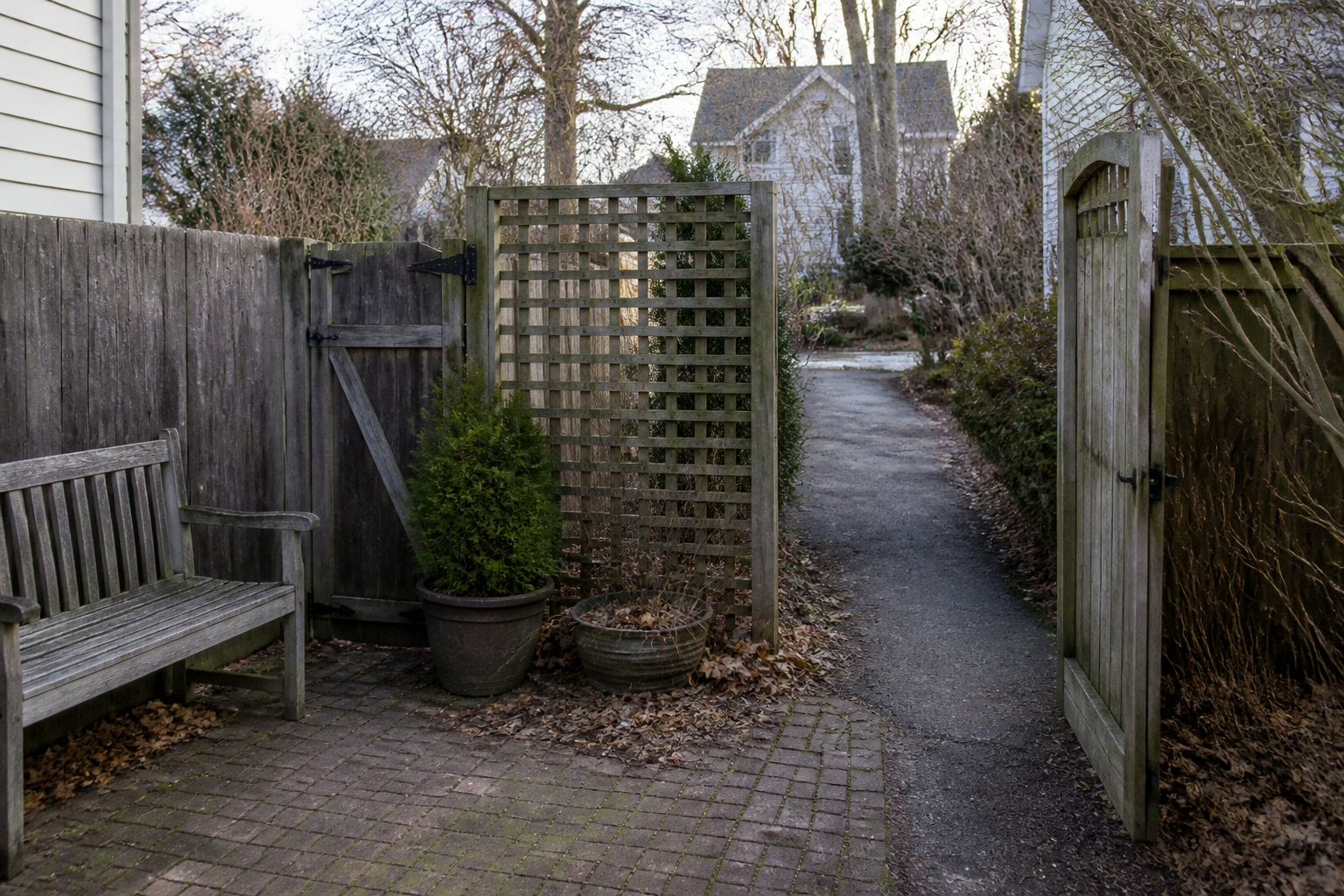
Plants take time. If the sightline is uncomfortable now, use one freestanding outdoor panel, a lattice panel, or a narrow slatted screen. Match its scale to the view instead of defaulting to a full fence. A panel beside the patio may solve a seated view, while an upper window usually needs a taller plant or overhead element rather than a taller solid wall.
Before digging post holes, confirm the property line, fence rules, and any homeowner-association limits. Maryland Extension also advises contacting the local utility-marking service. Do not block a driver’s view, gate swing, drainage route, or needed winter sun. A screen that feels fine in September can cast a long December shadow.
6. Treat Most Vines as Summer Privacy
That lush wall of leaves may be doing more work than you realize. Once a deciduous vine drops its foliage, the stems add texture but rarely hide a person or window. The University of Illinois Extension notes that woody vines can provide winter interest, yet vine choice still has to match the site’s hardiness, scale, and support. Its vine selection guidance also separates plants by how they climb, which matters when you are adding a trellis.
Keep the vine if you love it in summer, but do not count bare stems as the winter privacy layer. Place a narrow evergreen behind the trellis, use a solid-backed panel where permitted, or accept that this part of the yard will be more open for a few months. If a locally suitable evergreen vine exists, verify its mature size and behavior through your regional Extension office before planting it against a shared fence.
7. Redirect the Doorway View With a Winter Focal Point
Sometimes the yard feels exposed because the eye has nowhere else to land. A small evergreen, a pot with cut branches, a simple bench, or a weathered birdbath can hold the foreground while a screen fills in behind it. Put the focal point where it catches the view from the back door, not in the lawn by habit.
This does not replace a screen when a neighbor can see directly into the seating area. It does make a broad, bare winter view feel more composed while you wait for plants to grow. Keep the arrangement believable: one strong shape, enough open ground to walk and maintain the yard, and no collection of tiny objects that reads as clutter from inside the house.
8. Plan Winter Watering and Wind Protection
New evergreen planting can look settled above ground while its roots are still limited. Plan winter watering around local guidance for your soil and weather, and water as needed in fall until the ground freezes. The University of Illinois Extension explains that windy sites can dry evergreens faster, while reflected heat from a wall or fence can add stress.
Do not solve that problem by piling mulch against the trunks. Maryland Extension recommends a two- to three-inch mulch layer kept away from the trunk flare. In a harsh, exposed spot, a burlap barrier on the windward side can reduce winter burn without wrapping the plant into a damp bundle. Check panels after the first strong wind, retighten hardware, and clear leaves from drainage paths. Privacy only helps if the screen stays healthy and secure.
Fall makes the weak point obvious. Fix the exact sightline first, give the long-term plants enough room to become themselves, and let the rest of the yard stay open. The result feels private where it matters without turning a small backyard into a green hallway.
What to Read Next
- Privacy vines that cover a fence in one summer explains which climbers need wire, lattice, or another support before summer growth begins.
- Balcony privacy ideas that do not look cheap helps with screens, planters, and sightlines when the outdoor space is very small or rented.
- Rain garden ideas for the wet spot that never dries is the next read when drainage, not privacy, limits where a new shrub or panel can go.
- A fall backyard corner you’ll still want to use shows how to keep a sheltered seating area comfortable after summer ends.