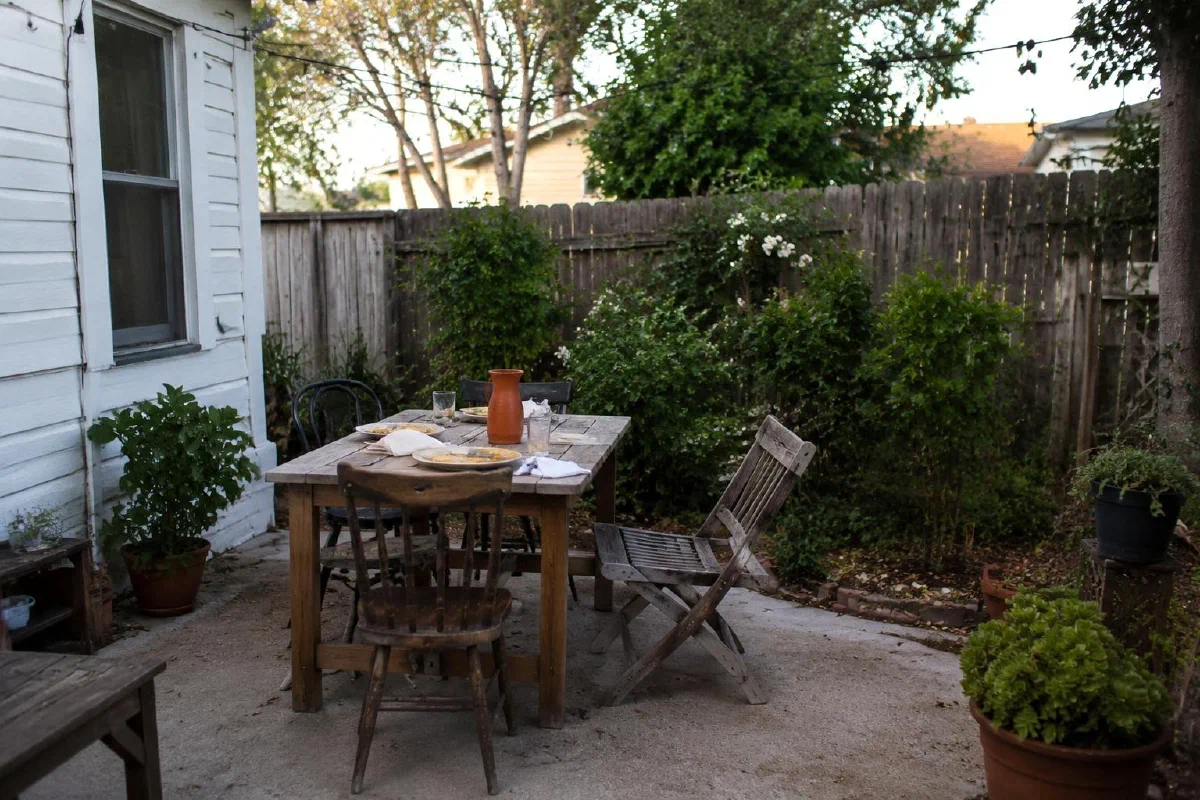
The reason a backyard dinner runs the host ragged is rarely the food. It’s the timing. Everything gets left for the last hour, so the host is lighting candles while the first guests are already pouring their own drinks and wondering where to sit.
A calm host stages light, drinks, and seating before anyone knocks. The work is the same. It just happens earlier, in a fixed order, so the half-hour before guests arrive is a quick walk-through instead of a sprint. This checklist lays out that order, from three days out to the moment you sit down.
Three Days Out: The Quiet Prep
The point of starting early is that none of it is urgent. Three days before, knock out the jobs that don’t depend on the menu.
- Clean the patio. Sweep the corners where leaves and seed pods collect, wipe the table, and hose down cushions if they’re dusty. Cushions need a full sun-dry day, which is exactly why this happens now and not Saturday morning.
- Test the string lights. Plug every strand in and confirm it works. A dead strand discovered at 7pm is a problem; discovered on Wednesday it’s a quick swap. Warm-white LED strands rated for outdoor use hold up far better than the cheap incandescent sets that blow a bulb and take the whole line down.
- Chill drinks and check ice. Glass bottles and cans take longer than people expect to get cold. Two days of fridge time beats a panicked ice run.
- Count your chairs against your guest list. If you’re short, this is when you borrow or pull the indoor dining chairs out, not an hour before.
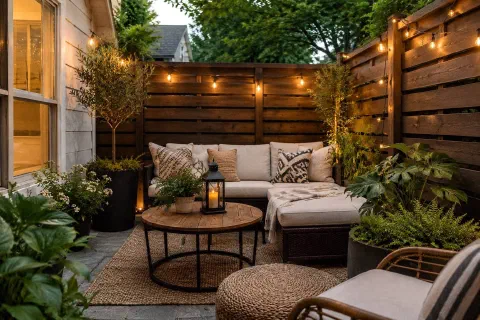
If your patio still feels bare, this is also the moment for a fast refresh using what you already own. A weekend patio refresh you can do with what you already own covers how to fill the space without buying anything new.
The Drink Station: Get It Off the Table
The single best move for a calm backyard dinner is one self-serve drink station, set up away from the food table.
Here’s why it matters. When drinks live on the dinner table, every refill puts a guest right where you’re trying to plate food, and the crowd bunches into one spot. Move drinks to a side table eight to ten feet away and the group naturally spreads out. Guests pour their own. You stop playing bartender.
Keep it simple:
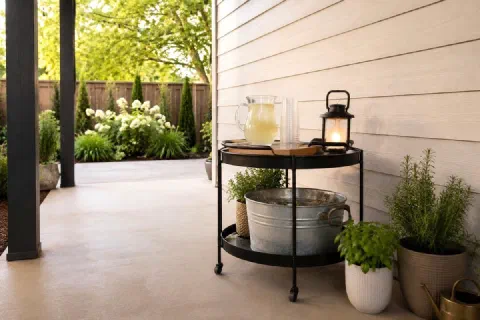
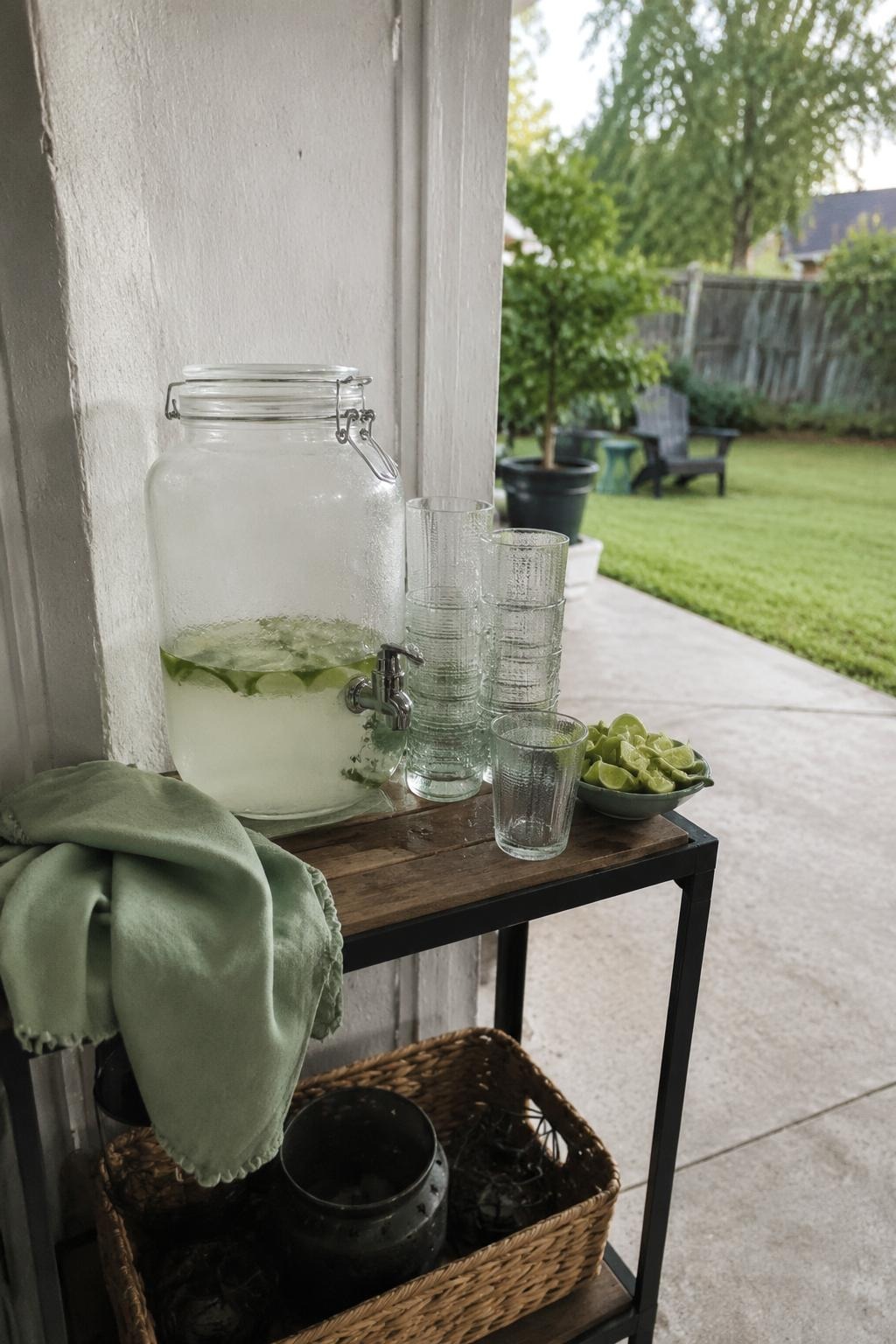
- A glass drink dispenser with one batched drink, iced water or a citrus cooler, so nobody waits on you to mix.
- A stack of everyday tumblers, not your good glassware. Outdoor dinners and stemware don’t mix.
- A bowl of cut limes or lemons, a bottle opener, and a small bin for caps and trash right there.
- One cloth towel for spills. There will be spills.
A wheeled cart works, a small folding side table works, even a sturdy plant stand works. The location matters more than the furniture.
Which Seats Fit, and How Much Room They Need
Most backyard seating problems come down to one number nobody checks: how many chairs actually fit with room to move.
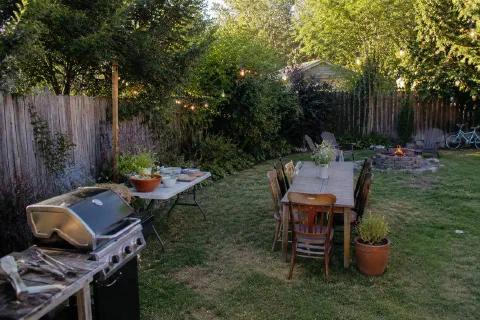
Around a fire pit, plan for one chair per 2 to 3 feet of the seating circle, and keep the chairs 3 feet back from the edge of the pit. NFPA’s fire pit guidance puts a 3-foot zone around the pit for children and pets and asks for chairs at a safe distance, so treat 3 feet as the floor rather than the target. A standard 36-inch fire pit comfortably seats six, not the eight people you optimistically pictured. If you’re working out the dimensions from scratch, fire pit seating area size walks through the exact spacing.
Around a dining table, give each seat 24 inches of table edge and leave at least 36 inches behind the chairs for a walking lane. A lane people can pass through without anyone scooting in is the difference between a relaxed table and a logjam.
| Space | The number to plan on | Why it works |
|---|---|---|
| Fire pit seating circle | One chair per 2 to 3 feet of the circle | People need elbow room, not just a seat |
| A 36-inch fire pit | Six chairs, not eight | The back row stops feeling the heat |
| Distance from the pit edge | 3 feet minimum | Nobody wants their knees at the rim |
| Dining table edge | 24 inches per seat | Plates, glasses, and elbows |
| Walking lane behind the chairs | 36 inches | Someone can pass without anyone scooting in |
Then walk the whole space once and pretend you’re a guest carrying a full plate. Can you get from the drink station to a seat without turning sideways? If not, move a chair. That one walk-through catches every flow problem before it happens.
Lighting: Stage It Before the Sun Drops
The most common dusk mistake is waiting until it’s dark to deal with light. By then you’re fumbling with lighters and extension cords in front of guests.
Layer three sources and set them all in daylight:
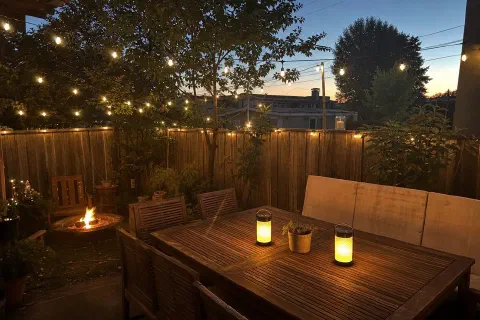
- String lights overhead, hung in a zigzag or a single span across the eating area. Warm-white, 2700K, reads as candlelight, not a parking lot. Cool-white strands kill the mood instantly. DOE’s lighting guidance lists 2700K as warm light for homes and 4100K as the neat, clean, efficient light of offices, which is exactly the gap between the two strands.
- A few lanterns or pillar candles down the center of the table, low enough that people can see across them.
- One light at the edges, a solar stake or a small lantern by the steps and the drink station, so nobody trips in the dark.
Plug the string lights into a smart plug or an outdoor timer set for thirty minutes before sunset. They warm up while there’s still light, so the yard never goes through that awkward dark gap. For a fuller breakdown of layering outdoor light, backyard night lighting for soft summer evenings covers the placement in detail.
The Weather Backup: Have One Before You Need One
A backyard dinner with no rain plan is a gamble. You don’t need a tent. You need a decision made in advance so you’re not scrambling at 5pm.
- Rain plan: know which room moves the dinner indoors, and clear it Friday so it’s ready. A covered porch counts. If a shower is likely, rainy porch ideas for days you still want to sit outside covers how to keep the evening going under cover.
- Wind plan: hurricane-glass candle holders or battery flameless candles instead of open flame, and weight down anything light. A 15 mph breeze turns a paper napkin pile into confetti.
- Heat plan: for a hot afternoon, set the table in the shade pocket that holds longest, usually the east or north side of the house, and keep a pitcher of water at the drink station. A clip-on fan in the corner does more than people expect.
The 30-Minute Reset, Then Sit Down
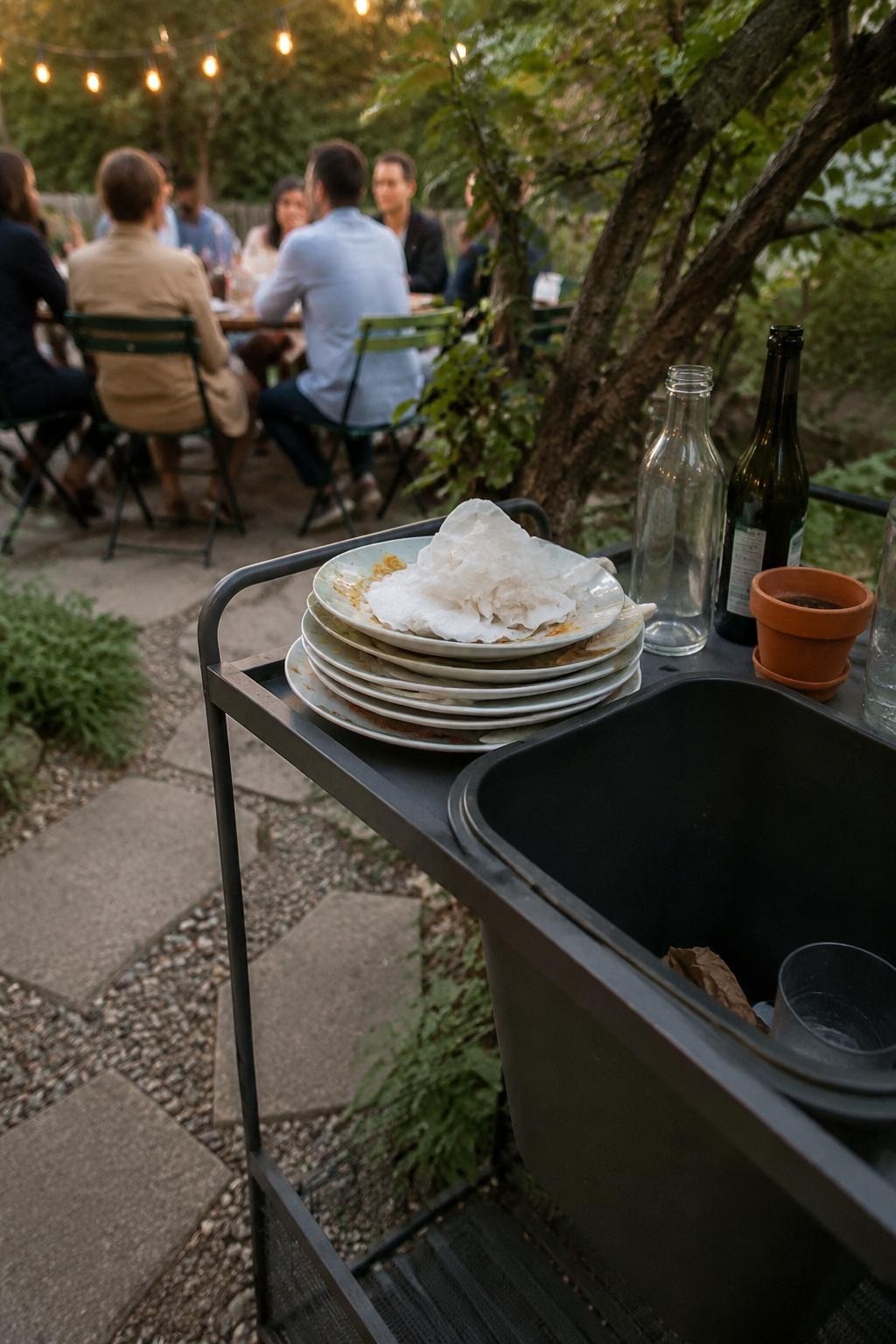
This is the whole payoff of starting early. Half an hour before guests arrive, you do five things and then you stop.
- Top off the drink dispenser and refill ice.
- Turn on the music, low enough to talk over. If sound has always come from a phone balanced on the rail, patio speakers built for weather are the one-time fix that ends the fiddling.
- Light the candles and confirm the string lights came on with the timer.
- Set out the dish and trash drop-zone (more on that next).
- Walk the seating lane one last time for a clear path.
Then you sit down. You greet the first guest with empty hands and a drink of your own, not a serving spoon. That is the entire goal of the checklist.
Keeping Cleanup Off One Person: The Drop-Zone
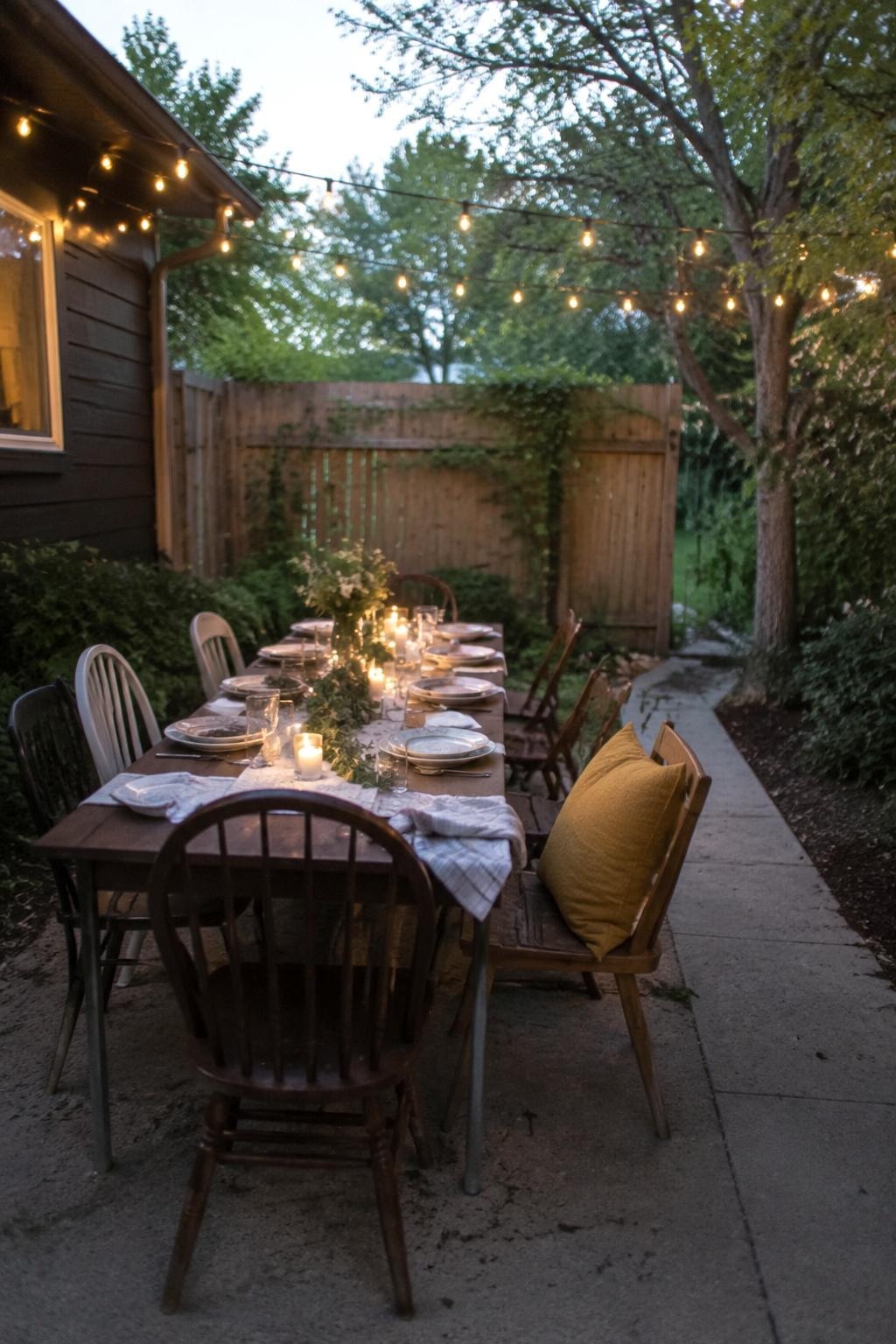
Every stressed-out host forgets the same thing: where the dirty dishes and trash go.
Without a drop-zone, every empty plate and bottle ends up in your hands or stacked on the food table. Set one side cart, a bin, or even a dishpan in a corner before guests arrive, and label it in your head as the spot. Dirty dishes go there, trash and recycling go next to it. Cleanup stops landing on one person, because guests will use it on their own once it exists.
It’s the smallest line on the checklist and the one that saves the evening. A bus tub or a deep plastic bin under the side table costs almost nothing and disappears when you don’t need it.
The Order of Operations, Taped to the Fridge
Here’s the whole sequence in the order it actually happens, short enough to print and tape inside a cabinet door:
- Three days out: clean the patio, test the string lights, chill the drinks, count the chairs.
- The day before: clear the rain-backup room, prep the drink batch, set out serving pieces.
- Two hours out: set the table, fill the drink station, position the dish drop-zone.
- Thirty minutes out: ice, music, candles and lights on, walk the seating lane.
- Guests arrive: you’re sitting down with a drink.
A backyard dinner doesn’t need a bigger yard, new furniture, or a themed table. It needs the work spread across a few days instead of crammed into one frantic hour. Stage light, drinks, and seating before anyone arrives, give cleanup a home, and the same backyard you already own reads like a real outdoor dining room by the time the first guest walks in.
What to Read Next
- Why every backyard needs a fire pit evening for the one feature that keeps people lingering well past dessert.
- Thanksgiving table ideas for a small space when the table itself is the next thing you want to sort out.
- Backyard night lighting for soft summer evenings if three light sources are not as far as you want to take it.
- Best outdoor patio speakers for ending the phone-balanced-on-the-rail problem for good.