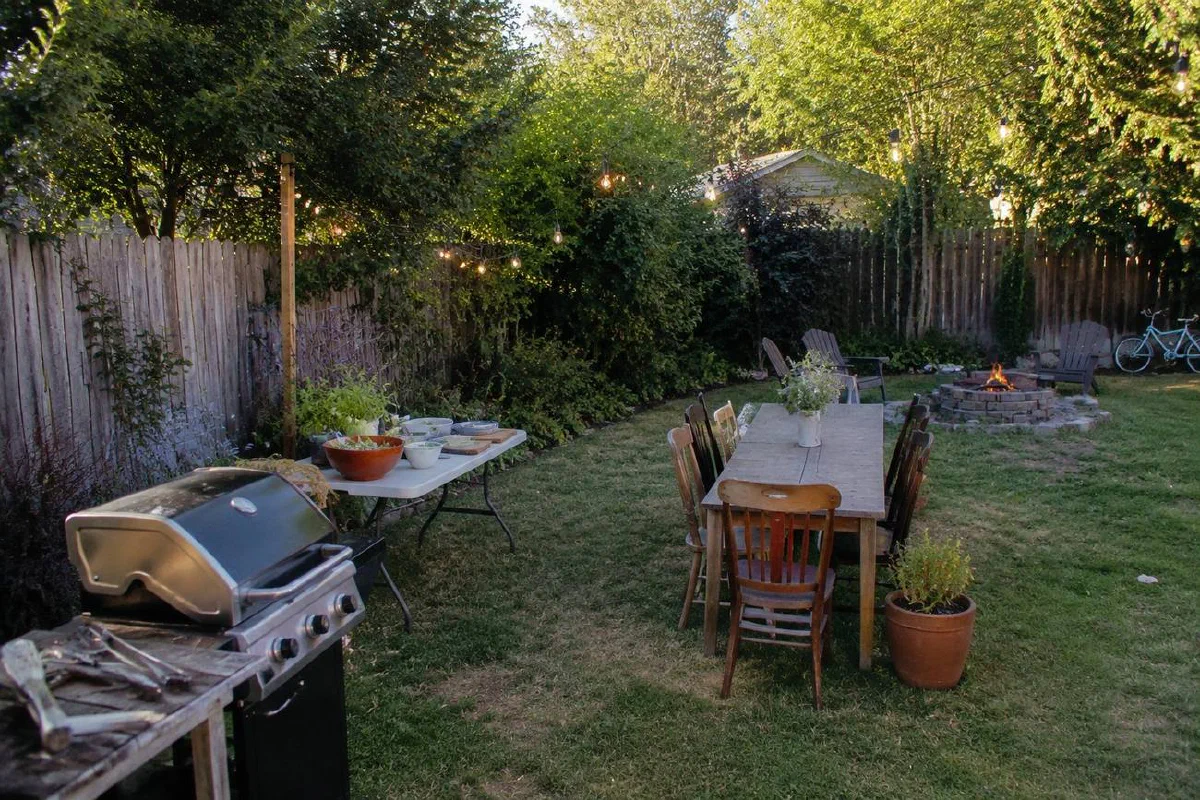
The reason many backyard cookouts feel cramped is that the grill, drinks, and guest traffic all meet in one place.
A backyard that hosts a crowd well gives the cook room to work, moves drinks away from the grill, and keeps the eating area out of the smoke. The seven zones below help you sketch a route from the back door to the grill, drinks, seats, and cleanup. Scale each one to the yard you actually have.
These seven zones cover what a real backyard BBQ actually needs. Most homes don’t have room for all seven at full size; you don’t need to. Even a token version of each zone (one stool, one tray, one shaded corner) does the work.
Which Zones to Combine First
| Your yard | Zones that get full size | Zones to combine |
|---|---|---|
| Tight patio with one clear walking route | Drink, eating, cleanup | Keep prep beside the cook area and put games elsewhere if there is no safe space. |
| Yard with separate cooking and seating areas | Cook, drink, eating, cleanup | Let lounge seating share the eating area; give kids a visible safe spot. |
| Yard with room for distinct destinations | Cook, prep, drink, eating, lounge, cleanup | Add a separate play area only where adults can see it and it stays away from the grill. |
1. The Cook Zone
The grill plus an arm’s length of counter space on either side.
Most backyard grills sit isolated, with nowhere to put the spatula down, nowhere to rest the platter of raw burgers, nowhere to keep the tongs out of the dirt. A small folding table next to the grill, or a built-in counter on the side, changes the entire experience. The cook stops walking back to the kitchen every two minutes.
The minimum: grill plus a 24-inch side table. The upgrade: a side burner for sauces, a thermometer mount, a paper-towel roll bracket. The aspirational: a built-in outdoor counter with a sink.
Keep guests out of the grill’s working area and follow the grill maker’s clearance instructions for nearby structures and furniture. Smoke and grease do not make good conversation.
2. The Prep Zone
A separate small surface for cutting, marinating, and assembling, not on the grill side.
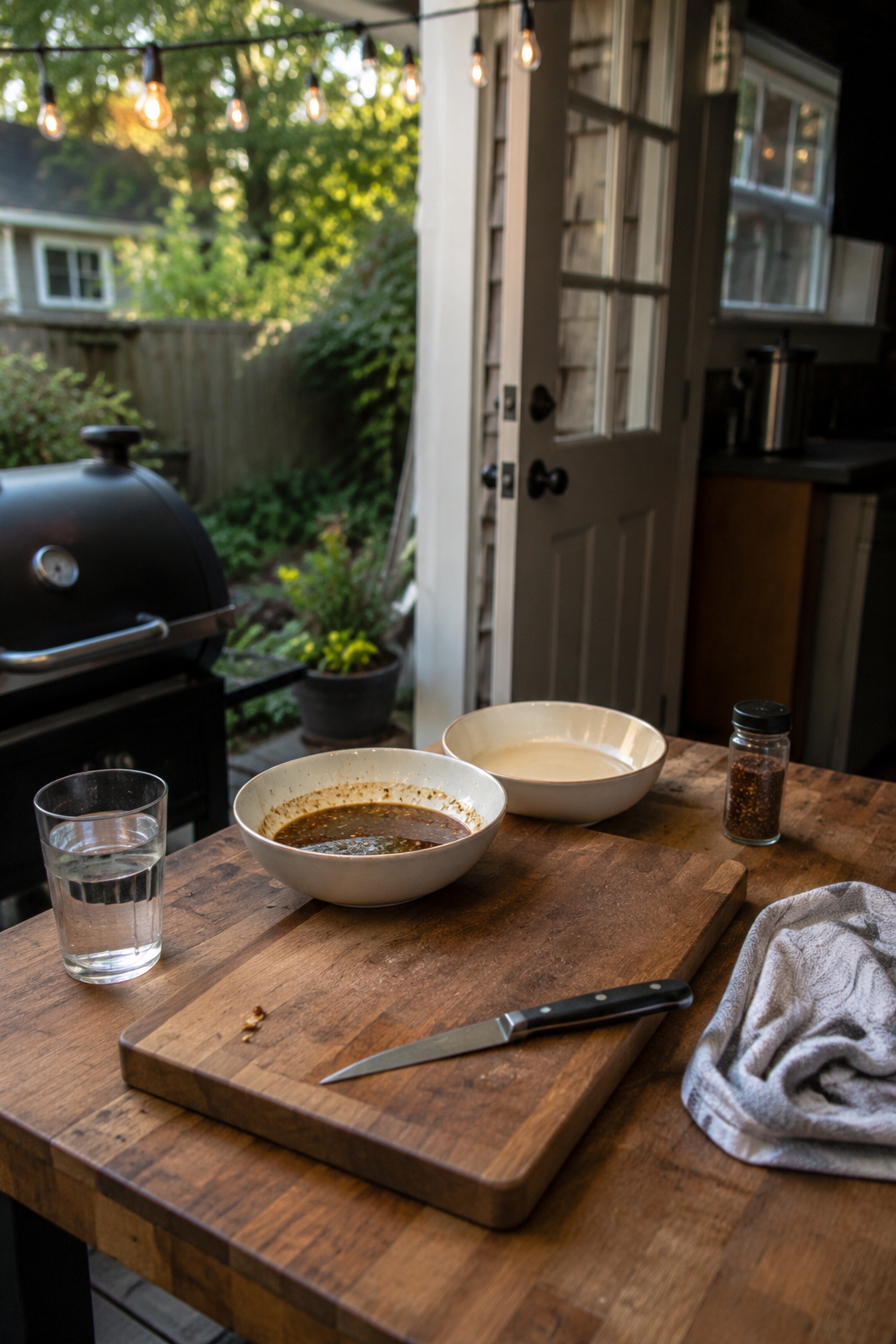
This is the zone most backyards skip. A small prep table near the back door, with a cutting board, a knife, a spice rack, and a couple of bowls, means the cook doesn’t have to keep walking back to the kitchen for every step. It also means the cleanup later has fewer rounds.
A folding card table works. A teak butcher-block cart works. A small portable kitchen island works. Set it where the cook can reach it without blocking the route to the house, while following the grill maker’s clearance instructions.
3. The Drink Zone
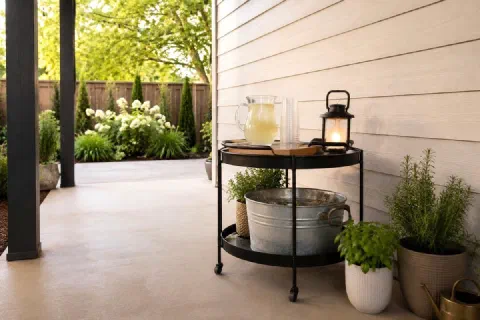
A cooler, a bottle opener, glassware, and a small bar cart, separated from the cook zone so guests serve themselves.
The drink zone is where guests congregate. Put it close to the seating area, far from the grill. A simple wheeled bar cart with a few bottles, a stack of cups, and an ice bucket is enough. For a larger crowd, set up a self-serve cooler with bottled drinks on ice and let guests get their own.
The mistake most hosts make: setting the cooler in the cook’s path. The cook spends an hour saying “excuse me” to people getting beer.
For a Memorial Day or 4th of July crowd, plan for one drink per guest per hour. A 20-person party for 4 hours needs 80 servings. Plan accordingly.
4. The Eating Zone
A table, real seating, and surfaces for plates, not balanced on knees.
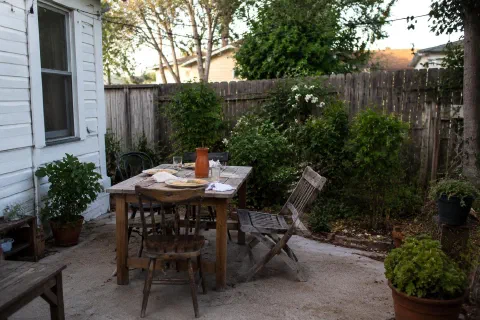
A backyard BBQ where everyone eats with the plate on their lap is a tired backyard BBQ. A table for at least half the guests, plus a few small side tables or stumps for plate-resting, transforms the eating part of the event from awkward to comfortable.
For a 20-person party, plan for 10-12 dining seats. The rest of the crowd will stand and circulate. A long folding table with a cloth turns into a real eating surface; two smaller tables pushed together give visual variety.
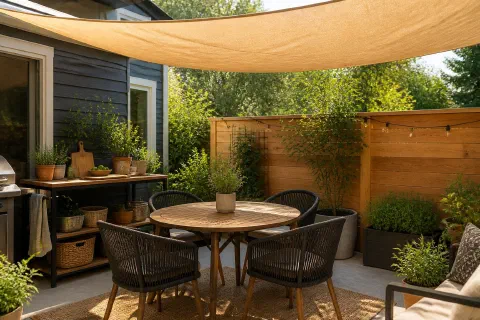
Keep the table out of direct sun if possible. A pergola, a market umbrella, or a shade sail over the dining table is the single biggest comfort upgrade for a summer afternoon party.
5. The Lounging Zone
A sofa, two chairs, side tables, and ideally a fire pit, for the post-meal hours.
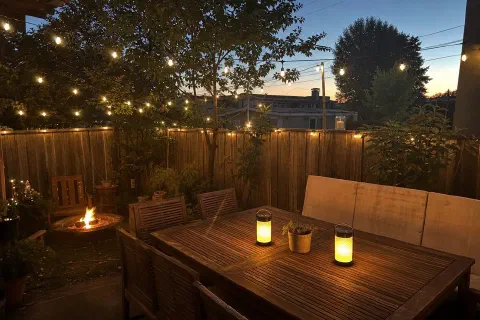
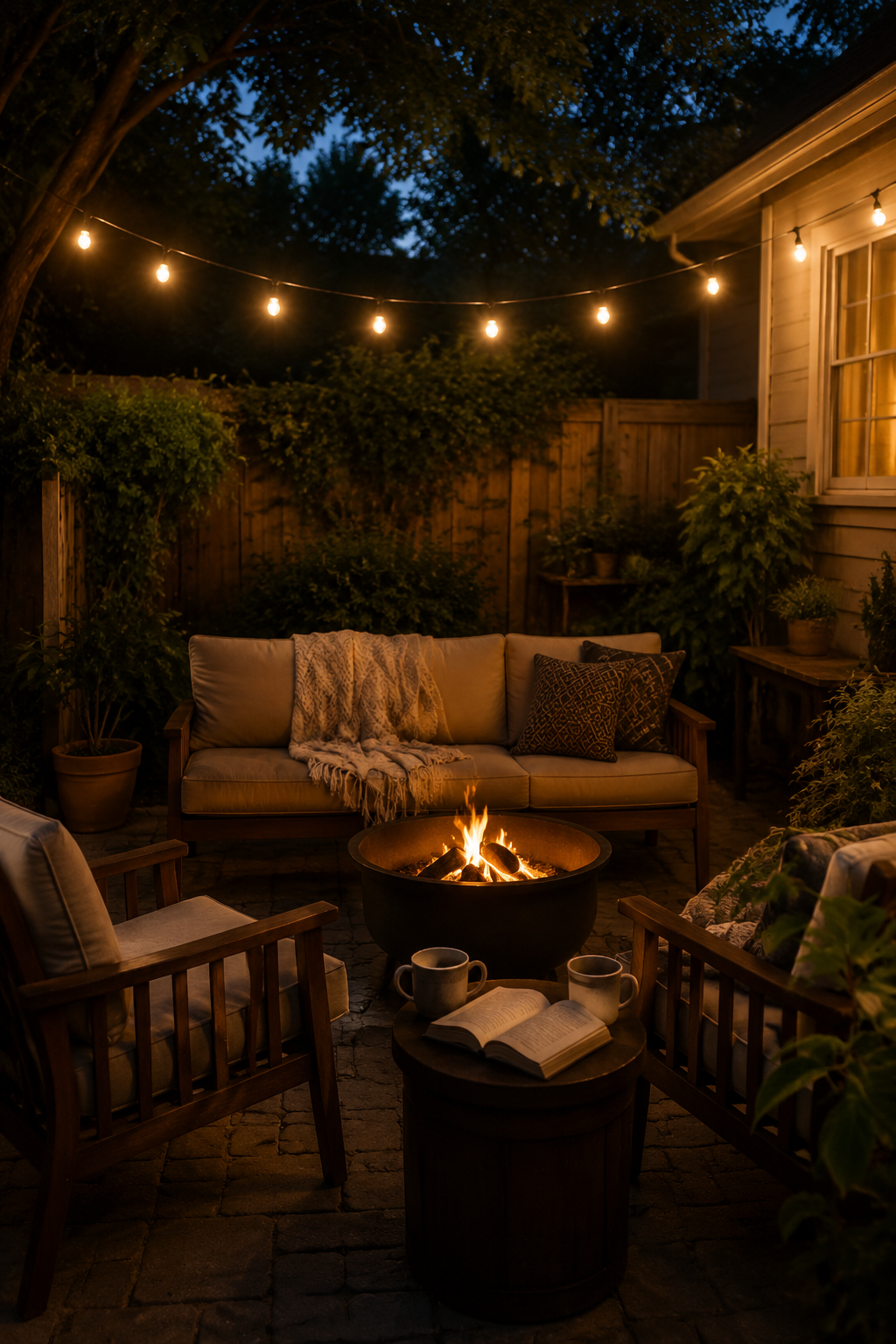
The hours before and after the meal are where guests often linger. A few comfortable seats around a small table give them somewhere to stay once the plates are cleared. Add a fire pit only where local rules, the product manual, and the available clearances permit it.
The fire pit is the anchor. Even in summer, a small propane fire pit gives the post-dinner conversation a focal point and runs hot enough to take the edge off after 9pm. Cushions on the chairs matter; uncomfortable seating empties the lounge zone fast.
Sound belongs in this zone too, not by the grill. A phone propped in a planter gets drowned out the moment twenty people start talking, and a pair of outdoor speakers rated to stay outside through rain puts the music where guests are sitting instead of over the whole yard.
6. The Kid Zone
A shaded area with one activity that lasts more than 10 minutes.
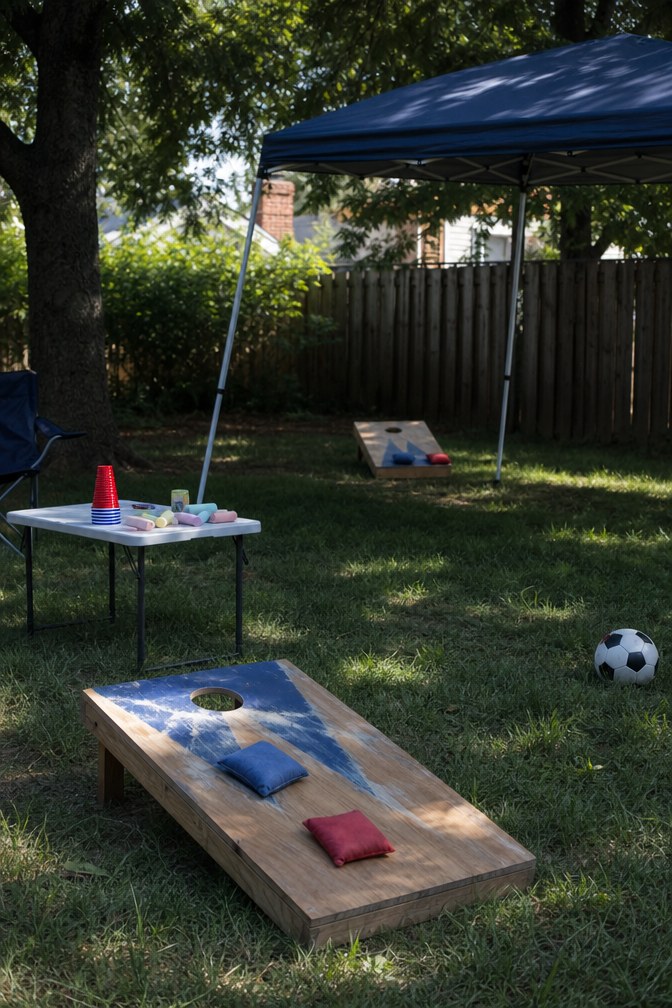
Kids at a backyard BBQ either roam underfoot or congregate in one spot. The second option only happens if there’s something to do. A sandbox, a corn hole set, a sprinkler, a backyard tent, a stack of pool noodles, pick one that fits the age range and the weather and stage it before guests arrive.
Set the kid zone in shade if possible. If the yard has none, compare a properly secured pop-up canopy with moving the games closer to the house; leave enough room for adults to see the play area.
The kid zone also keeps kids away from the grill, the cook zone, and the drink zone, which is half the reason it exists.
7. The Cleanup Zone
A trash can, a recycling can, paper towels, and a place for dirty dishes, staged before guests arrive.
The party that turns into a kitchen full of dirty dishes at 11pm is the party with no cleanup zone. Stage the trash and recycling visibly near the eating zone. Mount a roll of paper towels on a nearby post or wall. Put a plastic tub on a side table for dirty plates so they don’t pile on the dining table.
Hosts often try to hide the cleanup zone. Don’t. Guests will use it if they can see it. They won’t if they can’t.
A small wet/dry vacuum or a leaf blower stays in the garage for the morning-after cleanup, which is a 15-minute job instead of an hour when the trash is already in the right place.
How to Lay Out a Small Yard
For a tight yard with one clear walking route:
- Combine the cook + prep zones along one side, with the grill at one end and prep counter immediately beside it
- Drink zone on a wheeled cart that lives indoors and rolls out for the party
- Eating zone in the center, lounging zone at the far end
- Kid zone in the front yard if the back is too tight
- Cleanup zone near the back door for fast trips inside
Where cooking and seating have separate areas, give drinks and cleanup their own reachable spots. In a larger yard, add another destination only if it shortens the walk for guests rather than scattering the group.
Set them up in this order:
- Stage the cleanup zone first, near the back door, so trash and dirty plates never pile on the table.
- Set the cook zone against a wall, then put the prep surface beside it so the cook stops walking to the kitchen.
- Put the drink zone on the seating side, well out of the cook’s path.
- Arrange the eating zone in the shade, then set the lounging zone at the far end so the party can move after the meal.
- Stage the kid zone last, somewhere you can see it, with one activity ready before guests arrive.
Cook Zone and Fire Pit Safety Rules
Grills and fire pits both count as open flames, and the clearance rules are the part hosts skip.
- Give the grill the same treatment: away from siding, deck railings, eaves, and overhanging branches, with a 3-foot safe zone around it that kids and pets stay out of. The U.S. Fire Administration is where that rule comes from.
- Keep a fire pit at least 10 feet from anything that can burn, and remember that the larger the fire, the greater the distance you need.
- Keep children and pets at least three feet from a fire pit.
- Put the fire pit on a level surface that will not catch fire, such as patio blocks, bricks, or concrete.
- Keep the fire pit away from siding, decks, deck railings, tents, grass, and out from under eaves, overhanging branches, or rooflines.
- Use a fire pit screen so it contains sparks, embers, and ash.
- Keep a hose, a bucket of water, or a shovel with dirt or sand nearby, and never leave an outdoor fire unattended.
- Skip the fire altogether on windy, dry days.
NFPA’s outdoor fire safety guidance is where those numbers come from. It also notes that requirements differ from one community to the next, so a quick call to the local fire department before the party is worth more than guessing on the night.
What Makes the Difference
A backyard BBQ feels professional when the cook isn’t running a 5-mile relay between the grill and the kitchen, the guests aren’t asking where the napkins are every ten minutes, and the kids aren’t bored. Zones solve all three.
The zones do not require seven new purchases. Start with a table you own for prep, a cooler away from the grill, and a visible place for trash. Add furniture only where the route still feels crowded.
FAQ
What’s the most important zone in a backyard BBQ?
The prep zone. It’s the one most backyards skip, and it’s the one that determines whether the cook spends the party at the grill or running between the grill and the kitchen.
How many guests can a small backyard host?
There is no reliable guest count based on patio area alone. Check local occupancy rules where applicable, leave a clear walking route, and make sure guests have enough seating and shade for the length of the gathering.
Do I need a pergola or covered area for a backyard BBQ?
Not required, but shade over the dining zone is the single biggest comfort upgrade for an afternoon party. A market umbrella, a shade sail, or a pop-up canopy all work.
What to Read Next
- A 4th of July backyard setup you can do in one afternoon runs the same zone plan against a single fixed date and a fixed guest list.
- A backyard Belmont Stakes party is the version where the party has a theme, a start time, and a dress code to plan the zones around.
- Summer porch decor with light relaxed layouts handles the porch side, for guests who drift toward the house once the food is out.
- Backyard night lighting for soft summer evenings is what keeps the lounging zone usable after the sun goes down.