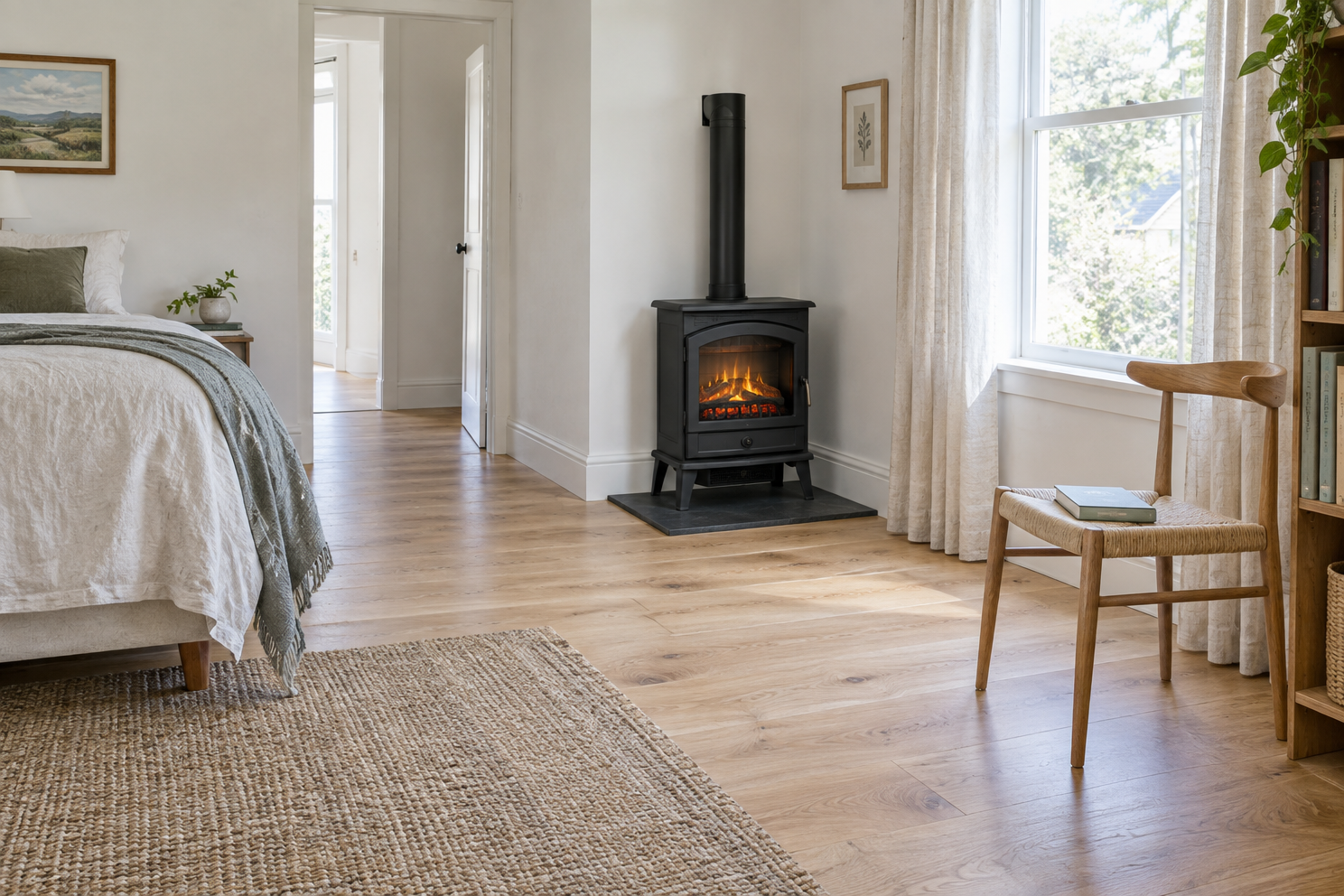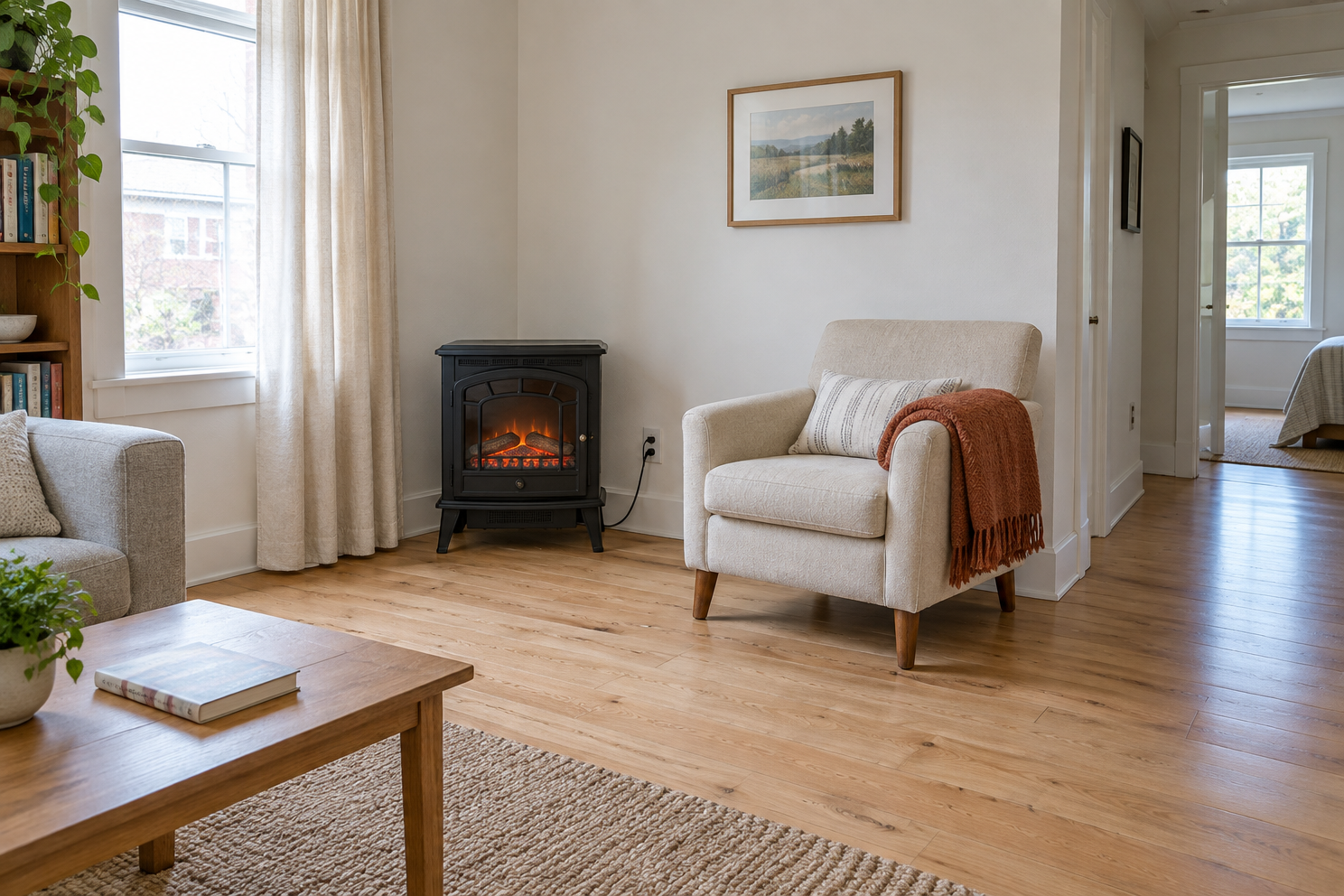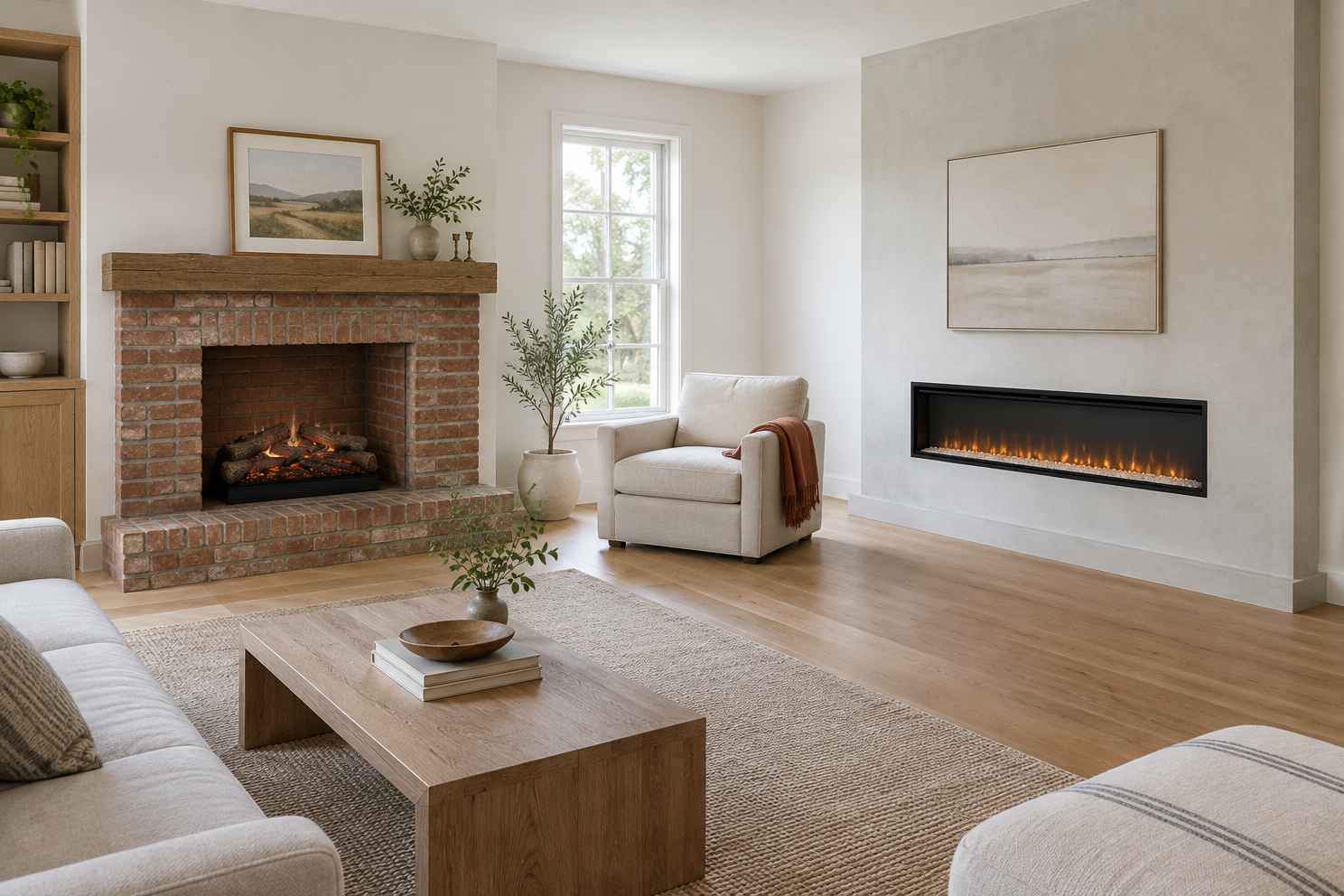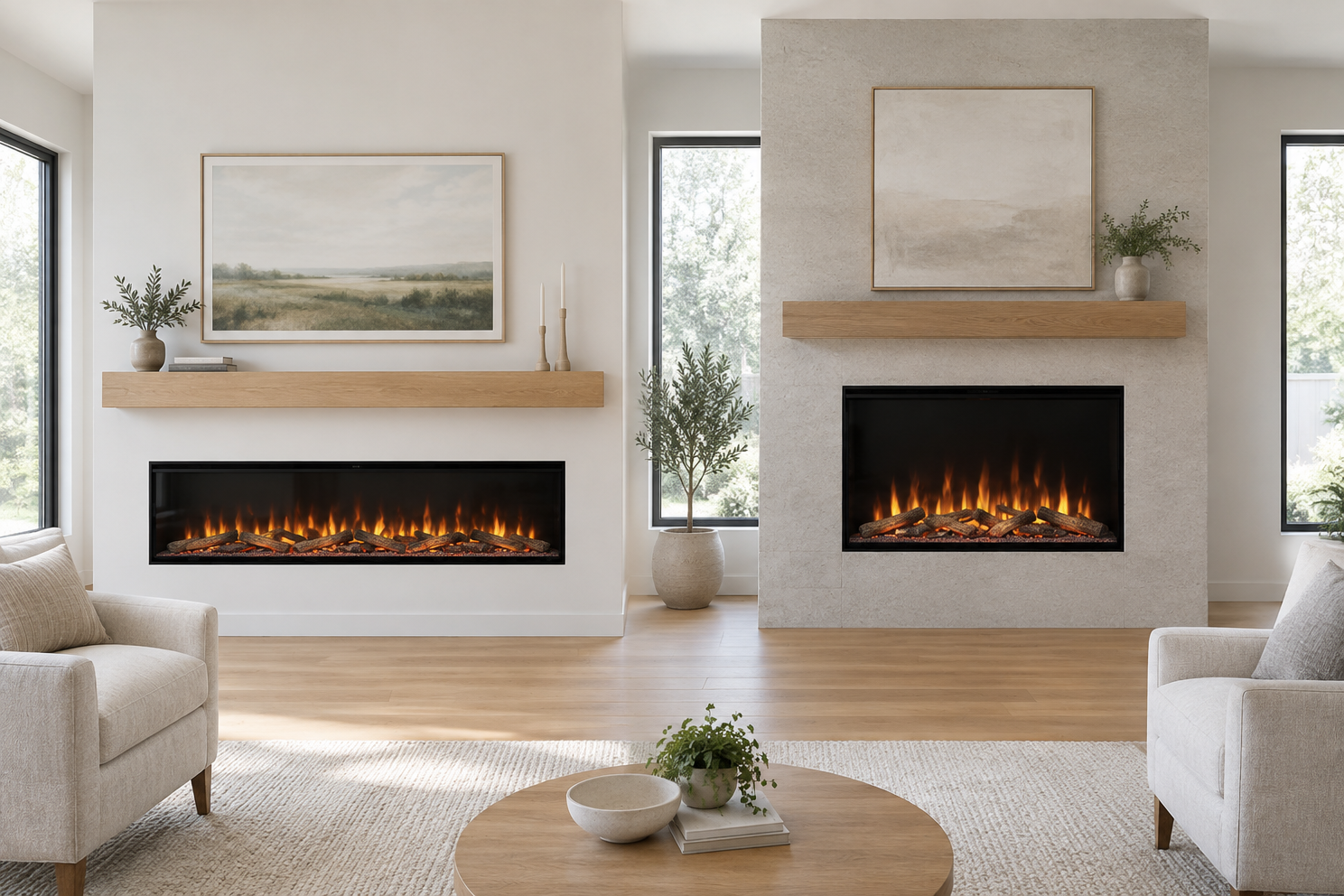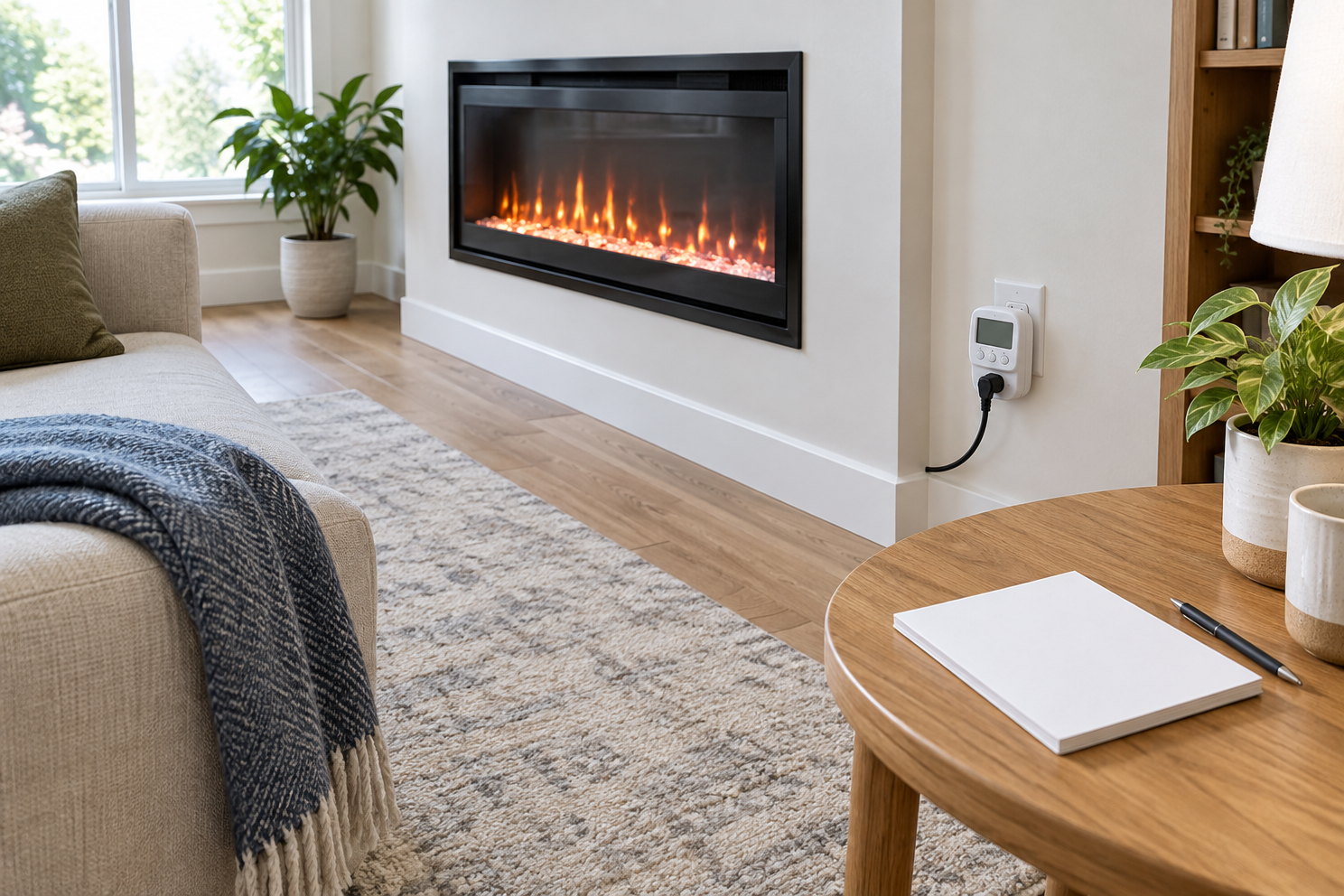
An electric fireplace is not especially expensive by the hour, but daily use adds up. At the U.S. Energy Information Administration’s June 2026 residential average of 18.34 cents per kilowatt-hour, a 1,500-watt electric fireplace costs about 28 cents per hour at full heat. Run it four hours a day for 30 days and the heating cost is about 33 dollars.
Your actual cost is wattage × hours × your utility rate. Flame-only mode uses less power, but the amount varies by model and should not be guessed from the heater’s 1,500-watt rating.
Cost at the June 2026 U.S. Average
| Setting | Power | Cost per hour | 4 hours/day for 30 days | 8 hours/day for 30 days |
|---|---|---|---|---|
| Low heat example | 750 W | 14 cents | 16.51 dollars | 33.01 dollars |
| Typical high heat | 1,500 W | 28 cents | 33.01 dollars | 66.02 dollars |
| 240 V high-output example | 2,500 W | 46 cents | 55.02 dollars | 110.04 dollars |
These are energy-cost estimates, not complete utility bills. Taxes, fees, tiered pricing, and local rates can change the result.
Use This Formula
Cost = watts ÷ 1,000 × hours used × electricity price per kWh
For a 1,500-watt fireplace used three hours at 18.34 cents per kWh:
- 1,500 ÷ 1,000 = 1.5 kilowatts
- 1.5 × 3 hours = 4.5 kWh
- 4.5 × 18.34 cents = 83 cents
To calculate your local cost, find the “price per kWh” or divide the energy-charge dollars by kWh on a recent utility bill. If the bill has seasonal or time-of-use rates, use the rate that applies when the fireplace will run.
What the National Average Does and Does Not Tell You
The U.S. Energy Information Administration reported a June 2026 U.S. residential average of 18.34 cents per kWh. Its Short-Term Energy Outlook forecast about 18.2 cents for the 2026 annual average.
Those numbers are a useful benchmark. They are not your rate. Electricity prices vary widely by state, utility, time of day, and usage tier.
| Your electricity rate | 1,500 W cost per hour | 4 hours/day for 30 days |
|---|---|---|
| 12 cents/kWh | 18 cents | 21.60 dollars |
| 18 cents/kWh | 27 cents | 32.40 dollars |
| 25 cents/kWh | 38 cents | 45 dollars |
| 35 cents/kWh | 53 cents | 63 dollars |
This table is the faster answer if your local rate is far from the national average.
Flame-Only Mode Costs Less, but Check the Manual
Electric fireplaces usually let the visual flame run without the heater. The lights, display, and small motor use much less power than a 1,500-watt heating element. Exact draw differs by product and settings.
Don’t calculate flame-only cost as if the full heater were running, and don’t repeat a generic “three cents an hour” claim without the model’s measured wattage. If the manual lists flame-effect watts, put that number into the same formula.
For example, if a model used 40 watts for flame only, the June 2026 national-average calculation would be:
40 ÷ 1,000 × 18.34 cents = about 0.7 cents per hour.
That is an example, not a claim about every fireplace.
When an Electric Fireplace Can Save Money
An electric fireplace can reduce total heating cost when it lets you warm one occupied room and turn the central thermostat down enough to save more energy than the fireplace uses. This is zone heating.
It works best when:
- You spend several hours in one closed room.
- The rest of the home can safely stay cooler.
- The room is not extremely drafty.
- The central system actually runs less.
- Your electricity rate is reasonable relative to the fuel used by central heat.
It may not save money when the central heat runs unchanged, doors stay open to the whole house, or the fireplace becomes extra heat on top of an already warm room.
The honest test is a utility comparison. Run the room-heating plan for similar-weather days, track fireplace hours, and compare total energy use. Comfort is still valuable, but it should not be mislabeled as savings.
120 Volts vs 240 Volts
Most plug-in models top out around 1,500 watts because of standard 120-volt circuit limits. Premium built-ins may offer a 240-volt mode with more heat.
The Dimplex IgniteXL 50, for example, is listed at 1,500 watts on 120 volts or 2,500 watts on 240 volts. At the national-average rate, full 240-volt output costs about 46 cents per hour, compared with 28 cents at 1,500 watts.
The higher setting can deliver more heat. It does not create cheaper heat. It also requires the electrical installation specified by the manufacturer.
Check current Dimplex IgniteXL 50 specifications
Purchase Price vs Running Cost
A fireplace’s purchase price and hourly heat cost are separate. Two 1,500-watt models cost roughly the same to run on high even if one appliance is value-priced and the other is premium-priced.
Paying more may buy:
- Better flame presentation
- A shallower body
- Longer warranty
- More finish options
- 240-volt capability
- Smart controls
- Better trim and installation documentation
It does not make a 1,500-watt heating element use less energy simply because the fireplace looks more realistic.
This is why our best electric fireplace insert guide separates fit, flame, heat, and budget instead of ranking by price alone.
A Monthly Budget Before You Buy
Use this four-line worksheet:
- Fireplace heat wattage: ___ W
- Expected hours per day: ___
- Expected days per month: ___
- Utility rate: $___ per kWh
Then calculate:
watts ÷ 1,000 × hours/day × days/month × rate
If the result feels high, the useful controls are fewer hours, a lower heat setting, a lower central thermostat during occupied-room use, or flame-only mode. Buying a different 1,500-watt fireplace does not change the high-heat math.
Safety Still Matters in a Cost Discussion
Do not use a smart plug, timer, extension cord, or power strip unless the fireplace manufacturer explicitly approves the device and load. The Consumer Product Safety Commission advises direct wall-outlet connection for electric heaters.
The National Fire Protection Association recommends keeping portable heaters at least three feet from anything that can burn and turning them off when leaving or going to bed.
Saving a few dollars is not a reason to bypass a dedicated-circuit requirement or run a cord under a rug.
Frequently Asked Questions
How much does it cost to run a 1,500-watt electric fireplace for one hour?
At 18.34 cents per kWh, it costs about 28 cents. Multiply 1.5 kW by your own electricity rate for a local answer.
How much per month at four hours a day?
At the June 2026 U.S. average, a 1,500-watt heater costs about 33 dollars for four hours a day over 30 days. A 750-watt setting costs about 16.51 dollars.
Is an electric fireplace cheaper than central heat?
It can be cheaper for one occupied room if the central system runs less. It is usually not cheaper if the central thermostat stays unchanged and the fireplace adds extra heat.
Does flame-only mode use much electricity?
It uses less than the heater, but exact wattage varies. Check the model manual or measured specification and use the same kWh formula.
Does a larger electric fireplace cost more to run?
Not necessarily. Many 36-, 50-, and 60-inch 120-volt units share a 1,500-watt maximum. Wattage and run time determine energy cost, not glass width.
Are electric fireplaces 100 percent efficient?
At the room level, electric resistance heat converts the electricity it consumes into heat. That does not mean it is always the cheapest heating source, because electricity price and the efficiency of alternatives differ.
Bottom Line
At the June 2026 national-average rate, expect about 28 cents an hour for a typical 1,500-watt electric fireplace on high, 14 cents at 750 watts, and 46 cents for a 2,500-watt built-in. The purchase price does not change that wattage math.
Use your bill’s rate, estimate honest daily hours, and decide whether the fireplace replaces some central heat or adds to it. That one distinction matters more than any “energy-efficient” label on the box.