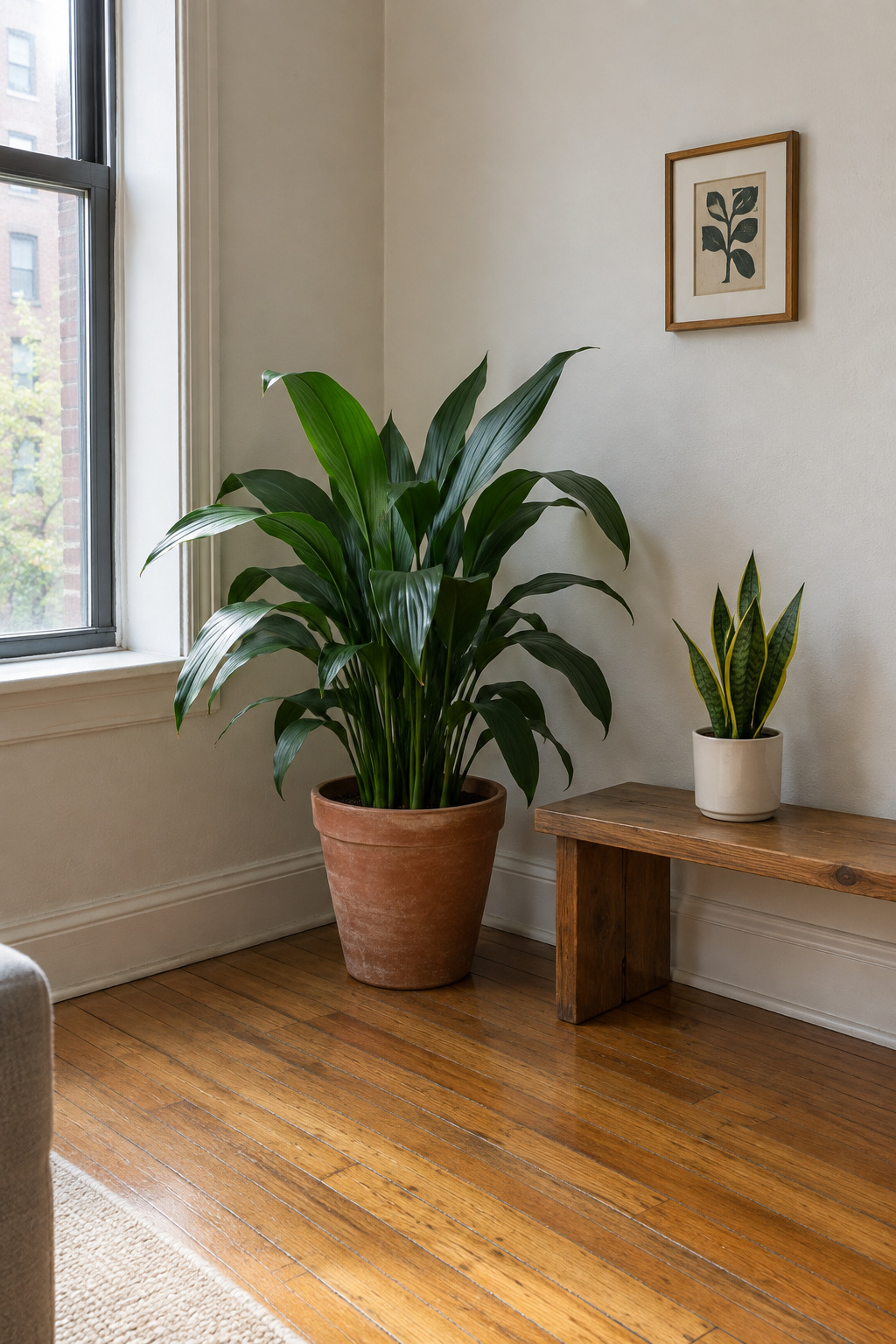
Almost every apartment plant list assumes you have more light than you do and more floor than you have.
So here is the short version before the details.
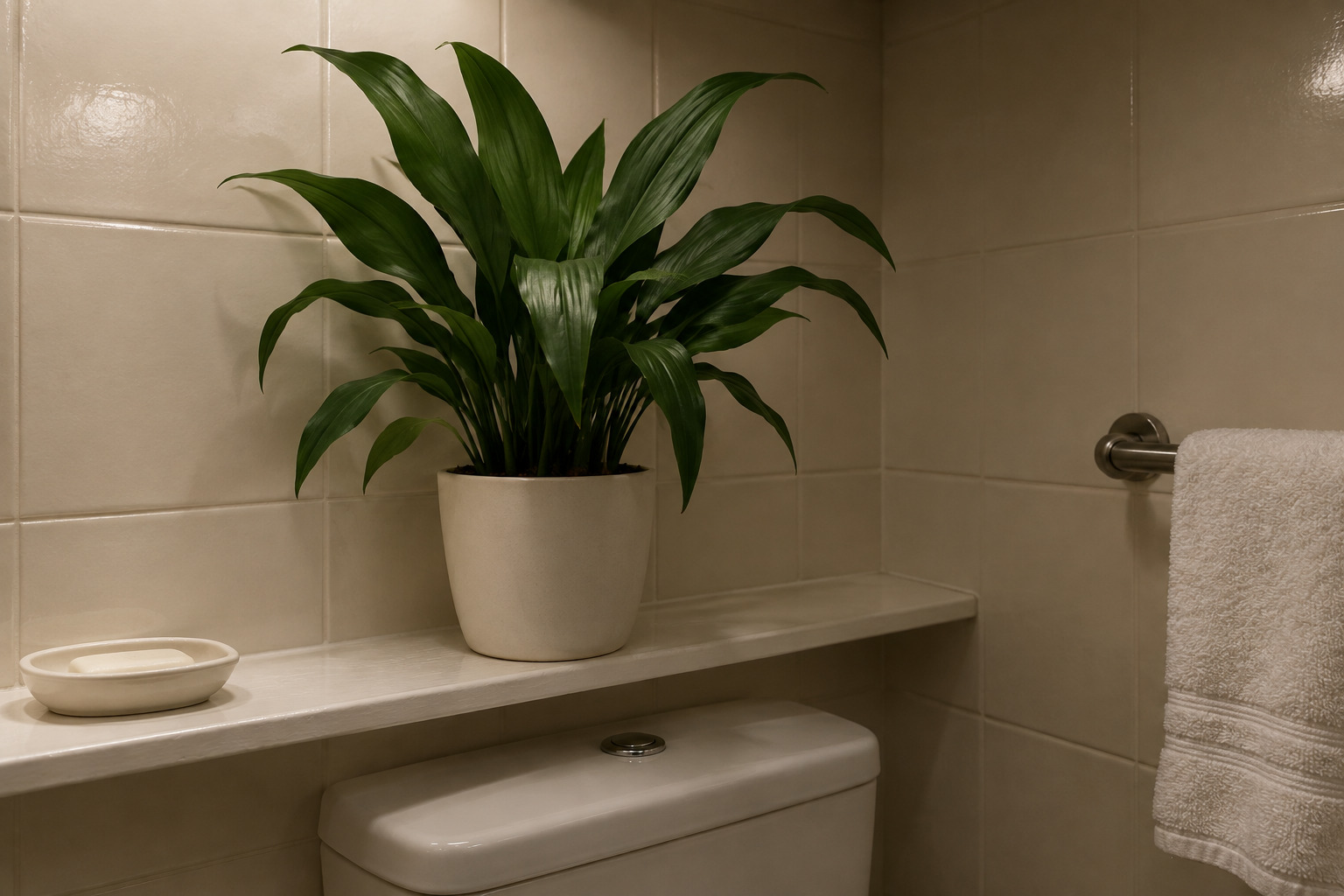
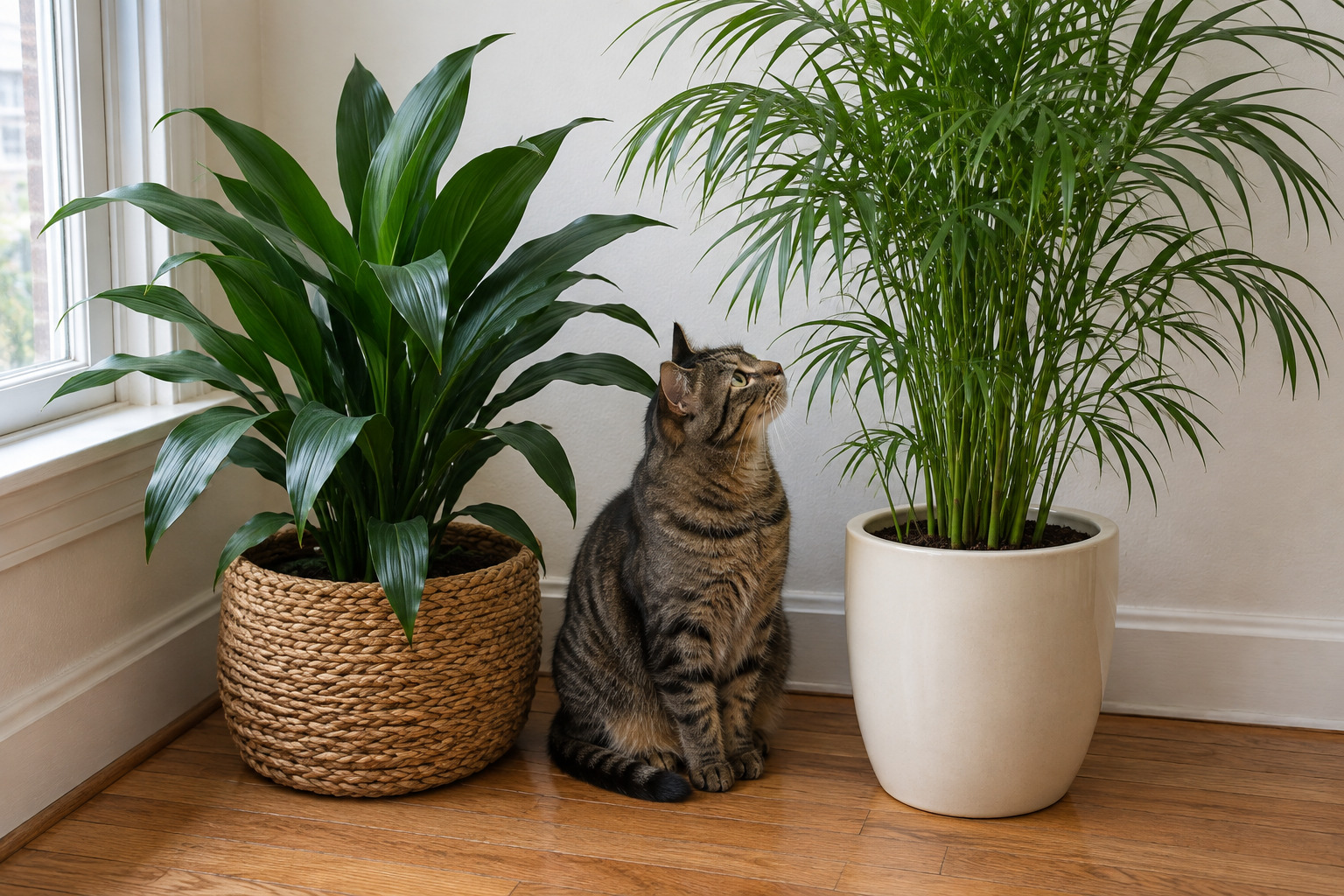
The best apartment plants are the cast iron plant, the snake plant, the parlor palm and pothos. All four hold up in a north window or a few feet back from it, and all four forgive a missed watering. The cast iron plant and the parlor palm are the two the ASPCA lists as non-toxic to cats and dogs; pothos and snake plant are toxic if a pet chews them. In a small apartment, one tall plant plus two small ones is the whole design. A third tall plant is what turns a home into a plant store.
Light decides this, not taste. Start there.
Which Plants Work Where You Actually Have Room
Stand where the pot will go and look at midday. If you cannot see sky from that spot, the light is doing less than the room suggests.
The bands below come from extension measurements, and they disagree slightly. Illinois Extension puts a north window a few feet in at roughly 75 foot-candles, with 150 as medium and 300 as bright. Clemson’s Home and Garden Information Center sets the low-light floor at 100 foot-candles with 75 to 200 preferred, and notes that about 100 foot-candles for 12 hours a day is what it takes just to maintain a plant’s quality for a year. Treat 100 as a checkpoint, not a wall.
| The spot you have | What it measures | Plants that work there | Why, and what to watch |
|---|---|---|---|
| One north window, pot 3 to 4 feet back | Roughly 75 to 100 foot-candles | Cast iron plant (Aspidistra elatior), parlor palm (Chamaedorea elegans), snake plant (Dracaena trifasciata) | All three are on Clemson’s low-light list. Growth is slow, so buy the size you want the room to have |
| One north window, pot on the sill | The brightest spot that window offers | Cast iron plant, parlor palm, African violet (Saintpaulia) | African violet is the one that wants the sill rather than the floor. Keep water off the hairy leaves |
| An east or west window, pot a few feet back | Roughly 150 foot-candles, medium | Spider plant (Chlorophytum comosum), pothos (Epipremnum aureum), African violet | The best light most renters have. Illinois Extension treats a south window up to 5 feet back as high light |
| An interior corner with no window nearby | Under 50 foot-candles, and less in winter | Nothing, long term | Rotate two low-light plants in and out every two weeks, or add a lamp on a timer. A light you switch on for twenty minutes is not a light source |
A south or west window in a sealed apartment gets hot behind the glass, so pull the pot back off the pane. And a low-light corner is not a no-light corner. Every plant here still wants tens of foot-candles, not zero.
How Many Plants a Small Apartment Actually Tolerates
One tall plant plus a couple of small ones. That holds whether your place is 400 square feet or 700.
The reason is geometry. A floor plant’s leaves take up more room than its pot, and the pot is wider than the nursery container you carried home. A cast iron plant runs 1 to 3 feet wide at maturity and a parlor palm’s fronds spread about 2 to 3 feet, according to the NC State Extension Gardener Plant Toolbox. Two of those in a 500 square foot studio overlap, and once two tall plants overlap you are walking around them.
Height is the other half. Three plants all at eye level read as a collection. One tall plant, one trailing plant on a shelf, and one small pot on a side table read as a room. That is the reasoning behind the tall plant rule that a third tall plant is almost always too many.
The layout that works:
- One tall or floor plant, in the corner that is too small for a chair. Something that goes up rather than out.
- One small plant at mid height, on a windowsill, a shelf end, or a stack of two books.
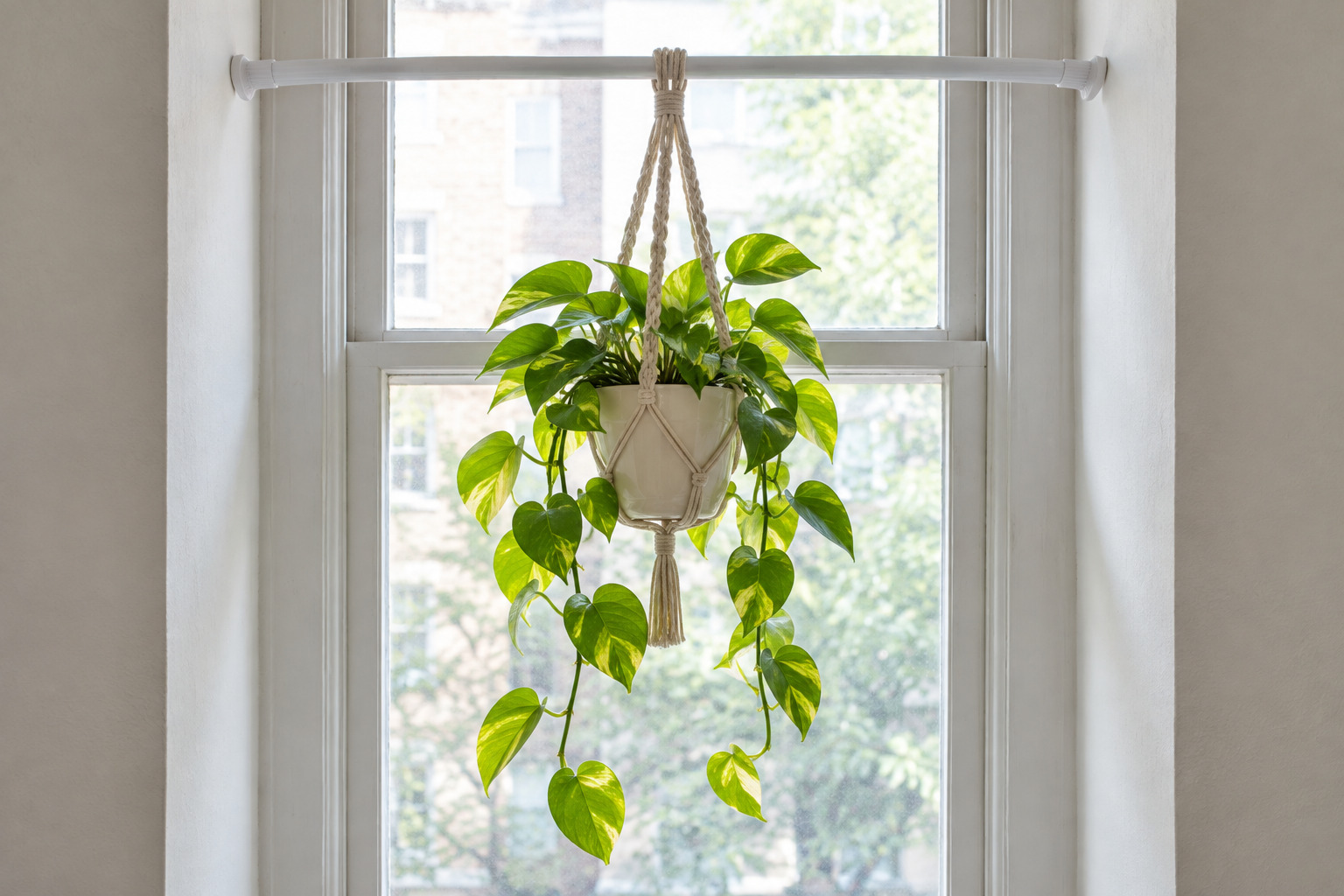
- One trailing plant, on a shelf or hanging from a tension rod, if you want a third. Two is fine.
- Nothing at ankle height. A row of pots on the floor makes a small room feel smaller.
The rental rules that shape the plant plan
You know your lease, so treat this as the general shape rather than legal advice. Most leases say the place goes back the way you found it, which makes a plant hanging from a drilled anchor a repair you pay for later. Three ways around it:
- Go up without drilling. A tension rod inside a window frame, or a hook rated for a watered pot, holds one small hanger. A wet 6-inch pot is heavier than it looks.
- Put the height on furniture. A narrow stand beside a low cabinet gives you the vertical line with a fraction of the footprint. The narrow plant stands for apartment corners comparison covers the widths that fit.
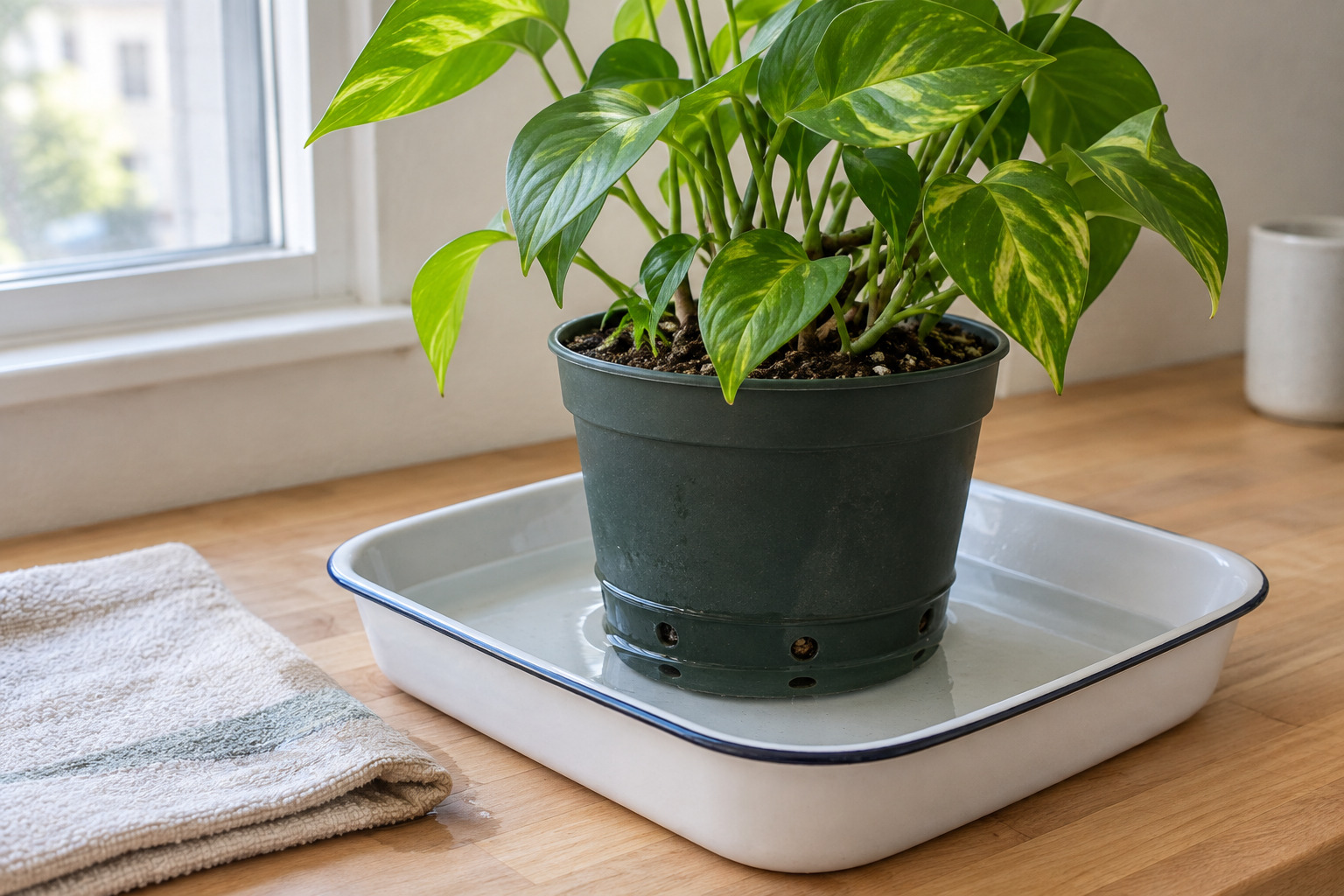
- Keep the nursery pot inside the pretty one. Clemson describes the method and adds the rule people skip: never sit a pot directly on carpet, wood, or furniture, because the moisture underneath damages the surface.
If the corner you are trying to fill gets no daylight at all, the honest options are different ones. Plants for a bathroom with no window covers the rotation and grow-light answer, and hanging a plant without drilling covers the vertical version when the floor is already spoken for.
If the balcony is yours, that changes the plan. Outdoor containers get far more light than any indoor spot, which is why the balcony storage and plant setup is worth a look before the door gets crowded with pots.
A Watering Rule That Keeps a Dim Plant Alive
Here is the part that actually kills apartment plants, and it is not neglect.
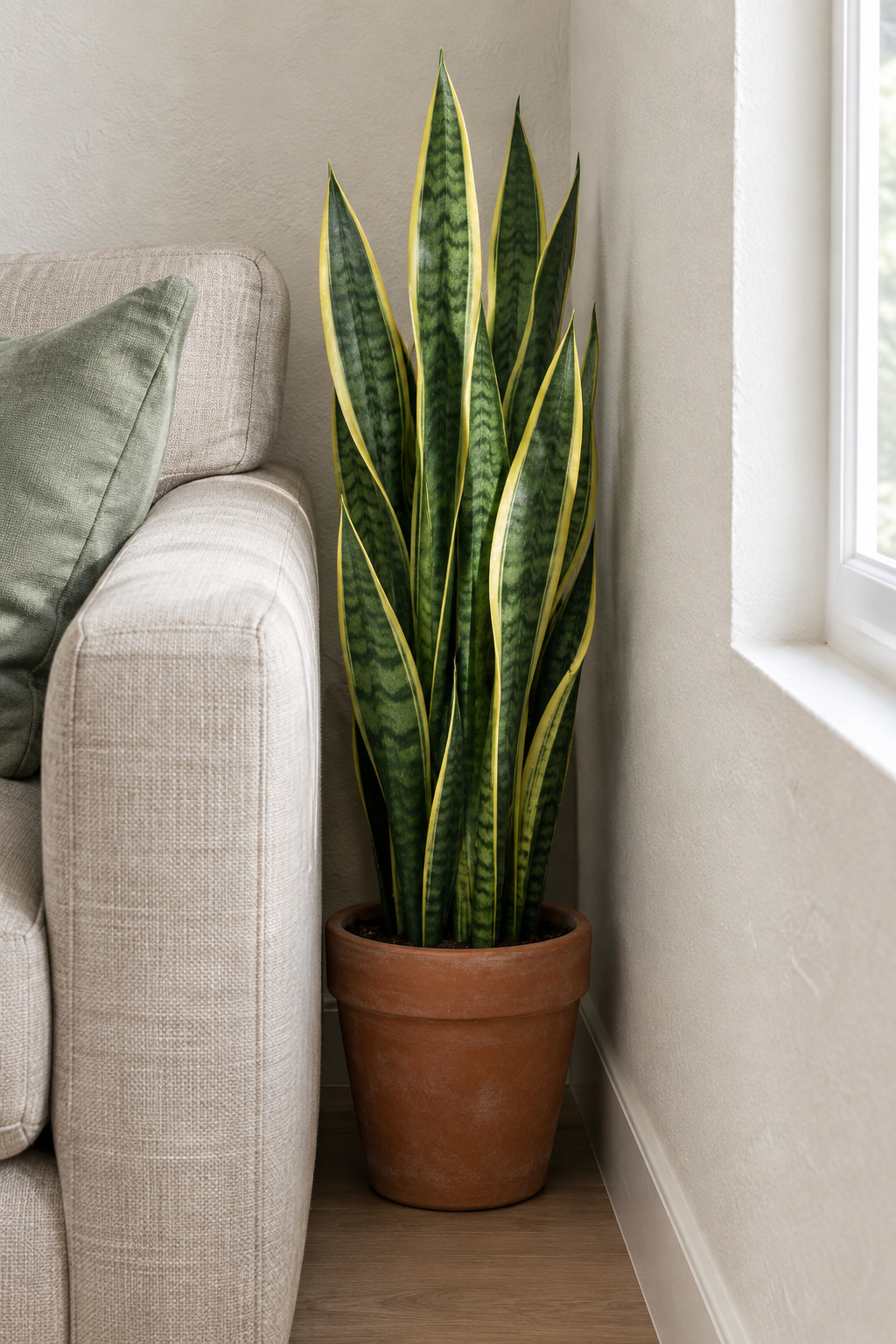
A plant in dim light uses water far more slowly than the same plant beside a bright window. The habit that worked somewhere brighter, watering every Sunday, is the thing that rots the roots. Illinois Extension is blunt: plant type, temperature, humidity, light, pot size, potting mix and drainage all change how fast soil dries, so a schedule usually does not work.
The replacement habit is a finger test. Push two inches into the mix. Damp means wait. Bone dry two inches down means water. In a dim corner that often means waiting twice as long as the tag suggests.
Which plants forgive a missed watering:
- Forgive a lot. Cast iron plant, snake plant, ZZ plant, pothos, parlor palm. All tolerate drying. NC State Extension suggests watering a snake plant only every one to two months in winter.
- Forgive a little. Spider plant and African violet want the top inch to dry, and both sulk if the mix stays wet. Spider plant is fluoride sensitive, and NC State notes tap water can burn the leaf tips.
- Do not forgive. Boston fern and most ferns. They want even moisture and more humidity than a heated apartment offers.
Three more things that kill a plant here, all about water rather than light:
- A pot with no drainage and no lift-out. The nursery pot inside the decorative pot, lifted out to water, is the whole fix.
- Potting up too far. University of Minnesota Extension recommends no more than a 2 to 3 inch increase in diameter. Extra soil holds extra water around a small root ball, and in a dim room it never dries.
- Fertilizing in January. Clemson notes that indoor plants in low light have reduced fertilizer requirements and that a plant in a winter rest period should not be fed at all.
Which Apartment Plants Are Safe for Cats and Dogs
The ASPCA says plainly that its toxic and non-toxic plant list is not all-inclusive. A plant absent from the list is not cleared, it is unknown. So every plant below was checked against its own ASPCA page, and anything the database does not carry is written as Unverified rather than safe.
| Plant | Cats and dogs | What the ASPCA says |
|---|---|---|
| Cast iron plant and parlor palm | Non-toxic | Non-toxic to dogs and cats, and to horses for the cast iron plant |
| Spider plant and African violet | Non-toxic | Non-toxic to dogs and cats, and to horses for the African violet |
| Boston fern | Non-toxic | Non-toxic to dogs and cats |
| Snake plant (Dracaena trifasciata) | Toxic | Saponins. Nausea, vomiting, diarrhea |
| Pothos (Epipremnum aureum) | Toxic | Insoluble calcium oxalates. Mouth burning, drooling, vomiting, trouble swallowing |
| Heartleaf philodendron, Chinese evergreen (Aglaonema modestum), peace lily | Toxic | Insoluble calcium oxalates, same signs as pothos |
| ZZ plant, bird’s nest fern, moth orchid | Unverified | Absent from the ASPCA database |
| Rubber plant (Ficus elastica) | Unverified | Absent under that name. The ASPCA lists the Ficus genus as toxic |
The pattern worth noticing: the pet-safe list is mostly the plants that look boring in a photo, and the toxic list is most of the plants that look interesting. If a cat or dog chews, the cast iron plant and the parlor palm are the two that let you stop worrying. If an Unverified plant is the one you love, the honest move is a high shelf.
The Humidity Problem in a Sealed Apartment
Sunlight is not the only thing an apartment gets wrong. A sealed, heated studio in winter is dry enough to matter.
Iowa State University Extension puts numbers on it: many houseplants prefer a relative humidity of 40 to 50 percent, and the humidity in many homes during winter may be only 10 to 20 percent. That gap is why a fern crisps at the edges while the pothos beside it does not care. The same source is honest about the popular cure. Misting does not work, because foliage dries within minutes.
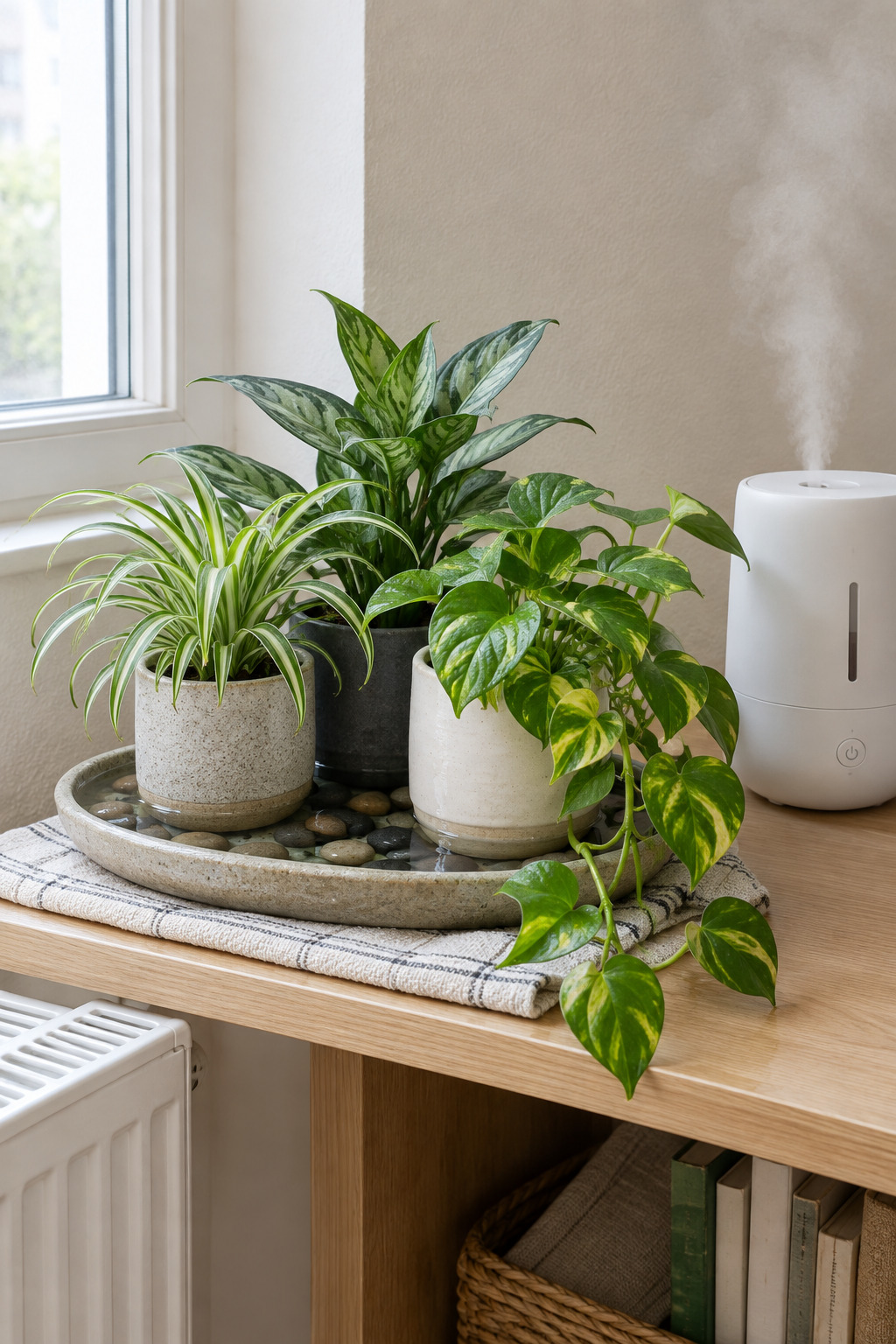
What works is a group and a tray. Grouping plants raises the humidity right around them, and a saucer of pebbles with water below the pot line does the same at small scale. Minnesota Extension adds the other half of the problem: cold drafts from a gap under a door and drying heat from a register stress a plant faster than dry air alone. Push the pot two feet off the radiator and away from the door, and leave the pebble tray.
Start With Three: A Low-Light Buying Order for a Renter
If you have lost a plant before and do not want to lose another, do not buy the collection at once. Buy in this order, and let each one survive a month before you add the next.
- Buy the cast iron plant first. Roughly 1 to 3 feet tall and wide, slow, tolerant of dim light and a missed watering, and on the ASPCA non-toxic list. If a pet shares the apartment, this is the starting point.
- Add the snake plant second, if you want another shape. It goes up rather than out, so it fits a gap about a foot wide. It is toxic to cats and dogs, so keep it out of reach.
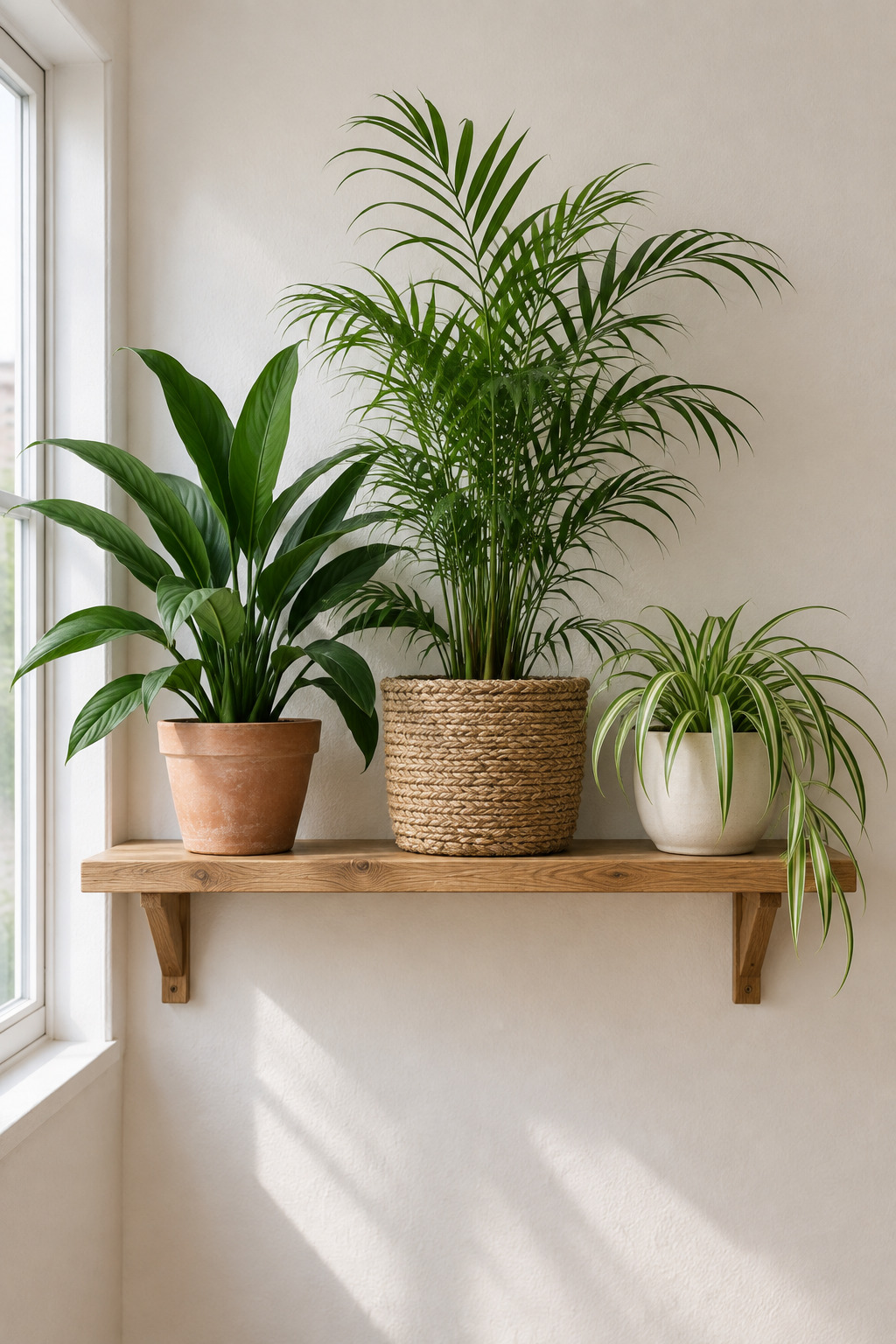
- Add the parlor palm or the spider plant third. The parlor palm is pet-safe and takes the same dim light as the cast iron plant. The spider plant is pet-safe too but wants a little more light, so give it the windowsill.
If a cat or dog shares the apartment, check the pet-safe apartment plant shortlist before you buy rather than after, because the safest plants for a pet are rarely the ones in the photograph you saved.
Pothos comes once those three are alive, not before. It is the fastest grower here, which makes it the most rewarding and the most likely to embarrass you while you are busy. It is toxic to cats and dogs.
Skip the fiddle leaf fig, the bird of paradise and the olive tree for now. All three want more light than one apartment window gives. The dark-corner plant list compares the low-light group by measured light.
Questions Renters Actually Ask
What are the best plants for an apartment?
Cast iron plant for a dim corner, snake plant for a narrow gap, parlor palm for a pet-safe low-light option, pothos for a shelf where it can trail. With one north window and no floor to spare, the cast iron plant alone answers most of the question.
What are some easy-care plants for an apartment?
Easy care mostly means forgiving a missed watering. Cast iron plant, snake plant, ZZ plant, parlor palm and pothos all handle a dry week. Ferns and African violets punish an irregular routine.
What are the best indoor plants for flats?
The same plants, called something different. A flat with one window has the same constraints as a studio: limited light at pot height, limited floor, no anchors in the wall. Pick by the light you can measure.
What are some good apartment plants that do not need much sunlight?
Cast iron plant, snake plant, parlor palm and Chinese evergreen hold up in genuinely dim light. None needs direct sun, and all grow slowly in it. If the spot gets no daylight at all, the honest options are a grow light or rotating plants in and out every two weeks.
What indoor plants stay small?
Spider plant runs about 1 to 1.5 feet tall, cast iron plant runs 1 to 3 feet tall and wide, and a parlor palm holds around 2 to 3 feet wide while it slowly gains height. Small is partly a function of light: a plant in dim light grows more slowly and stays nearer the size you bought.
What are the lowest maintenance indoor plants?
Snake plant, cast iron plant and ZZ plant, in that order. NC State Extension suggests watering a snake plant only every one to two months in winter. All three want a dry-out between waterings.
What about low maintenance plants for apartments with low light?
Those are the same three plants. The difference is placement. A low-maintenance plant in the wrong spot still dies, and a low-light plant in a bright south window can scorch.
Sources
- ASPCA: Toxic and Non-Toxic Plants : the status of every plant named here, checked one plant at a time. The list is not all-inclusive, which is why four plants read as Unverified.
- Clemson HGIC: Indoor Plants, Cleaning, Fertilizing, Containers and Light Requirements : foot-candle bands, the low-light plant list, double-potting, and the 100 foot-candle maintenance figure.
- Illinois Extension: Lighting for Houseplants : light levels by window direction and distance.
- Illinois Extension: Watering Houseplants : the two-inch finger test and the factors that change how fast soil dries.
- Iowa State University Extension: Should I mist the houseplants? : the 40 to 50 percent target, the 10 to 20 percent winter reality, and why misting does not fix it.
- University of Minnesota Extension: Winter houseplant tips : humidity methods, cold drafts and drying heat, and the 2 to 3 inch limit on repotting up.
- NC State Extension Gardener Plant Toolbox : mature dimensions and winter watering intervals for the snake plant and the other plants named here.
What to Read Next
- Low Light Indoor Plants : compare the dim-corner options by measured light before you commit one to the darkest spot.
- How to Style Tall Indoor Plants in a Living Room : work out where the one tall plant goes and which furniture it belongs beside.
- What Size Planter Does a Tall Indoor Plant Need : size the pot before it arrives, because too much soil is how a dim plant drowns.
- Living Room Plant Ideas for Empty Corners : choose by the shape and light of the specific corner rather than the room in general.
- Indoor House Plants Without the Clutter : keep three plants from becoming thirty once the first one survives.