Not having a yard can make every outdoor idea feel like it belongs to somebody else. The backyard people get fire pits, bird baths, garden beds, and long tables. You get a narrow slab outside a sliding door and maybe a railing you are not allowed to drill into.
That does not mean the balcony has to stay bare. A useful balcony garden is not a smaller version of a backyard. It is a tighter setup with fewer pieces, better placement, and plants that earn their space.
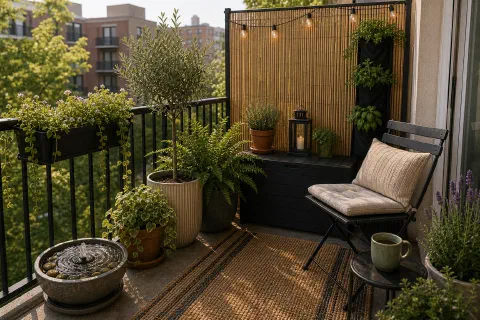
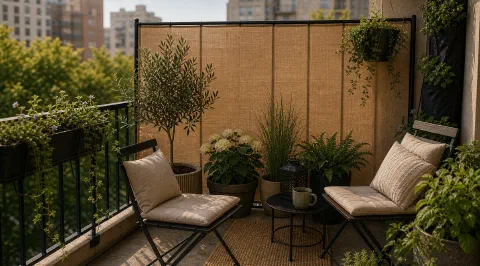
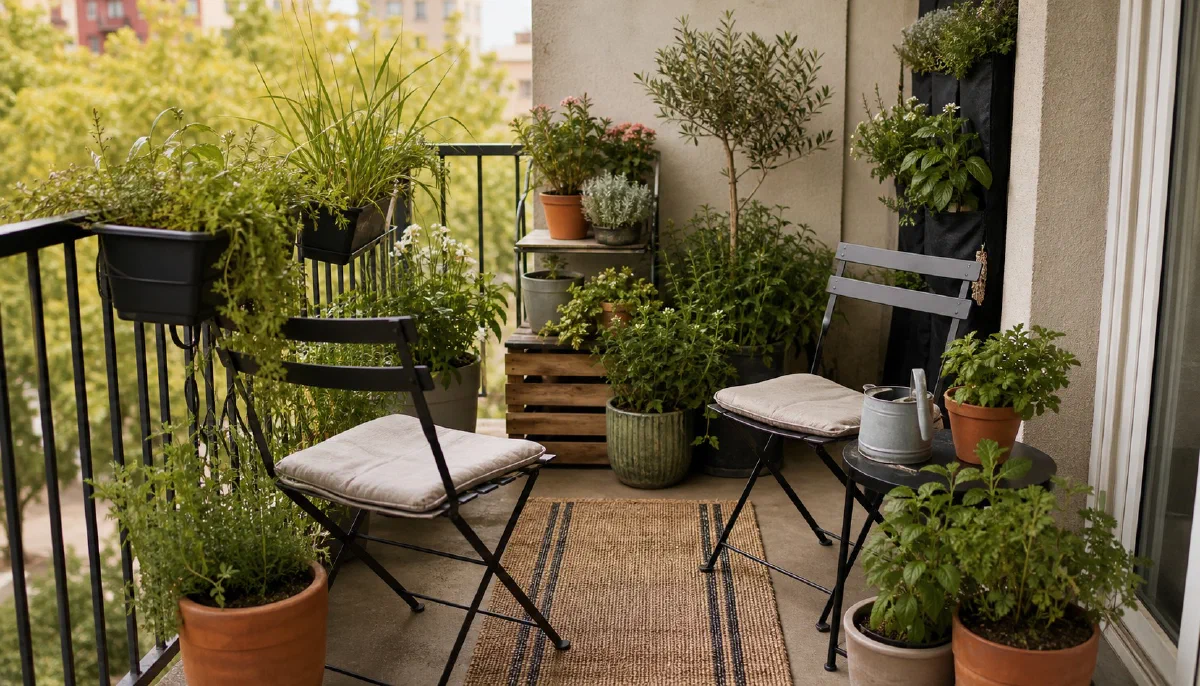
Start with one corner you can actually use: a chair, a pot cluster, a little table, and enough greenery to make stepping outside feel different from standing in the kitchen.
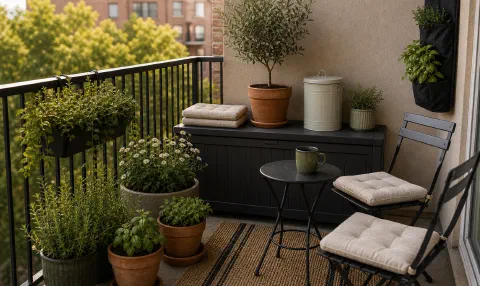
The easiest apartment balcony garden starts with one seating corner, three to five containers, and a watering setup you can keep up with. Use vertical stands only after the floor plan works, choose plants for the light you truly get, and leave enough open space to sit down without moving pots.
Balcony Garden Layout: Start With the Spot You Want to Sit In
Put the chair first. That sounds too simple, but most balcony gardens fail because the plants get placed before the person. Set one chair where you would drink coffee, read, or take a call. Then build the garden around that spot. If you cannot sit down without moving a pot, the layout is not working yet. For very tight spaces, borrow the same discipline from the two-chair setup in two-chair tiny patio layout .
Use Plant Clusters Instead of Scattering Pots Everywhere
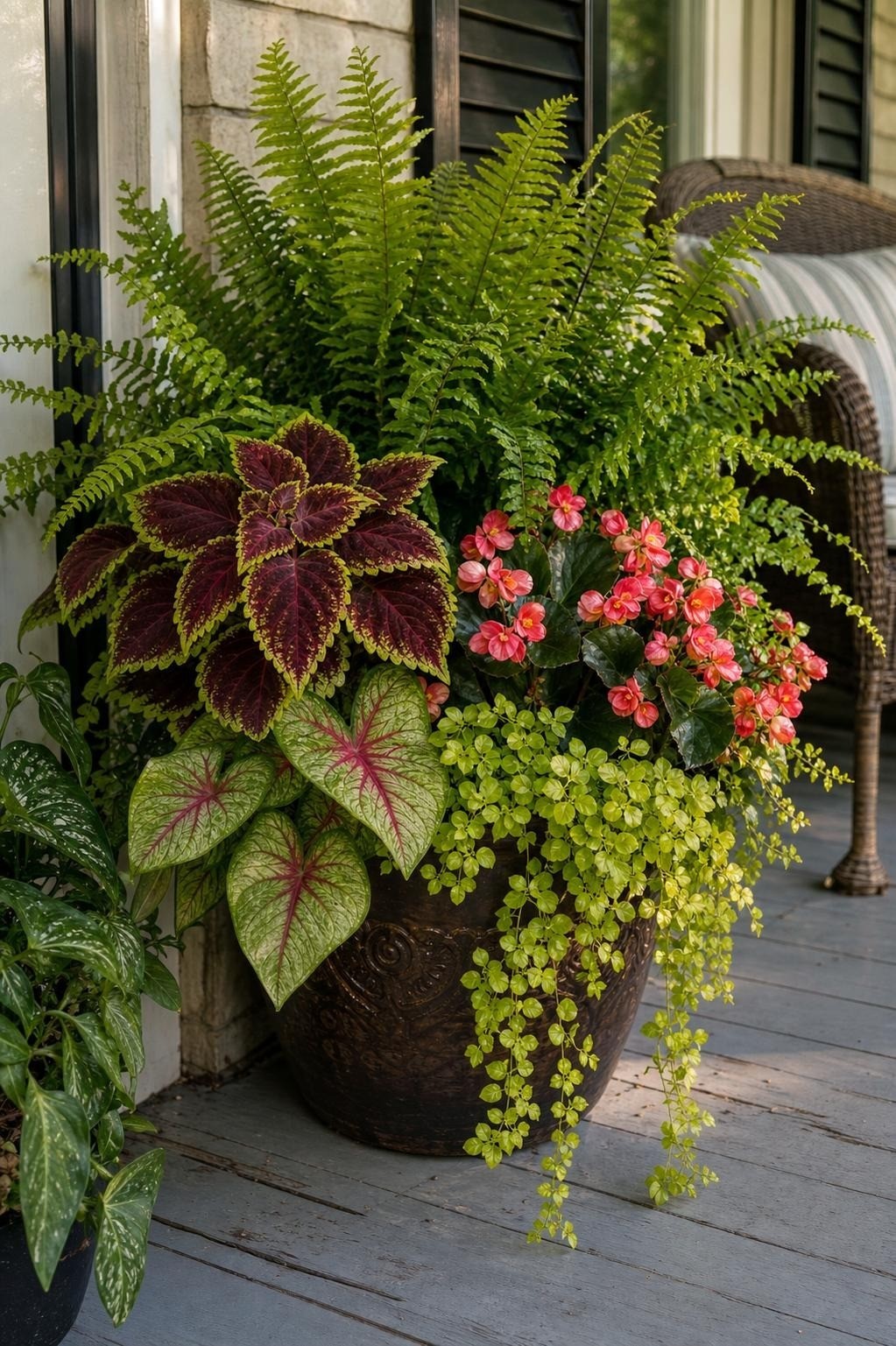
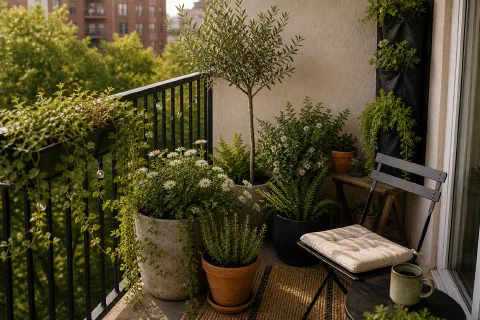
A balcony feels calmer when the plants gather in two or three groups. Try one taller plant near a corner, two medium pots beside it, and one trailing pot on a stand or stool. The group reads like a little garden instead of a row of random purchases. If the balcony still feels thin, use the fuller container approach from container garden ideas for small patios and repeat colors instead of buying every plant that looks pretty.
Plant Stand and Renter-Safe Placement
Avoid anything that depends on drilling into brick, hanging heavy boxes from an unknown railing, or letting water run down to the neighbor below. Use freestanding screens, weighted planters, outdoor rugs, and small tables. Put saucers under plants, but do not let them sit full of water. If water keeps pooling, the mosquito section in mosquito fixes for patios matters more than another plant.
University of Maryland Extension’s container guidance is a useful reality check for a balcony: exposure changes the heat and light, containers may need frequent checks in hot weather, saucers can protect the surface below, and a large moist container can be much heavier than it feels when empty. Oregon State University Extension’s container guide also recommends drainage holes, potting mix rather than soil dug from the ground, and choosing container size with the plant in mind. Treat those as planning warnings, not a balcony load limit. Your lease, building manager, and any posted structural guidance still decide what belongs on the balcony.
What to Grow When the Balcony Is More Mood Than Farm
Herbs are useful, but they are not the only choice. For a balcony that should feel alive, mix one scented plant, one leafy plant, and one blooming plant. Sound counts as a layer too, and small water features for an apartment balcony covers the renter-friendly ways to get it. Basil, mint, rosemary, pothos, ferns, calibrachoa, dwarf zinnias, and compact salvia can all work depending on sun. Choose by light first, then by how often you are willing to water. University of Minnesota Extension’s small-space container guidance makes the same case: drainage, available light, and a realistic watering routine come before the plant list.
The Low-Spend Version Still Works
If money is tight, skip the full makeover. Buy one outdoor rug, one bigger pot, and one plant that changes the view from inside. Add a thrifted stool as a plant stand. Use a tray table instead of a full bistro set. The goal is not to impress anyone; it is to make the door worth opening.
A Simple First Weekend Plan
Clean the balcony, choose the sitting corner, place one rug or mat, add two medium containers, and leave the rest alone for a week. Notice where the sun hits and where you actually stand. Then add only what solves a problem: privacy, color, shade, or storage. If the balcony has barely any room, pair this with small patio ideas when you barely have room .
Balcony Garden Setup Sequence
Five checks before adding another pot
- Measure the clear route from the door to the chair before choosing a stand or planter.
- Watch the balcony at morning, midday, and late afternoon so the plant matches the light it actually receives.
- Put a saucer or drip-control tray under every container before the first watering.
- Check the building’s balcony rules and ask management about weight limits rather than guessing from an empty pot.
- Keep one week of watering notes before adding a plant with a different moisture need.
Balcony Weight and Privacy Checks
- Wind: A high, exposed balcony can dry containers and tip light pots. Use a stable position near the wall and choose a heavier base only after checking the building rules.
- Water: A saucer catches overflow, but standing water should not remain beneath the pot. Empty it as part of the watering routine.
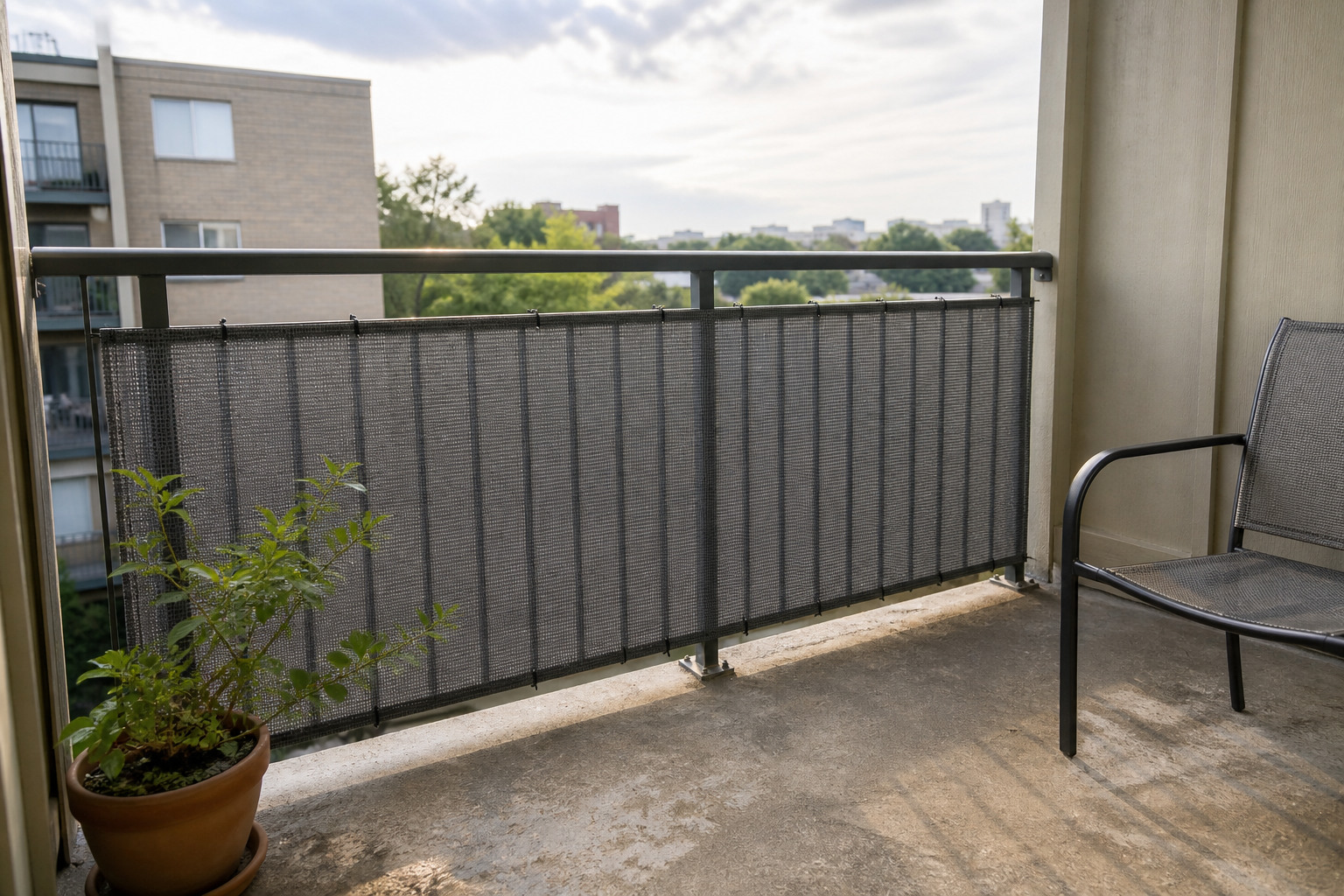
- Privacy: A freestanding screen or grouped foliage can soften a view without attaching anything to a railing. Leave the door swing and drain path clear.
| If the balcony problem is… | Start with… | Check before adding more |
|---|---|---|
| No reason to sit outside | One chair and one clear corner | The route from the door and the view from inside |
| Plants look scattered | One tall plant with two medium pots | Similar light and watering needs |
| The railing feels exposed | A freestanding screen or grouped foliage | Building rules, wind, and the drain path |
What I’d Buy First
- Two medium planters instead of ten tiny pots.
- A narrow outdoor rug to define the sitting area.
- One plant stand only if it frees floor space.
- A small watering can you will actually keep nearby.
- Lightweight privacy planters if the railing view feels exposed.
What to Read Next
- Container garden ideas for small patios help when you need a fuller grouping without more floor clutter.
- Two-chair tiny patio layout shows how to protect a usable sitting spot before adding garden layers.
- Small patio ideas when you barely have room gives you another tight-footprint plan to borrow for a narrow balcony.
- Small water features for an apartment balcony covers sound and water features that respect renter constraints.
- Mosquito fixes for patios is the next stop when saucers or trays keep holding water.