This article contains affiliate links. If you buy through them, Etheric Echoes may earn a commission at no extra cost to you. As an Amazon Associate I earn from qualifying purchases. Read the full disclosure.
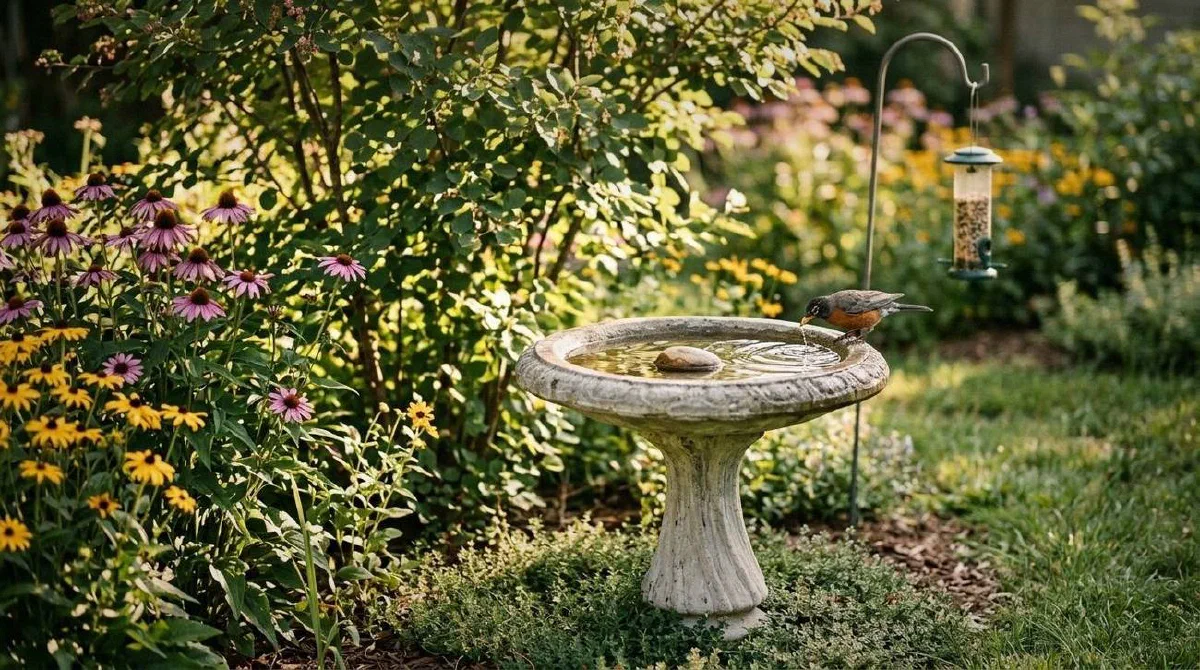
A bird bath works best when shallow water, secure footing, clean surfaces, and safe placement come together. Cornell’s bird-bath guide recommends shallow sloping water and open ground between the bath and cat-hiding cover. No material or price guarantees a particular number of visitors.
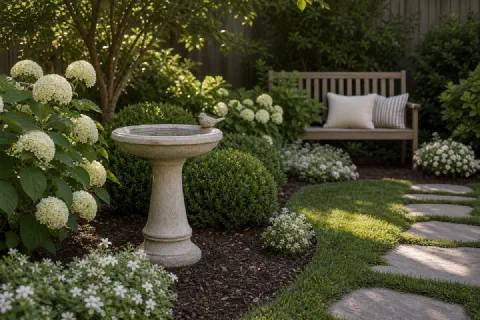
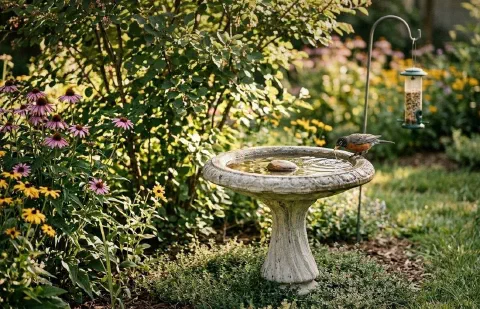
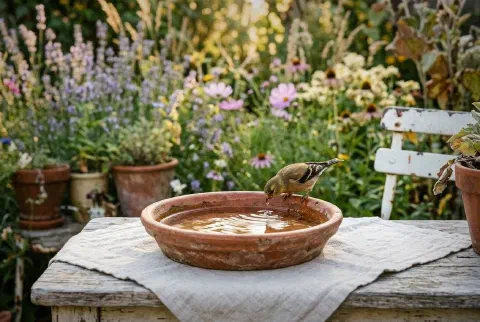
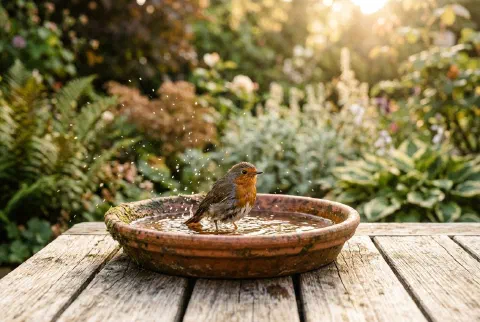
This guide covers everything you need to turn a simple water feature into a full backyard sanctuary : bird bath types compared, ideal placement, the best companion plants, maintenance schedules, and DIY ideas for every budget.
The best bird bath setup is shallow, visible, easy to clean, and placed near cover without giving cats a hiding spot. Start with a rough-surface bath or saucer, keep water around 1 to 2 inches deep, add a flat stone for footing, and place it within a short flight of shrubs or a fence line.
Specific baths that match the advice above
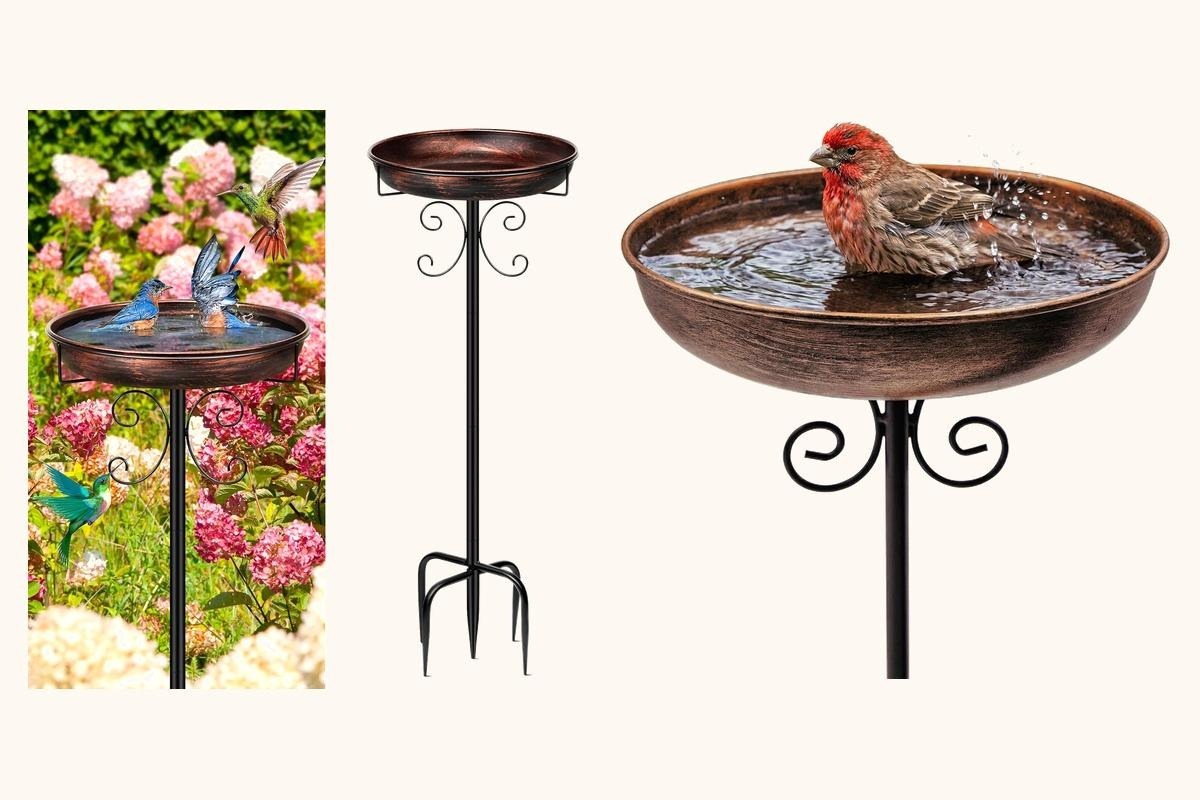
- Gtongoko removable-bowl bird bath (opens Amazon in a new tab) : compare bowl removal and cleaning access.
- Daoeny pedestal bird bath (opens Amazon in a new tab) : check base stability and usable water depth.
- A low staked bath (opens Amazon in a new tab) : check drainage, mounting and exposure to predators.
Emptying and cleaning the basin is the first mosquito-control step. If considering a larvicide, confirm its current label allows the intended use and follow it exactly; do not substitute a blanket harmless-to-wildlife claim for the label.
Bird Bath Types Compared
Not all bird baths perform the same. Material affects durability, grip for birds, heat retention, and winter survival. Here is how the most common types stack up.
| Material | Useful feature | Check before buying |
|---|---|---|
| Concrete or cast stone | Stable weight and possible rough footing | Freeze protection and manufacturer’s winter instructions |
| Glazed ceramic | Decorative surface | Grip, cracks and frost limits |
| Metal | Often lighter or removable | Water temperature, coating and corrosion |
| Plastic or resin | Easier to lift and clean | Base stability, UV damage and usable depth |
| Heated bath | Open water in freezing weather | Rated installation, compatible basin and protected electrical connection |
Concrete can crack when water freezes in it, and sealed stone is not universally winter-safe. Follow the maker’s care instructions rather than relying on a promised ten-year lifespan.
Best Placement Tips for Bird Baths
Where you position your bird bath matters as much as the bath itself. Birds evaluate safety before they land, so placement determines whether your bath gets daily visitors or sits empty.
The Four Placement Rules
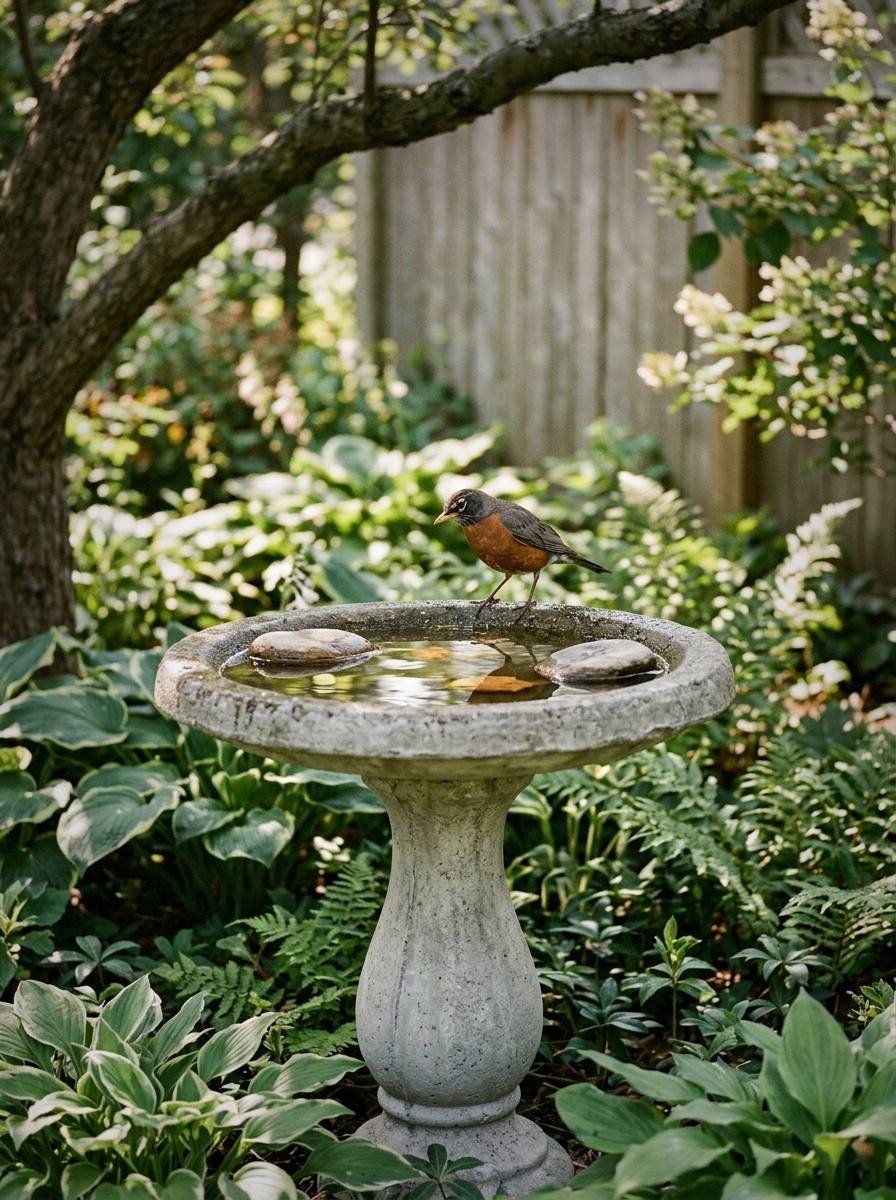
Near escape perches (4-6 feet). Place the bath within a short flight of a tree branch, fence, or tall shrub. Wet feathers slow birds down, so they need a nearby perch to dry off and watch for predators.
Partial shade. Full sun heats water fast, promotes algae growth, and forces more frequent refills. A spot that gets morning sun and afternoon shade keeps water cool and clean longer.
Visible from inside your home. This helps more than you think. If you can see the bath from a window, you will remember to maintain it. A bath hidden behind the shed gets neglected by July.
Away from low ground cover. Keep at least 4 feet of open space between the bath and any dense, low plants or rock piles where cats can hide. Pedestal-style baths give birds a height advantage, typically 24 to 30 inches off the ground.
Quick Placement Checklist
- 4-6 feet from a tree, fence, or tall shrub
- Partially shaded (afternoon shade ideal)
- Visible from a kitchen or living room window
- 4+ feet from dense ground cover
- Level ground (use shims or sand under the base)
- Within hose reach for easy refilling
Water Depth and How to Get It Right
Cornell recommends a shallow bath, about one inch at the edge and no more than two inches in the middle. Provide secure footing instead of assuming every species responds to an exact depth threshold.
How to Add Shallow Sections
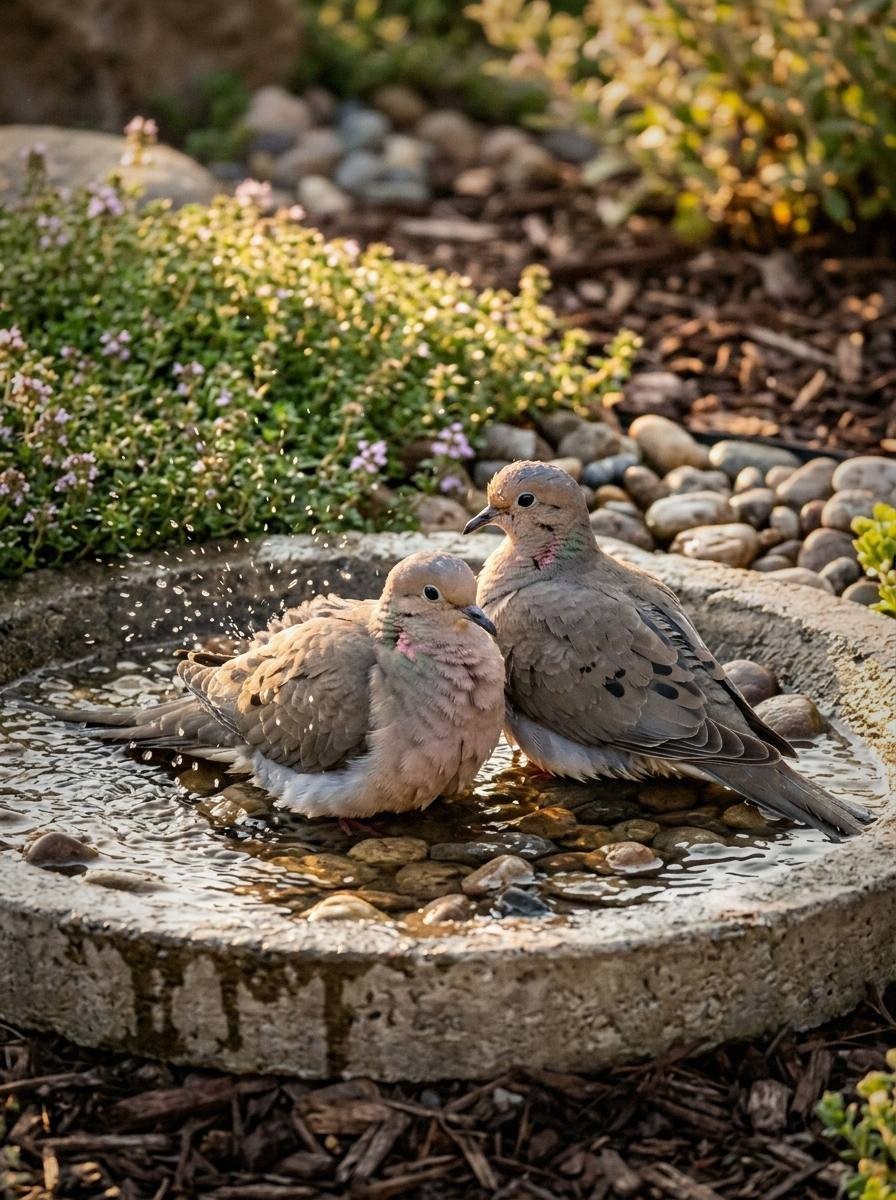
- Flat river stones. Drop one or two flat stones (3-4 inches wide) into the center of the basin. This creates a shallow island where small birds can stand with water barely covering their feet.
- Pea gravel ramp. Line one side of the basin with a gentle slope of pea gravel, giving birds a gradual entry from rim to water.
- Terracotta saucer insert. A small upside-down terracotta saucer creates an elevated platform inside the basin.
A stable stone can create a shallower standing area; check that it cannot shift or trap debris.
Tip: If your bath is too deep across the entire basin, fill it only halfway. You will use less water and attract more species.
Best Plants to Pair with a Bird Bath Garden
A bird bath surrounded by the right plants becomes a complete habitat station. Native plants attract insects (food), provide perching spots, and create the sheltered feel that makes birds comfortable.
Flowering Plants for Pollinators and Hummingbirds
| Plant | Botanical Name | Attracts | Height | Sun | USDA Zones |
|---|---|---|---|---|---|
| Bee Balm | Monarda didyma | Hummingbirds, bees, butterflies | 2-4 ft | Full-Part | 3-9 |
| Cardinal Flower | Lobelia cardinalis | Hummingbirds | 2-4 ft | Part shade | 3-9 |
| Black-Eyed Susan | Rudbeckia hirta | Goldfinches (seeds), butterflies | 2-3 ft | Full | 3-7 |
| Purple Coneflower | Echinacea purpurea | Goldfinches (seeds), bees | 2-5 ft | Full | 3-8 |
| Creeping Thyme | Thymus serpyllum | Ground bees, butterflies | 2-4 in | Full | 4-8 |
Native Shrubs for Escape Perches
- Winterberry holly (Ilex verticillata): Deciduous holly with red berries that attract cedar waxwings and robins in winter.
- Serviceberry (Amelanchier spp.): Spring berries, bird magnet, beautiful in all four seasons.
- Elderberry (Sambucus canadensis): Fast growing, produces berries that over 40 bird species eat.
- Native viburnums: Arrowwood viburnum provides berries and dense branching for nesting.
Choose companion plants for your region, mature size and moisture needs, while leaving clear sightlines around the bath.
How Often Should You Clean and Change Bird Bath Water?
Change the water every one to two days, and sooner if dirty or depleted. Clean the basin regularly; do not rely on a temperature threshold or moving water to make it sanitary.
The interval matters for more than appearances. Utah State University Extension , citing the National Wildlife Health Center, lists five diseases that pass between birds at shared water and feeders: salmonellosis, aspergillosis, avian pox, trichomoniasis, and mycoplasmosis. Each one can kill a bird directly, or weaken it enough that a predator finishes the job. Green water and droppings turn a bath into a transmission point.
Three things shorten the interval: how many birds visit, how much water the basin holds, and what falls in from above. A bath under a tree needs more attention than one in the open.
On routine days a hose rinse before each refill is enough. When the basin feels slimy, scrub it with a stiff brush and water only, because soap residue strips the waterproofing birds need. Once a month, or any time you have seen a sick bird at the bath, disinfect rather than just clean. Utah State University Extension gives the ratio: one part liquid chlorine bleach to nine parts warm water. Submerge the empty basin for two to three minutes, then let it air dry and rinse well before refilling.
For the cleaning side in more depth, see Audubon’s Why You Should Keep Your Birdbath Clean .
Upkeep at a glance
| Task | When to check | Action |
|---|---|---|
| Fresh water | Every day or two; sooner when fouled | Empty, rinse and refill |
| Visible dirt or algae | At each water change | Scrub and rinse; do not leave residues |
| Disinfection | As needed, especially after sick birds | Follow a credible bird-bath protocol and rinse thoroughly |
| Cracks or instability | Before filling and after freezing weather | Repair as the maker directs or replace |
| Heater and cable | Before and during winter use | Follow the rated installation and electrical instructions |
Winter Care and Mosquito Prevention
Use only a heater rated for the basin and location; there is no universal minus-twenty-degree performance guarantee. Cornell recommends a ground-fault-protected connection. Never add antifreeze or glycerin to the water.
Changing water interrupts mosquito breeding and removes contamination. Moving water is an optional attraction, not a guarantee that mosquitoes cannot breed. Keep any pump clean and follow its winter storage instructions.
Common Backyard Birds Attracted to Bird Baths
Once you provide clean, shallow water, visitor timing varies. Here are the most common species and their bathing habits.
| Species | When They Visit | Behavior at Bath | Region |
|---|---|---|---|
| American Robin | Morning, evening | Full-body splashing, vigorous bathers | All US |
| Northern Cardinal | Early morning | Cautious, quick dips | Eastern US |
| American Goldfinch | Midday | Prefers shallow sections, social bathing | All US |
| Black-Capped Chickadee | All day | Quick splash-and-go, rim drinkers | Northern US |
| Mourning Dove | Morning | Drinks without tipping head back (unique), pairs visit together | All US |
| Tufted Titmouse | Morning | Fast bathers, in and out | Eastern US |
| Downy Woodpecker | Afternoon | Drinks from rim, occasional bath | All US |
| Ruby-Throated Hummingbird | Midday | Flies through mist/spray, hovers over moving water | Eastern US |
| House Finch | All day | Social, groups of 3-5 | All US |
| Song Sparrow | Morning, evening | Splashes heavily for their size | All US |
Record visits if you want to learn which birds use the bath; arrival timing and species vary by location and season.
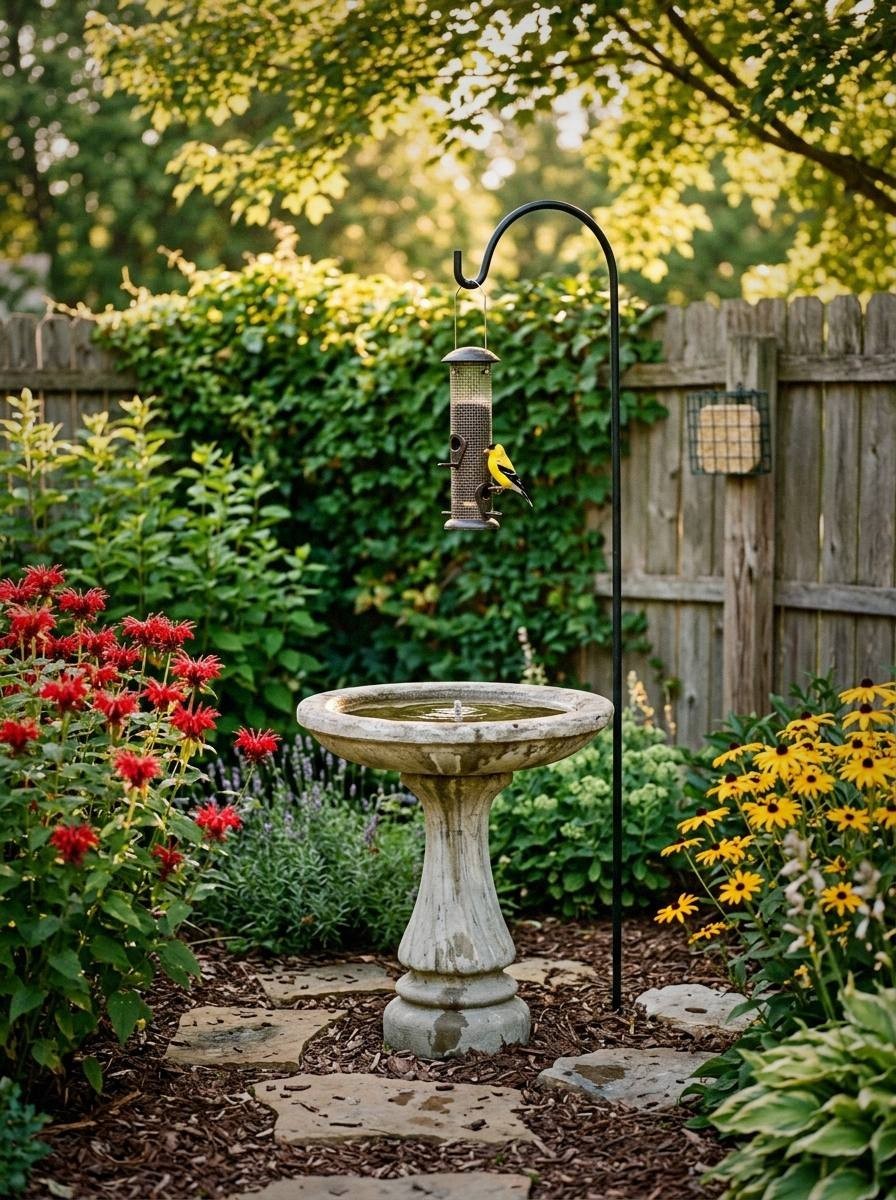
How to Create a Bird Bath Garden Station
A bird bath garden station combines water, food, and shelter in one area. This is the fastest way to turn a bare corner into a backyard oasis that attracts wildlife year-round.
Station Layout
Place a stable bath where you can refill and observe it. Keep nearby perches within a short flight while leaving open ground around the basin so birds can see predators. A dense shrub two feet behind the bath can undermine the clear sightline.
Choose locally suitable plants without crowding the approach. Place feeders so seed hulls and droppings cannot fall into the water, and check feeder placement separately.
Tips for Your Station
- Face the station toward a window so you can observe from inside.
- Add a flat rock or log nearby. Birds use these as staging perches before approaching the bath.
- Keep feeders close but not directly over the water (seed hulls and droppings contaminate the bath). The rest of the feeder placement decisions matter as much as what you fill it with.
- Mulch the area to suppress weeds and retain moisture for your plants. Two to four inches also keeps dropped seed under the feeder from sprouting .
DIY Bird Bath Ideas on a Budget
You do not need to spend $100+ on a bird bath. Birds care about clean, shallow water and safe placement, not aesthetics.
Budget DIY Options
- Terracotta saucer on a tree stump ($5-$10). A 14-inch terracotta plant saucer set on a cut log or overturned pot. Add a few stones for shallow areas. Simple, effective, and replaceable.
- Vintage bowl on a pillar ($0-$20). Check the basin material, shallow depth and stability before reuse. Use a sound support intended for the filled weight rather than an unfastened stack.
- Ground-level rock basin ($0). A natural depression in a flat rock, kept filled with water. Ground-feeding birds like juncos and towhees prefer ground-level water sources.
- A sound shallow saucer. Use a clean water-holding material and stable support. Do not apply a decorative coating unless it is suitable for continuous water contact and the intended use.
- Stacked stone bath ($10-$30). Layer flat fieldstones with waterproof mortar to create a natural-looking basin. Perfect for a cottage garden wildlife setup.
Tip: Whatever container you use, rough up smooth surfaces with sandpaper so birds can grip the bottom. Slippery baths get abandoned.
Seasonal Bird Bath Tips
Spring (March to May)
- Clean thoroughly after winter. Remove heater, clean using appropriate bird-bath guidance and rinse thoroughly before refilling.
- Position in a spot that gets morning sun to warm cold overnight water.
- Plant native perennials around the bath now for summer blooms.
Summer (June to August)
- Check water levels daily. Evaporation and heavy use can empty a bath in 24 hours.
- Move to partial shade if not already shaded. Water above 80F discourages bathing.
- Add a solar fountain to keep water moving and cool.
- Change water every 2 days to prevent mosquito breeding.
Fall (September to November)
- Keep the bath running. Migrating birds use water sources along their route.
- Leave seed-bearing plants (coneflowers, black-eyed susans) standing near the bath for natural food.
- Clean fallen leaves out of the basin regularly.
Winter (December to February)
- Install a submersible heater before the first hard freeze.
- Place the bath in full sun to supplement the heater and reduce energy use.
- Check daily. Heaters can malfunction, and birds depend on the water source once they know it is there.
- Skip the fountain. Moving water loses heat faster.
Frequently Asked Questions
Do bird baths attract mosquitoes?
They can. Empty and replace water frequently, clean the basin, and inspect equipment. A fountain does not replace cleaning or guarantee prevention.
How do I keep cats away from my bird bath?
Keep owned cats indoors and leave open ground around the bath so birds can see approaching predators. A pedestal or fixed four-foot gap is not a guarantee of safety.
What is the best bird bath material?
Choose secure footing, stability and cleaning access before decoration. Check winter care for the exact model: concrete and ceramic can crack, while lightweight basins need secure support.
How deep should a bird bath be?
Cornell recommends no more than one inch at the edges, sloping to a maximum of two inches in the middle. Add stable stones for shallower footing rather than relying on a deep decorative bowl.
Should I add a dripper or fountain?
It can make water more noticeable, but check maintenance, power and water loss. Visitor numbers are not guaranteed.
Where should I put a bird bath in a small yard?
Choose shallow water, stable support, shade where practical, cleaning access and a visible escape route. Keep the basin separated from dense low cover where cats can hide.
What to Check Before Ordering
Measure the usable bowl depth, not just overall pedestal height. Check that the base is stable on your surface and that you can lift or empty the basin for frequent cleaning. A simple shallow saucer can be a better fit than a deep decorative model, regardless of its price.
What to Read Next
- Bird Bath Placement Mistakes That Keep Birds Away covers the six placement errors that leave a bath unused.
- 7 Bird Bath Setups Songbirds Actually Use compares basin depth, footing, and height across seven real setups.
- 5 Walmart Bird Baths I’d Compare for a Backyard Corner ranks affordable baths by bowl depth and footprint.
- How to Keep Bird Bath From Freezing Without an Outlet handles the months when open water disappears.