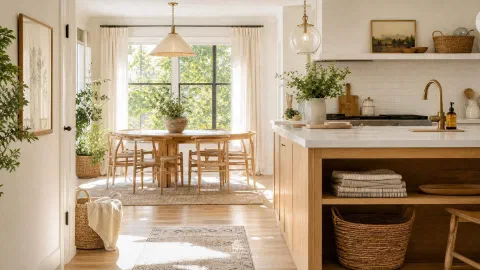
Slow living is mostly about what you stop doing.
The pinned versions of slow living usually involve buying linen, lighting beeswax candles, and posting moody kitchen photos. The actual practice is quieter than that. It is a set of small habits that change the pace inside a house, and the changes are mostly about reducing input, not adding it.
These nine habits cost nothing. None require buying anything. Each one fits into a normal weekday for someone who works, has kids, has obligations, has a phone. The point is not to slow life down to half speed. The point is to give the home a different rhythm than the rest of the day.
1. One Window Open Most of the Day

Most homes are sealed all day.
Open one window when you are home, even for a few hours. The kitchen window in the morning. The bedroom window in the afternoon. The window over the desk while working from home. The shift is small. The change is real.
A house with one open window sounds different. You hear birds, leaves, neighbors. The air moves slightly. The temperature is closer to the outside. The boundary between the home and the world becomes lower.
In zones where AC runs all summer, this still works for one or two hours in the morning before it gets hot. In winter, a window cracked an inch for ten minutes does the same job.
2. The First Thing You Touch in the Morning
The first thing you touch in the morning sets the tone for the day.
For most people, the first thing is a phone. The phone is a high-input object. It takes you from the quiet of waking to the noise of the world in twenty seconds.
Replace the phone with something physical. A glass of water on the nightstand. A book on the bed. A robe on the chair. A pair of slippers. The object does not matter. What matters is that the first contact is with something quiet.
The phone can come into the day at minute fifteen. The first fifteen minutes are easier to keep slow when the morning starts with a glass of water rather than a notification.
3. The 4pm Reset
The afternoon dip is the hardest part of most days. It is also where slow living habits collapse.
Build a small reset for 4pm. Not a productivity break. A pace break. Five minutes of doing one specific small thing: walking around the yard, watering one plant, making a cup of tea, sitting outside for the length of a song.
The reset works because it interrupts the trajectory of the afternoon. Without it, the day slides from work-mode straight into evening-mode without a transition. With it, there is a small pause in between.
The 4pm reset is what stops most people from feeling tired by 7pm.
4. The Phone-Free Meal
One meal a day without the phone in the room.
Pick the meal that fits your household. Breakfast for solo eaters. Dinner for families. Lunch for people who work from home alone. The meal becomes more than food when the phone is not part of it.
Phone-free does not mean putting the phone face-down on the table. It means putting the phone in a different room. Same room, different rules. The phone in another room means you eat the meal at the meal’s pace, not the pace of an incoming notification.
This habit is the most-resisted one and also the one with the most observable effect on how a house feels.
5. The Handwritten List
A handwritten grocery list, to-do list, or dinner plan reads slower than a digital one.
The list does not need to be pretty. It needs to be physical. A small notebook, a notepad on the counter, a sheet of paper on the fridge. The act of writing the list, crossing items off the list, and tossing the list when done is part of the rhythm.
A handwritten list also handles fewer items than a digital one. That is part of why it works. Three things written on paper feel manageable. Twenty items on a phone app feel like a list you cannot finish.
The slow-living version of getting things done is shorter lists, finished more often.
6. The Five-Minute Outside Step
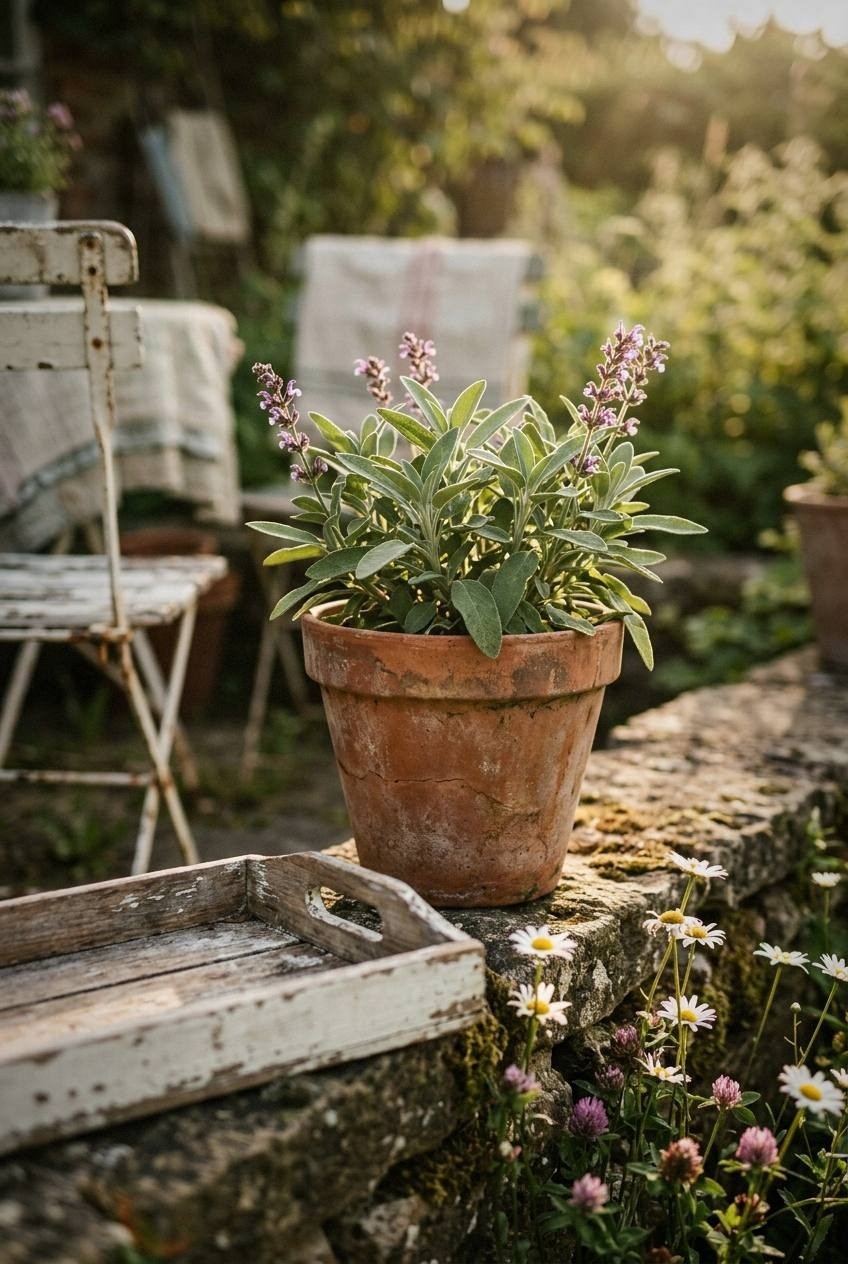
Step outside for five minutes a day, not to do anything. Just to be outside.
Sit on the back porch. Stand in the yard. Walk to the mailbox. Watch the birds at the feeder. The activity does not matter. The step out of the house matters.
Most homes have a back door, a front door, or a porch door, and most people use them only for in-and-out transitions. The five-minute outside step uses the door for a different purpose: a deliberate pause.
Once a day is the floor. Twice a day is better. The mornings and the evenings are the two times when the outside light is worth standing in.
7. Lower Light in the Evening
After 7pm, switch from overhead lights to lamps and candles.
Overhead lights run cool-white and bright. The Energy Department’s bulb guidance puts warm light at 2,700 K and describes it as friendly and personal, the range it lists for homes, while the cool 4,100 K end is the neat, clean light used in offices and showrooms. A ceiling fixture in that cooler range reads like a workplace at nine at night, whatever the clock says.
A lamp at one corner of the room and a candle on the table reads as evening. The brain registers the change. The pace of the room slows because the light slowed.
This habit costs the price of one or two warm-white bulbs and the willingness to flip a different switch when the sun goes down. The Department of Energy’s Energy Saver guide marks warm or soft light at 2700 to 3000 K and cool or bright light at 3500 to 4100 K, and it points out that brightness is measured in lumens rather than watts, so the Kelvin number on the box is the one that decides how the room feels.
8. The Weekly Thing-You-Don’t-Need Walk
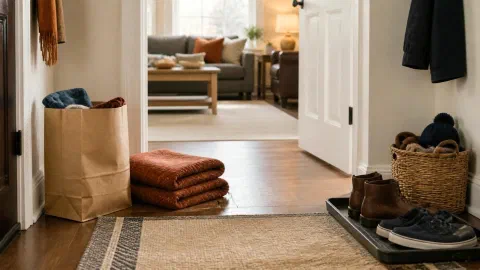
Once a week, walk through the house with a paper bag and put in five things you do not need.
Five is the right number. More than that becomes a cleanout, which is a different project. Five is the size of an editing pass.
The bag goes to donation on the same trip as the next grocery run. The bag does not sit in the garage waiting to be sorted. Sorting is what kills decluttering for most people.
A house with weekly small edits feels different from a house that gets one annual purge. The slow-living rhythm is small, regular, and finished.
9. The Sunday Slow Start
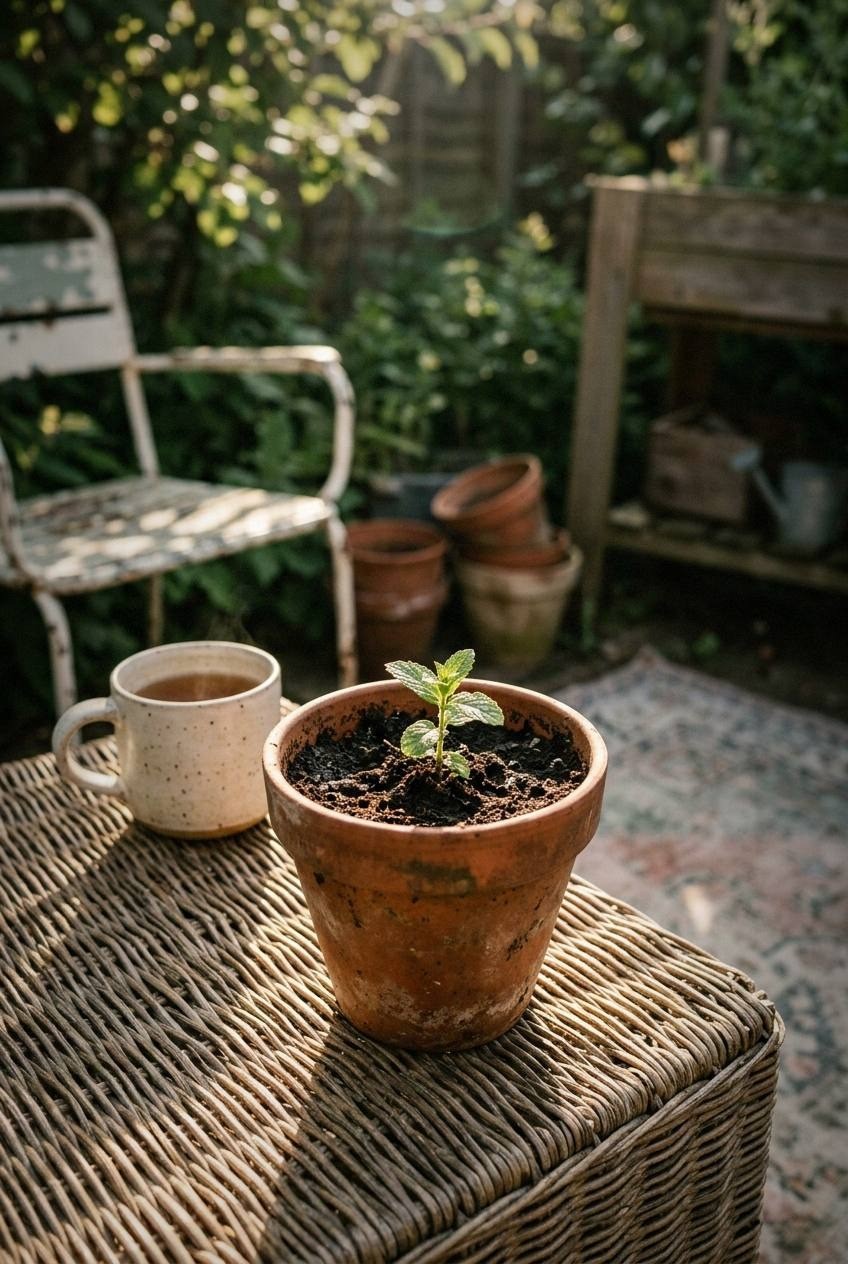
The day that sets the tone for the week is Sunday.
Build a slow start into Sunday morning. Coffee made at the kitchen counter, not bought from the drive-through. Breakfast at the table, not in the car. The first hour spent at home, not running errands.
This habit is the easiest to skip and the most important to keep. Sunday is the day when the calendar does not enforce a pace. The pace has to come from the household.
A slow Sunday morning before noon shifts the rest of the week. Mondays land softer. Tuesdays feel less rushed. Wednesdays come without dread.
How to keep these habits from becoming another checklist
Most slow living advice fails the same way a fitness plan does: it arrives as nine new obligations, and by week three you are behind on all of them. The fix is to pick three habits to keep and let the other six go quiet.
Do it in this order:
- Write the nine habits down and cross out six of them.
- Keep the three that attach to something you already do, the first coffee, the walk to the car, the last trip past the kitchen.
- Run those three for two weeks and add nothing.
- Add a fourth only once one of the three has stopped needing a reminder.
The ones worth keeping first are the cheap ones. An open window costs nothing and needs no decision. Lower light in the evening is a switch, not a practice. The five-minute outside step works in any weather and any mood.
The rest can wait for a month when you have room. A habit you keep for two years beats nine habits you keep for nine days, and nothing here stops working because you skipped a Tuesday.
When the evening light slips
The one habit that quietly undoes itself is the evening light. Lamps and candles feel like a treat in October and like an inconvenience in February, and the overhead switch is right there by the door.
Two things keep it in place. Put the lamp on a switch you already touch, so the easy action is the warm one. And set the boundary by the room rather than the clock, so the kitchen can stay bright while the living room goes low.
If you keep only the lamp and drop the candle, you have kept the part that changes how the room reads at nine at night.
Which Habit to Start With
| Habit | What it costs | Time it asks for | Start here if |
|---|---|---|---|
| One window open | Nothing | An hour or two of fresh air | You want the fastest change with no decision attached |
| The first thing you touch | Nothing | Fifteen minutes each morning | Your day opens with a phone in your hand |
| The 4pm reset | Nothing | Five minutes | You are running out of steam by seven |
| The phone-free meal | Nothing | One meal | The table has turned into a second desk |
| The handwritten list | A notepad | Five minutes | Your list never seems to get shorter |
| The five-minute outside step | Nothing | Five minutes | You are indoors from morning until dark |
| Lower light in the evening | One or two bulbs | One switch | The living room feels like an office after dinner |
| The thing-you-don’t-need walk | A paper bag | Fifteen minutes a week | Flat surfaces keep filling back up |
| The Sunday slow start | Nothing | One morning | The week arrives before you have landed |
Pick the one tied to a moment you already have, not the one you like the idea of most. A habit attached to something that already happens, the first coffee, the walk to the car, the last trip past the kitchen, needs no reminder and no willpower. It rides along on a thing you were going to do anyway.
If nothing stands out, start with the window. It costs nothing, takes no decision, and changes the air and the sound of a room within an hour. Most people notice it the same day.
Give it two weeks before adding a second one. Nine at once is how this turns into the checklist it is supposed to replace.
What These Have in Common
Each of these habits removes input rather than adding it.
A peaceful home is not the home with the most peaceful objects. It is the home where the rhythm has been edited down to something matched to the household, and where the household actually keeps to it.
There is an additive version of the same idea, if subtracting is not where you are. A hygge checklist of twelve small changes works on the room instead of the schedule, and the two do not fight.
Slow living done properly is invisible. The home feels different. The reason is harder to point at. That is the goal.
What to Read Next
- Slow Morning Routine: 5 Calm Steps Before the House Wakes takes the first habit on this list and builds a whole morning out of it.
- Things I Stopped Buying Growing My Own is the same subtractive logic applied to the shopping list rather than the schedule.
- What Happened When I Stopped Buying Cut Flowers is one person’s account of dropping a weekly purchase and what replaced it.
- The Week I Stopped Weeding and Started Sitting is the outside version, for anyone whose house is calm and whose yard is not.