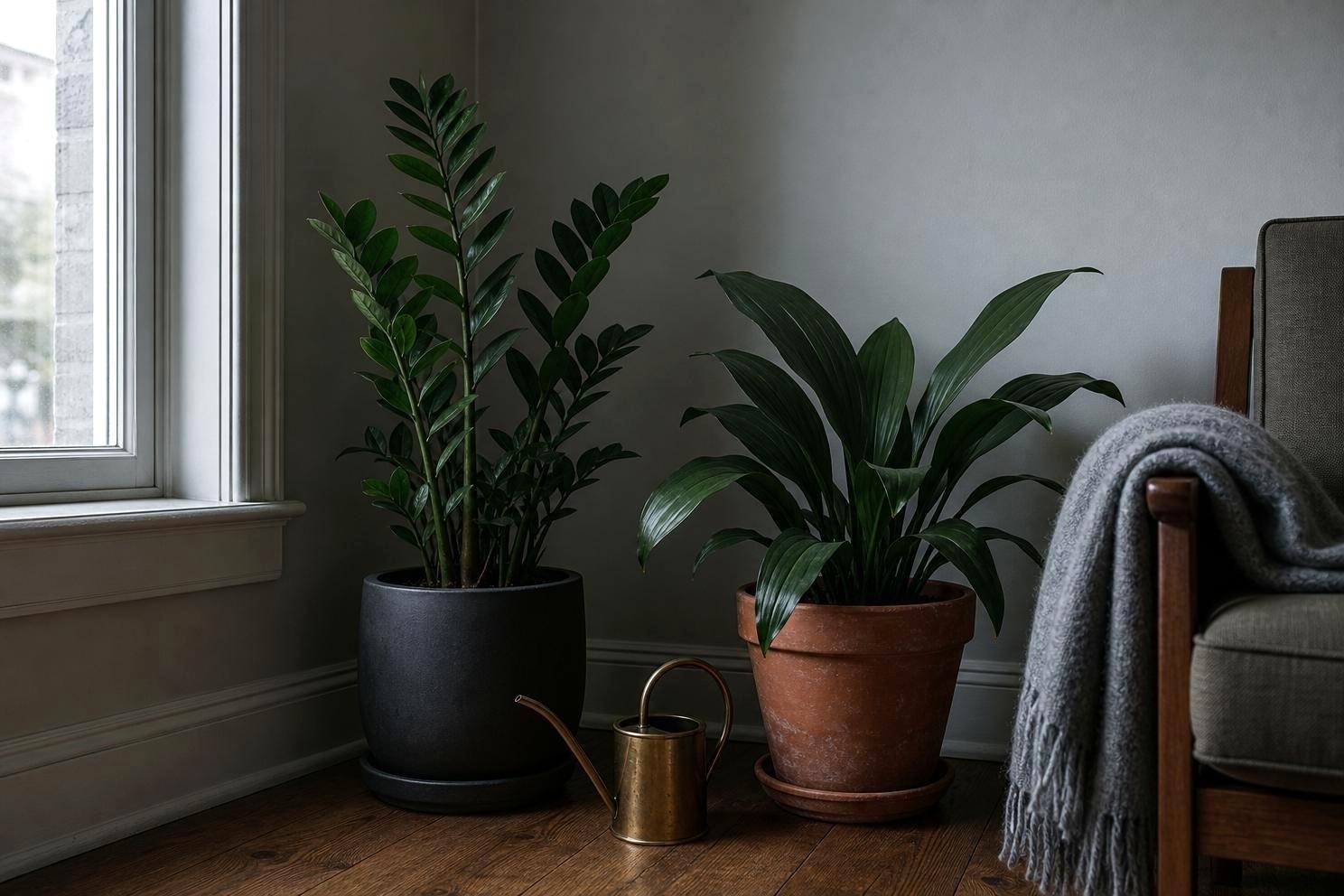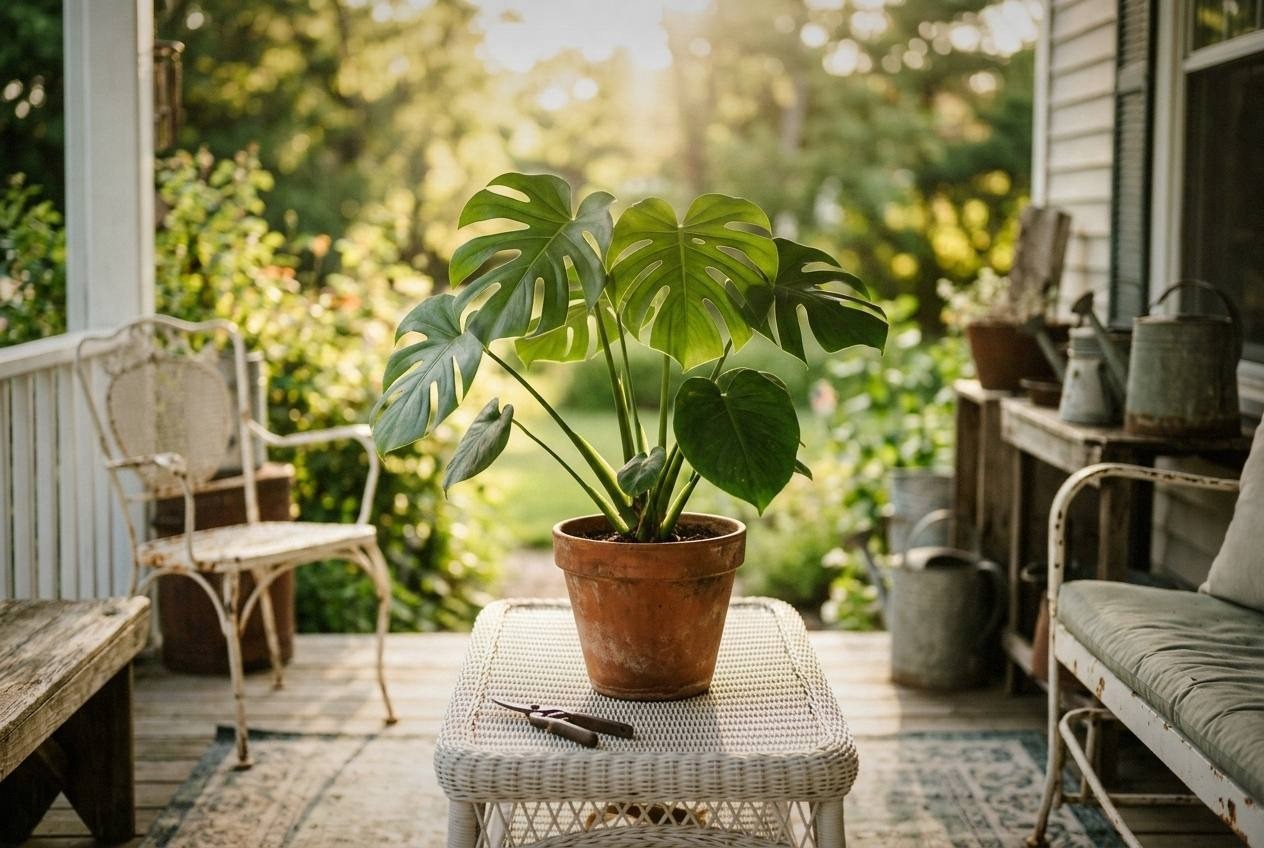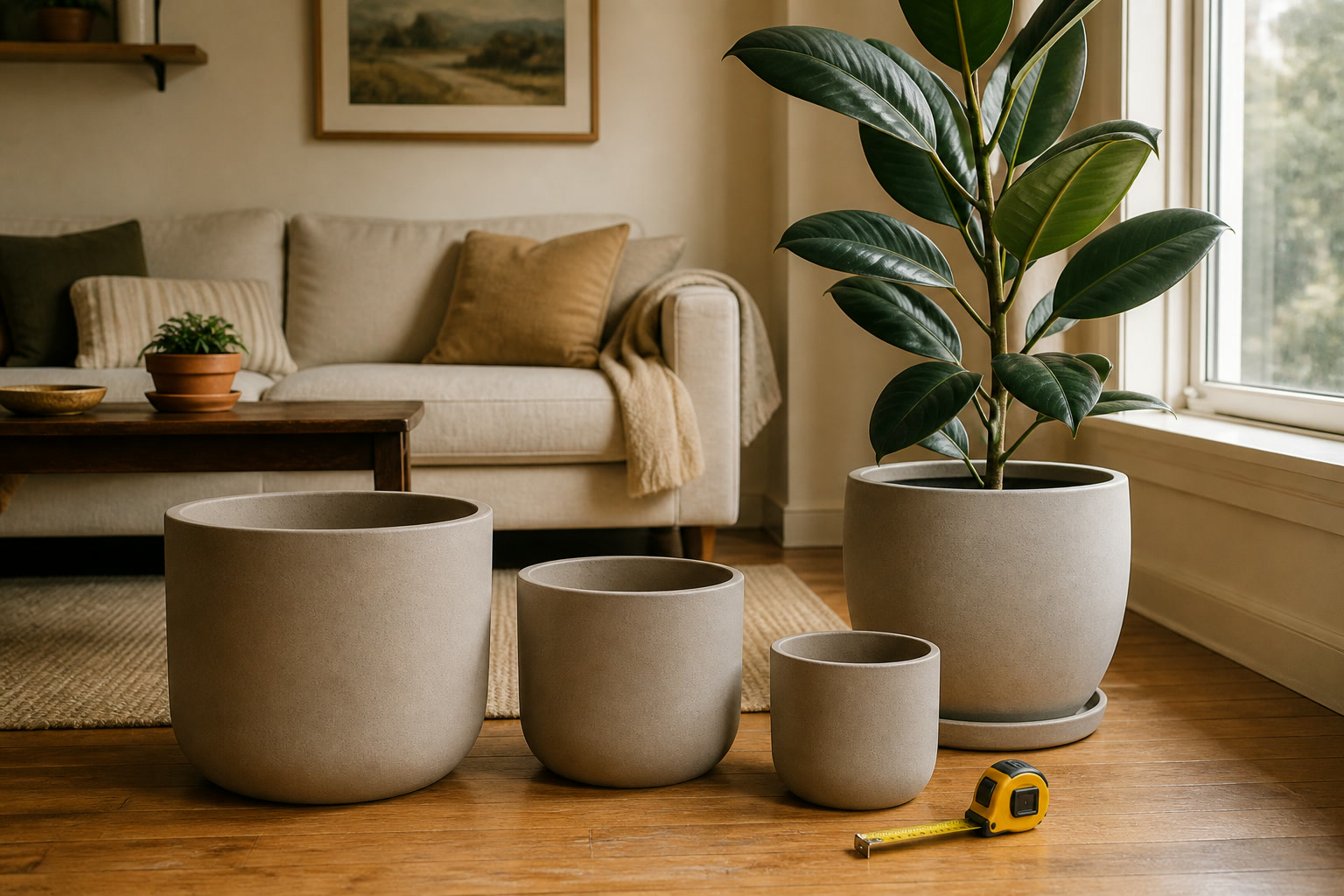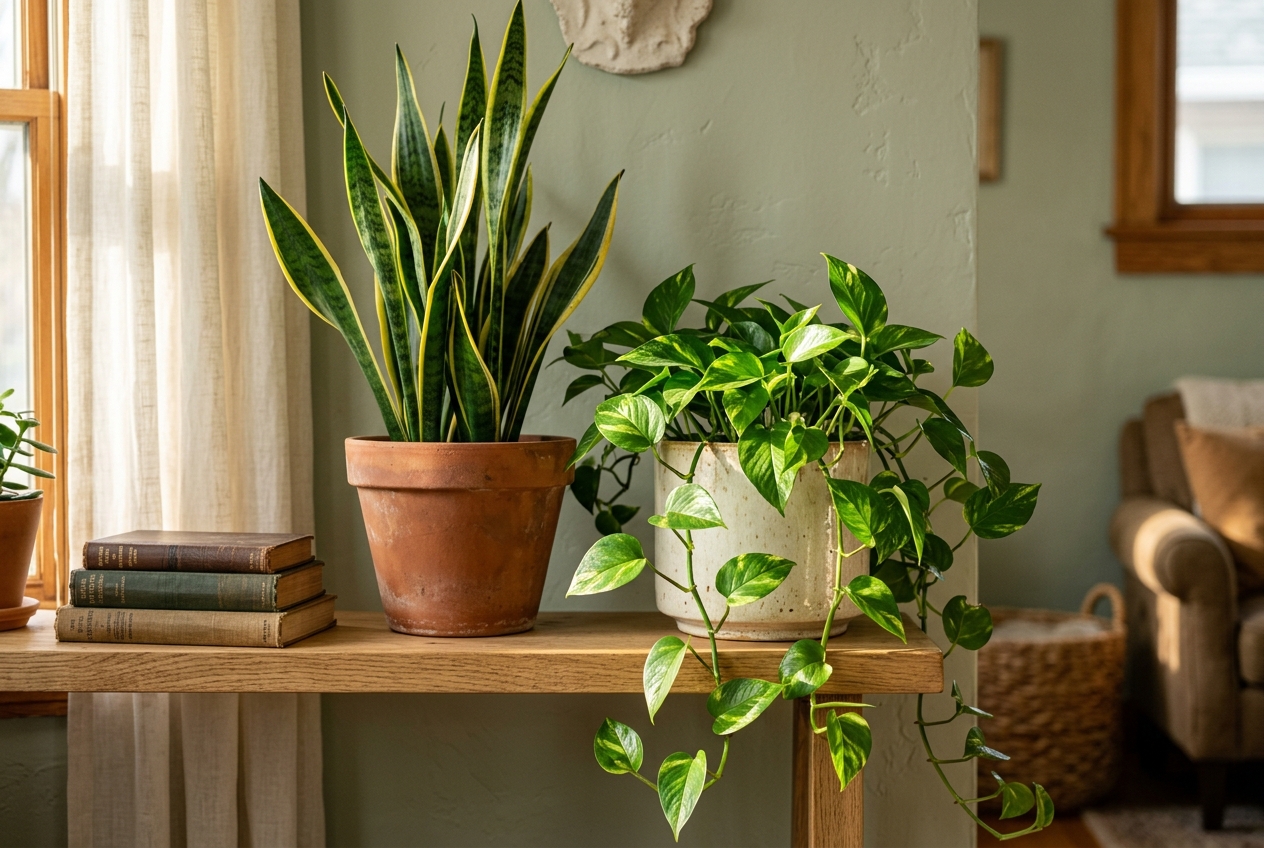
Search for air purifying plants and you get the same nine names on forty different sites, usually with a line about NASA and a promise that three pots will clean the air in your living room.
The plants are genuinely good houseplants. The promise attached to them is doing more work than the evidence supports, and it is worth knowing which part is which before you buy nine pots expecting the apartment to feel different.
So here are both halves. What the science actually found, and the nine plants I would still put in a room, with the light each one needs and whether it is safe around a cat.
Where the NASA Claim Comes From
In 1989 a NASA researcher named B.C. Wolverton published Interior Landscape Plants for Indoor Air Pollution Abatement , a study on using houseplants to scrub air inside sealed spacecraft. Plants went into airtight chambers roughly the size of a large packing box, a measured dose of formaldehyde or benzene went in with them, and the concentration was tracked over the next day or two.
Inside those chambers the levels dropped. That result is real and nobody disputes it.
The problem is the leap from a sealed box to a living room. Your living room is not sealed. Air moves through it constantly, through gaps, vents, doors, and the simple fact that a building breathes. A chamber the size of a box has no air exchange at all, which is exactly what let the plants show an effect.
The widely repeated “one plant per 100 square feet” guideline is not a NASA recommendation either. It came later, from a popular book, as an extrapolation from those chamber numbers.
What the Research Actually Found
In 2019 Bryan Cummings and Michael Waring at Drexel University published Potted plants do not improve indoor air quality in the Journal of Exposure Science and Environmental Epidemiology. They took twelve of these plant studies, converted every result into the same unit air professionals use to compare purifiers, and set it against the air exchange a normal building already provides on its own.
To match what a home’s existing ventilation already does, they calculated you would need somewhere between ten and one thousand plants per square meter of floor.
Two organizations with no stake in houseplants have landed in the same place. The EPA’s indoor air guidance states that “there is currently no evidence, however, that a reasonable number of houseplants remove significant quantities of pollutants in homes and offices” , and points readers to source control, ventilation and filtration instead. The American Lung Association reaches the same conclusion and makes the same three recommendations.
Read that EPA sentence closely, because the hedge in it is carrying real weight. It does not say plants do nothing. It says there is no evidence that a reasonable number of them removes a significant quantity. That is a statement about dose, not about biology.
Why the Same Plants Do Work in a Green Wall
This is the part that almost never makes it into these articles, and it is why the flat “plants are useless” version is wrong too.
Take the same species, pack them at high density into a vertical panel, and pull room air through the foliage and the root zone with a fan. Now the effect is measurable. A study in Air Quality, Atmosphere & Health tested one of these active green wall biofilters and found roughly 57% single-pass removal of methyl ethyl ketone, a common indoor VOC, at an airflow of 50 cubic meters an hour.
The plants did not change. The airflow did.
That is the whole thing in one sentence: a potted plant is not a bad filter, it is a filter with almost no air moving through it. A leaf only works on the air that touches it, and in a still room very little does. Those systems also run activated carbon in the growing medium, so the plant is not doing all of the work alone.
Which is worth knowing, because it tells you what a shelf of pots is and is not. It is not an air purifier. It is also not a con. It is a plant.
The One Part That Is True
There is a real mechanism under the “snake plant in the bedroom” advice, and most articles garble it, so it is worth getting right.
Most plants open their leaf pores in daylight, take in carbon dioxide, and release oxygen. Succulents and a few other groups evolved in dry places where opening pores in the afternoon heat would cost too much water, so they run it backwards. Pores stay shut through the day and open at night. Botanists call it CAM photosynthesis, and snake plants, aloe, most succulents, and many orchids and bromeliads all use it.
So yes, a snake plant does release oxygen at night. A pothos does not.
The quantity is the part nobody mentions. An adult breathes through roughly 550 liters of oxygen a day. A potted snake plant contributes on the order of grams. You could not detect the difference in a closed bedroom with laboratory instruments, let alone feel it.
Keep the snake plant in the bedroom. It is a beautiful, nearly unkillable plant that tolerates a dark corner. Just keep it for that.
Nine Plants Worth Growing
Leaf area is the honest variable. A plant with more leaf surface, growing faster, does more gas exchange than a small slow one. That is why the same names keep appearing on every list: they are the big, fast, forgiving houseplants. They earned the spot, just not for the stated reason.
Light levels below are in plain terms. Low light means several feet back from a north window, or a room that never gets a direct sun beam. Bright indirect means near a window but out of the beam itself.
1. Golden Pothos (Epipremnum aureum)
The fastest grower here and the hardest to kill. Vines reach six to ten feet indoors and root in a glass of water if you want more of them. Low to bright indirect light. Water when the top two inches of soil are dry, usually about weekly. Toxic to cats and dogs.
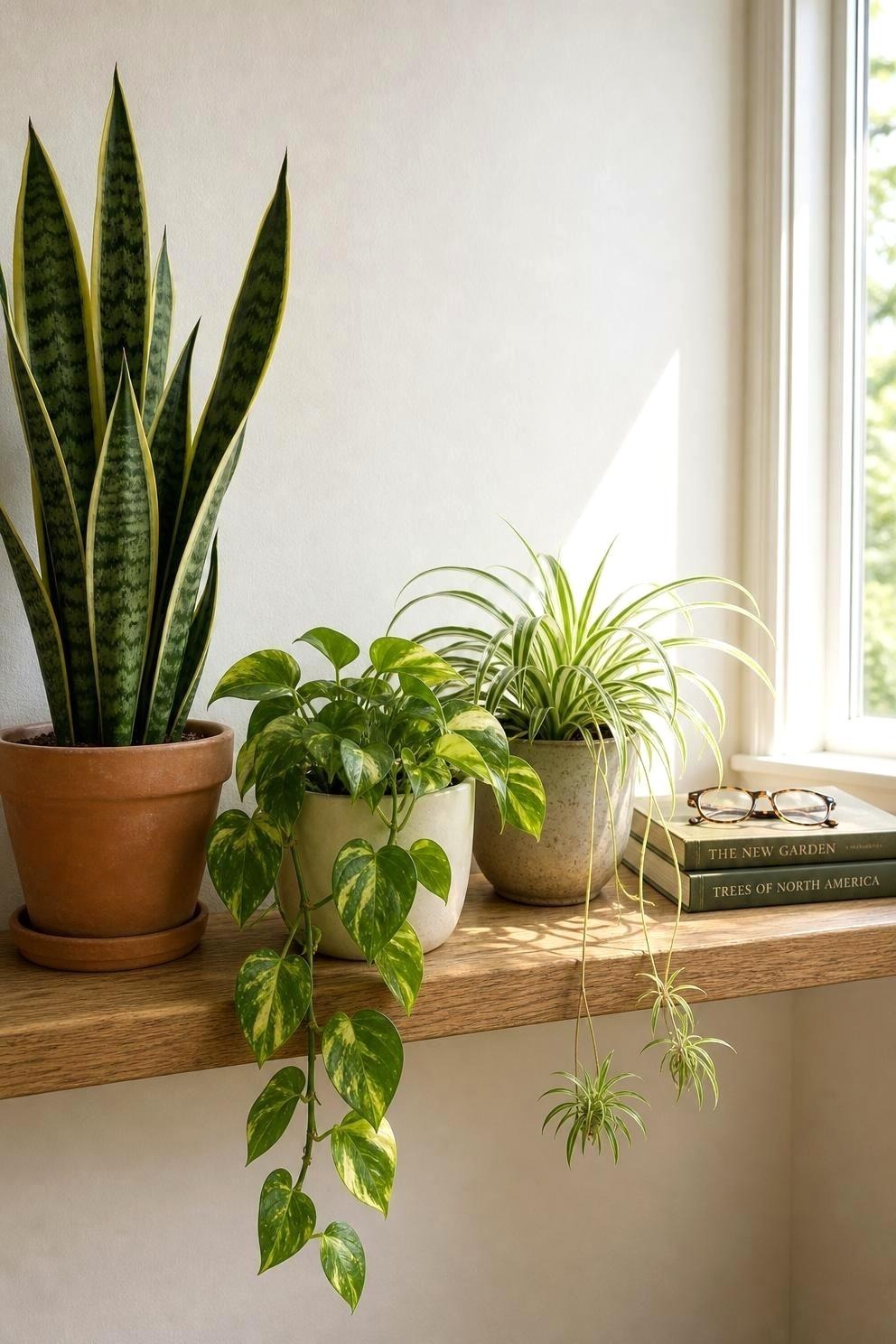
2. Snake Plant (Dracaena trifasciata)
Tolerates a darker corner than almost anything else and forgives a month of neglect. Upright form, so it fits the narrow gap beside a sofa where nothing else does. Water every two to three weeks, less in winter. The usual way people kill one is watering it. Mildly toxic to cats and dogs.
3. Spider Plant (Chlorophytum comosum)
The one I recommend most to people with pets and no confidence. Bright indirect light, tolerates less, water weekly. Throws out baby plants on long stems that you can snip and pot, so one plant becomes a shelf full inside a year. Safe for cats and dogs.
4. Areca Palm (Dypsis lutescens)
Large fronds, so a lot of leaf area in a single pot, and it fills a corner the way furniture does. Bright indirect light. Keep the soil lightly moist and do not let it dry out completely. Safe for cats and dogs.
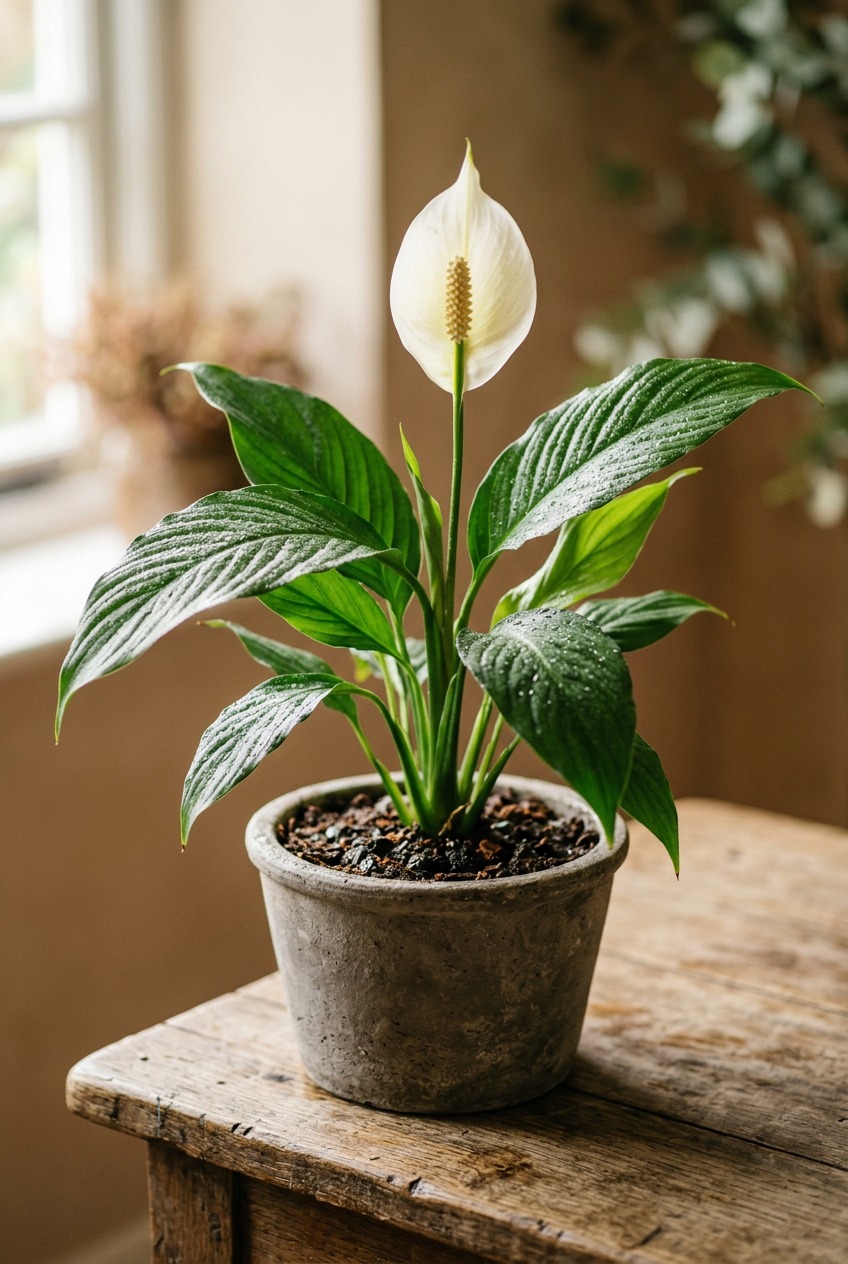
5. Peace Lily (Spathiphyllum wallisii)
Handles low light better than most flowering plants and blooms white twice a year. Its real virtue is that it droops dramatically when thirsty and recovers within hours, so it tells you what it needs instead of dying quietly. Water every five to seven days. Toxic to cats and dogs.
6. Boston Fern (Nephrolepis exaltata)
High leaf area, and it puts real moisture back into a dry room, which matters more through winter than anything on the air quality question. The tradeoff is that it wants humidity and steady moisture, so it is the fussiest plant here. Bright indirect light, water two or three times a week. Safe for cats and dogs.
7. Rubber Plant (Ficus elastica)
Big glossy leaves, grows six to ten feet indoors over several years, and reads as furniture rather than as a houseplant. Bright indirect light, water when the top inch dries. Wipe the leaves with a damp cloth every month or two, which is worth doing on any large-leaved plant. Toxic to cats and dogs.
8. Dragon Tree (Dracaena marginata)
Thin arching leaves on woody stems, reaching six to eight feet indoors. Tolerates low light but grows faster in bright indirect. Water every ten to fourteen days. Sensitive to fluoride in tap water, so if the leaf tips brown, switch to filtered. Toxic to cats and dogs.
9. Parlor Palm (Chamaedorea elegans)
Stays around three to four feet, so it works where an areca would swamp the room, and it handles low light better than most palms. Water when the top inch dries. Safe for cats and dogs.
Which One to Choose for Your Room
Three questions settle it, in this order:
- Watch the light for one full day. Not a guess from memory. If the spot never gets a direct sun beam and you would need a lamp to read there at noon, that is low light, and your list is the dragon tree, the snake plant and the pothos. Everything else on this page wants a window.
- Decide whether a pet will reach it. If a cat or dog shares the room and chews, build from the four safe ones: spider plant, areca palm, Boston fern, parlor palm. Height helps, but a determined cat gets to a shelf.
- Pick the size the gap needs. Floor corner takes an areca palm or a rubber plant. Narrow gap beside furniture takes a snake plant. Shelf or hanging takes a pothos or a spider plant. Buying the plant before you know the gap is how you end up rearranging the room around a pot.
| Plant | Light | Water | Mature size | Cats and dogs |
|---|---|---|---|---|
| Golden pothos | Low to bright indirect | Weekly | 6 to 10 ft trailing | Toxic |
| Snake plant | Low to bright indirect | Every 2 to 3 weeks | 2 to 4 ft upright | Mildly toxic |
| Spider plant | Bright indirect | Weekly | 1 to 2 ft, trailing babies | Safe |
| Areca palm | Bright indirect | Keep lightly moist | 5 to 7 ft | Safe |
| Peace lily | Low to medium | Every 5 to 7 days | 1 to 3 ft | Toxic |
| Boston fern | Bright indirect | 2 to 3 times a week | 2 to 3 ft spread | Safe |
| Rubber plant | Bright indirect | Every 7 to 10 days | 6 to 10 ft | Toxic |
| Dragon tree | Low to bright indirect | Every 10 to 14 days | 6 to 8 ft | Toxic |
| Parlor palm | Low to bright indirect | Every 7 to 10 days | 3 to 4 ft | Safe |
Pet Safety and the Mistakes That Cost You a Plant
Most air purifying plant lists say nothing about toxicity, and it is the only thing on the page attached to an actual outcome. Toxic here usually means mouth irritation, drooling and vomiting rather than an emergency, but a determined chewer and a peace lily is a vet visit. The ASPCA keeps a searchable list of toxic and non-toxic plants covering every common houseplant, and it is worth checking before anything new comes home.
The other four mistakes, in the order people make them:
- Watering on a schedule instead of on the soil. Overwatering kills more houseplants than everything else combined. The schedule changes with the season and the room.
- A pot with no drainage hole. A beautiful cachepot with no hole is a bucket. Keep the plastic nursery pot inside it and lift it out to water.
- Buying nine at once. Three plants you keep alive teach you more than nine you replace.
- Ignoring the light for a week and blaming the plant. A pothos in a windowless bathroom is not a hardy plant being difficult. It is a plant in the dark.
What Actually Changes the Air in a Room
If air quality is the reason you came here, these are the three things that move the number, in order of how much they move it.
Open a window. Fifteen minutes with two windows open on opposite sides of the home exchanges more air than any number of pots. In winter, short and frequent beats long and once.
Stop the source. Most indoor volatile compounds come from something you brought in: new particleboard furniture, fresh paint, plug-in fragrance, scented candles, aerosols, cleaning sprays. Low-VOC paint and skipping the air freshener does more than a shelf of plants, and it costs nothing.
Run a filter, if you have a real reason. A HEPA filter handles dust, pollen, dander and smoke particles. If gases rather than particles are the concern, the unit needs activated carbon as well, and the carbon has to be replaced on a schedule. Match the unit’s rated room size to the room you are actually putting it in.
None of that makes the plants pointless. A room with plants in it is a better room to sit in, and there is decent evidence that being around them helps mood and concentration. That is a real benefit. It is simply a different one from the one on the label.
Placement by Light Level
- North-facing or interior rooms: dragon tree, snake plant, pothos. The three that survive a genuinely dim corner.
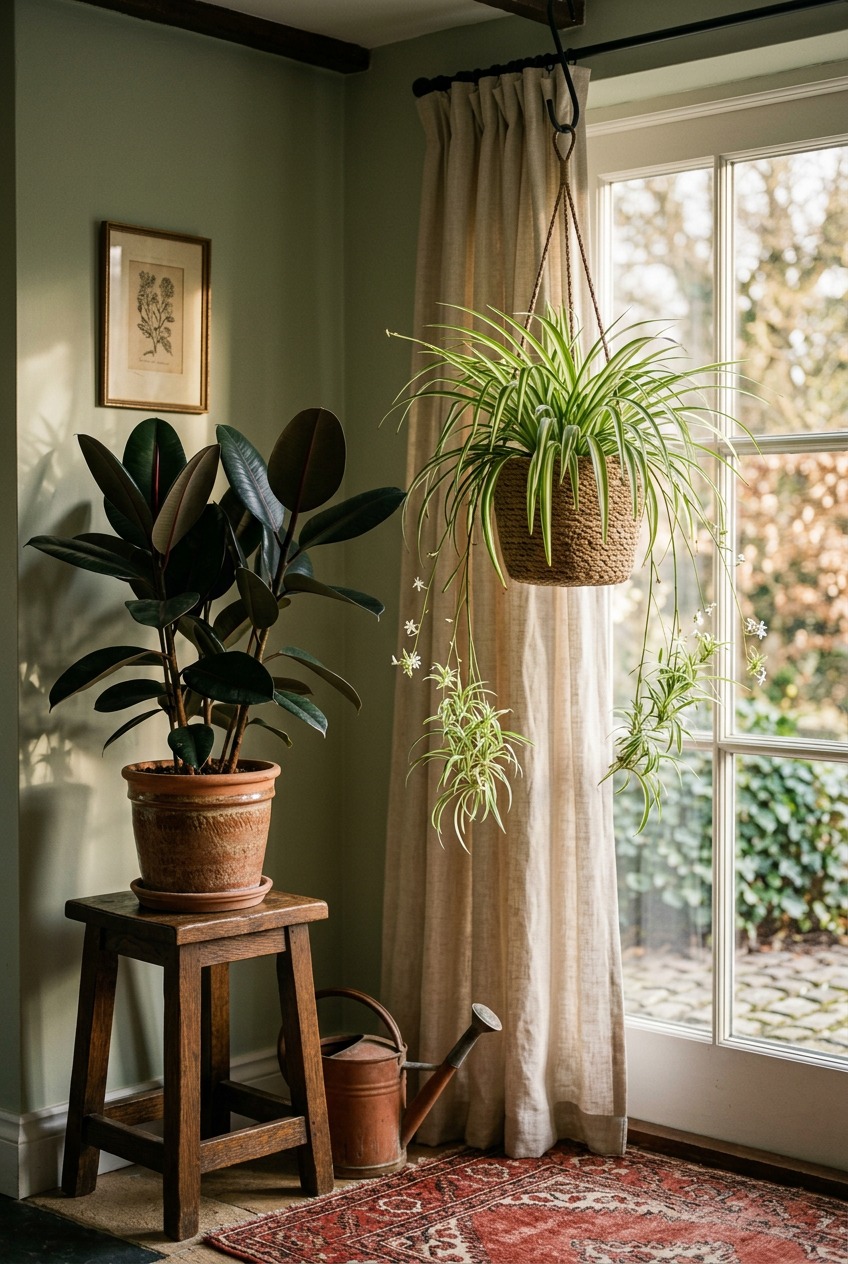
- Bright window, out of the beam: areca palm, rubber plant, spider plant, Boston fern.
- Bedroom: any of them. The snake plant if you like the idea of the night oxygen, the parlor palm if you want something softer.
- Bathroom: Boston fern, if there is a window. The humidity solves the one thing that plant is difficult about.
- Group them. Three or five pots at different heights in one corner look deliberate. The same plants spread one to a room look like leftovers.
Care and Watering Without Guessing
Put a finger two inches into the soil. If it comes out with soil clinging to it, wait. If it comes out clean and dry, water until it runs from the drainage hole, then empty the saucer. Standing water in a saucer is how roots rot.
Everything slows in winter. A pothos on a weekly summer schedule usually wants every ten to fourteen days from November through February, and a snake plant can go a month or more.
Wipe the leaves on anything large-leaved every month or two. Dust on a rubber plant or a peace lily blocks light the plant needs, and a damp cloth takes two minutes.
Feed at half the strength on the label, and only between spring and early autumn. Nothing on this list is a heavy feeder, and fertilizing a plant that is barely growing in January burns roots.
Questions People Actually Ask
Do air purifying plants really work?
Not in the way the phrase implies. The EPA’s position is that there is no evidence a reasonable number of houseplants removes a significant quantity of pollutants from a home, and the Drexel review put the shortfall at ten to a thousand plants per square meter. Built into a fan-forced green wall, the same species measurably do remove VOCs. On a shelf, in still air, assume the effect is too small to notice and grow them for the other reasons.
Which plant purifies air the most?
If you want the one with the most leaf surface doing the most gas exchange, it is the areca palm or a large Boston fern. In a still room that is a ranking inside an effect too small to measure, so treat it as a tiebreaker between two plants you already like rather than a reason to buy either.
What plant removes 78% of airborne mold?
That figure circulates attached to English ivy. It traces back to a 2005 conference presentation that tested ivy in a sealed container alongside moldy bread, and I can find no peer-reviewed replication of it at room scale. Airborne mold in a home is a moisture problem. Find the damp and fix the damp.
Should you sleep with plants in your bedroom?
Yes, it is safe. The old worry was that plants release carbon dioxide at night and would compete with you for air. The amount is trivial next to your own breathing and next to the air moving through the room. Snake plants and aloe actually release oxygen overnight rather than carbon dioxide, though again, in grams.
Which plant absorbs bad smells?
None of them, in any useful quantity. Odor is a source problem, and the fix is finding the source: the bin, the drain, damp fabric, the litter tray. A plant will not out-compete any of those.
What plants make a house smell good?
A different category, and worth knowing that is what you want. Fragrant houseplants are things like jasmine, gardenia, scented geranium and a flowering hoya. None of them appear on air purifying lists because scent and filtration are unrelated, and the fragrant ones generally want much more light than the nine above.
How many should I start with?
Three, at different heights, in one corner whose light you have actually watched for a day. Buying nine at once is how people end up with nine dead plants and a theory that they cannot keep anything alive.
The Short Version
Buy the plants. Put them where the light suits them, keep the pet-safe ones within reach of the animals and the rest out of reach, and group them so they look like a decision rather than an accumulation.
Then open a window, because that is the part that cleans the air.