
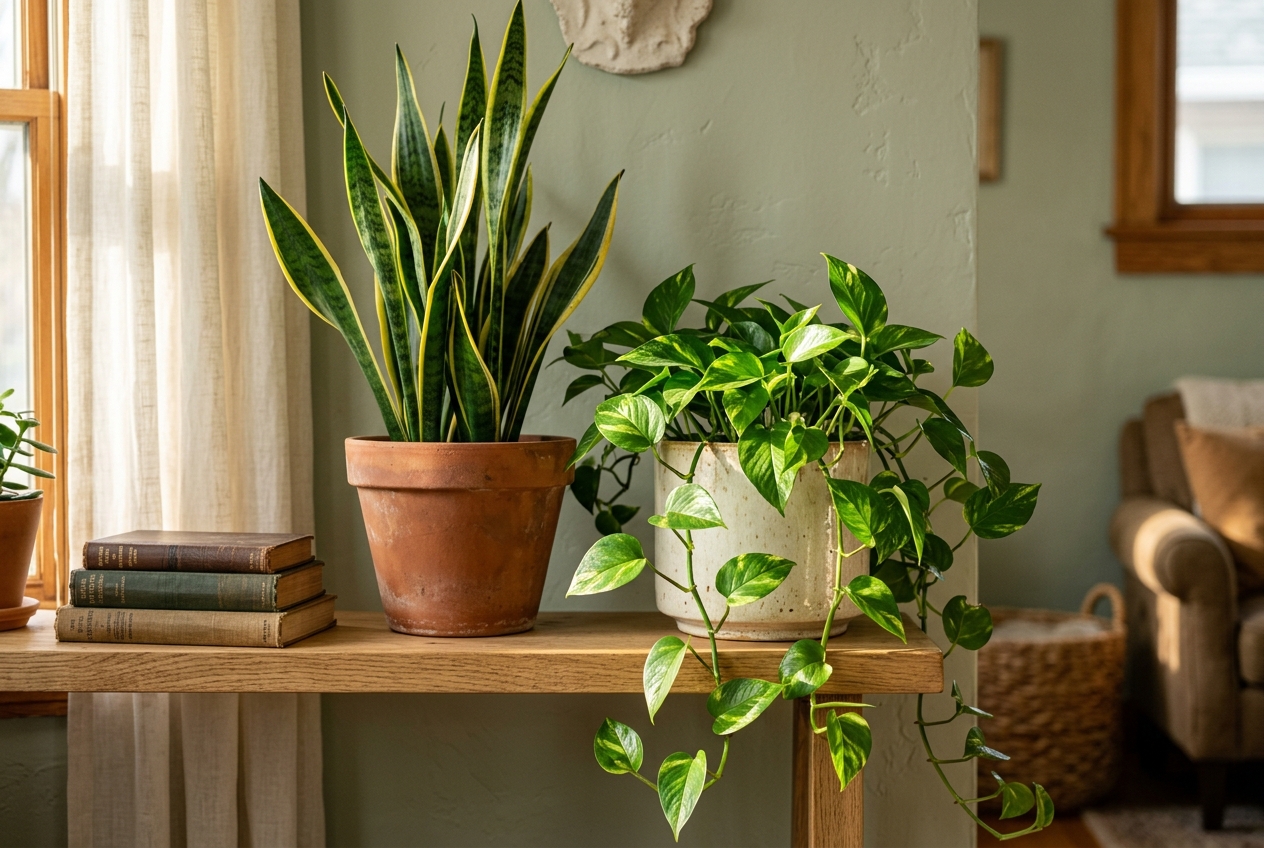
Snake plants and pothos remove formaldehyde and benzene from indoor air while tolerating the low light and inconsistent watering that kill most houseplants. NASA’s Clean Air Study identified these species as top performers for filtering common household toxins, and both survive in USDA zones 9-11 outdoors or as houseplants anywhere.
What You Need
| Item | Cost | Notes |
|---|---|---|
| 6-inch potted snake plant | $12-18 | Sansevieria trifasciata, any variety |
| 4-inch potted golden pothos | $8-12 | Epipremnum aureum |
| 6-inch spider plant | $10-15 | Chlorophytum comosum |
| Peace lily (6-inch pot) | $15-20 | Spathiphyllum wallisii |
| Rubber plant (8-inch pot) | $20-30 | Ficus elastica |
| Dracaena marginata (10-inch pot) | $25-35 | Also called dragon tree |
| Boston fern (hanging basket) | $18-25 | Nephrolepis exaltata |
| Well-draining potting mix | $8-12 per bag | Standard indoor formula |
| Ceramic or plastic pots with drainage | $5-15 each | Match your decor |
All seven plants are available at Home Depot, Lowe’s, or local nurseries year-round. Buy smaller pots to save money. They grow fast.
The Seven Plants and What They Do
1. Snake Plant (Sansevieria trifasciata)
Removes formaldehyde, benzene, trichloroethylene, and xylene. Releases oxygen at night, unlike most plants. Water every 2-3 weeks. Tolerates 50-85°F and low light (as low as 10 foot-candles). Mine sits 8 feet from a north window and hasn’t been watered in three weeks.
Height: 1-4 feet depending on variety. ‘Laurentii’ has yellow edges. ‘Black Gold’ is darker.
2. Golden Pothos (Epipremnum aureum)
Filters formaldehyde, benzene, and carbon monoxide. Grows in water or soil. Trailing vines reach 6-10 feet indoors. Water when top 2 inches of soil dry out, usually weekly. Thrives in 65-85°F and any light except direct sun.
I’ve propagated 12 plants from one $10 starter by cutting 6-inch stems below a node and rooting them in water for two weeks.
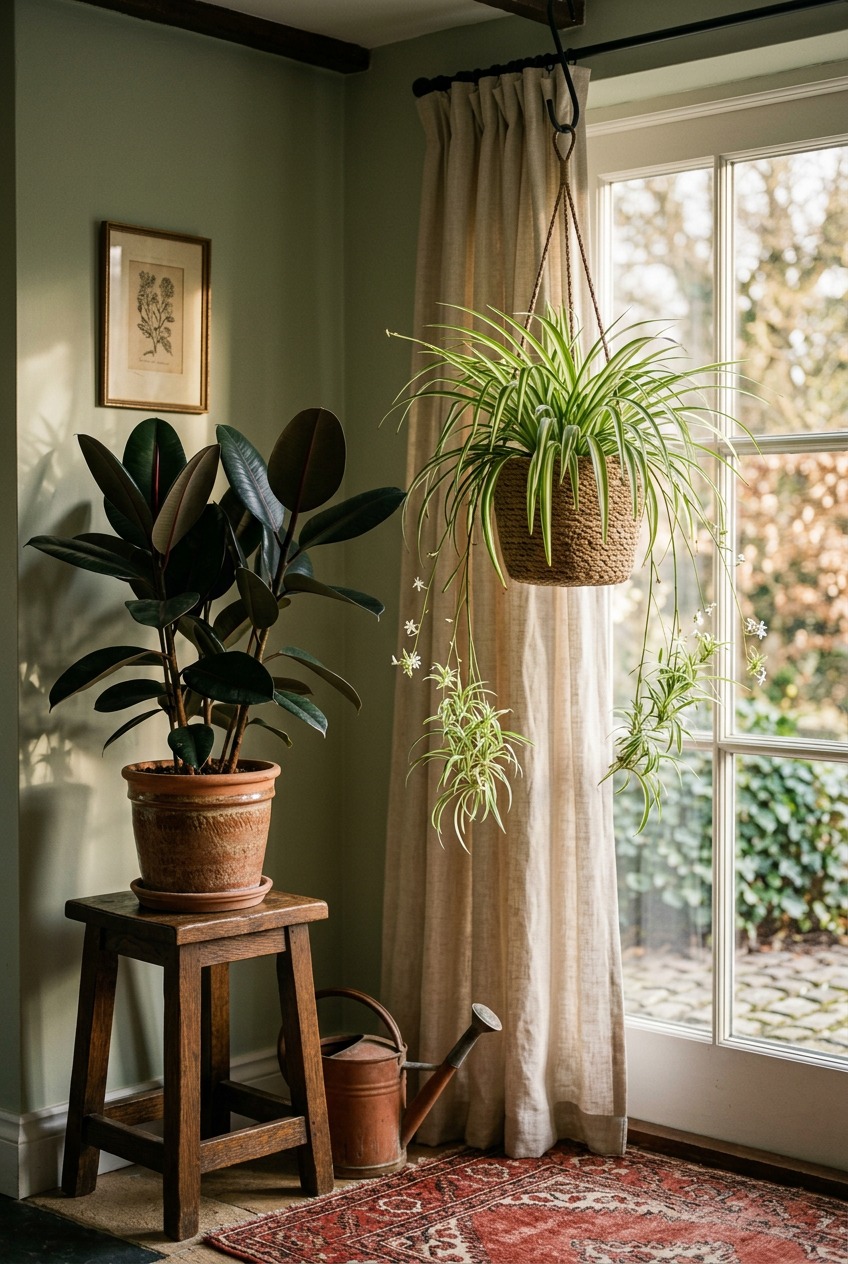
3. Spider Plant (Chlorophytum comosum)
Removes formaldehyde and xylene. Produces baby plants (spiderettes) on long stems that you can pot or leave hanging. Water weekly. Prefers 60-75°F and bright indirect light but survives in dimmer corners. Non-toxic to cats and dogs.
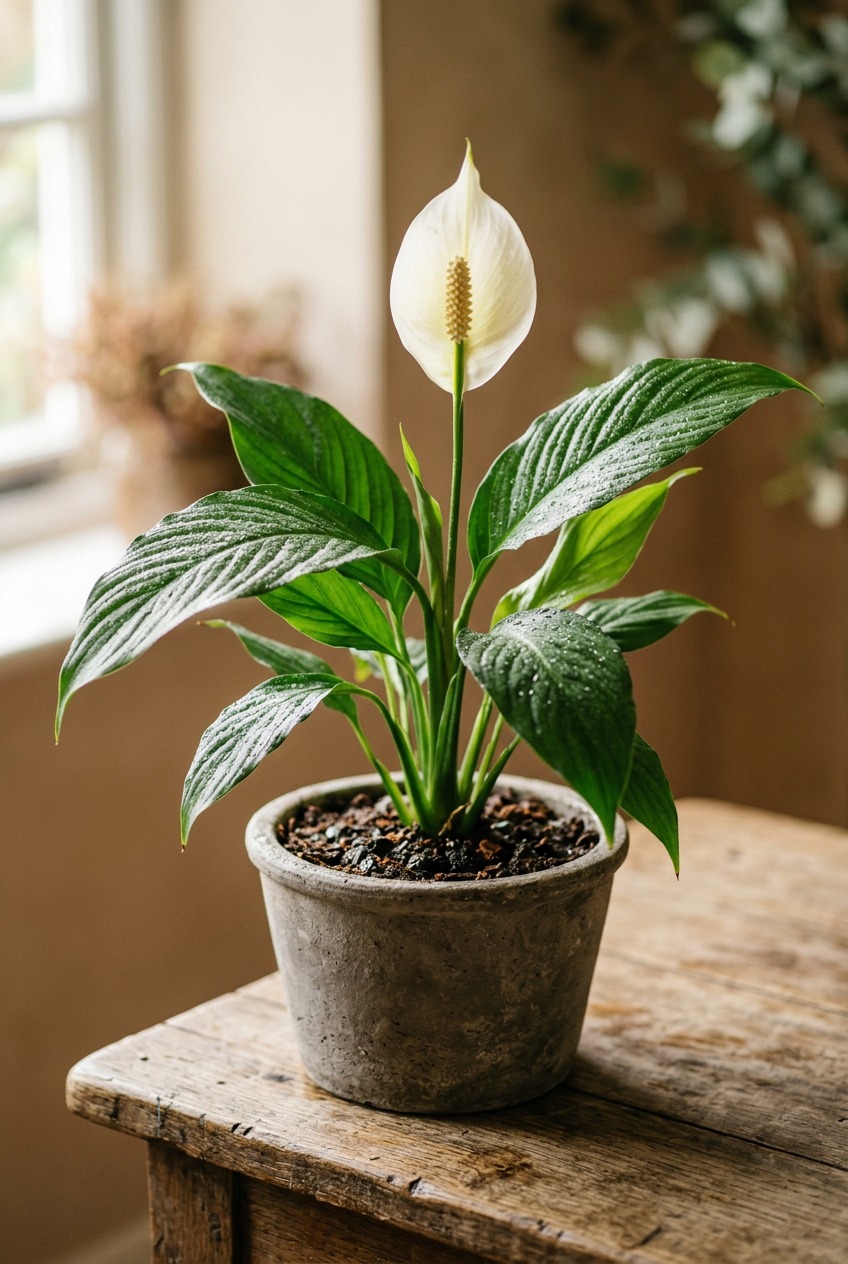
4. Peace Lily (Spathiphyllum wallisii)
Filters ammonia, benzene, formaldehyde, and trichloroethylene. White flowers bloom in spring and summer. Droops dramatically when thirsty, then perks up within hours of watering. Water when leaves start to sag, usually every 5-7 days. Needs medium light (100-200 foot-candles). Keep away from pets (toxic if ingested).
5. Rubber Plant (Ficus elastica)
Removes formaldehyde. Large, glossy leaves. Grows 6-10 feet tall indoors over several years. Water when top inch of soil dries, every 7-10 days. Prefers bright indirect light and 60-75°F. Wipe leaves monthly with a damp cloth to maximize air filtration.
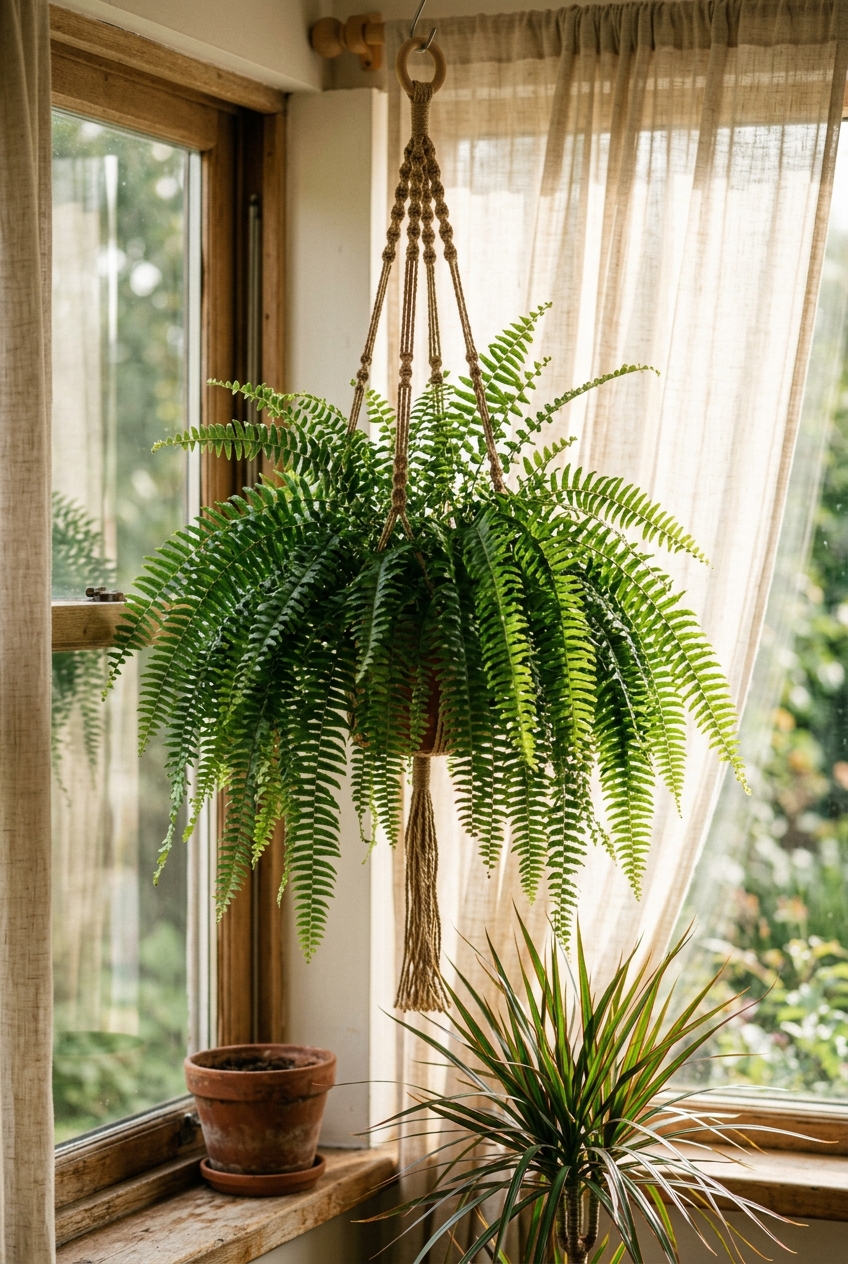
6. Dracaena Marginata (Dragon Tree)
Filters benzene, formaldehyde, trichloroethylene, and xylene. Thin leaves on woody stems. Reaches 6-8 feet indoors. Water every 10-14 days. Tolerates low light but grows faster in bright indirect light. Sensitive to fluoride in tap water (use filtered or distilled if leaf tips brown).
7. Boston Fern (Nephrolepis exaltata)
Top performer for removing formaldehyde. Adds humidity to dry indoor air (releases up to 2 liters of moisture per day). Water 2-3 times per week to keep soil consistently moist. Needs bright indirect light and 60-75°F. Best in a hanging basket near a window.
Quick Tip: Group plants together to create a microclimate with higher humidity. This helps ferns and peace lilies thrive without daily misting.
How Many Plants You Actually Need
NASA recommends one plant per 100 square feet of living space for measurable air quality improvement. A 300-square-foot living room needs three plants minimum. I keep five in my 250-square-foot space and notice less dust buildup on surfaces.
Larger plants clean more air. One 8-inch rubber plant filters more than two 4-inch pothos. Start with three medium plants (6-8 inch pots) and add more if you like the look.
Placement by Light Level
| Light Condition | Best Plants | Window Distance |
|---|---|---|
| Low light (north windows, corners) | Snake plant, pothos, dracaena | 6-15 feet from window |
| Medium light (east windows, filtered west) | Peace lily, spider plant, rubber plant | 3-6 feet from window |
| Bright indirect (south windows with sheer curtains) | All seven plants thrive | 2-4 feet from window |
Direct sun burns most of these plants. If a south or west window gets hot afternoon sun, move plants back or use sheer curtains.
What to Watch For
Yellowing leaves: Overwatering. Let soil dry more between waterings. Snake plants and dracaenas rot easily if kept wet.
Brown leaf tips: Underwatering, low humidity, or fluoride in tap water. Boston ferns and spider plants are sensitive. Switch to filtered water or let tap water sit out 24 hours before using.
Leggy growth: Not enough light. Move the plant closer to a window or add a grow light. Pothos stretches toward light with long gaps between leaves when it’s too dark.
Pests: Check undersides of leaves monthly for spider mites (fine webbing) or mealybugs (white cottony spots). Wipe leaves with diluted dish soap (1 teaspoon per quart of water) if you spot bugs.
From my experience: I killed three peace lilies before I learned they need consistent moisture. Now I water mine every Sunday and Thursday without checking the soil. It hasn’t drooped in six months.
Watering Without Guessing
Buy a $10 moisture meter from any hardware store. Insert the probe 2-3 inches into soil. Water when it reads 2-3 on a 1-10 scale for most plants. Snake plants and dracaenas can drop to 1 before watering.
Or use the finger test. Stick your index finger 2 inches into the soil. If it feels dry, water. If it’s damp, wait two days and check again.
Water until it drains from the bottom of the pot. Empty the saucer after 15 minutes. Sitting water causes root rot.
Make It Your Own
Small spaces: Choose pothos or spider plants. Train pothos up a moss pole or let it trail from a shelf. Spider plants fit in hanging baskets that don’t take floor space.
Pet owners: Stick to spider plants (non-toxic). Keep peace lilies, dracaenas, and pothos out of reach (mildly toxic if chewed).
Dry climates: Add a Boston fern. It pumps moisture into the air and thrives if you keep the soil damp.
Renters: All seven plants are easy to move. Use lightweight plastic pots instead of heavy ceramics. Pothos and spider plants survive a few days in a box during a move better than ferns or peace lilies.
Low-maintenance preference: Snake plants and pothos survive two weeks without water. I’ve left both for 18 days while traveling with no issues.
Before You Start
Budget: Expect to spend $80-150 for all seven plants in starter sizes, plus pots and soil. Buy three plants first and add more over six months as you learn what works in your space.
Time commitment: 15-30 minutes per week for watering and quick checks. Monthly leaf wiping adds 10 minutes.
Best season to buy: Spring and summer. Plants establish faster in warm months, but these seven adapt year-round indoors.
Common misconception: More plants don’t always mean cleaner air. One healthy 10-inch rubber plant filters more than five struggling 4-inch plants. Focus on keeping a few plants thriving rather than collecting dozens.
FAQ
How long does it take to notice cleaner air?
NASA’s study showed measurable toxin reduction within 24 hours in sealed chambers. In a typical living room with open doors and windows, expect subtle improvements over 2-4 weeks. You might notice less stuffiness or fewer headaches, but the change isn’t dramatic. Three medium plants in a 300-square-foot room filter continuously but won’t eliminate all pollutants.
Can I use these plants in a basement living room with no windows?
Snake plants and pothos survive in low light (10-50 foot-candles) but need some light source. Add a full-spectrum LED grow bulb ($15-25) in a nearby lamp, set on a timer for 12-14 hours daily. Place plants within 2-3 feet of the bulb. I keep a snake plant in a windowless bathroom under a 15-watt grow bulb and it’s grown 4 inches in eight months.
Do I need to fertilize these plants?
Feed once per month during spring and summer with half-strength liquid houseplant fertilizer (10-10-10 NPK). Skip fertilizing in fall and winter when growth slows. Overfertilizing causes salt buildup and brown leaf tips. I use Miracle-Gro Indoor Plant Food diluted to half the label recommendation.
