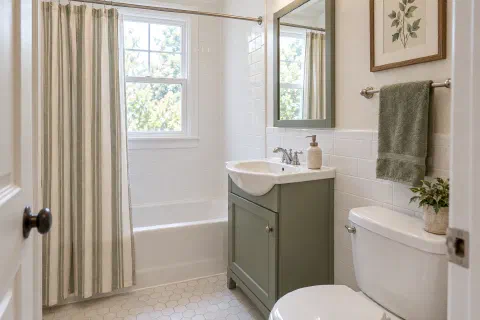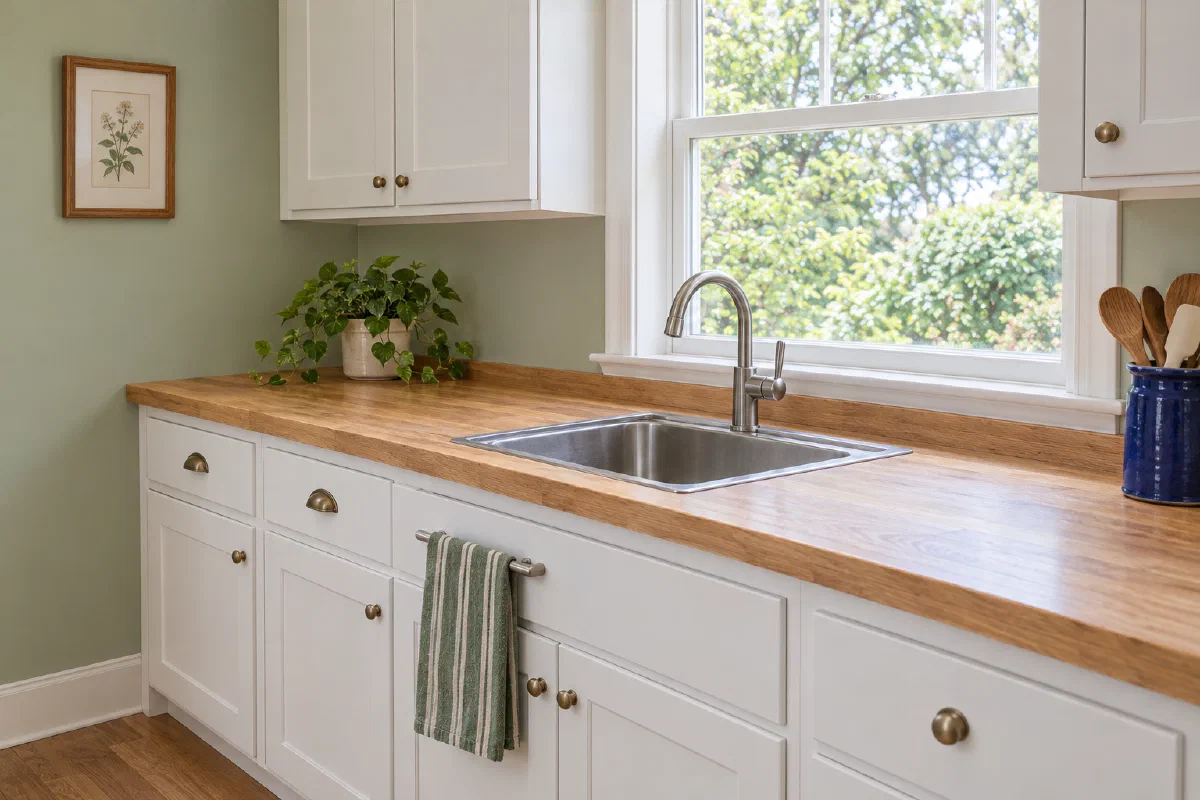
The kitchen looks lovely until you need somewhere to chop an onion. Then the vase, candle and little stack of cookbooks all have to move. In a small home, the same counter might handle breakfast, food preparation and the bag you drop when you walk through the door.
These kitchen decor ideas put color and character in things you use, on a dry wall or in an existing shelf. Keep a clear patch of counter for cooking before you add anything. You can make the room feel more personal with a patterned towel and one ceramic piece, then decide whether it needs more.
The FDA’s safe food handling guidance calls for washing cutting boards, utensils and countertops after preparing food items. An arrangement that leaves room to work and wipe down is easier to live with than a display spread across the food preparation area.
1. Keep the counter where you prepare food clear
Put your usual cutting board on the spot where you chop and assemble meals. Set an empty mixing bowl beside it and stand where you normally work. That shows how much space to keep available more reliably than copying a styled kitchen photograph.
Move decorations out of that patch and check where each one can go. A vase might belong on the dining table. A cookbook you rarely open can return to a shelf. Keep something on the counter because you reach for it there, rather than because there happens to be an empty corner.
You may need room to unload groceries or prepare more than one part of dinner. Leave flexibility instead of outlining a tiny chopping square between permanent displays.
If space is so limited that you must move an appliance before every meal, deal with that storage decision first. Decorating becomes easier once you know which counter areas can remain clear and which hold equipment you use every day.
2. Add color with tea towels you use
A green stripe, a blue check or a small floral pattern can change the view of a plain kitchen without occupying the counter. Choose a tea towel with a useful absorbency and care label, then give it a place to hang where it can dry.
An existing rail or a suitable cabinet handle can work if the towel doesn’t interfere with opening the door. Use the oven handle only if the appliance instructions and placement allow it safely. Keep textiles clear of the stovetop and any area where they could touch a burner.
The U.S. Fire Administration tells households to keep combustible materials, including towels, curtains and wooden utensils, away from the stove. Choose the sink side of the kitchen for a towel display when that gives it a safer, useful location.
Rotate towels you already have before buying a set. Pair one patterned towel with a plain one if both are useful, or hang a single towel in a narrow room. Keep enough clean towels for your routine without turning every handle into a display rail.
3. Choose ceramics that hold everyday things
Start with the ceramic pieces in your cupboards and choose one that does a useful job:
- Fruit bowl: Use a food-safe bowl for produce your household eats, after reserving prep space.
- Utensil crock: Put frequently used tools within reach, away from cooking heat.
- Decorative vessel: Give a vintage piece with uncertain food suitability a non-food purpose elsewhere.
Bring out the piece you reach for often and put it where its contents are easy to use.
Keep utensils away from the stovetop’s heat and don’t pack a crock so tightly that you lift several tools to find one. If the holder gets greasy or dusty, reduce what you leave out and wash the container according to its material and care guidance.
Use food-safe vessels for anything that directly contacts food. A decorative vintage bowl with uncertain suitability can hold non-food items somewhere else. You don’t have to turn every attractive object into kitchen equipment.
A fruit bowl should suit what your household eats. If fruit sits untouched there while you prefer refrigerated produce, use the bowl for another purpose. Choose its position after reserving prep space, and avoid letting it become the place for receipts, batteries and whatever came out of someone’s pocket.
4. Put a useful tray on a side counter
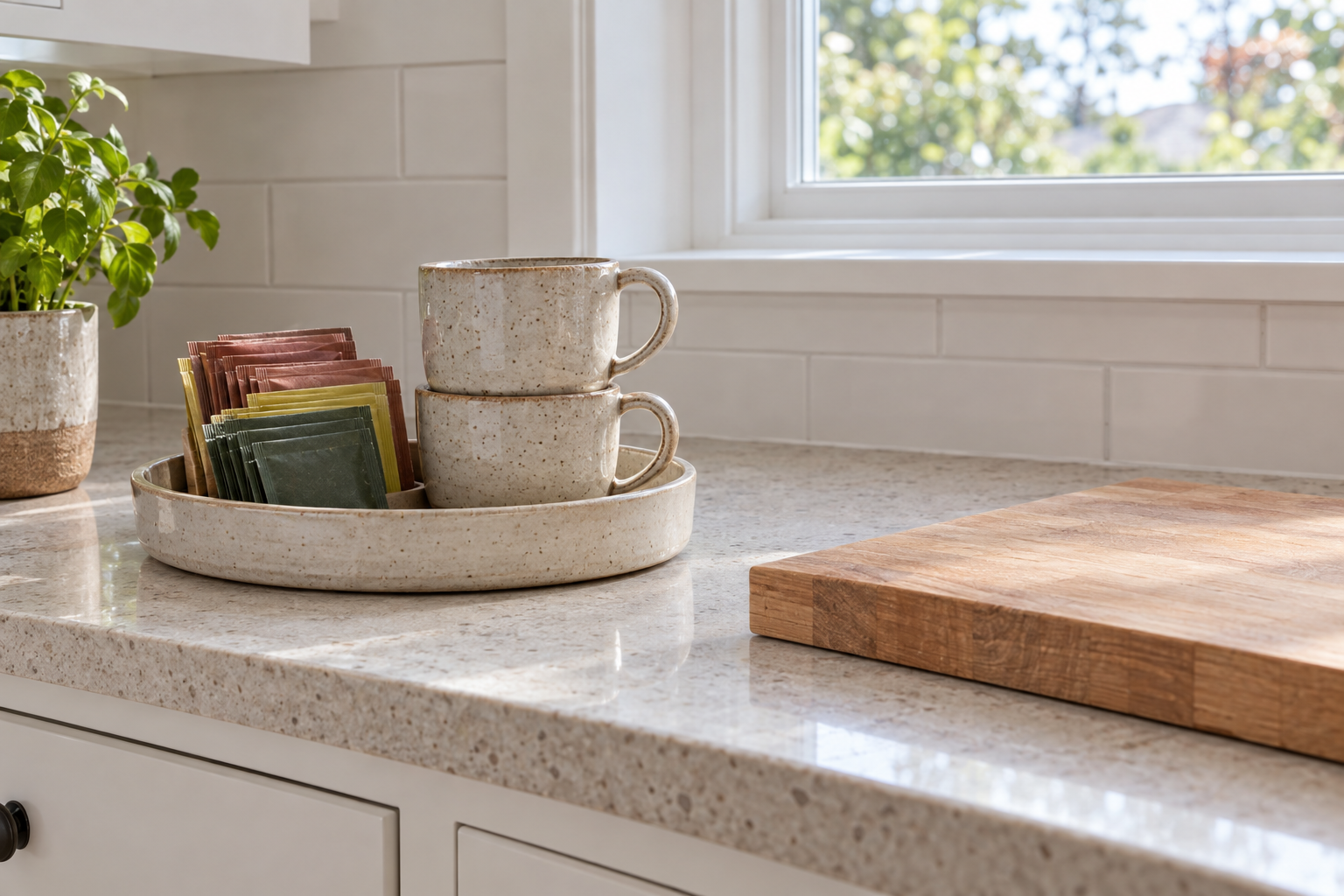
A tray can gather a few related items, but it also occupies space. Use one for a small tea supply or the mugs you reach for each morning on a side counter, away from the main food preparation area. Leave hot appliances on a surface and in a position approved by their instructions.
Choose a tray you can lift easily with the contents on it. Check that its material is washable or can be cleaned as directed. Deep rims and decorative handles can catch crumbs or make it awkward to slide beneath a cabinet.
| Arrangement | Useful when | Skip it when |
|---|---|---|
| Tea and two everyday mugs | You make tea there daily | Supplies already fit neatly in a nearby cupboard |
| Soap and a dish brush | The sink edge has room | It blocks taps or stays wet underneath |
| A small breakfast supply | Several people use the same items | Food storage labels require another location |
Keep the tray limited to that purpose. A tray filled with unrelated jars and ornaments needs clearing before it helps with anything. If you regularly carry it away to cook, try storing its contents nearby instead.
5. Hang wall art away from grease and splashes
The short wall beside a doorway can hold a botanical print, a recipe card you care about or a small landscape. Put art somewhere you can see it without setting it on the backsplash or leaning it behind the hob.
Choose a dry wall away from cooking grease and direct sink spray. A frame there is easier to keep clean, although you should still check its surface occasionally. Keep meaningful originals elsewhere if your kitchen is persistently humid or the available wall gets splashed.
Use an existing hook when possible. For a rental, check permission before drilling and follow the mounting product’s surface and weight requirements. Removable adhesive can damage some finishes, especially if the surface or removal method is wrong.
Hold the picture in position before mounting it. Check cabinet doors, switches and the path into the room. One picture with room around it can give a small kitchen more personality than several frames arranged across the only wall with useful storage space.
6. Use an existing shelf for dishes you reach for
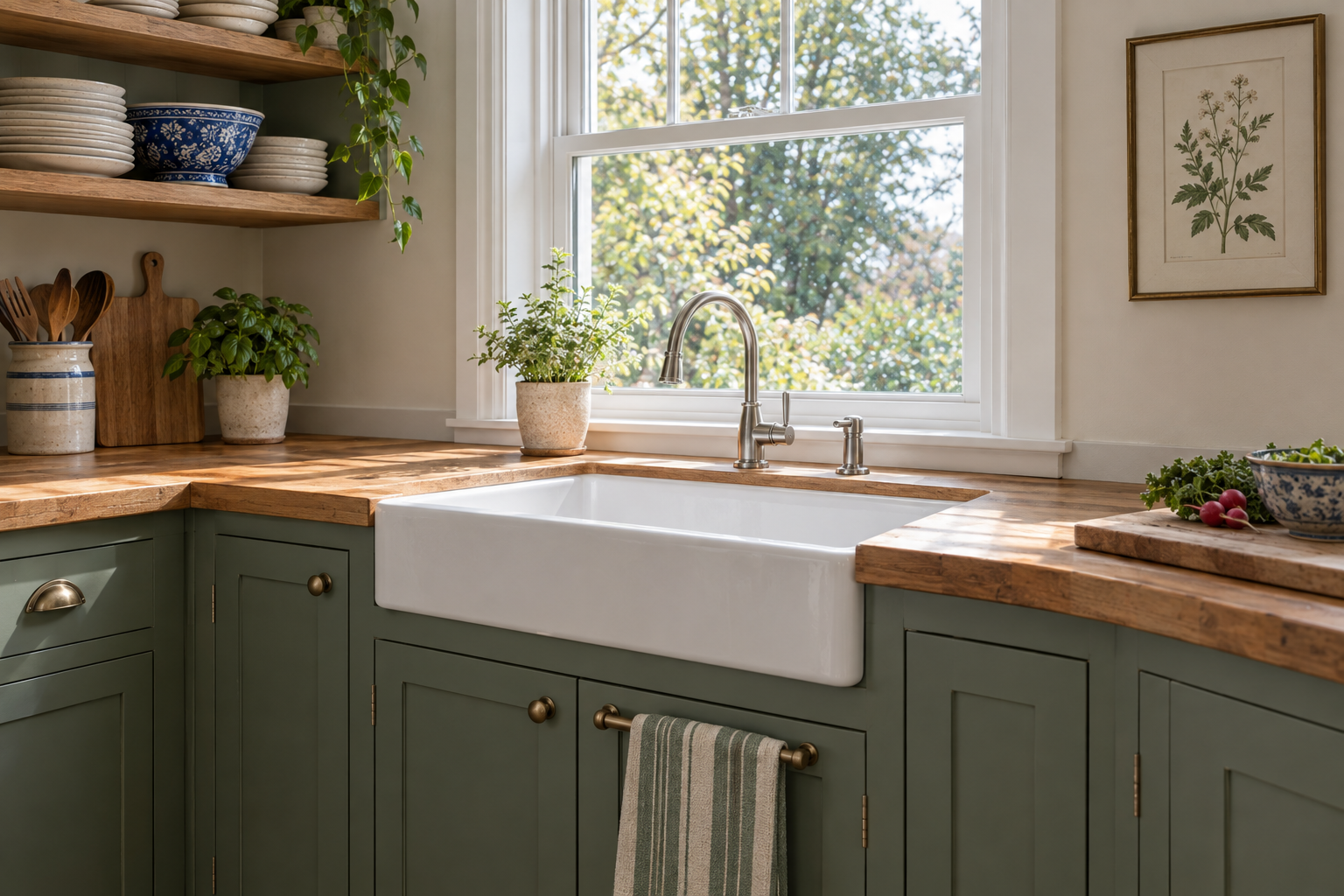
If your kitchen already has an open shelf, try arranging a short stack of everyday plates beside two mugs. Leave room to lift each item without moving the rest. Keep heavier objects where you can handle them comfortably and follow the shelf’s load rating.
A shelf is useful when it gives something a reachable home. It adds work when you put rarely used dishes there and need to wash away cooking dust before using them. Keep delicate pieces or infrequently used glasses in a closed cupboard if that suits your room.
Repeat one color from a towel or bowl if you want some connection across the kitchen. The pieces should be stable and fit within the shelf depth.
If you have no shelf, use the inside of your cabinets neatly and add personality somewhere else. Installing shelves is a separate project with fixing, load and lease considerations. Kitchen decor can begin with the storage you already have.
7. Give one personal object a place outside the work area
A small kitchen can feel like yours with one object that means something: a postcard on a dry wall, an inherited jug on a secure shelf or a favorite bowl on the table. Choose a place that lets you enjoy it without rearranging it every time you cook.
Check the view from the doorway as well as the place where you work. A colorful object on the shelf might already supply enough detail. If you want another change, choose it for a specific blank spot rather than filling every space you can see.
Keep decorative candles, dried stems and fabrics away from cooking heat. Keep plants and their watering away from electrical equipment and food preparation areas. A bright windowsill can suit a plant when it has the right conditions and doesn’t obstruct the window or catch falling kitchen items.
Use the kitchen through an ordinary dinner before adding anything else. If you can reach a pan, put down the shopping and wash the counter without clearing a display, you have room to cook. Leave that room available tomorrow.
What to read next
- Fall kitchen decor ideas : Add a seasonal detail after the everyday cooking space works.
- A pantry corner for an empty kitchen space : Find a useful storage arrangement if supplies keep covering the counter.
- Herb garden layouts for a kitchen window : Check the light and space before adding herbs to the room.
- Fall kitchen towels : Compare working textiles if a towel is the first detail you want to change.