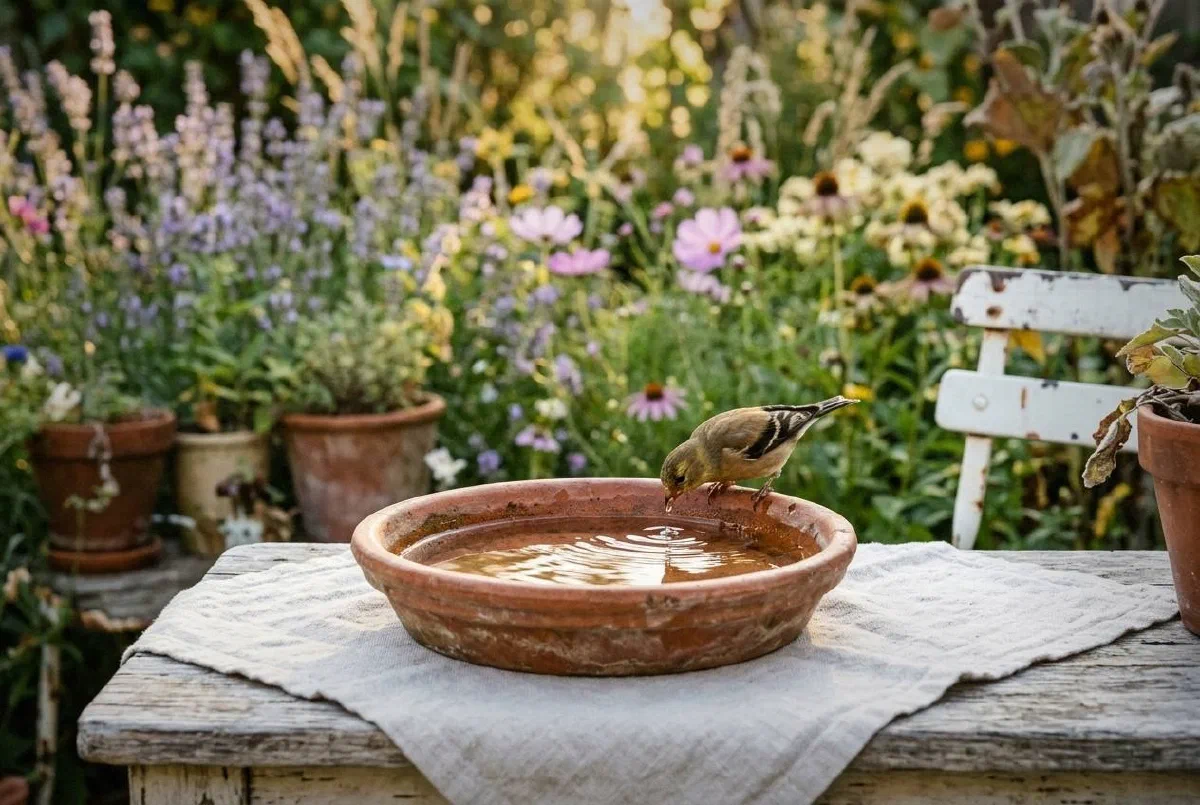
This article contains affiliate links. If you buy through them, Etheric Echoes may earn a commission at no extra cost to you. As an Amazon Associate I earn from qualifying purchases. Read the full disclosure.
A lot of bird baths sit in yards looking pretty and doing almost nothing.
The birds fly past, the water turns green, and the whole thing becomes another object to clean. Usually the problem is not the bath itself. It is placement and depth.
These fixes are practical and based on what songbirds in suburban North American yards, roughly Zones 3 through 9, tend to choose. You probably do not need a new bird bath. You may only need to move the one you have.
If songbirds ignore your bird bath, move it near safe cover, lower the water depth, add a flat stone, and keep it visible enough that you will refill it. Those changes usually matter more than buying a prettier bath.
Here are all seven setups at a glance. The right-hand column is the change that does most of the work in each one.
| # | The setup | The change that matters most |
|---|---|---|
| 1 | Low, and beside cover | Move it out of the middle of the lawn |
| 2 | Two inches of water | Mark the rim and fill to the line, not the brim |
| 3 | A flat stone in the middle | Fist-sized, flat-topped, and not limestone |
| 4 | A ground-level dish | One inch or less, in the same kind of spot |
| 5 | Slow dripping water | About one drop per second, from a jug |
| 6 | The right yard position | Within 10 feet of cover, or close to the house |
| 7 | A weekly clean | Sunday morning, about three minutes |
Baths that fit these seven setups
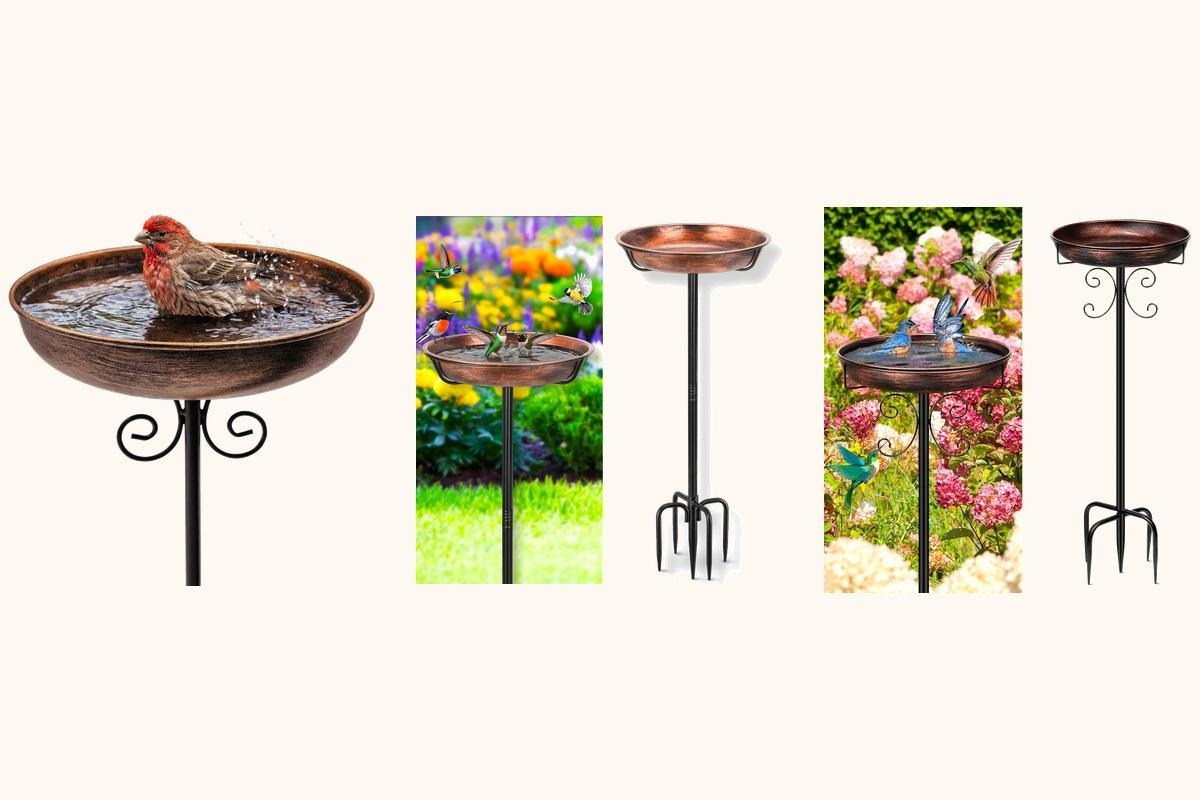
- For idea 2, water two inches deep: a 10-inch staked bath with a shallow bowl (opens Amazon in a new tab) . Shallow by design and height-adjustable, so you are not trying to fake two inches in a basin built for four.
- For idea 7, cleaning it every Sunday: the Gtongoko 34-inch bath with a removable bowl (opens Amazon in a new tab) . The bowl lifts off, which is the difference between a weekly rinse and a chore you quietly drop.
- For a visible main station: the Daoeny 35-inch pedestal in antique bronze (opens Amazon in a new tab) , several thousand sold a month, with a five-prong base that holds in soft ground.
- For standing water worries: mosquito dunks (opens Amazon in a new tab) , one tablet per month and harmless to birds.
On idea 5, the slow drip: the solar floating pumps that fill this category are best avoided right now. A hose left on the slowest possible trickle does the same job for free.
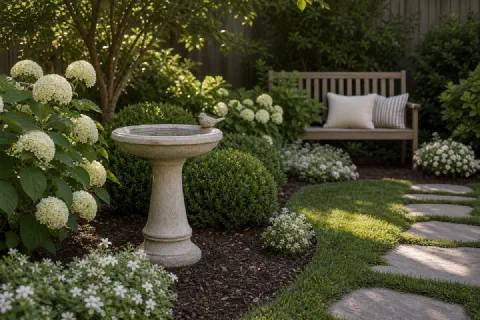
1. Place It Low and Beside Cover, Not in the Middle of the Lawn
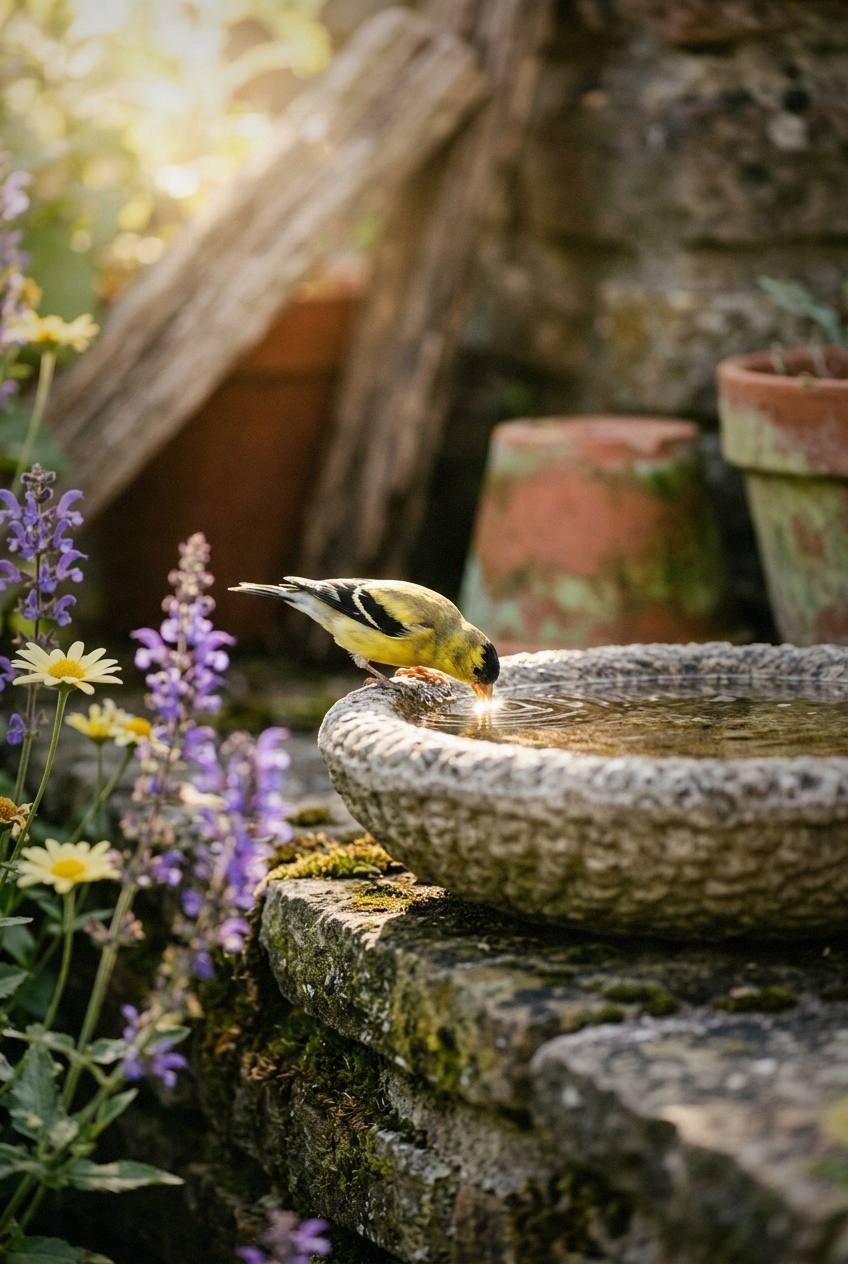
A pedestal bird bath in the middle of the lawn looks classic and gets used the least.
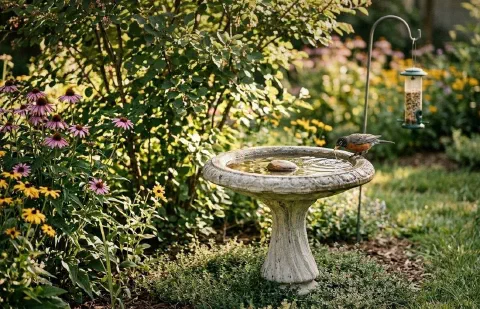
Songbirds want an exit. Robins, juncos, chickadees, song sparrows, and house finches all approach water by hopping in from cover. A bird bath set within 6 to 10 feet of a hedge, holly, hydrangea, or low evergreen will see real visits within a week.
The 6-to-10-foot distance matters in two directions. Closer than 6 feet and a cat or hawk gets too close to the cover. Farther than 10 feet and many small songbirds will not cross the open ground.
Lower bird baths get used more than tall pedestals. Concrete dishes set right on the ground or on a flat stone are the closest match to how birds use puddles, which is what they evolved to drink from.
If your bird bath is currently in the center of the lawn, this is the move that changes everything. Walk it over to the edge of a shrub bed. Set it on the ground. Wait three days.
2. How Deep Should a Bird Bath Be?
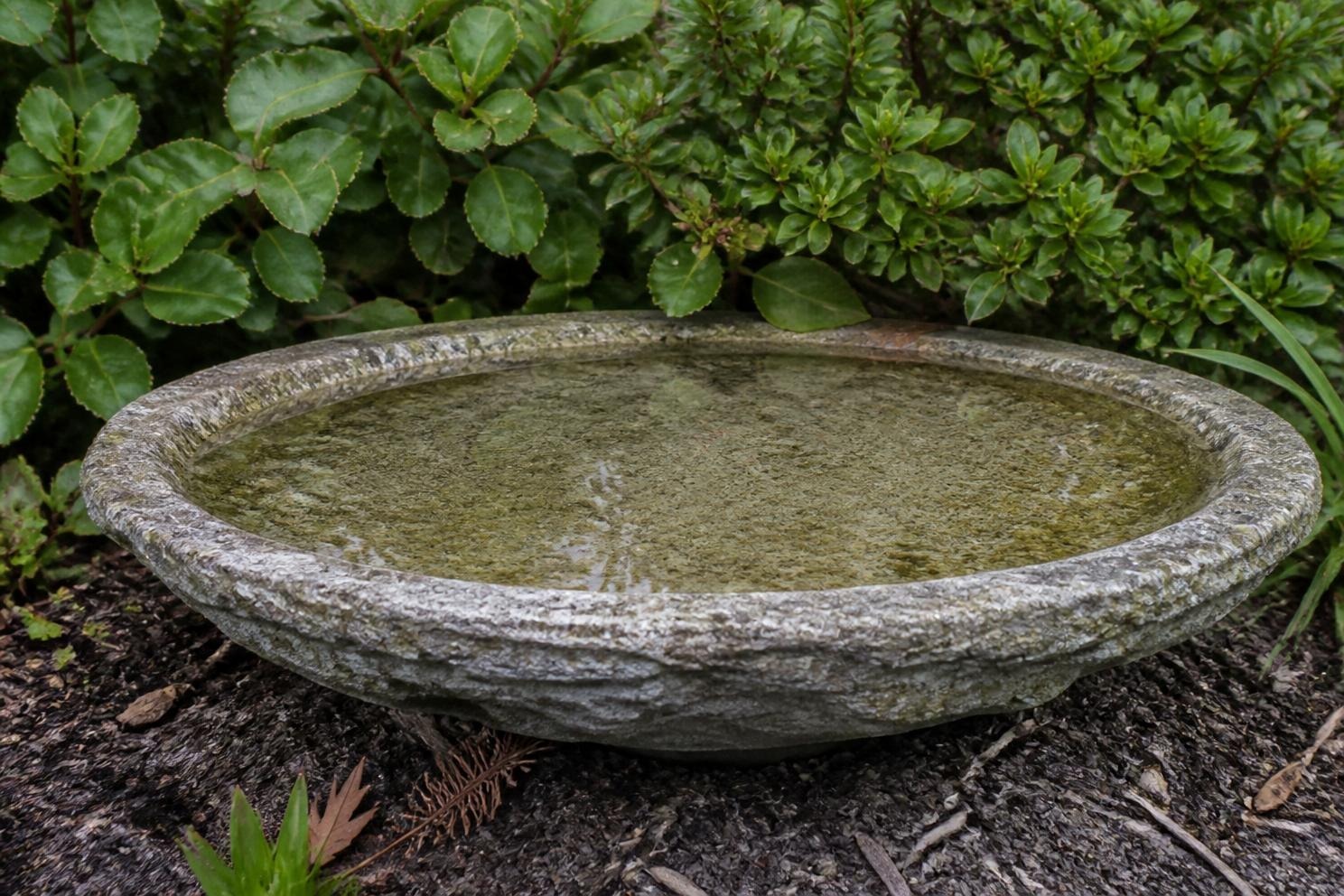
About two inches at the deepest. Songbirds the size of a sparrow, chickadee, or finch will not bathe in water deeper than that, because they wade and they cannot swim, and a four-inch basin reads as a hazard rather than a bath.
Most decorative bird baths are built for visual impact instead, which is why they run deep.
Mark the inside rim of your bird bath at two inches with a sharpie or scratch line. Top up to that line, not the brim. A lot of bird baths get filled to the top because that is how they looked in the product photo. The birds do not care about the product photo.
Cornell Lab’s Celebrate Urban Birds makes the same point: a good bird bath is closer to a shallow puddle than to a basin, so choose a shallow container rather than a deep one.
If your basin is deep, do not try to drill it. Just put a flat rock in the middle that reaches near the surface. The rock works as a landing pad, breaks up the open water, and gives the bird a clear sense of footing.
Crows and grackles will use any depth. Songbirds need it shallow.
3. Put a Stone in the Middle for Footing
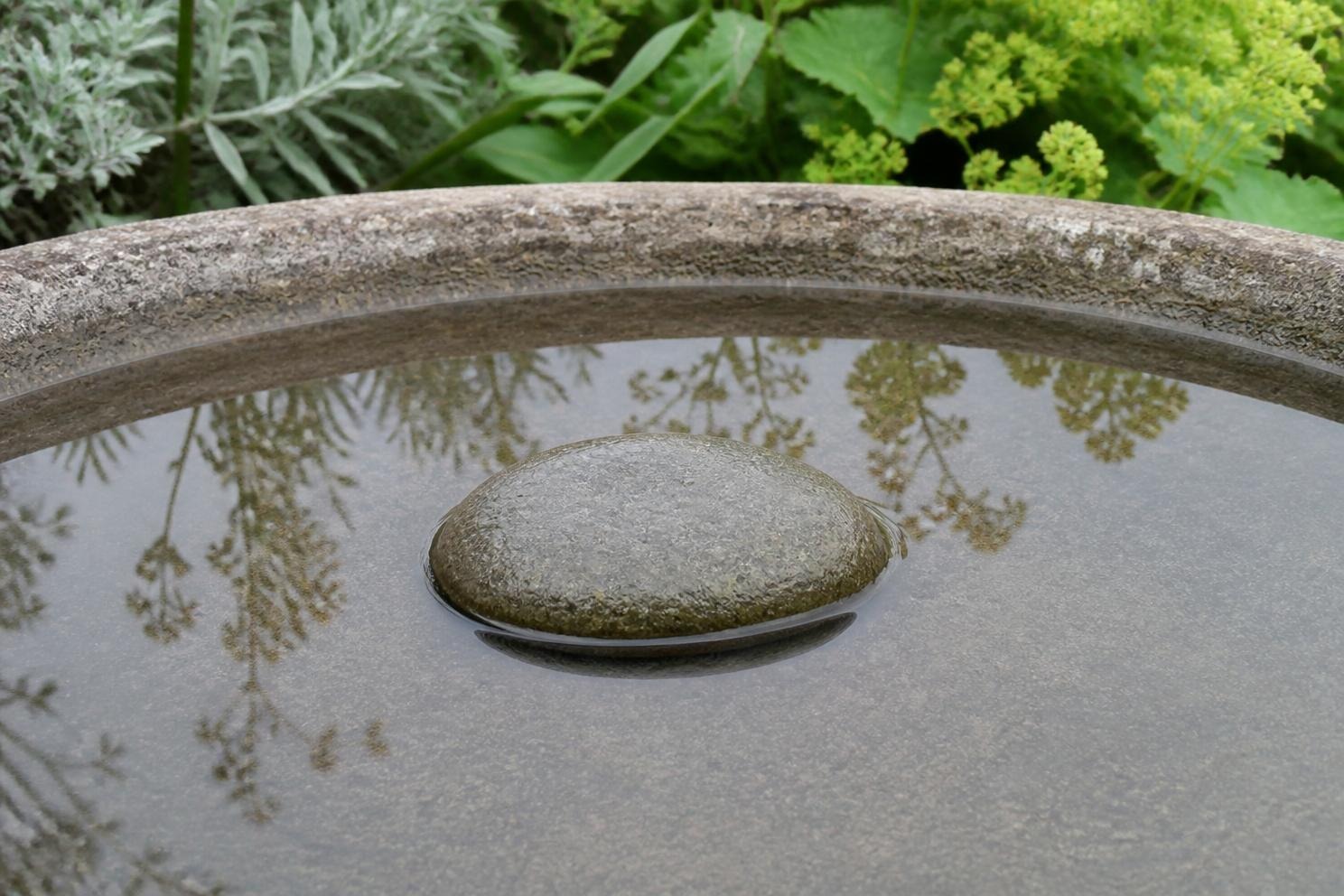
A flat rock in the center of a bird bath is the single change that brings small birds in fastest.
The rock gives the bird a landing place that is not the slick rim. It also shortens the distance to safety if a hawk shadow passes overhead. Most important, it makes the water feel adjustable. The bird stands on the rock and chooses how far into the water it wants to go.
Pick a flat-topped stone roughly the size of your fist or slightly larger, depending on the bath. Granite, sandstone, or river rock all work. Avoid limestone if your water is hard, since it can leach minerals.
Some bird baths come with this built in. Most do not. Adding a stone takes 30 seconds and costs nothing if you find the right one in your own yard.
If you have a deep concrete bath, two flat stones stacked on each other work as well as one taller one.
4. Add a Ground Level Dish for the Birds That Skip the Pedestal
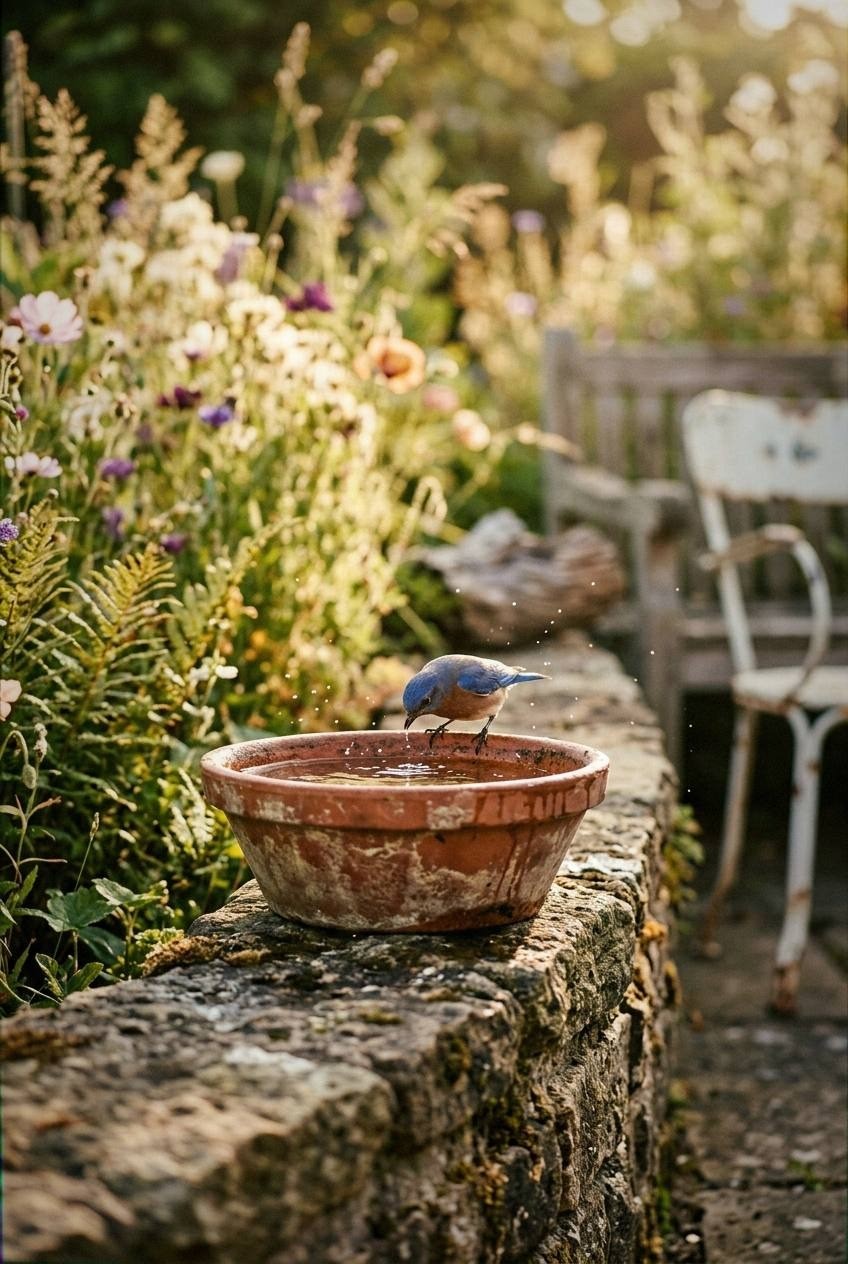
Some songbirds rarely use a pedestal bird bath at all.
Mourning doves, juncos, towhees, native sparrows, and thrushes are ground feeders. They drink and bathe at puddle level. A high pedestal feels exposed to them.
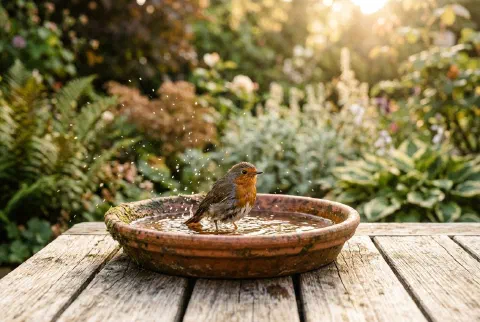
The fix is a second water source at ground level. Use a terracotta plant saucer, an old pie tin, or a shallow ceramic bowl. Set it on a flat stone or directly on the ground in the same kind of spot as a pedestal, within 6 to 10 feet of cover.
Keep the depth at one inch or less for ground baths. Add one small flat stone in the middle, even smaller than for the pedestal version.
A 14-inch terracotta saucer is cheap, easy to rinse, and low enough for ground-feeding birds. If your pedestal bath has been ignored for two years, try the saucer before you buy anything fancier. When you do decide to buy, compare basins by bowl depth and footprint rather than by how the pedestal looks.
5. Add Slow Dripping Water and Watch What Changes
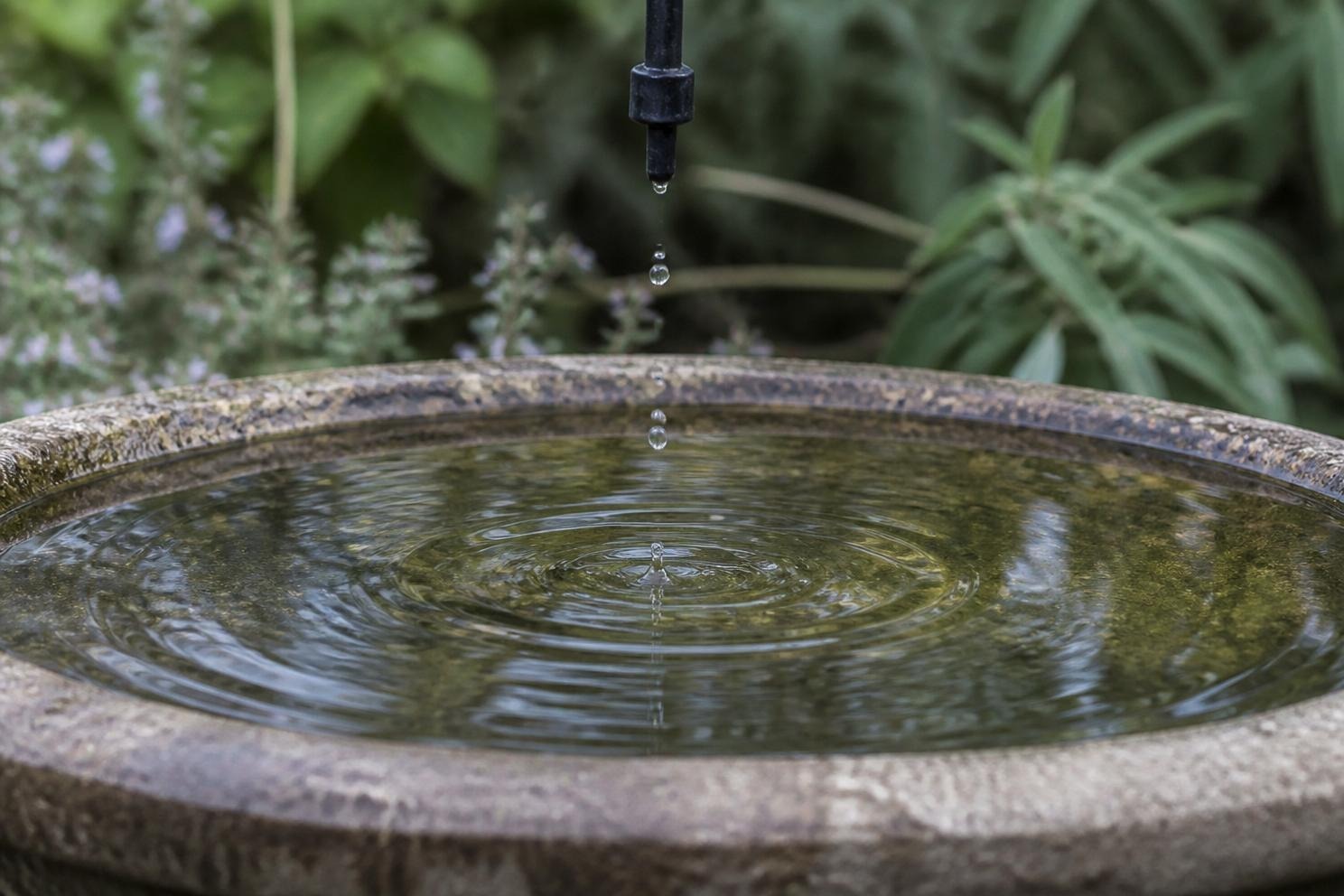
Still water gets some birds. Moving water gets more.
Songbirds find water by sound and by motion. Both signals travel farther than the visual cue of a basin. A slow drip into a bird bath turns it from a passive feature into a magnet.
Project FeederWatch calls dripping water one of the best ways to make a bath more attractive , and the setup it describes is the one most yards already have the parts for: a plastic jug with a pinhole punched in the bottom, filled with water and hung above the bath so it drips out. Fill it once a day. The drip rate should be slow, about one drop per second.
Battery powered drippers and small fountains work too, but the jug is what most yards already have. A drilled out milk jug, a clear plastic juice jug, even an old water bottle on a wire all do the job. If you are weighing a fountain instead of a drip, whether a bird bath fountain is worth it covers what moving water genuinely improves and what it does not.
Goldfinches, warblers during migration, and ruby-crowned kinglets respond strongly to the sound of dripping. These are birds that may otherwise pass your yard. The drip is what brings them down.
6. Three Yard Positions That Get More Visits Than the Lawn Center
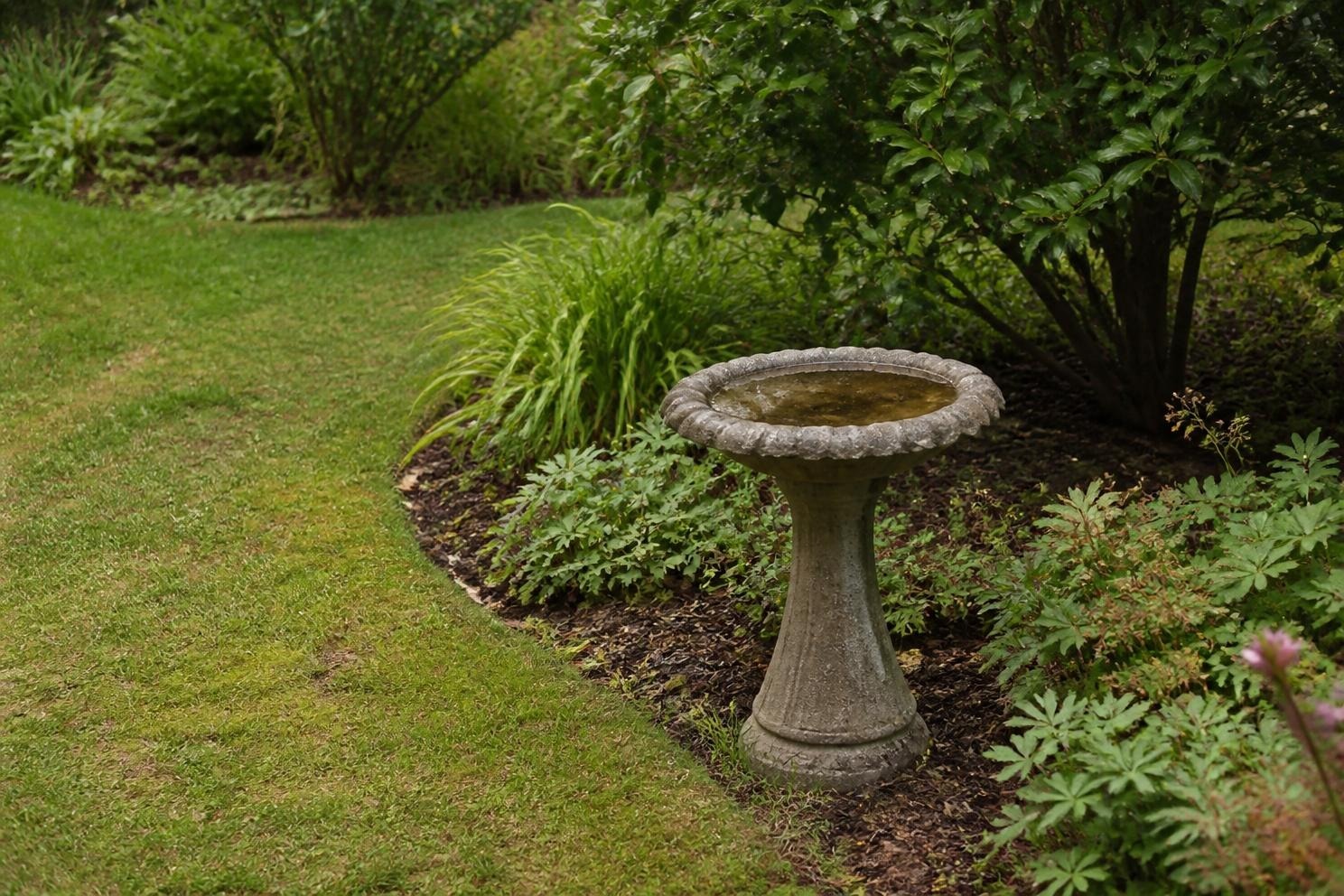
Three positions usually beat the lawn center, no matter where you garden.
The first is the edge of a deciduous shrub or small tree, ideally one that flowers in spring or holds berries in fall. Songbirds use these as staging perches.
The second is the back corner of the yard where the fence meets a bed. This corner gives cover on two sides and an open approach on the others, which is exactly what a small bird wants when it lands.
The third is anywhere within 10 feet of the back of the house, especially if there is a window where the bird can see itself. Birds avoid open windows, but they tolerate house presence in exchange for the safety of being close to a wall on one side.
If your bird bath is currently somewhere else, try one of these positions. Move it for a week. If you do not see more visits in seven days, move it again.
7. Clean It on Sunday Morning, Every Sunday
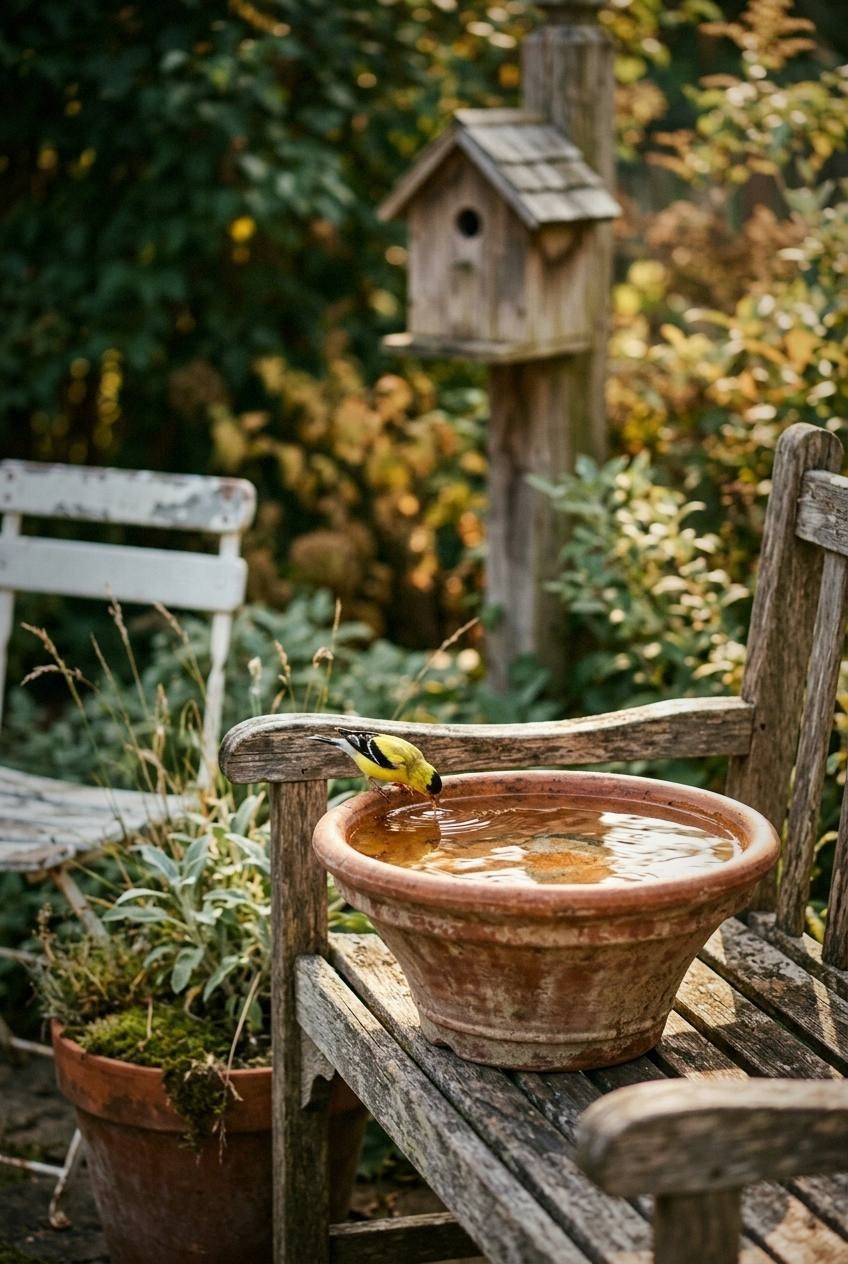
A bird bath that goes green in summer is a bird bath that stops being used. Algae, mosquito larvae, and dropped feathers all turn songbirds away within a few days.
Clean the bath weekly during warm months. Project FeederWatch’s bathing guidance sets the same schedule, a weekly scrub with the water replaced every couple of days. Sunday morning is a good rhythm because the yard is quiet and the bath is usually easy to reach before the day gets hot. The whole job takes about three minutes.
Tip the water out into a garden bed. Scrub the basin with a stiff brush and plain water. Skip soap, bleach, and any cleaner with fragrance. If the basin has visible algae, a brief scrub with a 1:9 vinegar-to-water solution clears it without leaving residue.
Refill from the hose. Drop the rock back in. Done.
In Zones 7 through 9, weekly cleaning runs from April through October. In Zones 3 through 6, the active cleaning season is May through September. Outside those months, switch to a heated bird bath in winter or accept that the bath will freeze.
The Sunday rhythm matters because consistency is what songbirds key on. They learn that water is reliably available in your yard. Once they learn it, they bring others.
How to Set the Whole Thing Up in One Afternoon
If you are starting from a bird bath in the middle of the lawn, this is the order that avoids doing any job twice.
- Pick the new spot before you lift anything. Stand at the window you look out of most and choose a position within 10 feet of cover that you can still see.
- Move the bath and set it level. A bath that rocks loses water on one side and dries out on the other.
- Mark two inches on the rim and fill to the line. Do this while the bath is empty of stones so you can see the inside wall clearly.
- Add the flat stone. Fist-sized or a little larger, flat side up, sitting proud of the water.
- Set the ground dish in the same kind of spot, one inch deep or less, with its own small stone.
- Hang the drip jug and adjust it to about one drop per second. Fill it at the same time every day for the first week so the habit sticks.
- Pick your cleaning day now and put it in the phone. The rhythm is what keeps birds coming back, and the rhythm is the part that slips.
Should You Put a Penny or a Tennis Ball in the Bird Bath?
No. This is the one piece of bird bath advice worth ignoring out loud.
The penny is supposed to leach copper that kills mosquito larvae. The tennis ball is supposed to bob around and stop mosquitoes landing. Both circulate every summer and neither is part of the actual guidance.
The CDC’s mosquito prevention guidance names bird baths directly and gives exactly one instruction: once a week, empty and scrub, turn over, cover, or throw out anything that holds water. Bird baths sit on that list beside flowerpot saucers and buckets.
That is the whole trick. In warm weather a mosquito goes from egg to biting adult in roughly a week. A bath you dump and scrub every seventh day never gets there.
So the Sunday rinse in idea 7 is not housekeeping. It is the mosquito control. Scrub the sides while the water is out, because eggs sit just above the waterline and a quick tip and refill leaves them stuck to the basin.
If you know you will miss a week, add a larvicide tablet rather than a coin. That is why the dunks are on the short list above, and it is a much better use of a dollar than a penny.
What Works in Any Zone
Low placement, shallow water, a stone in the middle, cover within 10 feet, weekly cleaning. What does not work: tall pedestals in open lawn, deep basins, neglected water.
The bird bath that gets used is the one that meets birds where they already feel safe.
What I’d Actually Buy
Buy the Gtongoko 34-inch with the removable bowl (opens Amazon in a new tab) . The removable part is the whole decision. A bath you cannot lift the bowl off is a bath you will rinse twice and then stop rinsing, and a dirty bath is worse than no bath.
Add mosquito dunks (opens Amazon in a new tab) in the same order. They cost almost nothing, they are safe around birds, and they remove the one objection everybody raises about standing water.
If your yard gets wind or you have cats, skip the tall pedestals and take the 10-inch staked bath (opens Amazon in a new tab) instead. Low and staked beats top-heavy and tipped over.
What to Read Next
- A bird bath changed my backyard for what happens to a yard once water is reliable and visible.
- Bird bath placement mistakes that keep songbirds from landing if position is the only thing still wrong with your setup.
- Backyard wildlife habitat ideas when one water source turns into a whole-habitat plan.
- Native plants for wildlife habitat because the cover within 10 feet of the bath is doing half the work.
- Plants hummingbirds visit every day if you want the watering station to pull in more than songbirds.