

The bedding ideas worth trying are the ones you’d still like when the bed is a little rumpled. A narrow stripe, a soft green cover or a quilt with visible stitching can give an ordinary bedroom more character. You can keep the bed frame, the bedside table and most of what is already in the linen cupboard.
These seven options are alternatives. Choose the one that answers what you dislike about your bed now: too much pattern, a flat-looking cover, colors that feel cold or a stack of cushions you move twice a day. There’s no need to combine the whole list.
The photographs illustrate original styling ideas, rather than specific products or a room we have tested. They show color and texture combinations without claiming a firsthand product test.
Choose the change before choosing new bedding
Spread out the bedding you already use and look at it in daylight. Which piece do you still like? Keep that as the starting point. A patterned duvet might need plain pillowcases; a plain bed might need one textured top layer.
Think about the part you touch as well as the part you see. Cotton Incorporated’s cotton-sheet guide distinguishes the crisper feel of percale from the smoother feel of sateen. Fiber, construction and finishing also affect the result. Choose a familiar feel you enjoy instead of assuming the largest thread-count number is best.
Before spending money, check:
- The measurements of your mattress and existing duvet insert, including mattress depth for fitted sheets.
- How much fabric you want hanging down each side of the bed.
- The washing and drying instructions, plus where a large item will dry.
- Whether the change needs a new cover or can be made with a pillowcase, quilt or throw you own.
| Bedding idea | Try it when | Start with | Leave out |
|---|---|---|---|
| Soft white and cream | You want a quieter-looking bed | Existing plain sheets | Extra decorative cushions |
| One green layer | The room needs color | A sage or olive cover | A whole matching room scheme |
| Narrow stripes | Plain bedding feels a little dull | One striped cover or pillowcase | Several competing prints |
| A small floral print | You like garden details indoors | A floral quilt or duvet cover | More pattern on every surface |
| A stitched quilt | The bed looks flat | A quilt with visible texture | A second heavy layer added for display |
| Warm clay and muted pink | White bedding feels too stark | One warm-colored cover | Several nearly matching purchases |
| A light throw at the foot | You want a small, affordable change | One manageable throw | A large blanket pile |
1. Soften white bedding with a cream top layer
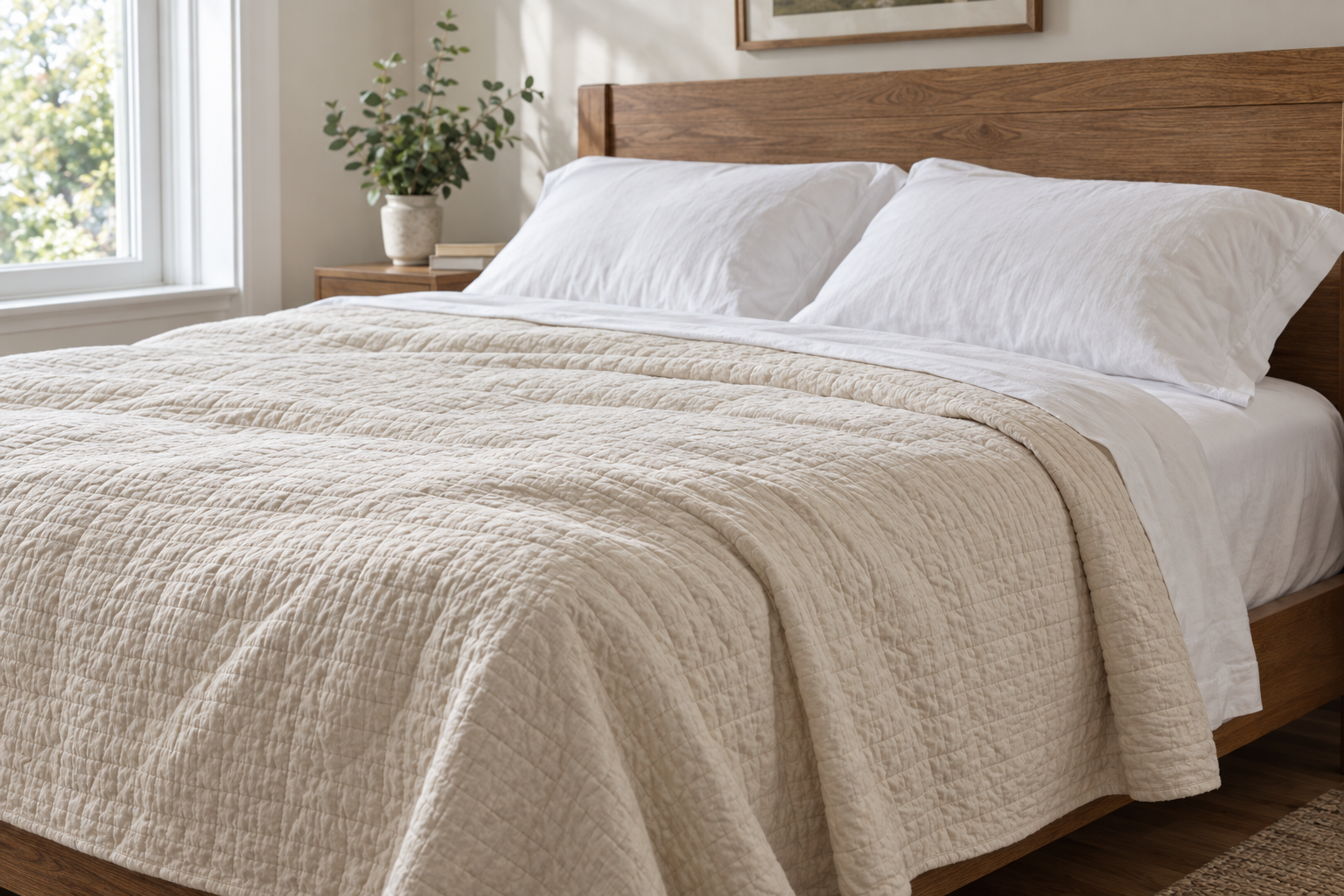
A white sheet set can be the beginning of a cozy bed. Add a cream quilt or coverlet if you have one, and let a strip of the white sheet show at the top. The slight difference in color gives the bed some depth without another print to coordinate.
Check the whites together in the room before ordering anything. A cool, blue-looking white beside a yellow cream may be a combination you like, or it may bother you every time you make the bed. You can test that with the pieces you own.
2. Let one sage or olive layer bring in color
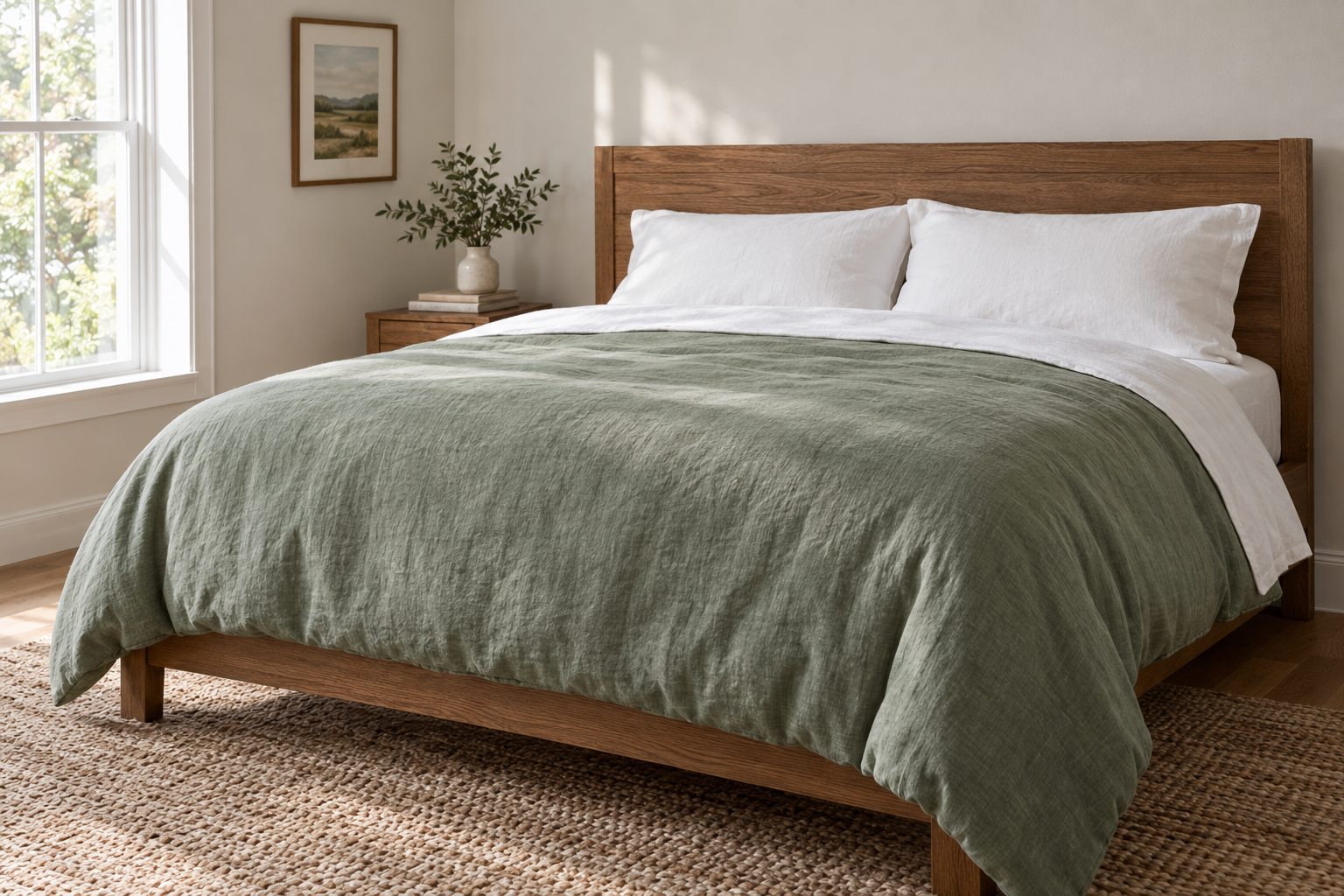
A green duvet cover or quilt can change the bed’s appearance while the rest of the room stays put. Try it with white pillowcases and a wood bed frame, or with the plain gray sheets you already use. The green can be the main color without appearing on the curtains, rug and every cushion.
Choose the green in the room’s light. A pale sage, a gray-green and a deeper olive are different choices; the words on the listing won’t show you everything about the shade. If you buy online, check the seller’s color photographs and return policy.
3. Use a narrow stripe with plain sheets
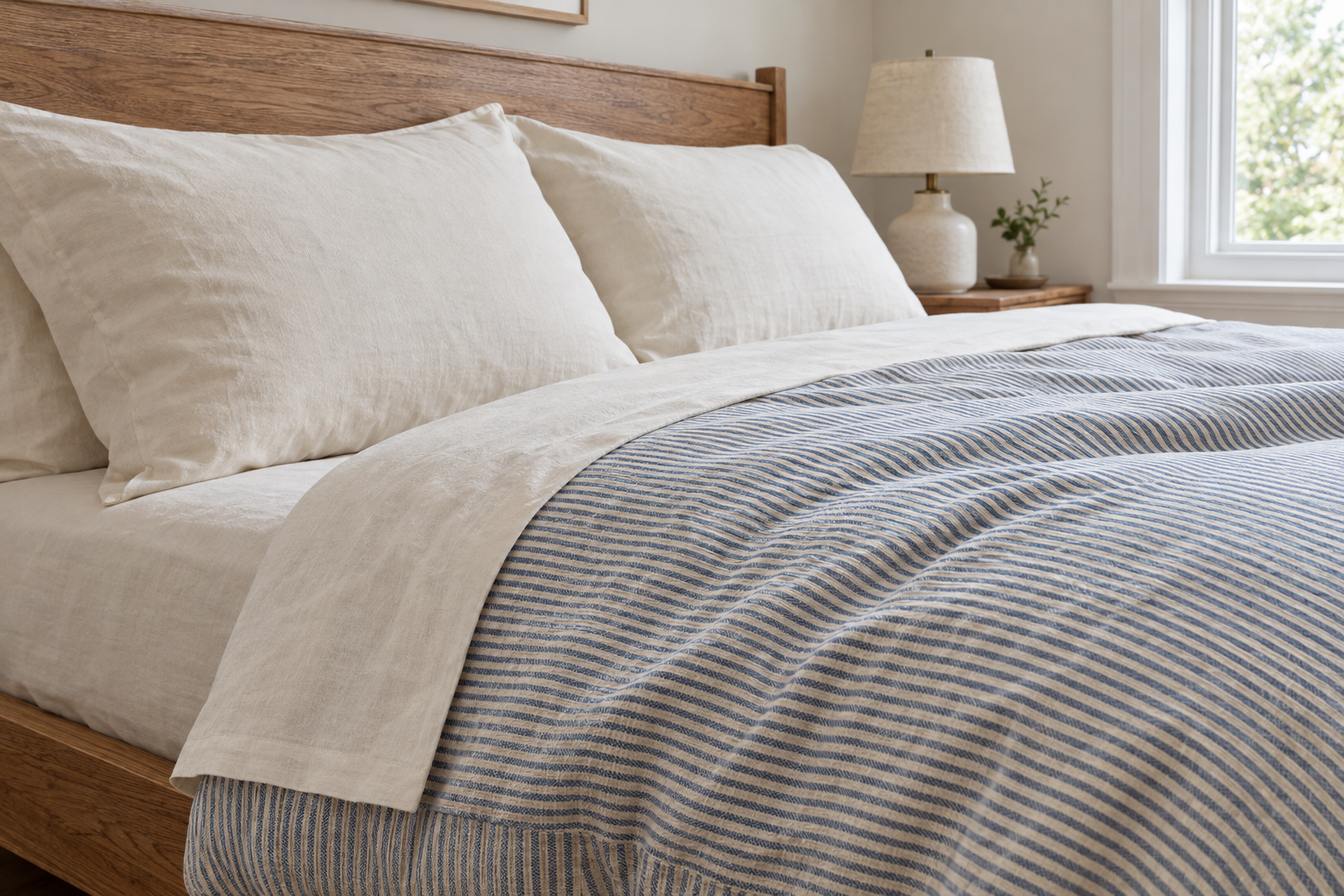
A striped duvet cover gives a plain bed an obvious detail. Blue and cream can suit a room with white walls; charcoal and warm white can work beside darker wood. Choose the pair of colors you want to keep seeing, rather than buying a set because it matches an entire styled photograph.
Let the stripe do most of the work. Plain sheets and plain sleeping pillowcases leave it visible. If your curtains already have a strong pattern, start with one striped pillowcase instead of covering the largest surface in the room with another print.
Look at the stripe’s scale before buying. A close-up of the fabric and a full-bed photograph answer different questions. The close-up shows the lines; the wider view shows how much of them you’ll see across the room.
4. Choose a small floral print for a garden detail
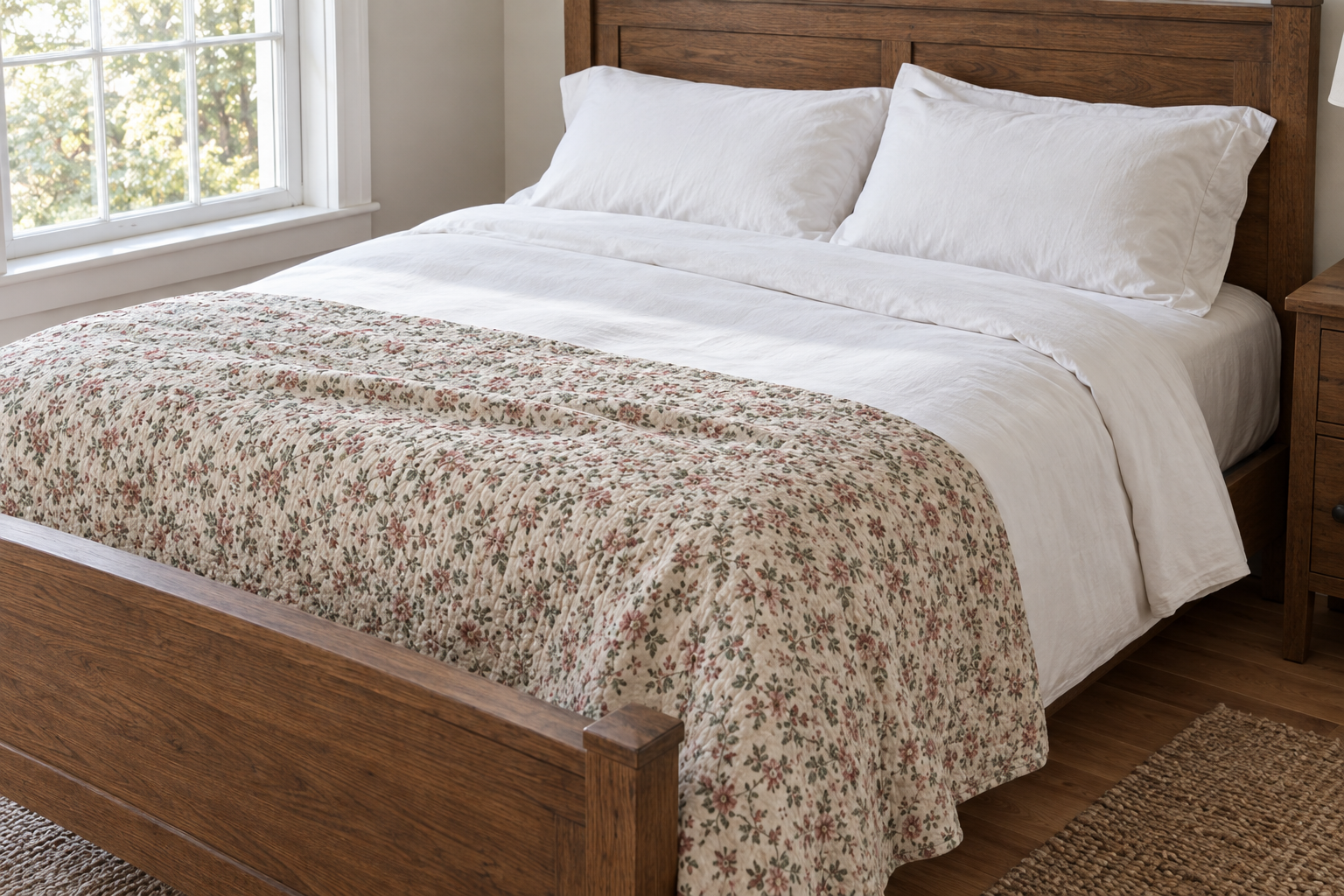
A small floral quilt or duvet cover can bring the garden into a bedroom without taking over the floor or windowsill. Look for a print with a background color you already use, such as cream, pale blue or soft green. That makes it easier to keep the pillowcases and sheets you have.
Choose the amount of pattern you want:
- For a restrained version, lay a floral quilt across the lower part of a plain bed.
- For more pattern, let the floral duvet be the main cover and keep the pillows simple.
You don’t need both arrangements at once.
If you’re choosing between prints, imagine the bed with the room’s ordinary belongings still around it. The laundry basket, book stack and chair will return after the photograph. A print you like in that setting is more useful than one that works only in a completely empty room.
5. Use a stitched quilt for visible texture
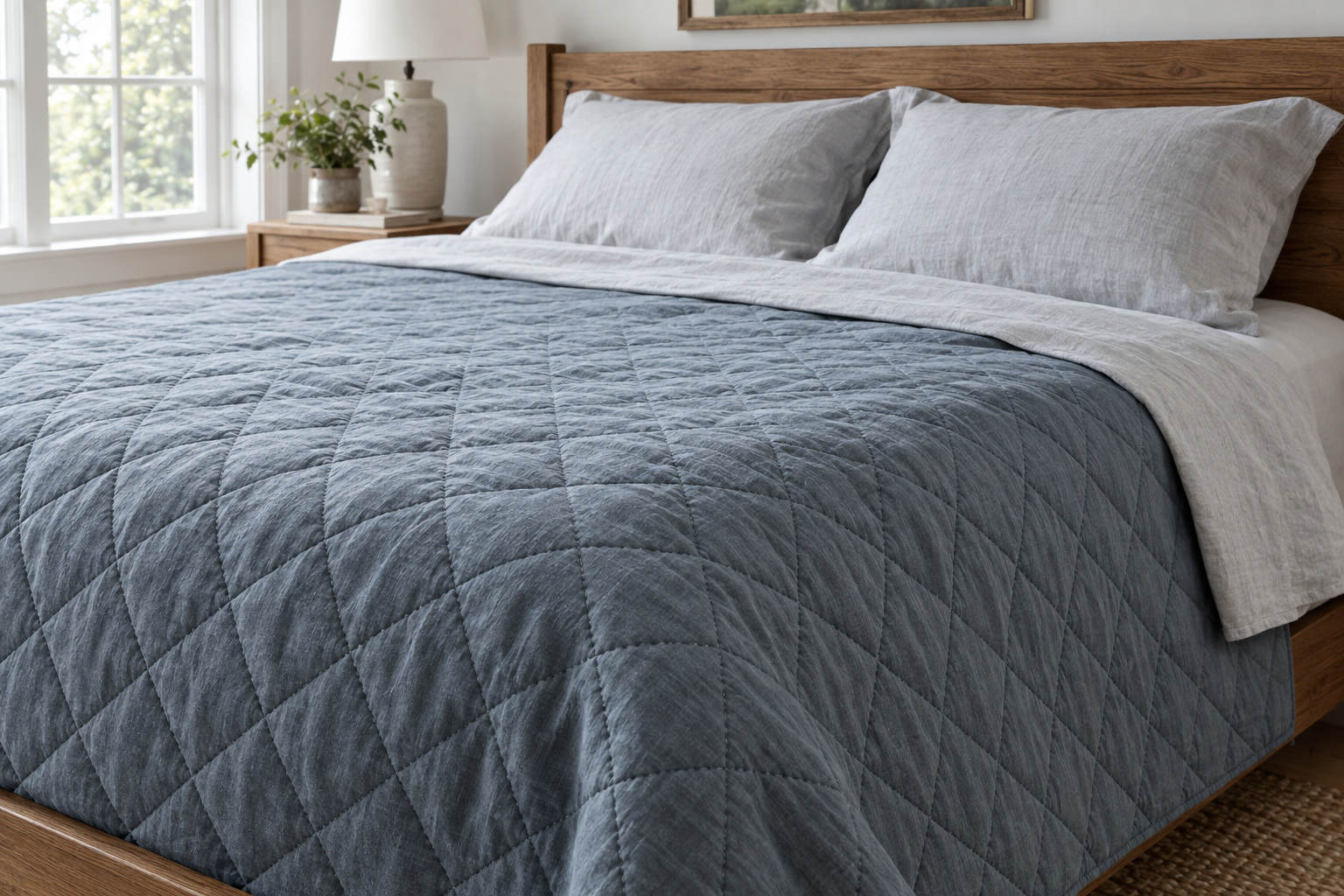
A quilt with visible stitching adds detail even when its color is close to the sheets. Try a plain cream quilt over soft gray sheets, or a washed blue quilt with white cases. The stitching gives you something to notice without needing a printed pattern.
Spread the quilt over the bed and check the sides. If it falls farther than you like, look at the listed dimensions before replacing it. Size names alone won’t tell you the drop on your particular mattress and frame. A photograph with a low bed can make the same cover look longer than it would on yours.
6. Pair warm clay with a muted pink or pale neutral
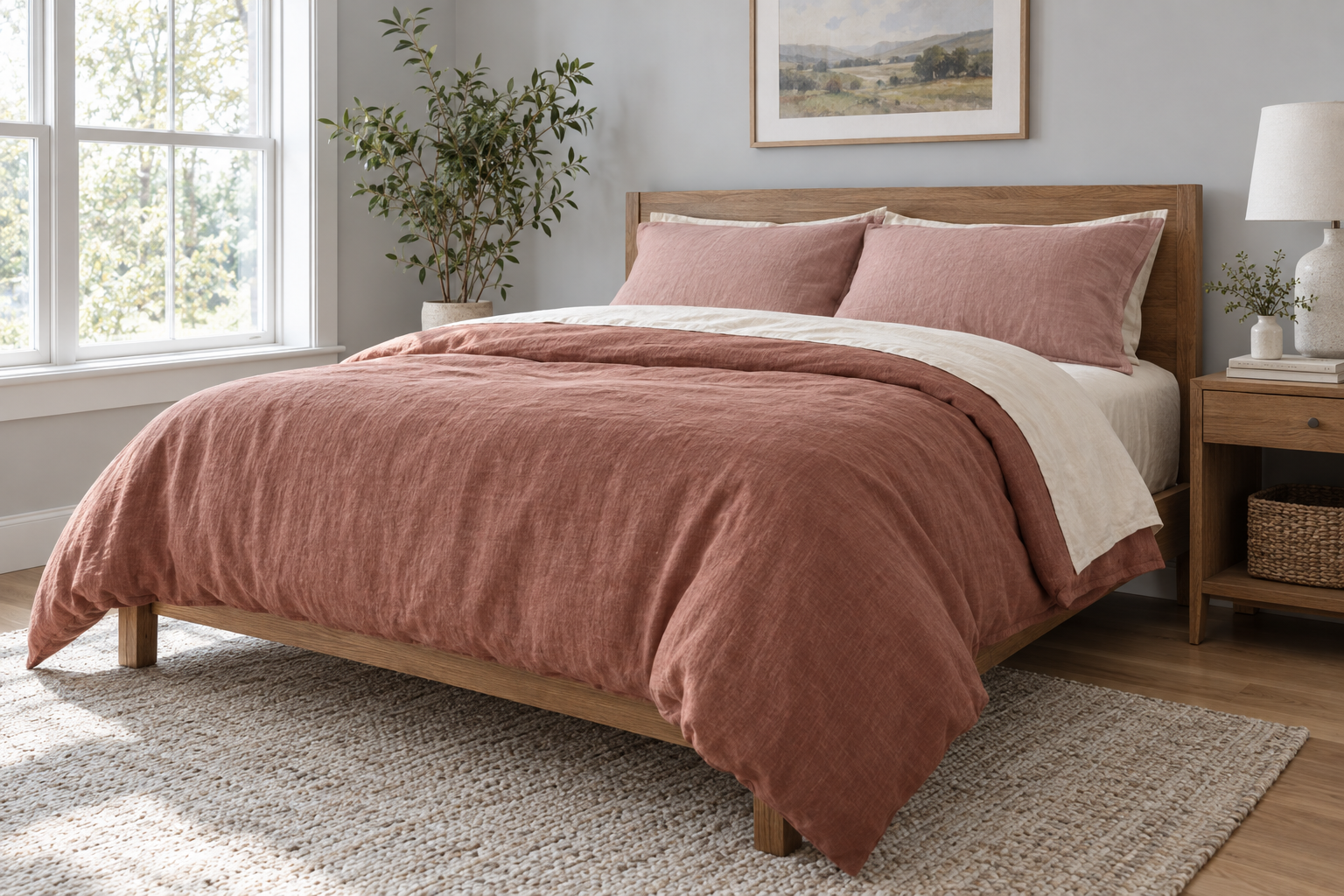
If white bedding feels too stark to you, try a warm clay-colored cover with muted pink pillowcases. Keep the sheet plain. The difference between the two colors can make the bed feel personal without adding a pattern.
You can make this gentler by keeping the clay color to a pillowcase or folded cover at the foot. A dusty rose, faded terracotta or warm brown may be easier to live with than a bright orange. Choose the color you enjoy in daylight and under the lamp you use at night.
Lay the fabrics together before deciding they match. Two warm shades can be pleasant because they’re different; they don’t have to be the same color from the same collection. If you’re unsure, keep one piece neutral and let the other carry the color.
7. Fold one light, washable throw at the foot
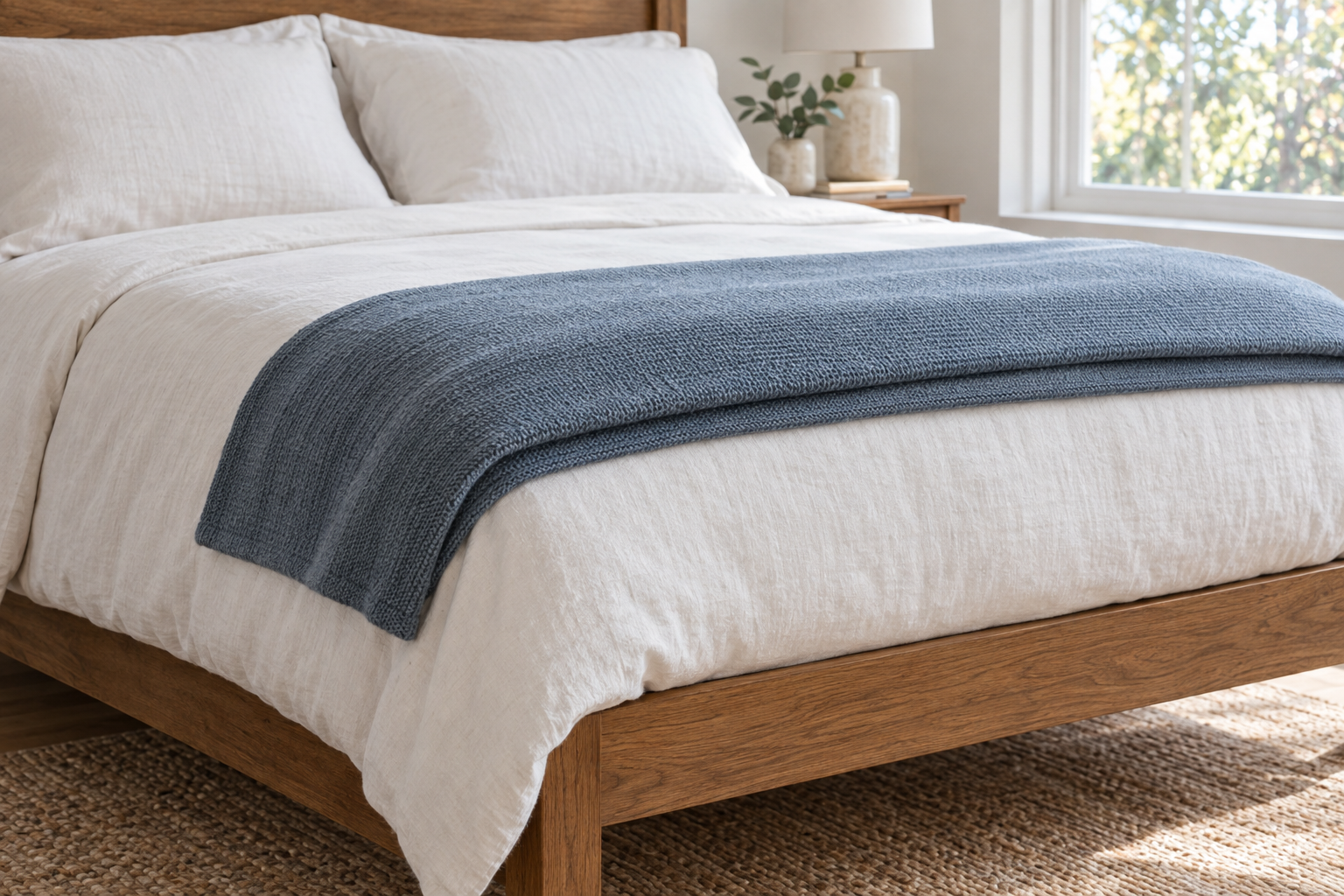
A throw is a small place to try a color or texture before replacing the main cover. A slate-blue knit on white bedding, a soft checked throw over a plain duvet or a cream waffle texture beside darker sheets can give you the detail you’re missing.
Choose one you can lift, fold and put away easily. Spread it across the lower part of the bed, or fold it over one corner so you can still see the main cover. Keep its ends off the floor if they catch under your feet or get dragged through dust.
For a washable option, read the actual care instructions. A knit appearance doesn’t tell you whether a throw can go in your machine or dryer. If it’s already yours, check the label before changing the washing routine. If you’re shopping, ask for the instructions when the listing doesn’t provide them.
Keep the laundry and storage manageable
Choose bedding you’ll want to care for as well as look at. Whirlpool’s sheet-washing guide advises checking the fabric care label before washing and drying, and washing sheets separately from comforters and towels. Follow the item’s instructions and your machine’s manual rather than assuming every fabric needs the same cycle.
Make the change in this order:
- Make the bed with your usual sheets and cover.
- Test the color, pattern or texture you want to change.
- Check fit, care and the budget before buying anything.
- Use the new arrangement for a few ordinary days before adding another piece.
Keep one place for the extra layer you use. A shelf or an under-bed bag can work if the bedding fits and is dry before storage. If the cupboard is full, decide what will leave before another blanket arrives.
Do you need matching pillowcases and a cover?
No. Plain cases can repeat a color from the cover, or use a neutral you already own. Check fabric care as well as appearance if you want to wash pieces together.
Which idea is the cheapest to try?
Start with a different fold, a pillowcase you own or a throw moved from another room. If you need to buy something, set a budget for one change and include any insert it requires. A duvet cover without a suitable insert won’t finish the bed on its own.
How do you avoid buying too many layers?
Choose one main cover that suits your routine, then add a second layer only if you want to use it. The seven looks are separate options. You can keep the pillows you sleep on and leave the decorative ones in the shop.