Last June, I stood in our backyard with a tape measure and a problem. We had grass, a fence, and absolutely no reason for anyone to come over. My neighbor’s deck was where everyone ended up on summer evenings, and I wanted that easy gathering energy in our own space.
I didn’t have a big budget. What I had was $50, a free Saturday, and the realization that people gather around fire. Not fancy fire, just fire. Here’s how we built a simple fire pit setup that changed our backyard from a pass-through space to the place where neighbors actually want to hang out.
Why This Works (The Outdoor Room Concept)
The secret isn’t the fire pit itself. You can buy a basic steel ring at any hardware store. The magic is in creating what designers call an “outdoor room,” a space that feels intentional and enclosed enough that people naturally settle in.
Our setup uses three elements: the fire source, defined seating in a circle, and a sense of walls without actual walls. That last part is what most people skip. It’s why their fire pit feels like it’s just sitting in the middle of the lawn.
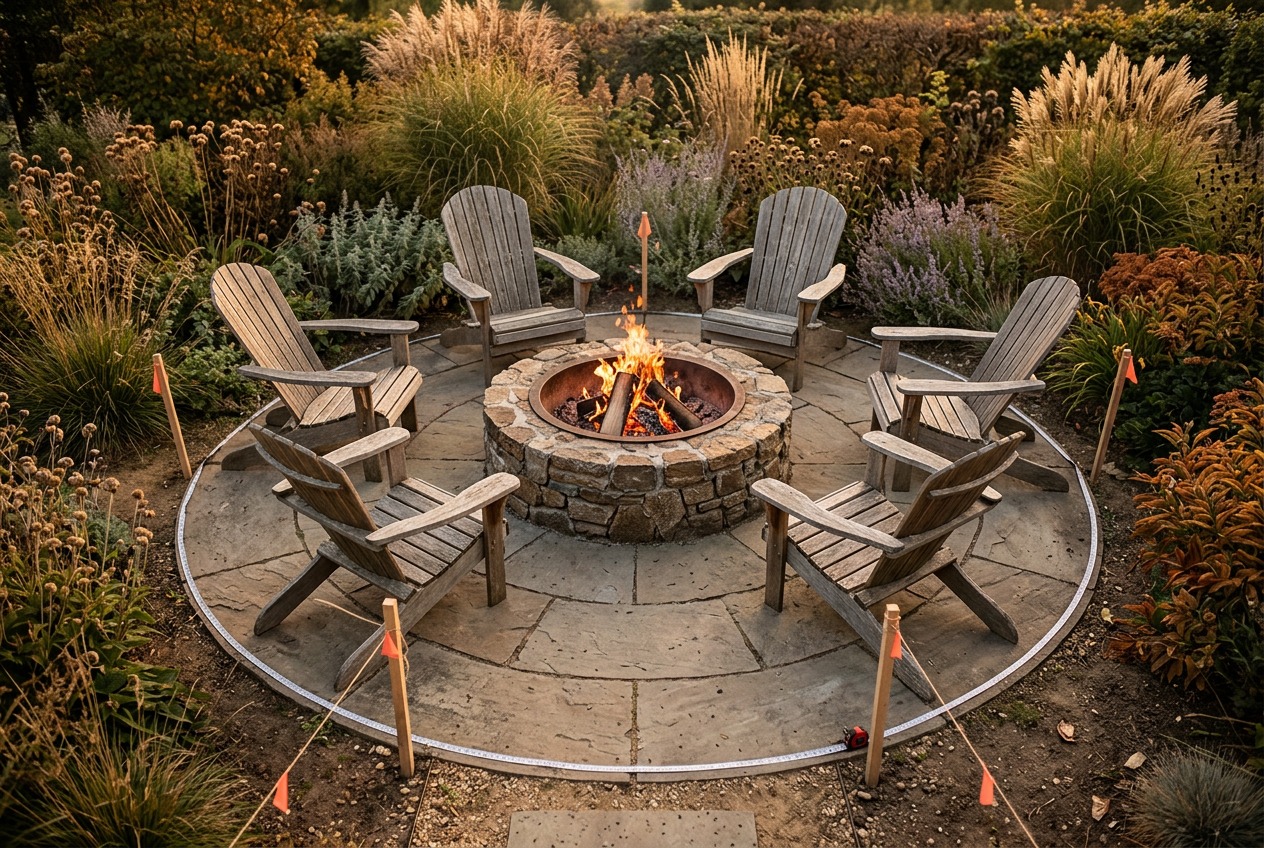
When you walk into our fire pit area now, it feels like stepping into a room. The space is about 12 feet across, ringed with river rock, and backed by a loose hedge of ‘Blue Princess’ holly that we planted for $8 per plant at the local nursery. The holly creates a visual boundary without blocking sight lines to the rest of the yard.
The Actual Build (Two Hours, Seriously)
Materials:
- 30-inch steel fire ring: $35 (Tractor Supply, on sale)
- Three bags pea gravel: $15 total
- Landscape fabric scrap: free (leftover from another project)
- River rock for border: $0 (collected from our creek over several weeks)
The Process:
I marked a 4-foot circle with spray paint where I wanted the fire pit to sit. This spot was about 15 feet from the house, directly visible from our kitchen window, and far enough from the fence to meet our city’s 10-foot clearance rule. Check your local fire codes before you start.
Dug out the grass and top 3 inches of soil. This part took the longest, about an hour with a flat shovel. You want a level circle that’s slightly recessed so the gravel sits flush with the surrounding grass.
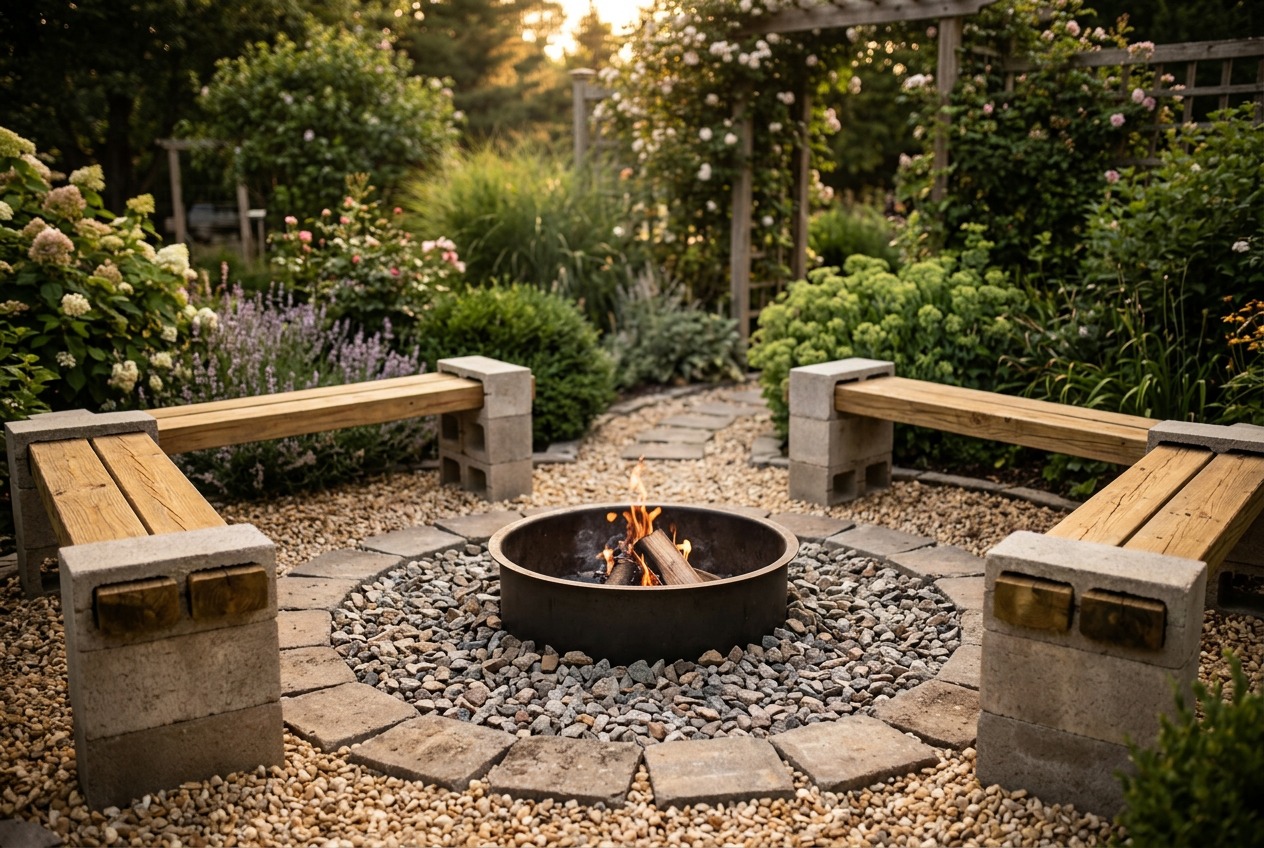
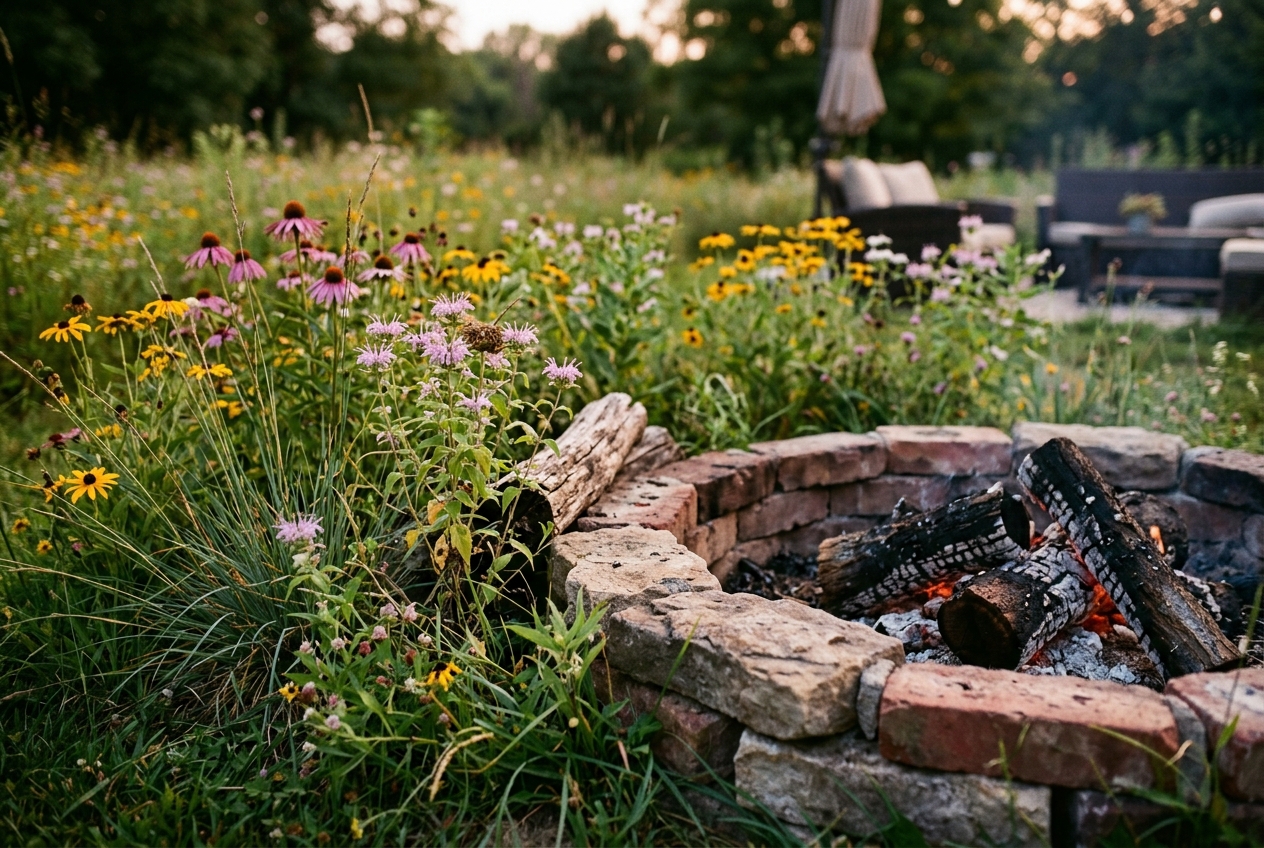
Laid down the landscape fabric to prevent weeds, then spread the pea gravel to create a 4-foot diameter pad. The fire ring sits directly on this gravel base. No concrete, no complicated footing. It’s been through two winters now without shifting.
The pea gravel extends about 6 inches beyond the fire ring on all sides. This catches sparks and gives you a clean surface to set drinks down. It also visually anchors the fire pit so it doesn’t look like it’s floating in the grass.
The Seating Layout That Changed Everything
Here’s what I got wrong the first time: I put four chairs in a perfect circle around the fire, evenly spaced. It looked neat. It felt like a waiting room.
The second weekend, I rearranged everything based on how people actually sat when they came over. Turns out, no one wants to stare directly at someone across a fire. People angle their chairs, they cluster in pairs, they want space to stretch their legs toward the warmth.
Our current layout:
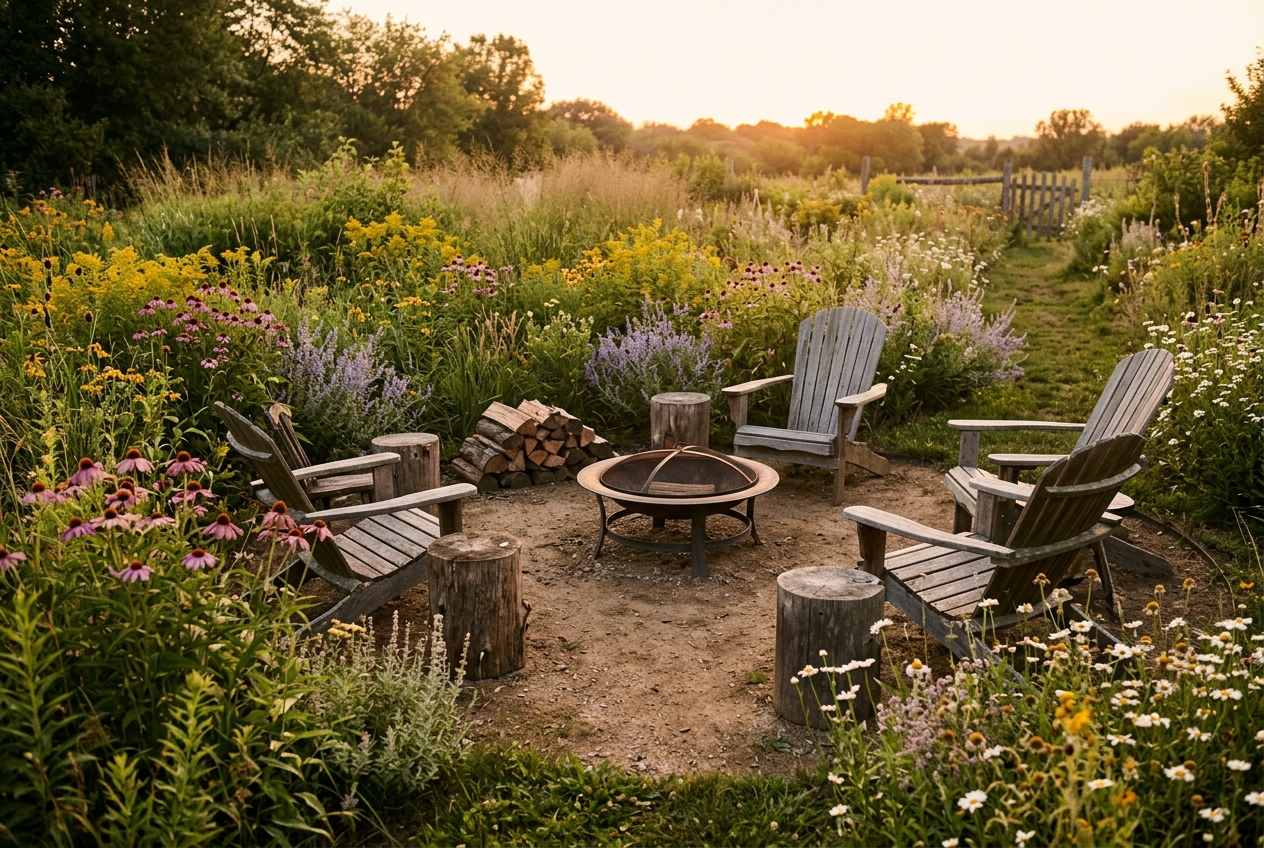
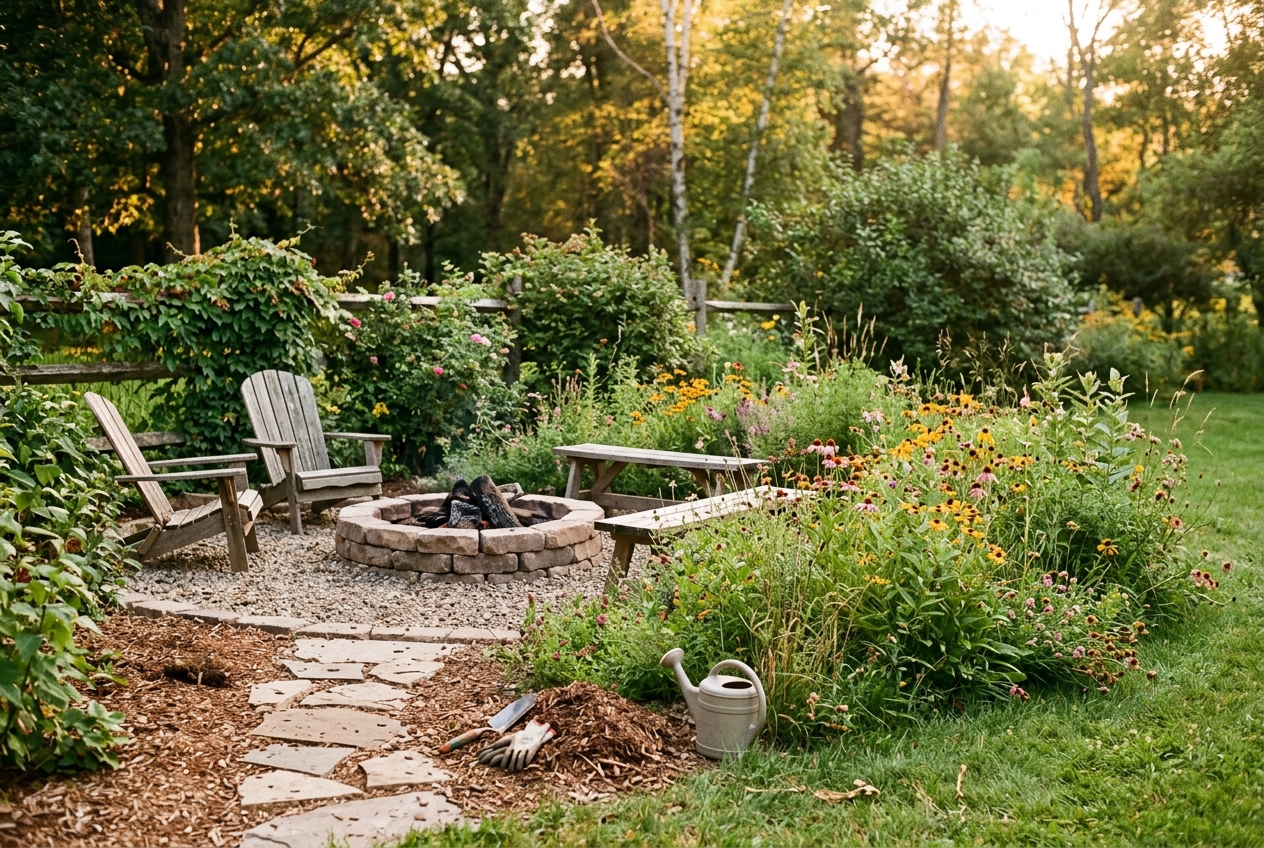
- Two Adirondack chairs at 10 and 2 o’clock (these we already owned)
- A wooden bench at 6 o’clock (Craigslist find, $20, painted dark green)
- Two folding camp chairs that live in the garage for overflow
- A tree stump at 4 o’clock that works as a side table or extra seat
The key is asymmetry. The bench creates an anchor point. The Adirondack chairs angle slightly inward. There’s a gap at 8 o’clock where people naturally walk in and out. It feels organic, not staged.
Creating the Walls Without Walls
This is the piece that makes it feel like a room. You need some sense of enclosure, but you don’t want to block views or create a boxed-in feeling.
We planted five ‘Blue Princess’ holly shrubs in a loose arc behind the bench, spaced 3 feet apart. These were 3-gallon pots from a local nursery, $8 each during their spring sale. They’re slow-growing but evergreen, so the space feels defined even in winter. After one full growing season, they’re about 3 feet tall and starting to fill in.
On the opposite side, we have two existing ‘Natchez’ crepe myrtles that we limbed up to create a canopy. Didn’t plant these, they were already there. But trimming the lower branches to about 6 feet created this overhead shelter effect without blocking sky.
The third “wall” is the house itself, about 15 feet away. The fourth side stays open, facing the rest of the yard.
If you don’t have existing trees or the budget for shrubs, you can create this same effect with:
- A tall ornamental grass like ‘Karl Foerster’ reed grass ($12 per plant, three would do it)
- Bamboo stakes with string lights wrapped around them
- A simple trellis with climbing ‘Jackmanii’ clematis (fast-growing, flowers in year two)
- Even a strategically placed garden cart or vintage wheelbarrow filled with flowers
The point is visual weight and height on at least two sides of your seating circle.
The Details That Make People Stay
Once the basic setup was done, I noticed people would come over, sit for one drink, then drift back inside. The space worked, but it didn’t quite hold people. These small additions changed that:
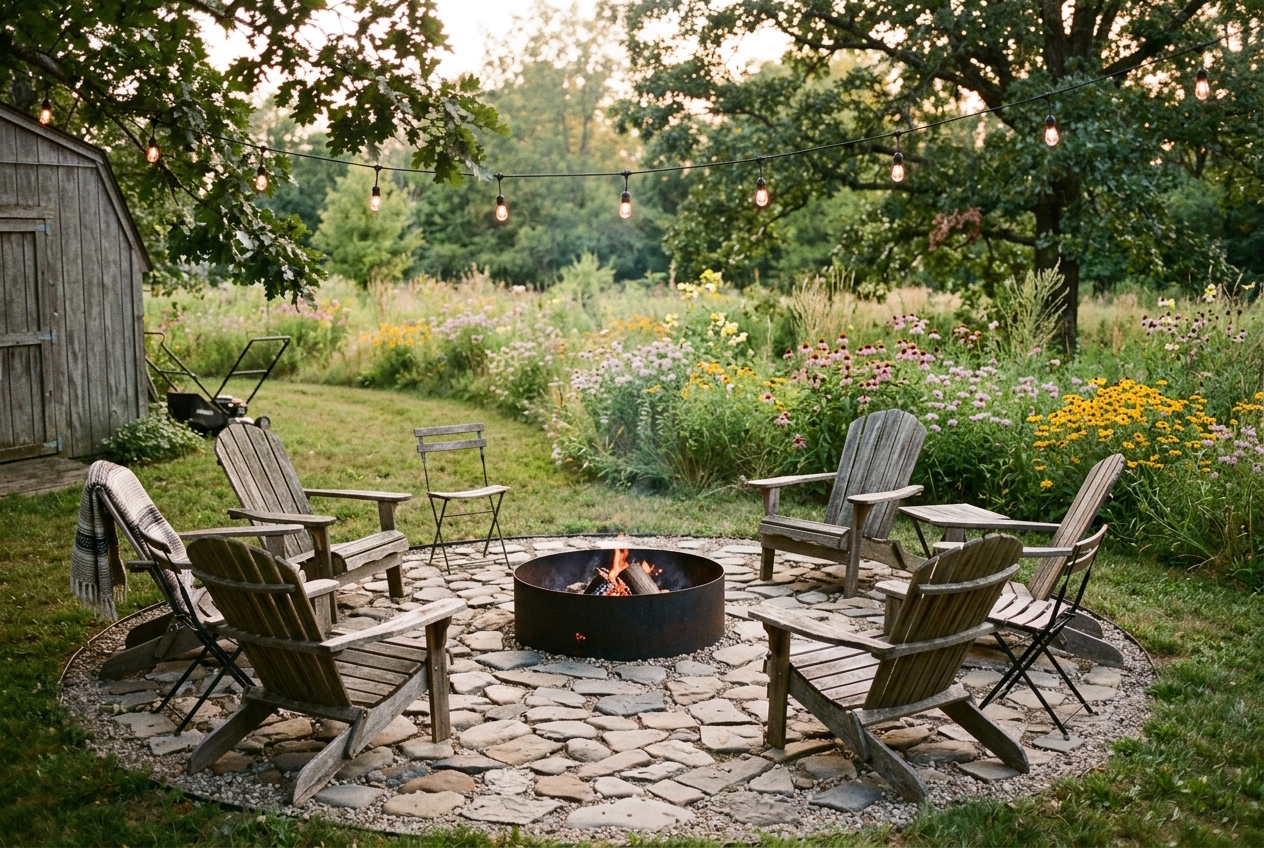
Lighting: Solar stake lights around the perimeter ($12 for a 6-pack at Home Depot). Not the bright spotlights, the soft amber ones that look like candles. They mark the edge of the space and create enough light to see your drink but not enough to kill the fire glow.
Side surfaces: That tree stump I mentioned, plus a couple of flat rocks positioned near chairs. People need somewhere to set things down. We added a small metal side table ($15, Target clearance) between the Adirondack chairs.
The wood situation: We keep firewood in a simple rack about 10 feet away, not right next to the fire pit. This was accidental at first, but it’s actually better. Getting more wood gives people a reason to stand up and move, which keeps the energy from getting too settled and sleepy.
Smell: I planted ‘Hidcote’ lavender and lemon thyme in the gaps between the holly shrubs. When it’s warm and people brush past them walking to their seats, the whole area smells incredible. The lavender was $4 per plant, the thyme was $3. Both are perennials that come back stronger each year.
What Happened Next
The first real test was a random Tuesday in July. I was out there reading with a small fire going, and our neighbor two houses down walked over with his dog. Then another neighbor saw us and came out. By 8 PM, there were seven people sitting around, and I hadn’t planned any of it.
That’s happened probably once a week all summer and fall. Not because we’re hosting, but because the space exists and looks inviting. People walking by can see the fire, see the seating setup, and it reads as “come join” instead of “private property.”
The $50 initial investment has expanded slightly. We’ve added a few more plants, another bag of river rock to extend the border, and I built a simple firewood rack from scrap lumber. All in, we’re probably at $120 total over the course of a year.
But the return isn’t measured in dollars. It’s measured in the number of times my kids have roasted marshmallows with neighbor kids on a school night. The conversations that happen when you’re all facing a fire instead of each other. The way our backyard shifted from a space we maintained to a space we actually live in.

The Timeline (If You’re Starting Now)
Weekend 1: Build the fire pit base, arrange seating (2-3 hours)
Weekend 2: Plant your “wall” elements, add lighting (2 hours)
Ongoing: Collect or purchase side tables, add plants in gaps, adjust chair positions based on how people actually use the space
If you’re reading this in early May, you’re in perfect timing. Plant those holly or grasses now, and they’ll establish roots through the summer. By fall, when fire pit season really kicks in, everything will look intentional instead of newly planted.
The lavender and thyme will bloom through June and July, which is a bonus. Even if you skip the plants entirely and just do the fire ring with seating, you’ll have a functional gathering spot this weekend.
Why This Matters
Creating a backyard sanctuary isn’t about perfection or big budgets. It’s about giving people (including yourself) a reason to be outside. A place that feels different from the rest of the yard, that has a purpose, that draws you out the back door instead of into the living room.
Our fire pit setup is simple. The chairs don’t match. The holly shrubs are still small. The whole thing cost less than a nice dinner out. But it changed how we use our outdoor space and how our neighbors interact with us.
That’s the real value. Not the fire pit itself, but the outdoor room it anchors. The gathering spot that says “slow down, sit here, stay a while.” And the surprising discovery that when you build it, people actually come.