Most perennials bloom for two to three weeks, then go quiet for the rest of the year.
A perennial border that looks good all summer is built from the small group of plants that flower for ten weeks or more. There are not many of these, and most lists pad the count with plants that bloom briefly and then cycle. The 12 below all flower from June through September in their growing zones with average garden care.
Each entry includes the bloom window, zones, light needs, and one note about what makes it actually keep blooming, since most long-blooming perennials need either deadheading or shearing to deliver the full season.
Here is the whole border at a glance. The last column is the part that decides whether you get six weeks or sixteen.
| # | Perennial | Bloom window | Zones | Light | What keeps it blooming |
|---|---|---|---|---|---|
| 1 | Coneflower (Echinacea) | June to September | 3-9 | Full sun | Deadhead to the next leaf node |
| 2 | Black-Eyed Susan (Rudbeckia) | July to October | 3-9 | Full sun | Almost nothing, and it self-seeds |
| 3 | Coreopsis | June to September | 4-9 | Full sun | Shear the older single-stem types in late July |
| 4 | Daylily (Hemerocallis) | June to August | 3-9 | Full sun to part shade | Weekly deadheading on reblooming types |
| 5 | Catmint (Nepeta) | May to August | 3-8 | Full sun | Shear by half after the first flush |
| 6 | Salvia (Salvia nemorosa) | May to July, again August to September | 4-8 | Full sun | Shear to basal foliage after the first bloom |
| 7 | Phlox (Phlox paniculata) | July to September | 4-8 | Full sun to part shade | Choose a mildew-resistant cultivar |
| 8 | Russian Sage (Perovskia) | July to September | 4-9 | Full sun | Cut back to 6 inches in early spring, never mid-season |
| 9 | Hardy Geranium (Cranesbill) | May to September | 4-8 | Full sun to part shade | ‘Rozanne’ repeats on its own |
| 10 | Yarrow (Achillea) | June to September | 3-9 | Full sun | Cut to basal foliage after the first flush |
| 11 | Stella d’Oro Daylily | June to October | 3-9 | Full sun | Deadheading is optional but adds two to three weeks |
| 12 | Astilbe (for shade) | June to August | 3-8 | Part shade to full shade | Consistent moisture and heavy mulch |
1. Coneflower (Echinacea)
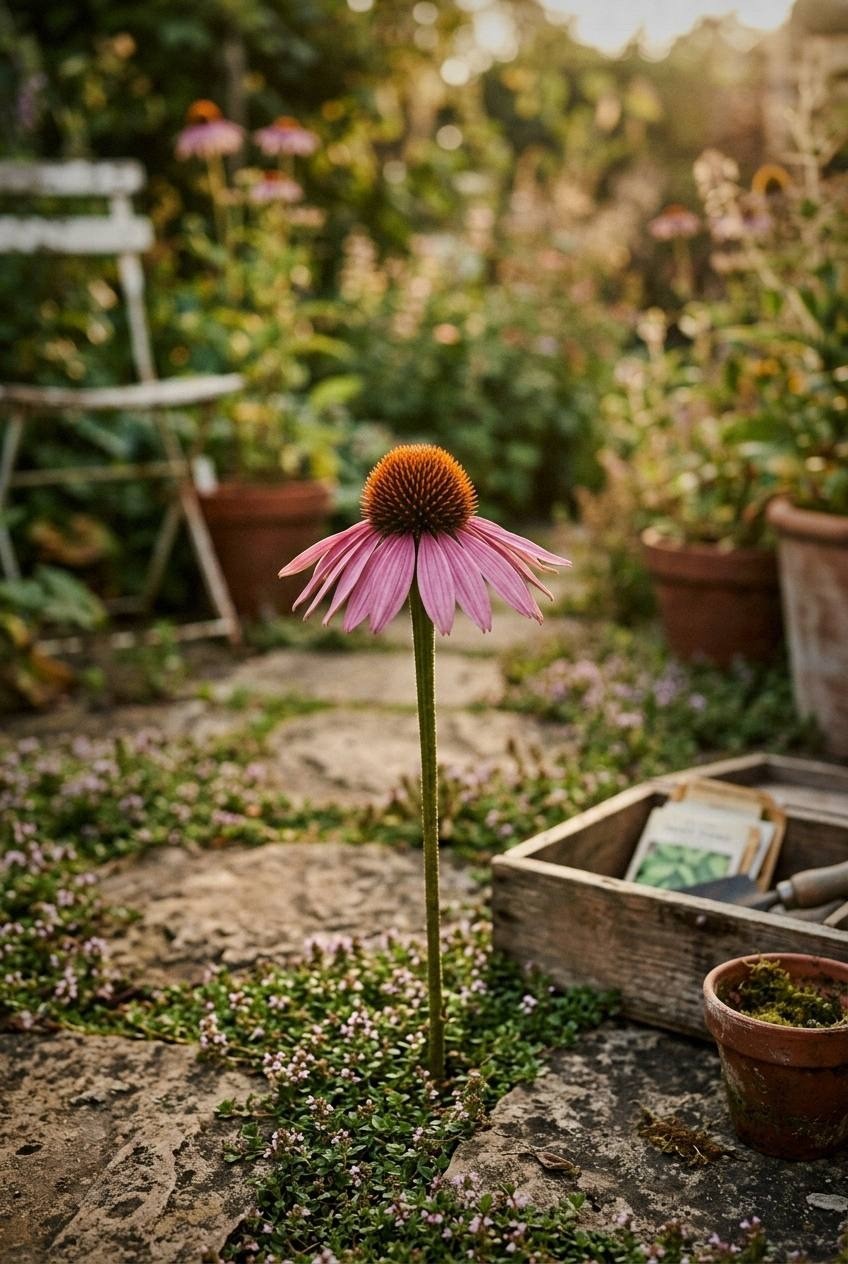
Bloom window: June through September. Zones 3 through 9. Full sun.
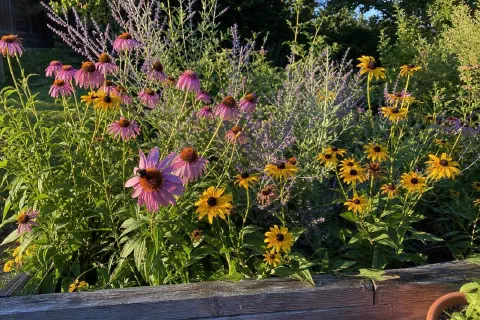
The reason coneflower keeps blooming is deadheading. Cut spent flowers down to the next leaf node and the plant pushes a new flush within two weeks. If you stop deadheading in late August, leave the seed heads up for the goldfinches in fall. That is also the point where a summer bed needs a second act, and five fall flower-bed plans sketch out what goes in beside those seed heads.
Pink, purple, white, orange, and yellow varieties are all reliable. Drought-tolerant once established. Reseeds slowly, which fills out a cottage border over time.
2. Black-Eyed Susan (Rudbeckia)
Bloom window: July through October. Zones 3 through 9. Full sun.
Yellow daisy flowers with dark brown centers. Less deadheading-sensitive than coneflower, meaning it keeps blooming with no maintenance. Self-seeds in mulched beds. Penn State Extension’s planting-site guide lists Rudbeckia hirta as a full-sun to part-sun performer, which is why it holds up in the hottest strip of a border.
Pair with coneflower in any mixed cottage border. The two plants peak together in late July and read as a single mass.
3. Coreopsis
Bloom window: June through September. Zones 4 through 9. Full sun.
Yellow, gold, orange, or pink daisy flowers on tall thin stems. The newer threadleaf varieties bloom continuously without deadheading. The older single-stem types need shearing in late July to push a second flush. The same Penn State list includes Coreopsis verticillata as a full-sun pick for a hot, exposed bed.
Tolerates poor soil, drought, and heat. One of the few perennials that actually keeps blooming during a hot dry August.
4. Daylily (Hemerocallis)
Bloom window: June through August. Zones 3 through 9. Full sun to part shade.
Each individual flower lasts only one day, but reblooming varieties produce dozens of stems. Stella d’Oro and Happy Returns both bloom from June through September if deadheaded weekly.
Strap-like foliage stays green all summer. Tolerates almost any soil. Divides easily every 4 to 5 years.
5. Catmint (Nepeta)
Bloom window: May through August. Zones 3 through 8. Full sun.
Lavender-blue spikes on mounded gray-green foliage. The trick to all-summer bloom: shear back by half after the first flush in late June. The second bloom appears within three weeks and runs through August.
Drought-tolerant and deer-resistant. Catmint takes its name from catnip (Nepeta cataria), the plant cats actually respond to, and the ASPCA lists catnip as toxic to cats , with vomiting, diarrhea, or sedation as the usual signs. Worth knowing before you tuck it into a bed where a cat spends its afternoons.
6. Salvia (Salvia Nemorosa)
Bloom window: May through July, with a second flush in August and September. Zones 4 through 8. Full sun.
Upright purple, blue, white, or pink spikes. Same trick as catmint: shear back to basal foliage after first bloom for a strong second flush. Pair with catmint and the bed reads layered upright-and-mounded.
Hummingbird and bumblebee magnet. Drought-tolerant once established.
7. Phlox (Phlox Paniculata)
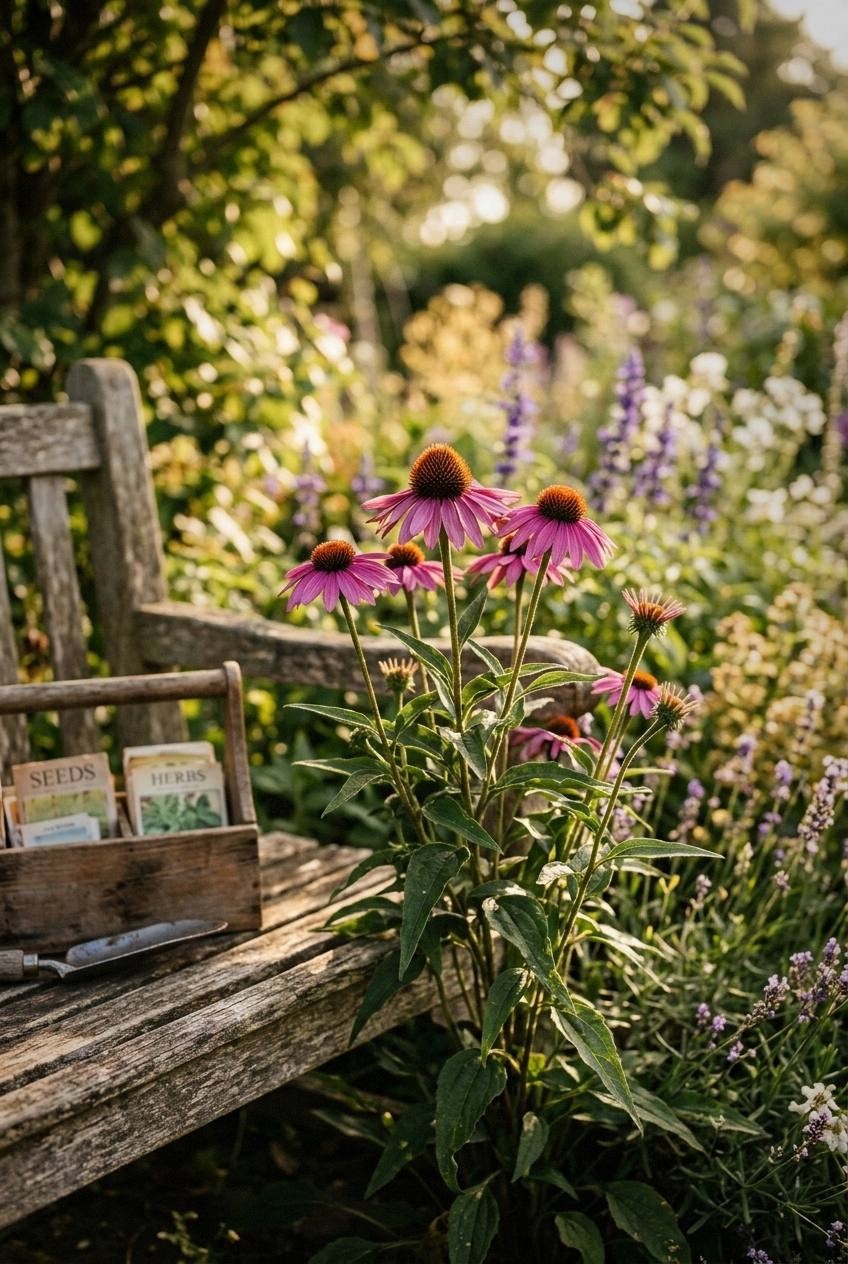
Bloom window: July through September. Zones 4 through 8. Full sun to part shade.
Tall fragrant clusters of pink, white, lavender, or red flowers. Older varieties get powdery mildew in humid summers, which is why Clemson HGIC lists phlox among the plants most commonly infected and names ‘David’ as one of the cultivars with demonstrated resistance. Pick mildew-resistant types like ‘David’ (white) or ‘Jeana’ (pink), and remember that resistance is not immunity.
Cuts well for indoor arrangements. The scent in August evenings is one of the few flower scents most yards still have at that point in the summer.
8. Russian Sage (Perovskia)
Bloom window: July through September. Zones 4 through 9. Full sun.
Cloud-like sprays of small lavender-blue flowers on silvery stems. Adds height and airiness to mixed beds. Once established, drought-tolerant to the point of thriving in dry summers.
Cut back to 6 inches in early spring before new growth. Mid-season pruning makes it leggy. The plant looks slightly wild on purpose.
9. Hardy Geranium (Cranesbill)
Bloom window: May through September. Zones 4 through 8. Full sun to part shade.
Pink, magenta, or white five-petal flowers on mounded foliage. Different from the annual geraniums in hanging baskets. The hardy version is a perennial groundcover. Penn State’s site guide lists Geranium maculatum as a part-sun to part-shade plant, so it is the one on this list that will take a shadier edge.
The variety ‘Rozanne’ blooms continuously from June to October without deadheading and is the closest thing to a foolproof long-blooming perennial. Plant once, watch it work.
10. Yarrow (Achillea)
Bloom window: June through September. Zones 3 through 9. Full sun.
Flat-topped clusters of white, yellow, pink, or red flowers. Soft ferny foliage. Drought-tolerant. Cut back to basal foliage after first bloom flush for a second wave in August.
Pair with coneflower and Russian sage for a Mediterranean-feeling border. All three thrive in the same conditions.
11. Stella d’Oro Daylily
Bloom window: June through October. Zones 3 through 9. Full sun.
The reblooming gold daylily that is the closest thing to a continuous-flowering perennial. Bred for repeat bloom, holds up in heat, tolerates poor soil.
Compact at 12 to 18 inches. Useful in front-of-bed positions or edging a path. Deadheading is optional but extends bloom by 2 to 3 weeks.
12. Astilbe (For Shade)
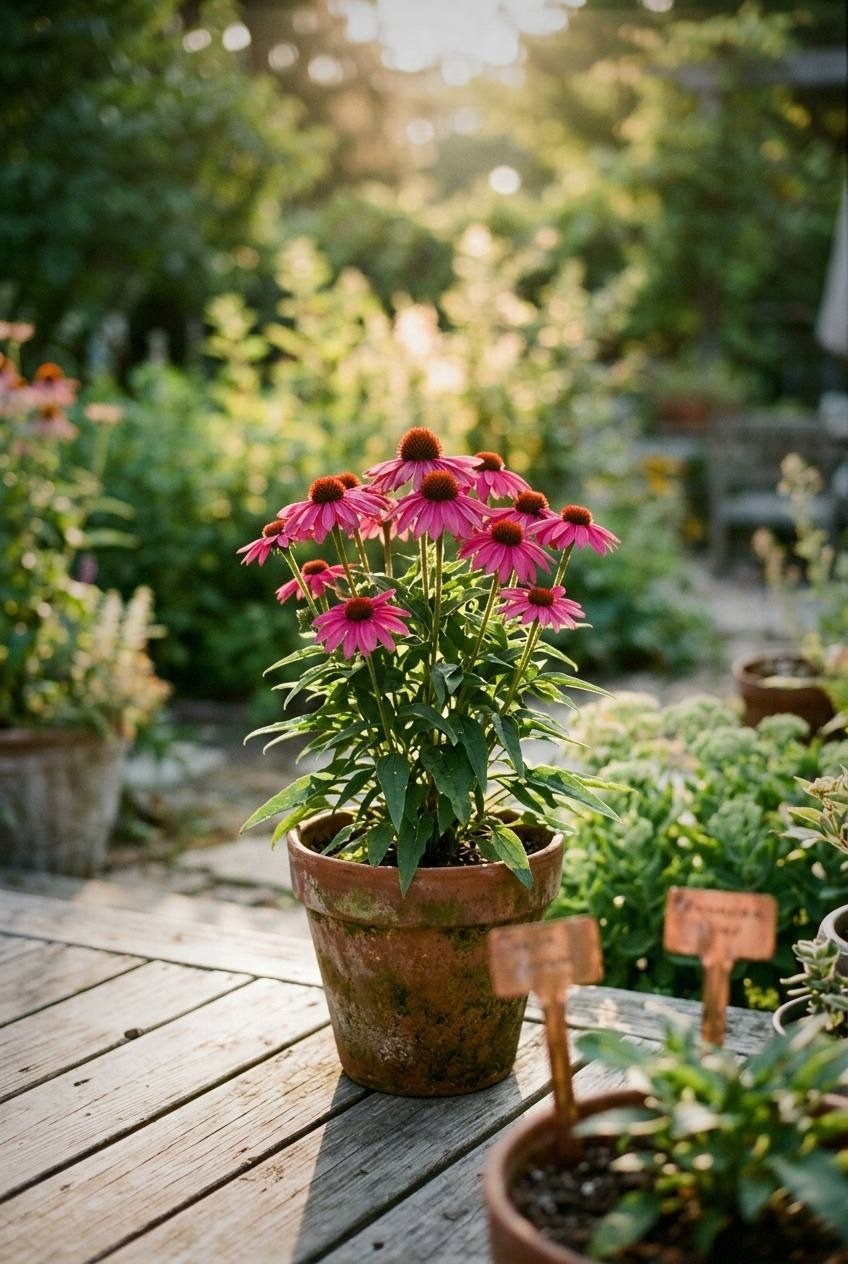
Bloom window: June through August. Zones 3 through 8. Part shade to full shade.
The shade-bed perennial that actually flowers all summer. Plumes of pink, white, red, or lavender. Fern-like foliage stays attractive through fall.
Astilbe needs consistent moisture more than any other perennial on this list. Mulch heavily. In dry summers without irrigation, the bloom window shortens.
How to Build a Border That Blooms All Summer
The mistake most beginning gardeners make is planting one of each. A bed with 12 different perennials reads scattered. A bed with 4 of these plants in groups of 3 to 5 reads intentional.
The order that works:
- Measure the light first, across a full day in June rather than an afternoon in April. Match the pick to the light band before you match it to the color you wanted.
- Choose three or four plants from the list, not twelve. Take one early starter, one mid-season anchor, and one that runs into September.
- Buy in odd-numbered groups. Three or five of one plant beats one each of five plants.
- Set the tallest at the back and let the mounded plants, catmint and hardy geranium, fill the middle.
- Water the new bed through the first season. After that, the drought-tolerant half of this list stops needing you.
- Write the shear dates on a calendar now, one for late June and one for late July. The second flush depends on the calendar, not on memory.
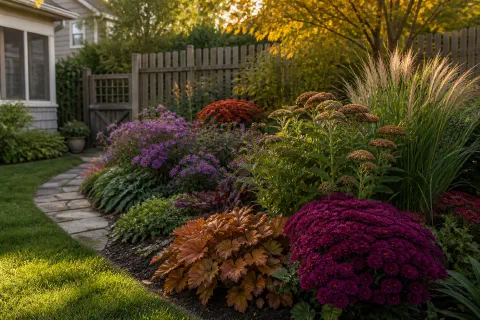
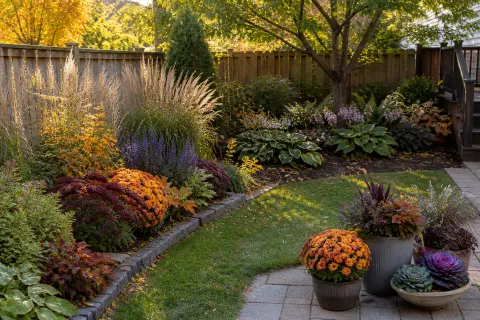
Pick 3 to 4 plants from this list. Plant in groups. Let them peak together. Deadhead and shear on the schedule each plant needs. By August, the bed will look like the cottage border in the photographs.
The perennial border that blooms all summer is not the one with the most plants. It is the one with the right plants, planted in the right groups, cut back at the right time.
Mistakes That Shorten the Bloom
- Shearing Russian sage in midsummer. It is the one plant here that wants its cut in early spring only. A mid-season trim makes it leggy for the rest of the year.
- Letting coneflower and daylily go to seed in July. Seed heads end the flower cycle early. Leave them in late August if you want goldfinches, not in July.
- Planting phlox in a humid, airless corner. Powdery mildew shows up first where air does not move. Thin the stems and water at the soil, not over the leaves.
- Skipping the mulch around astilbe. Dry soil shortens the bloom window more than shade does.
- Feeding the whole bed in midsummer. Soft growth flops and blooms later, not longer.
- Cutting everything to the ground in fall. Standing stems hold the border through winter and feed the birds.
Care Rhythm for a Long Season
Long bloom is a schedule, not a plant trait. The whole border runs on two passes.
- Late June: shear catmint by half and shear salvia back to basal foliage. These two carry the August show.
- Late July: shear coreopsis and yarrow to basal foliage for the second wave. Deadhead coneflower and daylily as you walk past with a bucket.
- Late August: stop deadheading coneflower if you want seed heads for birds. Keep watering astilbe until the plumes fade.
- Late fall: leave the standing stems up. Cut Russian sage back to 6 inches, but not until early spring.
- Every spring: top-dress with compost. A border that has been in for three years or more needs dividing more than it needs feeding.
What to Read Next
- 10 easy cottage garden perennials if you want a lower-maintenance starting group before committing to a whole border.
- Cottage garden front yard layout because the grouping rules matter as much as the plant list.
- Front yard cottage garden edges that still look tidy from the street for the part of the bed the whole neighborhood sees.
- Cottage garden ideas on a budget if you are buying in threes and watching the total.
- Full sun plants around a mailbox for a smaller, hotter bed that uses the same full-sun half of this list.