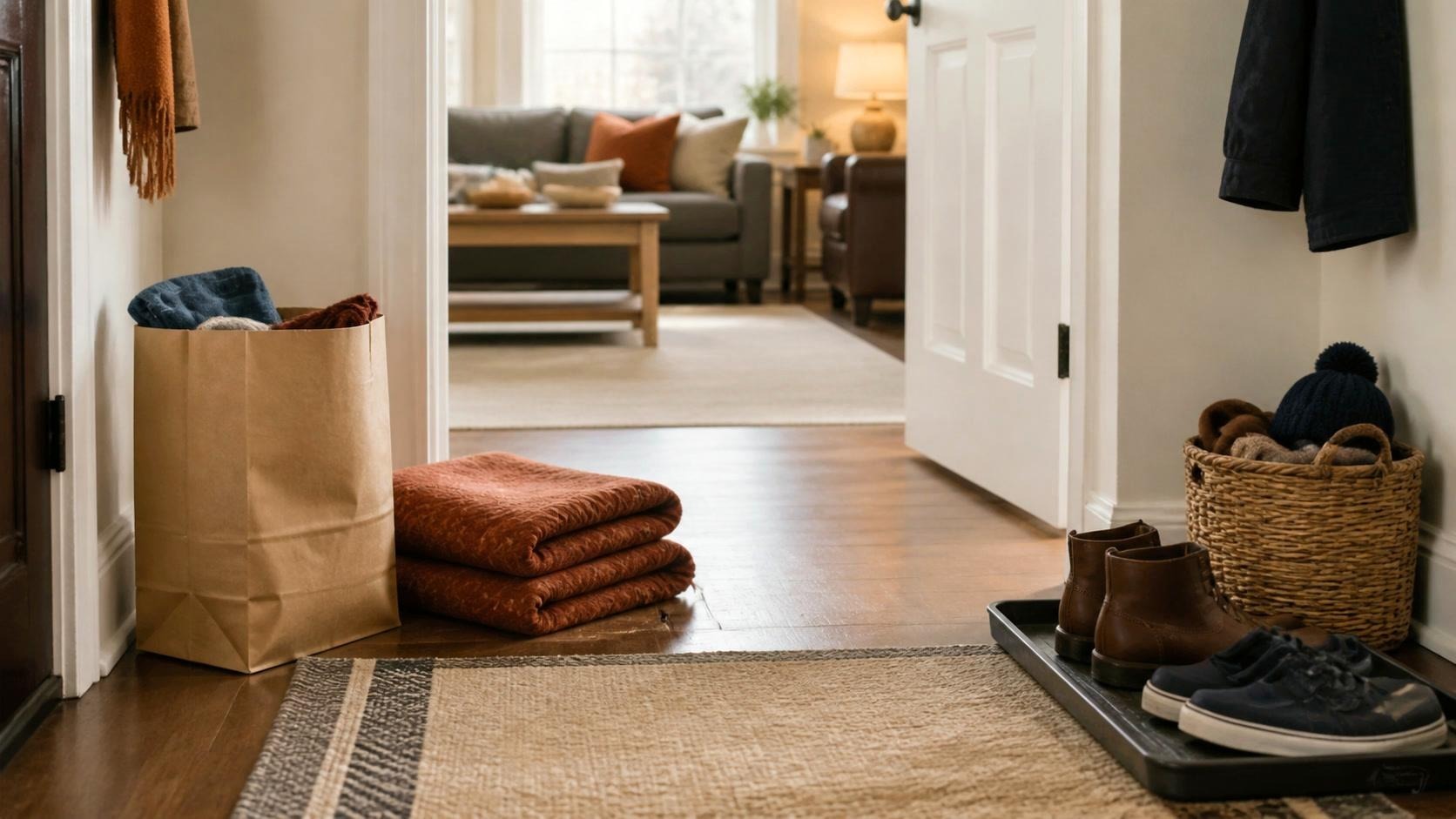
When a home starts to feel too full, it is tempting to look for one big weekend reset. But most of the weight is usually hiding in small categories: containers without lids, cords with no device, paper you meant to sort, the mug shelf that never quite closes.
This is a simple living declutter list for a normal week, not a whole-house overhaul. Pick one item each day, set a timer, and let the room get a little easier to breathe in.
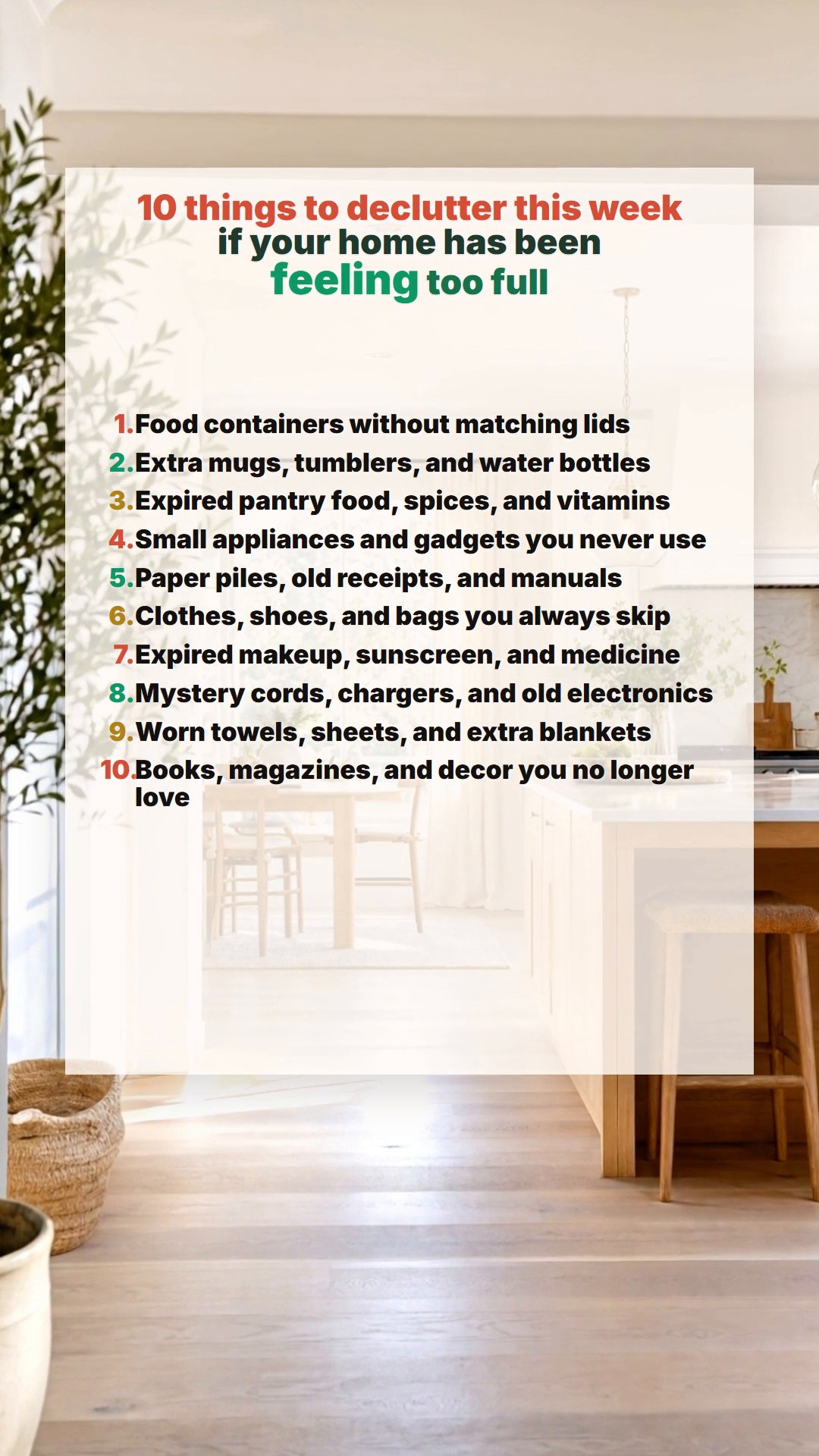
1. Food Containers Without Matching Lids
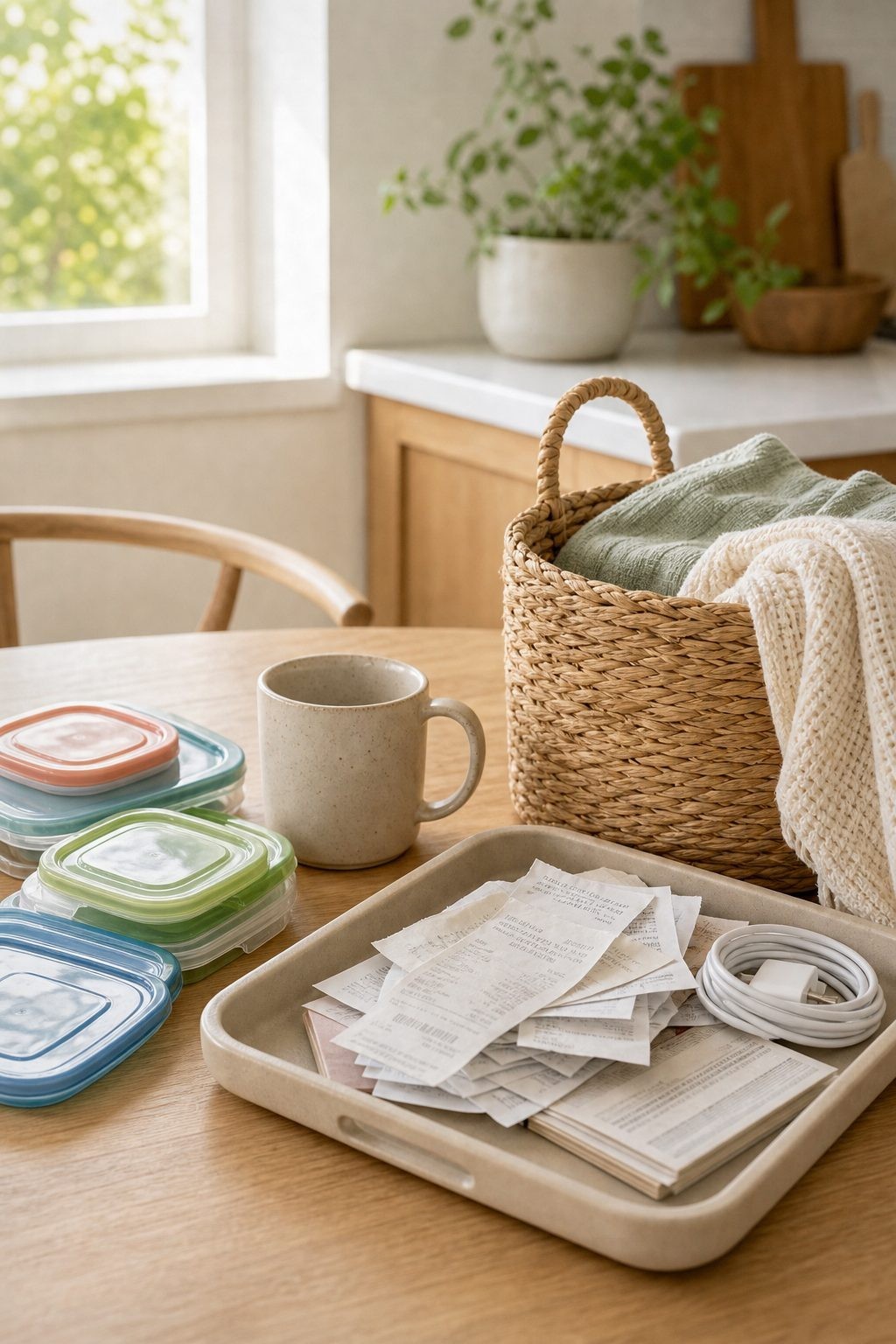
This is one of the fastest places to get a visible win because the mess is usually more annoying than emotional. Pull out every food container and lid. Match what belongs together. Anything stained, warped, cracked, or missing its other half can leave.
Keep the size you actually use for leftovers. If you always reach for the same three containers, that is useful information.
2. Extra Mugs, Tumblers, and Water Bottles
Most kitchens collect more drinkware than the household can reasonably use. The extras take over shelves, crowd the dishwasher, and make the cabinet feel chaotic every morning.
Line them up on the counter and keep the ones you love, the ones that travel well, and the ones that fit your real routine. Let go of the chipped mugs, mystery event bottles, awkward tumblers, and anything with a missing straw or lid.
3. Expired Pantry Food, Spices, and Vitamins
The pantry often feels full even when it is not actually useful. Check expiration dates, but also check reality. Old spices that smell like dust, vitamins no one takes, half-used mixes from a recipe you are never making again, and stale snacks all create false abundance.
The goal is not a picture-perfect pantry. The goal is to see what you have and make dinner easier.
4. Small Appliances and Gadgets You Never Use
Small appliances are heavy clutter because they take prime cabinet space and feel expensive enough to keep. Start with the gadgets you have not used in a year: duplicate blenders, novelty makers, single-use tools, and anything you avoid because it is annoying to clean.
If it solves a real problem, keep it. If it only represents a version of your kitchen you do not actually live in, let it move on.
5. Paper Piles, Old Receipts, and Manuals
Paper clutter makes a home feel unfinished because it keeps demanding a decision. Gather the loose receipts, manuals, flyers, appointment cards, envelopes, and school papers into one place.
Shred what needs privacy. Recycle what does not. Keep only what has a current job: tax records, warranties you still need, active medical information, or papers tied to something upcoming.
6. Clothes, Shoes, and Bags You Always Skip
You do not have to declutter your whole closet to make it feel lighter. Start with the pieces you already know you avoid. The shoes that pinch, the bag that never sits right, the shirt you try on and take off, the pants you are saving for a version of your day that never happens.
Those pieces are not neutral. They slow down mornings and make your closet look more useful than it is.
7. Expired Makeup, Sunscreen, and Medicine
Bathroom clutter is often tiny but persistent. Check sunscreen, medicine, makeup, skincare, first-aid items, and travel toiletries. Toss anything expired, separated, dried out, or irritating.
For medicine, follow your local disposal guidance rather than flushing it. For everything else, clear the counter first, then the drawers. The bathroom will feel calmer quickly.
8. Mystery Cords, Chargers, and Old Electronics
Every home seems to have a drawer of cords no one can identify. Take out the whole pile and label anything you can match to a device you currently own. Recycle old phones, dead headphones, broken chargers, and cords with no known purpose.
Keep one small tech box for useful backups. Do not let “maybe someday” become a drawer you avoid opening.
9. Worn Towels, Sheets, and Extra Blankets
Linen closets can quietly become storage for things no one reaches for. Keep the towels and sheets that feel good, fit the beds you actually have, and get used in a normal month.
Thin towels, scratchy sheets, extra blankets that smell dusty, and bedding for sizes you no longer own are all candidates to donate, repurpose, or recycle depending on condition.
If the closet is fine and the laundry room is the real bottleneck, six Walmart finds for a small laundry room covers the sorting and drying problem that keeps refilling it.
10. Books, Magazines, and Decor You No Longer Love
This category is about visual noise. Books you will not read again, old magazines, candles with a little wax left, vases you never use, and decor that no longer fits your home can make shelves feel crowded even when they are styled nicely.
Clear one surface or one shelf. Put back only what still feels like you. A room can feel more peaceful before you buy or organize anything.
A Simple Way to Use This List
Choose the category that annoys you most today. Set a 15-minute timer. Use three piles: keep, donate, and trash or recycle. When the timer ends, finish that one category before opening another one.
Decluttering feels heavier when everything is pulled out at once. It feels lighter when one drawer, one shelf, or one small decision area gets finished.
If your home still feels full after this list, look at repeat clutter next. That usually means an item has no easy home, a cabinet is over capacity, or you are keeping extras out of guilt rather than use.
When the weather turns, the seasonal version of this is a fall cleaning checklist that starts with less , which puts the safety and maintenance jobs first and leaves the rest optional.