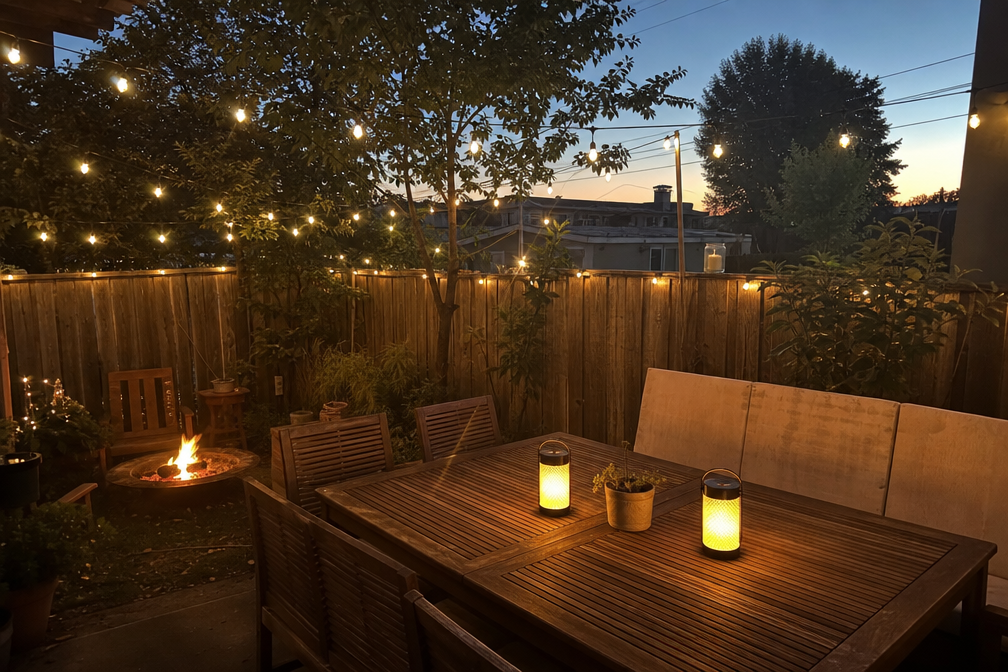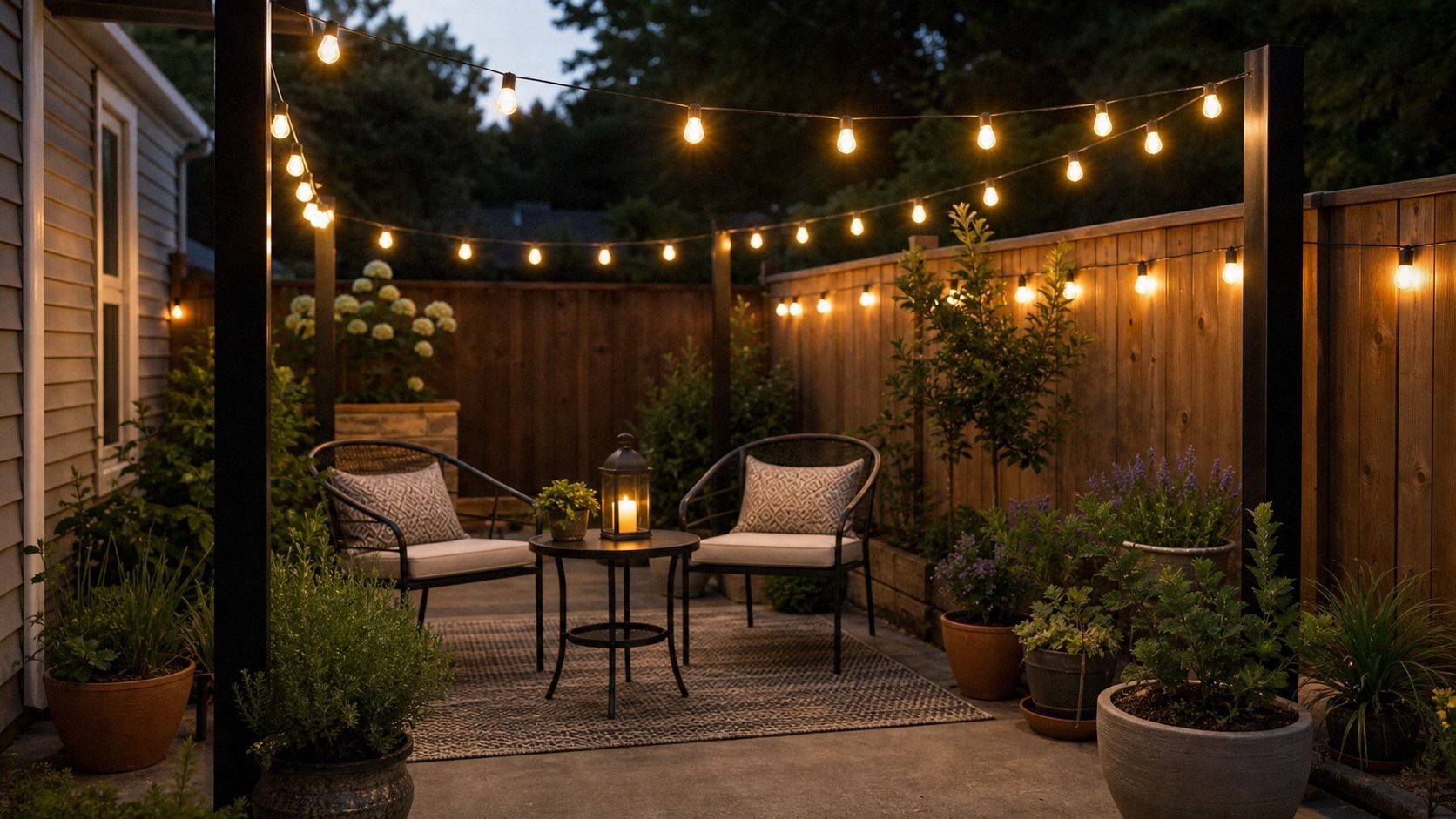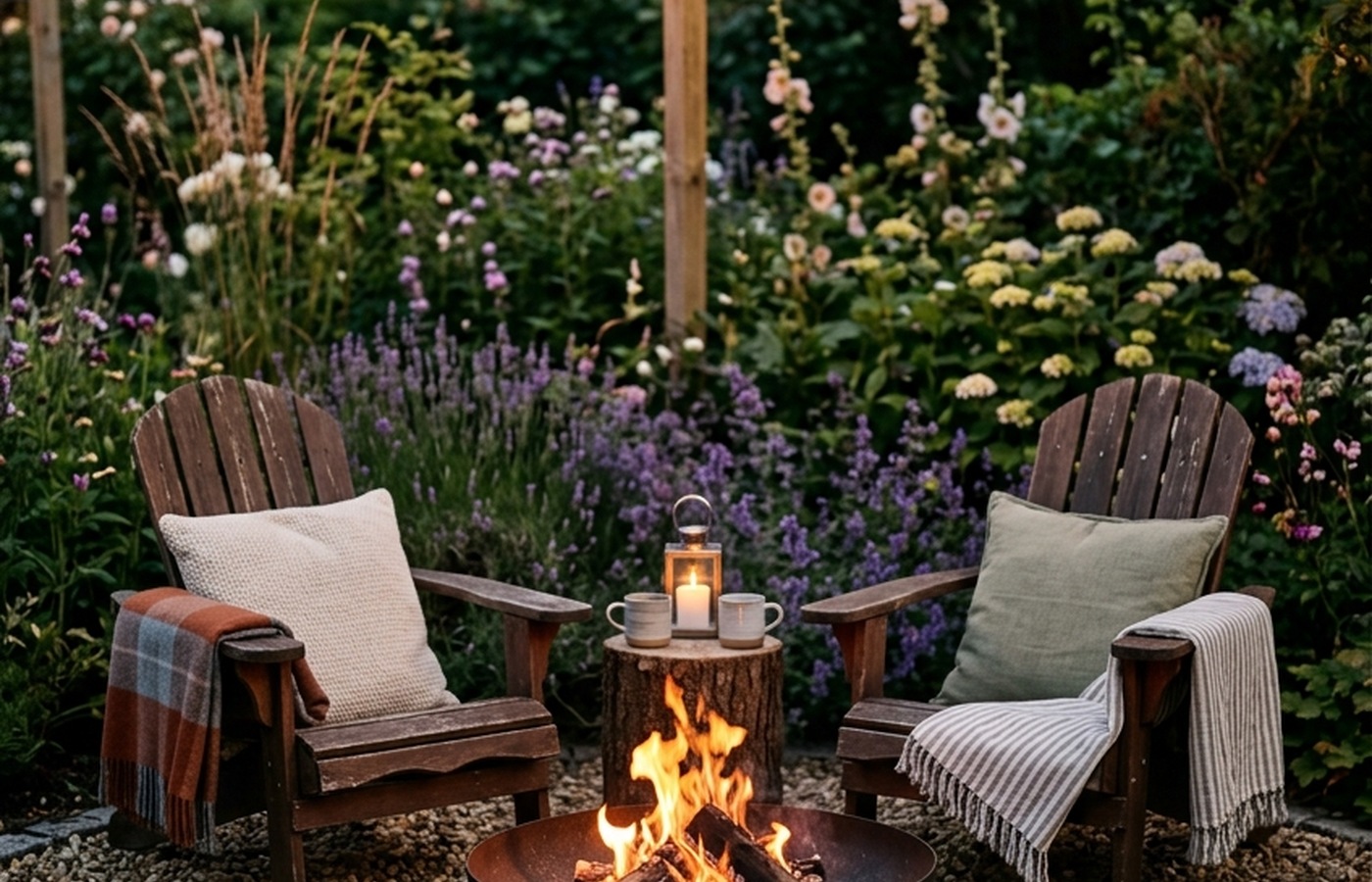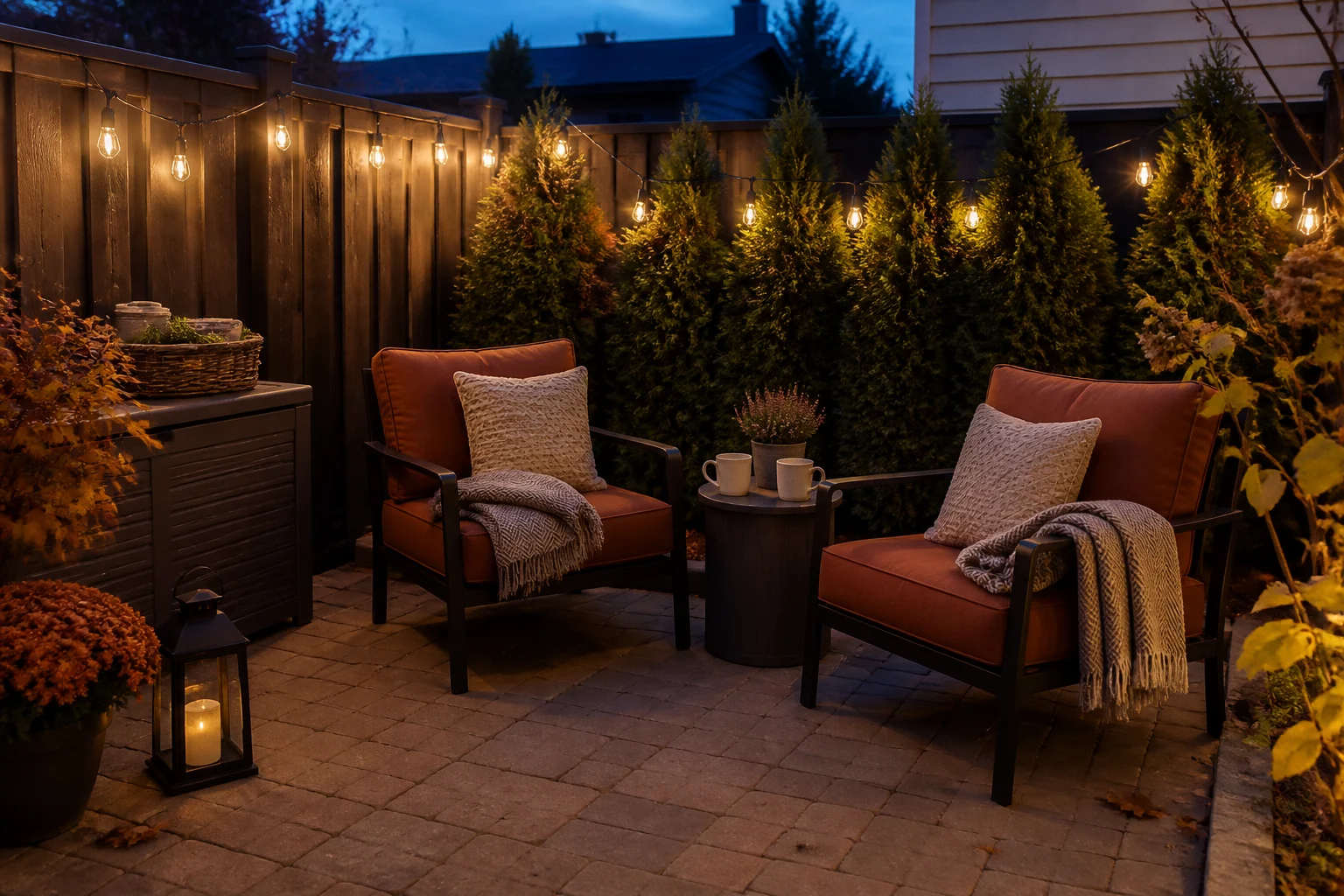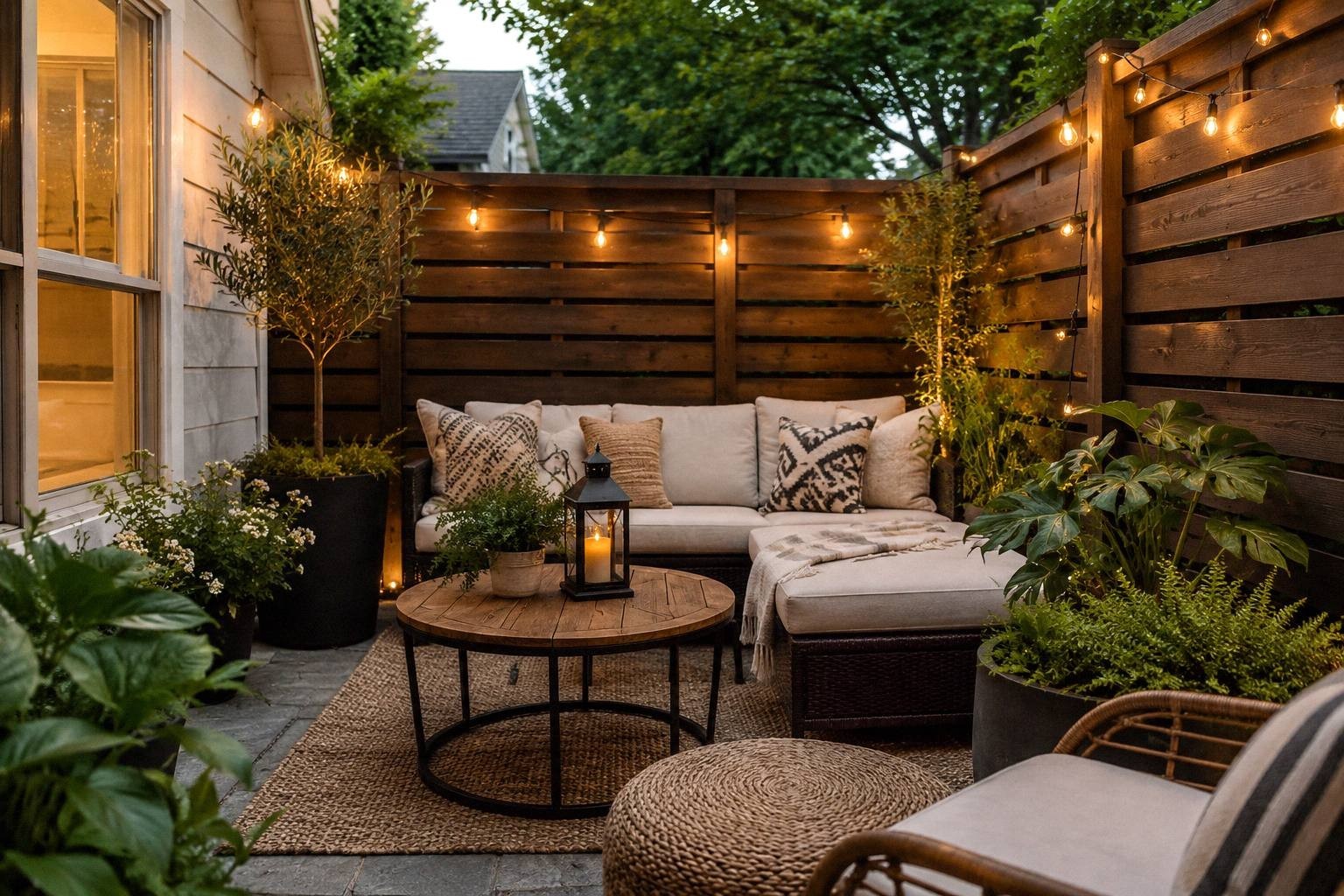
A small patio can feel just as inviting as a sprawling yard when you light it right. The trick is choosing fixtures that add warmth without crowding the space, and placing them where they’ll do the most good after the sun goes down. These ten ideas work in compact areas, most need no wiring, and several suit renters who can’t drill into walls or bury cable.
Compare Four Small-Patio Approaches
Small patios reward restraint. A single well-placed fixture often does more than three scattered ones, and light aimed upward or along edges makes the space feel larger than light pointed straight down at the center. You’re after pools of soft glow, not even brightness everywhere.
Renters and homeowners face different constraints. If you can’t drill, you’ll lean on solar stakes, battery packs, and pressure-mounted hooks. If you own the place, low-voltage wired systems give you consistent brightness and no dead batteries to swap. Either way, fixtures scaled to the space matter more than the power source.
| Approach | Best For | What to Know |
|---|---|---|
| Perimeter string lights | Defining edges, making the space feel enclosed | Hang along fence or railing; creates a room-like boundary |
| Solar path stakes | Walkways, planter edges, no-wire setups | Panel needs the sun exposure specified by the maker; light output is usually modest |
| Battery lanterns | Renters, movable accent light | Portable and adjustable; check runtime before buying |
| Low-voltage deck lights | Built-in look, permanent installations | Requires transformer and wiring; dimmable options available |
A Three-Step Setup Order
- Mark the step, door, grill, and chair where light has a real job to do.
- Check the outlet, mounting point, sun exposure, lease, and product instructions before buying a fixture.
- Test one light at dusk from your usual seat, then add a second layer only if a dark edge or task still needs it.
Match the Light to the Job
Most people buy too much light and aim it too high. A patio at night is not a kitchen. Start with the job the light needs to do, then check the fixture’s published output and coverage instead of treating one lumen number as right for every patio.
| What the light is for | Useful type | Where it sits |
|---|---|---|
| Ambience and edges | A dimmable strand, lantern, or low accent light | Ground level, rail height, or overhead around the sitting zone |
| Seeing faces at a table | A shaded table lamp or dimmable overhead light | At table height or just above, kept out of direct sightlines |
| Reading in a chair | A movable task lamp | Beside the chair, with the shade below eye level |
| Grilling or prepping food | A dedicated task light | Aimed at the work surface, away from the seating |
| Steps and the walk to the door | A shielded step or path light | Low and aimed down so the edge remains visible |
Before plugging in a strand, inspect the cord and use products marked for outdoor use. The Electrical Safety Foundation International’s outdoor decorating guidance covers cord and outlet checks, while UL Solutions explains outdoor and wet-location lighting certification . Keep connections out of standing water and follow the fixture maker’s limits.
Colour temperature decides more than brightness does. The U.S. Department of Energy explains that lower color temperatures appear warmer and more yellow, while higher ones appear cooler and bluer. For an amber patio glow, compare fixtures in the 2200K-to-2700K range. The string light guide covers the rest of the label, including weather ratings and how much strand length to buy.
One placement rule costs nothing and fixes most complaints. Keep every light source either below eye level when you are seated or high enough overhead that you never look into a bulb. A lantern at chest height on a side table is comfortable. The same lantern on a shelf behind the chairs is glare for everyone facing it.
String Lights Along the Perimeter
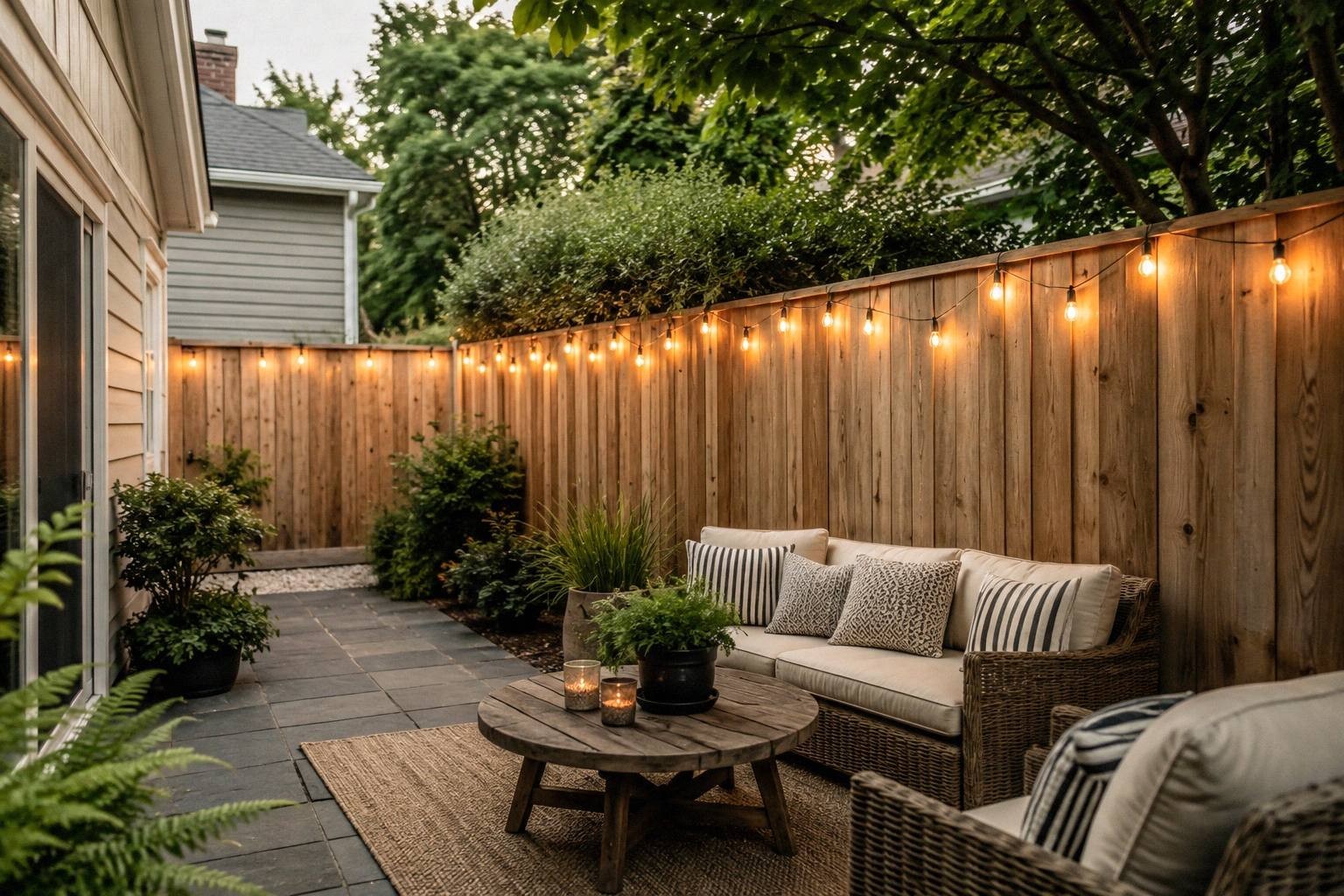
At dusk the fence line glows amber, and the patio feels like a room with soft walls instead of an exposed slab. You’re sitting under a gentle canopy of light that doesn’t glare down at you.
Run a single strand of Edison-bulb string lights along the top rail of your fence or the edge of an overhead beam. Measure the full hanging path, including the drop to power and the gentle sag between supports, before choosing a strand. Follow the light maker’s support spacing and do not make the electrical cord carry structural tension. If you rent, use a removable mounting method only when both the surface and the hook are rated for the load and outdoor exposure.
No overhead anchor? Use the fence or wall as the whole lighting plane. Short vertical drops hung from a properly supported horizontal cable create a curtain of light without taking up floor space. Keep the lowest bulbs above furniture and walking paths, use only outdoor-rated strands and connections, and follow the maker’s support and weather instructions.
Solar Path Lights for Edges and Steps
Small amber stakes mark the edge of the patio where it meets the grass, and the single step down to the yard is visible without a flashlight. The light is low and doesn’t compete with anything overhead.
Press solar path lights into the soil or a large planter along the perimeter. Keep them low enough that the fixture does not block sightlines across the patio. Put the panel where it receives the sun exposure specified by the maker; a shaded panel or short winter day cuts runtime. Use these lights to define edges, not as the only light for reading or cooking.
A Pair of Battery Lanterns on Side Tables
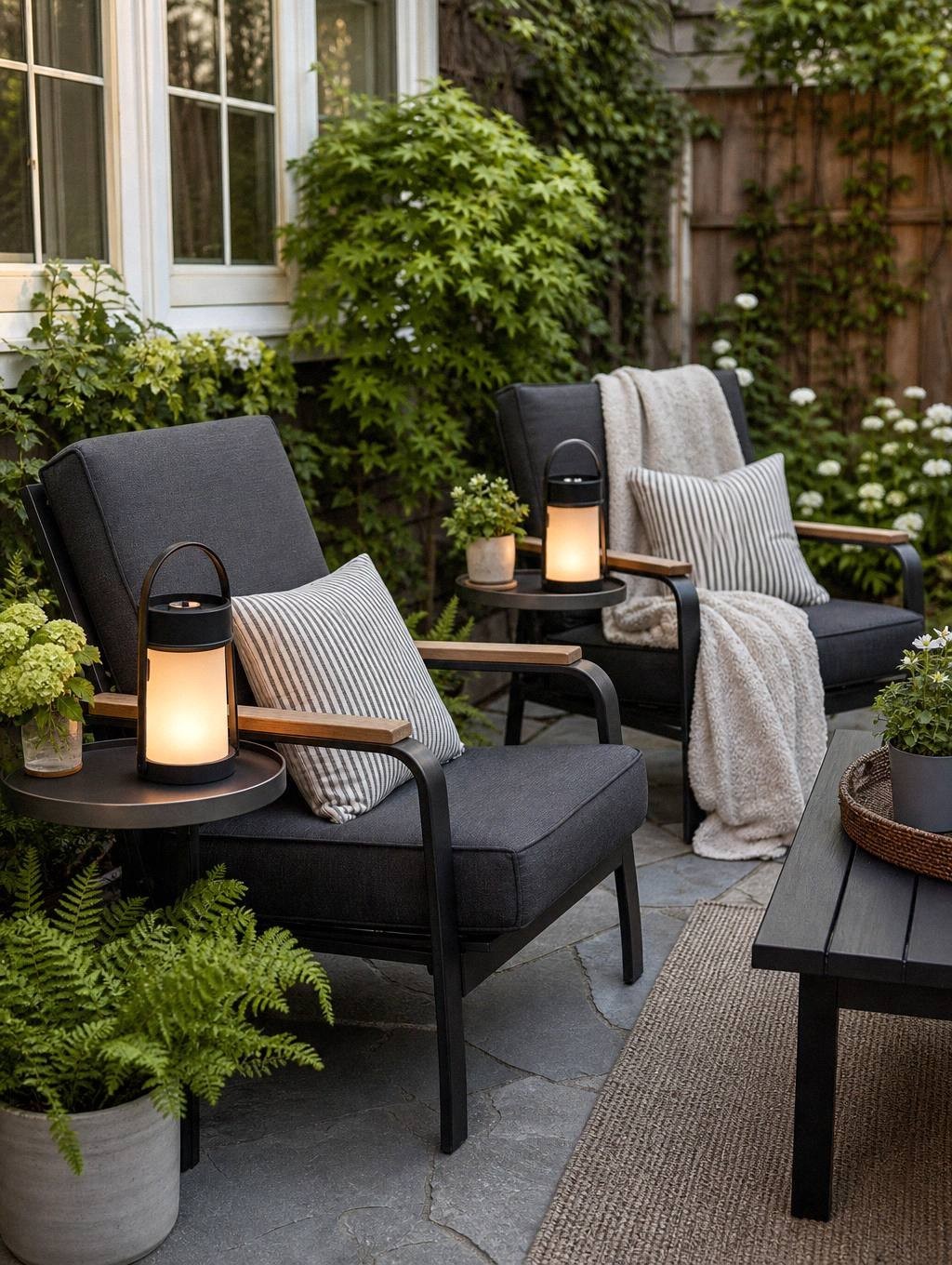
Two lanterns sit on the arms of your chairs, casting a warm circle that reaches your book and your drink. When you move to the other side of the patio, you pick them up and bring them along.
Battery-powered LED lanterns in metal or resin housings give you portable light without cords. Look for a stable base, a warm-white LED, a frosted lens, and a published runtime that covers the way you use the patio. Rechargeable models avoid a cord across the floor while they are in use. Set one on each side table or cluster both on a central coffee table when you have guests.
Uplighting a Single Tree or Shrub
The Japanese maple in the corner is lit from below, and its branches throw shadows on the fence behind it. The patio feels twice as deep because your eye travels to that back corner instead of stopping at the furniture.
Place a small spotlight or a solar uplight at the base of a tree or a tall shrub, aimed up into the foliage. A fixture with a three-watt LED is enough for a shrub six feet tall. Tuck it behind a rock or a low plant so you see the effect, not the bulb. This pulls attention to the edges of the space and makes a small yard feel layered instead of flat.
Deck Rail Lights Along the Seating Area
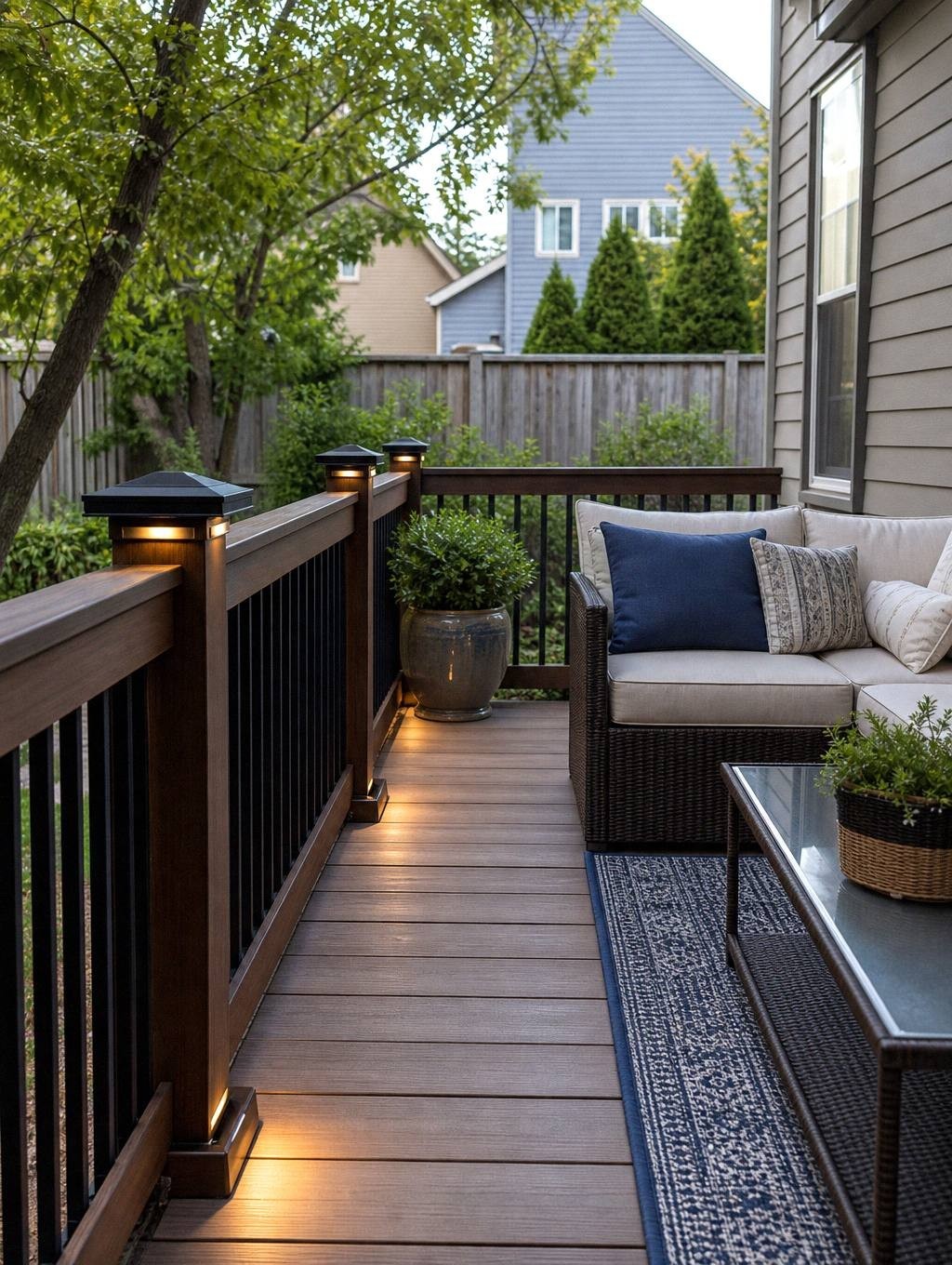
The railing glows softly at knee height, and you can see the edge of the deck without tripping. The light stays out of your eyes because it’s aimed down at the floor, not out into the yard.
Mount small LED puck lights or post-cap fixtures on the railing posts every four to six feet. Battery-operated versions press into place with no wiring, and low-voltage wired models connect to a transformer tucked under the deck. Choose fixtures two to three inches across so they don’t dominate the railing. The light should pool on the deck surface, not spill into the seating area.
A Shepherd’s Hook with a Hanging Lantern
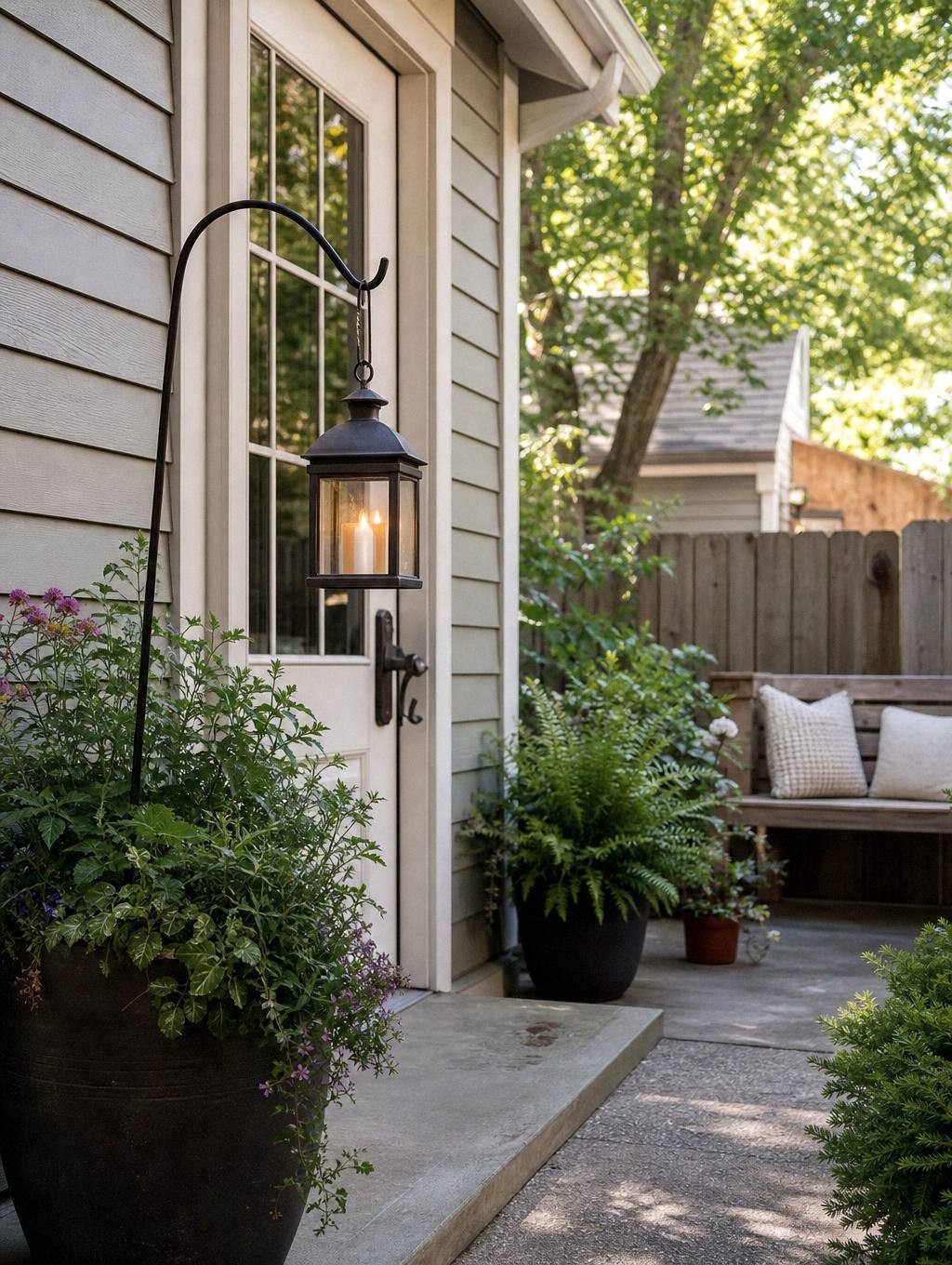
A lantern hangs at eye level beside the door, swaying slightly when the breeze picks up. It lights the threshold and the first few feet of the patio without a fixture mounted to the house.
Press a shepherd’s hook into a large planter or directly into the ground near the door. Hang a battery or solar lantern from the crook, about five feet off the ground. A lantern six inches in diameter is enough for a small patio. This setup works for renters because the hook lifts out when you leave, and it gives you adjustable light you can move to a different corner if the layout changes.
Bistro Lights Overhead on a Tension Wire
The lights hang in a loose zigzag above the table, close enough to light your plate but high enough that you don’t bump them when you stand. The patio feels like a cafe corner, not a backyard afterthought.
String a vinyl-coated steel cable between two posts or from the house to a fence post, pulled taut with a turnbuckle. Hang a strand of bistro lights from the cable using the built-in loops. For a patio ten feet across, a single strand with eight to ten bulbs is enough. Keep the cable seven to eight feet off the ground so the lights clear your head. This setup stays put in wind and gives you overhead glow without a permanent structure.
A Rechargeable Table Lamp
A rechargeable outdoor table lamp puts light where two people are sitting without a cord across the floor or a fixture overhead. Pick a dimmable model with a stable base and an outdoor-use rating, then keep it low enough that the bulb does not shine straight into anyone’s eyes.
This is the easiest first light for a renter, a balcony without an outlet, or a bistro table under a roof that blocks a solar panel. Charge it indoors as the maker directs and bring it in when the weather falls outside its published limits.
Under-Bench LED Strip Lighting
The bench glows from underneath, and the light washes across the patio floor in a soft band. You see where you’re walking without a bright fixture in your sightline.
Stick a battery-powered LED strip along the underside of a built-in bench or a low planter box. A strip twelve to eighteen inches long is enough for a small bench. Choose warm white LEDs and a strip with adhesive backing rated for outdoor use. The light stays low and indirect, which makes a tiny patio feel cozy instead of exposed. This works especially well if your seating is against a wall or a fence, because the light reflects off the vertical surface and spreads farther.
A Single Statement Pendant Over the Dining Spot
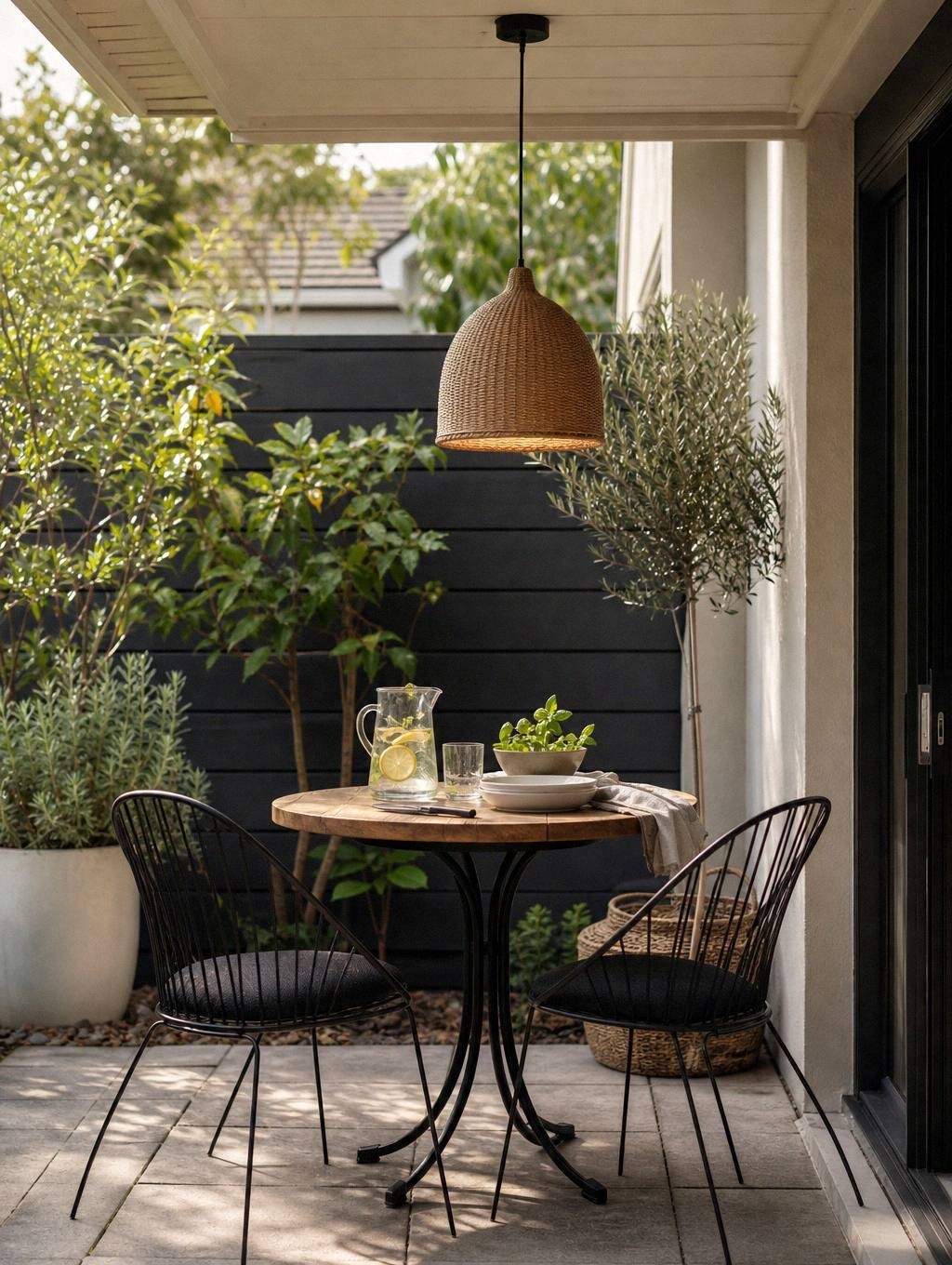
The pendant hangs above the bistro table, and the light pools on the surface where you set your plate. Everything outside that circle fades into soft shadow, and the patio feels intimate instead of small.
Hang a battery-operated or plug-in pendant from a ceiling hook or a sturdy tree branch, centered over your table. A fixture eight to twelve inches in diameter is enough for a table that seats two. The bottom of the shade should hang about thirty inches above the tabletop so it lights the surface without glaring in your eyes. If you’re renting, use a removable adhesive hook rated for the fixture’s weight. This gives you focused task light where you need it and leaves the rest of the patio in gentle dimness.
Three Small-Patio Lighting Options Worth Comparing
These three fixture types solve problems that used to push small patios toward one bright overhead light or a tangle of extension cords.
Rechargeable cordless table lamps went from novelty to a category you can shop. They answer the bistro table that sits nowhere near an outlet, most of them dim, and they charge on the same cable as a phone.
Warm dimmable LED strands let one perimeter layer cover dinner and the quieter hour after. Confirm that the strand, dimmer, and power source are compatible rather than assuming every LED strand can dim.
Low-voltage kits got much easier to install. Plug-in transformers with push-connect fittings let you run path lights and uplights along a bed without wiring knowledge or a trench, which used to be the reason people gave up and bought more solar than they wanted.
The look moving alongside them is quieter: fewer fixtures, warmer bulbs, light kept low and around the edges instead of one bright source overhead. That is what a small patio wanted anyway.
Mistakes to Avoid on a Small Patio
- Buying a bright central fixture before marking the step, table, and walking path that need light.
- Hanging bare bulbs in the seated sightline, where a warm bulb can still create glare.
- Treating an outdoor-use label as permission to leave plugs or connections in standing water.
- Putting a solar panel under a roof or in shade, then expecting the advertised runtime.
- Adding so many strands and lanterns that cords, hooks, and fixtures crowd the small space.
Covered Patios, Balconies, and Anywhere Without an Outlet
A roof overhead changes the plan, mostly for the better. A covered patio hands you something to hang from, which is the hardest thing to find on an open slab. Cup hooks screwed into the underside of the beams work if you own the place, ceiling-rated adhesive hooks if you do not, and either way run the strand in one straight line rather than a zigzag. A roof also keeps fixtures dry, so lighter-duty pieces survive there that an exposed patio would ruin in a season.
The catch is solar. A covered patio blocks the panel, so any solar fixture needs its panel out past the roofline. That usually means a separate-panel model with a cable, or a stake pushed into a planter that sits in the open.
Apartment balconies have the opposite problem: plenty of sky, almost no permission. Work with what clips, presses, or hangs.
- Railing clip lights, or rope light zip-tied along the inside of the rail. Both come off in a minute.
- A rechargeable table lamp that runs six to twelve hours on a USB charge. This is the most useful thing a balcony without an outlet can own.
- Battery lanterns hung from an over-rail planter hook.
- A shepherd’s hook in a heavy pot, which attaches to the building not at all.
- Adhesive hooks on siding or stucco, tested on a hidden patch first.
Read the lease before anything goes into a wall, and check whether open flame is allowed at all. Many buildings prohibit candles and fire bowls on balconies. A battery flicker lantern can give a similar low glow without an open flame.
Lighting Projects Worth Doing Yourself
Not every layer has to arrive finished in a box. Three small projects change a patio more than another strand would.
A planter post. Set a length of stained or painted timber into a large pot with gravel and quick-set concrete, and you have an anchor point where none existed. Two of them turn an open slab into somewhere you can hang lights over.
Jar lights along a rail or a step. Wrap wire around the neck of a clean jar, twist a loop for a handle, and drop in a battery tea light. Five or six along a step edge give you the flicker that a bare LED never quite manages.
A punched tin lantern. Fill an empty can with water, freeze it, punch a pattern through the side with a nail while the ice holds the shape, then let it thaw, dry it, and paint it. A tea light inside throws small points of light across the wall behind it.
None of these survive weather forever, and that is fine. They are the layer you redo each spring, not the one you install once.
Frequently Asked Questions
What lighting makes a small patio feel bigger?
Light placed at the edges or aimed upward into plants pulls your eye outward and makes the space feel deeper. Avoid a single bright fixture in the center, which flattens everything and stops your gaze. Uplighting a back corner or running a strand along the perimeter gives the patio dimension.
How do I light a tiny backyard without wiring?
Solar path lights, battery lanterns, and rechargeable table lamps work without an outlet. Solar fixtures need the amount and angle of sun specified by the maker, and shorter winter days reduce runtime. Battery options are more consistent when charged, but output and runtime still vary by model.
Are solar lights bright enough for a patio?
Solar lights work well for accent and edge lighting but rarely provide enough output for tasks like cooking or reading. They’re best used alongside another light source, or in spots where you need just enough glow to see a step or a path. Expect a soft amber light, not the brightness of a plug-in fixture.
What portable lighting options exist for renters?
Battery lanterns, solar stakes, adhesive-mount LED strips, and string lights hung from removable hooks all install without drilling. Shepherd’s hooks pressed into planters and rechargeable table lamps also move with you. Look for fixtures that use adhesive rated for outdoor surfaces, and test the bond on a hidden spot first.
How do I install string lights in a small area without posts?
Use a fence, railing, planter post, or another support that can carry the strand and any tension without pulling loose. Do not rely on an adhesive hook above a walking area unless both the hook maker and the light maker approve that use. Keep the cord and strand clear of doors, steps, and head height.
What’s the best way to layer light in a compact patio?
Start with one overhead or perimeter source for general glow, add a low accent like path lights or an uplight, then finish with a portable lantern or tabletop fixture you can move. Three layers is enough; more than that crowds a small space . Aim for different heights so the light feels distributed, not stacked.
Care and Maintenance After Installation
- Inspect cords, plugs, hooks, and mounting points at the start of the season and after severe weather.
- Wipe solar panels when dirt or pollen blocks the light, and recharge or replace batteries as the maker directs.
- Bring portable fixtures inside when conditions fall outside their published limits.
- Recheck the aim from the seated position after plants grow or furniture moves.
Getting Started
Pick one idea that solves your biggest problem first. If you trip on the step at night, start with path lights. If the patio feels exposed, run a strand along the fence. You can add a second layer later, but one well-placed fixture will change how the space feels after dark .
If the yard beyond the patio is dark too, the same logic scales up. Lighting a whole backyard is the same job with more distance between the layers.
Test the light before you commit to a permanent install. Hang a strand with removable hooks, or set a lantern where you think it should go, then sit in your usual chair at dusk and see if it works. You’ll know in ten minutes whether the light is too bright, too dim, or pointed the wrong way, and you can adjust before you drill a single hole.
More help with this project
- Keep the audio footprint as compact as the lighting plan with these outdoor speakers for a small patio .